10 Benefits of Live-In Care Agencies for Family Caregivers

For families in our service areas
For families in our service areas, this guide explains caregiver support and how non-medical in-home caregiving can support care planning in East Idaho, Treasure Valley & Magic Valley, Northern Wasatch, North Central West Virginia, and Northeast Ohio.
Understanding Live-In Care Agencies
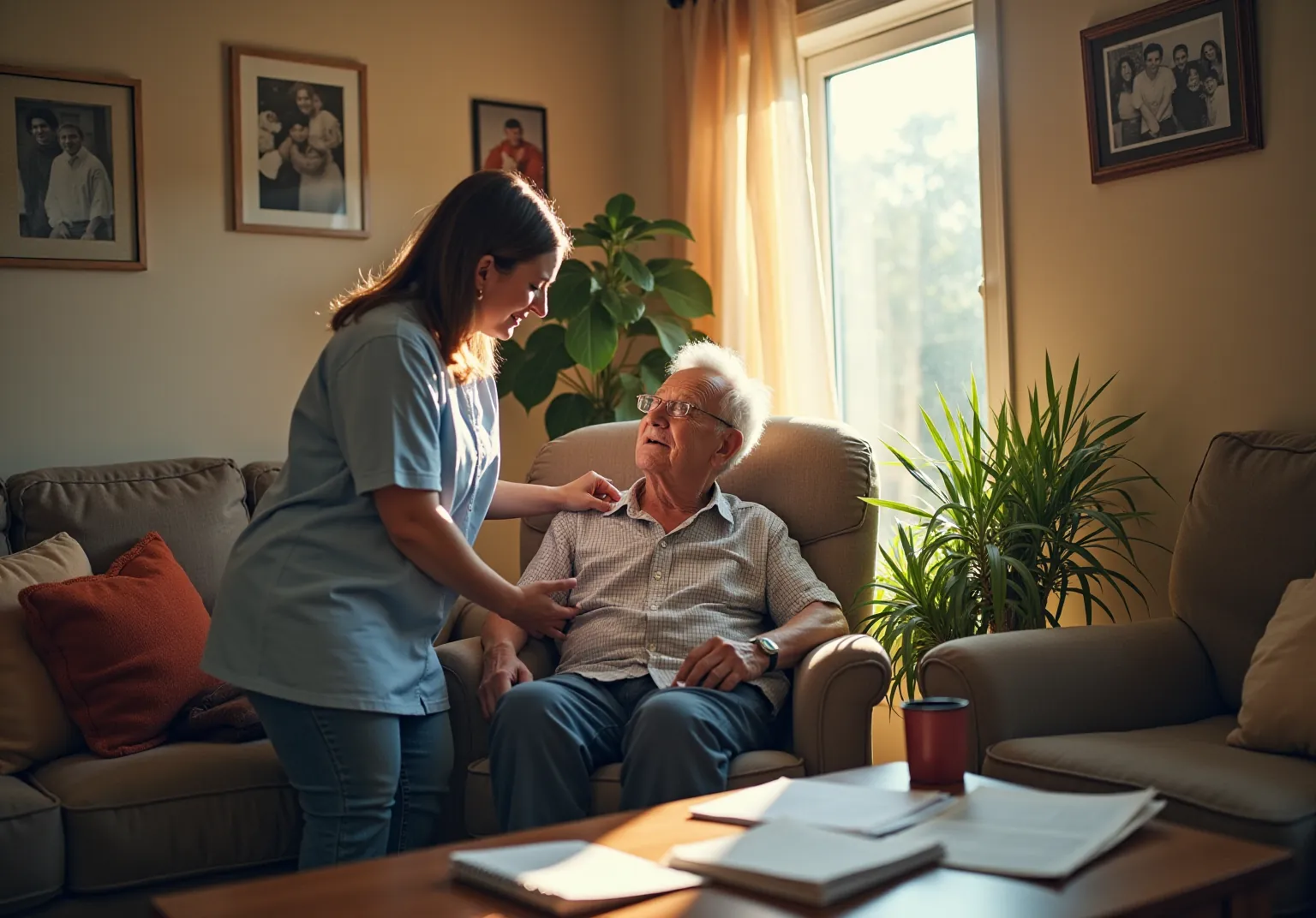
The growing number of older adults requiring assistance at home presents a pressing challenge for families striving to maintain their loved ones' independence and quality of life. This situation can lead to increased stress and emotional strain for caregivers, who often juggle multiple responsibilities while trying to provide the best care possible.
Live-in care agencies offer a viable solution to this problem. They provide personalized support that not only addresses daily living needs but also enhances emotional well-being through companionship. By alleviating some of the burdens faced by family caregivers, these agencies can help create a more secure and fulfilling environment for seniors.
As families navigate the complexities of caregiving, one question remains: how can these agencies truly transform the lives of seniors? Exploring the multifaceted benefits of live-in care reveals a path toward a more connected life for both seniors and their families. With the right support, families can ensure their loved ones maintain their independence while enjoying a higher quality of life.
Happy to Help Caregiving: Personalized In-Home Support for Seniors
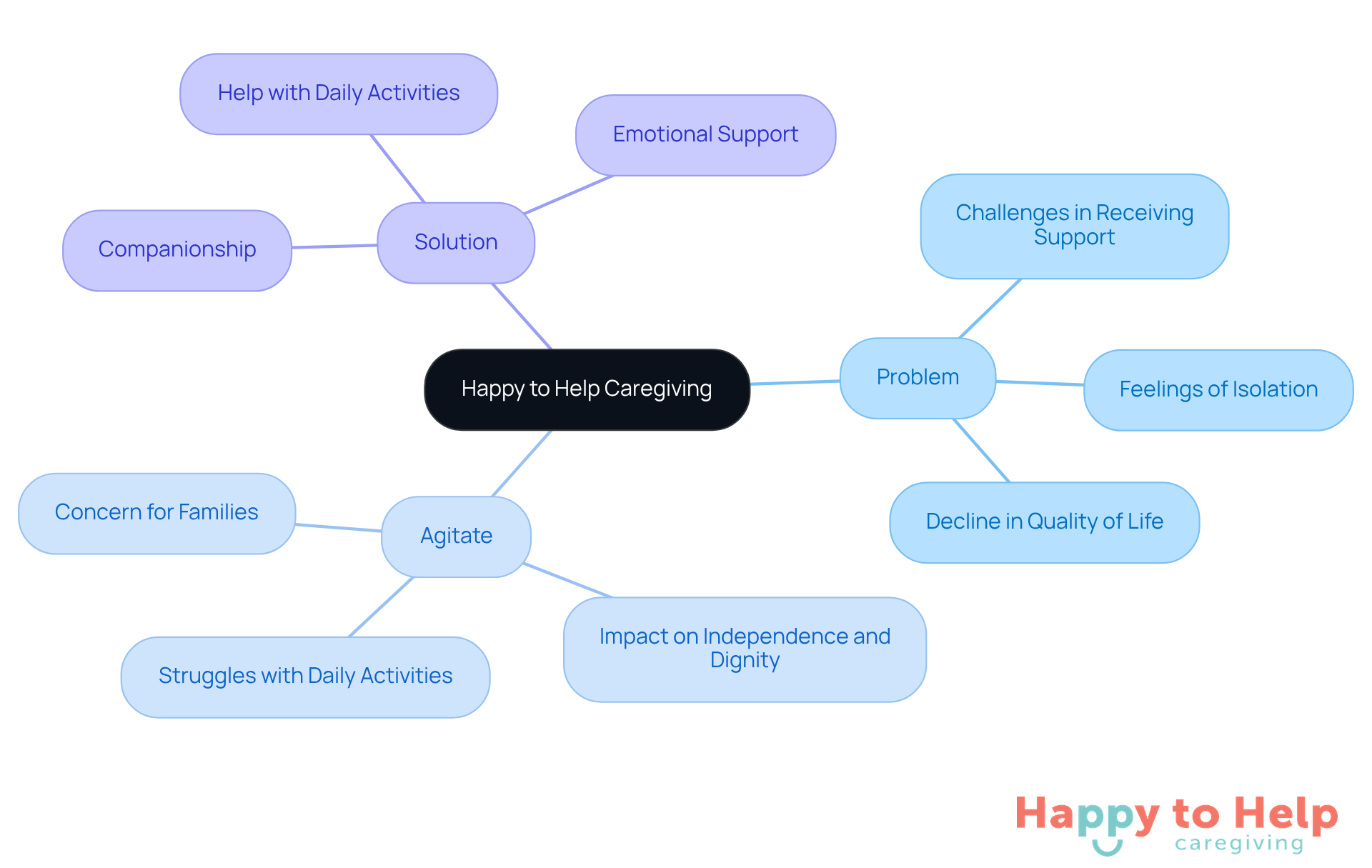
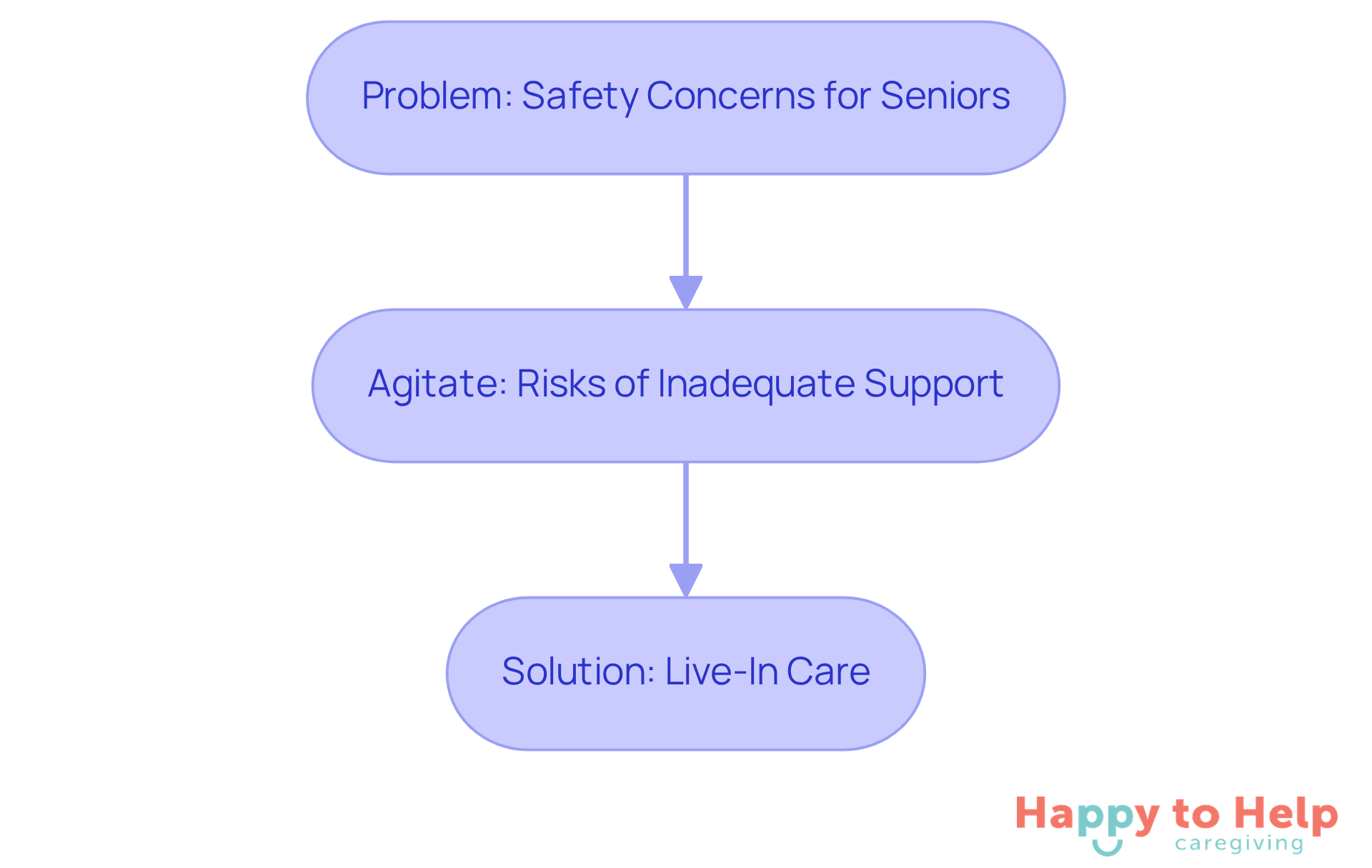
Problem: Many older adults face challenges in receiving adequate support at home, which can lead to feelings of isolation and a decline in their quality of life.
Agitate: Without proper assistance, seniors may struggle with daily activities and emotional well-being, impacting their independence and dignity. This situation is increasingly concerning as families seek ways to ensure their loved ones thrive in familiar environments.
Solution: Happy to Help Caregiving excels in providing customized in-home assistance tailored to the unique requirements of each client. This includes:
- Companionship
- Help with daily activities
- Emotional support
All aimed at promoting independence and enhancing the quality of life for seniors.
The agency's commitment to understanding each client's situation allows for the creation of personalized support plans, which are vital for fostering a sense of security and comfort.
Personalized treatment plans address not only physical health but also emotional and mental well-being, significantly enhancing overall quality of life. For instance, older adults receiving personalized assistance often experience increased social involvement and reduced feelings of isolation.
As families increasingly choose in-home assistance, focusing on tailored plans offered by live-in care agencies becomes crucial for ensuring that older adults flourish in their own residences. This reflects a broader trend towards customized support solutions in the aging demographic.
Enhanced Emotional Well-Being: Combating Loneliness with Live-In Care
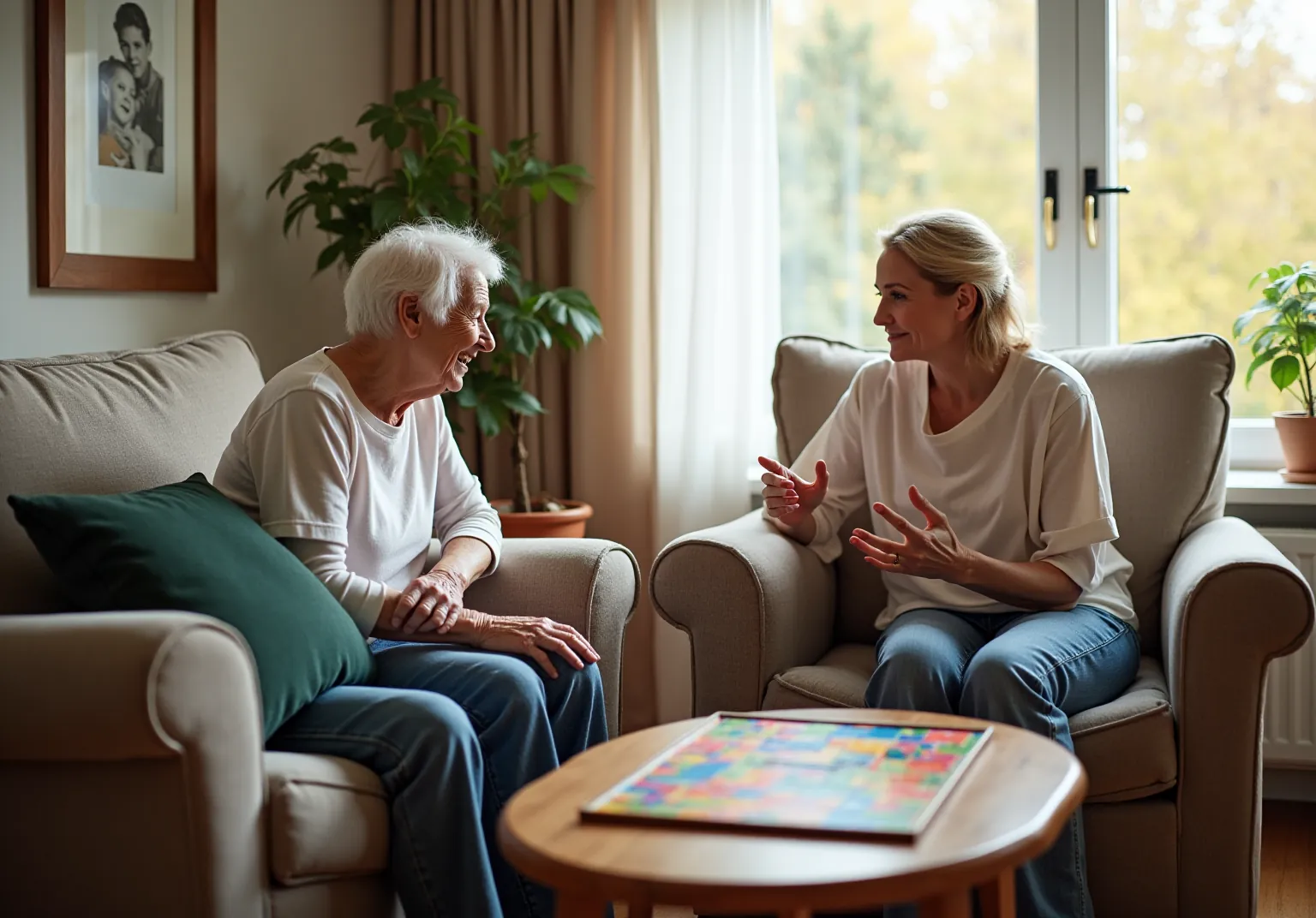
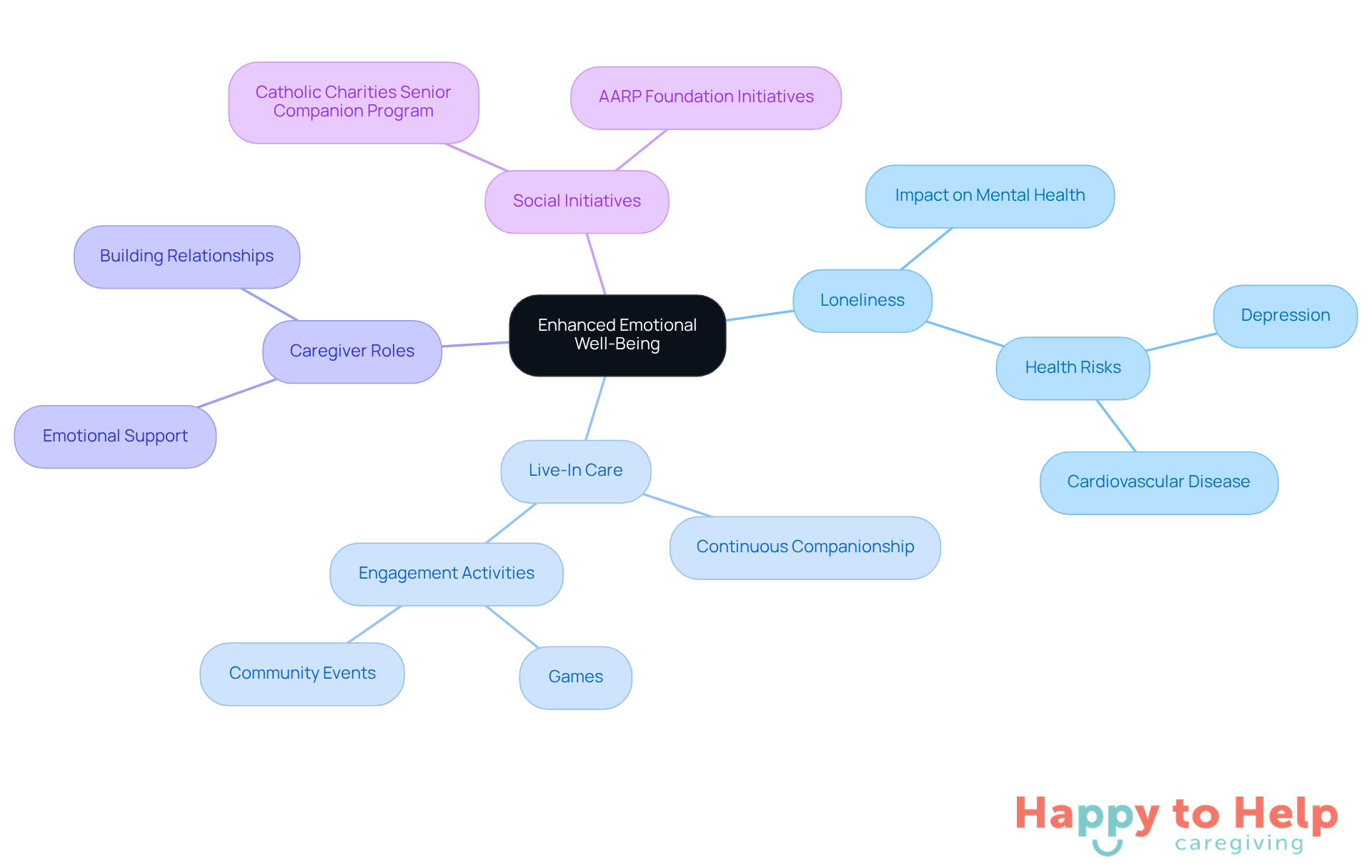
Loneliness and isolation are significant challenges faced by older adults, impacting their emotional well-being. Live-in care agencies address this problem by providing continuous companionship, which is essential for combating these feelings. Caregivers play a crucial role in this process, actively engaging clients in meaningful conversations and activities that foster connections vital for mental health.
Research from the National Institute of Health highlights that regular social interaction significantly enhances mood and reduces anxiety. This makes live-in care agencies a powerful solution for enhancing emotional stability among older adults. For example, studies show that older adults who maintain social connections experience better cognitive function and a lower risk of depression.
Initiatives like the Catholic Charities Senior Companion Program illustrate the positive impact of companionship on seniors' quality of life. These programs have been shown to improve emotional health outcomes, reinforcing the importance of social engagement. By prioritizing these connections, live-in care agencies not only address immediate emotional needs but also contribute to long-term mental wellness.
Family supporters are encouraged to explore local companionship options and involve their loved ones in social activities. This proactive approach can significantly improve emotional well-being, ensuring that older adults lead fulfilling lives.
Daily Living Assistance: Comprehensive Support for Everyday Activities
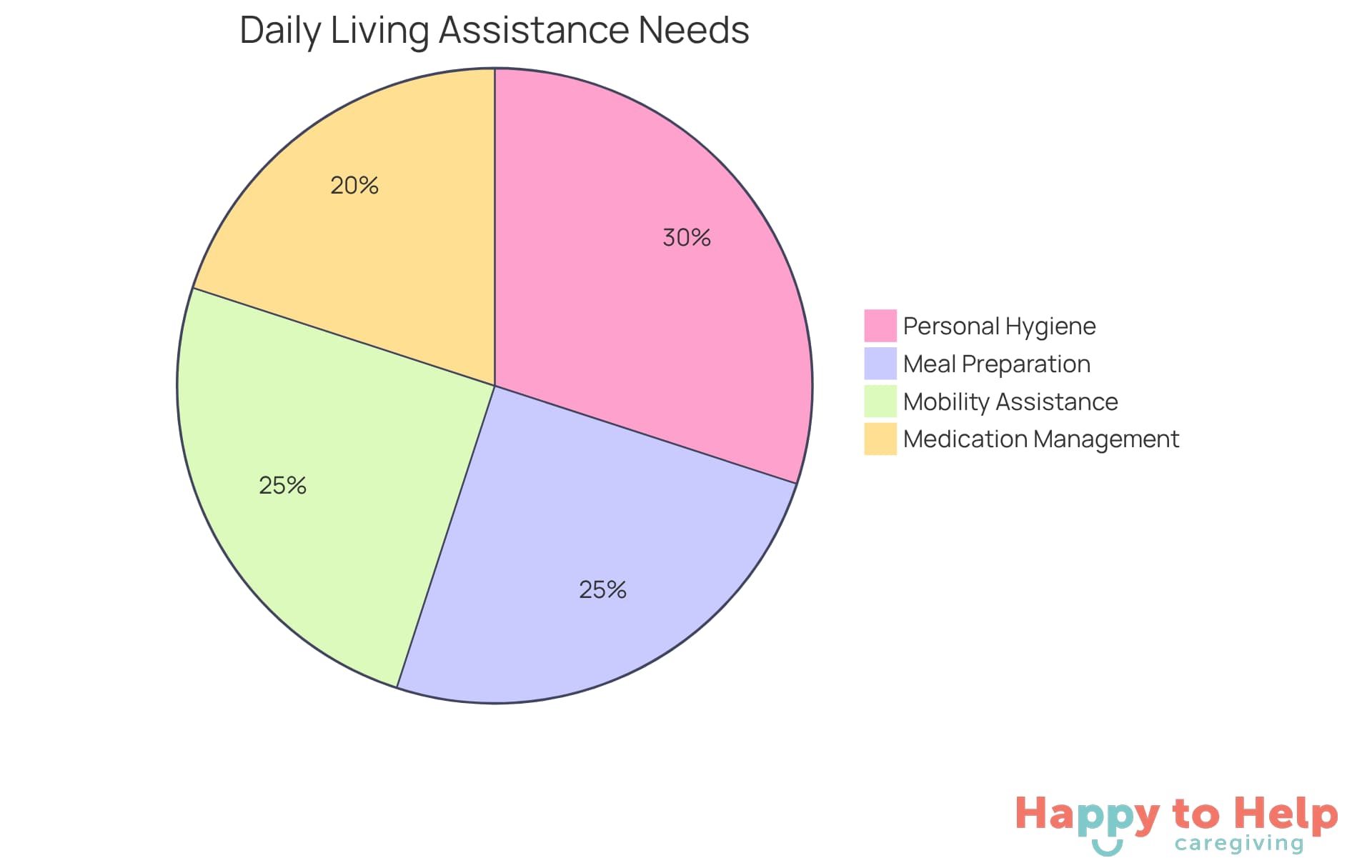
Elderly individuals often face significant challenges in managing daily activities, such as personal hygiene, meal preparation, medication management, and mobility assistance. This need for support can lead to feelings of isolation and a decline in their overall well-being.
The presence of a live-in assistant can address these issues effectively. By providing thorough support, caregivers help seniors maintain their routines, enhancing their safety and comfort at home. This assistance not only promotes autonomy but also fosters a sense of dignity and well-being.
As Rob Fraser, owner of Care to Stay Home, emphasizes, aiding daily activities goes beyond mere tasks; it’s about building connections that enrich the lives of older adults. Engaging clients in meaningful activities encourages social interactions, significantly reducing feelings of loneliness.
Statistics reveal that 44% of home assistance recipients require help with at least one daily task, underscoring the essential demand for caregiver support. Families should carefully evaluate their loved ones' specific needs when considering live-in care agencies, ensuring they receive the best possible assistance. With the right support, seniors can thrive in their familiar surroundings, enjoying a renewed sense of security and connection.
Flexible Scheduling: Tailored Care That Fits Family Needs
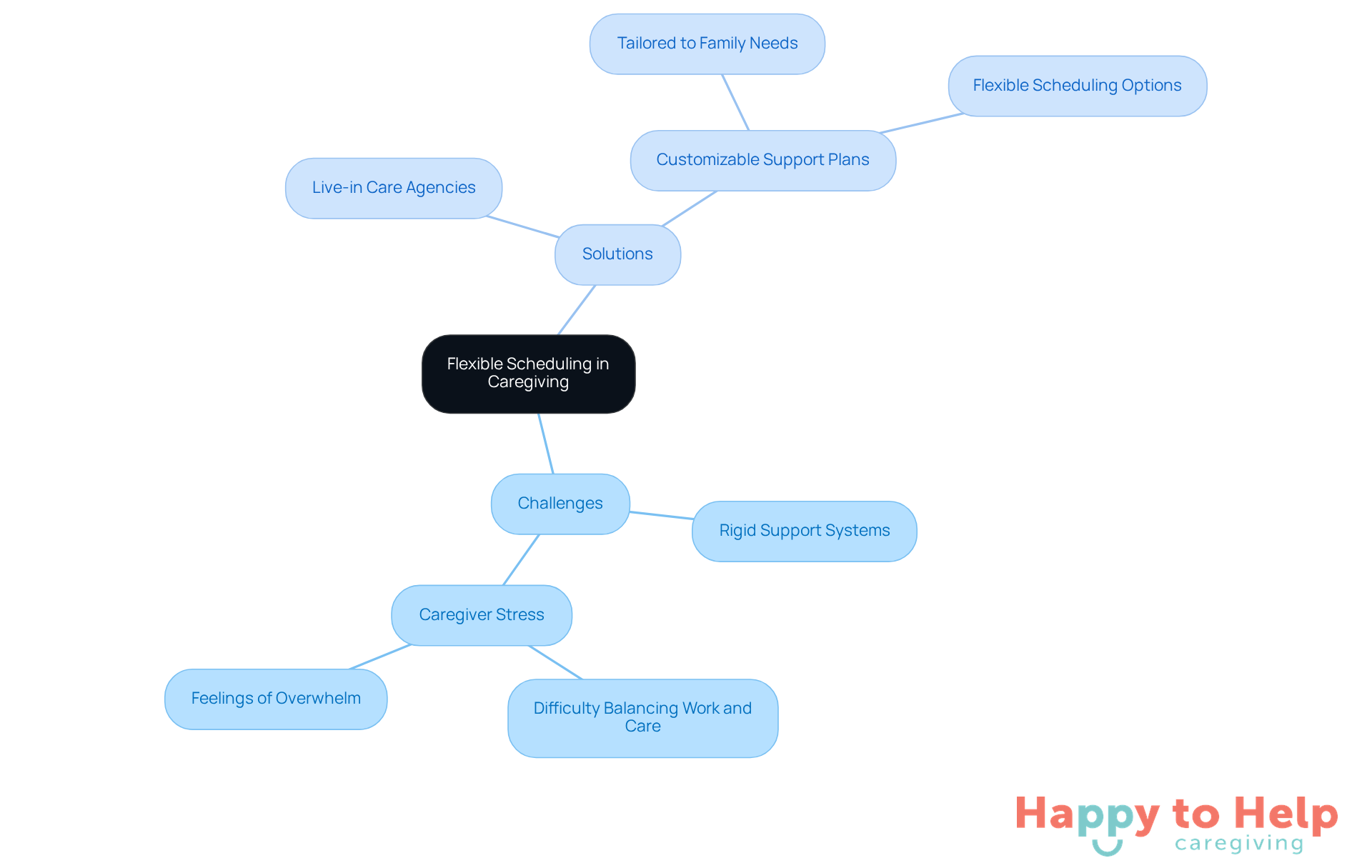
Caregivers often face significant stress due to rigid support systems that don't accommodate their unique needs. This inflexibility can disrupt daily routines and lead to feelings of overwhelm.
One effective solution is live-in care agencies, which provide customizable support plans tailored to the specific requirements and schedules of households. This flexibility ensures that assistance from live-in care agencies is provided when it is most needed, allowing caregivers to maintain their routines while ensuring their loved ones receive consistent support.
By implementing these adaptable support plans, families can reduce stress and enhance overall dynamics, creating a more harmonious living environment.
Cost-Effectiveness: Understanding the Financial Benefits of Live-In Care
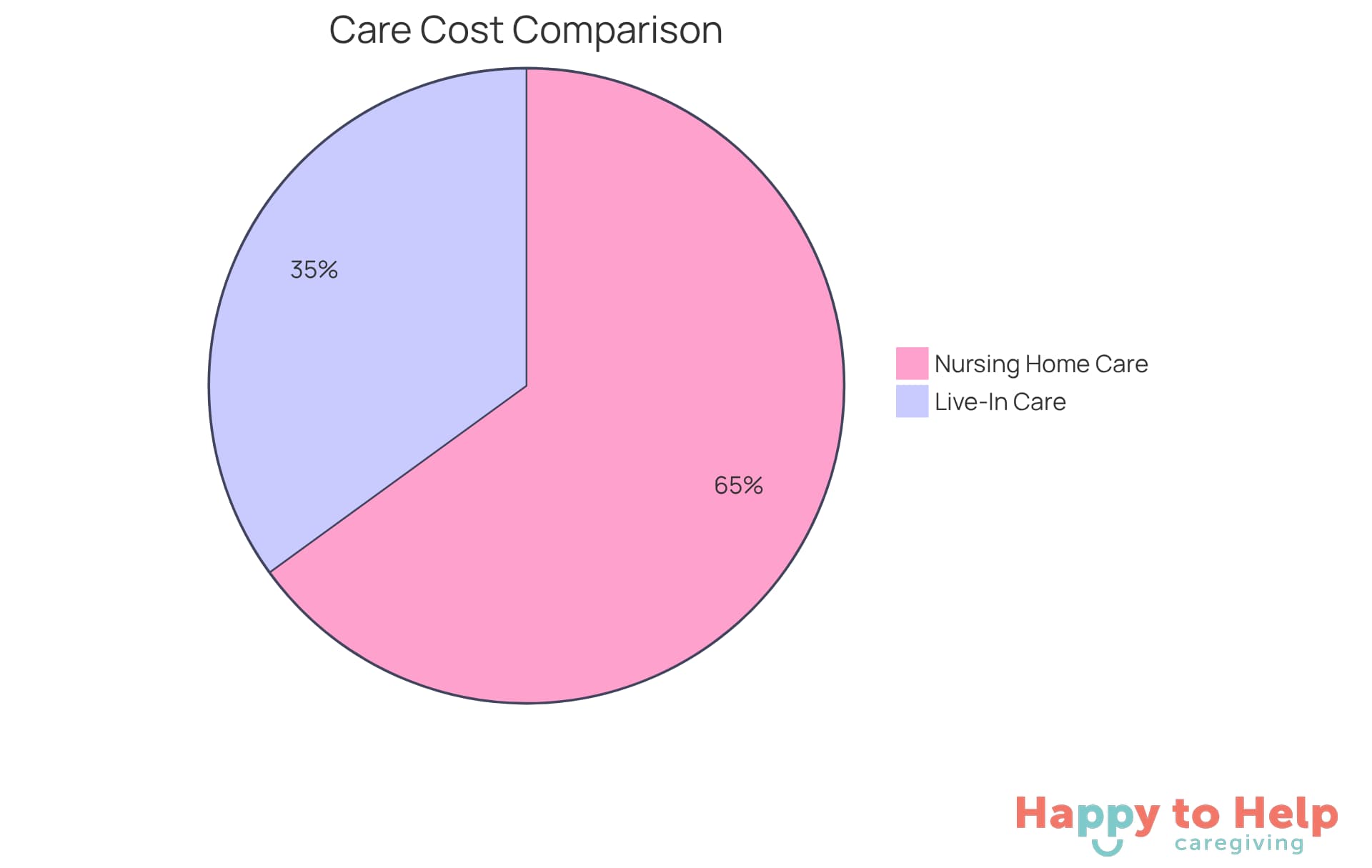
Many families face the challenge of high costs when it comes to caregiving, particularly with traditional nursing home support. This can lead to financial strain and the difficult decision of how best to care for loved ones.
The implications of these costs are significant; families often find themselves juggling multiple attendants for shift work, which can be both expensive and logistically challenging.
A practical solution to this problem is live-in assistance. This option can frequently be more economical than conventional nursing home support, allowing families to save on costs associated with facility living. Moreover, it ensures that loved ones receive personalized, one-on-one attention, which is crucial for their well-being.
Additionally, numerous live-in care agencies offer flexible payment choices, making it easier for families to manage expenses while ensuring quality assistance. This approach not only alleviates financial pressure but also enhances the quality of care provided.
Companionship Care: Building Meaningful Relationships for Seniors
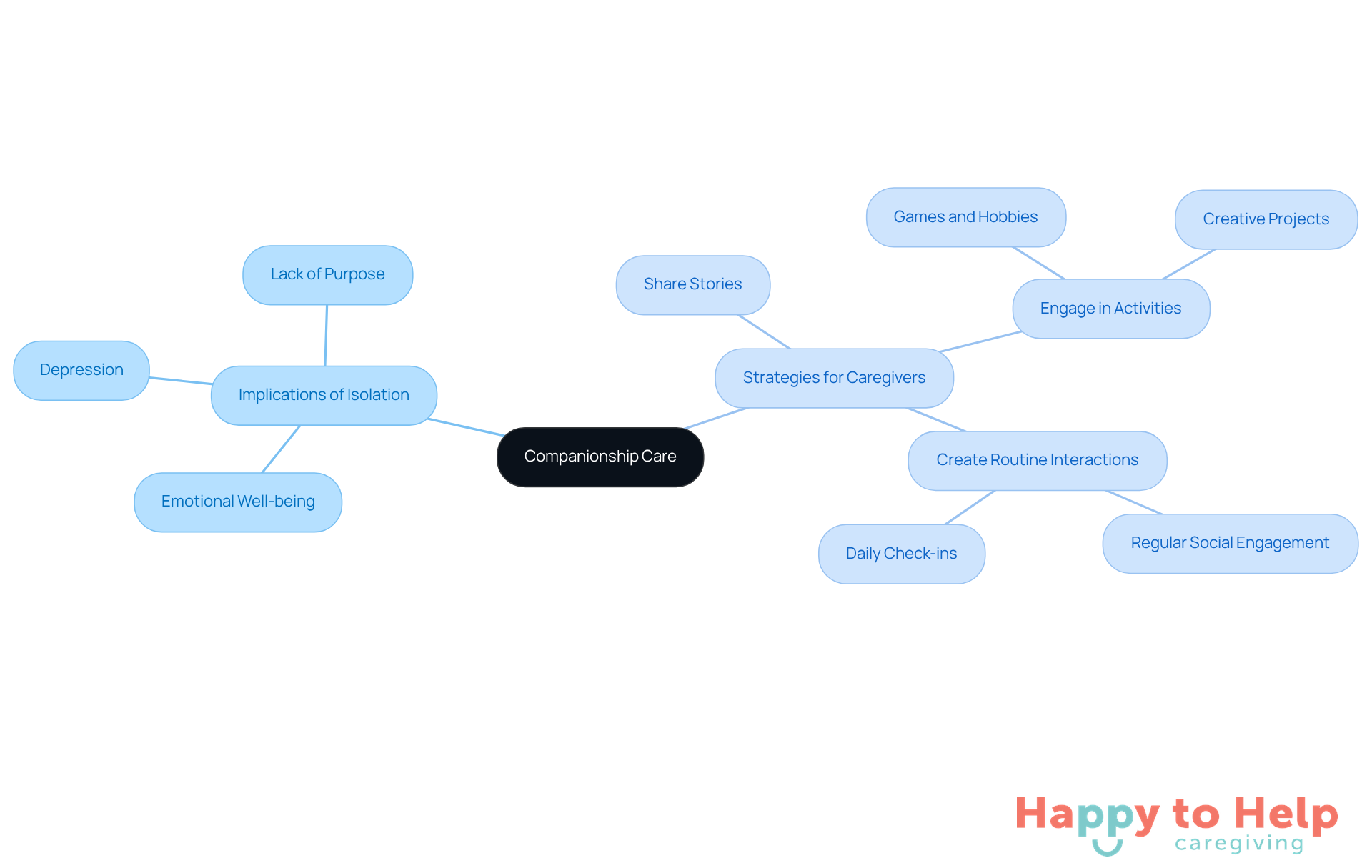
Companionship support is a critical aspect of live-in services. Many elderly individuals face feelings of isolation, which can significantly impact their emotional well-being. This loneliness is a problem that caregivers must address to foster a healthier environment for their clients.
The implications of isolation are profound. Without meaningful interactions, seniors may struggle with depression and a lack of purpose. Caregivers play a vital role in combating this issue by engaging in activities that seniors enjoy, such as games, hobbies, or simply sharing stories. These interactions not only enhance emotional well-being but also build a sense of belonging.
To effectively support companionship, caregivers can implement several practical strategies:
- Engage in Activities: Participate in games or hobbies that the elderly enjoy.
- Share Stories: Encourage seniors to share their life experiences, fostering connection.
- Create Routine Interactions: Establish regular times for social engagement to build anticipation and routine.
By focusing on these strategies, live-in care agencies can significantly improve the quality of life for elderly individuals, ensuring they feel valued and connected.
Safety and Security: Peace of Mind for Families with Live-In Care
Problem: Many families worry about the safety and security of their loved ones at home, especially seniors who may face mobility challenges or cognitive decline. This concern can lead to anxiety and stress for family members, as they seek to ensure their loved ones are safe.
Agitate: The implications of inadequate support can be severe. Without proper supervision, seniors are at a higher risk of accidents, such as falls, which can lead to serious injuries. Families often feel helpless, knowing their loved ones may be isolated and vulnerable, which can exacerbate feelings of worry and concern.
Solution: Live-in care agencies provide a practical solution to these challenges. Caregivers are trained to identify and mitigate potential safety hazards, creating a secure living environment. For instance, seniors like Margaret, who has restricted mobility and early-stage dementia, benefit greatly from the continuous presence of a caregiver. This not only reduces the risk of falls but also enhances overall safety.
Families often express relief knowing their loved ones are not alone. Live-in care agencies provide companionship, fostering a sense of safety and well-being. The emotional impact of having a dedicated caregiver can be profound; many families notice their loved ones seem 'more like themselves' once a caregiver is integrated into their daily routine. This ongoing assistance not only safeguards elderly individuals but also alleviates the concerns of family members, highlighting the vital role of live-in support in promoting both safety and peace of mind.
Technology Integration: Enhancing Care Through Innovative Solutions
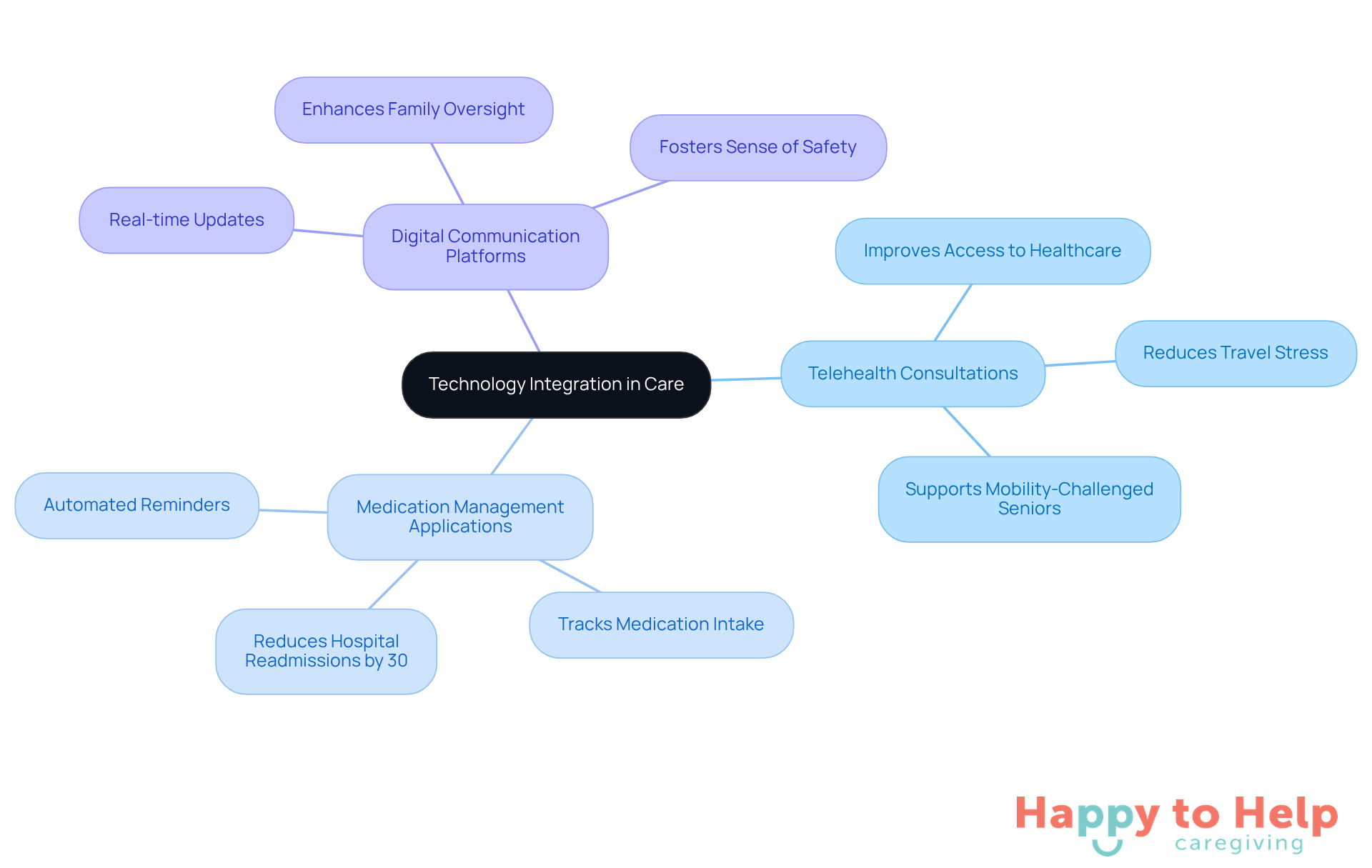
Technology is reshaping live-in care agencies, addressing a critical problem: the increasing need for assistance among older adults. As the population ages, caregivers face challenges in providing timely and effective support. By 2030, 1 in 5 Americans will be over the age of 65, highlighting the urgency of this issue.
One significant solution is telehealth consultations, which allow caregivers to connect with healthcare professionals remotely. This innovation ensures that older adults receive prompt medical advice without the stress of travel, particularly beneficial for those with mobility challenges. Not only does this improve access to healthcare, but it also alleviates the anxiety associated with in-person visits.
Medication management applications further enhance support by helping seniors adhere to their medication schedules. These tools send automated reminders and track medication intake, which is vital for maintaining health, especially for those managing chronic conditions. Effective medication management can lead to a 30% reduction in hospital readmissions, underscoring the importance of these applications in preventing health crises.
Moreover, digital platforms facilitate ongoing communication between households and caregivers, providing real-time updates on loved ones' well-being. This connection fosters a sense of safety, allowing families to oversee assistance from a distance. As Jacob Thomas noted, "By introducing technology one step at a time-starting with the most pressing need-you’ll give your loved one independence while protecting your peace of mind."
As telehealth continues to evolve, it becomes an essential component of in-home support offered by live-in care agencies, enhancing the overall quality of life for older adults and providing reassurance to their families. The impact of these technologies is profound, as they not only improve service delivery but also empower older adults to maintain their autonomy in a secure and supportive environment.
Trained Caregivers: Ensuring Quality and Expertise in Live-In Care
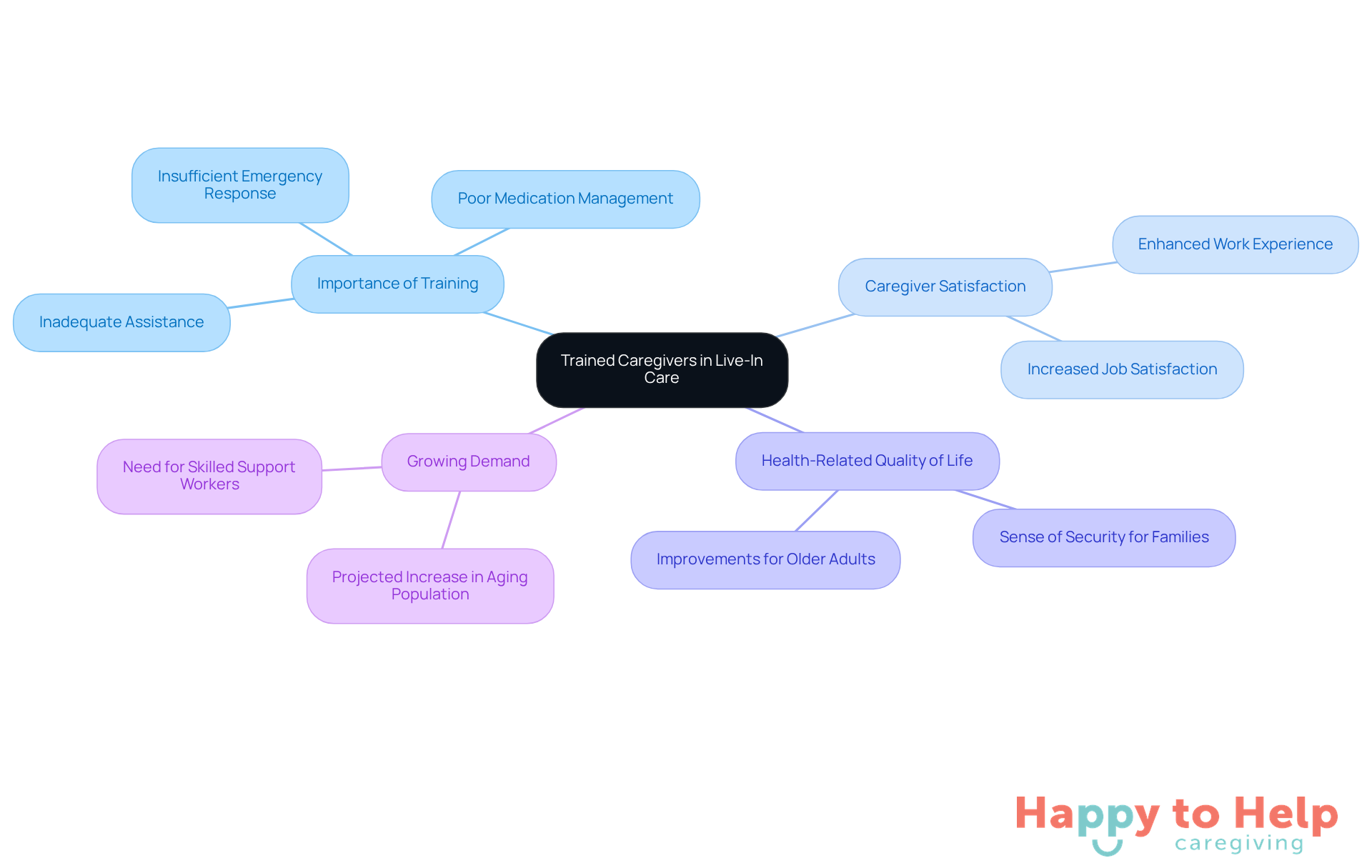
The effectiveness of live-in care agencies relies on the presence of trained attendants. Without proper training, caregivers may struggle to meet the diverse needs of those they assist. This lack of preparation can lead to inadequate personal assistance, poor medication management, and insufficient emergency response, ultimately compromising the quality of care provided to seniors.
Research shows that caregivers who undergo comprehensive training report higher job satisfaction. In fact, studies indicate that these trained providers experience increased satisfaction with their work after completing their training programs. This not only benefits the caregivers but also enhances the overall care experience for seniors, fostering a sense of security for families.
Moreover, older adults supported by trained professionals enjoy significant improvements in health-related quality of life (HRQoL) compared to those assisted by untrained individuals. Families can rest assured knowing their loved ones are in the hands of skilled professionals dedicated to enhancing daily lives and overall well-being.
As the number of Americans aged 65 and older is projected to rise by 47%, from 58 million in 2022 to 82 million in 2050, the demand for skilled support workers will continue to grow. This underscores the vital role that trained attendants play in managing chronic conditions and navigating healthcare systems, highlighting the importance of live-in care agencies in ensuring that older adults receive the best possible support.
Holistic Care Approach: Addressing Physical and Emotional Needs
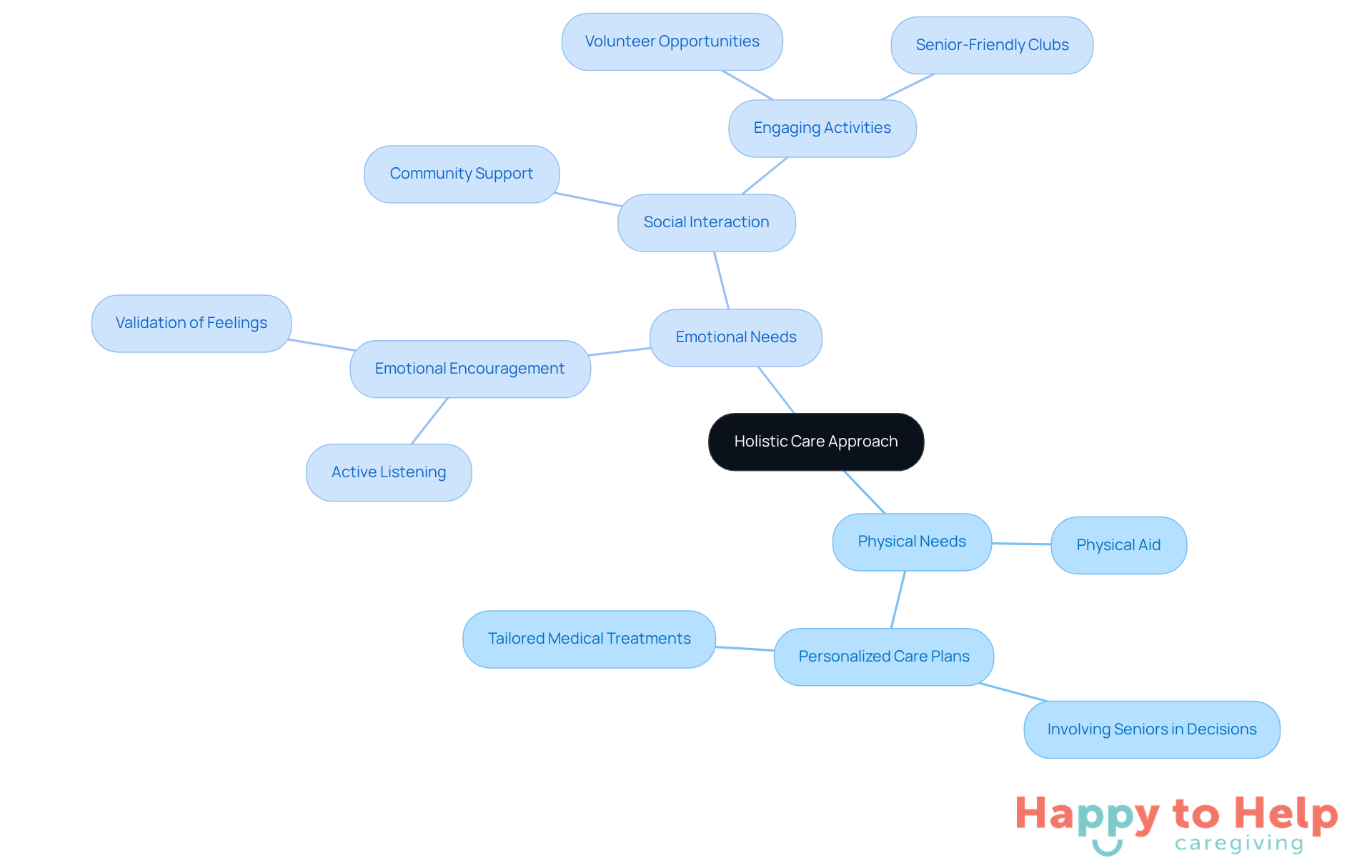
A holistic care approach is essential in live-in care agencies, as it effectively addresses both the physical and emotional needs of elderly individuals. Caregivers face the challenge of understanding the intricate relationship between physical health, mental well-being, and social engagement. Without this understanding, elderly individuals may struggle to maintain a balanced lifestyle, leading to increased feelings of isolation and decreased quality of life.
To combat these issues, caregivers can provide extensive support that includes:
- Emotional encouragement
- Social interaction
- Physical aid
By engaging in meaningful activities and fostering connections, caregivers can significantly reduce feelings of isolation. Personalized care plans ensure that each individual's unique needs and preferences are met, promoting autonomy and satisfaction.
This multifaceted approach not only enhances emotional stability and reduces stress but also contributes to improved physical health. Ultimately, it enriches the overall quality of life for seniors. By implementing these strategies, caregivers can create a supportive environment that addresses the comprehensive needs of elderly individuals.
Taking the Next Steps
Family caregivers often face significant challenges when it comes to providing adequate support for their elderly loved ones. The emotional and physical toll can be overwhelming, leading to stress and burnout. This situation not only affects caregivers but can also impact the quality of life for seniors, who may feel isolated or neglected.
Live-in care agencies offer a solution that addresses these issues head-on. By providing personalized, in-home support, these agencies empower older adults to maintain their independence while ensuring they receive the comprehensive care they need. This approach enhances the quality of life for seniors and alleviates the burdens often faced by family caregivers.
Key benefits of live-in care include:
- Emotional support: Companionship helps combat loneliness.
- Daily living assistance: Trained caregivers assist with everyday tasks.
- Flexible scheduling: Care can be tailored to fit family needs.
- Cost-effectiveness: Live-in care can be more affordable than traditional nursing homes.
As the population ages, the demand for compassionate, skilled support will only grow. Families are encouraged to explore these options to ensure their loved ones receive the best possible care. Embracing the services of live-in care agencies is not just a decision for today; it's a commitment to nurturing a brighter, more fulfilling future for older adults and their families.
https://iframe.tely.ai/cta/eyJhcnRpY2xlX2lkIjogIjY5MjUwZjkzMTk5OWZjNThlNjA5NGVjOCIsICJjb21wYW55X2lkIjogIjY4ZWU1ZGNhNzMxNzYyNTU3ZjNjOTVjMSIsICJpbmRleCI6IG51bGwsICJ0eXBlIjogImFydGljbGUifQ==Frequently Asked Questions
What challenges do older adults face regarding in-home support?
Many older adults struggle to receive adequate support at home, leading to feelings of isolation and a decline in their quality of life.
How does inadequate support affect seniors?
Without proper assistance, seniors may have difficulty with daily activities and emotional well-being, impacting their independence and dignity.
What services does Happy to Help Caregiving provide?
Happy to Help Caregiving offers customized in-home assistance, including companionship, help with daily activities, and emotional support.
How does personalized support benefit seniors?
Personalized support plans address physical health, emotional, and mental well-being, significantly enhancing overall quality of life and reducing feelings of isolation.
Why is companionship important for older adults?
Companionship combats loneliness and isolation, which are significant challenges for older adults, thereby improving their emotional well-being.
What role do caregivers play in enhancing emotional stability for seniors?
Caregivers engage clients in meaningful conversations and activities, fostering connections that are vital for mental health.
What does research say about social interaction for older adults?
Research indicates that regular social interaction enhances mood and reduces anxiety, contributing to better cognitive function and lower risk of depression.
What are some examples of programs that promote companionship for seniors?
Initiatives like the Catholic Charities Senior Companion Program demonstrate the positive impact of companionship on seniors' quality of life and emotional health outcomes.
What daily living activities do elderly individuals often need help with?
Seniors may require assistance with personal hygiene, meal preparation, medication management, and mobility.
How can live-in assistants enhance the well-being of seniors?
Live-in assistants provide thorough support that helps seniors maintain their routines, promoting safety, comfort, autonomy, and dignity at home.
What is the significance of building connections through daily activities?
Engaging clients in meaningful activities encourages social interactions, significantly reducing feelings of loneliness among older adults.
What percentage of home assistance recipients need help with daily tasks?
Statistics show that 44% of home assistance recipients require help with at least one daily task.
How should families evaluate the need for live-in care for their loved ones?
Families should assess their loved ones' specific needs to ensure they receive the best possible assistance from live-in care agencies.
List of Sources
- Happy to Help Caregiving: Personalized In-Home Support for Seniors
- Customized Care at Home: The Benefits of Personalized Care Plans - VNA Health Group (https://vnahg.org/customized-care-at-home-the-benefits-of-personalized-care-plans)
- The Future of Aging: Is In-Home Care the New Standard? - WorldHealth.net (https://worldhealth.net/news/future-of-aging-is-in-home-care-new-standard)
- Top healthcare trends of 2026: Aging in place is driving innovation in home-based care and technology (https://definitivehc.com/blog/aging-in-place-driving-innovation)
- Home Care Trends 2026: Preparing for Senior Care - Assisting Hands Centennial (https://assistinghands.com/77/colorado/centennial/blog/home-care-trends-2026-preparing-for-senior-care)
- Trends and Innovations in Senior Care | Amada Blog (https://amadaseniorcare.com/2025/01/trends-and-innovations-in-senior-care)
- Enhanced Emotional Well-Being: Combating Loneliness with Live-In Care
- Social isolation sends more older adults to the emergency room, study says (https://healthjournalism.org/blog/2025/11/social-isolation-sends-more-older-adults-to-the-emergency-room-study-says)
- 1 in 3 older adults still experience loneliness and isolation (https://michiganmedicine.org/health-lab/1-3-older-adults-still-experience-loneliness-and-isolation)
- The Emotional Benefits of Companion Care for Seniors (https://comfortkeepers.com/offices/texas/round-rock/resources/news/the-emotional-benefits-of-companion-care-for-seniors)
- The Role of Companionship in Enhancing Mental Health for Elderly Individuals (https://stlargusnews.com/the-role-of-companionship-in-enhancing-mental-health-for-elderly-individuals)
- | Catholic Charities Serving Central Washington (https://catholiccharitiescw.org/news/companionship-can-counter-the-impacts-of-loneliness-and-isolation)
- Daily Living Assistance: Comprehensive Support for Everyday Activities
- Care to Stay Home Highlights Live-In Caregivers Improving Daily Life in Spokane, WA (https://cbs42.com/business/press-releases/ein-presswire/866934068/care-to-stay-home-highlights-live-in-caregivers-improving-daily-life-in-spokane-wa)
- Study proving longevity benefits of senior living is something for operators to ‘jump up and down’ about (https://mcknightsseniorliving.com/news/study-proving-longevity-benefits-of-senior-living-is-something-for-operators-to-jump-up-and-down-about)
- 2025 Home Care Statistics: Trends & Insights To Know (https://premierhcinc.com/blog/home-care-statistics)
- Senior Housing Residents Live Longer Than Counterparts Living In The Community - National Investment Center (https://nic.org/news-press/senior-housing-residents-live-longer-than-counterparts-living-in-the-community)
- What Is the Lifetime Risk of Needing and Receiving Long-Term Services and Supports? (https://aspe.hhs.gov/reports/what-lifetime-risk-needing-receiving-long-term-services-supports-0)
- Flexible Scheduling: Tailored Care That Fits Family Needs
- Workplace flexibility is the most used, wanted benefit among caregivers: AARP (https://thehill.com/homenews/4668936-aarp-workplace-flexibility-most-used-wanted-benefit-caregivers)
- The Critical Role of Flexibility in Home Care Scheduling for Family Peace of Mind (https://relevar.com/the-critical-role-of-flexibility-in-home-care-scheduling-for-family-peace-of-mind)
- Caregiving While Working Calls for Workplace Flexibility (https://aarp.org/pri/topics/work-finances-retirement/employers-workforce/employer-caregiving-survey)
- Flexible Care Models Give Home Care Clients ‘What They Want When They Want It’ (https://homehealthcarenews.com/2025/10/flexible-care-models-give-home-care-clients-what-they-want-when-they-want-it)
- Return-to-Office Trends are Reshaping Caregiving at Home - Family & Nursing Care (https://familynursingcare.com/return-to-office-trends-are-reshaping-caregiving-at-home)
- Cost-Effectiveness: Understanding the Financial Benefits of Live-In Care
- Benefits of Live-In Care for Seniors (https://careindeed.com/blogs/benefits-of-live-in-care)
- Cost of Long Term Care by State | Cost of Care Report | Carescout (https://carescout.com/cost-of-care)
- Cost of Home Care vs. Nursing Homes (https://aplaceformom.com/caregiver-resources/articles/home-care-vs-nursing-home-costs)
- Medical foster home is less costly than traditional nursing home care - PMC (https://pmc.ncbi.nlm.nih.gov/articles/PMC6863232)
- Companionship Care: Building Meaningful Relationships for Seniors
- Why Home Care Providers Are Increasingly Offering Companion Care Services for Seniors | Aaniie, formerly Smartcare Software (https://aaniie.com/news/why-home-care-providers-are-increasingly-offering-companion-care-services-for-seniors)
- The Emotional Benefits of Companion Care for Seniors (https://comfortkeepers.com/offices/texas/round-rock/resources/news/the-emotional-benefits-of-companion-care-for-seniors)
- Mental Health Support for Seniors: The Role of In-Home Caregivers (https://homeinstead.com/home-care/usa/in/kendallville/871/news-and-media/mental-health-support-for-seniors-the-role-of-in-home-caregivers)
- A ‘Win’ For Home Care: DOL Proposes Reinstating Companionship Exemption (https://homehealthcarenews.com/2025/07/a-win-for-home-care-dol-proposes-reinstating-companionship-exemption)
- The Incredible Benefits of Home Care, in 7 Amazing Stats - Companions For Seniors (https://companionsforseniors.com/2019/08/benefits-home-care-amazing-stats-trends-reports)
- Safety and Security: Peace of Mind for Families with Live-In Care
- Care to Stay Home Highlights Live-In Caregivers Improving Daily Life in Spokane, WA (https://cbs42.com/business/press-releases/ein-presswire/866934068/care-to-stay-home-highlights-live-in-caregivers-improving-daily-life-in-spokane-wa)
- The Benefits of Live-In Care: Comfort and Support Without Leaving Home (https://houston-homecare.com/the-benefits-of-live-in-care-comfort-and-support-without-leaving-home)
- Choosing Care in California: The True Benefits of Live-In Care for Seniors - Coast Family Home Care (https://coastfamilyhomecare.com/benefits-of-live-in-care-in-california)
- Benefits of Live-In Care for Seniors (https://careindeed.com/blogs/benefits-of-live-in-care)
- The Benefits of 24/7 Live-In Home Care for Safety and Security (https://humancareny.com/blog/the-benefits-of-24-7-live-in-home-care-for-safety-and-security)
- Technology Integration: Enhancing Care Through Innovative Solutions
- Tech-enabled caregiving can help dementia patients stay at home — perhaps for too long (https://statnews.com/2025/11/24/dementia-caregiving-technology-assistance)
- How Technology Can Ease the Caregiver Burden (https://connectamerica.com/insights/how-technology-can-ease-the-caregiver-burden)
- 6 Companies and Technologies Changing Home Care for the Better (https://chosenfamilyhomecare.com/6-companies-and-technologies-changing-home-care-for-the-better)
- 6 Tech Tools Transforming Caregiving for Aging Loved Ones (https://ltcnews.com/articles/tech-tools-transforming-caregiving-aging-loved-ones)
- Viewpoints: Caregiving Has Gotten Harder For American Families; Technology Helps Elderly Stay Home - KFF Health News (https://kffhealthnews.org/morning-breakout/viewpoints-caregiving-has-gotten-harder-for-american-families-technology-helps-elderly-stay-home)
- Trained Caregivers: Ensuring Quality and Expertise in Live-In Care
- New law implements training, exam requirements for assisted living employees (https://mcknightsseniorliving.com/news/new-law-implements-training-exam-requirements-for-assisted-living-employees)
- Caregiver training: Evidence of its effectiveness for cognitive and functional improvement in older adults - PMC (https://pmc.ncbi.nlm.nih.gov/articles/PMC10078788)
- Health Care Cooperatives Could Hold Key to Easing Elderly Caregiver Shortage (https://ilr.cornell.edu/news/research/health-care-cooperatives-could-hold-key-easing-elderly-caregiver-shortage)
- An Aging America Needs a Stronger Care Workforce - National Skills Coalition (https://nationalskillscoalition.org/blog/news/an-aging-america-needs-a-stronger-care-workforce)
- Families Prefer In-Home Care To Senior Living – Yet Struggle To Identify Needed Support (https://homehealthcarenews.com/2025/11/families-prefer-in-home-care-to-senior-living-yet-struggle-to-identify-needed-support)
- Holistic Care Approach: Addressing Physical and Emotional Needs
- Empowering Aging in Place: Holistic Strategies for Senior Well-Being — HealthIMPACT Live (https://healthimpactlive.com/news/empowering-aging-in-place-holistic-healthcare-at-homeempowering-aging-in-place-holistic-healthcare-at-home)
- Holistic approach to senior care is a growing trend across America | Provided by The Watermark at Bellevue (https://seattletimes.com/sponsored/holistic-approach-to-senior-care-is-a-growing-trend-across-america)
- Ways to Address the Emotional Needs of Seniors (https://caringseniorservice.com/blog/emotional-needs-of-seniors)
- 10 Benefits of Live-In Dementia Care for Family Caregivers - Happy To Help (https://happytohelpcaregiving.com/10-benefits-of-live-in-dementia-care-for-family-caregivers)