
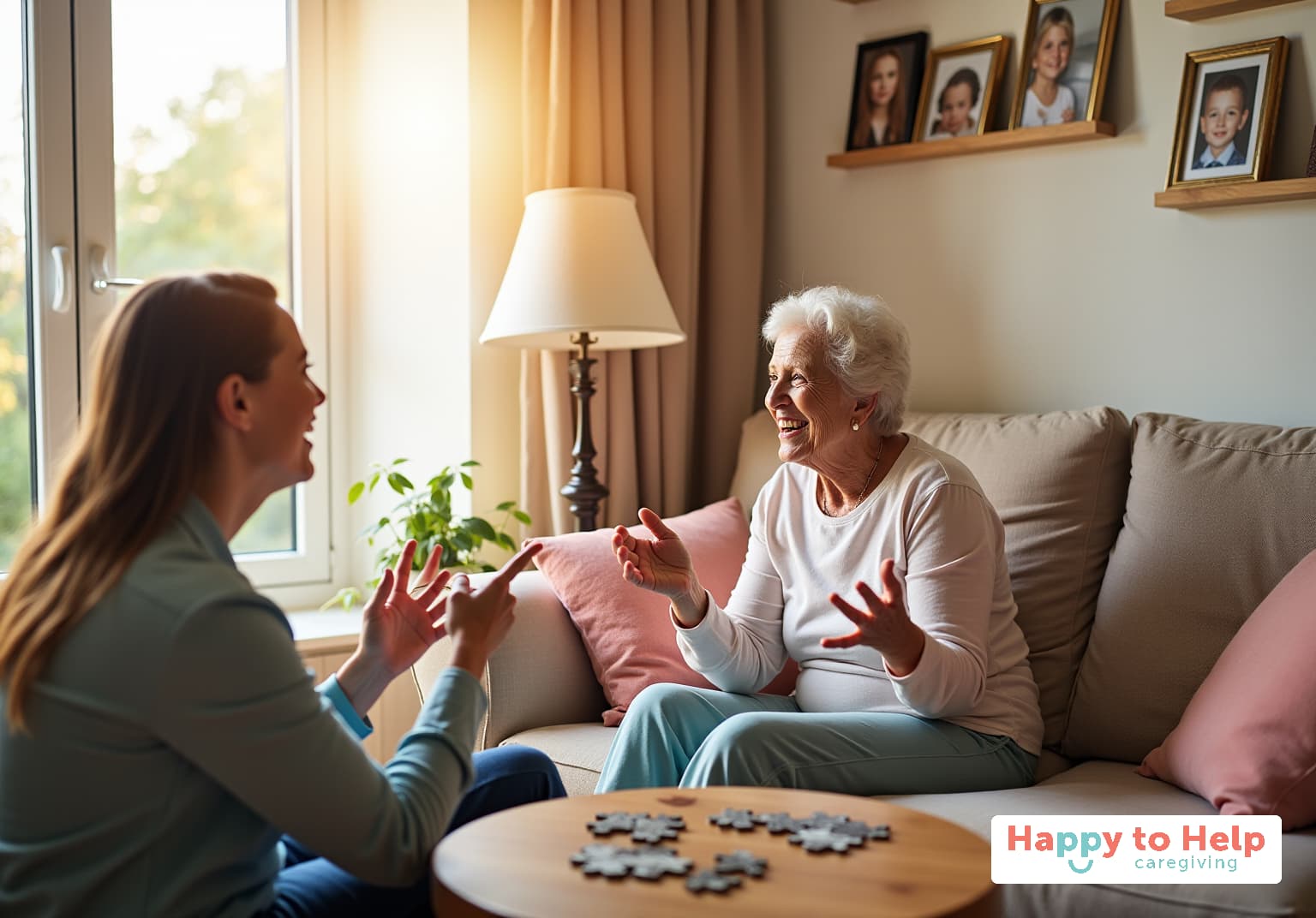
For families in our service areas
For families in our service areas, this guide explains in-home care and how non-medical in-home caregiving can support care planning in East Idaho, Treasure Valley & Magic Valley, Northern Wasatch, North Central West Virginia, and Northeast Ohio.
Understanding Private In Home Care Near Me
The landscape of caregiving is changing. Families are increasingly seeking personalized solutions to meet the unique needs of their loved ones. This shift presents a significant challenge: how can caregivers manage these evolving demands while ensuring quality support? As the demand for in-home care services rises, understanding the myriad benefits of these tailored support systems becomes crucial for family caregivers.
Private in-home care not only alleviates the burdens of caregiving but also enhances the quality of life for both caregivers and recipients. This article explores ten compelling advantages of private in-home care, revealing how it fosters independence, emotional well-being, and effective support for families navigating the complexities of caregiving.
Happy to Help Caregiving: Personalized In-Home Care for Enhanced Quality of Life
The Challenge of Caregiving
Caring for seniors and individuals with special needs can be a daunting task. Families often struggle to find adequate support that meets the unique needs of their loved ones. This lack of customized assistance can lead to feelings of frustration and helplessness, both for caregivers and those they care for.
The Growing Demand for Support
As the population ages, the demand for home support services is expected to rise significantly by 2025. Demographic trends indicate that 75% of seniors prefer to age in place, which underscores the need for effective in-home assistance. According to Ethan Popowitz, 'For numerous older individuals, the concept of aging in place has emerged as a notable preference among seniors in the U.S.'
A Tailored Solution
Happy to Help Caregiving specializes in providing customized in-home assistance that greatly enhances the quality of life for seniors and individuals with special needs. By prioritizing personalized support plans, the agency ensures that clients receive the specific assistance they need to thrive in their own homes. This approach not only fosters independence but also supports emotional well-being, making private in home care near me an essential service for families in need of compassionate care.
The Impact of Personalized Care
The influence of these tailored support plans is profound. They cater to individual needs and preferences, leading to increased satisfaction and happiness among clients. For instance, incorporating technology into domestic assistance can improve safety and health monitoring, further empowering seniors to maintain their independence.
Conclusion
In summary, as the demand for home support services continues to grow, agencies like Happy to Help Caregiving play a crucial role in providing the necessary assistance for seniors to age in place comfortably and safely.
Companionship Care: Alleviating Loneliness and Enhancing Emotional Well-Being
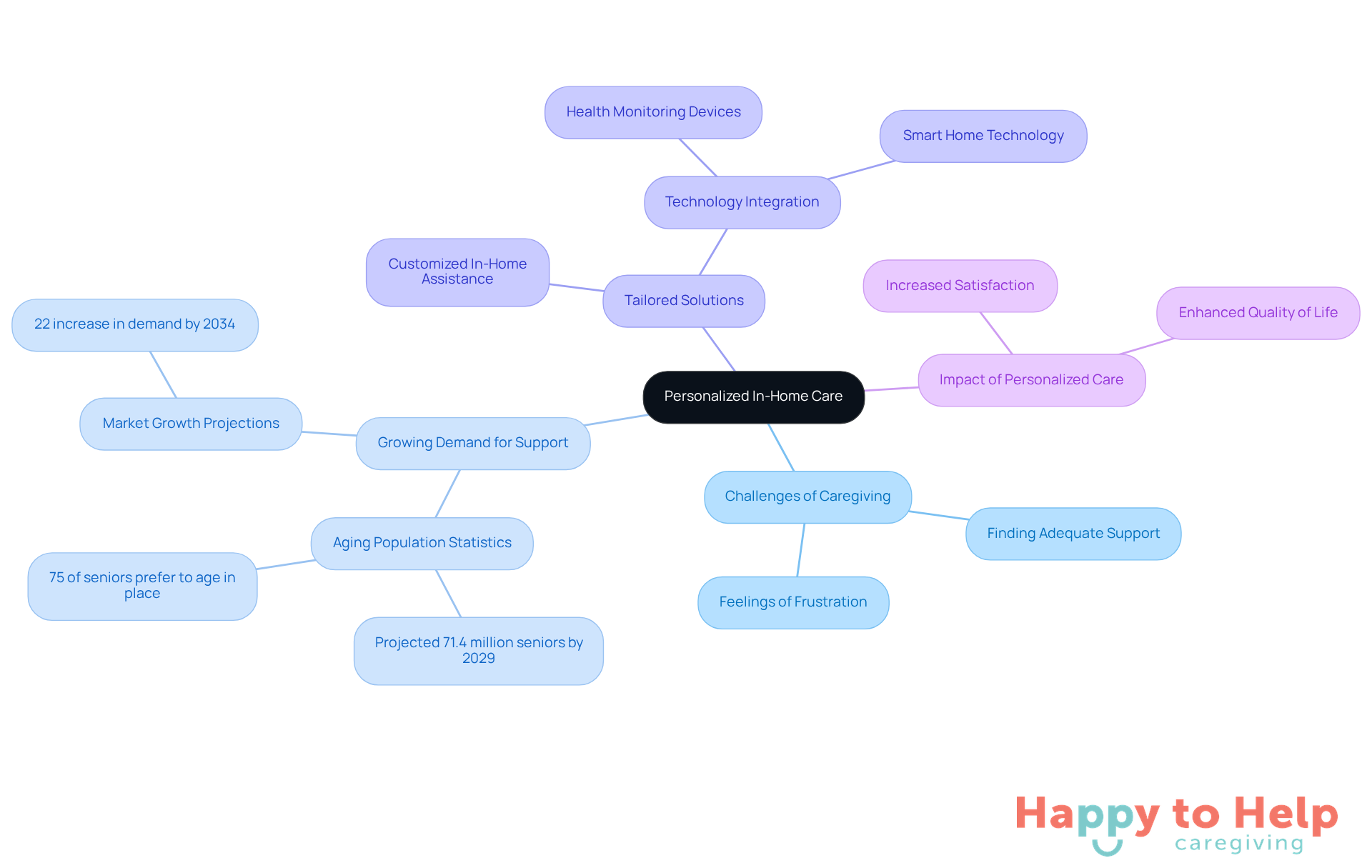
Loneliness among seniors is a significant issue that can severely impact their emotional well-being. Without companionship, many older adults experience feelings of isolation, which can lead to depression and anxiety. Research shows that regular social interaction is crucial for mental health, with 93% of families reporting emotional relief from having a caregiver present.
Companionship support addresses this problem effectively. Caregivers engage clients in meaningful conversations and enjoyable activities, such as storytelling and puzzles. These interactions not only combat feelings of loneliness but also foster a sense of belonging and purpose. By nurturing these connections, caregivers help seniors maintain their independence while feeling valued and supported in their daily lives.
As noted by Finding Home Care, companionship care doesn’t just alleviate loneliness; it also restores quality of life, independence, and confidence. Implementing companionship support is essential for enhancing the emotional well-being of seniors, making it a crucial element of private in home care near me.
Post-Hospital Recovery Assistance: Ensuring Safe Transitions and Comfort at Home
Post-hospital recovery presents significant challenges for individuals returning home after medical procedures. Without proper support, patients may struggle with medication management, mobility, and emotional well-being, which can lead to complications and even readmission.
Caregivers play a crucial role in this transition. They provide essential assistance, ensuring that patients adhere to medication schedules, helping them move safely, and offering emotional encouragement. This comprehensive support not only enhances comfort but also significantly reduces the risk of readmission.
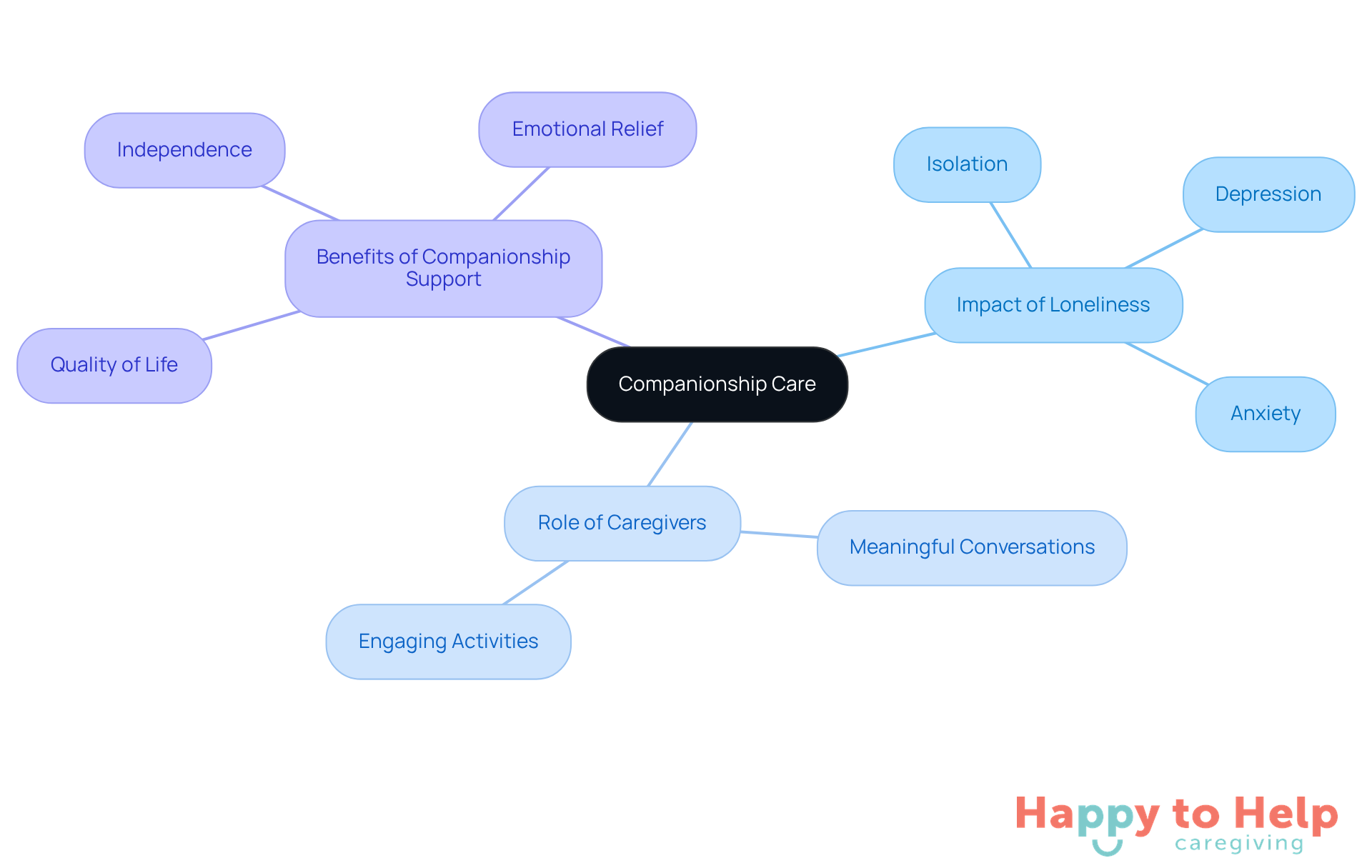
To facilitate a smoother recovery process, caregivers can implement several practical strategies:
- Medication Management: Create a clear schedule for medications, using pill organizers to prevent confusion.
- Mobility Assistance: Encourage gentle exercises and provide support during movement to enhance confidence and safety.
- Emotional Support: Regularly check in on the patient’s emotional state, offering a listening ear and reassurance.
By addressing these key areas, caregivers can ensure a safer and more effective recovery for their loved ones.
Respite Care: Supporting Family Caregivers and Preventing Burnout
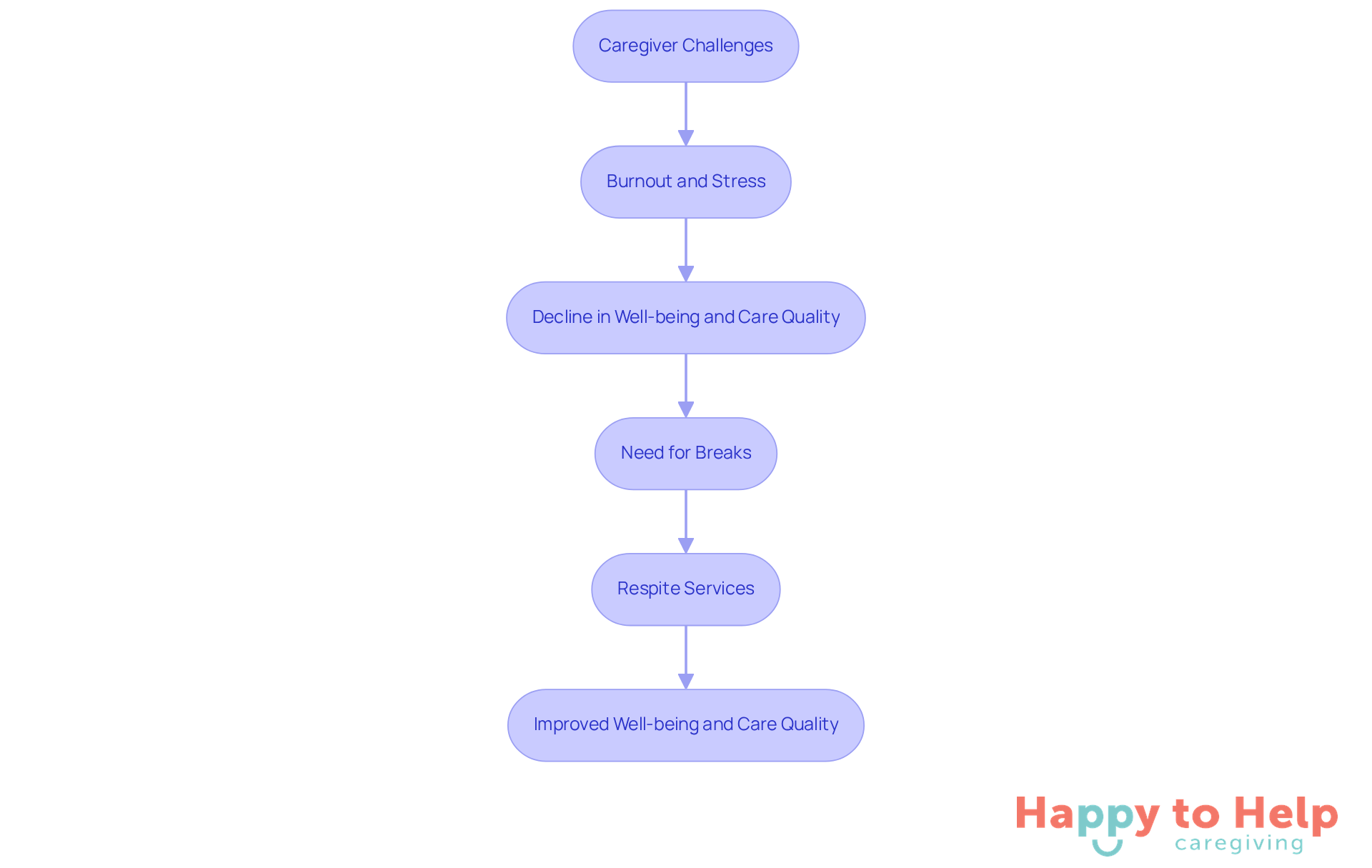
Caregivers often face significant challenges, including burnout and stress from their demanding roles. This can lead to a decline in their overall well-being and the quality of care they provide. Without adequate breaks, caregivers may struggle to maintain their physical and emotional health, which ultimately affects their ability to support those in need.
Respite services offer a practical solution to this pressing issue. By providing temporary relief for family supporters, these services enable caregivers to take essential breaks from their support duties. This not only helps to alleviate stress but also enhances their overall well-being. When caregivers have the opportunity to rejuvenate, they can return to their roles with renewed energy and focus, ultimately improving the standard of assistance given to clients.
Palliative Support Care: Enhancing Quality of Life for Individuals with Serious Illnesses
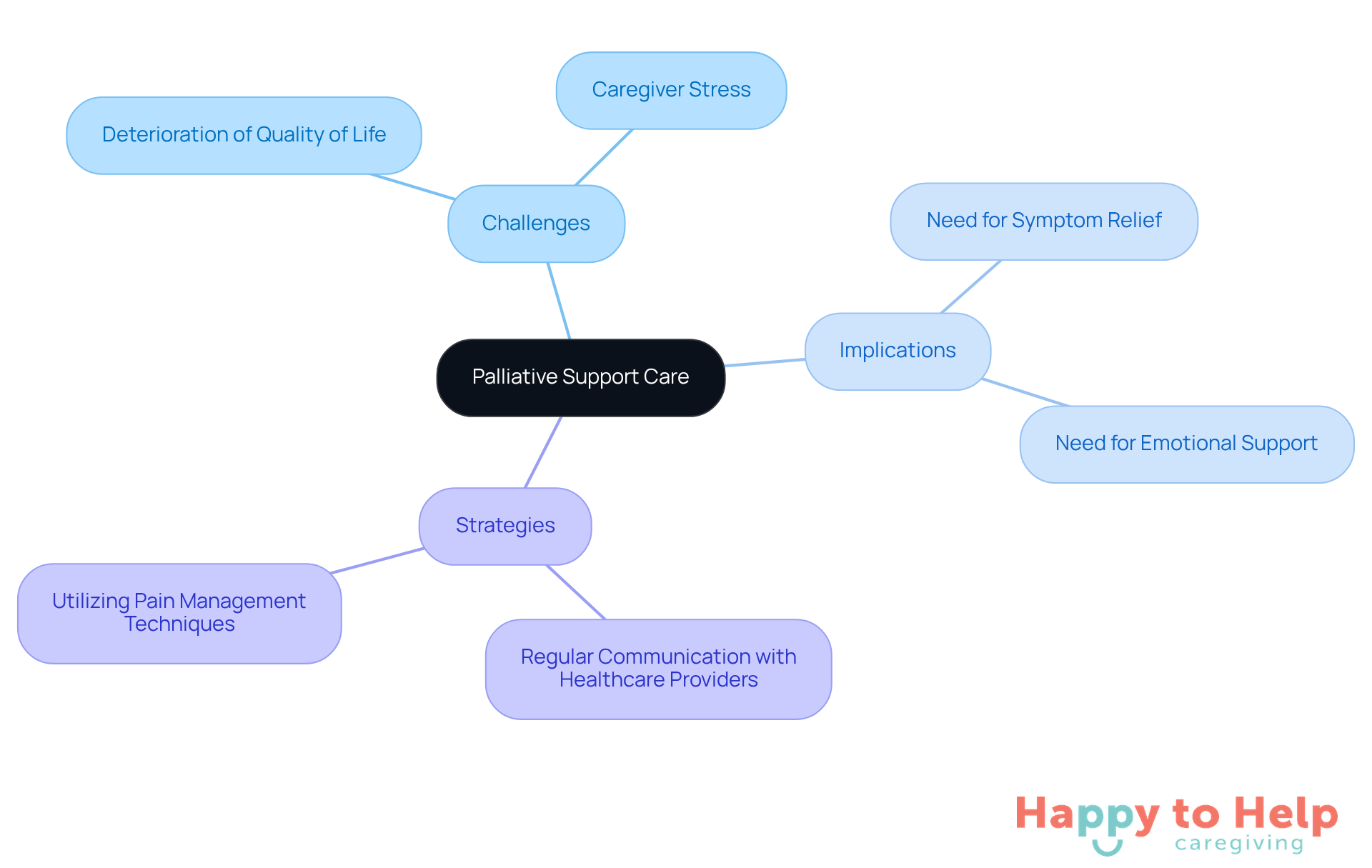
Palliative assistance addresses a significant problem: the quality of life for individuals facing serious illnesses often deteriorates without proper support. Caregivers may struggle to manage the complex needs of these individuals, leading to increased stress and emotional strain.
The implications of this challenge are profound. Without effective symptom relief and emotional support, patients may experience heightened discomfort and distress, which can further complicate their conditions. This is where palliative care steps in as a vital solution.
Palliative support focuses on alleviating symptoms, managing pain, and providing emotional aid. By addressing both physical and psychological needs, it ensures that clients maintain dignity and comfort during challenging times. Caregivers can implement practical strategies, such as:
- Regular communication with healthcare providers
- Utilizing pain management techniques
to enhance the quality of life for those they care for.
24/7 Availability: Flexible In-Home Care Tailored to Family Needs
Caregivers often face the challenge of needing support at unpredictable times. This uncertainty can lead to stress and anxiety, making it difficult for families to manage their caregiving responsibilities.
The 24/7 availability of private in home care near me services directly addresses this issue. Households can receive support whenever they require it through private in home care near me, allowing caregivers to adapt to evolving situations and provide prompt help. Families can rest assured knowing that assistance is always just a call away, significantly improving the overall caregiving experience.
Technology Integration: Enhancing Communication and Convenience in Caregiving
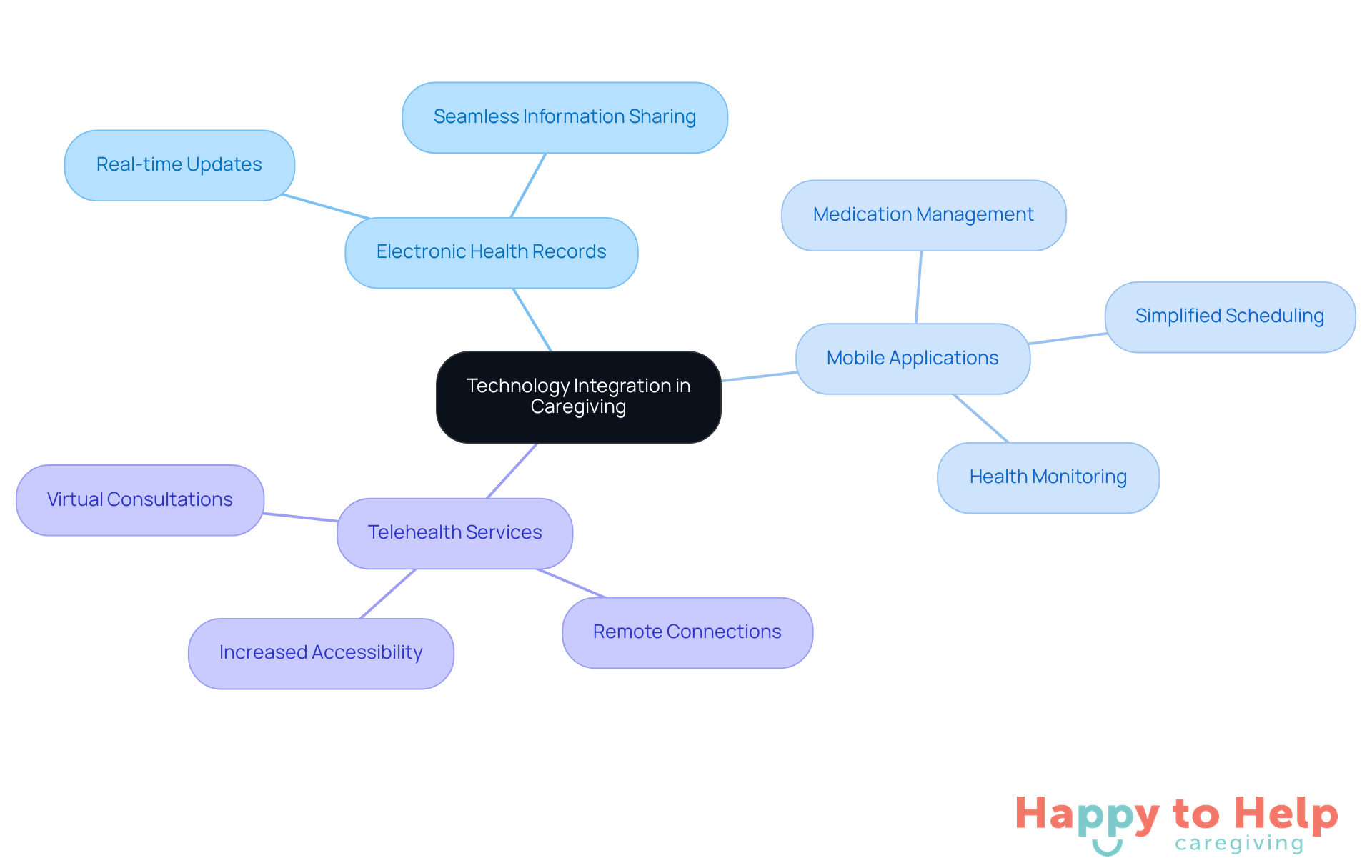
In caregiving, communication challenges can significantly hinder the quality of care provided. Caregivers often struggle to coordinate effectively with clients and their families, leading to misunderstandings and inefficiencies. This lack of clear communication can erode trust and transparency, which are essential for successful caregiving.
To address these issues, technology integration offers a practical solution. Tools such as:
- electronic health records
- mobile applications for scheduling
- telehealth services
can streamline communication processes. By enhancing coordination among caregivers, clients, and families, these technologies not only boost efficiency but also foster a more transparent and trusting environment.
Implementing these technological solutions can transform caregiving practices. For instance, electronic health records allow for real-time updates on patient information, ensuring that everyone involved is on the same page. Mobile applications can simplify scheduling, reducing the chances of missed appointments. Telehealth services provide a convenient way for caregivers to connect with clients remotely, making care more accessible.
By embracing these tools, caregivers can significantly improve their communication and coordination efforts, ultimately leading to better outcomes for clients and families.
Tailored Care Plans: Customizing Support to Meet Individual Needs
Caregivers often face the challenge of providing effective in-home assistance without a clear understanding of each client's unique needs. This can lead to a lack of personalized care, ultimately diminishing the quality of life for those receiving support.
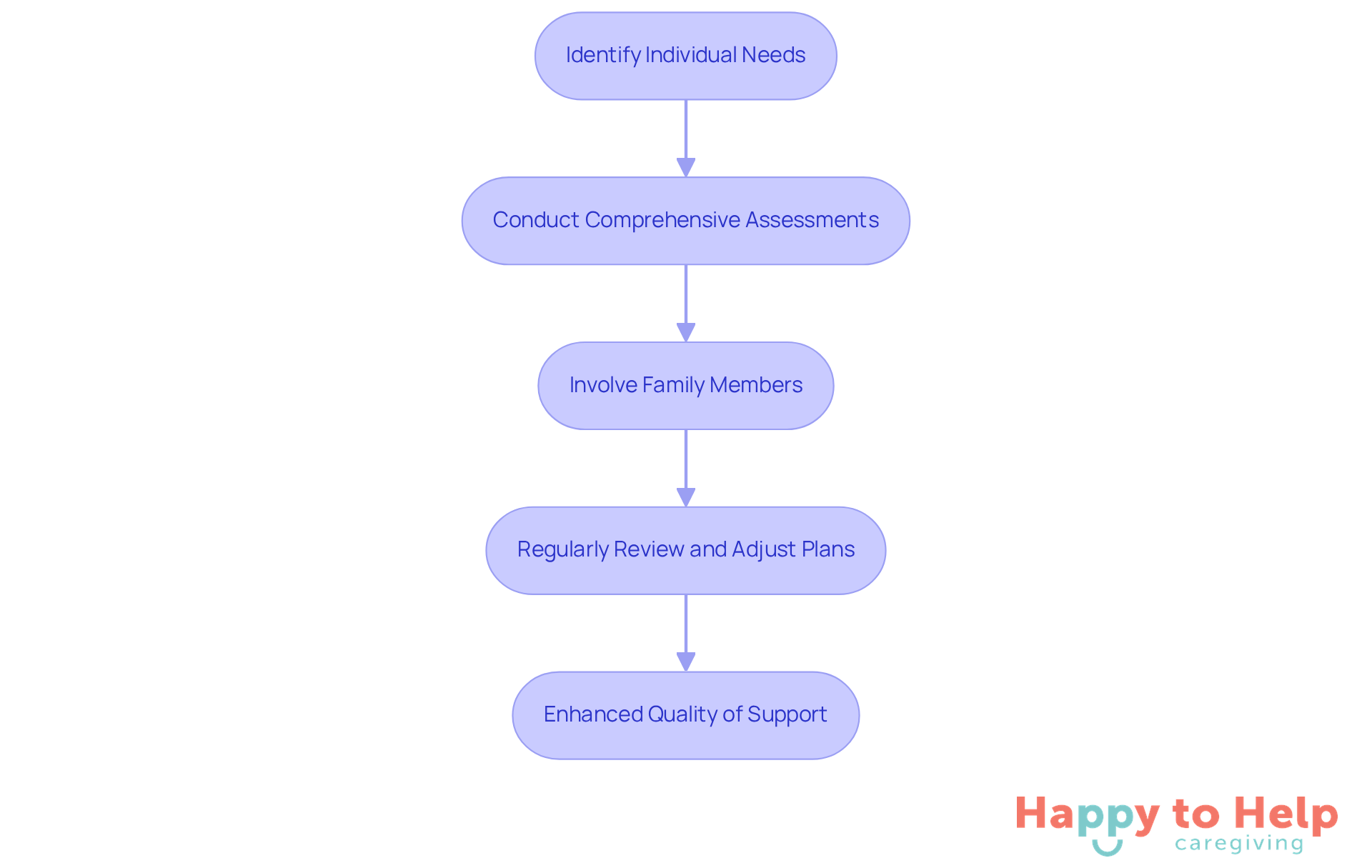
Customized support plans are essential in addressing this issue. By conducting thorough assessments and involving families in the planning process, providers can create tailored strategies that enhance overall well-being. This personalized approach not only meets specific preferences but also fosters a sense of agency and comfort for individuals receiving support.
To implement effective support plans, caregivers should consider the following actionable steps:
- Conduct comprehensive assessments to identify individual needs.
- Involve family members in the planning process to ensure all perspectives are considered.
- Regularly review and adjust support plans based on feedback and changing circumstances.
By prioritizing customized support, caregivers can significantly improve the quality of care and enhance the lives of those they assist.
Experienced Caregivers: Ensuring High-Quality, Compassionate Support
Caregivers often face the challenge of providing high-quality support that meets the unique needs of each individual. Without the right expertise, this can lead to a lack of trust and rapport between caregivers, clients, and their families, ultimately affecting the quality of care provided.
Experienced caregivers bring a wealth of knowledge and compassion to private in home care near me. Their training and hands-on experience enable them to deliver tailored support that not only enhances the caregiving experience but also fosters a positive and supportive environment. By establishing trust and rapport, they ensure that clients and their relatives feel secure and valued.
Family Dynamics: Strengthening Relationships Through In-Home Care
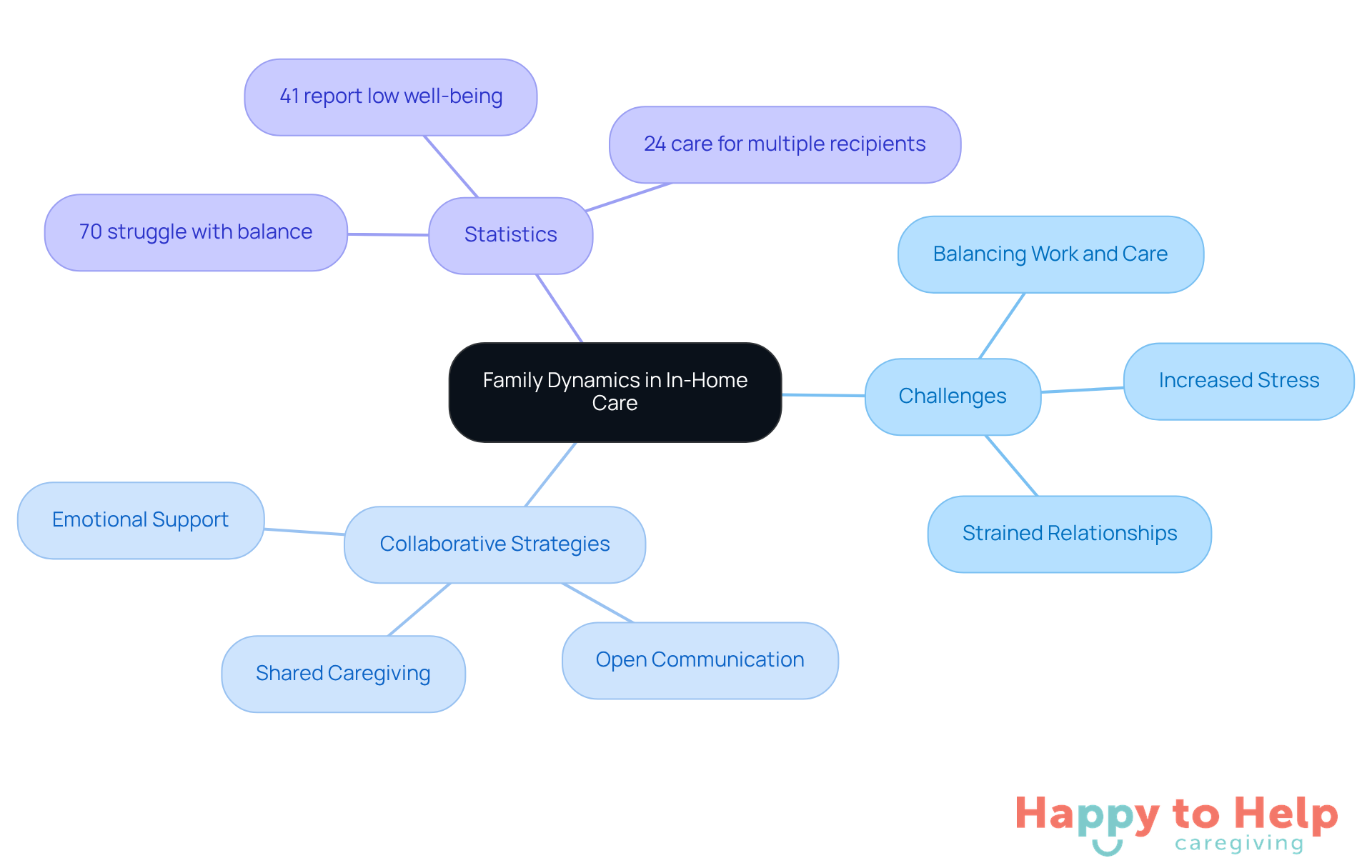
In-home care presents a significant challenge for many families, particularly when it comes to balancing caregiving responsibilities with professional obligations. Nearly 70% of household supporters struggle to juggle their jobs alongside caregiving tasks, leading to increased stress and strained relationships. This situation not only affects the caregivers but also impacts the emotional well-being of those receiving care.
To address these challenges, families can adopt a shared caregiving approach. By encouraging collaboration and open communication among household members, caretakers can take on specific duties, allowing others to focus on providing emotional support and cherishing quality moments with their loved ones. This strategy not only alleviates stress but also strengthens relationships, fostering a more supportive environment for everyone involved.
Effective communication is crucial, especially when caring for end-of-life patients. Therapists emphasize that "open communication, active listening, and empathy are essential tools for resolving conflicts in caregiving." By incorporating family support into the caregiving process, families can collectively tackle challenges, ultimately enhancing the quality of support and emotional well-being for both providers and recipients.
Moreover, with 41% of support providers reporting low overall well-being-32% higher than non-support providers-it's clear that collaborative care strategies are essential. The increasing complexity of caregiving roles is evident, with 24% of caregivers now caring for two or more recipients, up from 18% in 2015. This highlights the necessity for family collaboration to ensure that all members feel supported and engaged.
Your Path Forward
In-home care services address a pressing problem for family caregivers: the challenge of balancing their own well-being with the needs of their loved ones. Caregiving can be overwhelming, leading to emotional and physical strain. This situation not only affects caregivers but also impacts the quality of life for seniors and individuals with special needs.
The implications of inadequate support are significant. Loneliness can set in for both caregivers and their loved ones, and without proper assistance, recovery from hospital stays can be prolonged. Additionally, caregiver burnout is a real concern, often leading to a decline in the caregiver's health. This is where in-home care services come into play, offering a solution that fosters emotional well-being and independence.
Private in-home care provides several key benefits:
- Companionship that alleviates loneliness
- Support during post-hospital recovery
- Respite care that helps prevent caregiver burnout
Moreover, the integration of technology enhances communication, ensuring that families stay connected and informed. These elements create a nurturing environment that leads to better outcomes for clients and their families.
As the demand for personalized in-home care continues to rise, families are encouraged to explore local options. Tailored support can significantly enhance the lives of loved ones while also strengthening the caregiver's well-being. By investing in compassionate care, families can navigate the complexities of caregiving with greater ease and confidence, ensuring that everyone involved receives the support they need.
https://iframe.tely.ai/cta/eyJhcnRpY2xlX2lkIjogIjY5MjRmMjEwY2Q1NjY3YWUxYjQzNTcxZSIsICJjb21wYW55X2lkIjogIjY4ZWU1ZGNhNzMxNzYyNTU3ZjNjOTVjMSIsICJpbmRleCI6IG51bGwsICJ0eXBlIjogImFydGljbGUifQ==Frequently Asked Questions
What is the main challenge of caregiving for seniors and individuals with special needs?
The main challenge is the struggle to find adequate support that meets the unique needs of loved ones, which can lead to frustration and helplessness for both caregivers and those they care for.
Why is there a growing demand for home support services?
The demand for home support services is increasing due to the aging population, with demographic trends indicating that 75% of seniors prefer to age in place, highlighting the need for effective in-home assistance.
What does Happy to Help Caregiving specialize in?
Happy to Help Caregiving specializes in providing customized in-home assistance that enhances the quality of life for seniors and individuals with special needs through personalized support plans.
How does personalized care impact clients?
Personalized care caters to individual needs and preferences, leading to increased satisfaction and happiness among clients. It also incorporates technology for safety and health monitoring, empowering seniors to maintain their independence.
What role does companionship care play in supporting seniors?
Companionship care alleviates loneliness among seniors, which can significantly impact their emotional well-being. Caregivers engage clients in meaningful conversations and activities, fostering a sense of belonging and purpose.
How does companionship care affect the emotional well-being of seniors?
Companionship care restores quality of life, independence, and confidence, making it essential for enhancing the emotional well-being of seniors.
What challenges do individuals face during post-hospital recovery?
Individuals returning home after medical procedures may struggle with medication management, mobility, and emotional well-being, which can lead to complications and potential readmission.
What role do caregivers play in post-hospital recovery?
Caregivers provide essential assistance by ensuring adherence to medication schedules, helping with mobility, and offering emotional support, which enhances comfort and reduces the risk of readmission.
What practical strategies can caregivers implement for a smoother recovery?
Caregivers can create a clear medication schedule, encourage gentle exercises for mobility, and regularly check in on the patient's emotional state to provide reassurance and support.
List of Sources
- Happy to Help Caregiving: Personalized In-Home Care for Enhanced Quality of Life
- Home Care Industry Trends to Watch in 2025 (https://firstlighthomecare.com/blog/home-care-industry-trends)
- Top healthcare trends of 2026: Aging in place is driving innovation in home-based care and technology (https://definitivehc.com/blog/aging-in-place-driving-innovation)
- 2025 Home Care Statistics: Trends & Insights To Know (https://premierhcinc.com/blog/home-care-statistics)
- The Future of Aging: Is In-Home Care the New Standard? - WorldHealth.net (https://worldhealth.net/news/future-of-aging-is-in-home-care-new-standard)
- Trends and Innovations in Senior Care | Amada Blog (https://amadaseniorcare.com/2025/01/trends-and-innovations-in-senior-care)
- Companionship Care: Alleviating Loneliness and Enhancing Emotional Well-Being
- Combat Loneliness: The Benefits of Companion Care for Seniors (https://allheartcare.com/more-than-just-company-the-vital-role-of-companion-care-for-seniors)
- Benefits of Companion Care for Seniors in California - 2025 (https://findinghomecare.net/benefits-of-companion-care-for-seniors)
- Home Care Agency in Plantation, FL Near You | Skilled Nursing and Senior Home Care Services Serving Broward and Palm Beach Counties | Home Health Aide | Free Consult | 24-7 | Trust USA Home Health (https://trustusahomehealth.com/?p=2378)
- Older adults find support through health care companions (https://news-medical.net/news/20250924/Older-adults-find-support-through-health-care-companions.aspx)
- The Unbeatable Benefits of Companion Care for Seniors (https://comforcare.com/massachusetts/canton/resources/blog/the-unbeatable-benefits-of-companion-care-for-seniors)
- Post-Hospital Recovery Assistance: Ensuring Safe Transitions and Comfort at Home
- After the Hospital: How Home Health Care Supports Recovery at Home - Advanced Nursing & Home Care (https://advancednursing.care/blog/after-the-hospital-how-home-health-care-supports-recovery-at-home)
- 10 Essential Post-Hospital Recovery Assistance Services for Caregivers - Happy To Help (https://happytohelpcaregiving.com/10-essential-post-hospital-recovery-assistance-services-for-caregivers)
- Post-Hospital Discharge: Why In-Home Care Improves Recovery for Florida Seniors (https://visitingangels.com/pasco/news-info/post-hospital-discharge-why-in-home-care-improves-recovery/26199)
- Post-Hospital Home Care: The Key to a Smoother, Safer Recovery (https://heavenathomecare.com/how-post-hospital-home-care-helps-seniors-recover)
- Respite Care: Supporting Family Caregivers and Preventing Burnout
- Caregivers and the Importance of Respite Care (https://benedictineliving.org/resources/news/caregivers-and-the-importance-of-respite-care)
- How Does Respite Care Helps Prevent Caregiver Burnout (https://sundaleseniorliving.com/news-and-articles/the-role-of-respite-care-in-preventing-caregiver-burnout)
- Preventing Caregiver Burnout with Respite Care | The Herrick House (https://theherrickhouse.org/news-stories/all-news-stories/stories/2025/04/preventing-caregiver-burnout-with-respite-care)
- Caring For the Caregiver: Preventing Burnout - AMHC (https://amhc.org/news/caregiver)
- Improving Support for Family Caregivers (https://nationalacademies.org/news/2025/07/improving-support-for-family-caregivers)
- Palliative Support Care: Enhancing Quality of Life for Individuals with Serious Illnesses
- Palliative Care News | Duke Department of Medicine (https://medicine.duke.edu/palliative-care-news)
- Palliative Care News Archives (https://hospicenews.com/category/palliative-care-news)
- Palliative Care Improves Quality of Life (https://newsinhealth.nih.gov/2017/01/palliative-care-improves-quality-life)
- Palliative Care For Chronic Illness | Carolina Caring (https://carolinacaring.org/news/palliative-care-for-chronic-illnesses-improving-quality-of-life)
- Palliative Care News | Living with Serious Illness | Get Palliative Care (https://getpalliativecare.org/news)
- 24/7 Availability: Flexible In-Home Care Tailored to Family Needs
- 24/7 In Home Care Sacramento - HomeCare Professionals (https://hcprosonline.com/24-7-in-home-care-sacramento)
- Flexible Care Models Give Home Care Clients ‘What They Want When They Want It’ (https://homehealthcarenews.com/2025/10/flexible-care-models-give-home-care-clients-what-they-want-when-they-want-it)
- 2025 Home Care Statistics: Trends & Insights To Know (https://premierhcinc.com/blog/home-care-statistics)
- 10 Must-Know U.S. Home Care Industry Stats for 2025 - North American Community Hub (https://nchstats.com/us-home-care-industry-stats)
- Technology Integration: Enhancing Communication and Convenience in Caregiving
- HHS Launches New Caregiving AI Initiative to 'Spark Innovative Support' (https://hospicenews.com/2025/11/18/hhs-launches-new-caregiving-ai-initiative-to-spark-innovative-support)
- HHS Backs AI Innovation for America’s Caregivers | HHS.gov (https://hhs.gov/press-room/hhs-backs-ai-innovation-for-americas-caregivers.html)
- Technology improves caregiver experience for families dealing with dementia (https://news-medical.net/news/20250203/Technology-improves-caregiver-experience-for-families-dealing-with-dementia.aspx)
- How Technology Improves Communication Between Families And Care Staff (https://thehighpointresidence.com/blog/how-technology-improves-communication-between-families-and-care-staff)
- How Technology Enhances Communication in Senior Care (https://business.seminolebusiness.org/news/details/how-technology-enhances-communication-in-senior-care)
- Tailored Care Plans: Customizing Support to Meet Individual Needs
- The Importance of Personalized Care Plans (https://homecareadvisory.org/importance-personalized-care-plans)
- The Future of Private Home Care: What to Expect in 2025 (https://anodyne-services.com/2024/08/14/the-future-of-private-home-care-what-to-expect-in-2025)
- Importance of Personalized Senior Home Care in Burlington NC (https://wisdomseniorcare.com/the-importance-of-personalized-care-plans-for-seniors)
- Growing Demand for Home Care Services: Insights & Statistics (https://lovinghomecareinc.com/home-care-industry-statistics)
- How Personalized Care Plans Improve Quality of Life for Seniors (https://seniorcarecompanions.com/personalized-care-plans-quality-of-life-for-seniors)
- Experienced Caregivers: Ensuring High-Quality, Compassionate Support
- D-CARE study finds caregiver satisfaction higher with dementia care programs than usual care (https://uclahealth.org/news/release/d-care-study-finds-caregiver-satisfaction-higher-with)
- New Alzheimer’s Association Report Reveals Top Stressors for Caregivers and Lack of Care Navigation Support and Resources (https://alz.org/news/2024/new-alzheimers-association-report-reveals-top-stressors-caregivers)
- Caregiver Statistics: Demographics (https://caregiver.org/resource/caregiver-statistics-demographics)
- The Caregiving Landscape: Data & Insights on the Caregiver Experience in the U.S. (https://caregiveraction.org/caregiver-statistics)
- Home-Based Care Companies Improve Outcomes By Training Family Caregivers (https://homehealthcarenews.com/2025/10/home-based-care-companies-improve-outcomes-by-training-family-caregivers)
- Family Dynamics: Strengthening Relationships Through In-Home Care
- 2025 Home Care Statistics: Trends & Insights To Know (https://premierhcinc.com/blog/home-care-statistics)
- Family Dynamics in Home Care (https://regencyhcs.com/blog/family-dynamics-in-home-care)
- The Caregiving Landscape: Data & Insights on the Caregiver Experience in the U.S. (https://caregiveraction.org/caregiver-statistics)
- 39 Caregiver Statistics, Facts & Trends (https://humancareny.com/blog/39-caregiver-statistics-facts-trends)