

For families in our service areas
For families in our service areas, this guide explains caregiving and how non-medical in-home caregiving can support care planning in East Idaho, Treasure Valley & Magic Valley, Northern Wasatch, North Central West Virginia, and Northeast Ohio.
What You Need to Know About Services for 24 Hour Senior Care Near Me
Navigating the complexities of senior care can be an overwhelming endeavor for families. Caregivers often face significant emotional and physical demands, which can lead to stress and burnout. The need for reliable, compassionate assistance is paramount.
This is where comprehensive 24-hour in-home care services come into play. These services not only enhance the quality of life for seniors but also provide much-needed support for their families.
How can families ensure their loved ones receive the best care while maintaining their own well-being amidst the challenges of caregiving? This article explores ten essential services that can help families strike that balance.
Happy to Help Caregiving: Comprehensive 24/7 In-Home Care Services
Caregiving can be a challenging journey, especially for families supporting seniors and individuals with special needs. The emotional and physical demands can often feel overwhelming, leaving caregivers in need of reliable assistance.
Happy to Help Caregiving addresses this issue by offering a broad range of in-home assistance services, including 24 hour senior care near me, designed to support caregivers and their loved ones. Their services include:
- Companionship support
- Post-hospital recovery assistance
- Respite services
- Palliative support
Each service is tailored to improve the quality of life for clients, ensuring they receive compassionate care in the comfort of their own homes.
By focusing on maintaining independence and well-being, Happy to Help Caregiving provides a trusted solution for families looking for 24 hour senior care near me while navigating the complexities of caregiving. With their help, caregivers can find the support they need, allowing them to focus on what truly matters: the well-being of their loved ones.
Emotional Support: Alleviating Loneliness Through Companionship Care
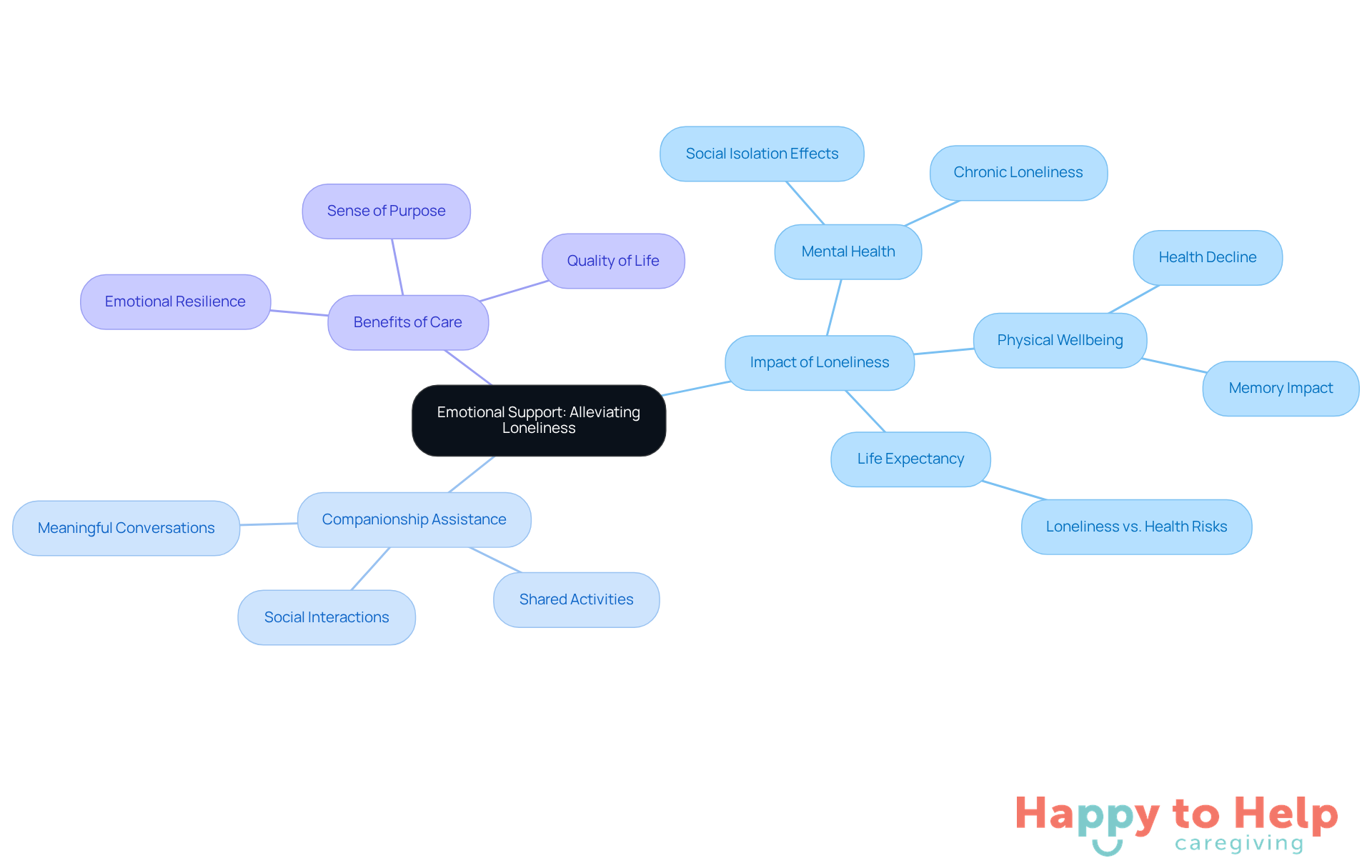
Loneliness among seniors is a significant issue that can severely impact their mental health. Research shows that over 70% of seniors with fair or poor mental health report feelings of social isolation. This isolation can lead to chronic loneliness, which affects memory, physical wellbeing, and even life expectancy, as noted by Sharon Morrisette.
To combat this problem, Happy to Help Caregiving offers companionship assistance, which provides essential emotional support. Caregivers engage clients through meaningful conversations, shared activities, and social interactions. These connections are vital for mental stimulation and emotional health.
Morrisette emphasizes that "Just a few hours of good company, attention, and friendship a week can enrich a senior’s life in multiple meaningful ways and help them to feel valued, seen, and heard." By nurturing these relationships, caregivers help seniors maintain a sense of purpose and belonging, significantly improving their overall quality of life.
In summary, companionship assistance not only alleviates feelings of loneliness but also promotes emotional resilience, allowing seniors to thrive in their familiar environments.
Personalized Care Plans: Tailoring Support to Individual Needs
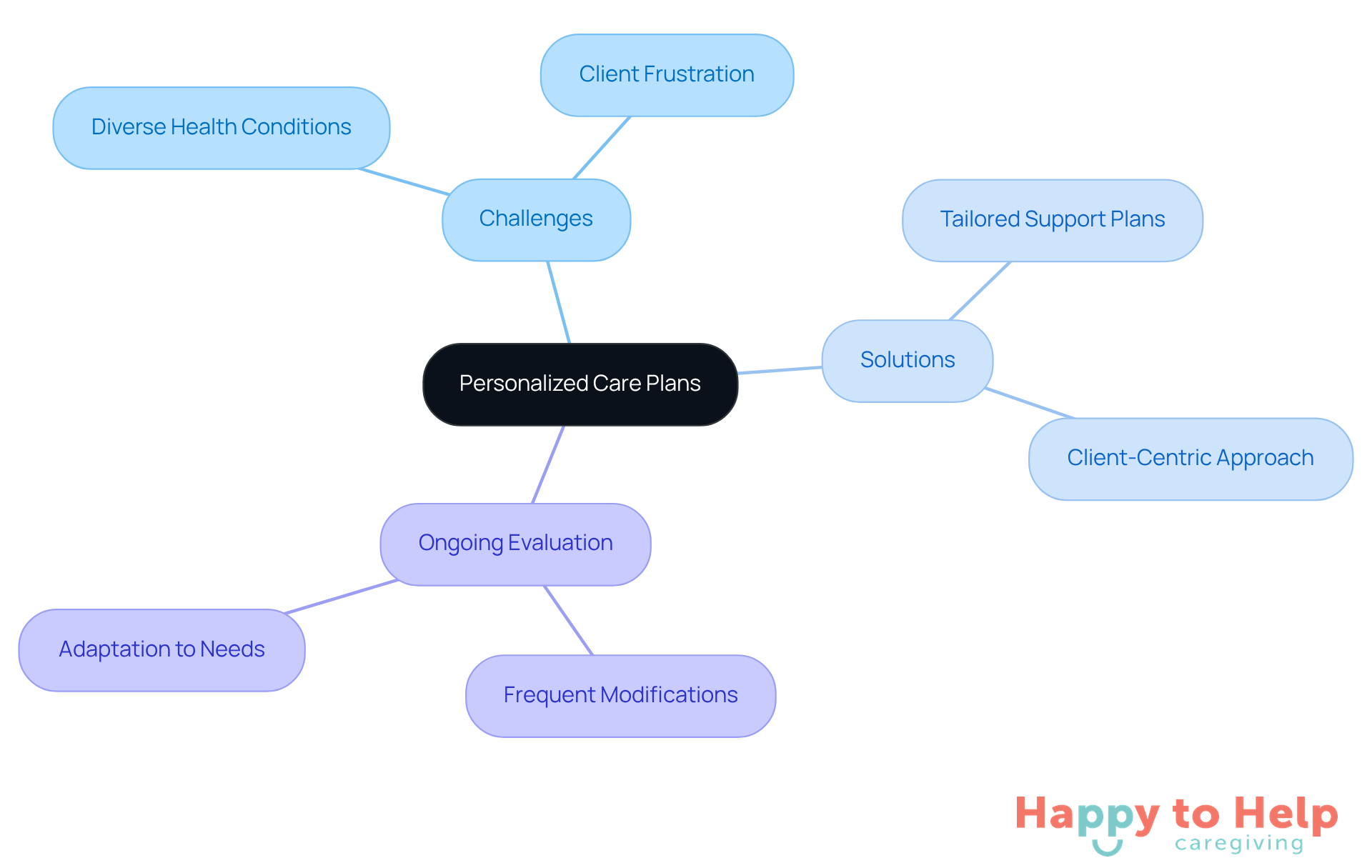
Caregivers often face the challenge of providing personalized support to clients with diverse health conditions and lifestyles. Without tailored assistance, clients may struggle to achieve their objectives, whether that involves daily tasks, medication management, or emotional support. This can lead to frustration for both caregivers and clients alike.
At Happy to Help Assistance, we recognize these challenges and offer a solution through personalized support plans. Each plan is crafted with the client's specific health conditions, preferences, and lifestyle in mind. This approach ensures that caregivers can provide focused assistance that truly aligns with the client's goals.
Moreover, we conduct frequent evaluations and modifications of these plans. This ongoing process guarantees that support remains relevant and effective as clients' needs evolve. By implementing such personalized strategies, caregivers can enhance their effectiveness and improve the overall well-being of those they assist.
Respite Care: Supporting Family Caregivers and Preventing Burnout
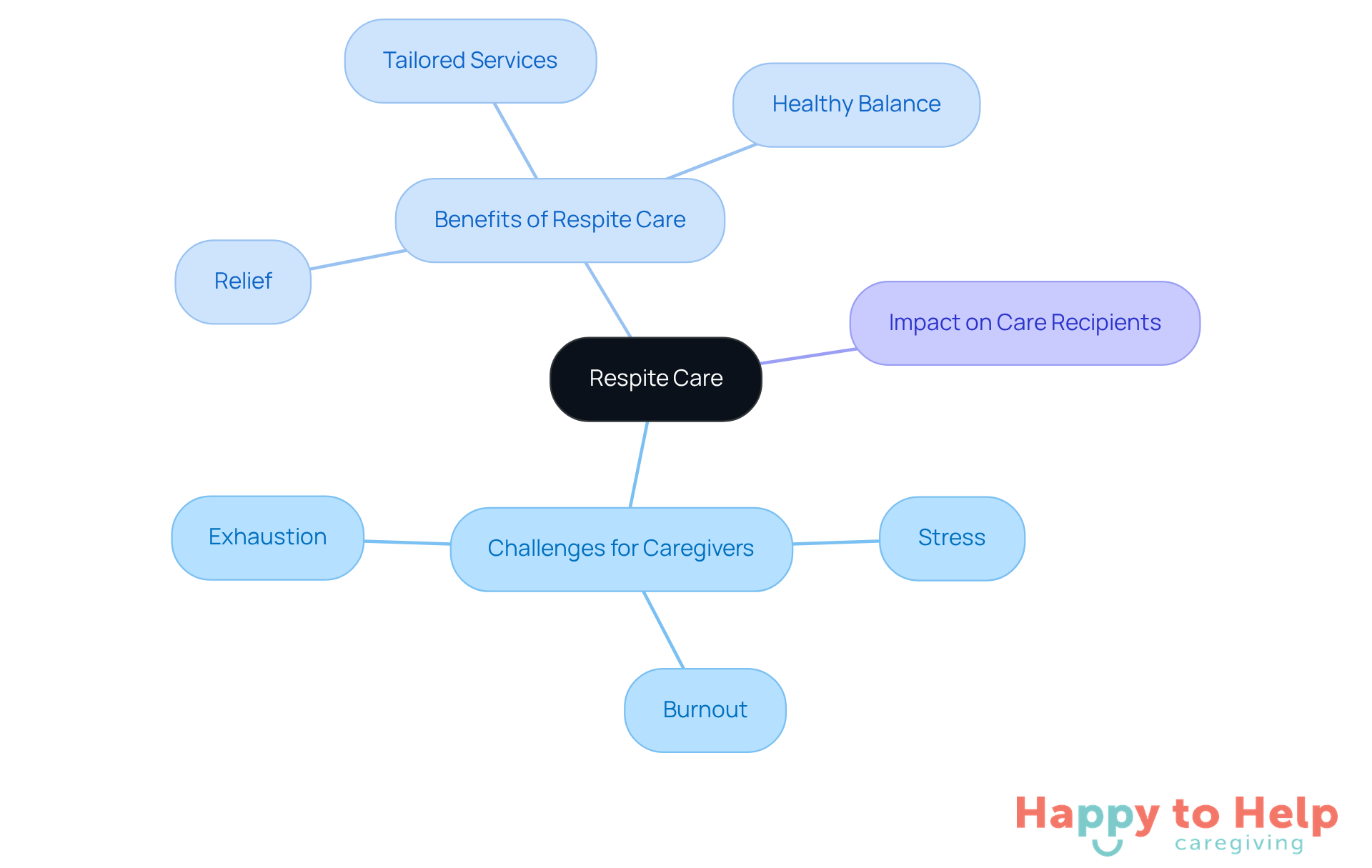
Caregiving can be a rewarding experience, but it often comes with significant challenges. Family caregivers frequently face stress and burnout due to the demands of supporting their loved ones. This situation can lead to feelings of exhaustion and overwhelm, impacting both the caregiver's well-being and the quality of care provided.
Respite assistance services from Happy to Help Caregiving offer a practical solution to this pressing issue. By providing crucial relief, these services allow caregivers to take necessary breaks without worrying about their loved ones' safety and well-being. Whether for a few hours or longer durations, respite care can be tailored to meet the specific needs of each household.
By alleviating the pressures on family caregivers, respite care helps maintain a healthy balance in caregiving relationships. This not only benefits the caregiver but also enhances the experience for the care recipient, fostering a more positive environment for both parties.
Post-Hospital Recovery Assistance: Ensuring Safe Transitions Home
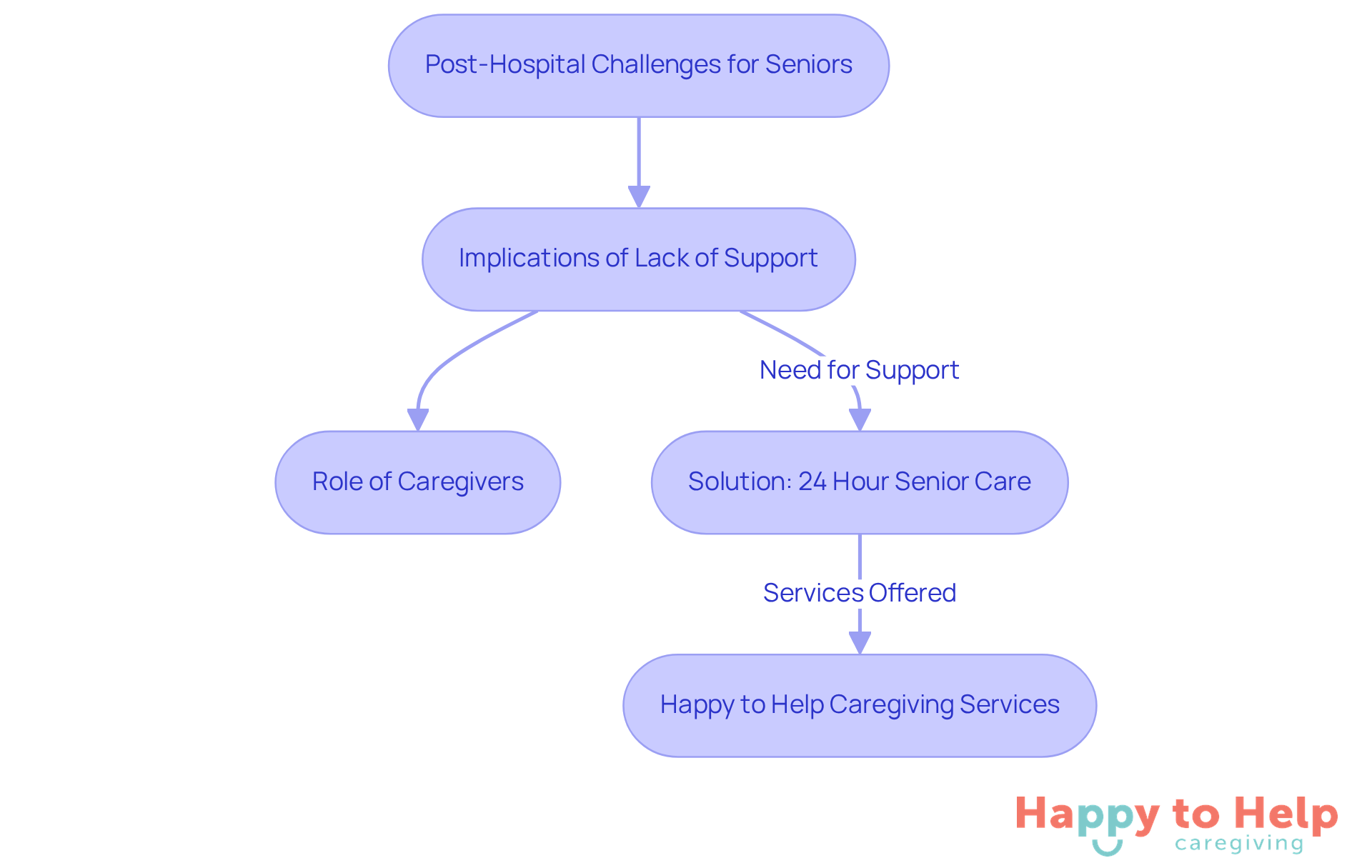
The Problem: After a hospital stay, seniors often face significant challenges when transitioning back home. This period can be fraught with difficulties, as nearly 20% of Medicare patients return to the hospital within 30 days of discharge. The lack of proper support during this critical transition can lead to complications and hinder recovery.
The Implications: Caregivers play a crucial role in this process. They provide essential services such as medication management, mobility assistance, and help with daily living activities. Without adequate support, seniors may struggle to adhere to discharge plans, increasing the risk of readmission and impacting their overall well-being.
The Solution: Happy to Help Caregiving specializes in 24 hour senior care near me, offering vital aid to seniors during their post-hospital recovery. By enabling seniors to regain their independence in a familiar environment, caregivers help create a safer and more comfortable recovery experience. Integrating smart home technology into recovery plans allows caregivers to track vital signs and provide proactive interventions, further enhancing the support offered.
As Andy Howard, CEO of HomeCare Professionals, emphasizes, "The journey from hospital to home represents a critical transition period for seniors, one that can determine whether recovery succeeds or complications arise." With the right assistance, such as 24 hour senior care near me, seniors can navigate this phase successfully, minimizing complications and enhancing their overall well-being.
Palliative Support Care: Enhancing Comfort for Seniors with Health Challenges
Seniors facing serious health challenges often struggle with discomfort and emotional distress. This situation can significantly impact their quality of life, making it essential for caregivers to provide effective support.
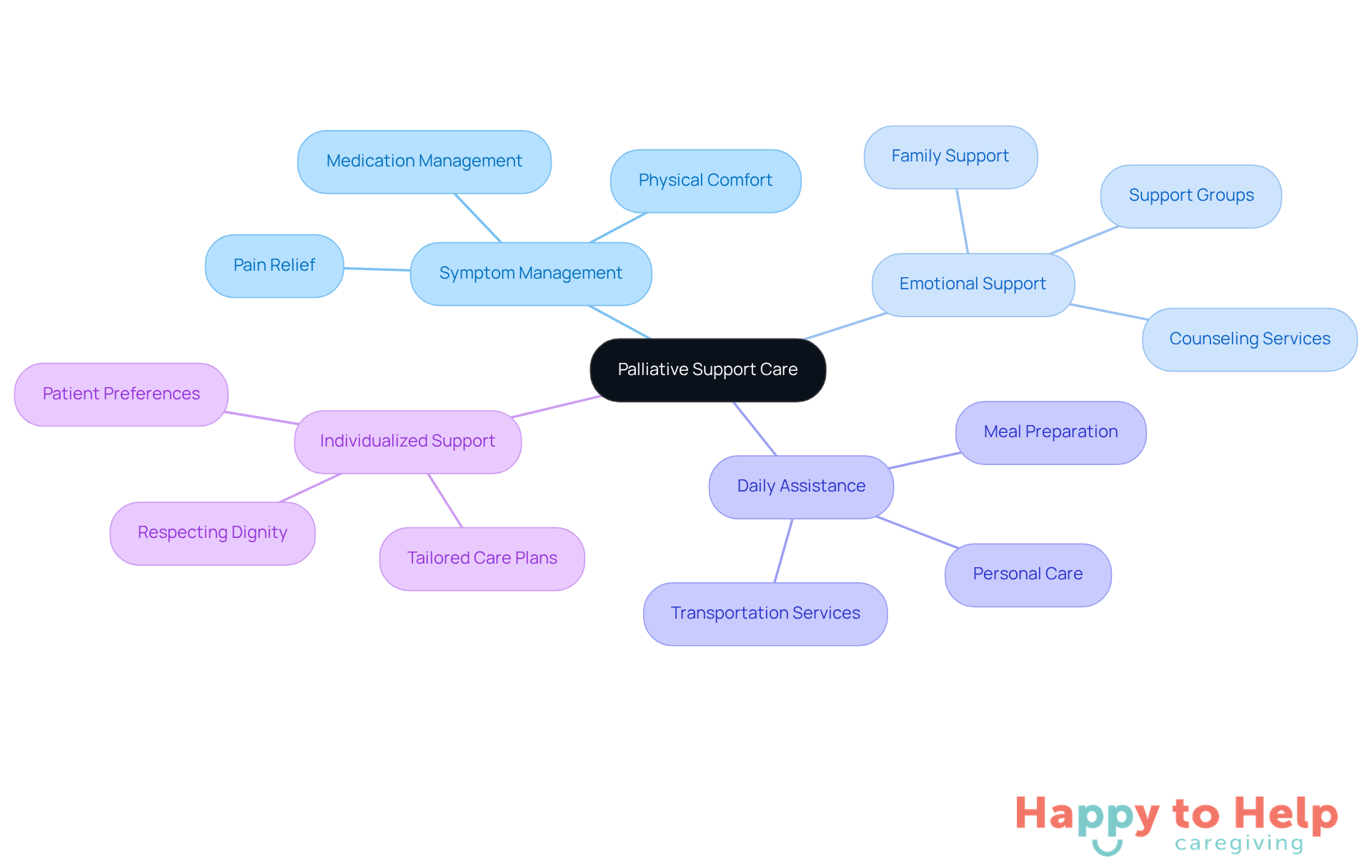
Palliative assistance from Happy to Help Caregiving is designed to enhance comfort and quality of life for these individuals. Caregivers focus on symptom management, emotional support, and assistance with daily activities, all while respecting each client's dignity and preferences. This holistic approach not only addresses physical needs but also fosters emotional well-being, allowing seniors to live as fully and comfortably as possible.
By concentrating on individualized support, caregivers help reduce distress and create a sense of security, which is crucial for those facing health challenges. As Dr. Lori Wiener states, the aim of palliative assistance is to alleviate symptoms and improve quality of life, underscoring the vital role of compassionate support in the lives of elderly patients.
With an estimated 56.8 million individuals requiring palliative support each year, the importance of these services is clear. Continuous initiatives like the Palliative Support and Hospice Education and Training Act (PCHETA) aim to improve access and training in palliative services, ensuring that more families can benefit from these essential offerings.
It's also important to clarify common misconceptions about palliative support. Unlike hospice services, palliative assistance can be provided alongside curative treatments and is not limited to end-of-life situations. Families seeking palliative support should discuss their loved ones' needs with healthcare providers to make informed choices about the best assistance available.
Flexible Scheduling: Adapting Care to Fit Family Needs
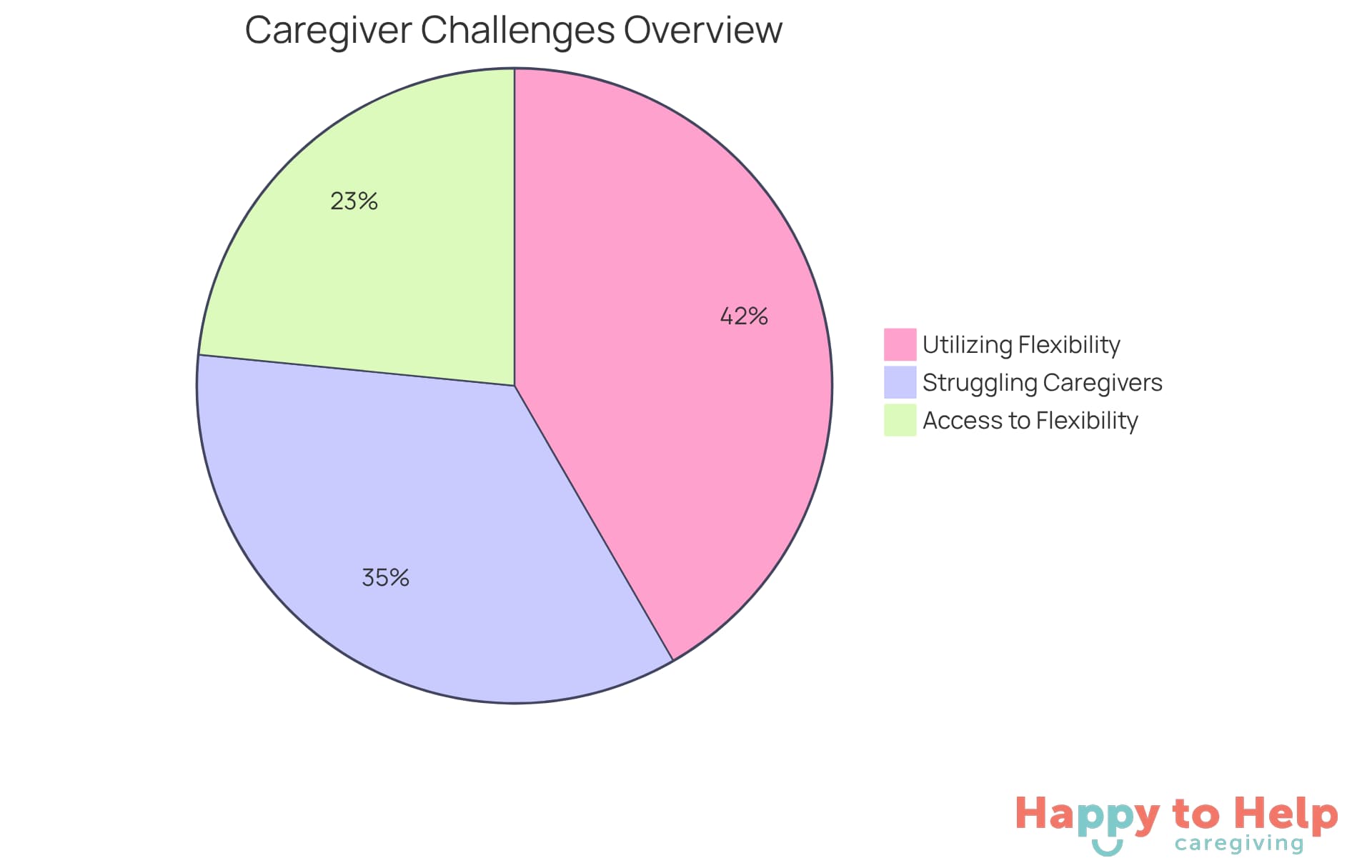
Caregivers often face a significant challenge: balancing work responsibilities with caregiving duties. This struggle can lead to increased stress and feelings of being overwhelmed. In fact, studies show that nearly 67 percent of caregivers find it difficult to manage both roles effectively.
The implications of this issue are profound. Many caregivers report feeling stretched thin, which can impact their well-being and the quality of care they provide. Approximately 45 percent of working caregivers have access to flexible work schedules, and 80 percent of those take advantage of this benefit. This flexibility is crucial for managing both work and caregiving responsibilities.
Happy to Help Caregiving addresses these challenges with adaptable scheduling, which is a cornerstone of their 24 hour senior care near me services. Caregivers are prepared to offer 24 hour senior care near me, providing customized support tailored to each household's unique needs, whether that means assistance during specific hours, overnight help, or ongoing support throughout the day. This adaptability not only alleviates stress for families but also ensures that seniors receive timely and appropriate care.
Relatives have expressed their appreciation for this tailored approach. One group noted, "The flexibility in scheduling has made all the difference for us, allowing us to manage our work and caregiving duties without feeling overwhelmed." By emphasizing flexible assistance, Happy to Help Caregiving empowers households to navigate their specific circumstances confidently, ensuring their loved ones receive the best possible support when they need it most.
Technology Integration: Enhancing Communication and Care Management
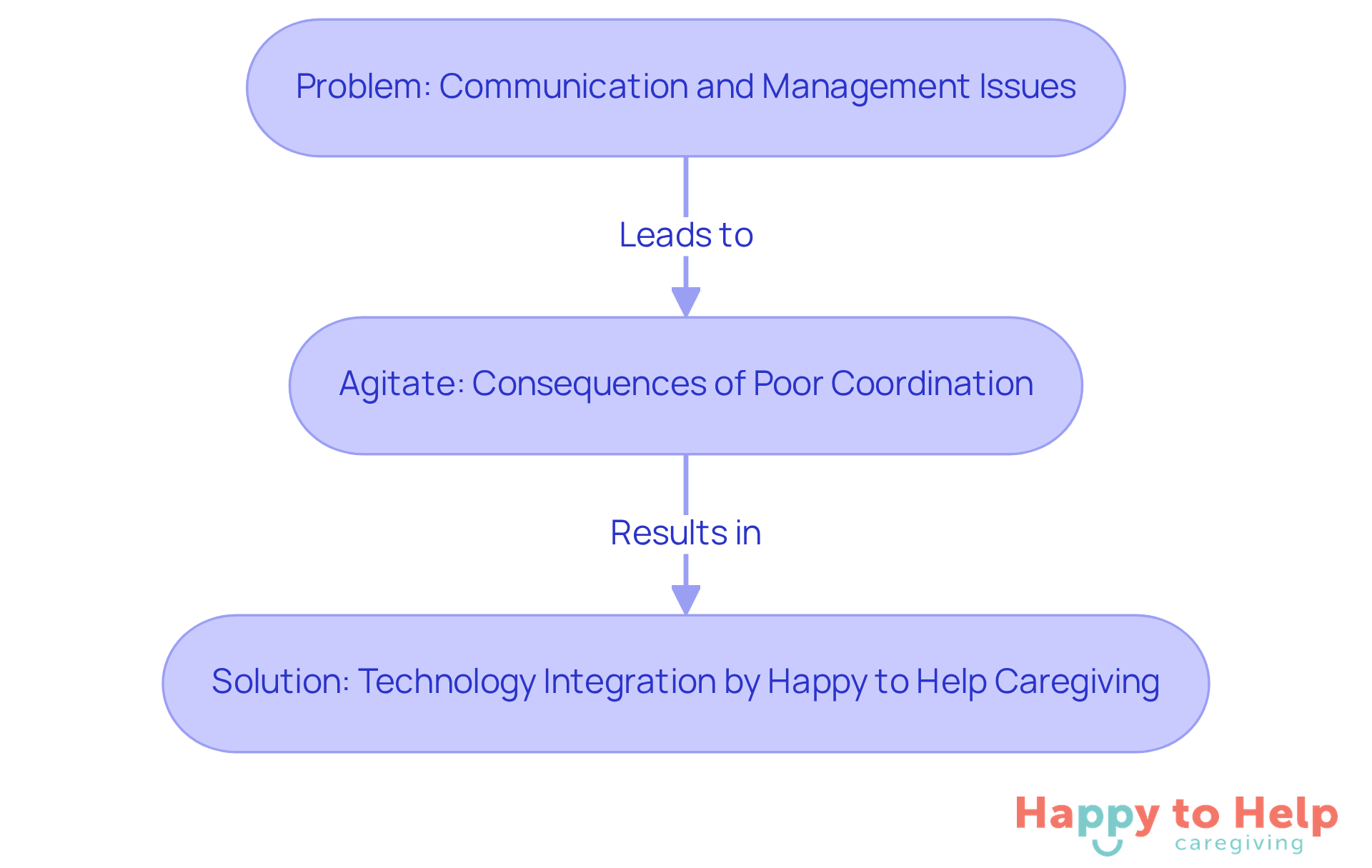
Problem: Caregivers often struggle with communication and management, which can complicate the caregiving process. With nearly 63 million Americans serving as family support providers, the need for effective solutions is more pressing than ever.
Agitate: This complexity can lead to misunderstandings and a lack of coordination among family members, leaving caregivers feeling overwhelmed. As the healthcare landscape evolves, the demand for transparency and responsiveness in caregiving becomes critical. Without the right tools, caregivers may find it challenging to manage their responsibilities effectively, impacting both their well-being and that of their loved ones.
Solution: Happy to Help Caregiving effectively employs technology to address these challenges. Features like online notes for relatives and automated payment options simplify the caregiving process, ensuring that households stay informed about their loved ones' support. This technological integration not only enhances operational efficiency but also fosters a collaborative atmosphere, enabling relatives to actively participate in the well-being of their loved ones. By embracing these digital solutions, caregivers can better manage their duties and improve overall well-being for both themselves and those they support.
24/7 Caregiver Availability: Ensuring Constant Support for Seniors
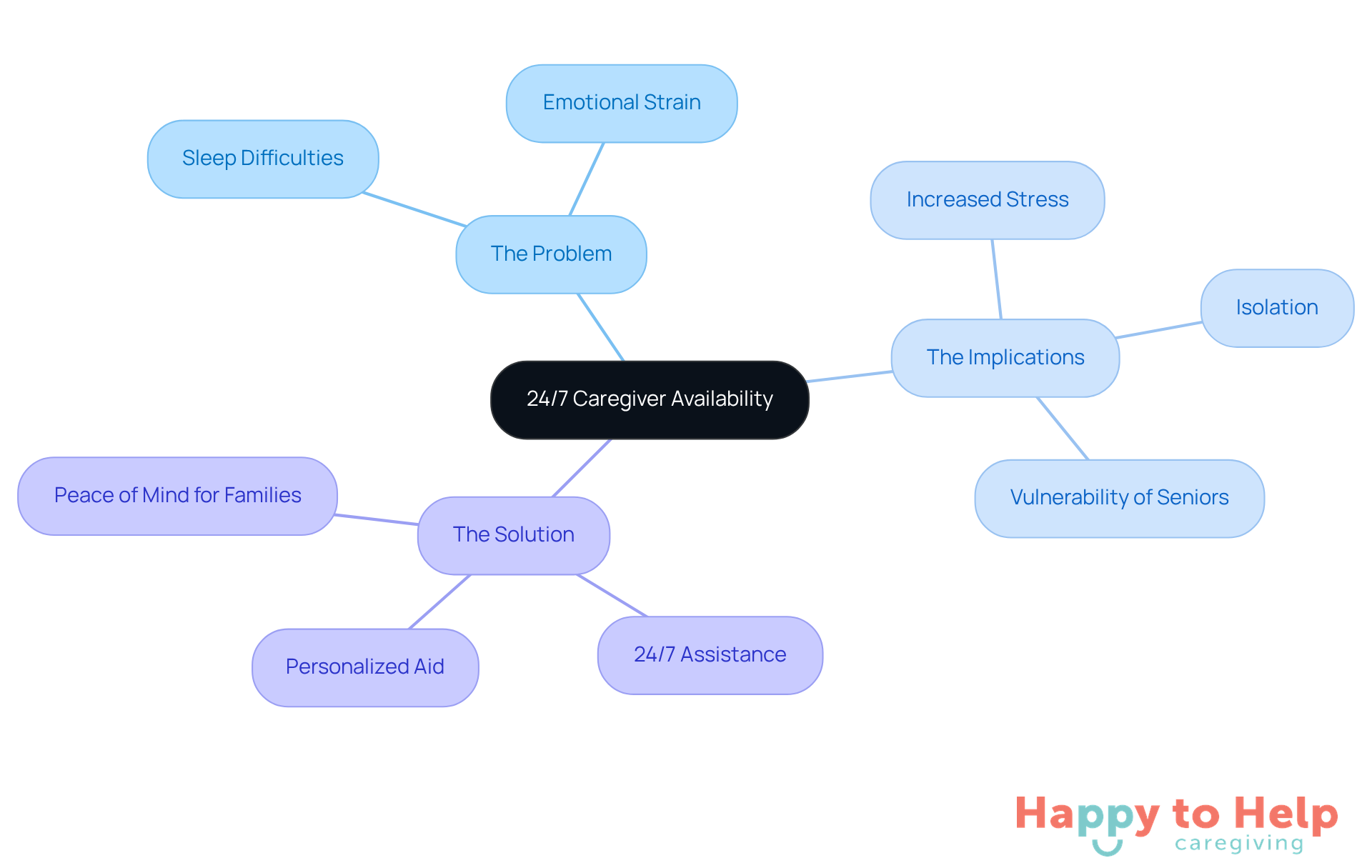
The Problem: Caregiving can be a daunting task, especially for family members who often juggle multiple responsibilities. Many caregivers face significant challenges, including sleep difficulties and emotional strain. According to the National Alliance for Caregiving, 43% of family providers report sleeping difficulties, underscoring the need for reliable support.
The Implications: Without adequate assistance, caregivers may struggle to provide the necessary care for their loved ones. This can lead to feelings of isolation and increased stress, which can negatively impact both the caregiver's and the senior's well-being. Seniors with chronic conditions or mobility challenges are particularly vulnerable, as they require consistent support to maintain their health and safety.
The Solution: Happy to Help Caregiving offers 24 hour senior care near me, providing 24/7 assistance to ensure that seniors receive personalized aid tailored to their unique needs. This around-the-clock care is crucial for individuals recovering from surgery or managing chronic conditions. With 24 hour senior care near me, families can rest assured knowing their loved ones are never alone, as help is always just a call away.
The presence of a support person not only enhances physical safety but also alleviates feelings of loneliness, significantly reducing the risk of depression and cognitive decline. This model of care fosters a sense of security and comfort, allowing seniors to thrive in their familiar surroundings while receiving the necessary assistance to maintain their independence.
A case study on 'Peace of Mind for Families' demonstrates how employing a personal attendant offers families reassurance, knowing their loved ones are receiving professional care and assistance. By choosing Happy to Help Caregiving, families can ensure that their loved ones receive the support they need, allowing everyone to focus on what truly matters.
Personalized Attention: Building Trust and Satisfaction in Care
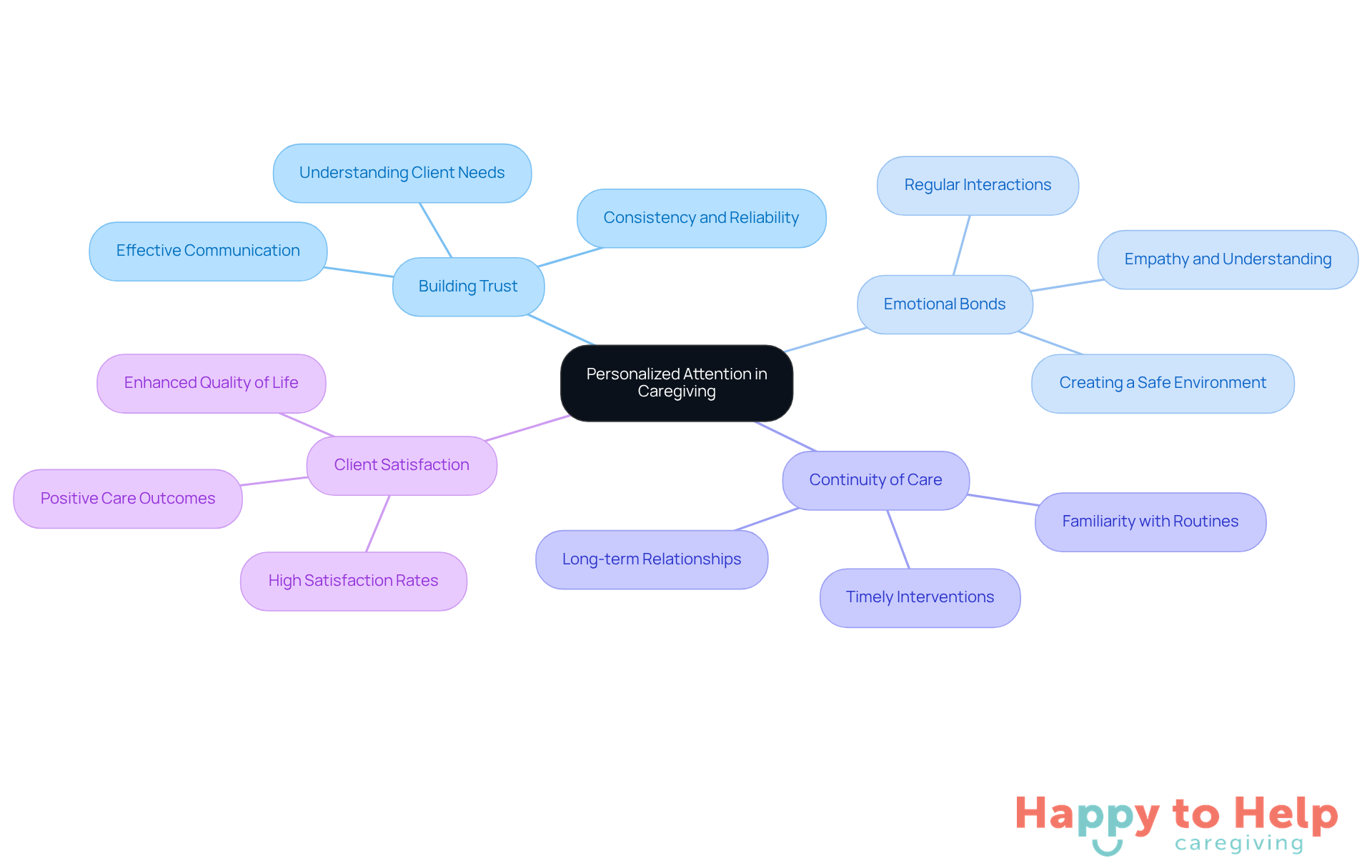
At the heart of Happy to Help Caregiving's philosophy lies a significant challenge: establishing trust in caregiver-client relationships. This trust is essential for effective caregiving, yet it can be difficult to achieve without personalized attention. Caregivers must invest time in understanding each client's unique preferences, history, and needs. This individualized approach not only enhances client satisfaction but also fosters a sense of security and comfort, allowing seniors to thrive in their familiar home environments.
Regular interactions play a crucial role in building trust. When caregivers become recognizable figures, clients can depend on them, transforming assistance into a collaborative effort rooted in mutual respect and understanding. By emphasizing emotional bonds, caregivers create an environment where clients feel valued and encouraged to express their needs. This open communication leads to more effective and compassionate support.
Continuity in support relationships is vital. It allows caregivers to grasp clients' routines, preferences, and health changes, ultimately improving the overall support experience. Emotional intelligence is key in this dynamic, enabling caregivers to interpret non-verbal cues and respond empathetically to clients' evolving needs. A recent study revealed that 92.8% of participants expressed satisfaction with the home care services provided, highlighting the effectiveness of personalized care.
As Paul Joiner, CEO of HHAeXchange, aptly states, "Successful client relationships are built on trust that is established through consistency, reliability, and solid communication." By focusing on these elements, caregivers can enhance their relationships with clients, ensuring that they receive the compassionate and tailored support they deserve.
Moving Forward with Services for 24 Hour Senior Care Near Me
Caregiving can be a challenging journey for families, especially when managing the complexities of senior care. Many caregivers experience stress and burnout, which can impact both their well-being and the quality of care provided to their loved ones. This is where Happy to Help Caregiving steps in, offering vital support that addresses these challenges head-on.
The implications of inadequate support are significant. Loneliness can take a toll on seniors, while caregiver burnout can lead to a decline in the quality of care. However, by utilizing services like companionship care, families can combat feelings of isolation for their loved ones. Personalized care plans ensure that individual needs are met, fostering a sense of independence and dignity.
Moreover, respite services play a crucial role in preventing caregiver burnout, allowing caregivers to recharge and maintain their own health. The integration of technology further enhances communication and management within caregiving, ensuring that families have access to support whenever they need it. With 24/7 caregiver availability, families can rest assured that their loved ones are receiving constant attention and care.
Ultimately, the significance of these services cannot be overstated. Families are encouraged to explore the various options available to them, recognizing that effective caregiving is a collaborative effort that requires trust, flexibility, and compassion. By choosing the right support, families can create a positive caregiving experience that not only meets their needs but also enriches the lives of their loved ones, allowing them to thrive in the comfort of their own homes.
https://iframe.tely.ai/cta/eyJhcnRpY2xlX2lkIjogIjY5MjRmMjExZWM0Y2FiOGU3NGVjMDExOSIsICJjb21wYW55X2lkIjogIjY4ZWU1ZGNhNzMxNzYyNTU3ZjNjOTVjMSIsICJpbmRleCI6IG51bGwsICJ0eXBlIjogImFydGljbGUifQ==Frequently Asked Questions
What services does Happy to Help Caregiving offer?
Happy to Help Caregiving offers a range of in-home assistance services, including companionship support, post-hospital recovery assistance, respite services, and palliative support, all designed to improve the quality of life for clients.
How does Happy to Help Caregiving support caregivers?
Happy to Help Caregiving provides reliable assistance that allows caregivers to focus on the well-being of their loved ones, helping them navigate the emotional and physical demands of caregiving.
What is the importance of companionship support for seniors?
Companionship support helps alleviate feelings of loneliness among seniors, which can significantly impact their mental health. It promotes emotional resilience and enhances their overall quality of life through meaningful interactions and activities.
How does loneliness affect seniors?
Loneliness can lead to chronic loneliness, impacting memory, physical well-being, and even life expectancy. Over 70% of seniors with fair or poor mental health report feelings of social isolation.
What are personalized care plans?
Personalized care plans are tailored support strategies developed for clients based on their specific health conditions, preferences, and lifestyles, ensuring that caregivers provide focused and relevant assistance.
How are personalized care plans adjusted over time?
Happy to Help Caregiving conducts frequent evaluations and modifications of personalized care plans to ensure that the support remains effective and relevant as clients' needs evolve.
List of Sources
- Happy to Help Caregiving: Comprehensive 24/7 In-Home Care Services
- State of home care in 2025 (https://mcknightshomecare.com/state-of-home-care-in-2025)
- Dementia caregivers get free support through new Medicare program (https://fox4news.com/news/dementia-caregivers-get-free-support-through-new-medicare-program)
- What’s Next For Home Health As The Industry Faces Its Biggest Test Yet (https://homehealthcarenews.com/2025/10/whats-next-for-home-health-as-the-industry-faces-its-biggest-test-yet)
- 24/7 In-Home Care Costs in 2025 - Assisted Living Magazine (https://assistedlivingmagazine.com/24-7-in-home-care-costs-in-2025)
- Home Care Industry Trends to Watch in 2025 (https://firstlighthomecare.com/blog/home-care-industry-trends)
- Emotional Support: Alleviating Loneliness Through Companionship Care
- Humana gives more than $12M in grants to prevent loneliness, support seniors’ emotional health (https://mcknightshomecare.com/news/humana-gives-more-than-12m-in-grants-to-prevent-loneliness-support-seniors-emotional-health)
- Trends in Loneliness Among Older Adults from 2018-2023 (https://ihpi.umich.edu/national-poll-healthy-aging/reports-and-resources/trends-loneliness-among-older-adults-2018-2023)
- Why Home Care Providers Are Increasingly Offering Companion Care Services for Seniors | Aaniie, formerly Smartcare Software (https://aaniie.com/news/why-home-care-providers-are-increasingly-offering-companion-care-services-for-seniors)
- (https://belleviecare.co.uk/support-advice/60-elderly-care-quotes-to-lift-your-spirits)
- Personalized Care Plans: Tailoring Support to Individual Needs
- The Future of Private Home Care: What to Expect in 2025 (https://anodyne-services.com/2024/08/14/the-future-of-private-home-care-what-to-expect-in-2025)
- Importance of Personalized Senior Home Care in Burlington NC (https://wisdomseniorcare.com/the-importance-of-personalized-care-plans-for-seniors)
- Customized Care at Home: The Benefits of Personalized Care Plans - VNA Health Group (https://vnahg.org/customized-care-at-home-the-benefits-of-personalized-care-plans)
- Creating Individualized Mental Health Care Plans for Seniors - Supportive Care (https://thesupportivecare.com/blog/creating-individualized-mental-health-care-plans-for-seniors)
- Why Personalized Home Healthcare is Essential for Elderly Care | HealthMax Home Health Care (https://healthmaxmn.com/blog/why-personalized-home-healthcare-is-essential-for-elderly-care)
- Respite Care: Supporting Family Caregivers and Preventing Burnout
- Funding Opportunity: National Lifespan Respite Care Program State Program Enhancement Grants | ACL Administration for Community Living (https://acl.gov/news-and-events/announcements/national-lifespan-respite-care-program-state-program-enhancement)
- Family Caregivers Struggling In Some States More Than Others (https://disabilityscoop.com/2025/10/31/family-caregivers-struggling-in-some-states-more-than-others/31710)
- Improving Support for Family Caregivers (https://nationalacademies.org/news/2025/07/improving-support-for-family-caregivers)
- New Report Reveals Crisis Point for America’s 63 million Family Caregivers (https://press.aarp.org/2025-07-24-New-Report-Reveals-Crisis-Point-for-Americas-63-million-Family-Caregivers)
- Post-Hospital Recovery Assistance: Ensuring Safe Transitions Home
- Post-Hospital Home Care: The Key to a Smoother, Safer Recovery (https://heavenathomecare.com/how-post-hospital-home-care-helps-seniors-recover)
- Hospital at home saves lives and money: CMS report (https://ama-assn.org/public-health/population-health/hospital-home-saves-lives-and-money-cms-report)
- Smart Homes and Post-Hospital Care: Supporting Seniors Aging in Place (https://hcprosonline.com/smart-homes-and-post-hospital-care-supporting-seniors-aging-in-place)
- Sent Home To Heal, Patients Avoid Wait for Rehab Home Beds - KFF Health News (https://kffhealthnews.org/news/article/patients-rehab-at-home-unclog-hospital-bed-nursing-home-waiting-list)
- Post-Hospital Care for Seniors Supports Healing (https://picseniorcare.com/how-post-hospital-care-for-seniors-makes-recovery-easier)
- Palliative Support Care: Enhancing Comfort for Seniors with Health Challenges
- Support for Serious Illness (https://newsinhealth.nih.gov/2025/07/support-serious-illness)
- Palliative care (https://who.int/news-room/fact-sheets/detail/palliative-care)
- Study: Few With Advanced Cancer Receive Palliative Care (https://breastcancer.org/news/study-palliative-care-underused-end-of-life)
- Palliative care and hospice poll reveals major gaps (https://ihpi.umich.edu/news-events/news/palliative-care-and-hospice-poll-reveals-major-gaps)
- ‘A good death’: How compassionate care helps people navigate the end of life (https://news.yale.edu/2025/10/13/good-death-how-compassionate-care-helps-people-navigate-end-life)
- Flexible Scheduling: Adapting Care to Fit Family Needs
- 9 Ways to Find Caregivers With Flexible Scheduling Options - MedCity News (https://medcitynews.com/2025/05/9-ways-to-find-caregivers-with-flexible-scheduling-options)
- Nurses are fleeing the workforce – can scheduling tech help? (https://healthcareitnews.com/news/nurses-are-fleeing-workforce-can-scheduling-tech-help)
- Caregiving While Working Calls for Workplace Flexibility (https://aarp.org/pri/topics/work-finances-retirement/employers-workforce/employer-caregiving-survey)
- The need for caregiving benefits may have reached a fever pitch (https://hrdive.com/news/sandwich-generation-needs-caregiving-benefits/802864)
- Return-to-Office Trends are Reshaping Caregiving at Home - Family & Nursing Care (https://familynursingcare.com/return-to-office-trends-are-reshaping-caregiving-at-home)
- Technology Integration: Enhancing Communication and Care Management
- HHS Launches $2M AI Initiative To ‘Transform’ Caregiving, Address Staffing Challenges (https://homehealthcarenews.com/2025/11/hhs-launches-2m-ai-initiative-to-transform-caregiving-address-staffing-challenges)
- HHS Backs AI Innovation for America’s Caregivers | HHS.gov (https://hhs.gov/press-room/hhs-backs-ai-innovation-for-americas-caregivers.html)
- HHS Launches New Caregiving AI Initiative to 'Spark Innovative Support' (https://hospicenews.com/2025/11/18/hhs-launches-new-caregiving-ai-initiative-to-spark-innovative-support)
- 2025: AI enhances personalized care; caregiver experience in the spotlight (https://healthcareitnews.com/news/2025-ai-enhances-personalized-care-caregiver-experience-spotlight)
- Tech-enabled caregiving can help dementia patients stay at home — perhaps for too long (https://statnews.com/2025/11/24/dementia-caregiving-technology-assistance)
- 24/7 Caregiver Availability: Ensuring Constant Support for Seniors
- Next Avenue Special Report: Caregiving in America - The 24/7 Caregiver (https://johnahartford.org/resources/view/next-avenue-special-report-caregiving-in-america-the-24-7-caregiver-1)
- Family Caregiver Annual Report and Statistics | SeniorLiving.org (https://seniorliving.org/research/family-caregiver-report-statistics)
- The Benefits of 24-Hour Home Care for Seniors Living Alone (https://lifesathomecare.com/the-benefits-of-24-hour-home-care-for-seniors-living-alone)
- The 10-Benefits of 24-Hour Home Care » LifeWorx Home Care (https://lifeworx.com/resources/articles/the-10-benefits-of-24-hour-home-care)
- Caregiver Statistics: Demographics (https://caregiver.org/resource/caregiver-statistics-demographics)
- Personalized Attention: Building Trust and Satisfaction in Care
- Home Care Clients Like Their Caregivers More Than Their Provider, Data Shows (https://homehealthcarenews.com/2024/08/home-care-clients-like-their-caregivers-more-than-their-provider-data-shows)
- Bolster Client-Caregiver Relationships With Trust & Respect (https://homecaremag.com/bolser-client-caregiver-relationships)
- The Caregiver-Client Bond: How the Right Match Builds Trust, Manages Stress, and Transforms Lives (https://rightathome.co.uk/enfield/news-item/the-caregiver-client-bond-how-the-right-match-builds-trust-manages-stress-and-transforms-lives)
- The Importance of Caregiver-Client Relationships in Senior Well-Being (https://homeinstead.com/home-care/usa/in/goshen/588/news-and-media/the-importance-of-caregiver-client-relationships-in-senior-well-being)
- An Assessment of Patient Satisfaction With Home Care Services in an Eastern City of Turkey - PMC (https://pmc.ncbi.nlm.nih.gov/articles/PMC12056709)