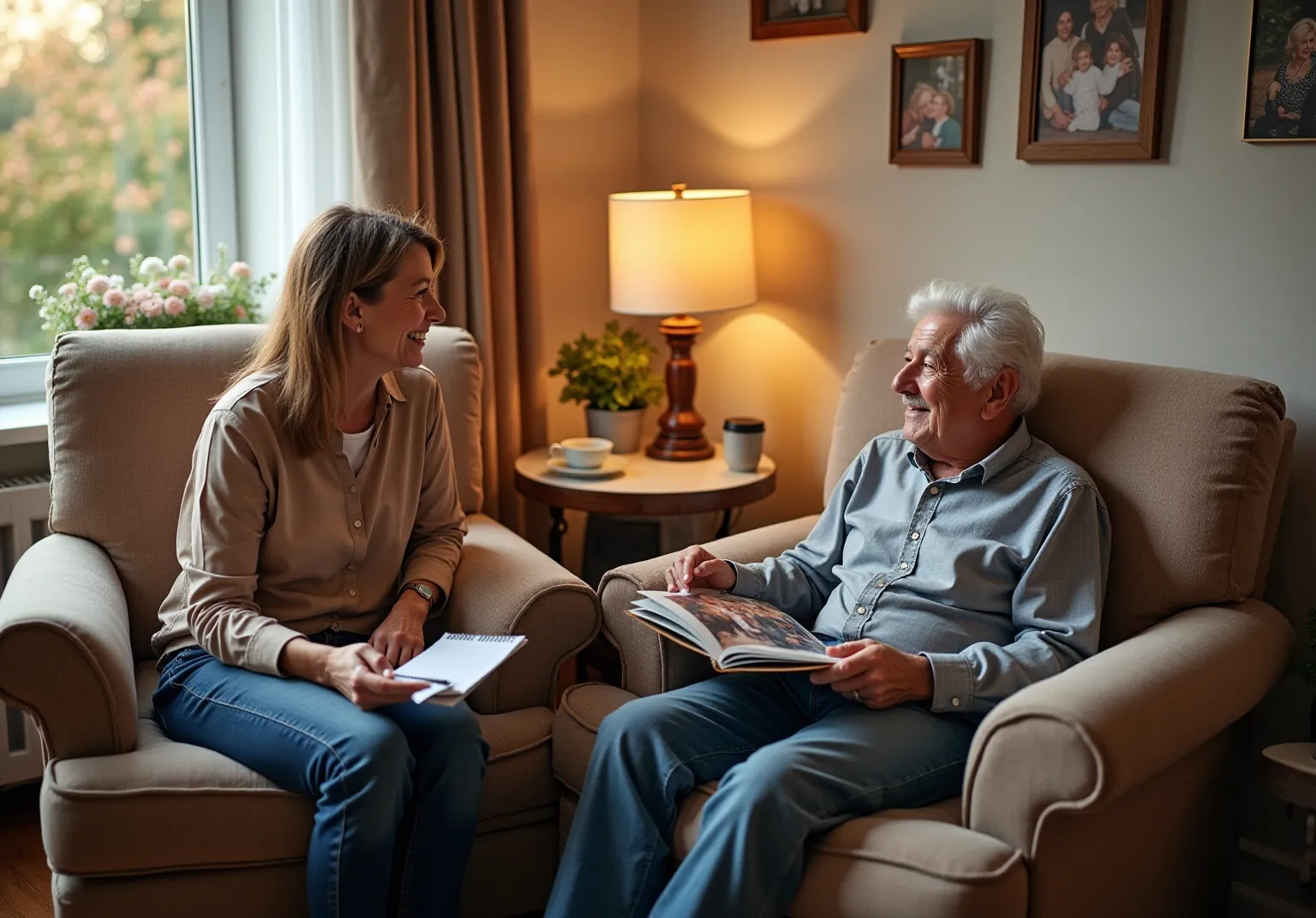
What You Need to Know About 10 Family History Questions to
Exploring family history presents a significant challenge for caregivers. Many struggle to initiate conversations about family dynamics, traditions, and health histories, which are crucial for tailoring care to individual needs. This gap can hinder the quality of support provided, leaving caregivers feeling disconnected from those they assist.
The implications of not addressing family history are profound. Without this understanding, caregivers may miss vital information that could enhance their approach and strengthen relationships with those they support. This lack of connection can lead to a less personalized care experience, ultimately affecting the well-being of individuals.
So, how can caregivers bridge this gap? Here are some practical strategies:
- Ask Open-Ended Questions: Encourage discussions about family stories and traditions.
- Create a Comfortable Environment: Foster a safe space for sharing sensitive information.
- Utilize Tools: Consider using family history charts or questionnaires to guide conversations.
By employing these strategies, caregivers can unlock the rich narratives of family history, transforming their caregiving relationships and enhancing the quality of care.
Happy to Help Caregiving: How Family History Questions Enhance Caregiving Relationships
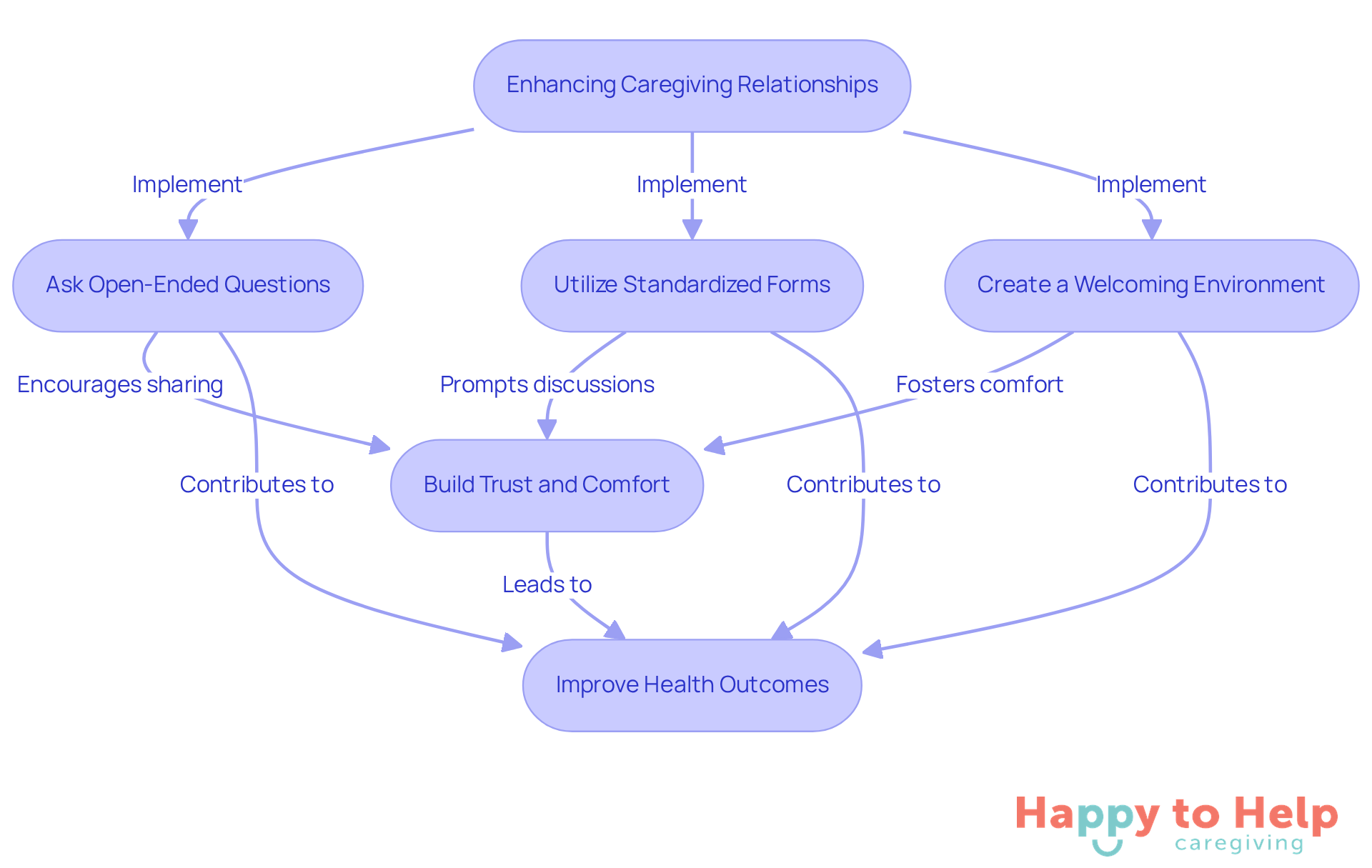
Family history inquiries present a significant challenge for caregivers. Without this crucial information, providers may struggle to deliver personalized care that meets the unique needs of each individual. This lack of understanding can lead to a disconnect between caregivers and patients, ultimately affecting the quality of care.
Understanding a patient's household dynamics, traditions, and health history is essential for fostering a compassionate caregiving relationship. When caregivers are equipped with this knowledge, they can build trust and comfort, making individuals feel more at ease in their home environment. This connection not only enhances the caregiving experience but also improves health outcomes.
To address this issue, caregivers should actively engage in family history questions. Here are some actionable tips:
- Ask open-ended questions during consultations to encourage patients to share their backgrounds.
- Utilize standardized forms that prompt discussions about family history questions.
- Create a welcoming environment that makes individuals feel comfortable sharing personal information.
By implementing these strategies, caregivers can significantly enhance their approach, leading to more effective and empathetic care.
What Health Conditions Run in Our Family?
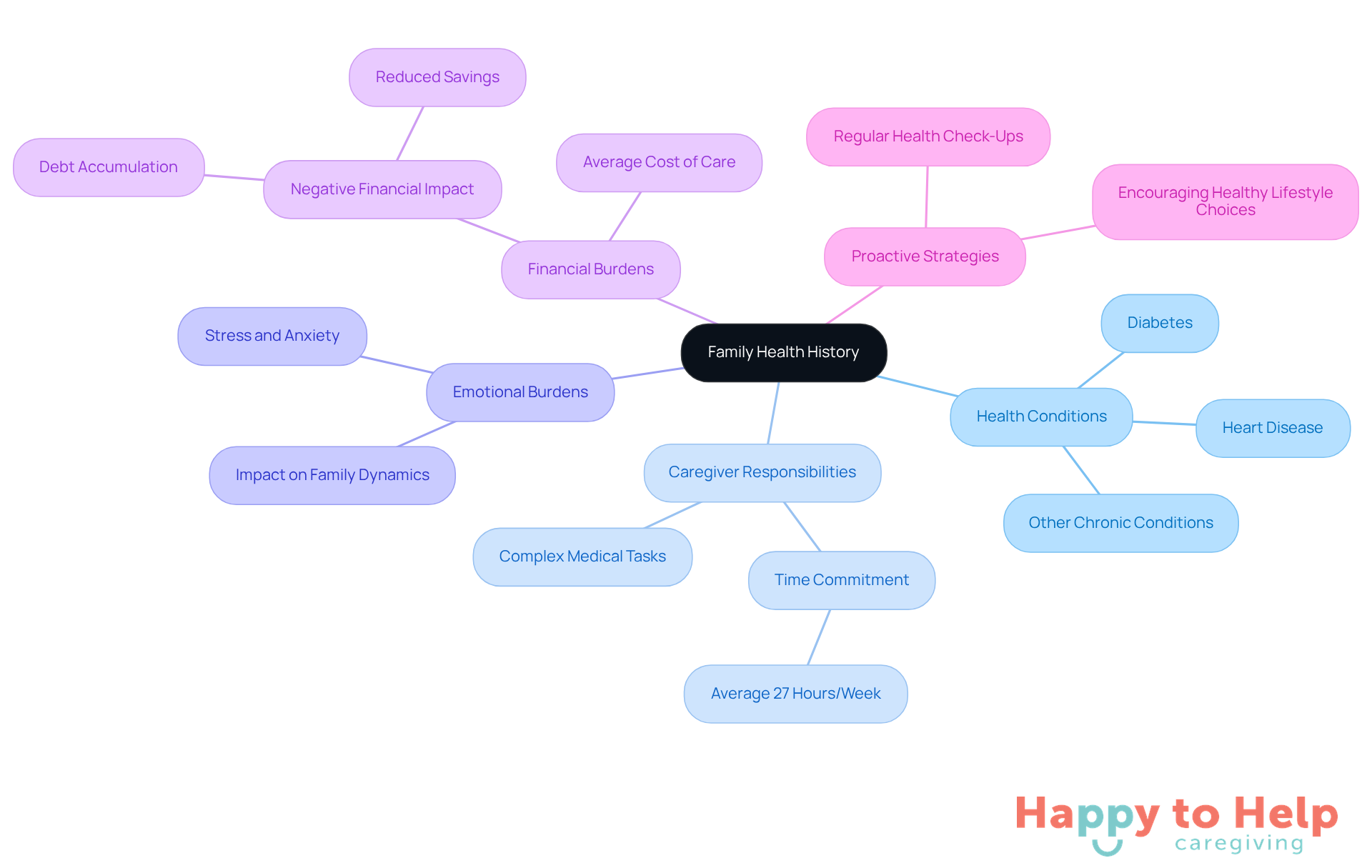
Caregivers find it crucial to understand health issues by addressing family history questions common within a household. When conditions like heart disease or diabetes are prevalent among relatives, caregivers face significant risks. These health challenges can lead to emotional and financial burdens, with statistics revealing that nearly 63 million Americans are caregivers, many of whom spend an average of 27 hours a week caring for loved ones with chronic conditions.
To address these challenges, caregivers can adopt proactive strategies. By promoting regular health check-ups and encouraging healthy lifestyle choices, they can enhance their clients' overall well-being. This approach not only supports the individual but also reassures family members about the quality of care being provided.
Healthcare professionals stress the importance of addressing family history questions to be aware of familial health histories. This knowledge allows caregivers to tailor their support to address specific health risks, creating a safer and more informed caregiving environment. Dr. Myechia Minter-Jordan highlights that nearly half of caregivers have experienced adverse financial effects due to their responsibilities, underscoring the need for these insights.
In summary, understanding health histories and implementing preventive measures are essential for caregivers. By doing so, they can mitigate risks and improve the quality of care, ultimately benefiting both themselves and their loved ones.
What Family Traditions Should We Continue?
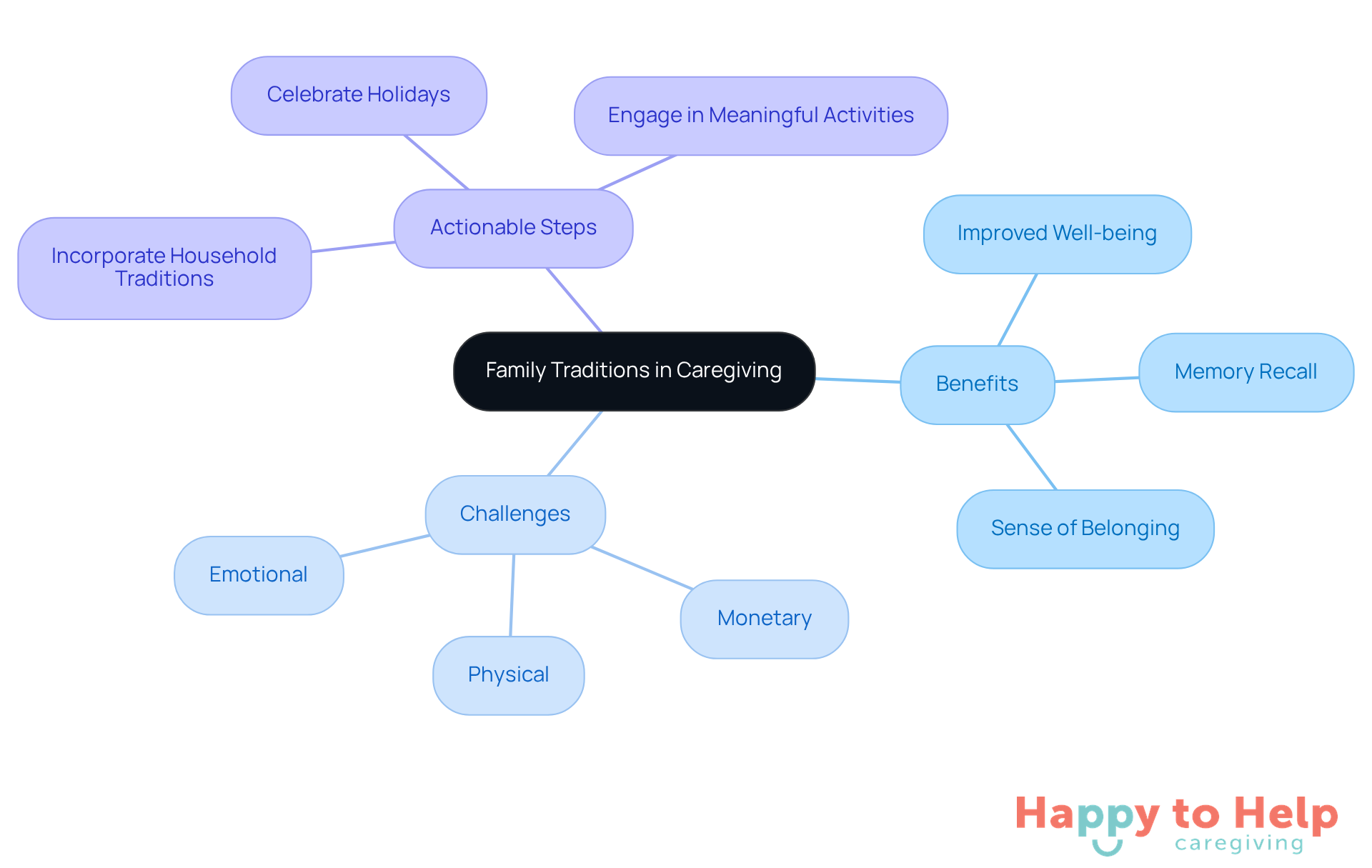
Asking about cultural traditions presents a significant challenge for caregivers. Many struggle to incorporate meaningful activities into their care routines, which can lead to a disconnect between seniors and their heritage. This lack of engagement can diminish the spirits of those in their care.
However, caregivers who respect and continue these traditions can make a profound difference. Celebrating holidays, preparing traditional dishes, and participating in household rituals not only elevate the individual's mood but also foster a sense of belonging. Statistics show that seniors who engage in familiar rituals experience notable improvements in overall well-being, fulfilling essential psychological needs such as continuity and connection.
For instance, participating in household traditions can stimulate memory recall and cognitive function, especially in seniors with dementia or Alzheimer's disease. By integrating these practices into their routines, caregivers can enhance the quality of life for those they aid.
Despite facing monetary, physical, or emotional challenges, caregivers can take actionable steps to incorporate household traditions into their assistance routines. This approach not only strengthens bonds but also enriches the caregiving experience, ultimately leading to a more fulfilling life for both caregivers and clients.
What Values and Beliefs Are Important to Our Family?
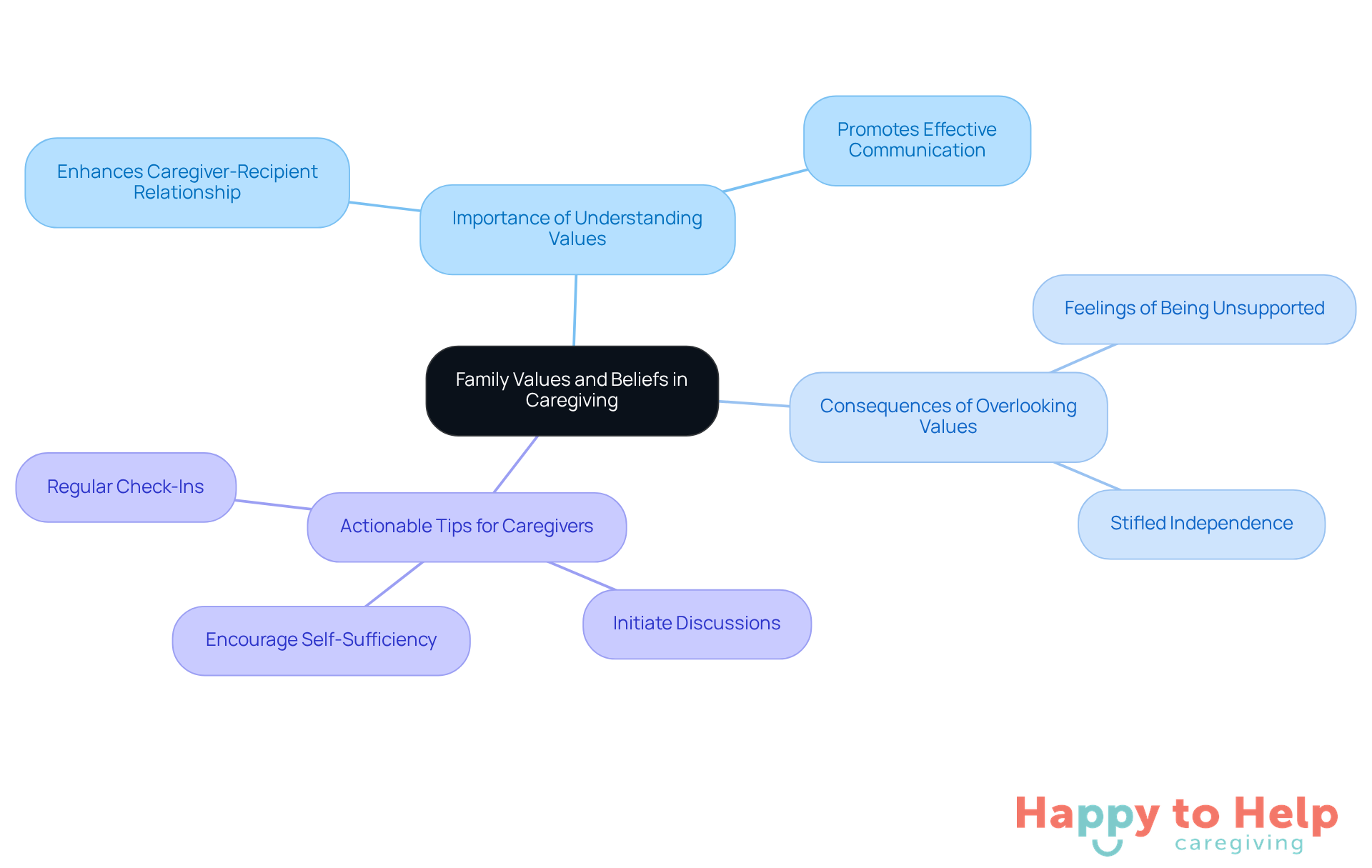
Understanding the values and beliefs of individuals is crucial for caregivers. When these values are overlooked, it can lead to a disconnect in the support provided, leaving individuals feeling unsupported or misunderstood. For example, if a household prioritizes independence, caregivers may inadvertently stifle self-sufficiency by not encouraging autonomy in daily tasks.
To address this issue, caregivers should actively engage in conversations about family history questions and values with the individuals they support. This dialogue not only clarifies expectations but also fosters a collaborative environment where everyone is on the same page regarding care. By grasping these values, caregivers can communicate more effectively with family members about family history questions, ensuring that all parties are aligned in their approach to care.
Here are some actionable tips for caregivers:
- Initiate discussions about values during care planning meetings.
- Encourage self-sufficiency by allowing individuals to take the lead in daily activities.
- Regularly check in with family members to ensure everyone’s expectations are met.
By implementing these strategies, caregivers can provide support that truly resonates with the individual’s values, leading to a more fulfilling caregiving experience.
What Are the Most Memorable Events in Our Family's History?
Caregivers often struggle to connect with individuals on a deeper level, which can hinder the emotional bond necessary for effective caregiving. This disconnect may lead to feelings of isolation for those receiving care, impacting their overall quality of life.
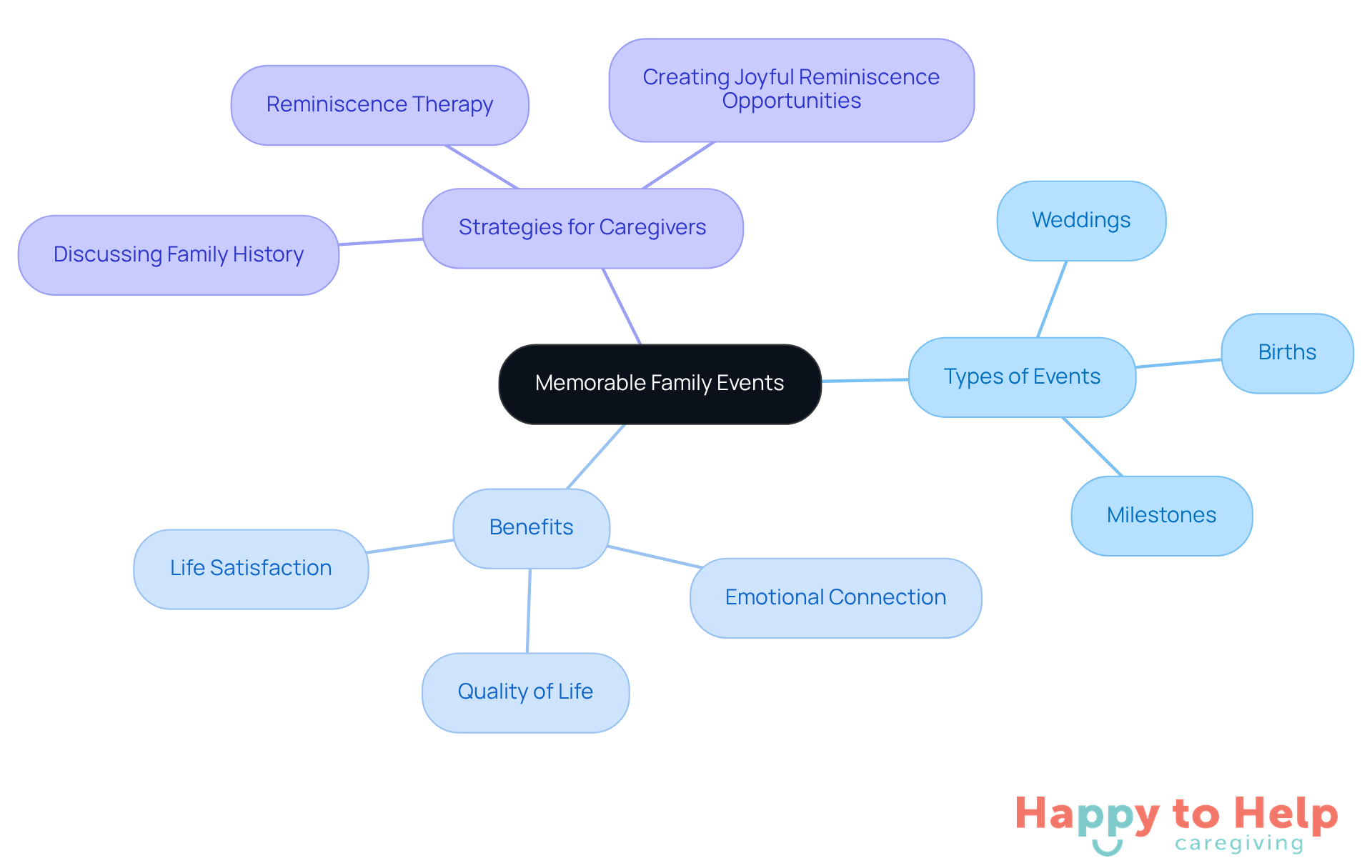
Research shows that exploring significant family events - like weddings, births, or milestones - can reveal much about a person's character and preferences. By sharing these stories, caregivers can foster meaningful conversations that help individuals reminisce and feel valued. This connection not only strengthens the caregiver-recipient relationship but also enhances the caregiving experience.
To address this challenge, caregivers can actively involve individuals by discussing family history questions and their preferred traditions. For instance, asking family history questions about memorable trips or cherished family customs can create opportunities for joyful reminiscence.
Statistics indicate that reminiscence therapy significantly boosts life satisfaction among the elderly, underscoring the importance of shared personal narratives. Caregivers who implement these strategies often report deeper connections and a greater sense of purpose in their roles. By prioritizing these conversations, caregivers can enrich the lives of those they support.
Who Are the Key Figures in Our Family Tree?
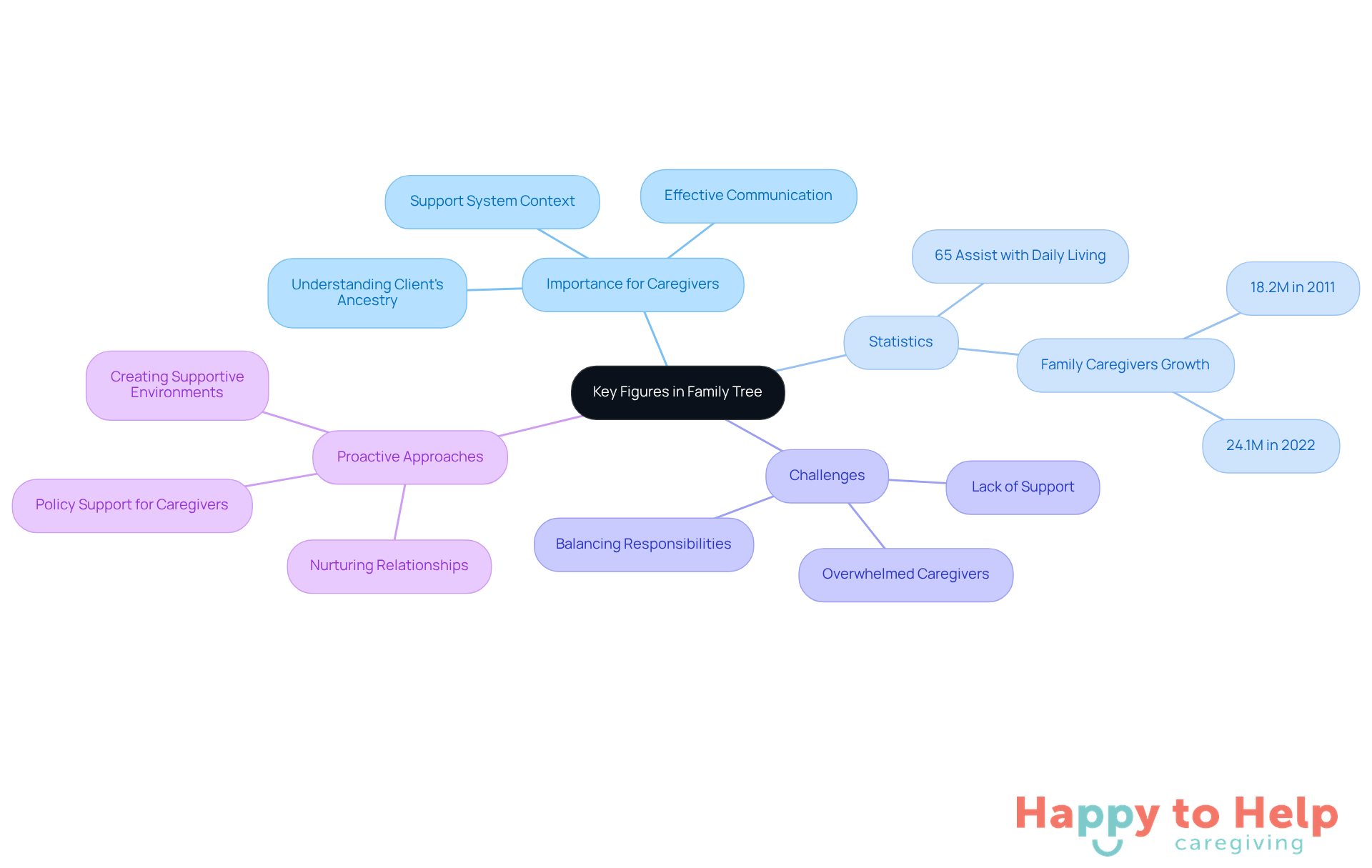
Recognizing important individuals in a client's ancestry is crucial for caregivers. Without this understanding, the support system may lack the necessary context, leading to ineffective communication during crises or gatherings. This gap can hinder the ability to provide timely and appropriate assistance, leaving caregivers feeling overwhelmed and unsupported.
Statistics reveal the extent of this issue: nearly 65 percent of household supporters assist with at least one activity of daily living, underscoring the need for a robust support network. Furthermore, the number of relatives aiding older adults surged from 18.2 million in 2011 to 24.1 million in 2022, highlighting an increasing reliance on familial support. This growing dependence emphasizes the urgency of fostering strong connections among caregivers and their support systems.
To address these challenges, caregivers should actively nurture relationships with key individuals in their clients' lives. By doing so, they can create a more supportive environment that benefits both the individuals receiving care and their relatives. As Dr. Myechia Minter-Jordan, CEO of AARP, states, "We need systems that recognize those who provide care, value them and support them - because they are not just assisting households, they are sustaining our entire health care system." This proactive approach not only enhances coordination but also enriches the overall experience of assistance.
What Stories Have Shaped Our Family's Identity?
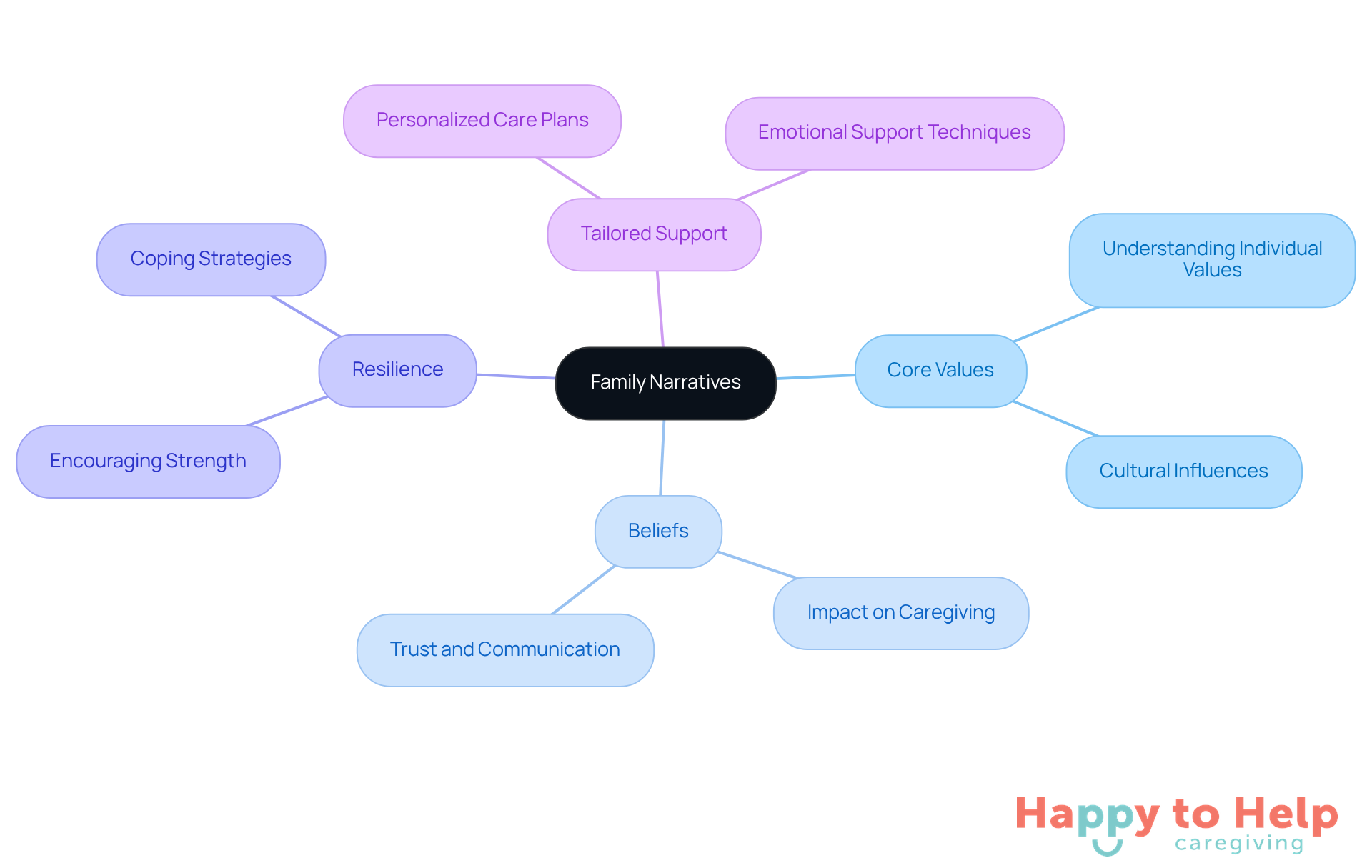
Understanding the narratives that shape a household's identity is crucial for caregivers. Without this insight, providers may struggle to grasp the individual's core values and beliefs, which can hinder effective support. These stories reveal what truly matters to the individual, guiding caregivers in their approach.
For instance, if a family narrative emphasizes resilience, caregivers can encourage individuals to draw on that strength during challenging times. By recognizing these narratives, caregivers can tailor their support strategies to align with the individual's values, ultimately fostering a more supportive environment.
What Hobbies and Interests Do We Share as a Family?
Caregivers often face the challenge of keeping individuals engaged and happy. Without enjoyable activities, the caregiving experience can become monotonous, leading to decreased quality of life for those they assist.
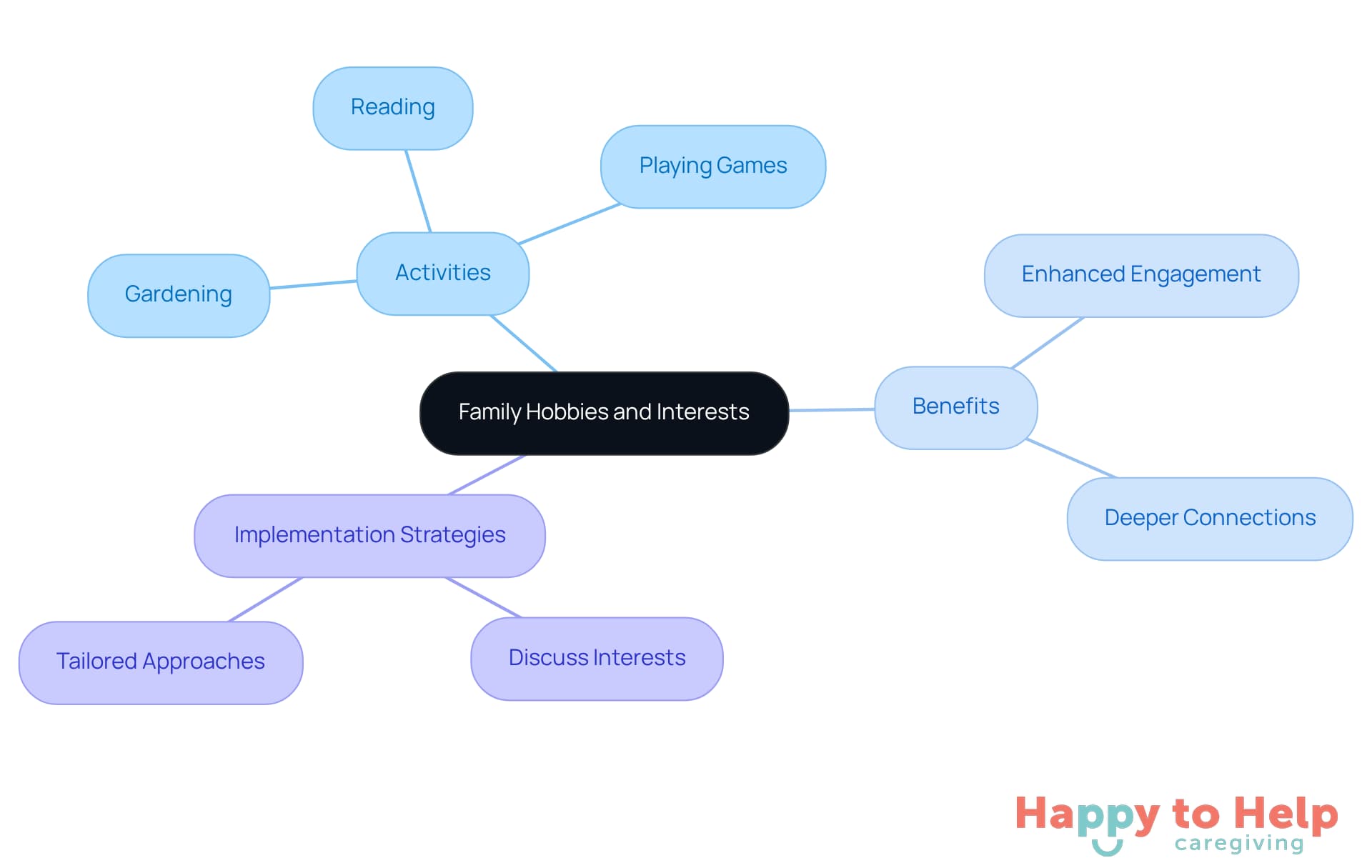
Incorporating hobbies such as gardening, reading, or playing games into daily routines can significantly enhance engagement. These activities not only bring joy but also foster a deeper connection between caregivers and individuals, creating a more positive caregiving environment.
To implement this, caregivers can start by discussing family history questions and interests with those they assist. Identifying what activities they enjoy, along with addressing family history questions, allows for a tailored approach to care. By integrating these hobbies into everyday life, caregivers can transform routine tasks into enjoyable experiences, ultimately improving the overall well-being of individuals.
What Are the Major Milestones in Our Family's Journey?
Caregivers face significant challenges when it comes to providing support for aging relatives. A staggering 74% of those offering assistance report feeling unprepared for their responsibilities. This lack of readiness can lead to stress and uncertainty, impacting both the caregiver and the individual receiving care.
Understanding important milestones, like graduations, anniversaries, and notable accomplishments, can provide caregivers with valuable insights into a household's values and priorities, which can be helpful when addressing family history questions. When caregivers are aware of a relative's achievements, they can incorporate these aspects into daily interactions, fostering a sense of pride and continuity. Statistics reveal that 63 million Americans are currently caring for aging relatives, underscoring the need for personalized care that aligns with personal histories.
As Tatyana Zlotsky, CEO of A Place for Mom, notes, "Too frequently, individuals approach us in crisis...there’s no guide for caring for a loved one." This highlights the necessity for caregivers to connect with personal stories, significant life events, and family history questions. By integrating this awareness into their support practices, caregivers can enhance the emotional wellness of those they assist, making the support experience more meaningful and impactful.
To implement this approach, caregivers can:
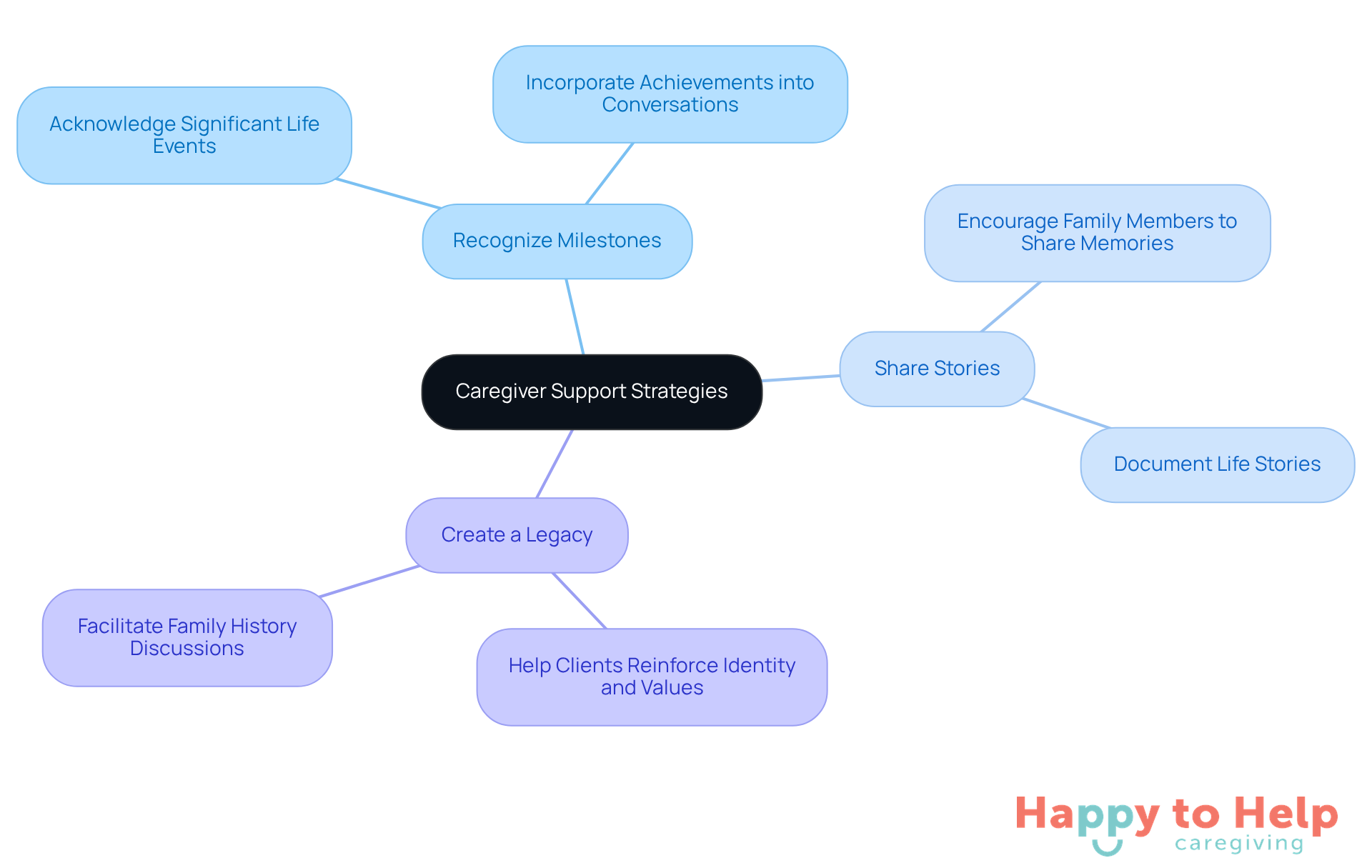
- Recognize milestones: Acknowledge significant life events in conversations.
- Share stories: Encourage family members to share their achievements and memories.
- Create a legacy: Help clients document their life stories, reinforcing their identity and values.
This strategy aligns with the National Strategy to Support Caregivers, which emphasizes the importance of understanding household dynamics in providing effective care.
What Dreams and Aspirations Do We Have for Our Family's Future?
Caregivers often face the challenge of not fully understanding the dreams and aspirations of the individuals they support. This disconnect can lead to a lack of purpose and fulfillment in their clients' lives. When caregivers are unaware of what drives their clients, they may miss opportunities to enhance their overall well-being.
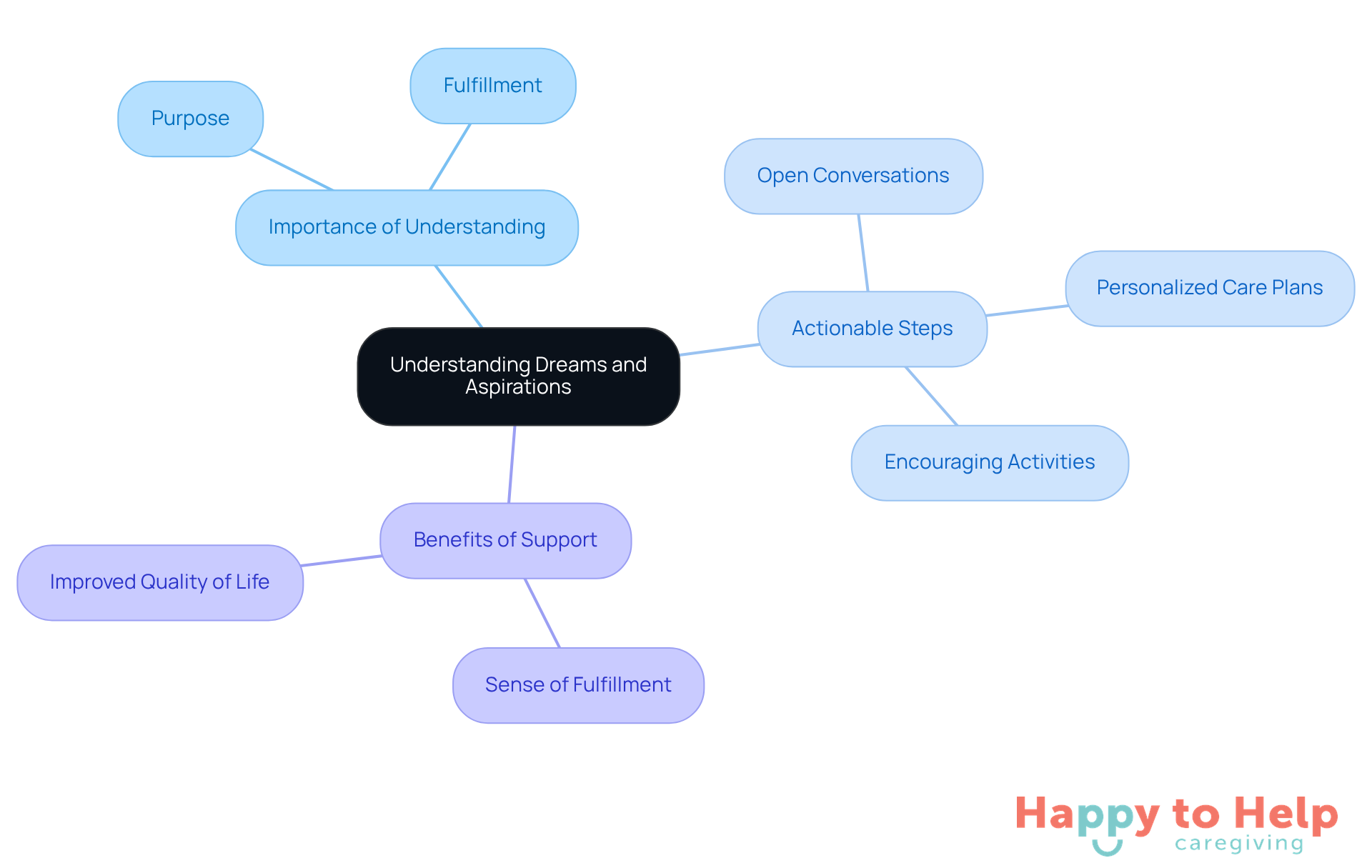
By discussing these aspirations, caregivers can gain valuable insights into what truly matters to their clients. Whether it’s pursuing a hobby, traveling, or spending quality time with family, aligning care with these goals is crucial. Supporting these aspirations not only fosters a sense of purpose but also significantly improves the quality of life for those in care.
To effectively support clients, caregivers can take several actionable steps:
- Engage in open conversations about dreams and interests.
- Create personalized care plans that incorporate these aspirations.
- Encourage participation in activities that align with their goals.
By prioritizing these discussions, caregivers can help individuals maintain a sense of fulfillment and joy in their lives.
Your Path Forward
Engaging in family history questions presents a significant challenge for caregivers who aim to strengthen their connections with those they assist. Without this understanding, caregivers may struggle to provide personalized and compassionate care, which can hinder trust and comfort in the caregiving relationship.
To address this issue, caregivers should prioritize understanding the unique backgrounds, traditions, and health histories of individuals. By asking open-ended questions and recognizing significant family events, caregivers can foster deeper insights that enhance the overall caregiving experience. Integrating cherished traditions into care routines not only enriches the caregiver-recipient relationship but also empowers caregivers to address the holistic needs of those they support.
Here are some actionable tips for caregivers:
- Actively seek out family narratives and values.
- Incorporate family traditions into daily routines.
- Engage in discussions about family history to help individuals maintain their identity and sense of belonging.
By embracing these strategies, caregivers can bridge the gap between themselves and their clients, creating a more supportive and fulfilling environment. This approach transforms the caregiving experience into a collaborative effort that honors the rich tapestry of family connections, ultimately leading to more meaningful and impactful caregiving journeys.
https://iframe.tely.ai/cta/eyJhcnRpY2xlX2lkIjogIjY5MjRmMjBhZWM0Y2FiOGU3NGVjMDEwYyIsICJjb21wYW55X2lkIjogIjY4ZWU1ZGNhNzMxNzYyNTU3ZjNjOTVjMSIsICJpbmRleCI6IG51bGwsICJ0eXBlIjogImFydGljbGUifQ==Frequently Asked Questions
Why are family history questions important for caregivers?
Family history questions are crucial for caregivers as they provide essential information about a patient's household dynamics, traditions, and health history, enabling personalized care that meets individual needs and enhances the quality of care.
How can caregivers effectively engage in family history inquiries?
Caregivers can effectively engage in family history inquiries by asking open-ended questions during consultations, utilizing standardized forms to prompt discussions, and creating a welcoming environment that encourages individuals to share personal information.
What health conditions should caregivers be aware of in relation to family history?
Caregivers should be aware of prevalent health conditions such as heart disease and diabetes within a patient's family, as these can pose significant risks and lead to emotional and financial burdens for both caregivers and patients.
What proactive strategies can caregivers adopt to address health risks?
Caregivers can adopt proactive strategies such as promoting regular health check-ups and encouraging healthy lifestyle choices to enhance their clients' overall well-being and reassure family members about the quality of care being provided.
How do family traditions impact caregiving?
Family traditions play a vital role in caregiving by fostering a sense of belonging and improving the mood of individuals in care. Engaging in familiar rituals can also enhance cognitive function and memory recall, particularly in seniors with dementia or Alzheimer's disease.
What steps can caregivers take to incorporate cultural traditions into their care routines?
Caregivers can incorporate cultural traditions by celebrating holidays, preparing traditional dishes, and participating in household rituals, which strengthens bonds and enriches the caregiving experience.
What are the psychological benefits of engaging seniors in familiar rituals?
Engaging seniors in familiar rituals fulfills essential psychological needs such as continuity and connection, leading to notable improvements in overall well-being and quality of life.
List of Sources
- Happy to Help Caregiving: How Family History Questions Enhance Caregiving Relationships
- Facebook (https://newsroom.clevelandclinic.org/2024/11/25/why-your-family-health-history-matters)
- Why Thanksgiving is the perfect time to share family health history - Baton Rouge Clinic (https://batonrougeclinic.com/news-education/why-thanksgiving-is-the-perfect-time-to-share-family-health-history)
- Why your family medical history matters: 5 things you should know (https://uabmedicine.org/news/why-your-family-medical-history-matters-5-things-you-should-know)
- 27 Inspirational Quotes for Caregivers (https://ultimatecareny.com/resources/27-quotes-for-caregivers)
- Healthy Living (https://nmhealth.org/news/healthy/2025/11?view=2298)
- What Health Conditions Run in Our Family?
- More Americans are family caregivers; states struggle to help them, report finds • Stateline (https://stateline.org/2025/07/25/more-americans-are-family-caregivers-states-struggle-to-help-them-report-finds)
- Caregiving Crisis: Nearly 1 in 4 US adults serve as caregivers for relatives with complex needs (https://investigatetv.com/2025/11/04/caregiving-crisis-nearly-1-4-us-adults-serve-caregivers-relatives-with-complex-needs)
- Family history and perceptions about risk and prevention for chronic diseases in primary care: A report from the Family Healthware™ Impact Trial - PMC (https://pmc.ncbi.nlm.nih.gov/articles/PMC4037165)
- Caregivers are in crisis. How bad it is depends on where you live, new data shows. (https://usatoday.com/story/life/health-wellness/2025/10/28/caregiver-crisis-state-by-state/86855003007)
- Awareness of Family Health History as a Risk Factor for Disease --- United States, 2004 (https://cdc.gov/mmwr/preview/mmwrhtml/mm5344a5.htm)
- What Family Traditions Should We Continue?
- Blending Traditions: Family Celebrations in Senior Living (https://frontporch.net/community/san-francisco-towers/blog/blending-traditions-family-celebrations-in-senior-living)
- Fact Sheet: Trends in Family Care for Older Americans (https://prb.org/resources/fact-sheet-trends-in-family-care-for-older-americans)
- The Importance of Preserving Family Traditions for Seniors - Villas of Holly Brook and Reflections (https://villasofhollybrook.com/the-importance-of-preserving-family-traditions-for-seniors)
- Why The Stress of Caregiving Affects Your Relationships (https://clearwaterliving.com/news-blog/why-the-stress-of-caregiving-affects-your-relationships?article=evolving-traditions-renewed-connections-at-clearwater-living)
- What Values and Beliefs Are Important to Our Family?
- Number Of Family Caregivers Has Skyrocketed in The U.S. (https://usnews.com/news/health-news/articles/2025-07-25/number-of-family-caregivers-has-skyrocketed-in-the-u-s)
- As Family Caregiving Grows, So Does the Need for Reform - Medicare Rights Center (https://medicarerights.org/medicare-watch/2025/08/14/as-family-caregiving-grows-so-does-the-need-for-reform)
- New Report Reveals Crisis Point for America’s 63 million Family Caregivers (https://press.aarp.org/2025-07-24-New-Report-Reveals-Crisis-Point-for-Americas-63-million-Family-Caregivers)
- The number of family caregivers is surging (https://19thnews.org/2025/07/family-caregivers-surging-aarp)
- Opinion | America’s Caregivers Are in Crisis (https://nytimes.com/2025/11/24/opinion/caregiving-crisis.html)
- What Are the Most Memorable Events in Our Family's History?
- A caregiver's survival guide: Advice from people who've been there (https://npr.org/2025/10/18/nx-s1-5558451/caregiver-caregiving-family-burnout-support-advice)
- The number of family caregivers is surging (https://19thnews.org/2025/07/family-caregivers-surging-aarp)
- Effects of reminiscence therapy on quality of life and life satisfaction of the elderly in the community: a systematic review - PMC (https://pmc.ncbi.nlm.nih.gov/articles/PMC10332080)
- Every Caregiver Has a Story (https://caregiver.org/news/every-caregiver-has-a-story)
- Caregiver Statistics: Demographics (https://caregiver.org/resource/caregiver-statistics-demographics)
- Who Are the Key Figures in Our Family Tree?
- Opinion | America’s Caregivers Are in Crisis (https://nytimes.com/2025/11/24/opinion/caregiving-crisis.html)
- The Number Of Family Caregivers Helping Older US Adults Increased From 18 Million To 24 Million, 2011–22 | Health Affairs Journal (https://healthaffairs.org/doi/10.1377/hlthaff.2024.00978)
- The number of family caregivers is surging (https://19thnews.org/2025/07/family-caregivers-surging-aarp)
- Unsung Heroes: Celebrating and Supporting Family Caregivers (https://firstquality.com/news/honoring-family-caregivers)
- What Stories Have Shaped Our Family's Identity?
- 27 Inspirational Quotes for Caregivers (https://ultimatecareny.com/resources/27-quotes-for-caregivers)
- CaringBridge (https://caringbridge.org/resources/inspirational-quotes-on-caregiving)
- Caregiver Statistics: Facts About Family Caregivers (https://agingcare.com/articles/who-are-family-caregivers-459287.htm)
- Caregiver Statistics: Health, Technology, and Caregiving Resources (https://caregiver.org/resource/caregiver-statistics-health-technology-and-caregiving-resources)
- Caregiving in the US 2025 (https://aarp.org/pri/topics/ltss/family-caregiving/caregiving-in-the-us-2025)
- What Hobbies and Interests Do We Share as a Family?
- Pursuing Interests & Hobbies as Older Adults - SRG Senior Living (https://srgseniorliving.com/blog/pursuing-interests-hobbies-as-older-adults-srg-senior-living)
- CaringBridge (https://caringbridge.org/resources/inspirational-quotes-on-caregiving)
- Engaging in hobbies boosts mental well-being for seniors, study finds (https://news-medical.net/news/20230913/Engaging-in-hobbies-boosts-mental-well-being-for-seniors-study-finds.aspx)
- How Hobbies Can Ease Caregiver Stress (https://ncoa.org/article/hobbies-for-caregivers-to-ease-stress-make-life-better)
- Why Hobbies are Good for Senior Health | Amada Blog (https://amadaseniorcare.com/2024/01/why-hobbies-are-good-for-senior-health)
- What Are the Major Milestones in Our Family's Journey?
- National Family Caregivers Month: Celebrating Our Successes, Continuing and Expanding Supports for Caregivers and Families | ACL Administration for Community Living (https://acl.gov/news-and-events/acl-blog/national-family-caregivers-month-celebrating-our-successes-continuing-and)
- A Place for Mom Releases Dual Reports on the Future of Family Caregiving, Including a New Talkspace Collaboration Highlighting Caregiver Mental Health (https://businesswire.com/news/home/20251124760580/en/A-Place-for-Mom-Releases-Dual-Reports-on-the-Future-of-Family-Caregiving-Including-a-New-Talkspace-Collaboration-Highlighting-Caregiver-Mental-Health)
- Opinion | America’s Caregivers Are in Crisis (https://nytimes.com/2025/11/24/opinion/caregiving-crisis.html)
- My Family Caregiving Journey and Why Change Is Needed (https://local.aarp.org/news/my-family-caregiving-journey-and-why-change-is-needed-oh-2025-11-19.html)
- What Dreams and Aspirations Do We Have for Our Family's Future?
- How Caregiving Can Alter Dreams and Goals (https://aarp.org/caregiving/basics/embrace-new-life-after-caregiving)
- Family Caregiver Support, Education Needs Growing (https://hospicenews.com/2025/11/11/family-caregiver-support-education-needs-growing)
- Caregiver Statistics: Demographics (https://caregiver.org/resource/caregiver-statistics-demographics)
- The Caregiving Landscape: Data & Insights on the Caregiver Experience in the U.S. (https://caregiveraction.org/caregiver-statistics)
- Caregiving in the United States 2020 (https://aarp.org/pri/topics/ltss/family-caregiving/caregiving-in-the-united-states)