

For families in our service areas
For families in our service areas, this guide explains home care and how non-medical in-home caregiving can support care planning in East Idaho, Treasure Valley & Magic Valley, Northern Wasatch, North Central West Virginia, and Northeast Ohio.
The Importance of Choose Home Care Nearby
Choosing the right care for loved ones can be one of the most challenging decisions families face. This is especially true when considering the unique needs of each individual. Families often grapple with the emotional weight of ensuring their loved ones receive the best possible support.
Home care services provide a personalized approach that addresses not only medical requirements but also emotional support and companionship. This dual focus significantly enhances the quality of life for clients. However, with numerous options available, families may wonder: what truly sets home care nearby apart from other caregiving alternatives?
This article explores ten compelling reasons to choose home care nearby. By shedding light on how tailored support can transform the caregiving experience, we aim to provide families with actionable insights that can ease their decision-making process.
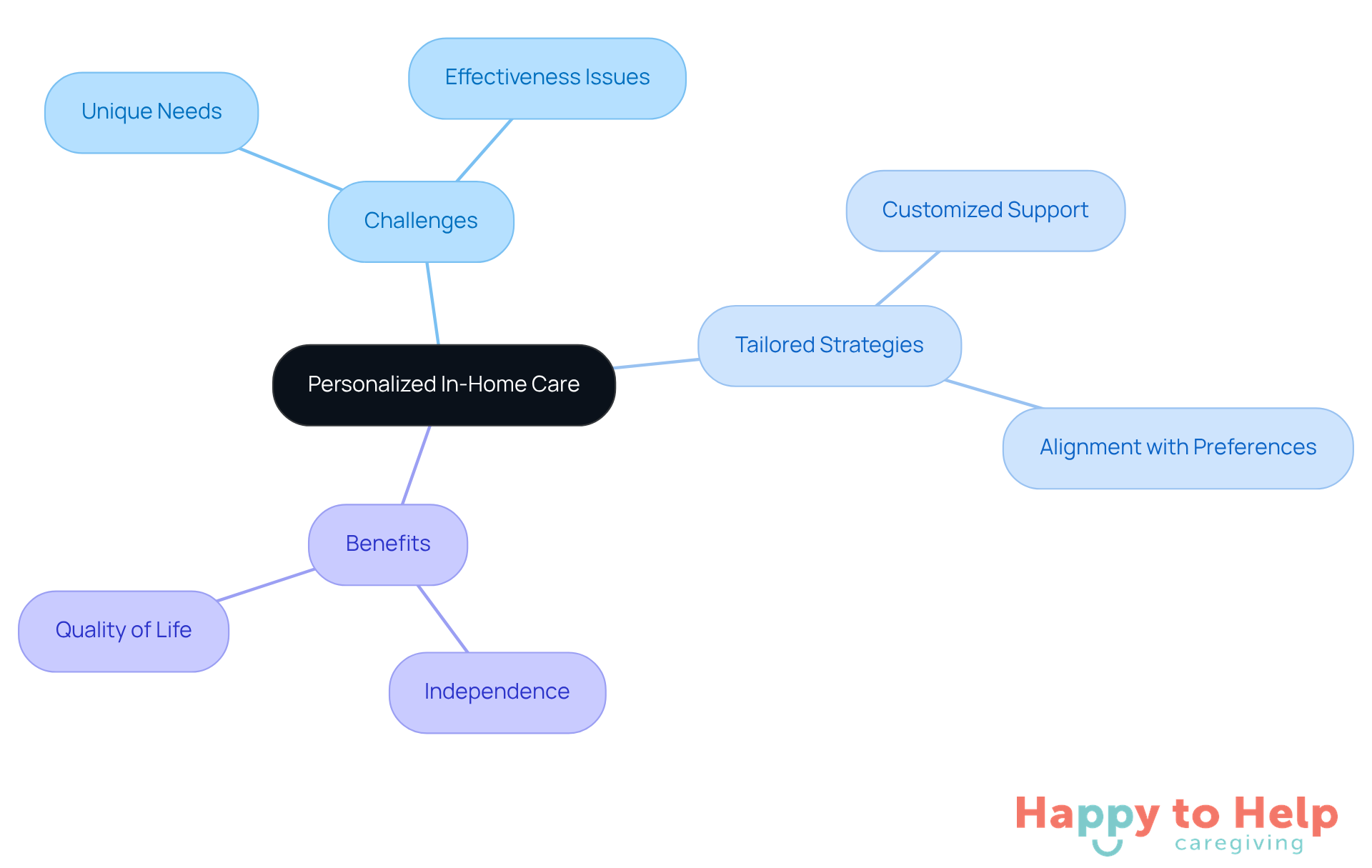
Happy to Help Caregiving: Personalized In-Home Care Tailored to Individual Needs
Caregivers often face the challenge of providing support that meets the unique needs of each individual. Without tailored strategies, the effectiveness of caregiving can diminish, leading to a lack of independence and comfort for those in need.
Happy to Help Caregiving addresses this issue by developing customized support strategies that cater to the distinct requirements of each person. This approach not only ensures that services are effective but also aligns with the preferences and lifestyles of individuals, promoting a sense of independence in their own homes.
By focusing on the specific needs of seniors and individuals with special requirements, Happy to Help Caregiving significantly improves the overall quality of life for those it serves. This makes it a preferred option for families seeking reliable home care nearby solutions.
Emotional Support: Alleviating Loneliness Through Companionship Care
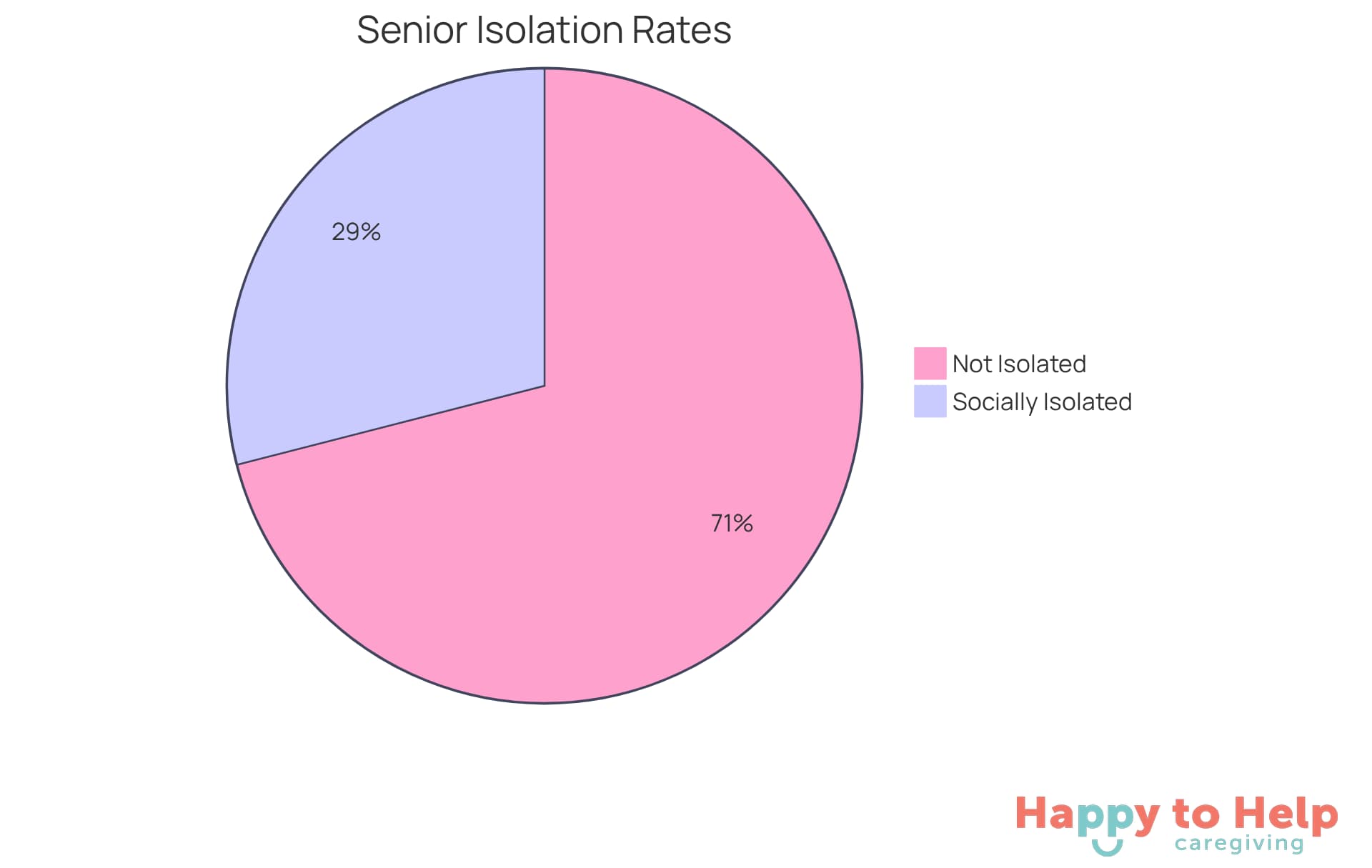
Companionship services address a significant problem faced by many seniors: loneliness. Research shows that 29% of seniors report feeling socially isolated, which can increase their risk of dementia by 50%. This isolation not only affects mental health but also diminishes the sense of belonging and purpose, particularly for those living alone.
The implications of chronic loneliness are severe. According to the National Poll on Healthy Aging, it may shorten life expectancy even more than being overweight or sedentary. This highlights the urgent need for effective emotional support and social engagement for seniors.
Happy to Help Caregiving provides a solution through its companionship services, catering to those in need of home care nearby. Caregivers engage seniors in meaningful conversations and enjoyable activities, helping to alleviate feelings of isolation. By prioritizing companionship, they ensure that individuals feel valued and understood, which significantly enhances overall well-being.
Case studies reveal a growing demand for companionship services, emphasizing the essential role of emotional assistance in elder well-being. By fostering these connections, caregivers can contribute to a more fulfilling and enriched life at home for seniors with home care nearby.
Post-Hospital Recovery Assistance: Facilitating a Smooth Transition Home
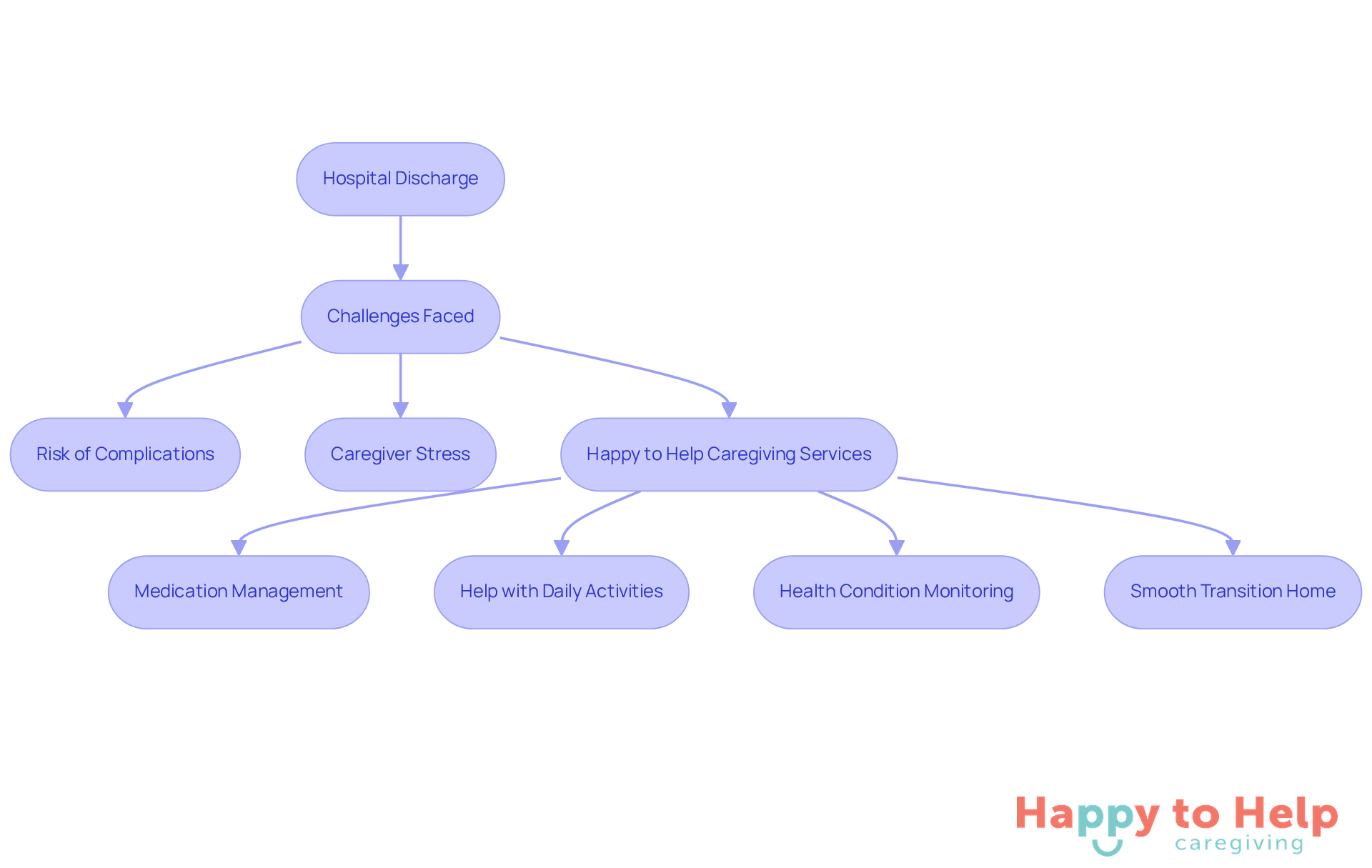
Transitioning from hospital to home can be a challenging time for many patients and their families. The risk of complications during recovery is significant, and without proper support, patients may face readmission to the hospital. This situation can be stressful for caregivers, who often juggle multiple responsibilities while ensuring their loved ones receive the care they need.
Happy to Help Caregiving addresses these challenges by offering specialized home care nearby for post-hospital recovery assistance. Their services include:
- Medication management
- Help with daily activities
- Health condition monitoring
Caregivers are trained to recognize signs of complications and provide timely interventions, which can significantly reduce the risk of readmission.
By enabling a systematic recovery process, Happy to Help Caregiving offers home care nearby to assist households in managing this vital stage of assistance. With their support, families can ensure a safe and smooth transition from hospital to home, allowing patients to focus on their recovery.
Respite Care: Supporting Family Caregivers and Preventing Burnout
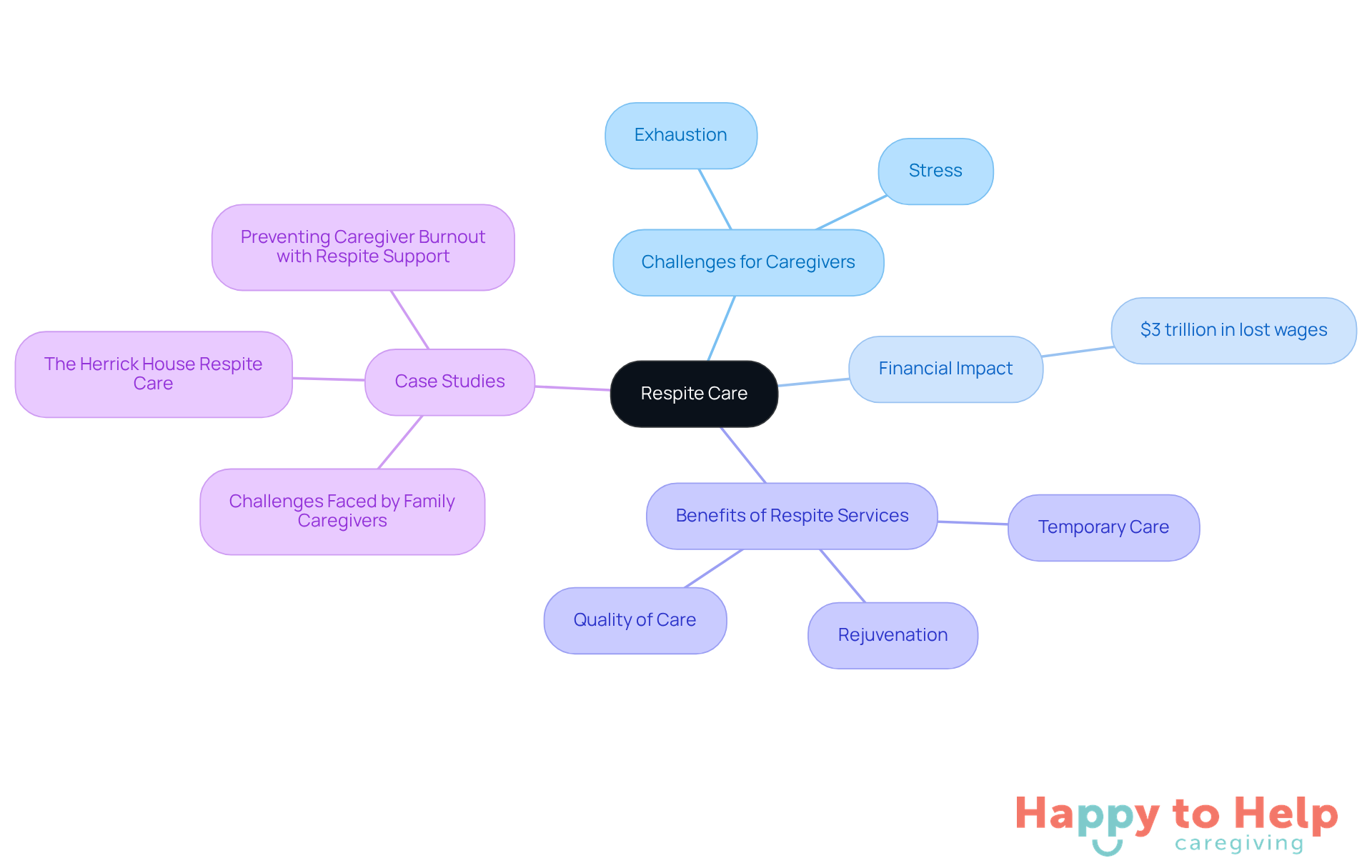
Caregivers face a significant challenge: exhaustion. This condition not only leads to stress but also diminishes the quality of support they provide to their loved ones. In fact, caregivers experience about $3 trillion in lost wages, benefits, and pensions annually, underscoring the financial toll of this issue.
To combat caregiver burnout, respite assistance services offered by Happy to Help Caregiving provide essential support, including home care nearby. These services allow caregivers to take necessary breaks, ensuring they can rejuvenate while their loved ones continue to receive excellent care. By supplying skilled caregivers on a temporary basis, families can address their own needs without compromising the quality of support for their loved ones.
Case studies, such as "Preventing Caregiver Burnout with Respite Support," demonstrate how respite services effectively reduce burnout and enhance caregiver well-being. This balance is vital for maintaining healthy family dynamics and ensuring long-term caregiving success. As Kim Whitmore from the ARCH National Respite Network and Resource Center notes, "Regardless of the age or condition of the individual who is providing assistance, respite services are among the most-frequently requested caregiver resources."
Ultimately, respite assistance is not just a service; it’s a crucial framework that enhances the overall quality of life for both caregivers and those they care for.
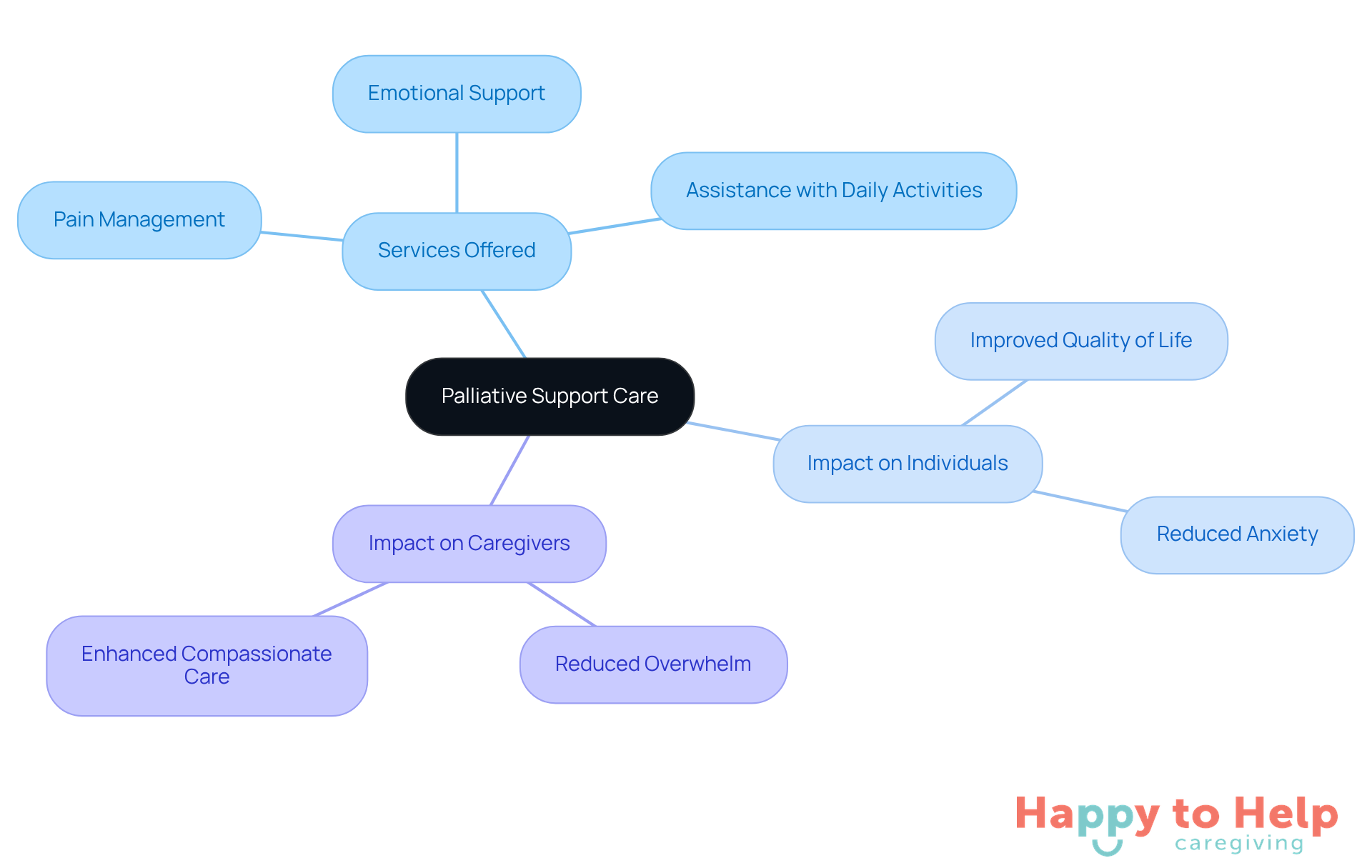
Palliative Support Care: Enhancing Comfort for Individuals with Serious Illnesses
Palliative assistance from Happy to Help Caregiving addresses a significant problem: the need for improved comfort and quality of life for individuals facing serious illnesses. Many caregivers struggle with providing adequate emotional and physical support, which can lead to increased distress for both the caregiver and the individual in need.
This lack of support can have serious implications. Without proper pain management and emotional assistance, individuals may experience heightened anxiety and a diminished quality of life. Caregivers often feel overwhelmed, which can affect their ability to provide compassionate care.
Happy to Help Caregiving offers a comprehensive solution. Their services include:
- Pain management
- Emotional support
- Assistance with daily activities
All tailored to meet the unique needs of each individual. Caregivers are specifically trained to deliver compassionate care that respects the dignity of those they assist, ensuring that clients feel supported during challenging times.
By prioritizing emotional well-being and comfort, Happy to Help Caregiving empowers clients to maintain a sense of normalcy and peace, which is essential for their overall quality of life. The incorporation of emotional assistance not only alleviates distress but also fosters resilience, allowing individuals to navigate their health challenges with greater ease and confidence.
As highlighted by the World Health Organization, "Palliative support is acknowledged in key global mandates and strategies on universal health coverage," emphasizing its essential role in health systems. Moreover, early palliative support has been shown to enhance quality of life and decrease unnecessary hospitalizations, underscoring the significance of emotional assistance in these environments.
Dr. Lori Wiener points out that early incorporation of palliative support greatly improves health-related quality of life, stressing the importance of the services offered by Happy to Help Caregiving.
Flexible Scheduling: Adapting Care to Fit Family Needs
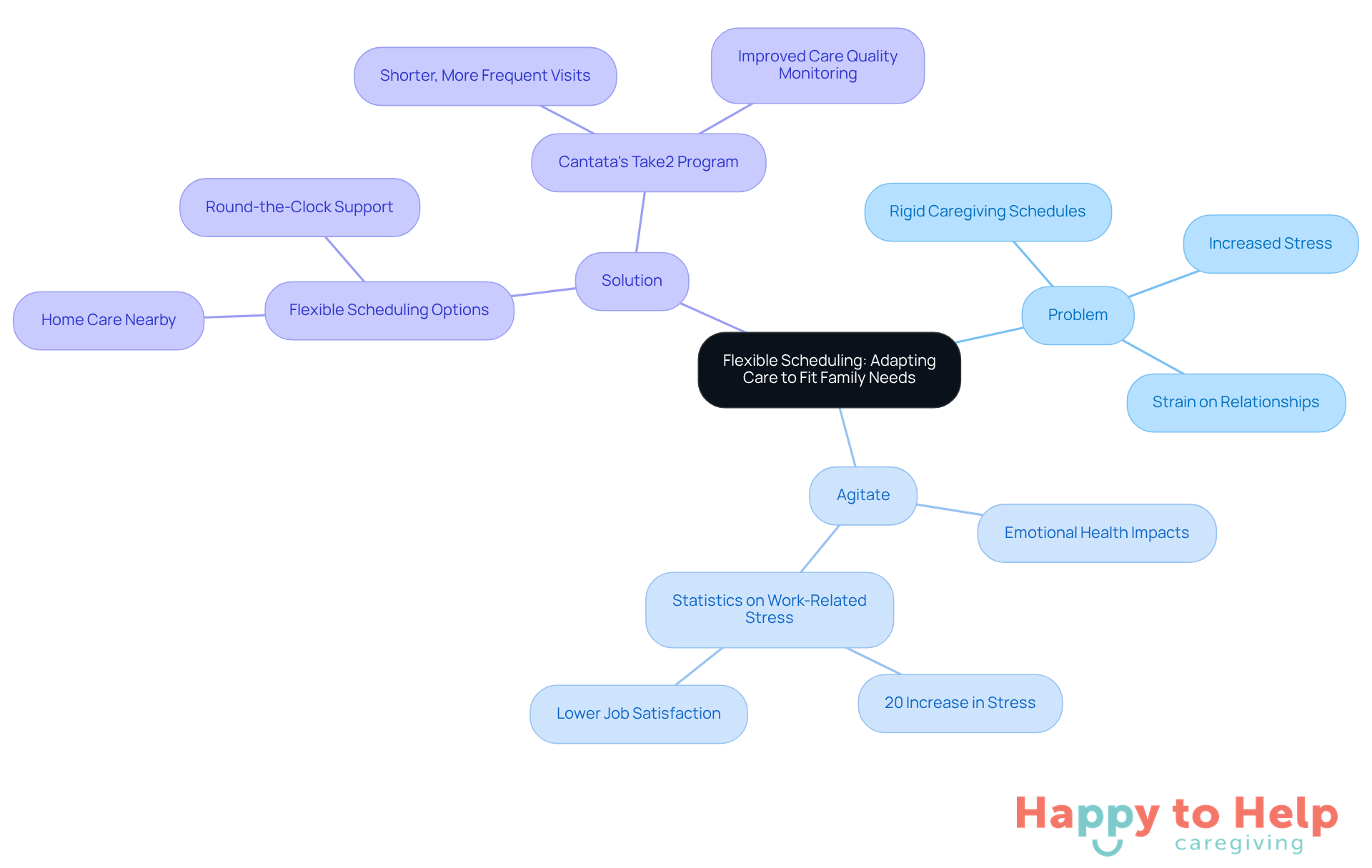
Problem: Many families face the challenge of rigid caregiving schedules that can lead to increased stress and strain on relationships. Caregivers often struggle to balance their responsibilities, which can negatively impact both their well-being and the quality of care provided.
Agitate: This lack of flexibility can make it difficult for families to maintain their daily routines and enjoy quality time together. When caregivers are unable to adjust their schedules, it can create feelings of frustration and helplessness, ultimately affecting the emotional health of both caregivers and their loved ones. Studies indicate that work-related stress can increase by 20 percent when schedules are inflexible, leading to lower job satisfaction and poorer outcomes for those receiving care.
Solution: Happy to Help Caregiving understands that each household's situation is unique, which is why they prioritize flexible scheduling options. Whether clients need home care nearby for just a few hours a week or require round-the-clock support, the agency is prepared to adjust to these different demands. This adaptability not only enables households to uphold their daily schedules but also guarantees that their cherished ones receive the vital support they merit. By accommodating diverse schedules, Happy to Help Caregiving significantly enhances the caregiving experience, offering families the peace of mind that comes from knowing their loved ones receive home care nearby.
Successful models, like Cantata's Take2 program, illustrate how shorter, more frequent visits can effectively address customer needs while promoting a stable environment. This dedication to flexibility not only assists families during difficult periods but also enhances family relationships, enabling quality moments together without the strain of inflexible care timetables.
24/7 Availability: Ensuring Continuous Support for Loved Ones
Caregivers often face the challenge of ensuring their loved ones receive the necessary support, especially those with complex medical needs. This situation can lead to feelings of anxiety and isolation for both the caregiver and the individual needing care. The implications are significant: without immediate assistance, health risks increase, and families may struggle with the emotional burden of caregiving.
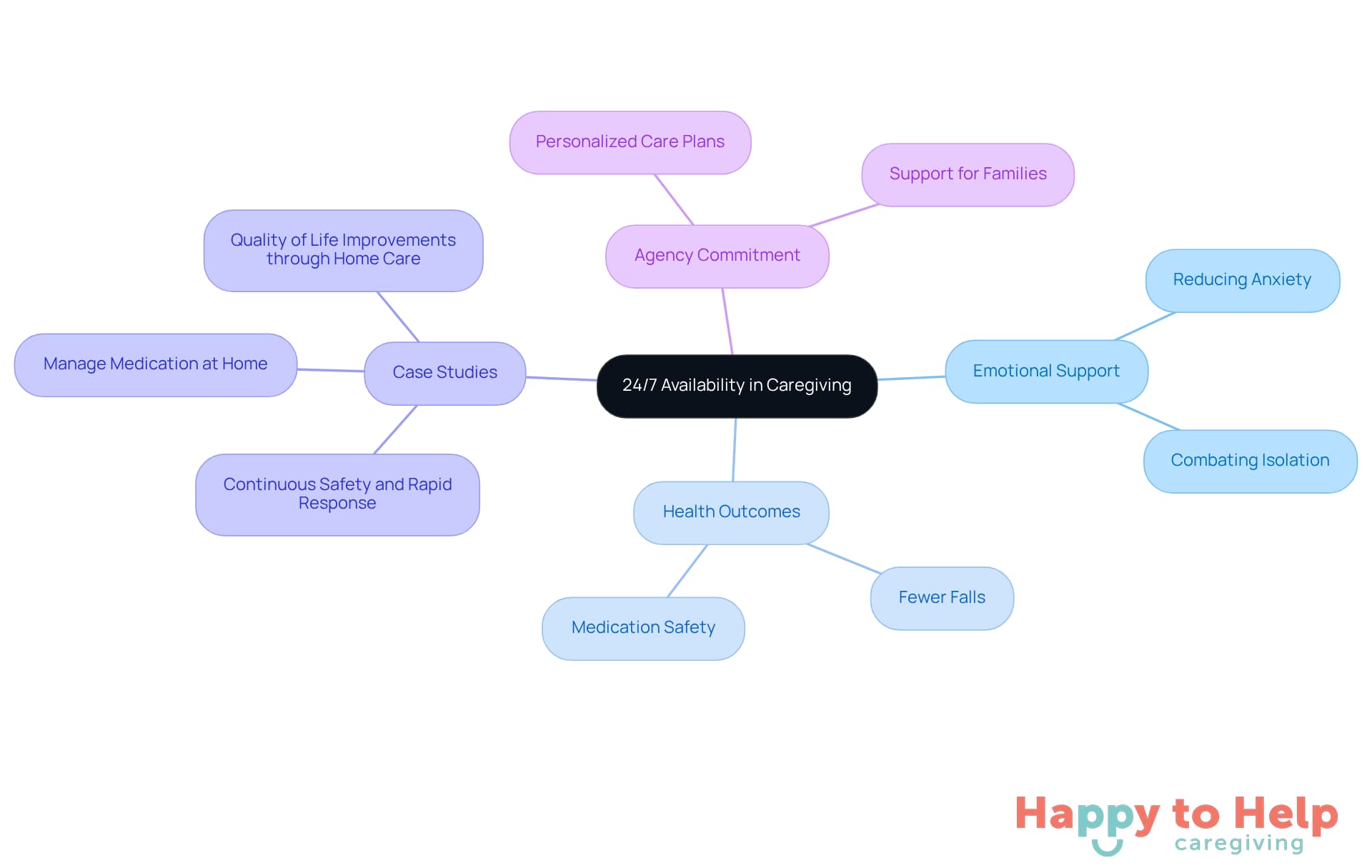
Happy to Help Caregiving addresses these challenges with its 24/7 availability, providing home care nearby whenever it’s needed. Families can rest easy knowing that home care nearby is just a call away, significantly enhancing the safety and security of their loved ones. This continuous support not only meets urgent medical needs but also promotes emotional well-being, reducing feelings of loneliness.
Case studies, such as 'Continuous Safety and Rapid Response,' reveal that seniors receiving round-the-clock assistance experience fewer falls and medication errors, leading to better health outcomes. The presence of caregivers ensures that seniors can maintain their routines in a familiar environment, which is crucial for their dignity and comfort.
As one expert noted, '24/7 senior caregiving provides continuous assistance and peace of mind with home care nearby.' This commitment to ongoing support highlights the agency's dedication to high-quality, responsive service, establishing it as a reliable ally for families navigating the complexities of caregiving.
Technology Integration: Enhancing Communication and Care Management
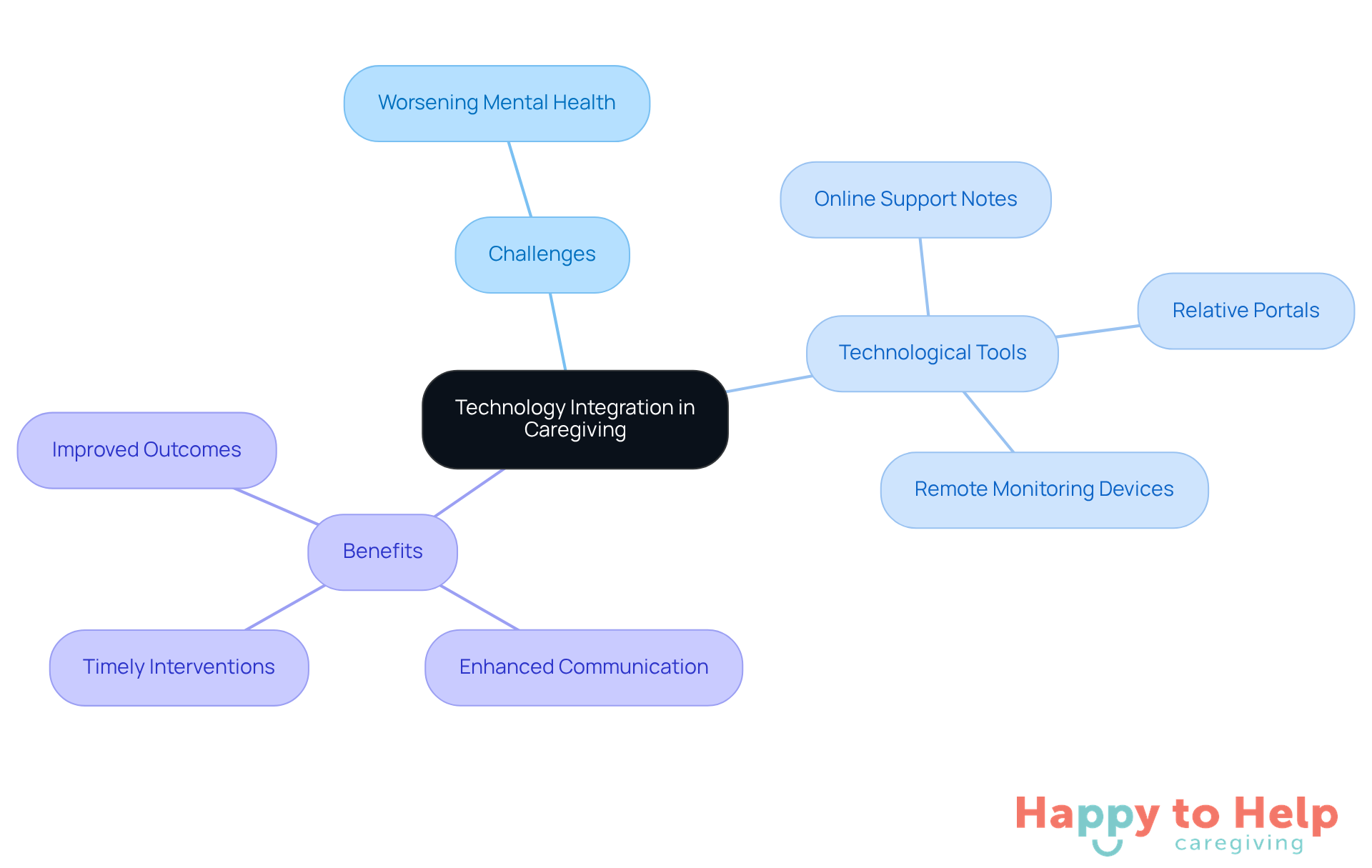
Caregiving presents significant challenges, particularly in communication and support management. Nearly half of caregivers report worsening mental health, according to the U.S. Department of Health and Human Services. This statistic underscores the urgent need for effective support systems in caregiving, as the emotional toll can be overwhelming.
To address these issues, technology plays a crucial role. Happy to Help Caregiving utilizes innovative resources like online support notes and relative portals, which keep family members informed about their loved one's treatment and progress. This technological integration not only enhances transparency but also fosters cooperation between caregivers and relatives, ensuring everyone is aligned in care strategies.
Moreover, remote monitoring devices allow caregivers to track vital health metrics, facilitating timely interventions and reducing the risk of complications. By leveraging these contemporary tools, households can feel more engaged and knowledgeable, which is essential for managing the complexities of caregiving.
In summary, the use of technology transforms the caregiving experience, enhancing efficiency and effectiveness. This ultimately leads to improved outcomes for individuals and peace of mind for their families.
Trained Caregivers: Ensuring High-Quality Support for Clients
Caregivers often face the challenge of providing high-quality assistance without adequate training. This can lead to gaps in essential caregiving skills, emotional support, communication, and safety protocols, ultimately affecting the care individuals receive.
At Happy to Help Caregiving, we recognize these challenges and have implemented a robust training program for all caregivers. This program not only covers essential caregiving skills but also focuses on emotional support and effective communication. By investing in the development of our caregivers, we ensure that individuals receive personalized care tailored to their unique needs.
The results speak for themselves: families report favorable outcomes, reflecting our dedication to excellence in caregiving. With our comprehensive training, caregivers are equipped to meet the diverse needs of those they assist, fostering a supportive and safe environment.
Family Testimonials: Real Stories of Positive Impact from Home Care Services
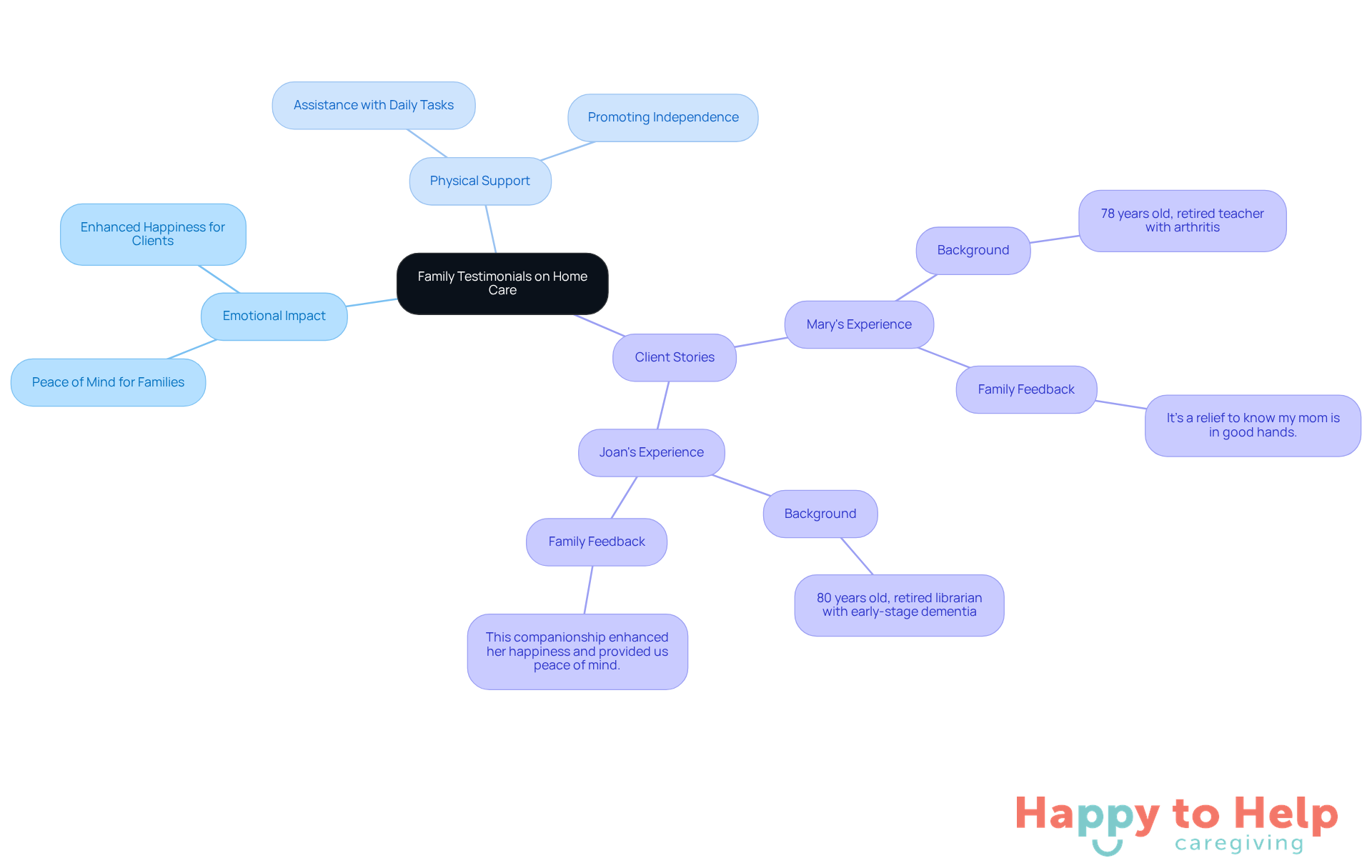
Family testimonials highlight the significant impact that Happy to Help Caregiving has on clients' lives. Many households share how the agency's compassionate caregivers provide not just essential physical support but also foster emotional connections and companionship.
For example, Mary, a 78-year-old retired teacher with arthritis, saw a remarkable improvement in her quality of life due to her caregiver's dedicated assistance with daily tasks and social engagement. Her family expressed relief, stating, "It’s a relief to know my mom is in good hands. She’s happy and active, and having a caring companion has made all the difference for her."
Similarly, Joan, an 80-year-old retired librarian with early-stage dementia, found joy and safety in her daily routine thanks to her caregiver. Her family noted that this companionship not only enhanced Joan's happiness but also provided them with peace of mind.
These testimonials underscore Happy to Help Caregiving's commitment to delivering quality support tailored to individual needs. By sharing these stories, the agency reinforces its reputation as a trusted partner in providing home care nearby, demonstrating how personalized care can lead to significant improvements in the lives of clients and their families.
With 53% of families preferring home care nearby over senior living, the emotional satisfaction reported by families emphasizes the importance of selecting a caregiving service that prioritizes both care and companionship. This choice ultimately makes the transition to in-home care a positive experience.
Your Path Forward
Choosing home care nearby for loved ones presents a significant challenge for families. Caregivers often face stress and uncertainty, worrying about the quality of care their loved ones receive. This concern can lead to emotional strain, impacting both the caregiver and the individual needing assistance.
The implications of inadequate care can be profound. Without proper support, loved ones may experience loneliness, health declines, and a lack of emotional connection. This situation not only affects their well-being but also weighs heavily on family members, who may feel overwhelmed and helpless.
Fortunately, personalized in-home care services offer a viable solution. By opting for home care, families can ensure their loved ones receive tailored support that meets their unique needs. This includes companionship, which plays a crucial role in alleviating feelings of isolation, and continuous assistance that is vital during recovery periods.
Key insights into effective caregiving highlight the importance of customized plans. These plans should cater to individual preferences and requirements, ensuring that each person receives the attention they deserve. Additionally, respite care for family caregivers is essential, allowing them to recharge while knowing their loved ones are in capable hands.
The availability of 24/7 assistance further enhances peace of mind for families. Integrating technology into care management can also improve communication and streamline support, making it easier for families to stay connected with caregivers.
Ultimately, choosing home care services is a vital step in nurturing the health and happiness of loved ones. By prioritizing personalized care, families foster a supportive atmosphere that meets both physical and emotional needs. Embracing these home care options not only enriches the lives of individuals but also strengthens family bonds, making it a worthwhile investment in the future of caregiving.
https://iframe.tely.ai/cta/eyJhcnRpY2xlX2lkIjogIjY5MjdhNWRiODIzNTQ4YzIzODM1Mjg3ZiIsICJjb21wYW55X2lkIjogIjY4ZWU1ZGNhNzMxNzYyNTU3ZjNjOTVjMSIsICJpbmRleCI6IG51bGwsICJ0eXBlIjogImFydGljbGUifQ==Frequently Asked Questions
What is Happy to Help Caregiving?
Happy to Help Caregiving is a service that provides personalized in-home care tailored to the unique needs of individuals, ensuring effective support and promoting independence in their own homes.
How does Happy to Help Caregiving address the needs of seniors and individuals with special requirements?
The service develops customized support strategies that cater to the distinct requirements of each person, significantly improving their overall quality of life and aligning with their preferences and lifestyles.
What is the significance of companionship services offered by Happy to Help Caregiving?
Companionship services help alleviate loneliness among seniors, which is a significant issue as 29% of seniors report feeling socially isolated. These services enhance emotional support and social engagement, improving overall well-being.
What are the consequences of chronic loneliness in seniors?
Chronic loneliness can increase the risk of dementia by 50% and may shorten life expectancy more than being overweight or sedentary, highlighting the need for effective emotional support.
What specific services does Happy to Help Caregiving provide for post-hospital recovery assistance?
They offer medication management, help with daily activities, and health condition monitoring to facilitate a smooth transition from hospital to home.
How does Happy to Help Caregiving reduce the risk of hospital readmission during recovery?
Caregivers are trained to recognize signs of complications and provide timely interventions, which significantly reduces the risk of readmission and supports a systematic recovery process.
Why is emotional support important for seniors receiving home care?
Emotional support is essential for enhancing the sense of belonging and purpose among seniors, helping them feel valued and understood, which contributes to a more fulfilling life at home.
List of Sources
- Happy to Help Caregiving: Personalized In-Home Care Tailored to Individual Needs
- The Evolution of Home Care Services: Trends in the USA - Cottage Home Care (https://cottagehomecare.com/blog/trends-in-home-care-new-york)
- Customized Care at Home: The Benefits of Personalized Care Plans - VNA Health Group (https://vnahg.org/customized-care-at-home-the-benefits-of-personalized-care-plans)
- What’s Coming in the Future of Home Health Care? - Alora Health (https://alorahealth.com/blog-future-homecare-trends)
- Home Care Trends 2026: Preparing for Senior Care - Assisting Hands Centennial (https://assistinghands.com/77/colorado/centennial/blog/home-care-trends-2026-preparing-for-senior-care)
- The Future of Home Health Care: Trends to Watch in 2025 (https://synchronyfl.com/the-future-of-home-health-care-trends-to-watch-in-2025)
- Emotional Support: Alleviating Loneliness Through Companionship Care
- Emotional support key to protecting older adults against depression (https://unsw.edu.au/news/2025/09/neighbourhoods-may-hold-key-slowing-cognitive-decline)
- Why Home Care Providers Are Increasingly Offering Companion Care Services for Seniors | Aaniie, formerly Smartcare Software (https://aaniie.com/news/why-home-care-providers-are-increasingly-offering-companion-care-services-for-seniors)
- Trends in Loneliness Among Older Adults from 2018-2023 (https://ihpi.umich.edu/national-poll-healthy-aging/reports-and-resources/trends-loneliness-among-older-adults-2018-2023)
- The Impact of Emotional Support on Senior Mental Health (https://humancareny.com/blog/the-impact-of-emotional-support-on-senior-mental-health)
- Humana Foundation Expands National Efforts to Improve Seniors’ Emotional Health (https://humanafoundation.org/news-humana-foundation/press-releases/humana-foundation-expands-national-efforts-to-improve-seniors-emotional-health)
- Post-Hospital Recovery Assistance: Facilitating a Smooth Transition Home
- A Safer Transition from Hospital to Home: Pharmacy Program Helps Discharged Patients with Medications-ASHP (https://news.ashp.org/News/ashp-news/2025/09/09/a-safer-transition-from-hospital-to-home-pharmacy-program-helps-discharged-patients-with-medications)
- Reducing Medication Errors at Hospital Discharge (https://cedars-sinai.org/newsroom/new-law-to-help-patients-avoid-medication-errors)
- How Healing at Home Helps Unclog the Hospital Bed Logjam (https://usnews.com/news/health-news/articles/2025-03-03/how-healing-at-home-helps-unclog-the-hospital-bed-logjam)
- (https://bcbstx.com/provider/education/education/news/2023/10-09-2023-coordinating-care-after-hosp-discharges)
- Transitional Care Strategies From Hospital to Home: A Review for the Neurohospitalist - PMC (https://pmc.ncbi.nlm.nih.gov/articles/PMC4272352)
- Respite Care: Supporting Family Caregivers and Preventing Burnout
- As Family Caregiving Grows, So Does the Need for Reform - Medicare Rights Center (https://medicarerights.org/medicare-watch/2025/08/14/as-family-caregiving-grows-so-does-the-need-for-reform)
- Improving Support for Family Caregivers (https://nationalacademies.org/news/2025/07/improving-support-for-family-caregivers)
- Preventing Caregiver Burnout with Respite Care | The Herrick House (https://theherrickhouse.org/news-stories/all-news-stories/stories/2025/04/preventing-caregiver-burnout-with-respite-care)
- New Report Reveals Crisis Point for America’s 63 million Family Caregivers (https://press.aarp.org/2025-07-24-New-Report-Reveals-Crisis-Point-for-Americas-63-million-Family-Caregivers)
- Family Caregiver Support, Education Needs Growing (https://hospicenews.com/2025/11/11/family-caregiver-support-education-needs-growing)
- Palliative Support Care: Enhancing Comfort for Individuals with Serious Illnesses
- Support for Serious Illness (https://newsinhealth.nih.gov/2025/07/support-serious-illness)
- Palliative Care News Archives (https://hospicenews.com/category/palliative-care-news)
- Palliative care (https://who.int/news-room/fact-sheets/detail/palliative-care)
- Palliative Care News | Living with Serious Illness | Get Palliative Care (https://getpalliativecare.org/news)
- Flexible Scheduling: Adapting Care to Fit Family Needs
- Industry leaders: Offering work flexibility is the secret to attracting, retaining home care talent (https://mcknightshomecare.com/news/industry-leaders-offering-work-flexibility-is-the-secret-to-attracting-retaining-home-care-talent)
- Exploring the Rising Demand for Flexible Work in Healthcare (https://healthecareers.com/career-resources/nurse-career/rising-demand-for-flexible-work-in-healthcare)
- The Benefits of Flexible Scheduling in Home Care Plans (https://regencyhcs.com/blog/the-benefits-of-flexible-scheduling-in-home-care-plans)
- Home Care Providers Aim For Big Wins By Introducing Shorter Care Models Bypassing Service Minimums (https://homehealthcarenews.com/2025/02/home-care-providers-aim-for-big-wins-by-introducing-shorter-care-models-bypassing-service-minimums)
- The Critical Role of Flexibility in Home Care Scheduling for Family Peace of Mind (https://relevar.com/the-critical-role-of-flexibility-in-home-care-scheduling-for-family-peace-of-mind)
- 24/7 Availability: Ensuring Continuous Support for Loved Ones
- 24-Hour Home Care | BrightStar Care | BrightStar Care (https://brightstarcare.com/about-brightstar-care/resources/benefits-of-24-hour-home-care)
- 24/7 Long-Term Senior Care: What to Expect | Heisinger Bluffs (https://hbrhc.com/blog/what-to-expect-from-24-7-long-term-senior-care)
- The 10-Benefits of 24-Hour Home Care » LifeWorx Home Care (https://lifeworx.com/resources/articles/the-10-benefits-of-24-hour-home-care)
- Why 24/7 Senior Care Works: Safety, Comfort, and Constant Support - With A Little Help (https://withalittlehelp.com/24-7-senior-care-works)
- The Benefits of 24-Hour Home Care for Seniors Living Alone (https://lifesathomecare.com/the-benefits-of-24-hour-home-care-for-seniors-living-alone)
- Technology Integration: Enhancing Communication and Care Management
- The Impacts of Technology on Home Health Care (https://excelin.com/the-impacts-of-technology-on-home-health-care)
- From ‘Simple Things’ To AI: What Innovation Means For 3 At-Home Care Providers (https://homehealthcarenews.com/2025/08/from-simple-things-to-ai-what-innovation-means-for-3-at-home-care-providers)
- Tech-enabled caregiving can help dementia patients stay at home — perhaps for too long (https://statnews.com/2025/11/24/dementia-caregiving-technology-assistance)
- HHS Launches $2 Million AI Challenge to Support Family Caregivers (https://shrm.org/advocacy/hhs-launches--2-million-ai-challenge-to-support-family-caregiver)
- The Rise and Promise of Technology in Home Health (https://healthrecoverysolutions.com/blog/the-rise-and-promise-of-technology-in-home-health)
- Trained Caregivers: Ensuring High-Quality Support for Clients
- Key Trends in 2025 & the Future of Caregiver Training (https://blog.nevvon.com/key-trends-in-2025-the-future-of-caregiver-training)
- New Research Highlights Critical Role of Training in Caregiver Retention (https://careacademy.com/blog/role-of-training-in-caregiver-retention)
- Family Caregiver Support, Education Needs Growing (https://hospicenews.com/2025/11/11/family-caregiver-support-education-needs-growing)
- US News & World Report Highlights CCA's Caregiver Training (https://advancecaregivers.org/report-us-news-world-report-highlights-ccas-caregiver-training)
- The Journey of Caregiver Training - New Wave Home Care (https://newwavehomecare.com/the-journey-of-caregiver-training)
- Family Testimonials: Real Stories of Positive Impact from Home Care Services
- Why More Families Are Choosing Homecare Over Care Homes - Healthcare Newsdesk (https://healthcare-newsdesk.co.uk/why-more-families-are-choosing-homecare-over-care-homes)
- How Home Care Transforms Lives: Stories and Results - Atlas Home Health (https://atlashomehealth.com/consultation-effect-new-business-ventures)
- Families Prefer In-Home Care To Senior Living – Yet Struggle To Identify Needed Support (https://homehealthcarenews.com/2025/11/families-prefer-in-home-care-to-senior-living-yet-struggle-to-identify-needed-support)
- Family caregivers prefer in-home care over senior living, new industry report finds (https://mcknightshomecare.com/news/family-caregivers-prefer-in-home-care-over-senior-living-new-industry-report-finds)