For families in our service areas
For families in our service areas, this guide explains in-home care and how non-medical in-home caregiving can support care planning in East Idaho, Treasure Valley & Magic Valley, Northern Wasatch, North Central West Virginia & Southwestern Pennsylvania, and Northeast Ohio.
What You Need to Know About Factors to Compare In Home Care
Navigating in-home care can be overwhelming for families trying to provide the best support for their loved ones while managing their own responsibilities. This challenge is compounded as more households seek personalized assistance, making it crucial to understand what sets home care companies apart. Families must prioritize specific criteria to select a provider that not only meets their needs but also enhances their loved ones' quality of life.
This article explores four essential aspects to consider when comparing in-home care services:
- Quality of Care
- Provider Qualifications
- Range of Services
- Cost and Payment Options
By focusing on these factors, families can make informed decisions in a landscape filled with options, ensuring they choose the right support for their loved ones.
Overview of In-Home Care Services
Caregivers often face the challenge of providing adequate support for their loved ones while managing their own responsibilities. This can lead to stress and burnout, making it essential to explore effective options from in home care companies near me that cater to individual needs.
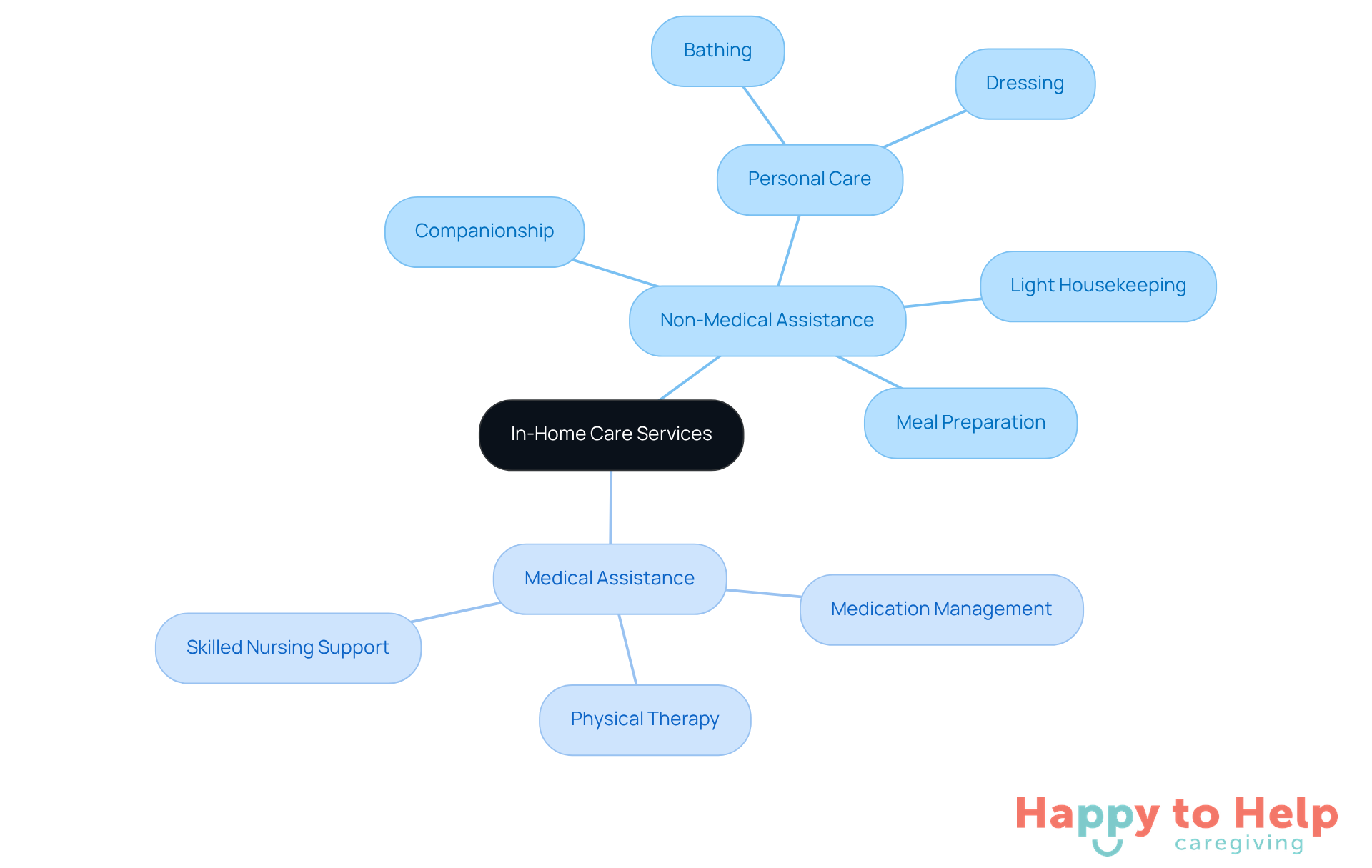
In-home assistance provided by in home care companies near me offers a comprehensive range of support designed to help individuals remain comfortable in their own residences. These services fall into two main categories: non-medical and medical assistance. Non-medical assistance includes:
- Companionship
- Personal care - such as bathing and dressing
- Meal preparation
- Light housekeeping
On the other hand, medical assistance encompasses:
- Skilled nursing support
- Physical therapy
- Medication management
Organizations like Happy to Help Caregiving excel in creating customized support plans tailored to the unique requirements of each client. This personalized approach is crucial, as it allows families to identify the most relevant options for their loved ones, promoting a more efficient evaluation of providers.
Recent statistics indicate that a significant number of households are opting for services provided by in home care companies near me. This trend reflects a growing preference for individualized support that prioritizes emotional well-being alongside physical health. Industry leaders emphasize the importance of this distinction, noting that while medical treatment is vital for certain conditions, non-medical services play a crucial role in overall health and happiness. Understanding these categories empowers families to make informed decisions about the support options available to them.
Cost Comparison of In-Home Care Providers
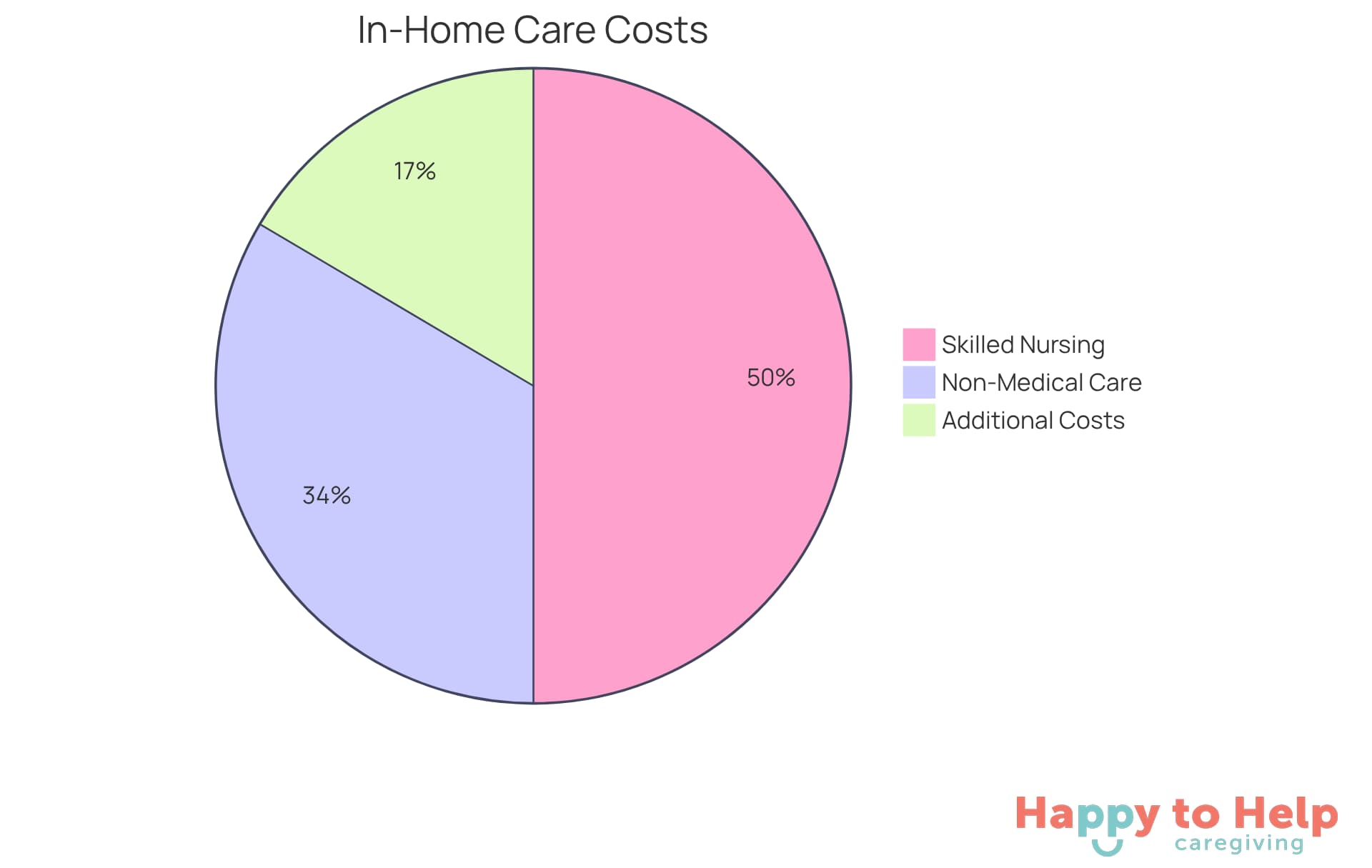
The cost of at-home assistance can vary widely, presenting a significant challenge for families seeking care. Factors such as the type of support required, the provider's location, and the skill level of the assistants all play a role in determining these expenses. As of 2025, the national average hourly rate for non-medical in-home care ranges from $33 to $34, while skilled nursing care often exceeds $50 per hour.
This variability can lead to unexpected financial burdens. Families must also consider additional costs, such as travel fees for caregivers or charges for specialized services, which can fluctuate based on location and specific needs. To navigate these complexities, families should take the time to compare costs across different providers. This approach not only helps in understanding the market but also empowers households to make informed decisions that align with their budgetary needs.
Evaluating Care Quality Across Providers
When families seek assistance services, they often look for in home care companies near me and face a significant challenge: how to assess the quality of care provided. Without careful consideration, they may end up with a provider that doesn't meet their needs, leading to dissatisfaction and potential harm to their loved ones.
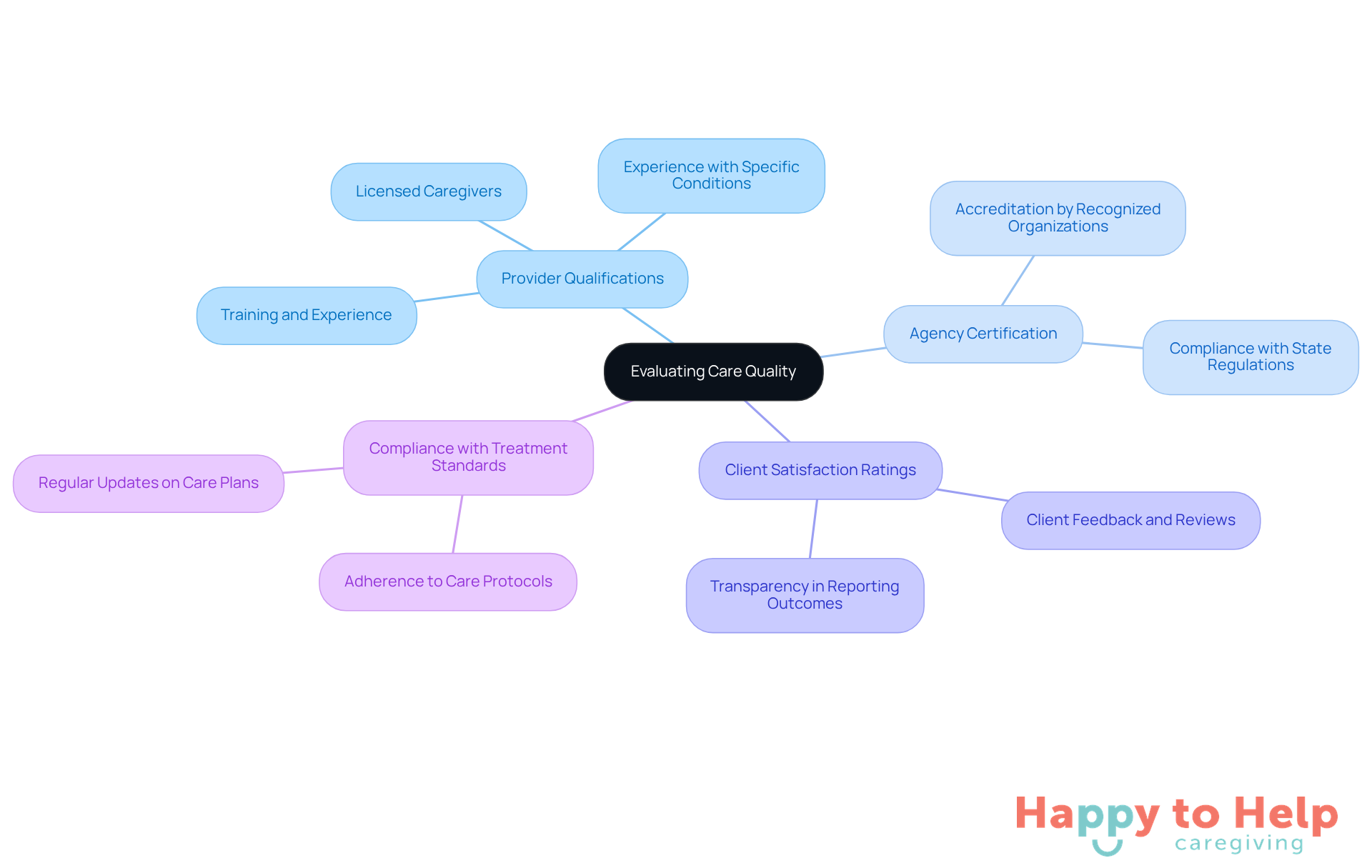
To navigate this issue, families should focus on several key factors. These include:
- Provider qualifications
- Agency certification
- Client satisfaction ratings
- Compliance with treatment standards
For instance, Happy to Help Caregiving highlights the training and experience of their caregivers, ensuring they can effectively address various client needs.
Moreover, families can benefit from organizations that provide transparent reporting on service outcomes and client feedback. Utilizing resources like Medicare's Care Compare tool can also aid in evaluating service quality across different providers. By concentrating on these quality indicators, families can select a provider from in home care companies near me that not only meets their needs but also upholds a high standard of service.
Specialized Services Offered by In-Home Care Companies
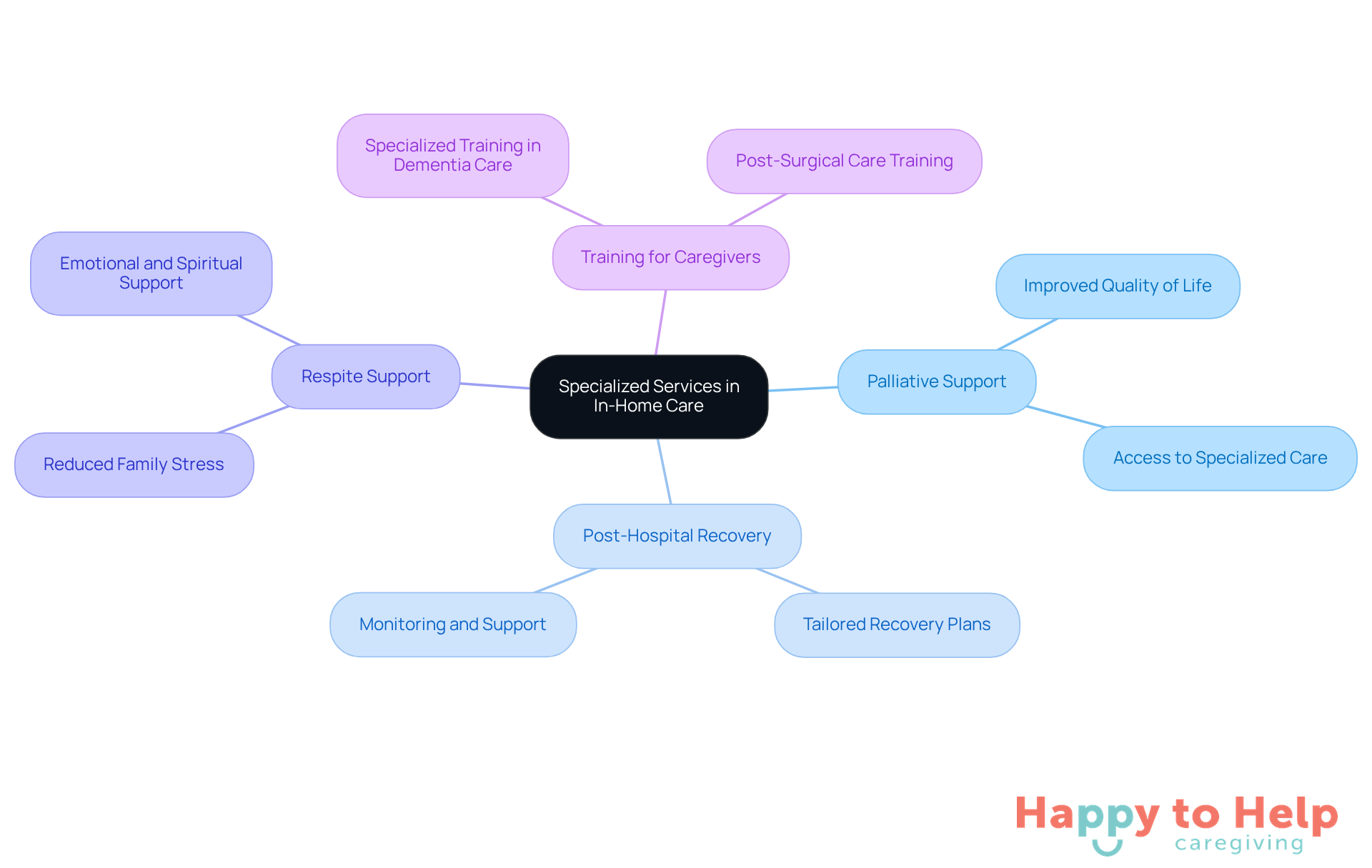
In home care companies near me face a significant challenge in meeting the specialized needs of their clients. Many individuals with severe illnesses require tailored services to enhance their quality of life. For example, Happy to Help Caregiving provides palliative support, which is crucial for those undergoing curative treatments. This comprehensive assistance ensures that patients receive the necessary care throughout their illness journey.
The implications of inadequate support can be profound. Families often struggle with managing complex health situations, particularly when dealing with conditions like Alzheimer's and dementia. Specialized services, such as post-hospital recovery help and respite support for relatives, are essential in these scenarios. Without proper assistance, both patients and their families may experience increased stress and diminished quality of life.
To address these challenges, households should prioritize asking in home care companies near me about the specific training their staff undergo for specialized services. Research indicates that caregivers trained in dementia support can significantly improve clients' quality of life by employing strategies that address symptoms and promote meaningful activities. A case analysis highlights that such training not only benefits clients but also reduces stress for their relatives.
Moreover, statistics show that access to palliative support services can lead to better patient outcomes. Therefore, it’s vital for families to choose organizations with a proven track record in these areas. By ensuring caregivers are well-equipped to handle the complexities of specialized care, families can feel confident that their loved ones will receive the targeted assistance necessary for improved overall well-being.
Your Path Forward
Choosing the right in-home care provider is a significant challenge for families, as it directly impacts the well-being of their loved ones. With numerous options available, understanding the various factors - such as service types, cost variations, and quality assessments - is essential. Families often face the daunting task of navigating these complexities, which can lead to confusion and uncertainty in making the best choice.
The implications of not selecting the right provider can be profound. Families may find themselves overwhelmed by the emotional and financial burdens that arise from inadequate care. Moreover, the distinction between non-medical and medical assistance can lead to significant cost differences, depending on the type of care required. Quality indicators also play a critical role in this decision-making process, as they can significantly affect the level of care received.
To address these challenges, families should prioritize thorough research and ask pertinent questions when evaluating potential providers. Understanding the necessity of specialized services for complex health conditions is crucial, as tailored care can greatly enhance the quality of life for clients. By comparing providers and considering their unique needs and values, families can make informed choices that lead to better outcomes.
Ultimately, engaging in-home care services is about more than just finding assistance; it’s about creating a supportive environment that prioritizes both emotional and physical health. By taking these steps, families can navigate the complex landscape of in-home care more effectively, ensuring that they secure the support that best fits their circumstances.
https://iframe.tely.ai/cta/eyJhcnRpY2xlX2lkIjogIjY5MjNiNTc1ZTUyZmU2NjM2Njg4Njc2NSIsICJjb21wYW55X2lkIjogIjY4ZWU1ZGNhNzMxNzYyNTU3ZjNjOTVjMSIsICJpbmRleCI6IG51bGwsICJ0eXBlIjogImFydGljbGUifQ==Frequently Asked Questions
What are in-home care services?
In-home care services provide support to individuals in their own residences, helping them manage daily activities and maintain comfort.
What types of assistance do in-home care companies offer?
In-home care companies offer two main types of assistance: non-medical and medical. Non-medical assistance includes companionship, personal care (such as bathing and dressing), meal preparation, and light housekeeping. Medical assistance includes skilled nursing support, physical therapy, and medication management.
Why is personalized support important in in-home care?
Personalized support is important because it allows families to create customized care plans tailored to the unique needs of each client, promoting more efficient evaluations of care providers and ensuring relevant options are identified.
What is the trend regarding in-home care services?
There is a growing trend of households opting for in-home care services, reflecting a preference for individualized support that prioritizes both emotional well-being and physical health.
How do non-medical services contribute to overall health?
Non-medical services play a crucial role in overall health and happiness by addressing emotional well-being, which is essential alongside medical treatment for certain conditions.
List of Sources
- Overview of In-Home Care Services
- How 3 Top Trends Have Shaped Home-Based Care This Year (https://homehealthcarenews.com/2025/08/how-3-top-trends-have-shaped-home-based-care-this-year)
- Home Care Industry Trends to Look Out for in 2025 (https://axiscare.com/blog/home-care-industry-trends)
- Health Care Industry Trends to Watch in 2025 - Cornell Brooks Public Policy (https://publicpolicy.cornell.edu/masters-blog/health-care-industry-trends-to-watch-in-2025)
- Home Health Care Trends for 2025 (https://carevoyant.com/home-health-blog/home-health-care-trends-2025)
- The Top 4 Trends Affecting the Home Health Care Industry in 2025 | JM Search (https://jmsearch.com/blog/the-top-4-trends-affecting-the-home-health-care-industry-in-2025)
- Cost Comparison of In-Home Care Providers
- How Much Does In-Home Care Cost in 2025? A State-by-State Guide - Elder Answers (https://elder-answers.com/how-does-in-home-care-cost-in-2025)
- Survey Shows Long-Term Care Costs Continue to Rise | Shepherd Elder Law (https://shepherdelderlaw.com/survey-shows-long-term-care-costs-continue-to-rise)
- 52 Eye-Opening Home Health Statistics: Insights for 2025 (https://boosthomehealth.com/home-health-statistics)
- The Cost of In-Home Caregivers May Surprise You (https://health.usnews.com/senior-care/caregiving/articles/how-much-do-in-home-caregivers-cost)
- Home Care Costs in 2025: A State-by-State Guide (https://aplaceformom.com/caregiver-resources/articles/in-home-care-costs)
- Evaluating Care Quality Across Providers
- Quality of Care in Home Health Agencies with and without Accreditation: A Cohort Study - PMC (https://pmc.ncbi.nlm.nih.gov/articles/PMC9901214)
- Challenges and Opportunities in Home Health Quality Improvement (https://ahrq.gov/news/blog/ahrqviews/home-health-quality-improvement.html)
- U.S. News to Debut Best Home Health Ratings in 2026 (https://usnews.com/info/blogs/press-room/articles/2025-11-03/u-s-news-to-debut-best-home-health-ratings-in-2026)
- How to Choose the Right In-Home Care Provider for Your Loved One | Luxe Homecare (https://luxehomecare.com/how-to-choose-the-right-in-home-care-provider-for-your-loved-one)
- How to Evaluate Home Care Agencies for Quality Services (https://ultimatecareny.com/resources/how-to-evaluate-home-care-agencies-for-quality-services)
- Specialized Services Offered by In-Home Care Companies
- Home (https://homehealthcarenews.com)
- Respite services significantly increase home deaths for palliative care patients (https://news-medical.net/news/20250923/Respite-services-significantly-increase-home-deaths-for-palliative-care-patients.aspx)
- Home-Based Care Companies Improve Outcomes By Training Family Caregivers (https://homehealthcarenews.com/2025/10/home-based-care-companies-improve-outcomes-by-training-family-caregivers)
- Hospice Vs Palliative Care Vs Home Care | Carolina Caring (https://carolinacaring.org/news/hospice-palliative-care-home-based-primary-care-whats-the-difference)
- Why Specialty-Specific Training Matters in Home Care (https://learn2care.us/blog/specialty-specific-training-in-home-care)