

For families in our service areas
For families in our service areas, this guide explains home care and how non-medical in-home caregiving can support care planning in East Idaho, Treasure Valley & Magic Valley, Northern Wasatch, North Central West Virginia, and Northeast Ohio.
The Importance of Find Home Care
Navigating home care for seniors can feel overwhelming for families who are facing the challenges of aging loved ones. It’s a journey filled with emotional ups and downs, and many families find themselves stressed and unsure of where to turn. With a significant portion of the elderly population needing assistance, it’s crucial to understand the various types of home care services available. This understanding is key to ensuring that your loved ones receive the right support they deserve.
This guide outlines five essential steps to help families identify, assess, and choose the best home care options tailored to their loved ones' unique needs. As the demand for these services continues to rise, families may wonder: how can they confidently select the right care provider amidst so many choices? Rest assured, you’re not alone in this journey. Together, we can explore the options that will provide the compassionate care your loved ones need.
Understand Home Care Services for Seniors
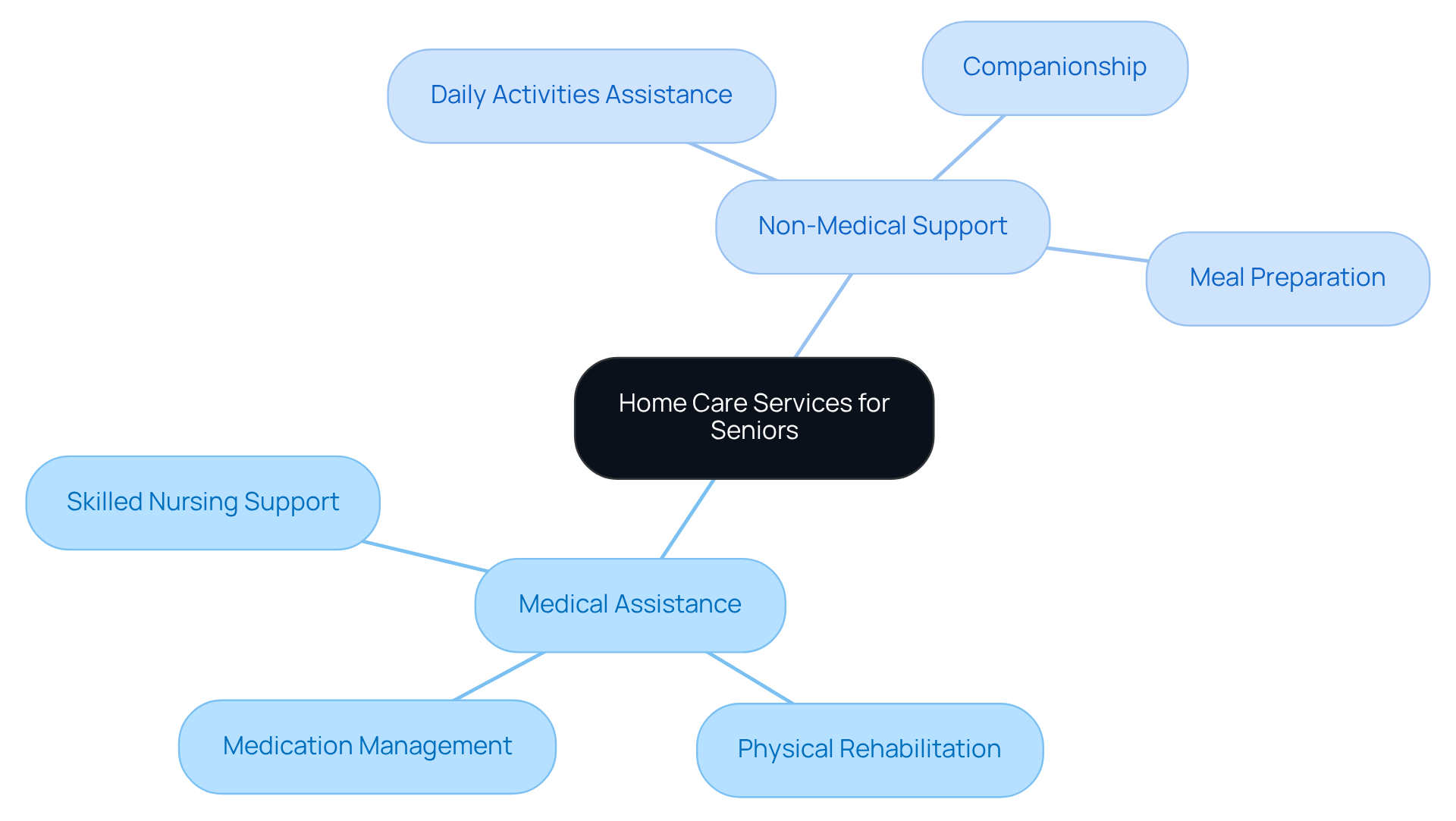
Caring for seniors can be a challenging journey, and understanding the options for home care for seniors near me is crucial. Home care for seniors near me generally falls into two main categories: medical assistance and non-medical support. Medical care includes skilled nursing support, physical rehabilitation, and medication management, typically provided by certified professionals who understand the complexities of health needs. On the other hand, home care for seniors near me focuses on assisting with daily activities like bathing, dressing, meal preparation, and providing companionship.
Recognizing these categories can help families identify the specific assistance their loved ones may require. For example, if a senior struggles with mobility and personal hygiene, non-medical services might be enough. However, for those with more complex medical needs, a combination of both types of support could be essential. Understanding these options is the first step toward finding the right home care for seniors near me for your loved one.
Statistics show that about 70% of seniors will need some form of assistance during their lives, with many relying heavily on non-medical support. As the demand for home care for seniors near me continues to grow - projected to rise by 22% by 2034 - families are encouraged to explore the various service models available. This exploration ensures that their loved ones receive the compassionate support they deserve.
Geriatric specialists emphasize the importance of understanding these distinctions. By doing so, families can make informed choices about the care options available, alleviating some of the stress and uncertainty that often accompany caregiving. Remember, you’re not alone in this journey; there are resources and support systems in place to help you navigate these decisions with confidence.
Assess Individual Care Needs
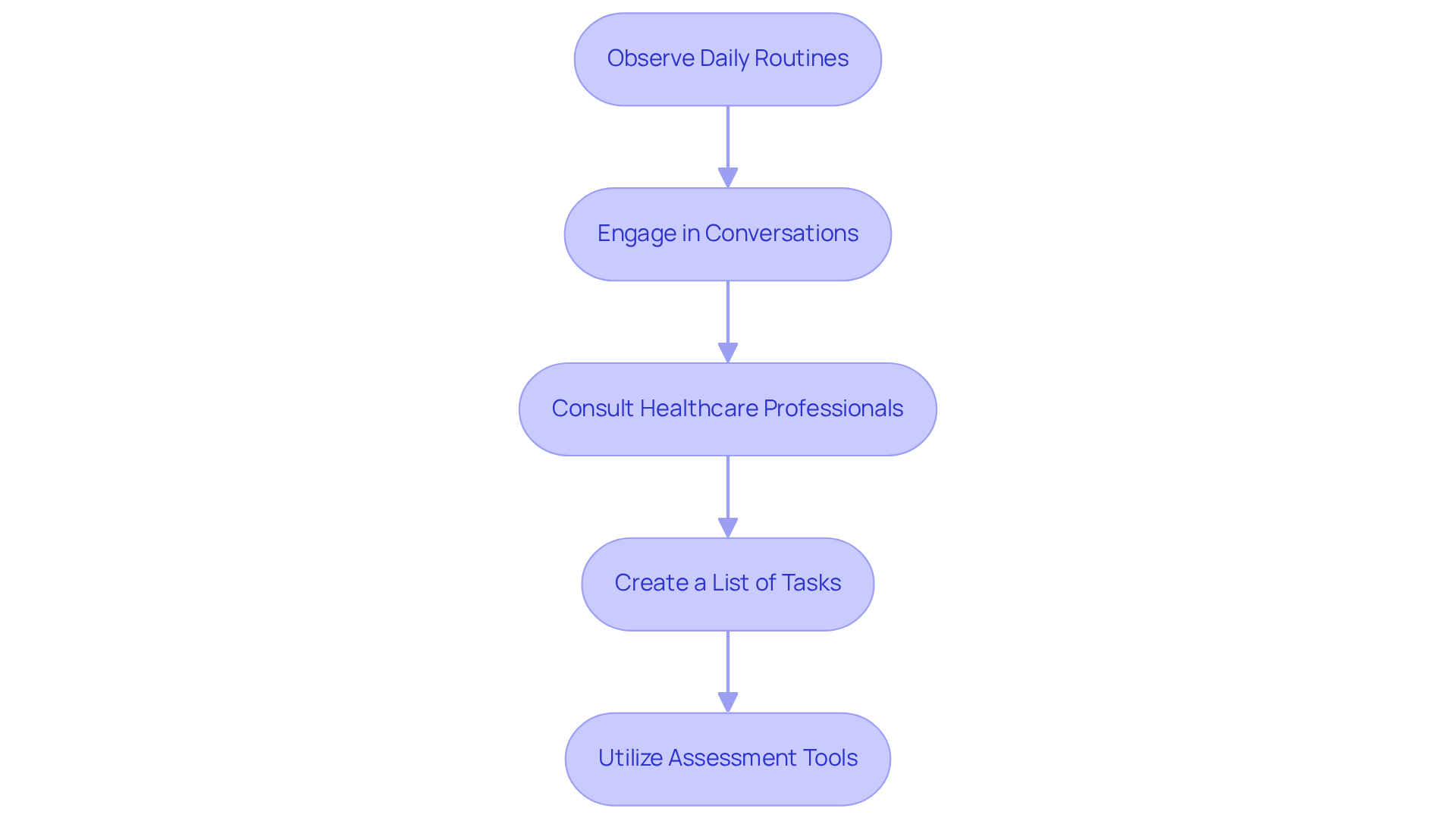
To effectively evaluate the support needs of a senior, it’s essential to start by observing their daily routines and pinpointing areas where they may struggle. Think about factors like mobility, cognitive function, and emotional well-being. Engaging in heartfelt conversations with the senior about their preferences and concerns can provide invaluable insights into their needs. Additionally, consulting with healthcare professionals can offer assessments based on their medical history and current health status.
Creating a list of specific tasks that require assistance - like grocery shopping, medication reminders, or companionship - can help clarify what support is necessary. This thorough understanding serves as a foundation for selecting the most appropriate services for home care for seniors near me.
According to the Aging Life Care Association, about 2 in 3 individuals who reach older age are likely to need prolonged assistance and support. This statistic underscores the importance of timely evaluations. Utilizing standardized assessment tools, such as the Barthel Index for self-care tasks or the Mini-Mental State Examination (MMSE) for cognitive function, can further refine your evaluation. These tools help measure the level of support required, ensuring that plans are tailored to each person’s unique situation.
As Kate Granigan, CEO of LifeCare Advocates, wisely notes, "If they don’t get the help they need, they could end up with injuries." By following these steps, families can ensure that their loved ones receive the individualized support they deserve, ultimately enhancing their quality of life in their living environment.
Research Local Home Care Providers
When searching for home care for seniors near me, it’s important to start with tools that can guide you, like the Eldercare Locator or Medicare's health assistance directory. These platforms are designed to help you find agencies that provide home care for seniors near me, making the process a bit easier during what can be a stressful time.
Don’t hesitate to reach out to medical experts, friends, or family members who have experience with home care for seniors near me. Their insights can be invaluable. Once you have a list of potential providers, take the time to check their credentials, including licensing and accreditation. Reading reviews and testimonials can also provide a glimpse into the experiences of other families, helping you feel more confident in your choices.
With around 11,506 health agencies offering home care for seniors near me across the U.S. as of 2023, thorough research is essential. As Dr. James McDonald, State Health Commissioner, reminds us, "It is our priority to ensure that home care users and their support providers are supported and that all residents who utilize this program receive high-quality personalized care." This commitment to quality care is crucial for your loved one’s well-being.
Finally, consider visiting the agencies in person. This allows you to ask questions and get a feel for their operations and staff. Direct interaction can help you evaluate the agency's environment and the demeanor of the attendants, ensuring they align with your loved one's needs. Given that the average turnover rate for professional support staff reached 79.2 percent in 2023, it’s also wise to consider staff stability when evaluating agencies. Your loved one deserves a caring and consistent support system.

Evaluate Caregiver Qualifications and Compatibility
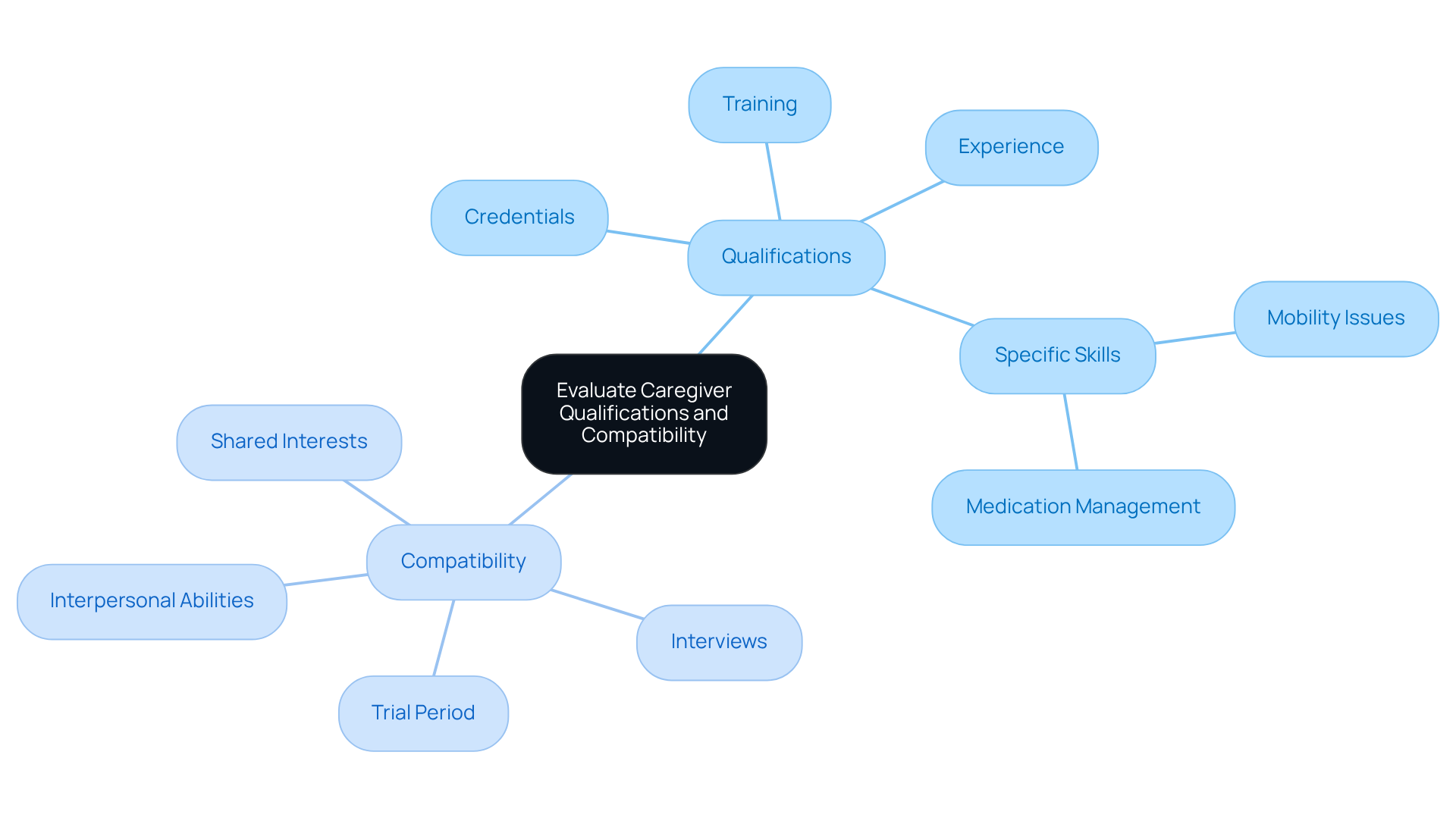
When you're looking for the right support for your loved one, it’s important to start by examining the provider’s credentials. Look closely at their certifications, training, and experience in elderly support. Ask about specific skills, like how they handle mobility issues or manage complex medication schedules - these are crucial for effective care.
But it’s not just about qualifications. The interpersonal abilities of a provider matter just as much. A provider’s character can significantly influence the quality of care they deliver. Take the time to arrange interviews with potential providers. Observing their communication style and demeanor can reveal a lot about how they approach caregiving.
Consider implementing a trial period. This allows you to see how they engage with your loved one, giving you a firsthand look at compatibility. Studies show that when caregivers share common interests or values with their clients, they build stronger, more effective relationships. This connection not only enhances overall satisfaction but also leads to better service outcomes.
Remember, this compatibility is essential. It fosters trust and ensures a positive caregiving experience, which is what we all want for our loved ones.
Understand Costs and Payment Options
Home assistance expenses can vary significantly based on the type of support needed, caregiver qualifications, and where you live. Families often find themselves spending between $25 to $35 per hour for in-home assistance, with some areas seeing rates soar to $50 per hour. It’s so important for families to have open conversations about pricing with potential providers. This way, they can clarify fee structures and any additional costs that might come up.
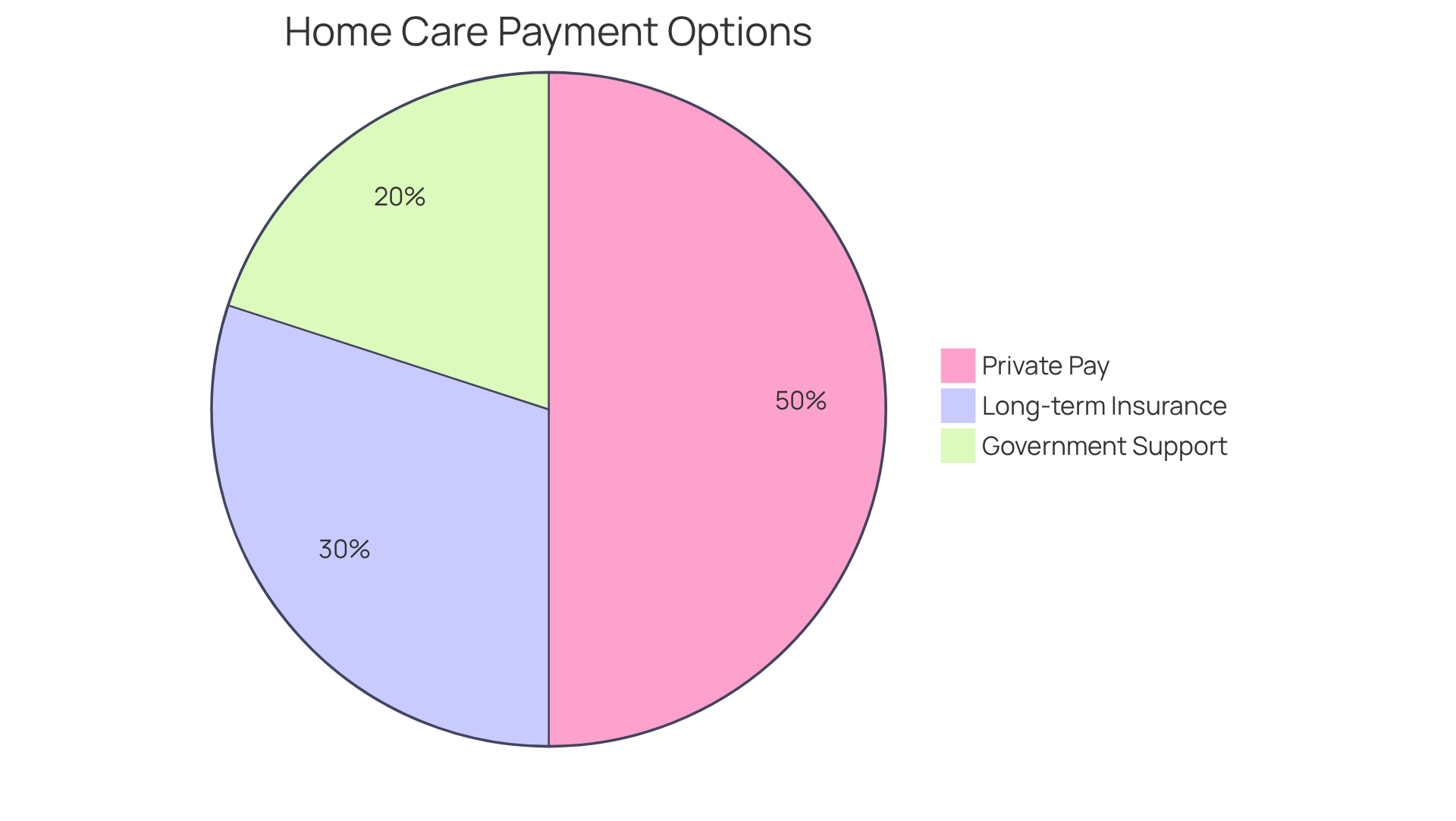
There are several payment options available to help ease these financial burdens:
- Private pay is a common route, where families tap into personal savings or retirement funds.
- Long-term support insurance can also provide valuable financial assistance, especially for those who have planned ahead.
- Additionally, government support programs like Medicaid may offer options for home care for seniors near me, depending on their income and state regulations.
Families are increasingly looking for creative ways to manage these expenses. For instance, combining in-home assistance with community services like Meals on Wheels can provide essential support at little to no cost. Understanding these financial aspects is crucial for families as they navigate the complexities of long-term care for their loved ones. It’s all about making informed decisions and planning effectively for the future.
Moving Forward with Find Home Care
Finding the right home care for seniors is so important for their well-being and comfort. Families often face emotional challenges when making these decisions, and understanding the various services available can truly help. It all starts with recognizing the difference between medical and non-medical care, which lays the groundwork for choosing the right support.
In this article, we’ve outlined essential steps to make the process of finding home care for seniors easier:
- Observing individual care needs
- Consulting professionals
- Researching local providers
- Evaluating caregiver qualifications
Each step is crucial in creating a personalized care plan. Plus, understanding the financial aspects and exploring payment options can ease some of the burdens that come with home care.
The importance of this journey cannot be overstated. The right home care not only improves the quality of life for seniors but also brings peace of mind to families. By taking proactive steps and utilizing available resources, families can ensure their loved ones receive the compassionate and competent care they deserve. Embrace this journey with confidence, knowing that the right support is within reach.
https://iframe.tely.ai/cta/eyJhcnRpY2xlX2lkIjogIjY5MWZhYzY4ZDE4ZTkwODFlMzViYjUzNiIsICJjb21wYW55X2lkIjogIjY4ZWU1ZGNhNzMxNzYyNTU3ZjNjOTVjMSIsICJpbmRleCI6IG51bGwsICJ0eXBlIjogImFydGljbGUifQ==Frequently Asked Questions
What are the main categories of home care services for seniors?
Home care services for seniors generally fall into two main categories: medical assistance and non-medical support. Medical care includes skilled nursing support, physical rehabilitation, and medication management, while non-medical support focuses on assisting with daily activities like bathing, dressing, meal preparation, and providing companionship.
How can families determine the specific assistance their loved ones may require?
Families can determine the specific assistance needed by observing the senior's daily routines, identifying areas where they struggle, and engaging in conversations about their preferences and concerns. Consulting with healthcare professionals can also provide valuable assessments based on the senior's medical history and current health status.
What statistics highlight the need for home care services among seniors?
Statistics show that about 70% of seniors will need some form of assistance during their lives, with many relying heavily on non-medical support. The demand for home care services is projected to rise by 22% by 2034.
Why is it important to understand the distinctions between medical and non-medical home care services?
Understanding the distinctions helps families make informed choices about the care options available, alleviating stress and uncertainty in the caregiving process. It ensures that seniors receive the appropriate level of support based on their individual needs.
What steps can families take to assess the support needs of a senior effectively?
Families can assess support needs by observing daily routines, identifying struggles, engaging in conversations with the senior, and consulting healthcare professionals. Creating a list of specific tasks that require assistance can also clarify the necessary support.
What standardized assessment tools can be used to evaluate a senior's care needs?
Standardized assessment tools include the Barthel Index for self-care tasks and the Mini-Mental State Examination (MMSE) for cognitive function. These tools help measure the level of support required and tailor care plans to each individual's unique situation.
What is the potential consequence of not providing the necessary assistance to seniors?
If seniors do not receive the help they need, they could end up with injuries, highlighting the importance of timely evaluations and appropriate support.