5 Steps to Find In Home Care Near You for Your Loved Ones

For families in our service areas
For families in our service areas, this guide explains in-home care and how non-medical in-home caregiving can support care planning in East Idaho, Treasure Valley & Magic Valley, Northern Wasatch, North Central West Virginia & Southwestern Pennsylvania, and Northeast Ohio.
Understanding Find In Home Care Near Me
Finding the right in-home care for loved ones presents a significant challenge for families, often filled with both hope and uncertainty. As caregivers sift through numerous options, they face the daunting task of understanding specific care needs and preferences. This complexity can lead to stress and confusion, making it crucial to navigate this journey thoughtfully.
To address these challenges, caregivers must take proactive steps to identify suitable providers. This involves assessing the unique needs of their loved ones and considering factors such as:
- Medical requirements
- Personal preferences
- Compatibility with caregivers
By doing so, families can ensure that they are making informed decisions that prioritize the well-being of those they cherish.
This guide offers a structured approach to empower families in their search for in-home care. By following clear, actionable steps, caregivers can foster lasting and positive relationships with care providers. Ultimately, this not only enhances the quality of care but also brings peace of mind to families during this critical journey.
Assess Your Care Needs and Preferences
Engaging in an open discussion with your loved one about their daily routines, preferences, and health concerns is crucial for effective caregiving. Caregivers often face the challenge of understanding these needs, which can lead to overlooked issues if not addressed.
-
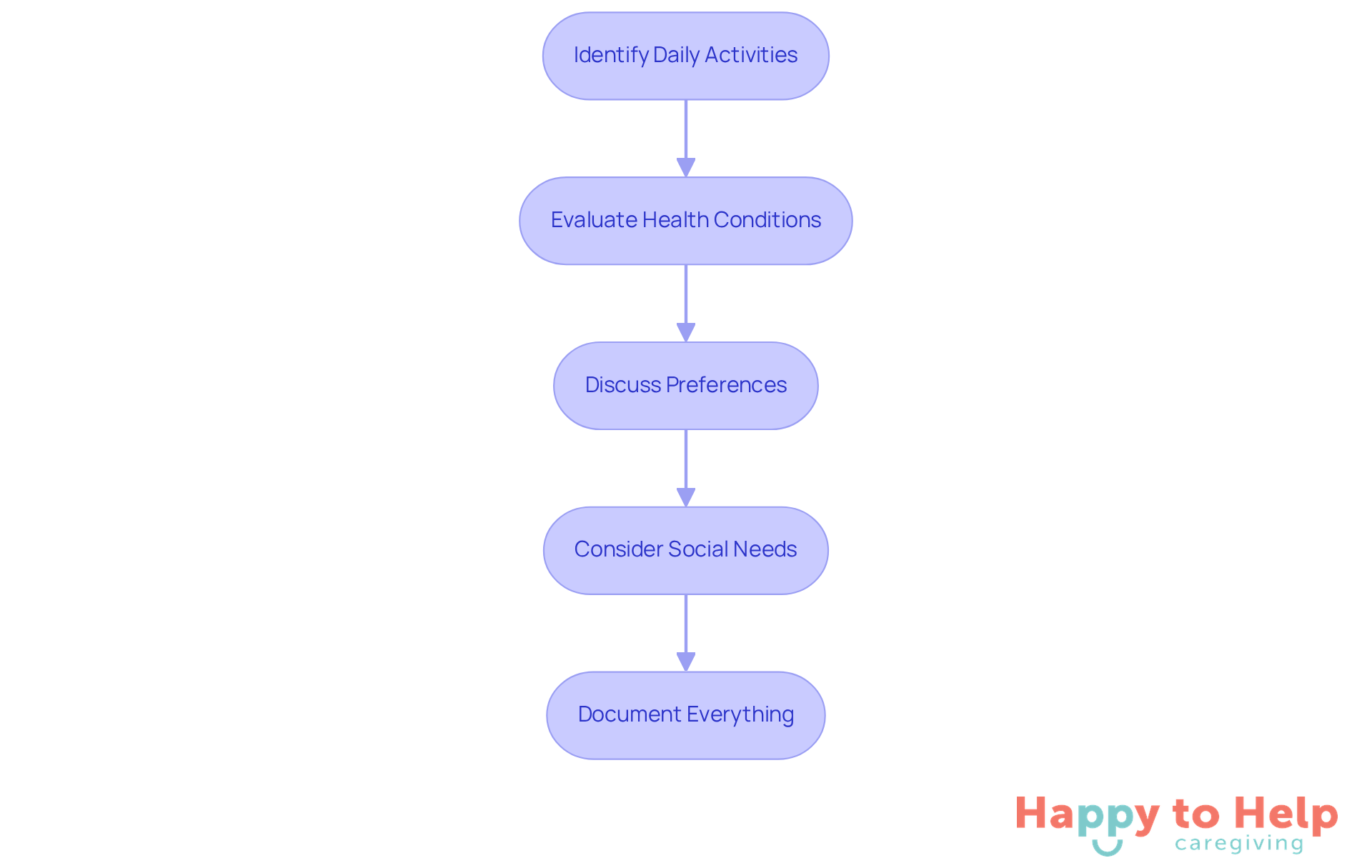
Identify Daily Activities: Start by listing the activities your family member needs help with, such as bathing, dressing, meal preparation, or medication management. This step is essential to ensure that no critical aspect of their daily life is neglected.
-
Evaluate Health Conditions: Next, take note of any medical conditions that may require specialized care. Conditions like dementia, mobility issues, or chronic illnesses can significantly impact their daily routines. For instance, frequent skin wounds in aging family members may indicate larger issues, such as arthritis or cognitive decline, which could necessitate immediate attention.
-
Discuss Preferences: It's also important to ask your loved one about their preferences regarding caregivers. Consider factors like gender, age, and personality traits that would make them feel comfortable. This can greatly enhance their overall well-being.
-
Consider Social Needs: Think about the importance of companionship and social interaction in their daily life. Research shows that social engagement is linked to improved emotional well-being. Social withdrawal may indicate a need for help due to depression or cognitive decline, making this an essential area to address.
-
Document Everything: Finally, write down all the information collected to create a clear picture of the support needs. This documentation will be invaluable in later steps, ensuring that caregivers can provide the best possible care.
Research Local In-Home Care Providers
Finding reliable in home care near me can be a daunting task for caregivers. With so many options available, it’s crucial to navigate this process effectively to ensure the well-being of loved ones. Here are some practical steps to help you in your search:
-
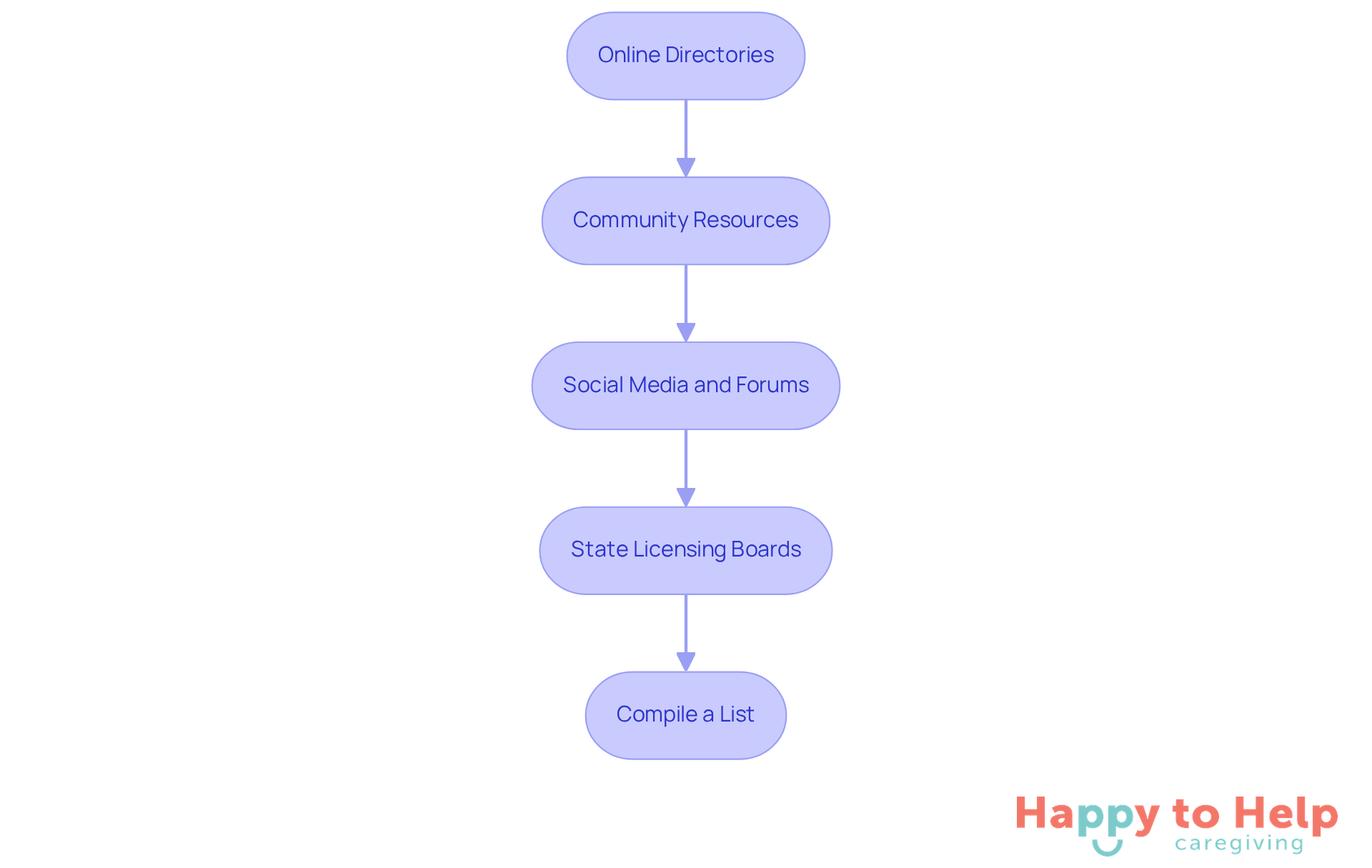
Online Directories: Start by utilizing platforms like A Place for Mom, Caring.com, or Yelp. These resources can help you identify agencies that provide in home care near me. Focus on those with excellent ratings and positive client feedback, as these indicators often reflect the quality of service. For example, Visiting Angels boasts a 5.0 rating based on 3 reviews, making it a strong candidate for your consideration.
-
Community Resources: Don’t hesitate to reach out to local senior centers, hospitals, or community organizations. They can provide recommendations for trustworthy providers of in home care near me. Agencies such as Adultcare Assistance Homecare and ComForCare are well-regarded for their quality care in Peoria, AZ, and are worth exploring.
-
Social Media and Forums: Engage with local community groups on platforms like Facebook or Reddit. These forums can be excellent sources for personal recommendations and shared experiences from families who have faced similar challenges.
-
State Licensing Boards: It’s essential to verify the credentials of potential agencies by checking with your state’s licensing board. Ensuring that agencies are properly licensed and accredited is crucial for safeguarding your family members' well-being.
-
Compile a List: Finally, create a comprehensive list of potential providers. Include their services, contact information, and any initial impressions based on your research. This organized approach will facilitate informed decision-making as you evaluate your options.
Compare Services, Costs, and Reviews
For families, selecting the right provider for in home care near me can be a daunting task. With numerous options available, it’s crucial to ensure that the chosen service meets the specific needs of your loved one. This process can be overwhelming, but by following a structured approach, you can simplify your decision-making.
-
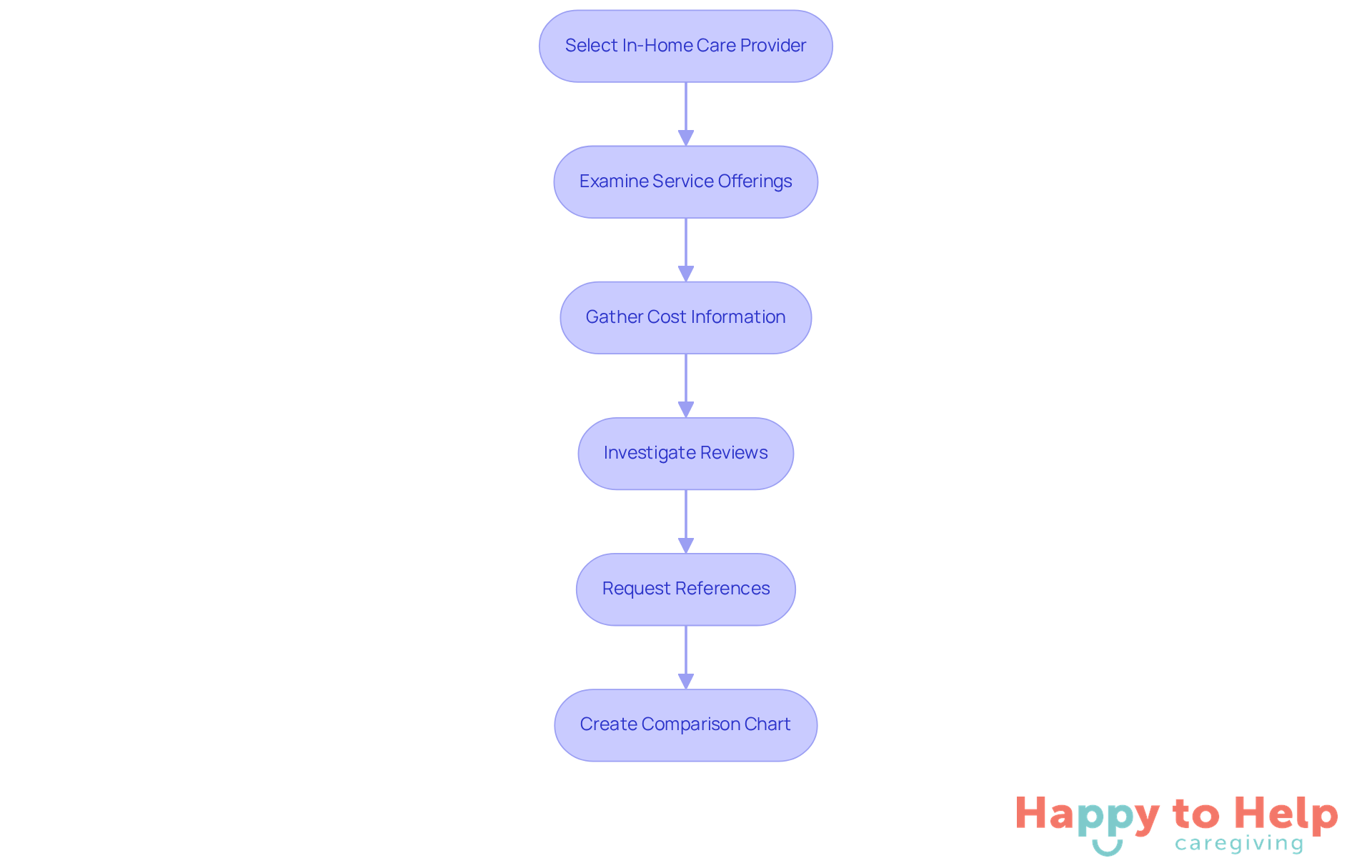
Service Offerings: Start by examining the specific services each provider offers. Ensure they align with your loved one's needs. Consider alternatives such as companionship, personal assistance, and specialized medical support, as these can significantly impact the quality of care.
-
Cost Analysis: Next, gather detailed pricing information from each agency. Inquire about hourly rates, package deals, and any additional fees for services like transportation or specialized care. For context, the national median cost for home health aide services is approximately $5,148 per month, with hourly rates typically around $33, depending on location and service complexity. Remember, costs can vary significantly across states, so researching local rates is essential.
-
Read Reviews: Investigate reviews across multiple platforms to gain a comprehensive understanding of each agency's reputation. Focus on feedback regarding the quality, reliability, and responsiveness of caregivers, as these elements are vital for a positive caregiving experience.
-
Check References: Request references from current or past clients to gain insights into their experiences with the agency. This step can provide valuable information about the agency's performance and interactions with caregivers.
-
Create a Comparison Chart: Organize your findings in a chart format to visualize differences in services, costs, and reviews. This method allows for easier comparison and aids in making an informed decision.
Additionally, consider seeking advice from financial consultants or caregiving specialists for insights into managing caregiving expenses, including potential tax deductions for in-home support costs. Evaluating the qualifications and training of caregivers is also essential to ensure your family member receives the best possible support.
By following these steps, families can navigate the complexities of selecting in home care near me more effectively, ensuring they find the right fit for their loved ones.
Interview Caregivers and Assess Compatibility
Finding the right caregiver for your loved one can be a daunting task. The challenge lies not only in identifying qualified candidates but also in ensuring they are a good fit for your family’s unique needs. This process can feel overwhelming, but with a structured approach, you can simplify it.
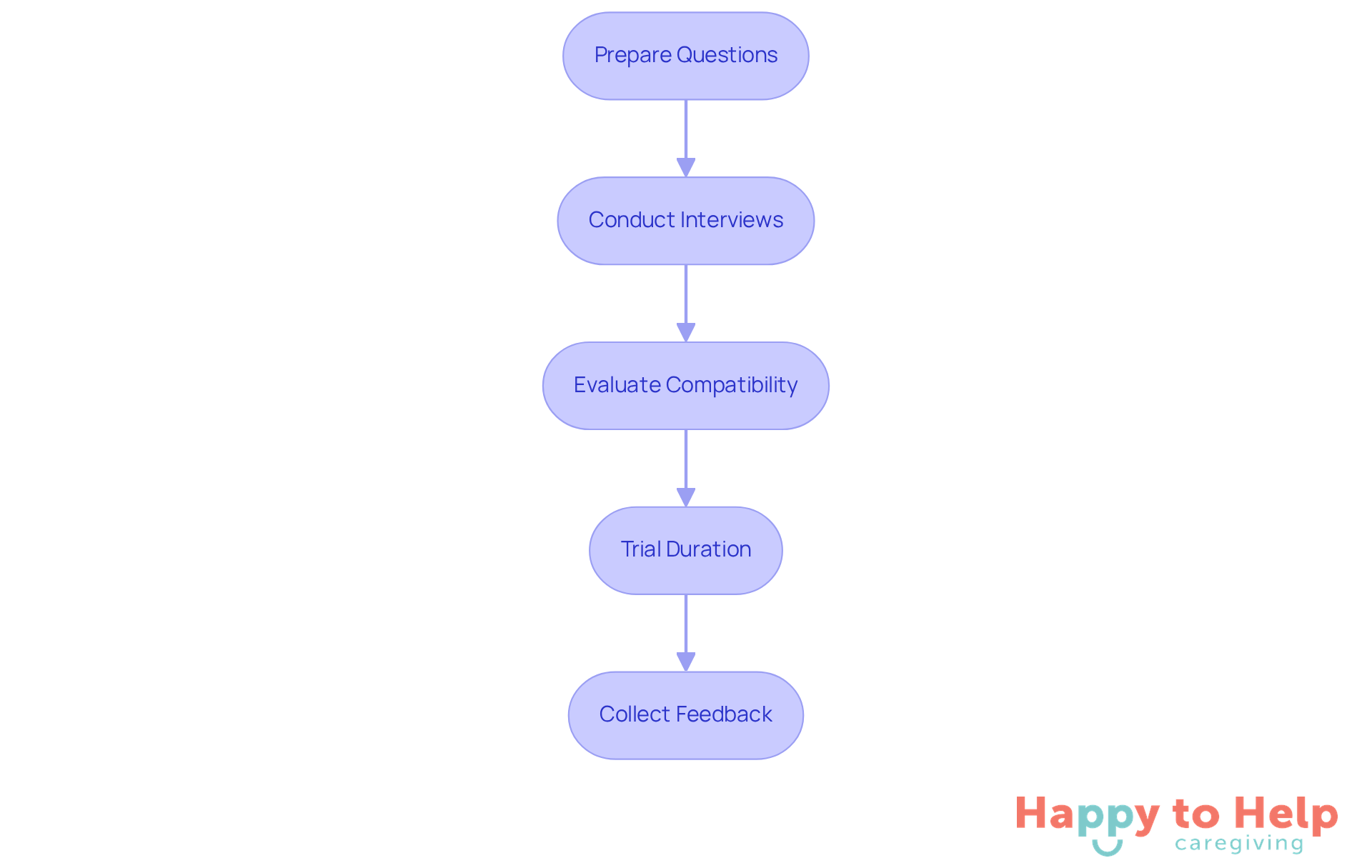
Prepare Questions: Start by developing a list of questions that cover essential areas such as experience, training, and caregiving philosophy. Consider asking:
- What experience do you have with clients who have similar needs?
- How do you handle challenging situations?
- What activities do you enjoy doing with clients?
Conduct Interviews: Arrange interviews with your selected providers. Pay close attention to their communication style and how they interact with your loved one. This interaction is crucial in assessing their suitability.
Evaluate Compatibility: After the interviews, discuss your impressions with your partner. Compatibility is key to a successful caregiving relationship, so ensure both of you feel comfortable with the choices.
Trial Duration: If possible, set up a trial period with the chosen provider. This allows you to observe how they engage with your family member in a real-world setting, providing valuable insights into their compatibility.
Collect Feedback: After the trial, gather feedback from both your loved one and the caregiver. This step is essential to evaluate whether they are a good match, ensuring that everyone’s needs are met.
Monitor Care Quality and Maintain Communication
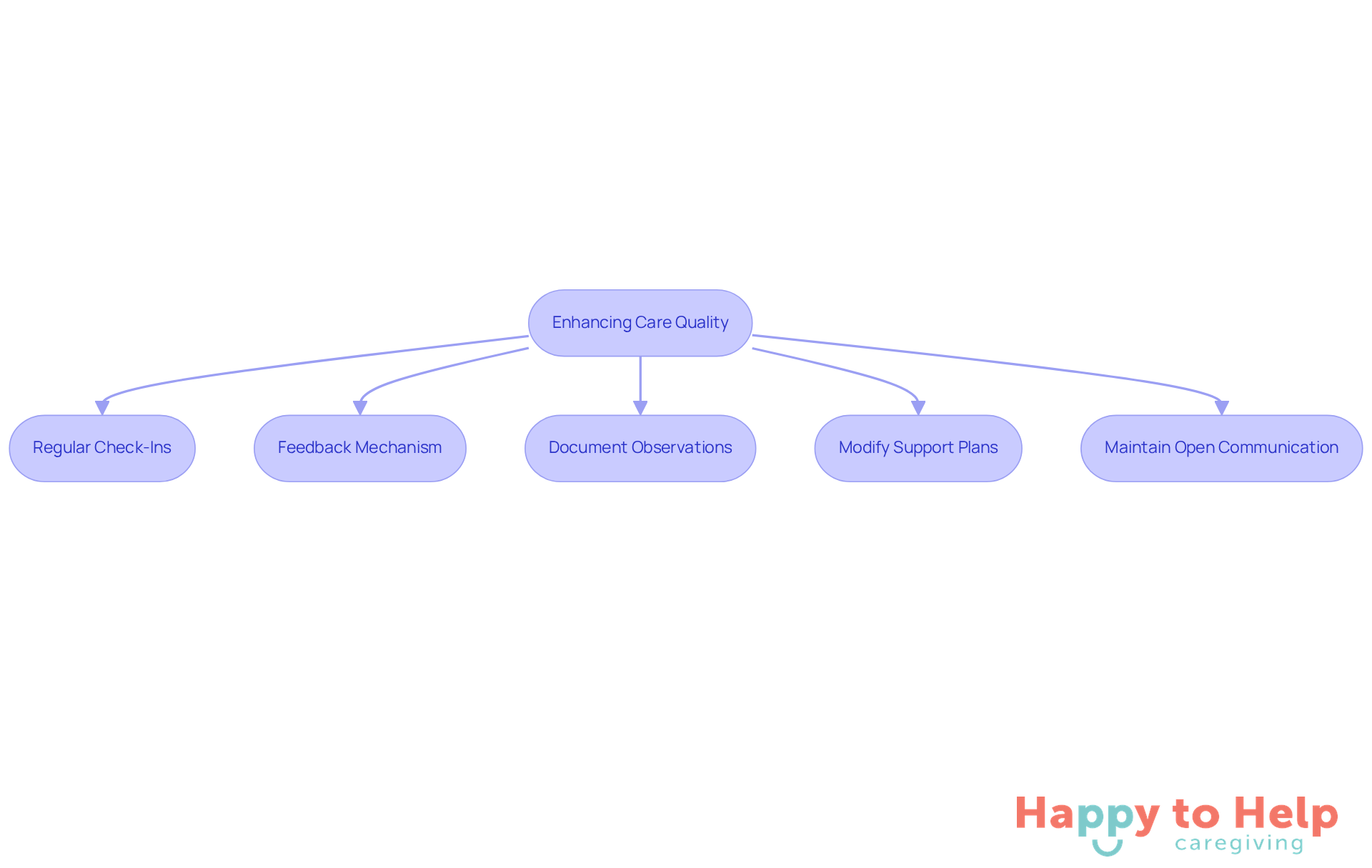
To ensure high-quality care for your loved ones, caregivers often face challenges that can impact the support provided. Poor communication and lack of feedback can lead to misunderstandings and unmet needs, ultimately affecting the well-being of those receiving care.
-
Regular Check-Ins: Arrange regular check-ins with both your family member and the caregiver. This enables open discussions about any concerns or modifications in support needs, fostering a proactive approach to management.
-
Feedback Mechanism: Establish a structured feedback system where your significant other can express their emotions regarding the support they are receiving. This empowers them and ensures their voice is heard in the caregiving process.
-
Document Observations: Maintain a log of observations regarding the caregiver's performance and your family member's satisfaction. This documentation can assist in recognizing patterns and areas for enhancement, ensuring that support remains aligned with your loved one's needs.
-
Modify Support Plans: Be adaptable and open to modifying the support plan based on feedback and changing needs. Consistently reviewing the support plan ensures it stays pertinent and efficient.
-
Maintain Open Communication: Promote clear dialogue among all individuals involved, including family members, caregivers, and your dear one. This collaborative approach fosters a supportive environment, enhancing the overall caregiving experience.
Effective communication is essential in caregiving, as it not only fosters trust but also guarantees that everyone is coordinated in their efforts to deliver the best possible support. Regular interactions and feedback can significantly improve the quality of care and the well-being of your loved one.
Making the Right Choice
Finding the right in-home care for loved ones can be a daunting challenge. Caregivers often face the problem of navigating a complex landscape of options, which can lead to confusion and uncertainty. This multifaceted process requires careful assessment, research, and ongoing communication to ensure that the specific needs of family members are met.
The implications of not addressing these needs can be significant. Without a thorough evaluation of care requirements and preferences, families may struggle to create a supportive environment that enhances their loved one's quality of life. It’s crucial to recognize that the journey to finding suitable in-home care begins with an honest assessment of what is truly needed.
To tackle this issue effectively, caregivers should follow a structured approach:
- Assess individual care needs and preferences.
- Research local providers, compare services and costs, and interview potential caregivers.
- Monitor care quality.
Each of these steps plays a vital role in navigating the complexities of in-home care, empowering families to make informed decisions that align with their loved one's unique situation.
Open communication and feedback are key to maintaining a high standard of care. By prioritizing these elements, caregivers can ensure that the evolving needs of the individual are consistently met. This proactive approach not only enhances the quality of care but also fosters a nurturing and responsive caregiving relationship.
Ultimately, the pursuit of quality in-home care is about more than just finding a service provider; it’s about advocating for loved ones. By utilizing the outlined steps and regularly assessing care quality, families can make a meaningful difference in the lives of those they support.
https://iframe.tely.ai/cta/eyJhcnRpY2xlX2lkIjogIjY5MjNiYmZkODU4ZTE0MmJhNzFkNjljOCIsICJjb21wYW55X2lkIjogIjY4ZWU1ZGNhNzMxNzYyNTU3ZjNjOTVjMSIsICJpbmRleCI6IG51bGwsICJ0eXBlIjogImFydGljbGUifQ==Frequently Asked Questions
Why is it important to assess care needs and preferences?
Assessing care needs and preferences is crucial for effective caregiving as it helps caregivers understand daily routines, preferences, and health concerns of their loved ones, ensuring that no critical aspects of their daily life are overlooked.
What should caregivers identify when assessing daily activities?
Caregivers should list activities that their family member needs help with, such as bathing, dressing, meal preparation, and medication management.
How can health conditions impact caregiving?
Medical conditions like dementia, mobility issues, or chronic illnesses can significantly affect daily routines and may require specialized care, indicating the need for immediate attention to certain issues.
What factors should be considered regarding caregiver preferences?
Caregivers should ask their loved ones about their preferences related to caregivers, including gender, age, and personality traits that would make them feel comfortable.
Why are social needs important in caregiving?
Social needs are important because companionship and social interaction are linked to improved emotional well-being. Social withdrawal may indicate a need for help due to depression or cognitive decline.
What should caregivers do with the information they collect?
Caregivers should document all the information collected to create a clear picture of the support needs, which will be invaluable for providing the best possible care.
What are some effective ways to research local in-home care providers?
Effective ways include using online directories like A Place for Mom or Caring.com, reaching out to local senior centers and community organizations, engaging with local community groups on social media, and checking with state licensing boards.
How can online directories help in finding in-home care providers?
Online directories can help identify agencies that provide in-home care with excellent ratings and positive client feedback, which often reflect the quality of service.
Why is it important to verify the credentials of potential care agencies?
Verifying the credentials of potential agencies is crucial for safeguarding family members' well-being by ensuring that the agencies are properly licensed and accredited.
What should caregivers include in their compiled list of potential providers?
Caregivers should include the services offered, contact information, and any initial impressions based on their research in their compiled list of potential providers.
List of Sources
- Assess Your Care Needs and Preferences
- Aurora releases study to address needs of older adults and caregivers (https://denver7.com/news/front-range/aurora/aurora-releases-study-to-address-needs-of-older-adults-and-caregivers)
- Through Early Discussions About Elder Care, Doctors Can Empower Seniors to Age in Place - MedCity News (https://medcitynews.com/2024/11/through-early-discussions-about-elder-care-doctors-can-empower-seniors-to-age-in-place)
- Bridging the Gap in Elderly Care: The Case for Comprehensive In-Home Assessment (https://reachmd.com/news/bridging-the-gap-in-elderly-care-the-case-for-comprehensive-in-home-assessment/2474101)
- Older adults prioritize social activities, inclusiveness in massive survey assessing what matters most to them (https://mcknights.com/news/older-adults-prioritize-social-activities-inclusiveness-in-massive-survey-assessing-what-matters-most-to-them)
- How to Assess if an Older Adult Needs Caregiving Help (https://aarp.org/caregiving/home-care/assessing-need-for-caregiver)
- Research Local In-Home Care Providers
- The 10 Best Home Care Agencies for Seniors in Peoria, AZ for 2025 | Caring.com (https://caring.com/senior-care/in-home-care/arizona/peoria)
- THE BEST 10 HOME HEALTH CARE in PEORIA, AZ - Updated 2025 - Hours - Yelp (https://yelp.com/search?cflt=homehealthcare&find_loc=Peoria%2C+AZ)
- TOP 10 BEST In Home Care in Peoria, AZ - Updated 2025 - Yelp (https://yelp.com/search?find_desc=In+Home+Care&find_loc=Peoria%2C+AZ)
- Top 10 Home Care Agencies in Peoria, AZ | CareYaya (https://careyaya.org/resources/blog/top-10-home-care-agencies-in-peoria-az)
- Top 10 Home Care Agencies in Peoria, AZ | Affordable Pricing (https://care.com/home-care-agencies/peoria-az)
- Compare Services, Costs, and Reviews
- How Much Does In-Home Care Cost? Your Guide to Affording Care (https://comforcare.com/blog/how-much-does-in-home-care-cost-your-guide-to-affording-care)
- Home Care Costs in 2025: A State-by-State Guide (https://aplaceformom.com/caregiver-resources/articles/in-home-care-costs)
- Average Cost of Home Health Care Services (https://careindeed.com/blogs/average-cost-of-home-health-care-services)
- The Cost of In-Home Caregivers May Surprise You (https://health.usnews.com/senior-care/caregiving/articles/how-much-do-in-home-caregivers-cost)
- What Is Senior Home Care: Services, Costs and Tips for Aging in Place (https://health.usnews.com/senior-care/articles/senior-home-care-aging-in-place)
- Interview Caregivers and Assess Compatibility
- Choosing the Right Senior Caregiver in San Antonio, TX (https://wric.com/business/press-releases/ein-presswire/866933575/choosing-the-right-senior-caregiver-in-san-antonio-tx)
- Caregiver Compatibility is Key – Generations Magazine (https://generations808.com/caregiver-compatibility-is-key)
- Choosing the Right Caregivers | Visiting Angels (https://visitingangels.com/rochester/articles/choosing-the-right-caregivers-what-families-should-look-for/26613)
- Finding the Right Caregiver Match | Active Day (https://activeday.com/news/finding-the-right-caregiver-match)
- The Importance of Caregiver-Client Relationships in Senior Well-Being (https://homeinstead.com/home-care/usa/in/goshen/588/news-and-media/the-importance-of-caregiver-client-relationships-in-senior-well-being)
- Monitor Care Quality and Maintain Communication
- The Importance of Communication in Home Health Care Relationships (https://h2hhc.com/blog/the-importance-of-communication-in-home-health-care-relationships)
- National Alliance for Caregiving: Caregiving in the US 2025 Report (https://johnahartford.org/resources/view/national-alliance-for-caregiving-caregiving-in-the-us-2025-report)
- The Importance of Good Communication in Domiciliary Care | First City Nursing (https://firstcitynursing.co.uk/news/2025/01/the-importance-of-good-communication-in-domiciliary-care/96)
- The Importance of Effective Communication in Caregiving (https://familycaregiversonline.net/the-importance-of-effective-communication-in-caregiving)
- Communication Breakdowns Are a Major Hurdle for Caregivers (https://asha.org/news/2025/communication-breakdowns-are-a-major-hurdle-for-caregivers?srsltid=AfmBOoqd8NgnXRInosYKPFrOxvcQ-xs3BvuuV025LxSpplu-44AooR6_)