

For families in our service areas
For families in our service areas, this guide explains caregiving and how non-medical in-home caregiving can support care planning in East Idaho, Treasure Valley & Magic Valley, Northern Wasatch, North Central West Virginia, and Northeast Ohio.
Understanding Find Live-In Care Near Me
Finding the right care for loved ones can be an overwhelming journey. As seniors age, the need for support becomes paramount, and families often struggle to navigate the myriad of options available. This challenge can lead to stress and uncertainty, making it difficult to ensure that elderly relatives receive the assistance they need while preserving their independence.
Live-in care services offer a vital solution, providing families with the peace of mind that their loved ones are cared for in the comfort of their own homes. However, understanding the complexities involved in selecting the right service can be daunting. Families must consider various factors, such as:
- The specific needs of their loved ones
- The qualifications of caregivers
- The financial implications of different care options
To effectively identify the best live-in care solutions, families should start by assessing their unique needs and preferences. Engaging with care professionals, seeking recommendations, and researching available services can help streamline the decision-making process. Additionally, families can benefit from utilizing resources such as caregiver support groups and online platforms that provide insights and reviews of live-in care services.
Understand Live-In Care: Definition and Benefits
Live-in care near me addresses a significant challenge faced by many families: the need for ongoing support for seniors while enabling them to maintain their independence. Caregivers often struggle with the demands of providing care, which can lead to feelings of stress and burnout. This situation can be particularly challenging when families are unable to provide the necessary help due to work or other commitments.
The implications of inadequate support can be serious, leading to increased feelings of loneliness and isolation among seniors. This not only affects their emotional well-being but can also impact their overall health. Therefore, finding a solution that offers both support and companionship, like live-in care near me, is crucial.
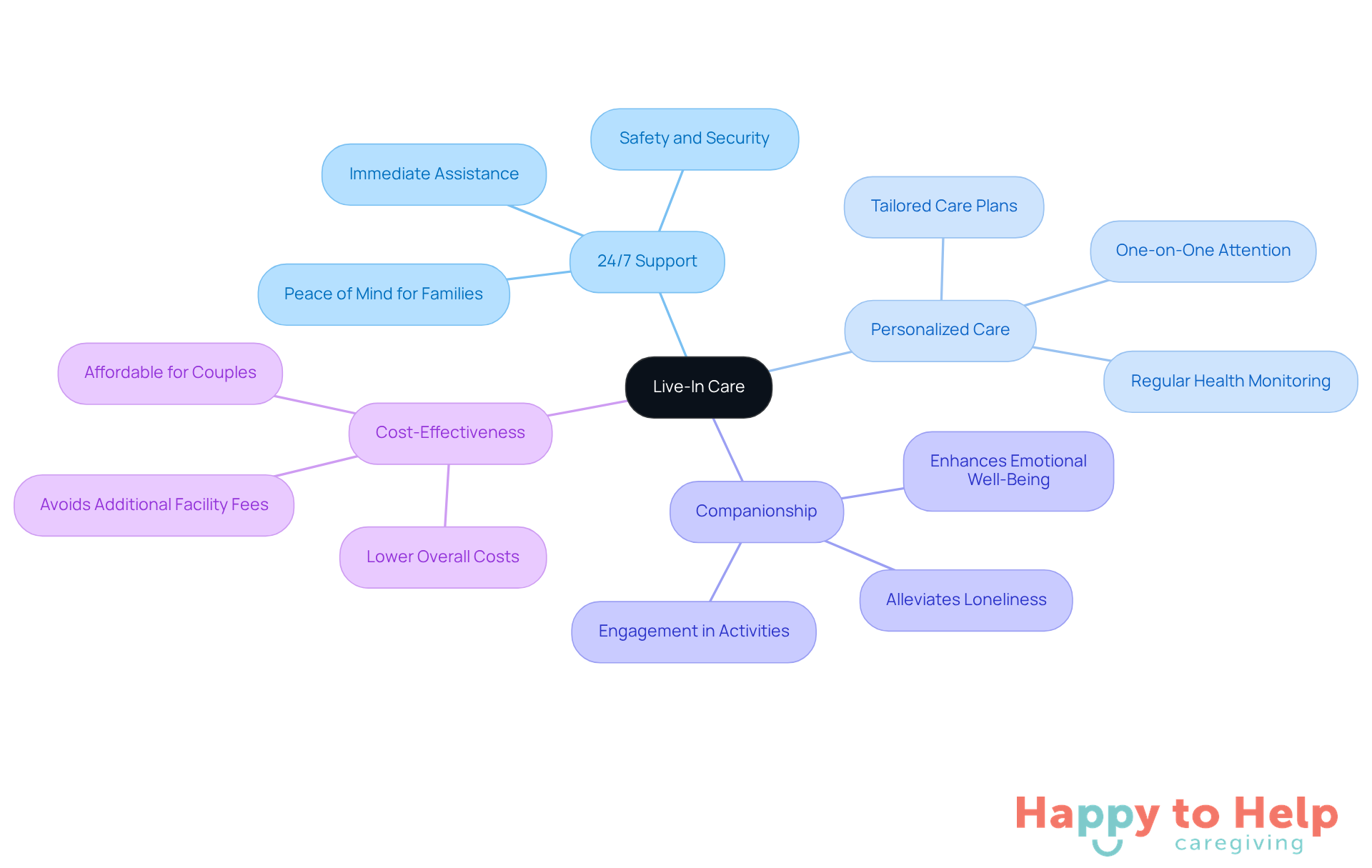
Live-in care near me offers a viable solution to these challenges. Here are some key benefits:
- 24/7 Support: Caregivers are available around the clock, ensuring that help is always at hand.
- Personalized Care: Care plans can be tailored to meet the specific needs and preferences of the individual, fostering a sense of comfort and familiarity.
- Companionship: Having a caregiver present can alleviate feelings of loneliness and isolation, enhancing emotional well-being.
- Cost-Effectiveness: For families requiring extensive assistance, live-in support can be more economical than other options, such as nursing homes.
Understanding these elements is essential for families to evaluate if live-in assistance is the appropriate option for their relatives.
Assess Your Care Needs: Evaluate Requirements and Preferences
To effectively assess your loved one's care needs, caregivers often face significant challenges. Identifying these needs is crucial, as neglecting them can lead to inadequate support and increased stress for both the caregiver and the loved one.
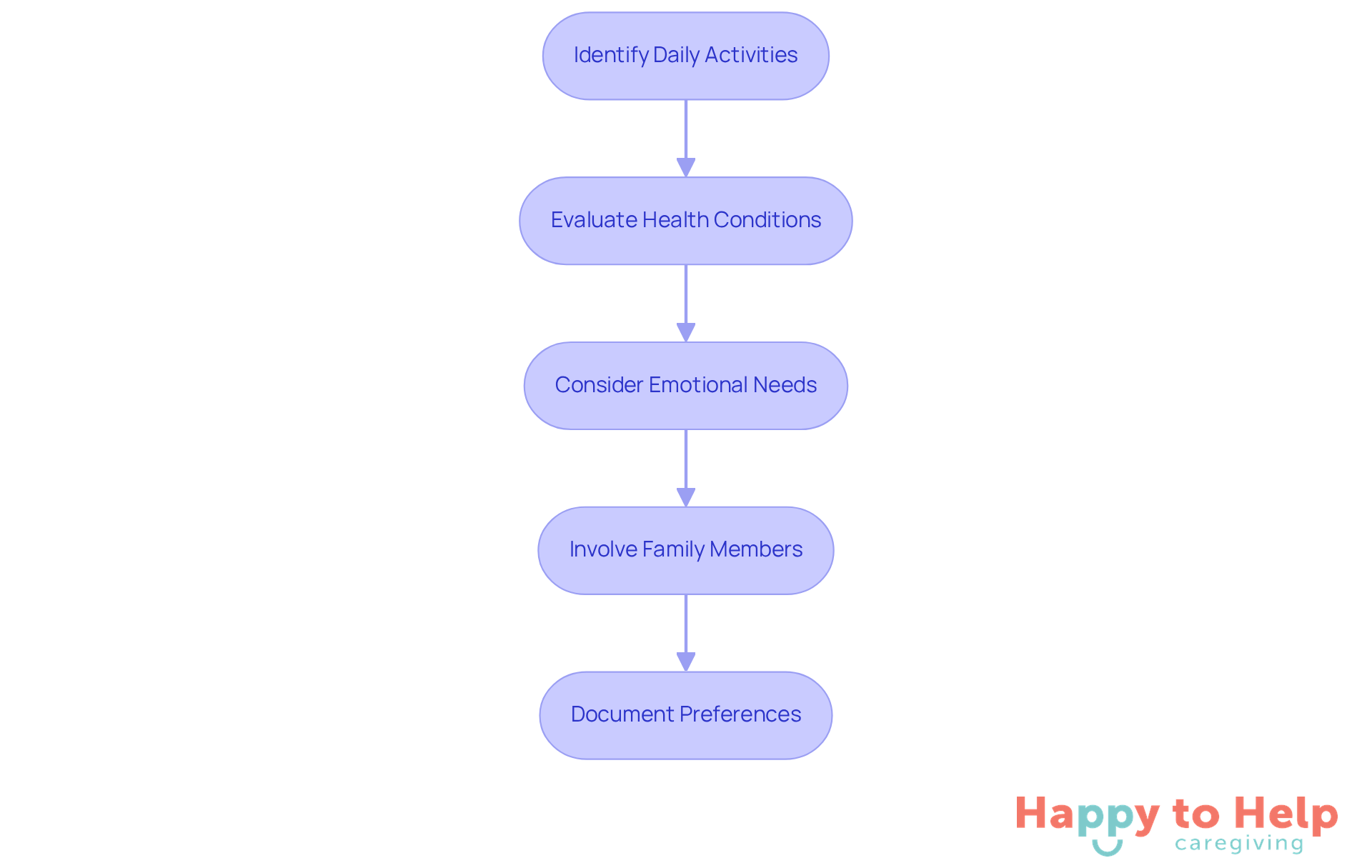
Steps to Assess Care Needs:
- Identify Daily Activities: List the daily tasks your family member struggles with, such as bathing, dressing, meal preparation, and medication management.
- Evaluate Health Conditions: Take note of any medical conditions that require specialized attention, such as dementia, mobility issues, or chronic illnesses.
- Consider Emotional Needs: Reflect on the emotional and social requirements of your dear one. Do they require companionship or assistance with social activities?
- Involve Family Members: Engage family members in discussions to gather diverse viewpoints on the support needs and preferences of your relative.
- Document Preferences: Make a note of your cherished person's preferences concerning support providers, such as gender, language, and personality traits.
This comprehensive assessment will provide a clear understanding of the support needs, which is vital for locating the suitable live-in care near me.
Research Local Options: Compare Services and Caregiver Qualifications
When exploring live-in care near me, many families face the challenge of finding the right caregiver for their loved ones. With an increasing number of older adults - projected to reach around 71.4 million by 2029 - it's crucial to act swiftly in locating qualified support providers.
-
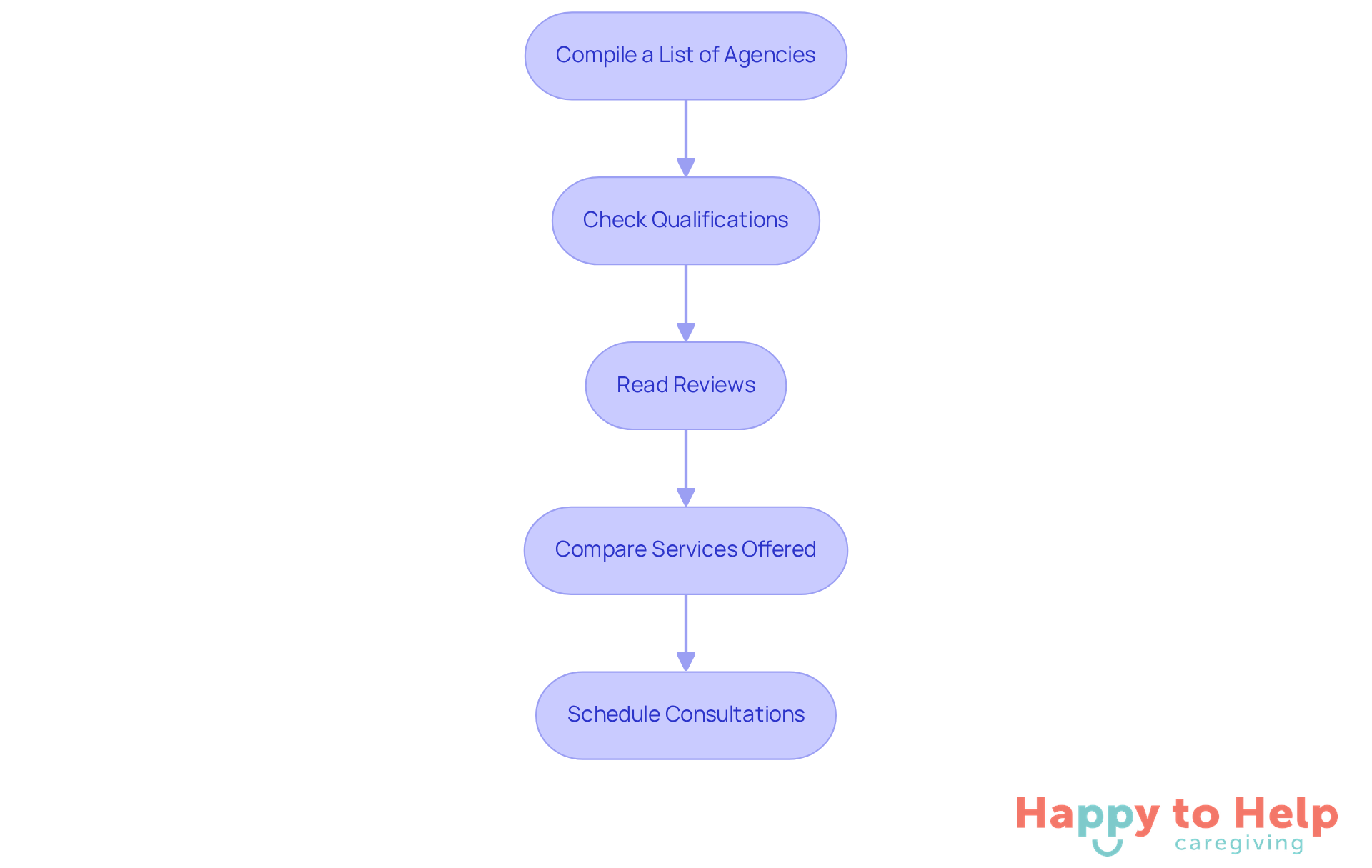
Compile a List of Agencies: Start by utilizing online resources, local directories, and recommendations from healthcare professionals to create a comprehensive list of caregiving agencies in your area. Cities typically have multiple agencies to meet the growing demand for live-in care near me services.
-
Check Qualifications: Investigate the credentials of the staff supplied by each agency. Look for certifications in CPR, first aid, and specialized training relevant to your loved one's needs. Alarmingly, only 22% of caregivers receive training for complex medical tasks, highlighting the importance of verifying qualifications. As industry leaders note, "The standard of support is directly associated with the training and credentials of those providing assistance."
-
Read Reviews: Seek out online feedback and endorsements from other families to assess the quality of service offered by each agency. Positive reviews can be a strong indicator of an agency's reliability and staff competence.
-
Compare Services Offered: Ensure that the services provided align with your family member's specific needs, such as companionship, personal support, or medical assistance. Agencies often offer a range of services, so understanding what each can provide is crucial.
-
Schedule Consultations: Arrange meetings with prospective agencies to discuss your family member's needs and inquire about their staff matching process. This step allows you to evaluate the agency's responsiveness and commitment to individualized support.
This research phase is vital for ensuring that you find a caregiver who is not only qualified but also a good fit for your loved one, ultimately enhancing their quality of life at home.
Budget for Care: Understand Costs and Payment Options
Budgeting for live-in care near me can be a daunting task for families, often leading to confusion and stress. Understanding the financial implications is crucial for caregivers who want to ensure their loved ones receive the necessary support through live-in care near me.
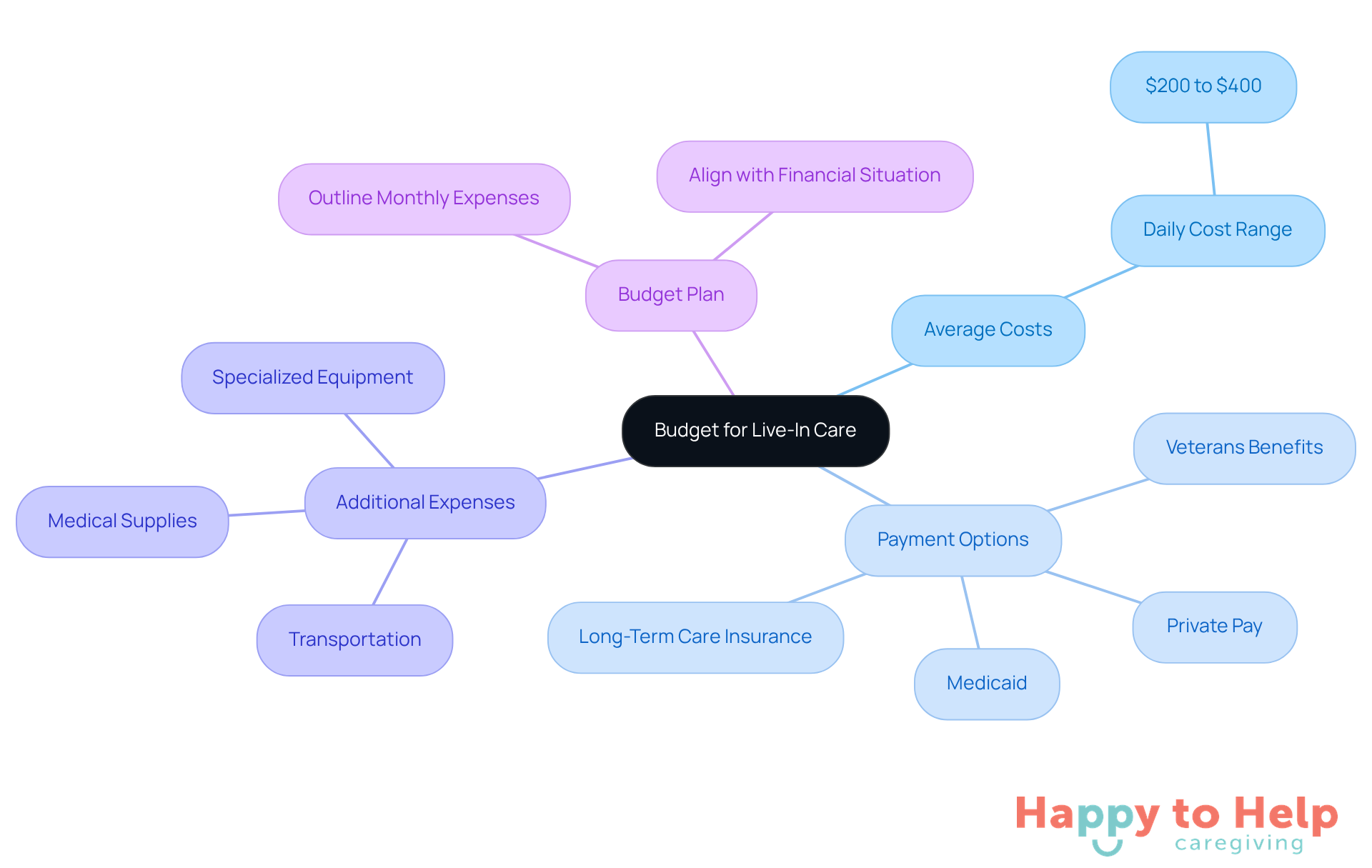
Understanding average expenses means researching the average expenses of live-in care near me, which is essential. As of 2025, costs can range from $200 to $400 daily, depending on the level of assistance required.
Explore Payment Options: Investigate various payment methods to ease the financial burden:
- Private Pay: Using personal savings or income to cover costs.
- Long-Term Care Insurance: Check if your loved one has a policy that includes in-home assistance.
- Medicaid: For qualified individuals, Medicaid may cover some in-home assistance costs.
- Veterans Benefits: Veterans may qualify for benefits that assist with caregiving costs.
Consider Additional Expenses: Don’t forget to factor in any extra costs, such as transportation, medical supplies, or specialized equipment that may be necessary.
Create a Budget Plan: Finally, develop a budget that outlines anticipated monthly expenses for support, ensuring it aligns with your financial situation.
By understanding the costs and payment options, families can make informed decisions about financing live-in care near me.
Interview Caregivers: Key Questions to Ask for Compatibility
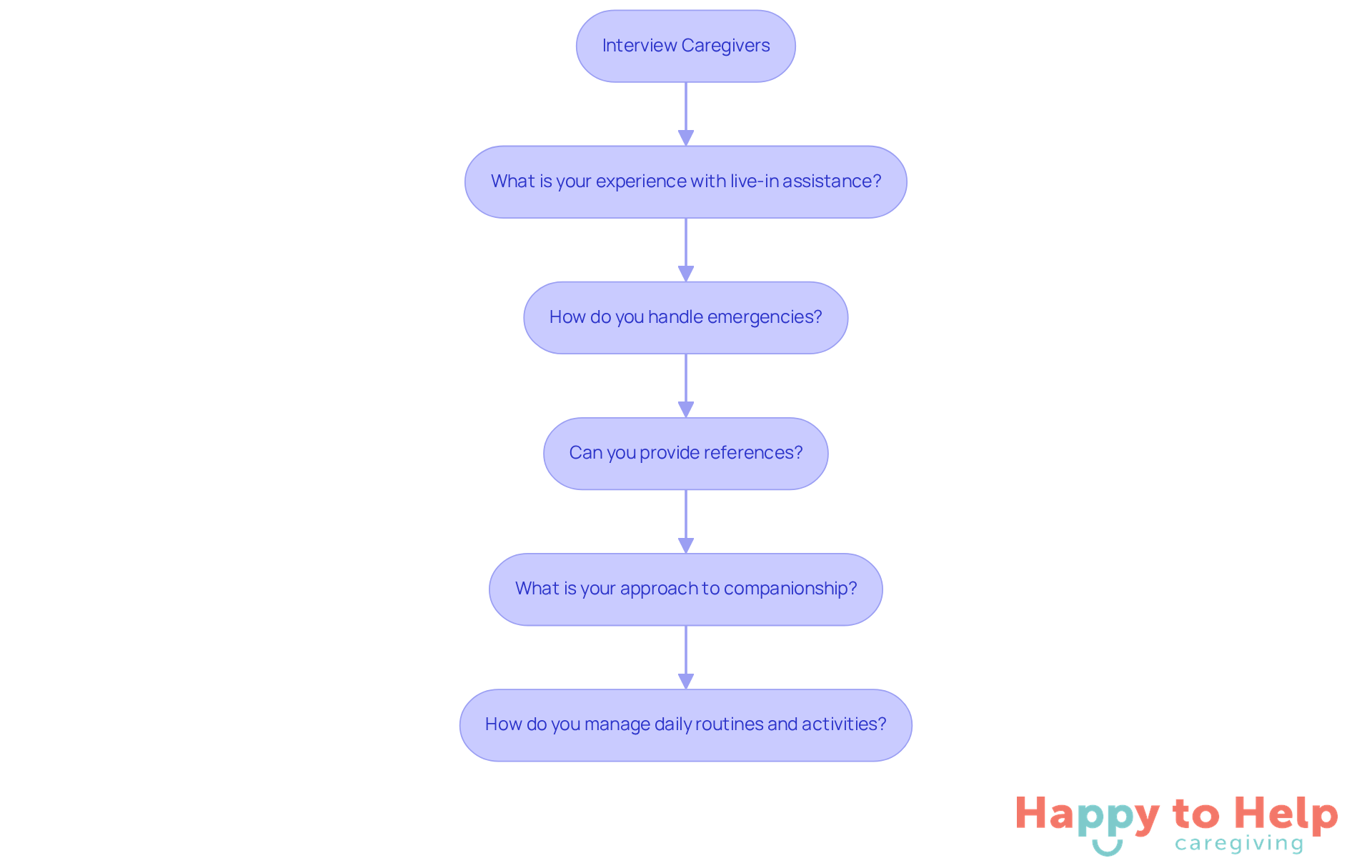
When interviewing potential caregivers for live-in care near me, families face the challenge of ensuring they find someone who is not only qualified but also compatible with their loved one. This process can be daunting, but asking the right questions can significantly ease the decision-making burden.
-
What is your experience with live-in assistance? Understanding a caregiver's background is crucial. It helps gauge their suitability for your cherished one's specific needs.
-
How do you handle emergencies? This question assesses their preparedness and ability to respond effectively to unexpected situations, which is vital for ensuring safety. Studies show that caregivers who participate in emergency preparedness training greatly improve the quality of service.
-
Can you provide references? Requesting references allows you to verify their past performance and reliability, giving you peace of mind about their capabilities.
-
What is your approach to companionship? This assists in ascertaining if their personality corresponds with your dear one's social needs, fostering a supportive environment. Providers should also honor the preferences of recipients to foster strong connections.
-
How do you manage daily routines and activities? Comprehending their method of support can uncover their suitability with your family member's lifestyle and preferences.
By asking these questions, families can ensure they choose a provider for live-in care near me who not only meets the necessary qualifications but also aligns with the emotional and social needs of their loved one. Involving care recipients in the decision-making process is essential, as it enhances their comfort and engagement. Additionally, caregivers who demonstrate kindness and empathy significantly improve the caregiving experience, leading to better outcomes for clients. Including quotes from caregiving professionals can further validate the importance of these considerations.
Making the Right Choice
Finding live-in care for a loved one is crucial for their well-being and independence. Families often face the challenge of navigating the complexities of securing appropriate support. Without proper guidance, the process can feel overwhelming, leading to stress and uncertainty. However, by understanding the benefits of live-in care and assessing specific needs, families can take proactive steps to enhance their loved ones' quality of life.
Personalized care and companionship are essential components of live-in care. These elements not only alleviate feelings of loneliness but also significantly improve emotional health. Families must thoroughly evaluate caregiver qualifications and compatibility to ensure that the chosen provider aligns with the unique preferences and requirements of the individual receiving care. Additionally, understanding the financial aspects and exploring various payment options can help families effectively plan for live-in care expenses.
Ultimately, pursuing quality live-in care goes beyond meeting physical needs; it fosters a supportive environment that promotes dignity and happiness. Families are encouraged to utilize the strategies outlined in this guide to find the best live-in care services available. By doing so, they can ensure their loved ones receive the compassionate, personalized support they deserve, allowing them to thrive in the comfort of their own homes.
https://iframe.tely.ai/cta/eyJhcnRpY2xlX2lkIjogIjY5MjNiNTcwNDNjYTk2ZmEzOTI0OTNjNiIsICJjb21wYW55X2lkIjogIjY4ZWU1ZGNhNzMxNzYyNTU3ZjNjOTVjMSIsICJpbmRleCI6IG51bGwsICJ0eXBlIjogImFydGljbGUifQ==Frequently Asked Questions
What is live-in care and why is it important?
Live-in care provides ongoing support for seniors, allowing them to maintain their independence while receiving necessary assistance. It addresses challenges families face when they cannot provide adequate help due to work or other commitments, reducing feelings of loneliness and isolation among seniors.
What are the main benefits of live-in care?
The key benefits of live-in care include 24/7 support from caregivers, personalized care plans tailored to individual needs, companionship to alleviate loneliness, and cost-effectiveness compared to nursing homes for families needing extensive assistance.
How can families assess their loved one's care needs?
Families can assess care needs by identifying daily activities their loved one struggles with, evaluating any health conditions requiring specialized attention, considering emotional needs, involving family members for diverse viewpoints, and documenting preferences regarding support providers.
Why is it important to evaluate care needs?
Evaluating care needs is crucial to ensure adequate support is provided, preventing increased stress for both the caregiver and the loved one. A comprehensive assessment helps in finding suitable live-in care that meets specific requirements.
List of Sources
- Understand Live-In Care: Definition and Benefits
- How Live-In Care Improves Quality of Life for Seniors (https://careindeed.com/blogs/how-live-in-care-improves-quality-of-life-for-seniors)
- Unexpected Benefits of Live-in Care | The Good Care Group (https://thegoodcaregroup.com/news/unexpected-benefits-live-in-care)
- The Benefits of Live-in Care: Why It's the Best Option for Your Loved One - ND Care & Support (https://ndcare.co.uk/2025/02/the-benefits-of-live-in-care-why-its-the-best-option-for-your-loved-one)
- The Benefits of Live In Care That Can Change Your Life (https://intouchealthcaresolutions.com/the-unmatched-benefits-of-live-in-care-that-can-change-your-life)
- Benefits of Live-In Care for Seniors (https://careindeed.com/blogs/benefits-of-live-in-care)
- Assess Your Care Needs: Evaluate Requirements and Preferences
- Nearly half of older adults worldwide struggle with daily tasks, study reveals (https://mcknights.com/news/nearly-half-of-older-adults-worldwide-struggle-with-daily-living-activities-study-reveals)
- Older adults prioritize social activities, inclusiveness in massive survey assessing what matters most to them (https://mcknights.com/news/older-adults-prioritize-social-activities-inclusiveness-in-massive-survey-assessing-what-matters-most-to-them)
- Warning From Older Adults: Care for Aging in America Needs Urgent Rethinking (https://johnahartford.org/newsroom/view/warning-from-older-adults-care-for-aging-in-america-needs-urgent-rethinking)
- Caregiving in the US 2025 (https://aarp.org/pri/topics/ltss/family-caregiving/caregiving-in-the-us-2025)
- National survey says care for older adults needs urgent rethinking - Herb Weiss - Rhode Island news (https://rinewstoday.com/national-survey-says-care-for-older-adults-needs-urgent-rethinking-herb-weiss)
- Research Local Options: Compare Services and Caregiver Qualifications
- 37 Home-Based Care Companies Earn A Spot On Inc. 5000 List (https://homehealthcarenews.com/2025/08/36-home-based-care-companies-earn-a-spot-on-inc-5000-list)
- How Home Care Agencies Can Prepare Now to Secure a Strong Start in 2025 (https://aaniie.com/news/how-home-care-agencies-can-prepare-now-to-secure-a-strong-start-in-2025)
- Caregiving in the US 2025 (https://aarp.org/pri/topics/ltss/family-caregiving/caregiving-in-the-us-2025)
- Home Care Industry Trends to Watch in 2025 (https://firstlighthomecare.com/blog/home-care-industry-trends)
- New Report Shows Nearly Half of U.S. States Are on the Threshold of a Caregiving Emergency | Otsuka US (https://otsuka-us.com/news/new-report-shows-nearly-half-us-states-are-threshold-caregiving-emergency)
- Budget for Care: Understand Costs and Payment Options
- Assisted Living Costs Double Across U.S. States in 2025 (https://fox40.com/business/press-releases/ein-presswire/862256779/assisted-living-costs-double-across-u-s-states-in-2025)
- Home Care Costs in 2025: A State-by-State Guide (https://aplaceformom.com/caregiver-resources/articles/in-home-care-costs)
- 8 Ways to Pay for In-Home Care (https://comforcare.com/blog/8-ways-to-pay-for-in-home-care)
- How Much Will Home Care Cost Per Month in 2025? | Home Care agency in New York (https://angelcareny.com/how-much-will-home-care-cost-per-month-in-2025)
- Cost of In-Home Care in California (2025) + 11 Ways to Pay (https://lovinghomecareinc.com/blog/cost-of-in-home-care-california)
- Interview Caregivers: Key Questions to Ask for Compatibility
- The Right Match of Caregivers and Care-Seekers - Kennedy Care (https://kennedycare.com/the-right-match-of-caregivers-and-care-seekers-2)
- Caregivers Need to Maintain Solid Relationships with Care Recipients to Maintain Better Quality of Life (https://ltcnews.com/articles/caregivers-need-to-maintain-solid-relationships-with-care-recipients)
- Choosing the Right Caregivers | Visiting Angels (https://visitingangels.com/rochester/articles/choosing-the-right-caregivers-what-families-should-look-for/26613)
- How to Choose the Right In-Home Caregiver for Your Loved One (https://homeinstead.com/home-care/usa/tx/carrollton-coppell-irving/407/news-and-media/navigating-in-home-care-tips-for-choosing-the-right-caregiver-for-your-loved-one)
- Perfect Pairings: Creating Personalized, Highly Compatible Caregiver-Client Matches to Boost Your Bottom Line | Aaniie, formerly Smartcare Software (https://aaniie.com/news/creating-personalized-highly-compatible-caregiver-client-matches-to-boost-bottom-line)