
Understanding Find the Best Group Home Care Near Me
Navigating the world of group home care presents a significant challenge for families seeking the best support for their loved ones. With over 32,000 facilities across the U.S. catering to various needs, the complexity of group home care can be overwhelming. Understanding these nuances is essential for making informed decisions that truly benefit those in need.
This guide provides a structured approach to finding suitable care options. It empowers caregivers with the knowledge necessary to assess individual needs and evaluate potential providers effectively. But how can one ensure that the chosen facility not only meets regulatory standards but also aligns with the unique preferences and requirements of their loved ones? By following the insights and actionable tips outlined here, caregivers can navigate this landscape with confidence.
Understand the Basics of Group Home Care
Group home care near me plays a vital role for individuals with specific needs, such as seniors or those with disabilities, by providing essential assistance and support. However, caregivers often face challenges in navigating these options, which can lead to confusion and stress.
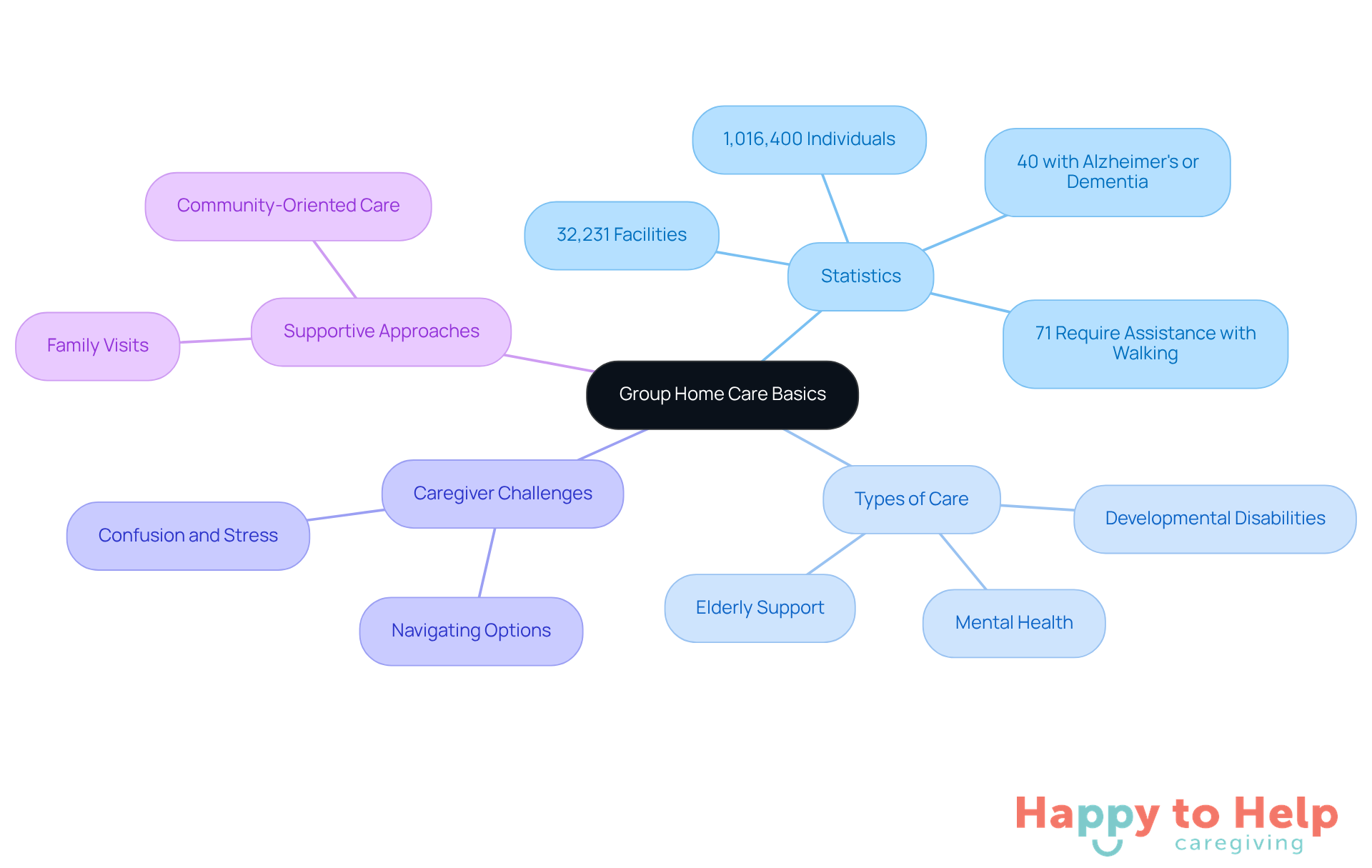
As of 2022, there were approximately 32,231 housing facilities in the U.S., accommodating around 1,016,400 individuals. Notably, about 40% of these individuals have a diagnosis of Alzheimer’s disease or other dementias, and 71% require assistance with walking. This highlights the significant level of care necessary in these environments.
Understanding the different types of group home care near me - from those focused on elderly support to those catering to individuals with developmental disabilities or mental health issues - is crucial. Each type of care in a group home care near me is designed to meet specific needs, ensuring that residents receive appropriate assistance in a community-oriented setting.
As William Young noted, "They generally didn’t confine people to their rooms and allowed family members to visit, which helped them retain residents." This approach fosters a supportive atmosphere that enhances the quality of life for residents.
To better support your loved one, familiarize yourself with these distinctions. This knowledge will empower you to choose the most suitable support option, ultimately improving their well-being.
Assess Individual Care Needs and Preferences
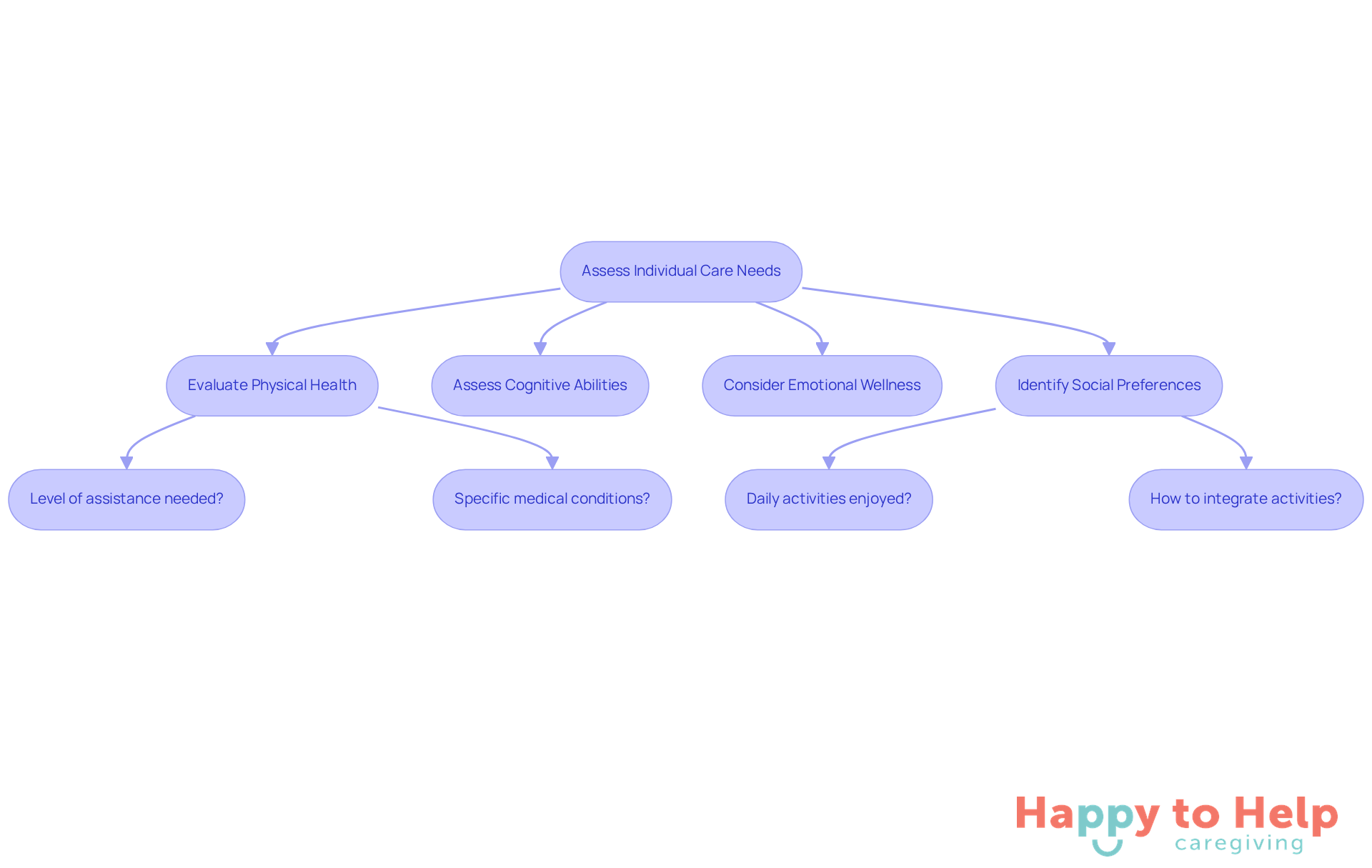
Start by evaluating your loved one's care requirements. Focus on their physical health, cognitive abilities, emotional wellness, and social preferences. Key questions to consider include:
- What level of assistance do they need with daily activities?
- Are there specific medical conditions, like chronic illnesses, that affect mobility or cognitive function?
- What social activities do they enjoy, and how can these be integrated into their daily routine?
Documenting these needs will help create a clear profile that guides your search for group home care near me.
Involving your loved one in this process is essential. It ensures their preferences and comfort are prioritized. Recent studies show that when seniors participate in discussions about their support, they report higher satisfaction and better alignment of services with their personal needs. Geriatric management professionals emphasize the importance of understanding individual preferences, noting that knowing what matters most to seniors can significantly enhance their quality of life. This collaborative approach fosters a sense of agency and helps families make informed decisions regarding group home care near me that reflect their loved one's desires and needs.
Evaluate Potential Care Providers
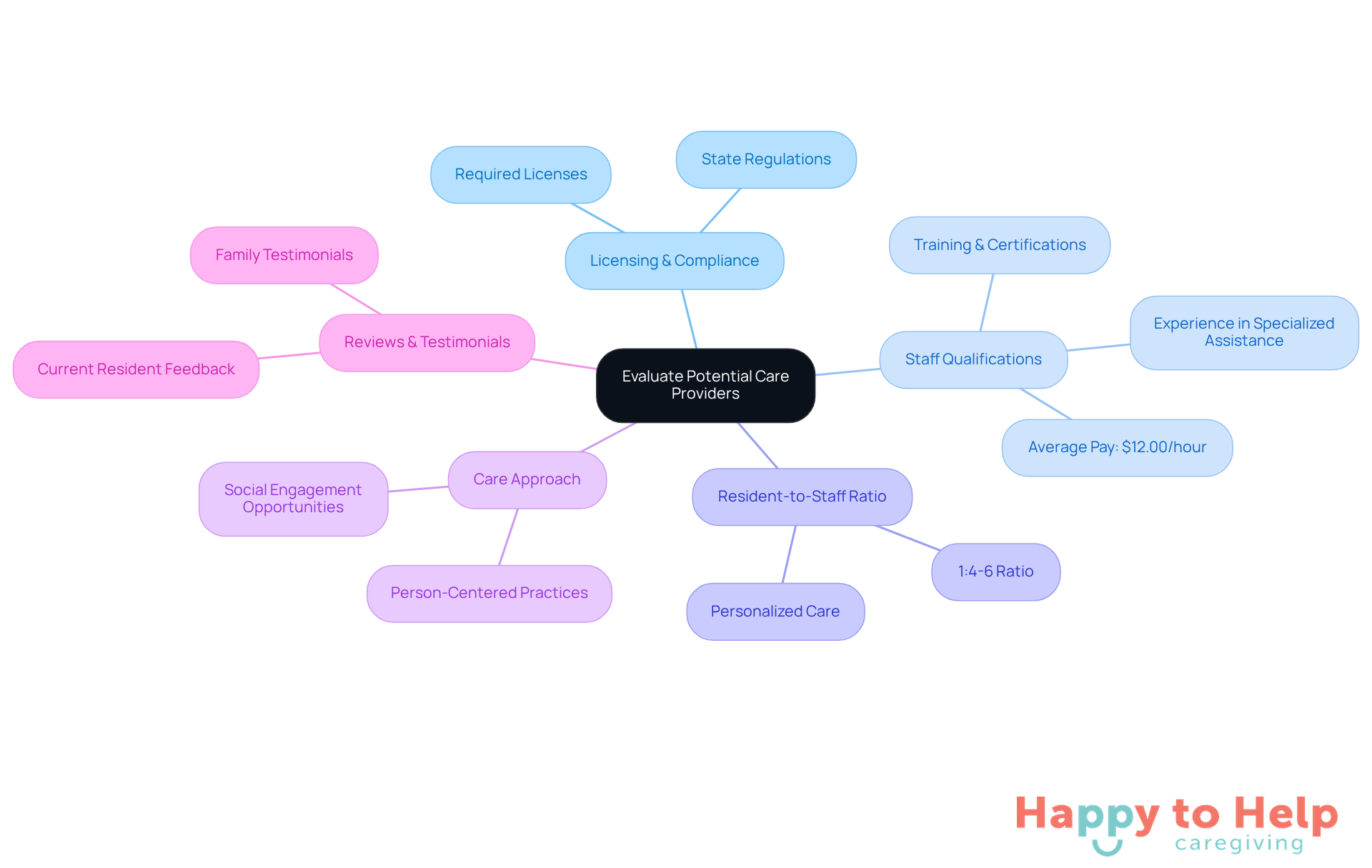
When evaluating options for group home care near me, a significant challenge arises: how to ensure quality care for loved ones. Evaluating each provider against key criteria is essential. Start by confirming that the facility possesses the required licenses and adheres to state regulations. This guarantees compliance with safety and quality standards.
Next, consider staff qualifications. Ask about the training and certifications of caregivers, along with their experience in delivering specialized assistance. According to industry insights, the average pay for caregivers in the region is approximately $12.00/hour. This figure reflects current labor market dynamics and can influence the quality of support provided.
Another critical factor is the resident-to-staff ratio. A lower ratio often translates to more personalized care and improved outcomes for individuals. For instance, many successful group homes maintain a ratio of 1 caregiver for every 4-6 individuals, enabling greater personalized attention. Additionally, seek out reviews and testimonials from current or past residents and their families to gain insights into their experiences.
Consider the facility's approach to care. Do they prioritize person-centered practices that respect individual preferences and dignity? Are there ample opportunities for social engagement and activities that promote a sense of community? Emphasizing staff qualifications is essential for ensuring high-quality care. Assessing these aspects will help you identify group home care near me that not only meets regulatory standards but also aligns with your loved one's needs and values, ensuring a supportive and enriching environment.
Visit Facilities and Meet Caregivers
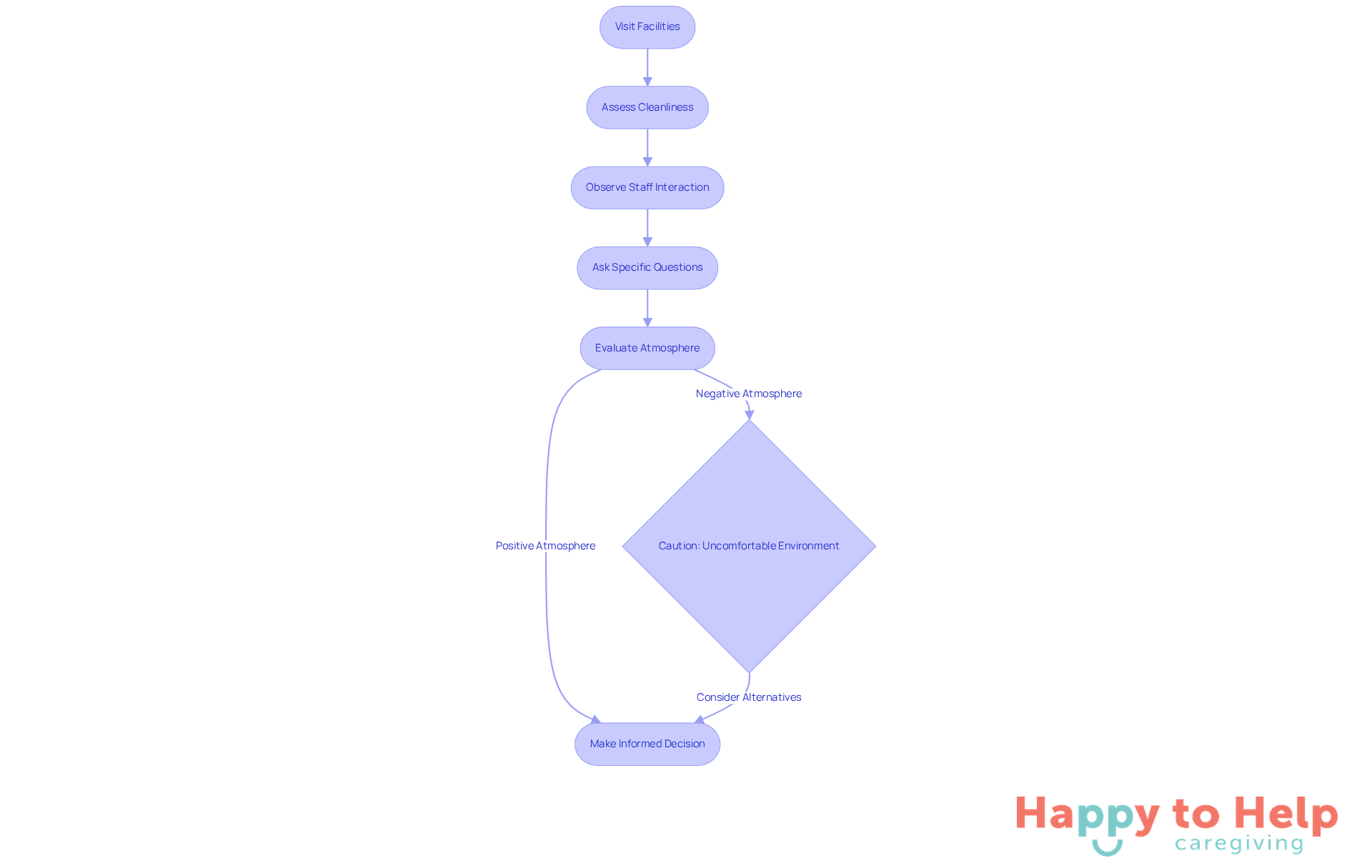
When considering potential group home care near me, it's essential to prioritize visits to your shortlisted facilities. The problem many caregivers face is finding group home care near me that provides a suitable environment to meet their loved one's needs. During these visits, assess the cleanliness and upkeep of the surroundings, as well as the demeanor of the staff. The overall atmosphere is crucial; it should feel welcoming and supportive. Connect with caregivers to understand their caregiving methods and observe how they interact with residents.
Ask specific questions about daily routines, activities, and emergency protocols to gauge their operational standards. Additionally, pay attention to residents' responses to staff interactions-do they appear comfortable and engaged? This visit is a vital opportunity to evaluate whether the environment at the group home care near me aligns with your loved one's preferences.
Consider inquiring about caregivers' training and experience, including the average number of training hours they receive. Understanding that caregivers generally undergo extensive training can provide reassurance regarding the quality of support your loved one will receive. Remember, a positive facility atmosphere can significantly influence individuals' well-being, making it essential to choose a place where both caregivers and residents thrive.
Moreover, it's important to recognize that the average family caregiver spends around $7,200 per year on caregiving expenses, and 71% report financial struggles. This context highlights the need to assess the financial aspects of care facilities. Including quotes from caregivers about the importance of facility atmosphere can add a personal touch and reinforce the significance of a supportive environment.
Lastly, ensure to ask specific questions during your visits, such as:
- What is the average number of training hours caregivers receive?
- How do you handle emergencies?
- What activities do you offer to residents?
These questions will help you gather all necessary information to make an informed decision.
Review Contracts and Understand Costs
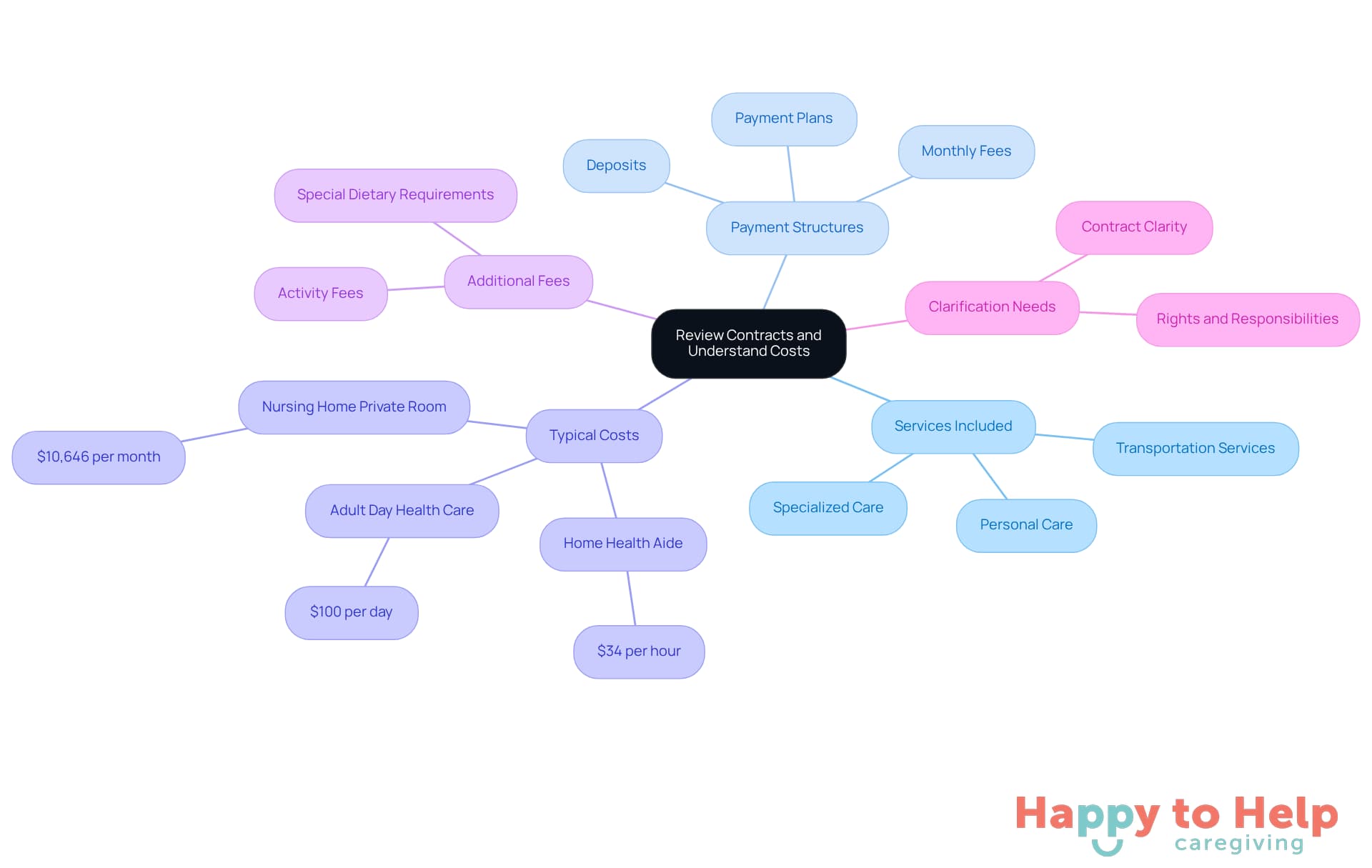
Before making your final choice, it’s crucial to examine the agreement provided by the group home care near me. The problem lies in the potential for unexpected costs if the agreement is not thoroughly understood. Focus on the services included, payment structures, and any additional fees that may arise.
Consider typical costs such as monthly fees, deposits, and charges for extra services like transportation or specialized care. For example, the 2024 national median cost for health aides is $34 per hour, which can significantly impact your overall expenses. Ensure that the contract clearly outlines the rights and responsibilities of both parties involved. If any aspect is unclear, don’t hesitate to seek clarification.
Be mindful of extra fees that might not be part of the base agreement, such as costs for activities or special dietary requirements. Recent changes in contracts for group home care near me may also influence your decision, making it essential to stay informed. A solid understanding of these details will empower you to make an informed decision and help you avoid unexpected costs in the future.
Make an Informed Final Decision
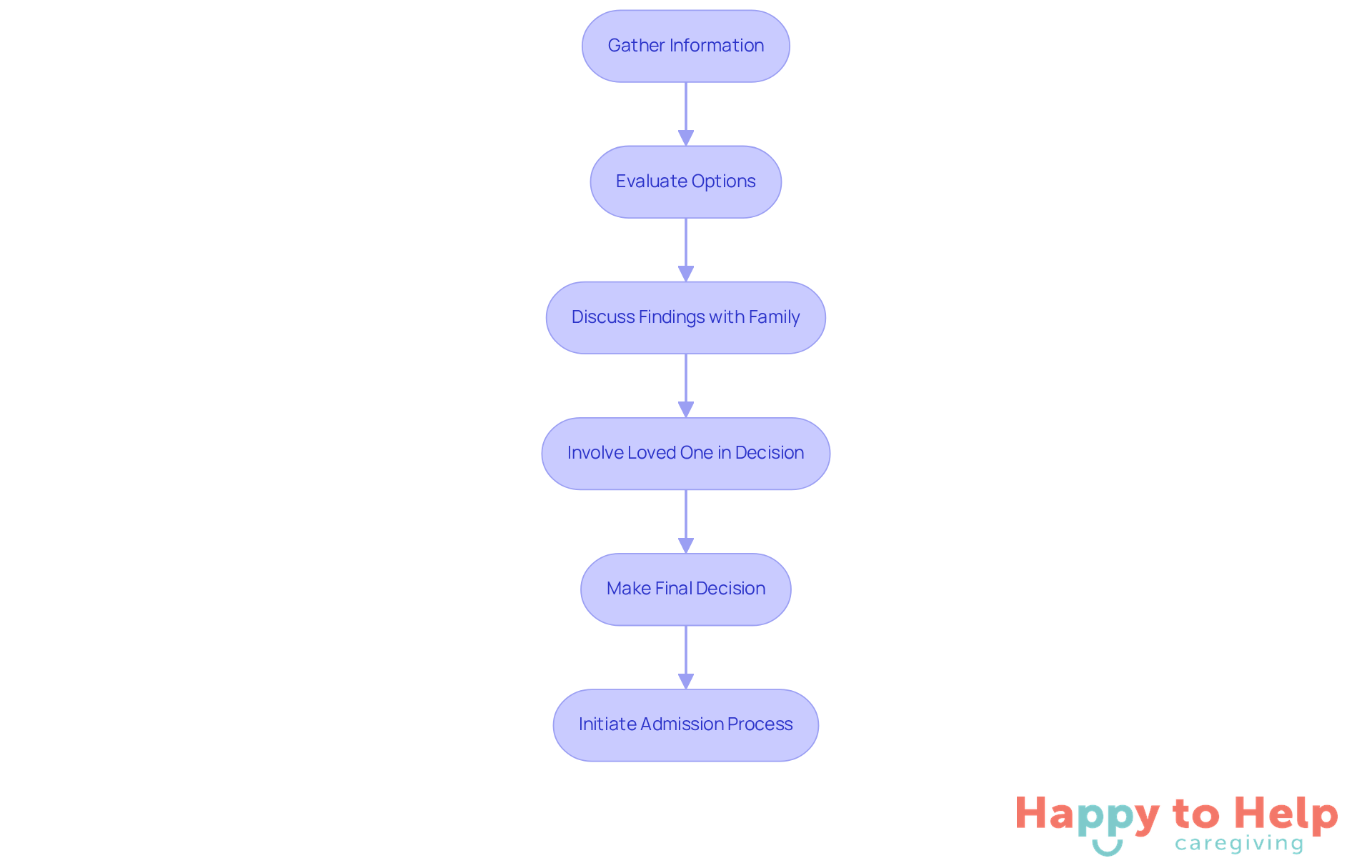
Making a decision about long-term care for a loved one can be daunting. After completing evaluations, visits, and contract reviews, you may feel overwhelmed by the options available. It's crucial to reflect on the information gathered and consider how each choice aligns with your loved one's needs and preferences.
Discuss your findings with family members, and if possible, involve your loved one in the decision-making process. Trust your instincts - select the facility that feels right for them, ensuring they will receive the assistance and support they deserve. Remember, nearly 48% of older adults turning 65 will pay for long-term care in their lifetime. This statistic highlights the importance of considering the financial implications of your choice.
Once you've made a decision, communicate with the group home care near me to initiate the admission process. The right choice can significantly impact your loved one's quality of life, so prioritize their comfort and well-being. By taking these steps, you can ensure that your loved one receives the care they need.
Moving Forward with Find the Best Group Home Care Near Me
Finding the right group home care can be a daunting challenge for families, often leading to stress and uncertainty. The implications of this struggle are significant, as inadequate care can adversely affect the quality of life for loved ones who require support. Families face the daunting task of navigating various care options, which can be overwhelming without proper guidance.
To tackle this issue effectively, families should start by assessing individual care needs and preferences. Evaluating potential care providers based on their qualifications and resident feedback is crucial. Visiting facilities allows families to gauge the environment and observe staff interactions, providing valuable insights into the care offered. Additionally, reviewing contracts for transparency regarding costs and services is essential to avoid unexpected financial burdens.
By prioritizing these steps, families can ensure that the selected group home care aligns with the specific requirements of their loved ones. Engaging in open discussions with family members and involving the individual in the decision-making process fosters a sense of agency and satisfaction. This thoughtful navigation of the complex landscape of group home care ultimately leads to a supportive and nurturing environment that enhances the quality of life for those who matter most.
https://iframe.tely.ai/cta/eyJhcnRpY2xlX2lkIjogIjY5MjUwZjllMjhmYmExOWI5MjM1NzEzYyIsICJjb21wYW55X2lkIjogIjY4ZWU1ZGNhNzMxNzYyNTU3ZjNjOTVjMSIsICJpbmRleCI6IG51bGwsICJ0eXBlIjogImFydGljbGUifQ==Frequently Asked Questions
What is group home care and who does it serve?
Group home care provides essential assistance and support for individuals with specific needs, such as seniors or those with disabilities. It accommodates various populations, including those with Alzheimer’s disease, other dementias, and individuals requiring assistance with daily activities.
How many group home facilities are there in the U.S.?
As of 2022, there were approximately 32,231 housing facilities in the U.S., accommodating around 1,016,400 individuals.
What types of group home care are available?
Group home care includes facilities focused on elderly support, individuals with developmental disabilities, and those with mental health issues. Each type is designed to meet specific needs and provide appropriate assistance in a community-oriented setting.
Why is it important to understand the different types of group home care?
Understanding the different types of group home care is crucial for selecting the most suitable option for your loved one, ensuring they receive the appropriate support and assistance that aligns with their specific needs.
How can I assess my loved one's care needs and preferences?
Start by evaluating their physical health, cognitive abilities, emotional wellness, and social preferences. Consider their level of assistance needed with daily activities, any medical conditions affecting mobility or cognitive function, and the social activities they enjoy.
Why is involving my loved one in the care process important?
Involving your loved one in the care process ensures their preferences and comfort are prioritized. Studies show that when seniors participate in discussions about their support, they report higher satisfaction and better alignment of services with their personal needs.
What role do geriatric management professionals play in selecting group home care?
Geriatric management professionals emphasize the importance of understanding individual preferences, noting that knowing what matters most to seniors can significantly enhance their quality of life. Their guidance can help families make informed decisions regarding group home care.
List of Sources
- Understand the Basics of Group Home Care
- NCHS Publishes New Data Brief on Residential Care Community Resident Characteristics (https://ahcancal.org/News-and-Communications/Blog/Pages/NCHS-Publishes-New-Data-Brief-on-Residential-Care-Community-Resident-Characteristics.aspx)
- Residential Care Facility Statistics (https://rosewood-nursing.com/post/residential-care-facility-statistics)
- Facts & Figures (https://ahcancal.org/Assisted-Living/Facts-and-Figures/Pages/default.aspx)
- FastStats (https://cdc.gov/nchs/fastats/residential-care-communities.htm)
- Group Homes Offer Alternative to Assisted Living (https://aarp.org/caregiving/basics/group-homes)
- Assess Individual Care Needs and Preferences
- Older adults prioritize social activities, inclusiveness in massive survey assessing what matters most to them (https://mcknights.com/news/older-adults-prioritize-social-activities-inclusiveness-in-massive-survey-assessing-what-matters-most-to-them)
- Warning From Older Adults: Care for Aging in America Needs Urgent Rethinking (https://johnahartford.org/newsroom/view/warning-from-older-adults-care-for-aging-in-america-needs-urgent-rethinking)
- New Study Finds That While Aging Seniors Prefer In-Home Care, Most Are Critically Underprepared for Future Healthcare Needs | Cross Country Healthcare, Inc. (https://ir.crosscountry.com/news-releases/news-release-details/new-study-finds-while-aging-seniors-prefer-home-care-most-are)
- Aurora releases study to address needs of older adults and caregivers (https://denver7.com/news/front-range/aurora/aurora-releases-study-to-address-needs-of-older-adults-and-caregivers)
- WHO calls for urgent transformation of care and support systems for older people (https://who.int/news/item/01-10-2024-who-calls-for-urgent-transformation-of-care-and-support-systems-for-older-people)
- Evaluate Potential Care Providers
- US News to publish inaugural Best Home Health ratings next year (https://mcknightshomecare.com/news/us-news-to-publish-inaugural-best-home-health-ratings-next-year)
- 13 Home Care Trends To Watch For in 2024 (And Thoughts From 11 Experts) | CareAcademy (https://careacademy.com/blog/home-care-trends)
- Evaluation of the ‘Ladder to the Moon, Culture Change Studio Engagement Programme’ staff training: Two quasi-experimental case studies | Request PDF (https://researchgate.net/publication/313538369\_Evaluation\_of\_the\_'Ladder\_to\_the\_Moon\_Culture\_Change\_Studio\_Engagement\_Programme'\_staff\_training\_Two\_quasi-experimental\_case\_studies)
- Visit Facilities and Meet Caregivers
- 25+ Inspirational Quotes for Caregivers (https://caringseniorservice.com/blog/quotes-for-caregiver-inspiration)
- 30 Inspirational Quotes for Caregivers (https://agingcare.com/articles/caregivers-quotes-inspiration-141133.htm)
- The Caregiving Landscape: Data & Insights on the Caregiver Experience in the U.S. (https://caregiveraction.org/caregiver-statistics)
- Caregiver Statistics: Work and Caregiving (https://caregiver.org/resource/caregiver-statistics-work-and-caregiving)
- CaringBridge (https://caringbridge.org/resources/inspirational-quotes-on-caregiving)
- Review Contracts and Understand Costs
- Facts & Figures (https://ahcancal.org/Assisted-Living/Facts-and-Figures/Pages/default.aspx)
- Cost of Long Term Care by State | Cost of Care Report | Carescout (https://carescout.com/cost-of-care)
- 10 Things About Long-Term Services and Supports (LTSS) | KFF (https://kff.org/medicaid/10-things-about-long-term-services-and-supports-ltss)
- Long-term care statistics 2025 (https://singlecare.com/blog/news/long-term-care-statistics)
- Make an Informed Final Decision
- CaringBridge (https://caringbridge.org/resources/inspirational-quotes-on-caregiving)
- 20 Inspirational Senior Care Quotes (https://1plus1cares.com/20-inspirational-senior-care-quotes)
- Facts & Figures (https://ahcancal.org/Assisted-Living/Facts-and-Figures/Pages/default.aspx)
- Aging in Place: Statistics + How to Prepare in 2025 (https://choicemutual.com/blog/aging-in-place-statistics)
- Long-term care statistics 2025 (https://singlecare.com/blog/news/long-term-care-statistics)