
Understanding Find the Best Home Care Center Near Me
Caring for a loved one can be a daunting task, especially when it comes to selecting the right home care center. The multitude of options available can leave caregivers feeling overwhelmed. Understanding the specific services and support systems offered by these centers is crucial in alleviating some of that burden.
This article will guide you through five essential steps to identify the best home care center. We will address key factors such as:
- Evaluating care needs
- Comparing local facilities
- Assessing caregiver qualifications
By following these steps, families can make informed decisions that ensure their loved ones receive the best possible care. How can families navigate this critical choice effectively?
Understand Home Care Center Services and Specializations
Caring for loved ones can be a daunting task, especially when it comes to meeting their unique needs. Caregivers often face challenges such as feelings of isolation, the complexity of daily care tasks, and the emotional toll of supporting someone who is ill. Understanding the available support services can significantly ease this burden.
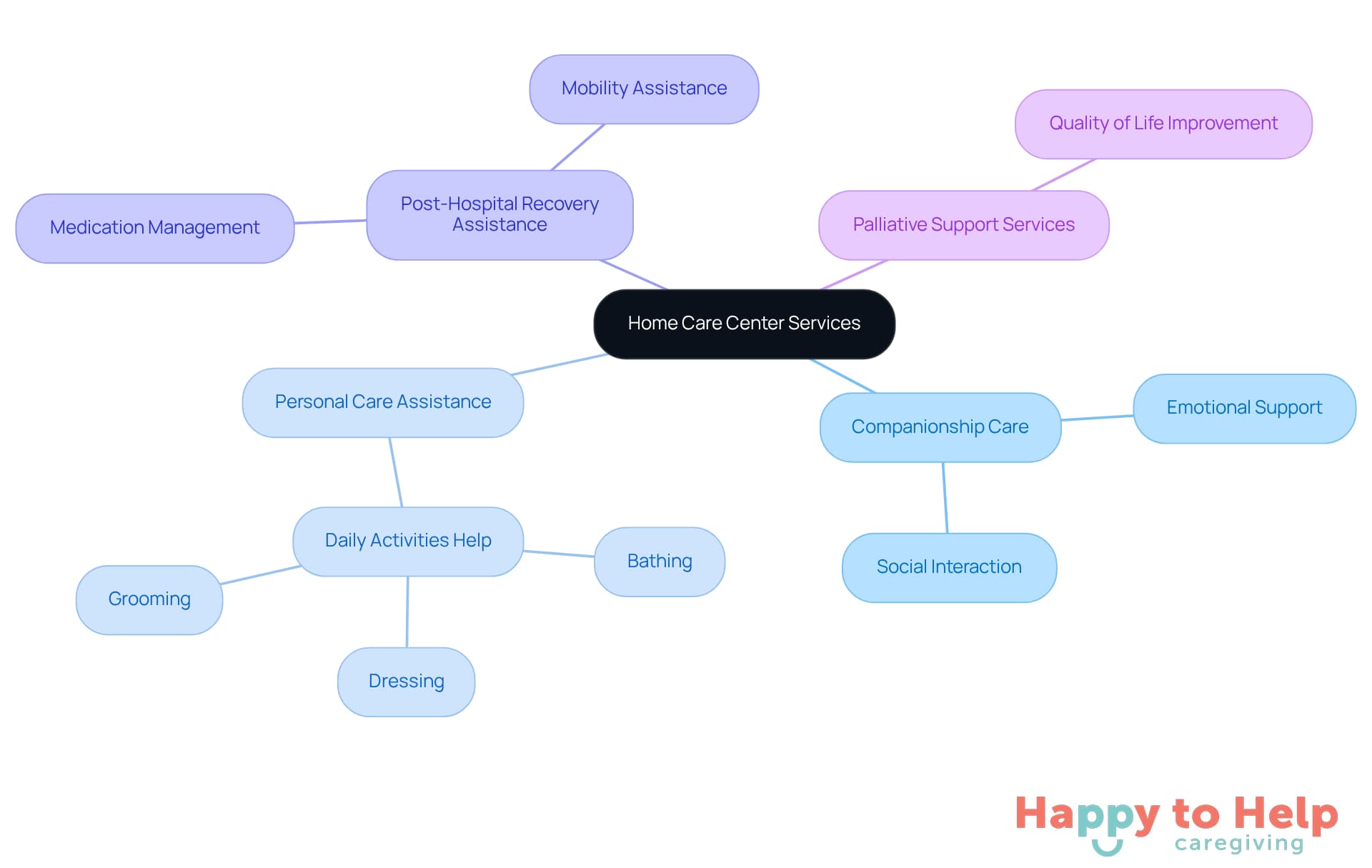
Home care centers near me offer a variety of services designed to assist caregivers and enhance the quality of life for individuals. Common services include:
- Companionship Care: This service provides emotional support and social interaction, helping to alleviate feelings of loneliness.
- Personal Care Assistance: Caregivers can receive help with daily activities like bathing, dressing, and grooming, ensuring that their loved ones maintain dignity and comfort.
- Post-Hospital Recovery Assistance: For those recovering from surgery or illness, this service includes medication management and mobility assistance, facilitating a smoother recovery process.
- Palliative Support Services: Specialized assistance aimed at improving the quality of life for individuals with serious illnesses.
By comprehending these services, families can identify the specific types of assistance needed for their loved ones. This ensures that they receive the appropriate support in the comfort of their home, ultimately enhancing both the caregiver's and the recipient's well-being.
Assess Your Care Needs and Preferences
To effectively assess care needs, caregivers often encounter several challenges. Understanding these challenges is crucial for providing the best support possible.
-
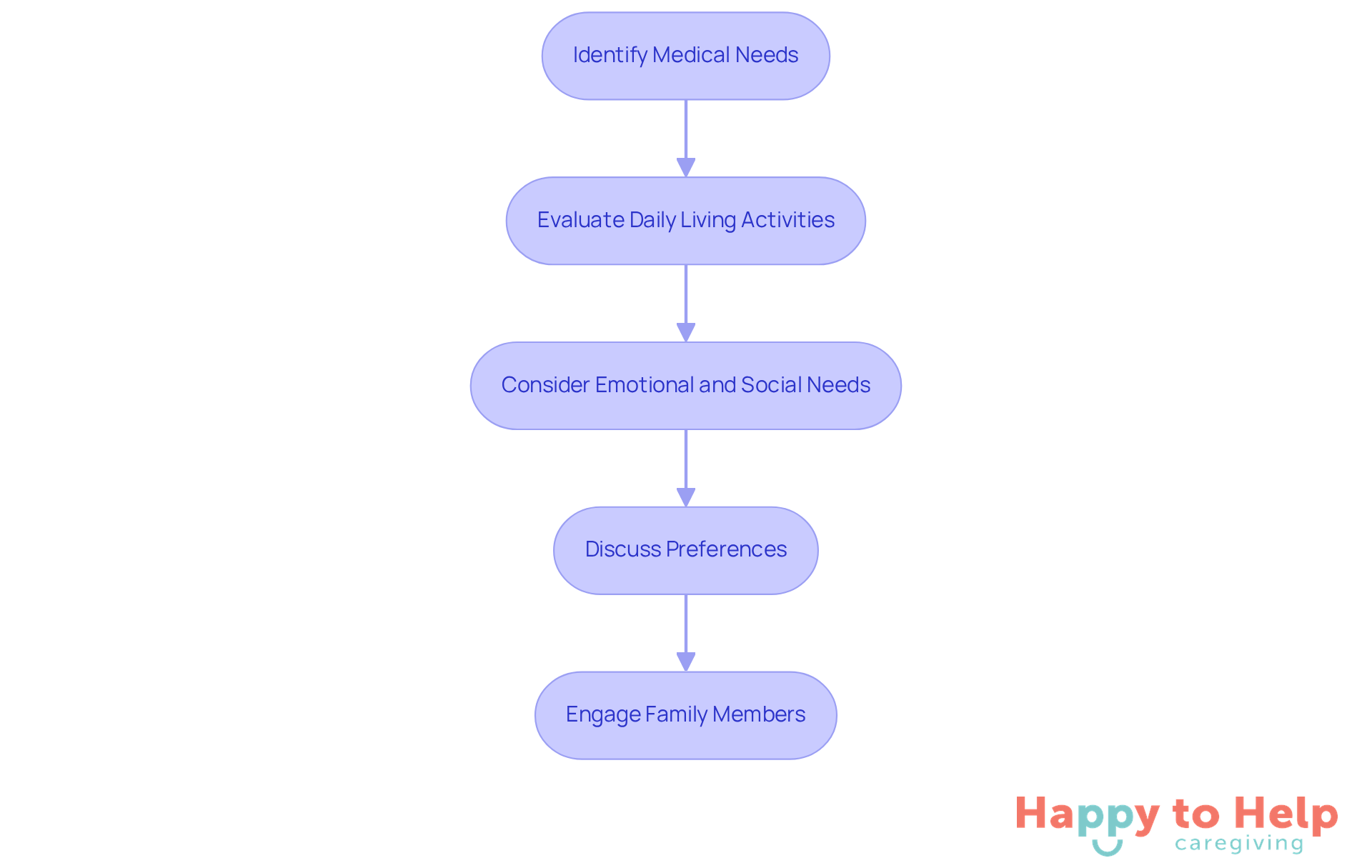
Identify Medical Needs: Start by reviewing any medical conditions, medications, and therapies required. Comprehending these elements is essential for customizing support effectively.
-
Evaluate Daily Living Activities: Next, determine which daily tasks your loved one struggles with, such as bathing, cooking, or mobility. Research indicates that many seniors face challenges with basic activities, making this evaluation essential for personalized care.
-
Consider Emotional and Social Needs: Reflect on the importance of companionship and social interaction for your loved one’s well-being. Engaging family members in this discussion can enhance emotional support and reduce feelings of isolation. In South Carolina, for instance, more than 125,000 people are living with dementia, highlighting the need for emotional assessments in caregiving.
-
Discuss Preferences: Engage your loved one in discussions about their preferences for caregivers, including gender, language, and personality traits. This step fosters a sense of control and comfort in their support experience.
-
Engage Family Members: Finally, collect feedback from family members to guarantee a comprehensive grasp of support requirements. Family engagement not only clarifies patient needs but also enhances compliance with treatment plans, resulting in improved health outcomes. Active family involvement can lead to fewer hospital readmissions, making it a vital element of planning.
This comprehensive evaluation will assist you in expressing particular requirements when investigating a home care center near me, ensuring that the chosen service corresponds with your loved one’s distinct needs and preferences. Moreover, offering logistical assistance, like adaptable meeting schedules, can eliminate obstacles to family involvement, further improving the support process.
Research and Compare Local Home Care Centers
Finding the right home care center near me can be a daunting task for caregivers. With so many options available, it’s crucial to ensure that your loved one receives the best possible care. Here’s how to navigate this process effectively:
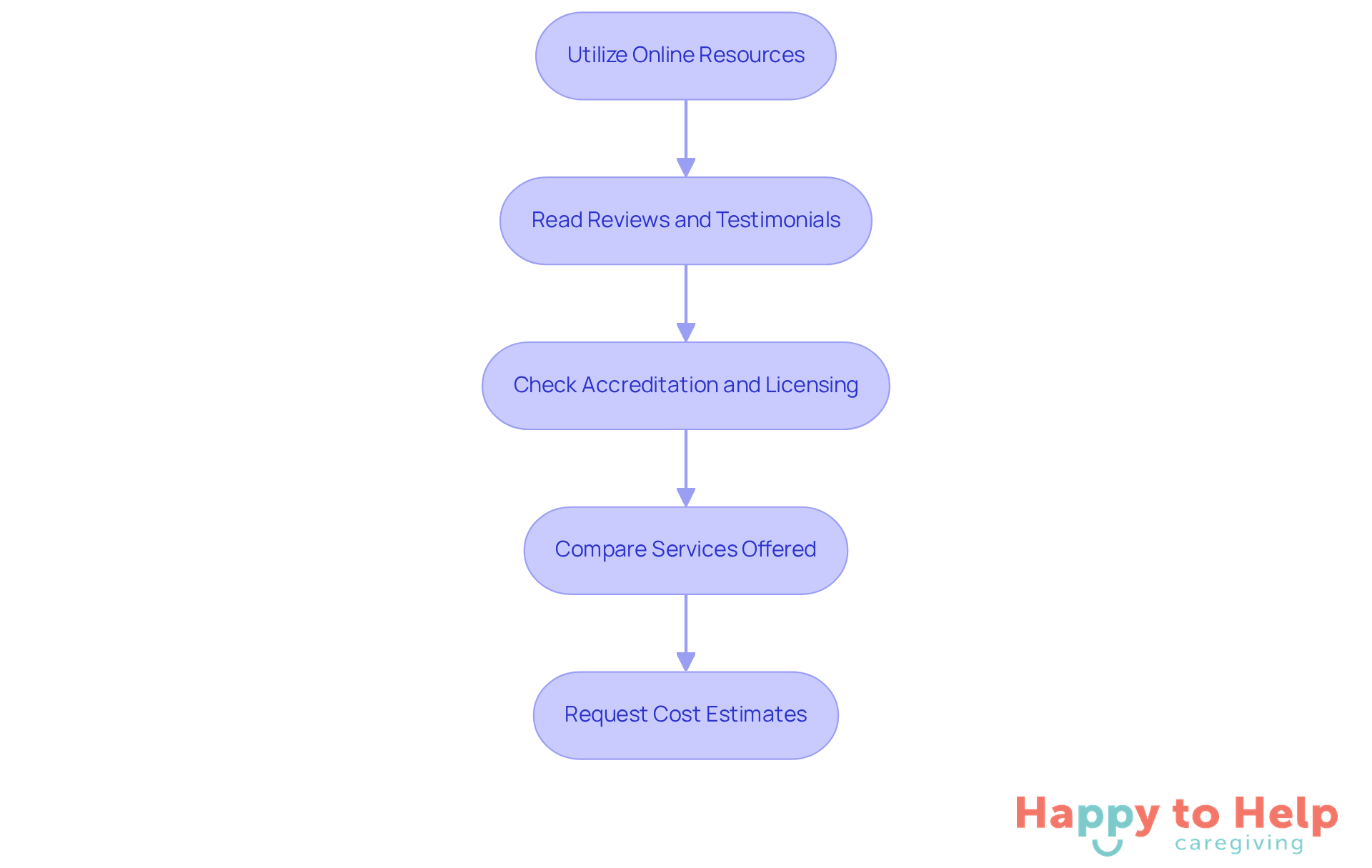
- Utilize Online Resources: Start by visiting websites like Medicare.gov, Yelp, and local directories to identify home support providers in your area.
- Read Reviews and Testimonials: Gather feedback from other families to assess the quality of care offered by different centers.
- Check Accreditation and Licensing: Verify that the organizations are licensed and accredited by the appropriate authorities.
- Compare Services Offered: Make a list of services each organization provides and see how they align with your loved one's specific needs.
- Request Cost Estimates: Contact organizations for pricing details and inquire about payment options, including insurance coverage.
By compiling this information, you can create a shortlist of potential home care centers near me that meet your criteria.
Evaluate Caregiver Qualifications and Agency Reputation
When evaluating caregiver qualifications and agency reputation, it's crucial to address a significant problem: ensuring the safety and well-being of your loved ones. Inadequate vetting can lead to serious consequences, including potential legal repercussions. To navigate this challenge effectively, consider the following actionable steps:
-
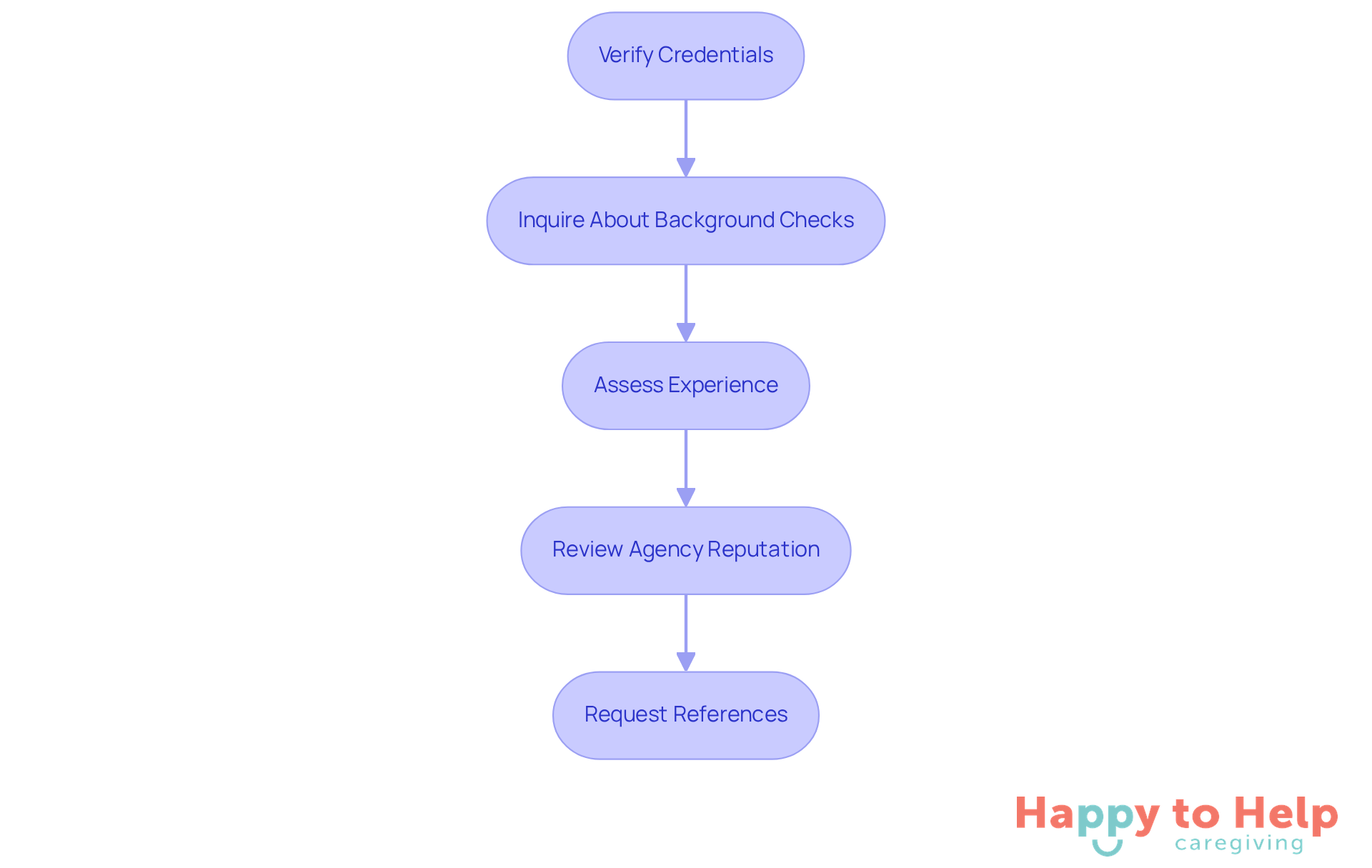
Verify Credentials: Confirm that providers possess relevant certifications, such as Certified Nursing Assistant (CNA) or Home Health Aide (HHA) certifications. These credentials are essential for ensuring they have the necessary skills.
-
Inquire About Background Checks: Ensure that the agency performs thorough background checks on their staff. This process is vital for safeguarding clients, as thorough checks can reveal disqualifying factors, such as a history of abuse or neglect. Matthew J. Rodgers, co-founder of iprospectcheck, emphasizes, "Lying about education or credentials will likely result in being disqualified from a job."
-
Assess Experience: Inquire about the support providers' experience levels, particularly concerning the specific needs of your loved one. Skilled caregivers are often better prepared to manage intricate circumstances and deliver superior support.
-
Review Agency Reputation: Investigate the agency's reputation by checking ratings from organizations like the Better Business Bureau (BBB) and reading online reviews. A strong reputation often indicates a dedication to quality service and client satisfaction. Additionally, consider that 85 percent of direct support workers are below 200 percent of poverty, which can affect their qualifications and the services they offer.
-
Request References: Ask for references from current or former clients to gain insight into the firm's reliability and quality of care. Personal testimonials can provide valuable insights into the organization's performance and the effectiveness of support providers.
By following this evaluation process, you can identify agencies that prioritize qualifications for support providers and maintain a strong reputation in the community. Remember, inadequate background checks can lead to significant legal repercussions, including potential lawsuits, emphasizing the necessity of thorough vetting.
Visit Care Centers and Ask Key Questions
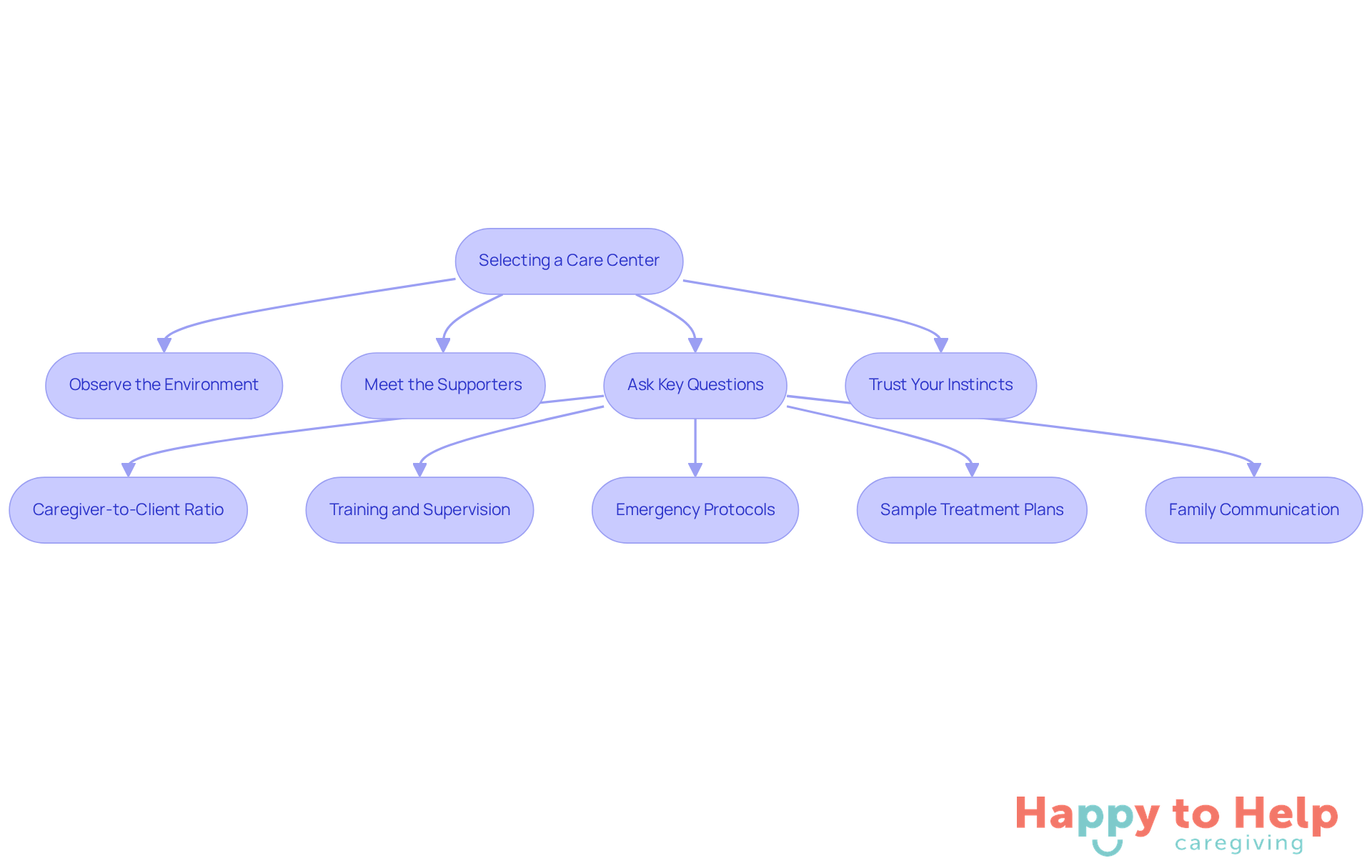
Selecting the right care center for your loved one can be a daunting task. With so many options available, it’s crucial to ensure that the environment is safe and welcoming. Here are some key considerations to help you make an informed decision:
-
Observe the Environment: Look for cleanliness, safety features, and an overall atmosphere that feels welcoming and comfortable.
-
Meet the Supporters: Interact with the caregivers to assess their demeanor and professionalism. As noted by Maxim Healthcare, "It helps to know that a home healthcare agency has done the work of running background checks on employees who will be coming into your home."
-
Ask Key Questions: Inquire about the following:
- Caregiver-to-Client Ratio: Understanding that the industry average is 1:8 during the day can help gauge the level of attention each resident receives.
- Training and Supervision: The Accreditation Commission for Health Care (ACHC) emphasizes stringent standards regarding caregiver training and supervision, which are vital for quality service.
- Emergency Protocols: Knowing the procedures in place for emergencies is essential for safety.
- Sample Treatment Plans: Requesting a sample treatment plan helps you understand how support is tailored to individual needs.
- Family Communication: Consistent updates are crucial for peace of mind, as highlighted in various studies on successful family-caregiver interactions.
-
Trust Your Instincts: Pay attention to your feelings about the environment and the staff. Trust your instincts regarding the comfort level for your loved one.
By following these steps, you can confidently select a home care center that meets your loved one's needs and fosters a supportive environment.
Taking the Next Steps
Finding the right home care center can be a daunting challenge for caregivers. It’s vital to ensure that loved ones receive the support they need while maintaining their dignity and comfort. Without proper guidance, families may struggle to navigate the various services offered by home care centers, leading to decisions that could impact their loved ones' quality of life.
To address this issue, it’s essential to identify specific medical, emotional, and social needs. Engaging family members in discussions about preferences can also help clarify what is most important. Researching local home care centers, comparing services, and evaluating caregiver qualifications are practical steps that can significantly narrow down options. Visiting care centers and asking critical questions will provide a clearer picture of the environment and the quality of care offered.
Ultimately, the well-being of loved ones hinges on the choices made in selecting a home care center. Prioritizing thorough research and maintaining open communication with both care providers and family members is crucial. By taking these steps, caregivers can ensure that their loved ones receive the best possible care tailored to their unique needs, fostering a supportive and nurturing environment.
https://iframe.tely.ai/cta/eyJhcnRpY2xlX2lkIjogIjY5MmY5MWEyZGM0MTVjZWNlZTQ2NmM4MyIsICJjb21wYW55X2lkIjogIjY4ZWU1ZGNhNzMxNzYyNTU3ZjNjOTVjMSIsICJpbmRleCI6IG51bGwsICJ0eXBlIjogImFydGljbGUifQ==Frequently Asked Questions
What services do home care centers typically offer?
Home care centers offer a variety of services including companionship care, personal care assistance, post-hospital recovery assistance, and palliative support services.
What is companionship care?
Companionship care provides emotional support and social interaction to alleviate feelings of loneliness for individuals receiving care.
How does personal care assistance help caregivers?
Personal care assistance helps caregivers with daily activities such as bathing, dressing, and grooming, ensuring that their loved ones maintain dignity and comfort.
What is included in post-hospital recovery assistance?
Post-hospital recovery assistance includes medication management and mobility assistance for individuals recovering from surgery or illness.
What are palliative support services?
Palliative support services are specialized assistance aimed at improving the quality of life for individuals with serious illnesses.
How can caregivers assess the care needs of their loved ones?
Caregivers can assess care needs by identifying medical needs, evaluating daily living activities, considering emotional and social needs, discussing preferences, and engaging family members for feedback.
Why is it important to evaluate daily living activities?
Evaluating daily living activities is essential because many seniors face challenges with basic tasks, which helps in customizing support effectively.
How can family involvement enhance the caregiving process?
Family involvement can clarify patient needs, enhance compliance with treatment plans, and lead to improved health outcomes, including fewer hospital readmissions.
What role do preferences play in selecting a caregiver?
Discussing preferences with the loved one about caregiver attributes such as gender, language, and personality traits fosters a sense of control and comfort in their support experience.
How can logistical assistance improve family involvement in care?
Offering logistical assistance, like adaptable meeting schedules, can eliminate obstacles to family involvement, enhancing the overall support process.
List of Sources
- Understand Home Care Center Services and Specializations
- Why Home Care Providers Are Increasingly Offering Companion Care Services for Seniors | Aaniie, formerly Smartcare Software (https://aaniie.com/news/why-home-care-providers-are-increasingly-offering-companion-care-services-for-seniors)
- The Emotional Benefits of Companion Care for Seniors (https://comfortkeepers.com/offices/texas/round-rock/resources/news/the-emotional-benefits-of-companion-care-for-seniors)
- 2025 Home Care Statistics: Trends & Insights To Know (https://premierhcinc.com/blog/home-care-statistics)
- 10 Benefits of In-Home Companion Care for Seniors You Should Know - Happy To Help (https://happytohelpcaregiving.com/10-benefits-of-in-home-companion-care-for-seniors-you-should-know)
- Assess Your Care Needs and Preferences
- How Family Involvement Enhances the Success of Personalized Support Plans (https://heartwisesupport.org/post/how-family-involvement-enhances-the-success-of-personalized-support-plans-ed3c1)
- 'More pressure on families.' Nearly half of US states are on the brink of a caregiving emergency (https://usatoday.com/story/news/health/2025/05/21/columbia-university-state-caregiving-study/83651201007)
- Caregiving in the US 2025 (https://aarp.org/pri/topics/ltss/family-caregiving/caregiving-in-the-us-2025)
- Trends in Senior Care: What to Expect in 2025 (https://agingconnections.org/blog/trends-in-senior-care-what-to-expect-in-2025)
- WHO calls for urgent transformation of care and support systems for older people (https://who.int/news/item/01-10-2024-who-calls-for-urgent-transformation-of-care-and-support-systems-for-older-people)
- Research and Compare Local Home Care Centers
- FastStats (https://cdc.gov/nchs/fastats/home-health-care.htm)
- Top Home Care Companies & How to Compare Them (2025) (https://linkedin.com/pulse/top-home-care-companies-amp-how-compare-them-arrre)
- 2025 Home Care Statistics: Trends & Insights To Know (https://premierhcinc.com/blog/home-care-statistics)
- 10 Tips for Finding the Right Home Care Agency | VirginiaNavigator (https://disabilitynavigator.org/article/93691/10-tips-finding-right-home-care-agency)
- 10 Must-Know U.S. Home Care Industry Stats for 2025 - North American Community Hub (https://nchstats.com/us-home-care-industry-stats)
- Evaluate Caregiver Qualifications and Agency Reputation
- DISA | Caregiver Screening for Safe Home Healthcare (https://disa.com/news/caregiver-background-check-best-practices)
- Does a Caregiver Need to Be Certified? Key Comparisons Explained - Happy To Help (https://happytohelpcaregiving.com/does-a-caregiver-need-to-be-certified-key-comparisons-explained)
- Caregiver Background Checks: A Complete Guide [2025] - iprospectcheck (https://iprospectcheck.com/caregiver-background-checks)
- The Direct Care Workforce - NASHP (https://nashp.org/the-direct-care-workforce)
- Caregiver Statistics: Demographics (https://caregiver.org/resource/caregiver-statistics-demographics)
- Visit Care Centers and Ask Key Questions
- 11 Questions to Ask a Home Healthcare Agency (https://maximhealthcare.com/healthcare-blog/questions-to-ask-a-home-healthcare-agency)
- 30 Inspirational Quotes for Caregivers (https://agingcare.com/articles/caregivers-quotes-inspiration-141133.htm)
- Inspirational Caregiver Quotes (https://homehelpershomecare.com/blog/2022/february/10-inspirational-self-care-quotes-for-caregivers)
- What Families Should Know About Caregiver Ratios in Nursing Homes (https://rosewood-nursing.com/post/what-families-should-know-about-caregiver-ratios-in-nursing-homes)
- Staff-to-Resident Ratios in Assisted Living (https://aplaceformom.com/caregiver-resources/articles/staff-ratio-assisted-living)