
The Importance of Agency Carers vs. Family Caregivers:
Navigating the complex landscape of caregiving presents a significant challenge for families. Understanding the nuances between agency caregivers and family caregivers is essential. Agency carers bring professional training and structured support, while family caregivers offer emotional bonds that can enhance the quality of care.
This balance raises critical questions: Can the emotional connection of family caregivers compensate for the lack of professional expertise? Or do the skills and reliability of agency carers outweigh the personal touch that comes from loved ones? Exploring these differences reveals the strengths and weaknesses of each approach and their profound impact on the well-being of both caregivers and those they care for.
To address these challenges, families should consider the following actionable solutions:
- Assess the specific needs of the individual requiring care.
- Evaluate the emotional and professional support available from both agency and family caregivers.
- Foster open communication between family members and caregivers to ensure a cohesive care plan.
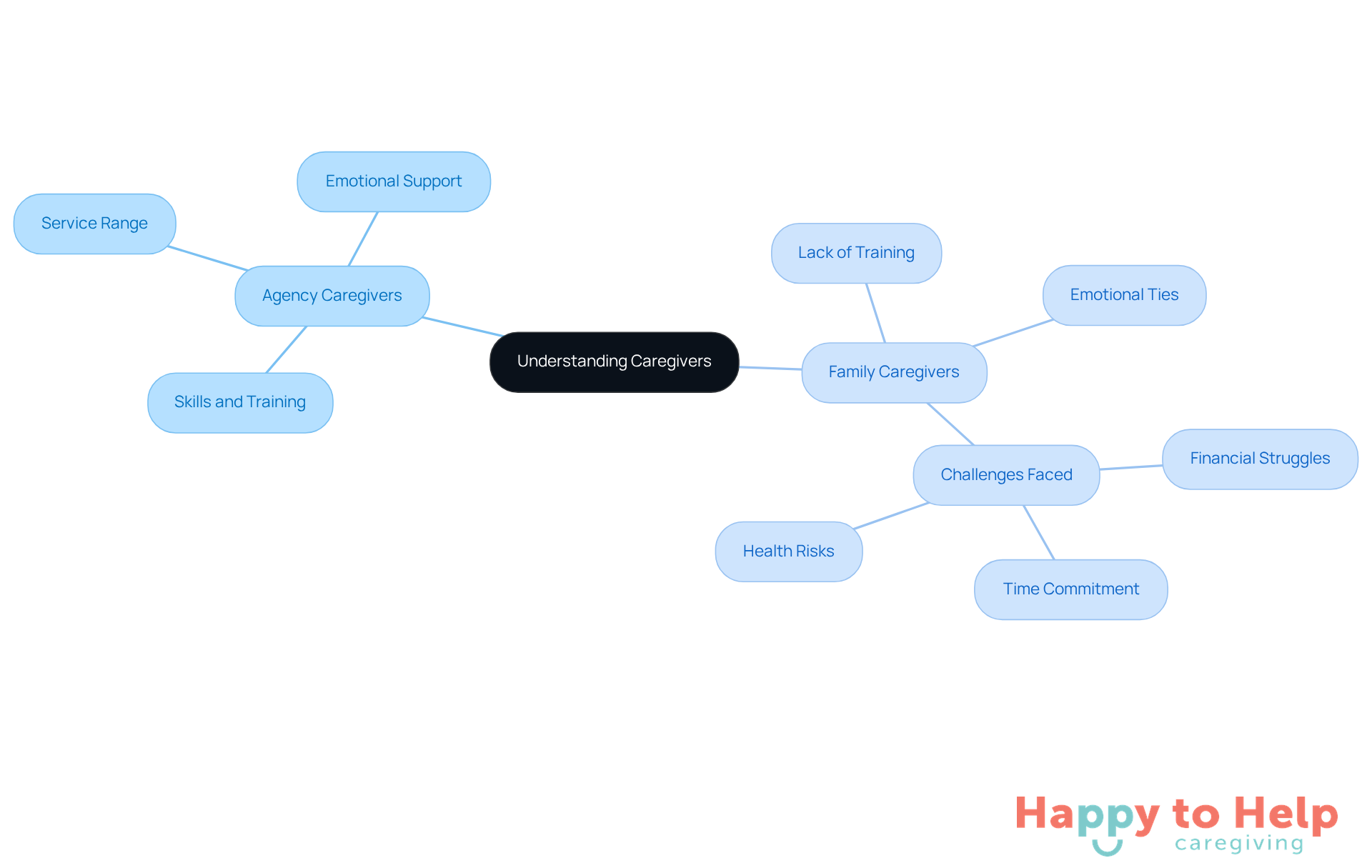
Understanding Agency Caregivers and Family Caregivers
Agency carers are skilled professionals hired by home service organizations, ready to provide a wide range of services, from companionship to medical support. They undergo thorough background checks and continuous training to maintain high service standards. In contrast, personal supporters are often relatives or friends who assist without formal training, motivated by emotional ties and a sense of obligation. While this can foster a personalized approach, it may lack the structure and consistency that professional helpers offer.
Understanding these distinctions is crucial for households exploring care options. Many families face the challenge of balancing caregiving responsibilities with their own needs. About 44% of households opt for professional providers, recognizing the benefits of expert assistance. Additionally, 88% of relatives providing care report insufficient support, highlighting the essential role of professional caregivers. Agency carers not only help alleviate the physical demands of caregiving but also provide emotional comfort, ensuring that loved ones receive quality care in a secure environment.
Real-world examples illustrate the effectiveness of support providers. Many households report that agency carers assist in managing complex medical needs, allowing relatives to focus on emotional support rather than medical tasks. This division of responsibilities can significantly reduce stress for relatives who often juggle multiple roles. In fact, caregivers spend an average of 17 hours each week on assistance, which can be overwhelming without additional support.
Experts in caregiving emphasize the advantages of agency carers:
- "Agency carers offer a degree of skill and dependability that can be essential for households dealing with the intricacies of care."
- They are trained to handle emergencies and provide specialized assistance that relatives may not be equipped to offer.
- Moreover, 71% of caregivers face financial difficulties, underscoring the importance of professional support in alleviating some of this burden.
In summary, while relatives offering support provide invaluable emotional assistance, agency carers bring expertise and organized support, making them an essential resource for households in need.
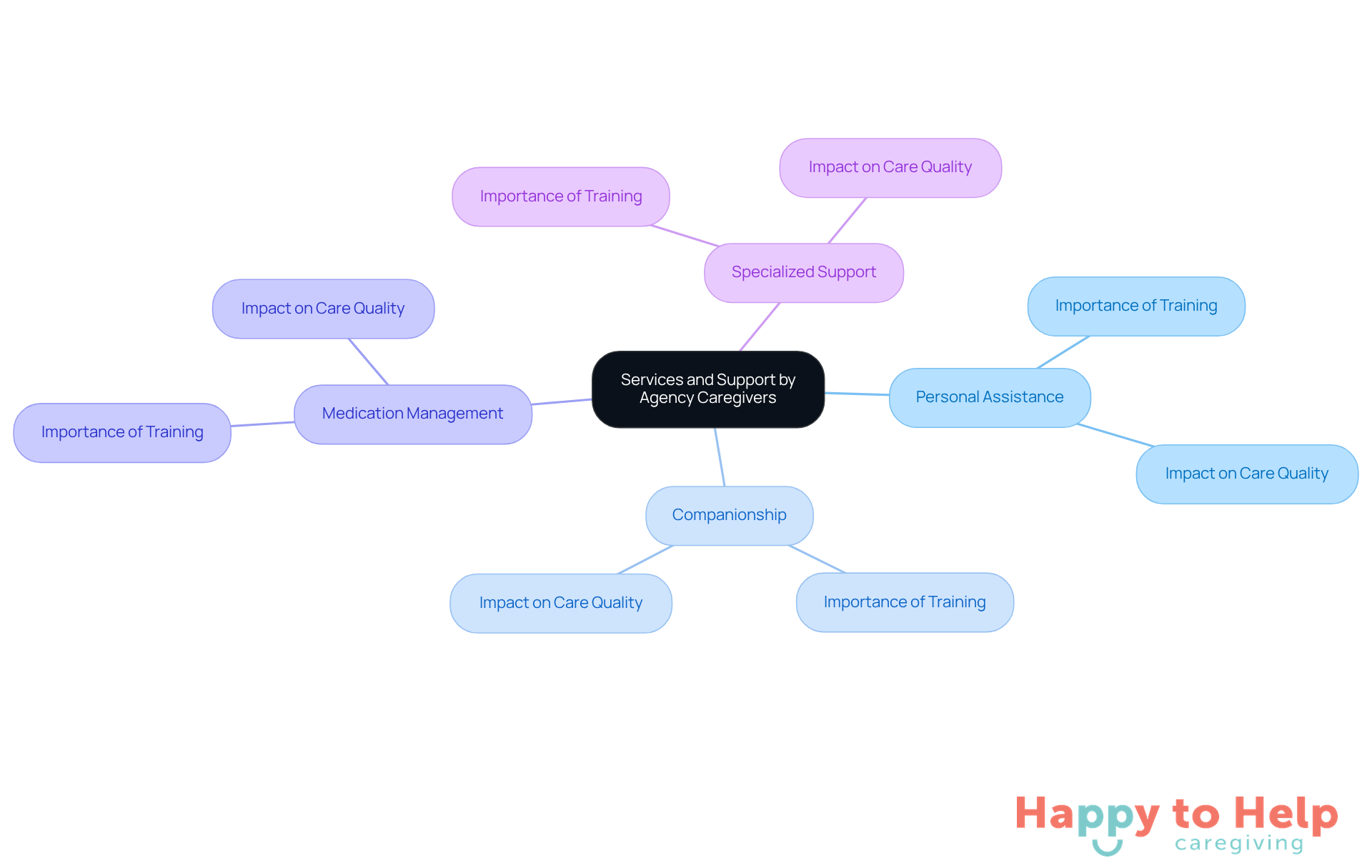
Services and Support Provided by Agency Caregivers
Agency carers encounter a significant challenge in delivering comprehensive care. They offer a wide range of services, including:
- Personal assistance with bathing and dressing
- Companionship
- Medication management
- Specialized support for chronic conditions
However, many family supporters may assist with daily activities but often lack the necessary training that agency carers possess to handle complex medical needs. This gap in service can severely impact the quality of care received from agency carers, particularly for individuals with serious health issues.
As Charles J. Fuschillo, Jr. points out, 'Functioning properly, managing stress, and preventing burnout is impossible without assistance and support.' This statement underscores the critical need for professional training among organizational staff. Such training not only enhances their ability to provide high-quality assistance but also ensures that clients receive the appropriate support tailored to their specific health conditions.
With projections indicating that 63 million individuals in the U.S. will depend on agency carers to assist an adult or child by 2025, the role of trained professionals becomes increasingly vital. Their expertise is essential in safeguarding the well-being and safety of clients, ultimately leading to improved health outcomes. To address these challenges, caregivers should prioritize seeking out trained professionals who can provide the necessary support and guidance.
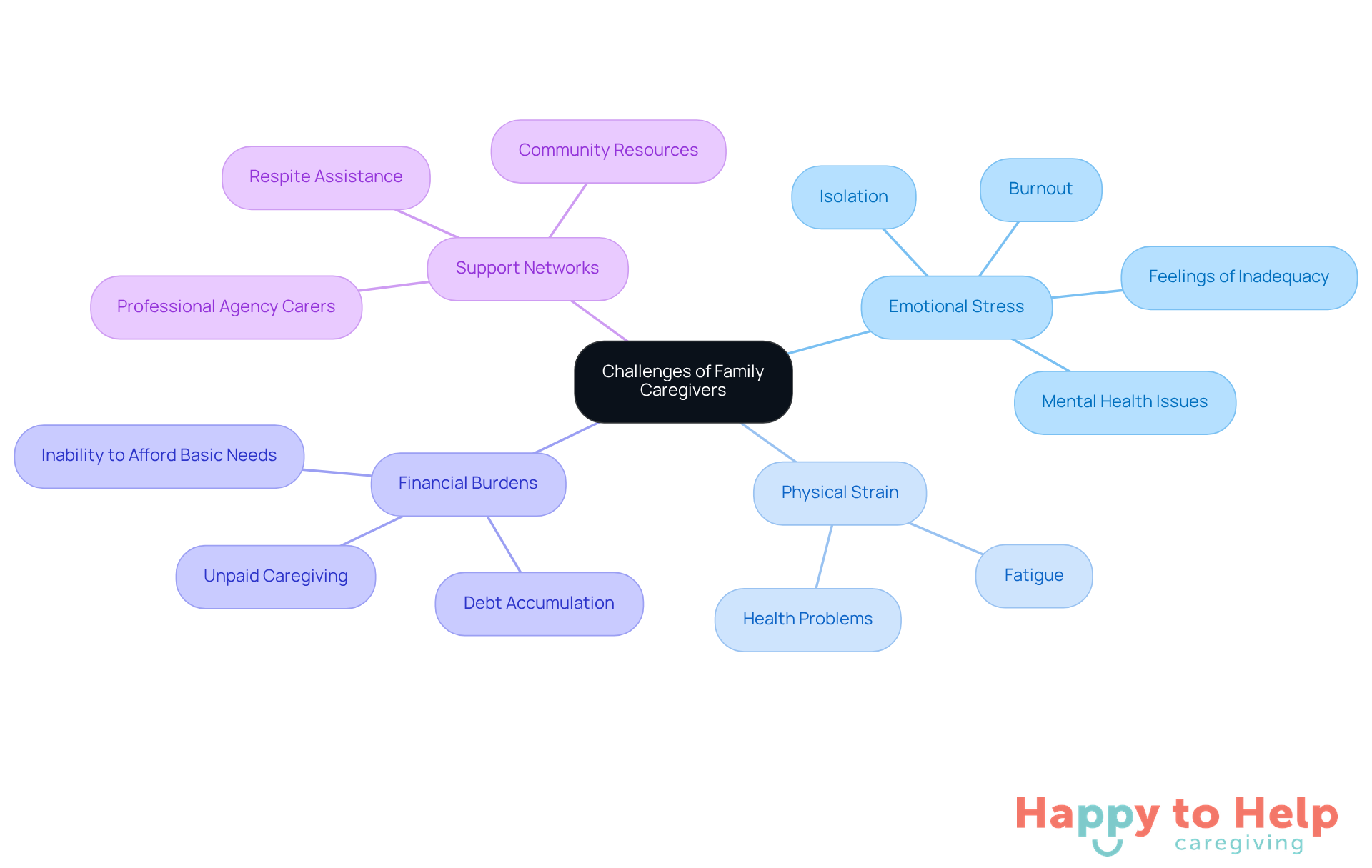
Challenges and Responsibilities of Family Caregivers
Family supporters often face significant challenges. These include:
- Emotional stress
- Physical strain
- Financial burdens
Many lack the necessary training to manage medical tasks, which can lead to feelings of inadequacy or burnout. The emotional toll of caring for a loved one can also result in isolation and mental health issues.
These challenges underscore the importance of support networks. Respite assistance and professional agency carers can alleviate some of the pressures that family providers encounter. By seeking help, caregivers can reduce their emotional and physical strain, ultimately improving their well-being and that of their loved ones.
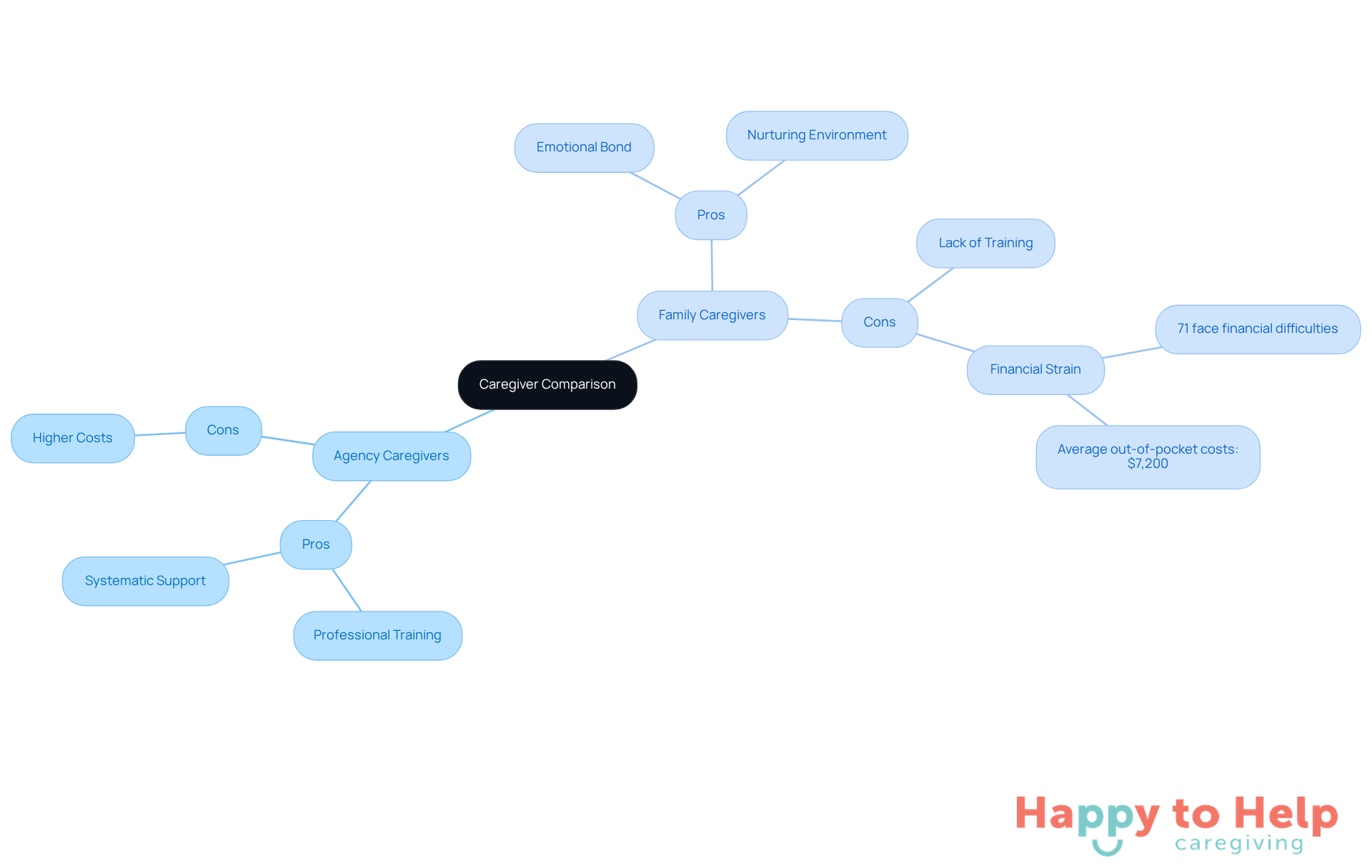
Pros and Cons of Agency Caregivers vs. Family Caregivers
Agency carers provide professional training and a systematic approach to support, which is crucial for individuals with complex health needs. However, this level of service often comes at a higher cost, posing a challenge for many families. In contrast, relatives providing care typically share a deep emotional bond with the care recipient, creating a nurturing environment that can enhance the overall quality of care. This personal connection can lead to greater satisfaction for both the caregiver and the recipient.
Despite these emotional advantages, family caregivers frequently encounter difficulties due to a lack of formal training and support. This can lead to feelings of isolation and burnout, especially as they balance caregiving with other life responsibilities. Statistics reveal that 71% of caregivers face financial difficulties, with 63% living paycheck to paycheck, which can heighten stress levels.
When considering costs, professional caregivers often charge significantly more than family members, who usually provide assistance without direct financial compensation. However, the financial impact of caregiving extends beyond immediate expenses; family caregivers may incur out-of-pocket costs averaging around $7,200 annually, with 90% contributing some financial support for their loved ones, further straining their finances.
Ultimately, the decision between agency carers and family support hinges on the specific needs of the individual requiring assistance and the resources available to the household. Families must weigh the benefits of professional training and reliability against the emotional support and personal touch that family caregivers offer, considering both the financial and emotional costs involved.
Taking the Next Steps
The distinctions between agency caregivers and family caregivers present a significant challenge for families navigating the complexities of care. Agency caregivers bring professional expertise and structured support, while family caregivers offer emotional bonds and personalized care. This duality can create confusion, making it essential for families to understand these differences to make informed decisions that align with their specific needs and circumstances.
Families often face emotional and financial challenges when relying on family caregivers, which can impact their well-being and effectiveness. Statistics reveal that many caregivers struggle with insufficient assistance and financial strain, underscoring the importance of professional support. Agency caregivers, with their specialized training and ability to manage complex medical needs, can significantly alleviate the burden on family members.
To address these challenges, families are encouraged to evaluate their resources, the level of care required, and the emotional implications of caregiving. By seeking the right balance of professional and personal support, families can enhance the quality of care for their loved ones while safeguarding their own health and well-being. Ultimately, the choice between agency caregivers and family caregivers should reflect the unique dynamics of each household, ensuring that all parties receive the support they need.
https://iframe.tely.ai/cta/eyJhcnRpY2xlX2lkIjogIjY5MjNhMGJjMWRmODM1M2QyMjg0NTk2MyIsICJjb21wYW55X2lkIjogIjY4ZWU1ZGNhNzMxNzYyNTU3ZjNjOTVjMSIsICJpbmRleCI6IG51bGwsICJ0eXBlIjogImFydGljbGUifQ==Frequently Asked Questions
What are agency caregivers?
Agency caregivers are skilled professionals hired by home service organizations to provide a range of services, including companionship and medical support. They undergo thorough background checks and continuous training to ensure high service standards.
Who are family caregivers?
Family caregivers are typically relatives or friends who assist individuals without formal training. They are motivated by emotional ties and a sense of obligation, which can lead to a more personalized approach to care.
What are the main differences between agency caregivers and family caregivers?
The main differences include the level of training and structure. Agency caregivers are trained professionals who provide organized support, while family caregivers may lack formal training and consistency in care.
Why do many families choose professional caregivers?
Many families choose professional caregivers to balance caregiving responsibilities with their own needs. About 44% of households opt for professional providers to benefit from expert assistance.
What challenges do family caregivers face?
Family caregivers often report feeling overwhelmed, with 88% indicating insufficient support. They typically spend an average of 17 hours each week on caregiving tasks, which can be stressful without additional help.
How do agency caregivers help alleviate the burden on family caregivers?
Agency caregivers assist in managing complex medical needs, allowing family caregivers to focus on providing emotional support rather than handling medical tasks. This division of responsibilities can significantly reduce stress.
What additional benefits do agency caregivers provide?
Agency caregivers offer skill and dependability, are trained to handle emergencies, and provide specialized assistance that family caregivers may not be equipped to offer.
What financial challenges do caregivers face?
About 71% of caregivers experience financial difficulties, highlighting the importance of professional support in alleviating some of this burden.
List of Sources
- Understanding Agency Caregivers and Family Caregivers
- National Alliance for Caregiving: Caregiving in the US 2025 Report (https://johnahartford.org/resources/view/national-alliance-for-caregiving-caregiving-in-the-us-2025-report)
- The Caregiving Landscape: Data & Insights on the Caregiver Experience in the U.S. (https://caregiveraction.org/caregiver-statistics)
- Fact Sheet: Trends in Family Care for Older Americans (https://prb.org/resources/fact-sheet-trends-in-family-care-for-older-americans)
- Caregiver Statistics: Demographics (https://caregiver.org/resource/caregiver-statistics-demographics)
- Family Caregiver Annual Report and Statistics | SeniorLiving.org (https://seniorliving.org/research/family-caregiver-report-statistics)
- Services and Support Provided by Agency Caregivers
- News Releases (https://hcaoa.org/news-releases.html)
- It’s Time to Care for Caregivers: Senator Markey Announces Comprehensive Family Caregiving Legislative Agenda | U.S. Senator Ed Markey of Massachusetts (https://markey.senate.gov/news/press-releases/11/20/2025/its-time-to-care-for-caregivers-senator-markey-announces-comprehensive-family-caregiving-legislative-agenda)
- Home-Based Care Companies Improve Outcomes By Training Family Caregivers (https://homehealthcarenews.com/2025/10/home-based-care-companies-improve-outcomes-by-training-family-caregivers)
- VA extends caregiver support program eligibility for “legacy” Veterans, caregivers (https://news.va.gov/press-room/va-extends-caregiver-support-program-eligibility-for-legacy-veterans-caregivers)
- Challenges and Responsibilities of Family Caregivers
- New Report Reveals Crisis Point for America’s 63 million Family Caregivers (https://press.aarp.org/2025-07-24-New-Report-Reveals-Crisis-Point-for-Americas-63-million-Family-Caregivers)
- New Report Reveals Crisis Point for America’s 63 million Family Caregivers - Massachusetts Healthy Aging Collaborative (https://mahealthyagingcollaborative.org/new-report-reveals-crisis-point-for-americas-63-million-family-caregivers)
- Caregiving’s Mental Health Crisis (https://forbes.com/sites/otsuka/2025/10/02/caregivings-mental-health-crisis)
- Family Caregivers Struggling In Some States More Than Others (https://disabilityscoop.com/2025/10/31/family-caregivers-struggling-in-some-states-more-than-others/31710)
- 'I don't know where to start.' Parents and caregivers are burned out. Who's most at risk? (https://usatoday.com/story/money/2025/04/04/parents-caregivers-burnt-out-help/82695959007)
- Pros and Cons of Agency Caregivers vs. Family Caregivers
- Topic: Caregivers in the U.S. (https://statista.com/topics/4113/caregivers-in-the-us?srsltid=AfmBOopVPEz-67M8lbh-gkXZ8RC-vlc-SDG565TvXA6V7ABuCkD8oRcN)
- The Caregiving Landscape: Data & Insights on the Caregiver Experience in the U.S. (https://caregiveraction.org/caregiver-statistics)
- Caregiver Statistics: Work and Caregiving (https://caregiver.org/resource/caregiver-statistics-work-and-caregiving)
- New Report Reveals U.S. Family Caregivers Perform Equivalent of a Staggering $873.5 Billion Worth of Labor, Would Surpass Revenue of Top Global Companies | Otsuka US (https://otsuka-us.com/news/new-report-reveals-us-family-caregivers-perform-equivalent-staggering-8735-billion-worth-labor)