

For families in our service areas
For families in our service areas, this guide explains home care and how non-medical in-home caregiving can support care planning in East Idaho, Treasure Valley & Magic Valley, Northern Wasatch, North Central West Virginia, and Northeast Ohio.
The Importance of Best Practices for Overnight Home Care
Overnight home care for the elderly addresses a critical issue for families trying to ensure their loved ones receive essential support during vulnerable nighttime hours. Many older adults struggle with sleep issues and feelings of loneliness, which can significantly affect their quality of life. Navigating the numerous care options and selecting the right provider can be overwhelming for families.
To tackle these challenges, families should consider several best practices:
- Assess the specific needs of the elderly relative, including any medical conditions or mobility issues.
- Research potential care providers thoroughly, looking for those with positive reviews and relevant experience.
- Involve the elderly person in the decision-making process to ensure they feel comfortable and respected in their own home.
By taking these steps, families can help their elderly relatives not only feel safe but also thrive in their familiar surroundings.
Explore Overnight Care Options for Seniors
When considering overnight home care for the elderly, families encounter a significant challenge: ensuring their loved ones receive the support they need during vulnerable nighttime hours. Research indicates that approximately 40% to 70% of older adults experience sleep issues, which can lead to feelings of loneliness and anxiety. This situation not only affects the seniors but also places a burden on caregivers, with over 60% experiencing burnout.
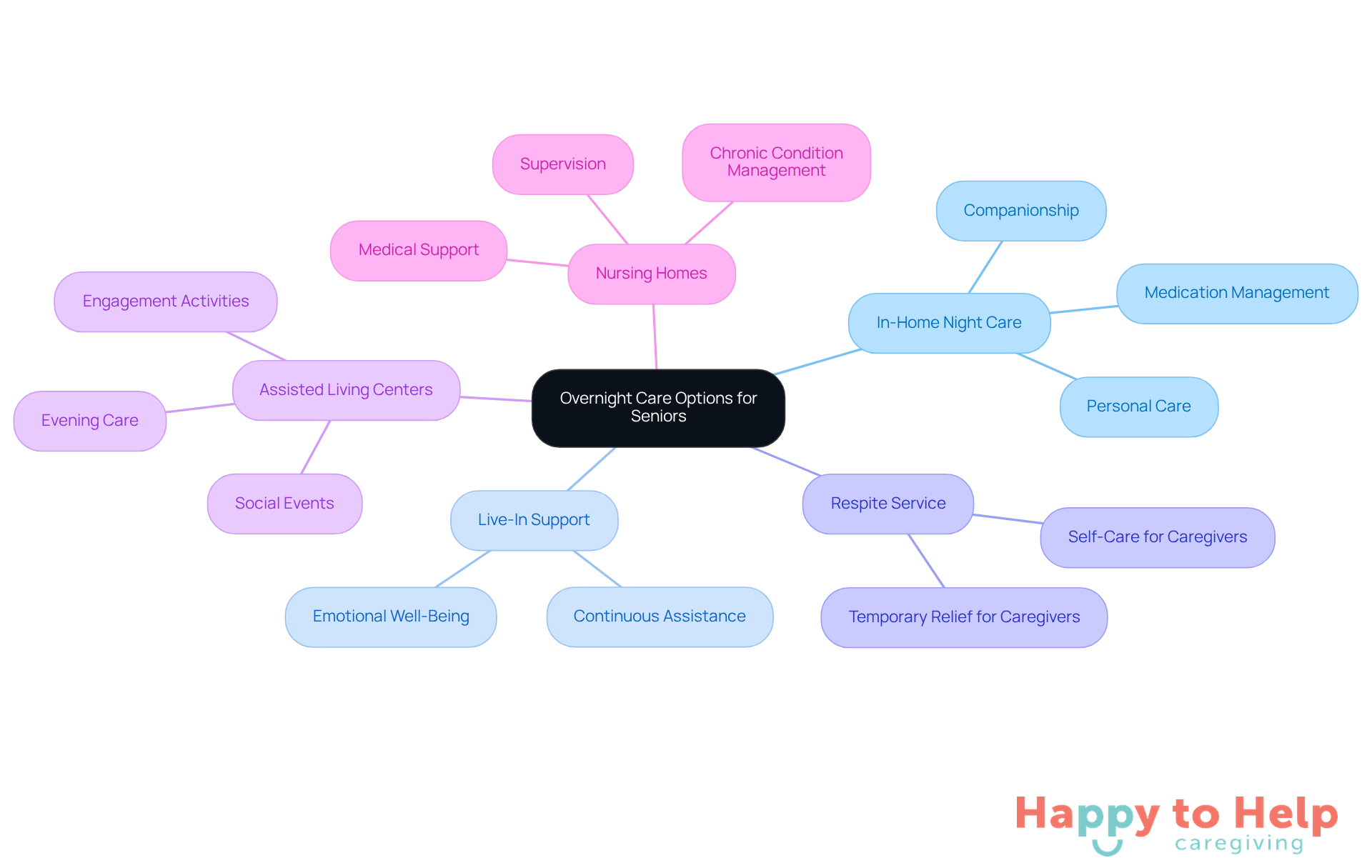
To address these challenges, families have a variety of tailored options to meet their loved ones' needs:
-
In-Home Night Care: Employing a skilled caregiver to stay overnight in the elderly person's residence can provide essential assistance with personal care, medication management, and companionship. This choice ensures safety and comfort, allowing older adults to feel secure in their own homes.
-
Live-In Support: A live-in assistant offers continuous support by residing in the home full-time. This arrangement is ideal for seniors who require extensive assistance or companionship, fostering a sense of security and familiarity that significantly enhances emotional well-being.
-
Respite Service: Temporary relief for primary caregivers is crucial. Respite care allows them to take necessary breaks while ensuring their loved ones receive professional assistance, highlighting the importance of self-care for those providing support.
-
Assisted Living Centers: For older adults who may benefit from a more organized setting, assisted living centers provide evening care along with additional services such as meals and social events. These facilities can enhance engagement, as older adults in such settings are 19% more likely to participate in enjoyable activities.
-
Nursing Homes: For individuals with substantial medical requirements, nursing homes offer extensive care, including continuous support from qualified medical personnel. This option is often necessary for seniors with chronic conditions requiring constant supervision. Notably, 70% of households caring for individuals with dementia eventually turn to nursing facilities due to sleep disturbances and fatigue from late-night support.
By assessing these choices, families can select the most suitable care solution that matches their loved one's needs and preferences, ensuring they receive the essential support to thrive at home.
Evaluate Key Factors in Choosing Care Providers
Choosing the right provider for overnight home care for the elderly can be a daunting task. Families often face the challenge of ensuring their loved ones receive the best possible care, which can significantly impact their quality of life. To navigate this process effectively, it’s crucial to evaluate several key factors.
-
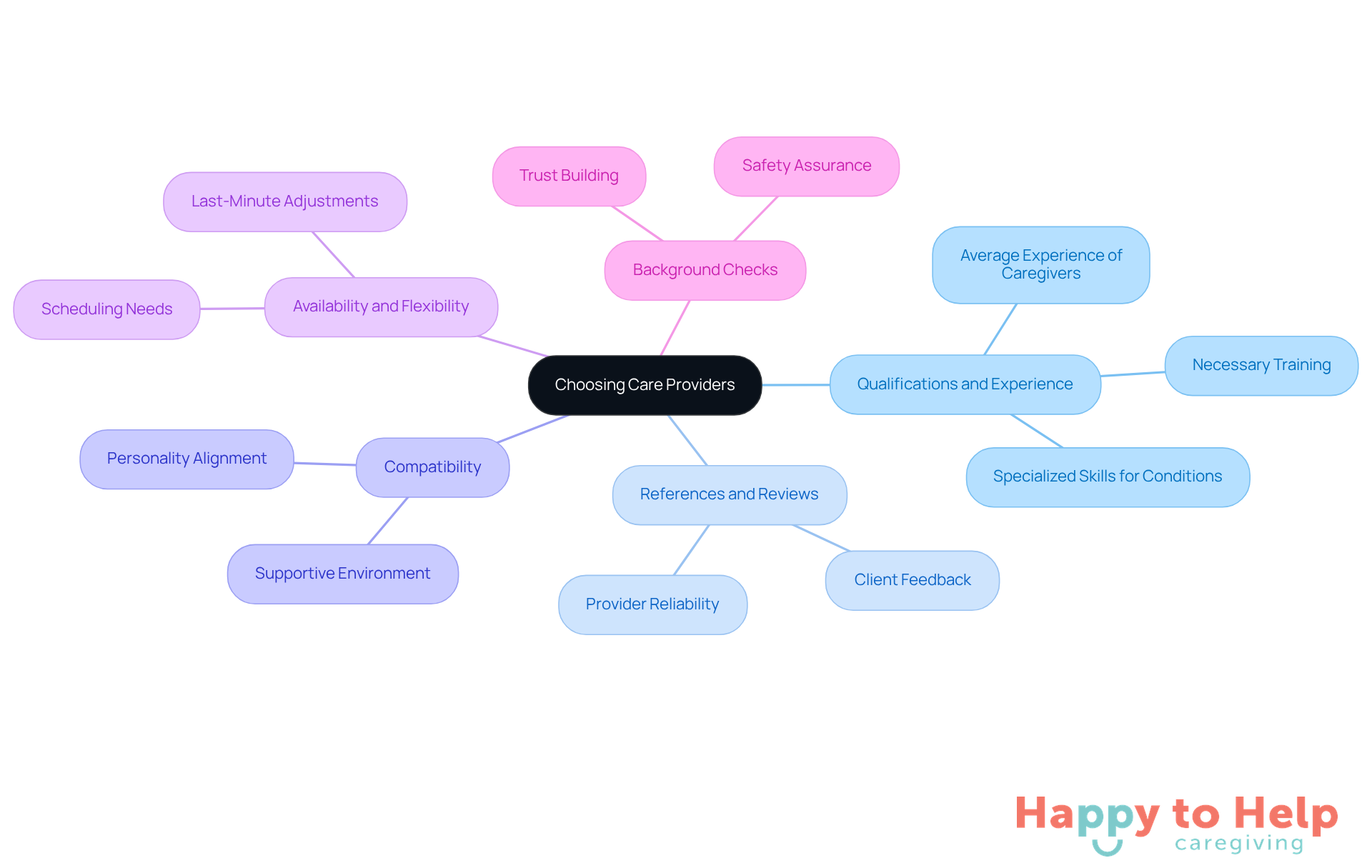
Qualifications and Experience: One of the primary concerns is ensuring that caregivers have the necessary training and experience, especially for specific health conditions like dementia or chronic illnesses. Caregivers with specialized skills can greatly enhance the quality of care. With an average of just one year of experience in the role, families should prioritize those who demonstrate a strong background in elderly assistance.
-
References and Reviews: Actively seeking references and reading reviews from other clients is essential. This feedback provides valuable insights into the provider's reliability, professionalism, and overall quality of service. As noted, "The simple act of caring is heroic," underscoring the importance of compassionate caregiving.
-
Compatibility: Evaluating the provider's personality and approach is vital. An attendant who aligns with the senior's preferences can create a more comfortable and supportive environment, crucial for emotional well-being.
-
Availability and Flexibility: It’s important to verify that the provider can meet the household's scheduling needs, including last-minute adjustments. Flexibility in scheduling can alleviate stress for families and ensure consistent, dependable care.
-
Background Checks: Confirming that the agency conducts comprehensive background checks on caregivers is essential. This step guarantees safety and fosters trust, allowing families to feel secure in their choice of provider.
By prioritizing these factors, families can make informed decisions that enhance the quality of overnight home care for the elderly in their care. Given that 40% of individuals providing care are in high-burden situations, selecting qualified providers is crucial for ensuring a positive caregiving experience.
Understand the Role of Overnight Caregivers
Caregivers involved in overnight home care for the elderly play a crucial role in ensuring the safety and well-being of older adults during nighttime hours. However, many families may not fully understand the challenges faced by these caregivers and the implications for their loved ones.
Problem: As older adults often require assistance during the night, the lack of proper support can lead to safety risks and health complications.
Agitate: For instance, approximately 83% of elderly individuals receiving assistance need help with bathing and showering. Missing medications can also lead to significant health issues, especially at night when caregivers may not be readily available.
Solution: Understanding the essential responsibilities of overnight caregivers can help families appreciate their value in improving their loved ones' quality of life. Here are the key roles they fulfill:
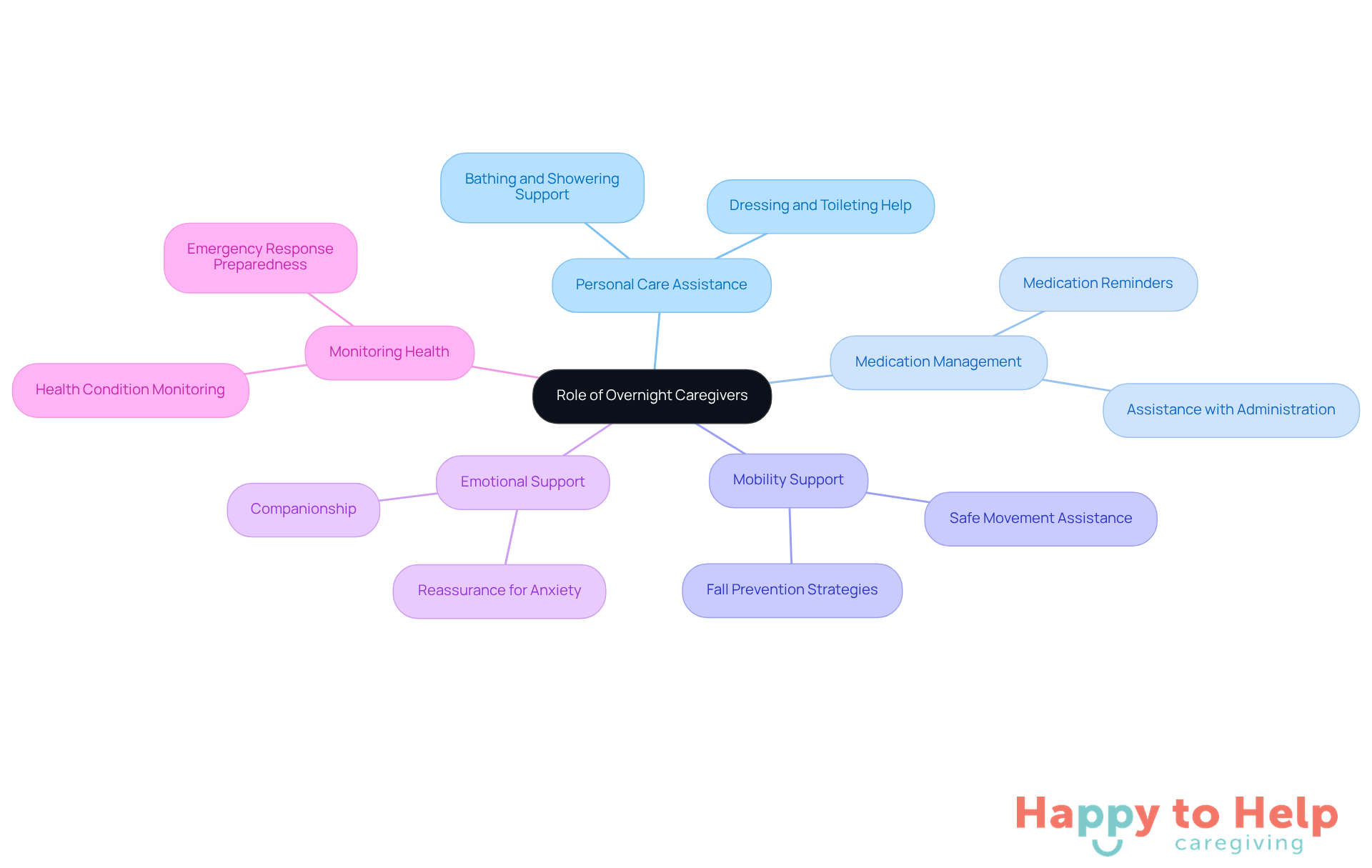
- Personal Care Assistance: Caregivers help elderly individuals with bathing, dressing, and toileting, ensuring dignity and comfort.
- Medication Management: They remind older adults to take medications on time and assist with administration, preventing health complications.
- Mobility Support: Caregivers assist seniors in moving safely around the home, especially during nighttime bathroom visits, to prevent falls.
- Emotional Support: Providing companionship and reassurance can alleviate feelings of loneliness and anxiety during the night. Calm reassurance helps those experiencing confusion or sundowning symptoms feel safe.
- Monitoring Health: Caregivers keep an eye on any changes in the senior's condition and are prepared to respond to emergencies, including calling for medical assistance if needed. Dependability and integrity are crucial traits for late-night assistants, assuring relatives that their loved ones are in safe hands.
By recognizing these roles, households can better appreciate the significance of overnight home care for the elderly in enhancing the quality of life for their loved ones.
Recognize the Benefits of Overnight Care
Overnight home care for the elderly addresses several significant challenges faced by seniors and their families, offering essential support that enhances safety and emotional well-being.
Problem: Many seniors face safety risks, particularly those with mobility challenges or recovering from medical procedures. The absence of immediate assistance can lead to falls and accidents, which are serious concerns for caregivers. Research indicates that constant observation can reduce fall risk by up to 30%, highlighting the critical need for trained staff.
Agitate: Without proper support, seniors may experience anxiety and disrupted sleep, further impacting their health. Families often worry about their loved ones feeling lonely or unsafe during the night, which can lead to increased stress for both seniors and caregivers. This situation can create a cycle of burnout for family helpers, who struggle to balance their own well-being with the demands of caregiving.
The solution is that overnight home care for the elderly offers a practical way to address these challenges.
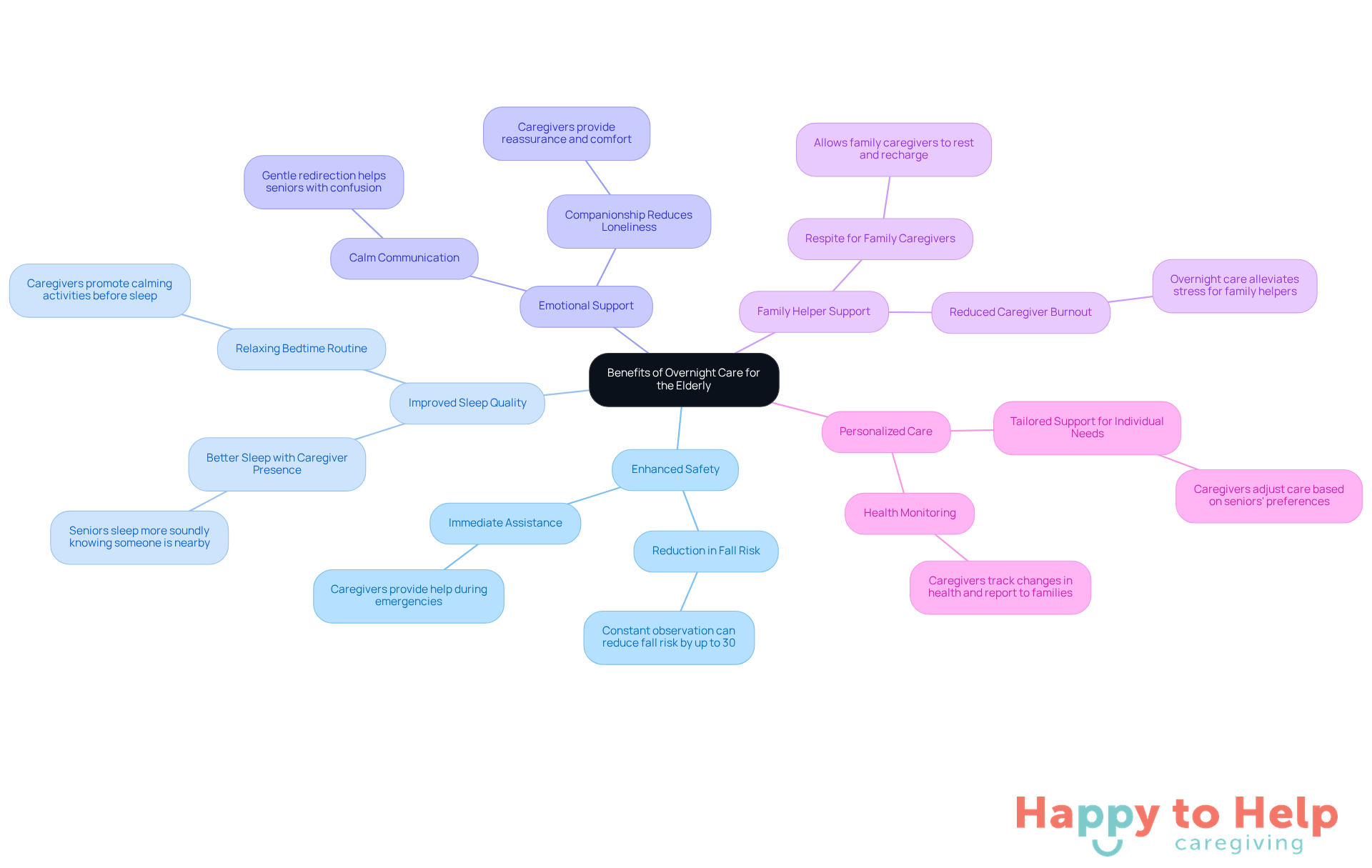
- Enhanced Safety: The presence of a caregiver significantly reduces the risk of falls, ensuring immediate assistance is available when needed.
- Improved Sleep Quality: Many seniors sleep better knowing someone is nearby, leading to better overall health.
- Emotional Support: Companionship during nighttime hours alleviates feelings of loneliness and anxiety, providing reassurance and comfort.
- Family Helper Support: Overnight assistance allows family caregivers to rest, reducing the risk of burnout and enabling them to provide better care during the day.
- Personalized Care: Caregivers can tailor their support to meet the specific needs of each senior, ensuring that health details are not overlooked.
By recognizing these benefits, families can confidently pursue overnight home care for the elderly, knowing it enhances safety, emotional well-being, and overall quality of life.
Making the Right Choice
Choosing overnight home care for the elderly presents a significant challenge that can greatly affect the well-being and quality of life for seniors and their families. The options available, from in-home night care to assisted living centers, can be overwhelming. Without the right support, seniors may face safety risks and emotional distress during vulnerable nighttime hours.
The implications of inadequate overnight care are serious. Families may experience increased anxiety, knowing their loved ones are not safe or comfortable at night. This situation can lead to a decline in the health and happiness of elderly individuals, making it crucial to prioritize the right support.
To address these challenges, families should consider several key steps in selecting the right overnight care provider:
- Evaluate caregiver qualifications and seek references to ensure they have the necessary experience.
- Ensure compatibility between the caregiver and the senior to foster a trusting relationship.
- Understand the critical roles that overnight caregivers play-from personal care assistance to medication management-highlighting their importance in maintaining the health and happiness of elderly individuals.
The benefits of overnight care are clear: improved safety and reduced anxiety for both seniors and their families. By exploring available options and understanding caregiver responsibilities, families can make informed choices that alleviate their own burdens while ensuring that seniors receive the compassionate care they deserve.
Ultimately, embracing overnight home care is about more than just providing assistance; it’s about creating a nurturing environment that promotes dignity, safety, and emotional well-being for the elderly.
https://iframe.tely.ai/cta/eyJhcnRpY2xlX2lkIjogIjY5M2Y1MDlkYjk3NTAxMmE2YWRmZmQxOSIsICJjb21wYW55X2lkIjogIjY4ZWU1ZGNhNzMxNzYyNTU3ZjNjOTVjMSIsICJpbmRleCI6IG51bGwsICJ0eXBlIjogImFydGljbGUifQ==Frequently Asked Questions
What challenges do families face when considering overnight care for seniors?
Families face the challenge of ensuring their loved ones receive support during vulnerable nighttime hours, as many older adults experience sleep issues, leading to loneliness and anxiety. This situation also burdens caregivers, with over 60% experiencing burnout.
What is in-home night care?
In-home night care involves employing a skilled caregiver to stay overnight in the elderly person's residence, providing essential assistance with personal care, medication management, and companionship, ensuring safety and comfort.
What are the benefits of live-in support for seniors?
Live-in support offers continuous assistance by having an assistant reside in the home full-time, which is ideal for seniors needing extensive help or companionship, enhancing their emotional well-being through security and familiarity.
What is respite service and why is it important?
Respite service provides temporary relief for primary caregivers, allowing them to take necessary breaks while ensuring their loved ones receive professional assistance. It emphasizes the importance of self-care for caregivers.
What services do assisted living centers provide for seniors?
Assisted living centers offer evening care along with additional services such as meals and social events, enhancing engagement. Older adults in these settings are 19% more likely to participate in enjoyable activities.
When might a nursing home be the best option for a senior?
A nursing home is suitable for individuals with substantial medical needs, offering extensive care and continuous support from qualified medical personnel. It is often necessary for seniors with chronic conditions requiring constant supervision.
How can families choose the right overnight care option for their loved ones?
Families can assess various care options, including in-home night care, live-in support, respite services, assisted living centers, and nursing homes, to select the most suitable solution that matches their loved one's needs and preferences.
List of Sources
- Explore Overnight Care Options for Seniors
- How Does Overnight Home Care Benefit Seniors? (https://visitingangels.com/eastside/articles/protecting-seniors-at-night-the-value-of-professional-overnight-home-care/25286)
- 10 Benefits of Overnight Care for Elderly Near Me - Happy To Help (https://happytohelpcaregiving.com/10-benefits-of-overnight-care-for-elderly-near-me)
- Sleep Well, Care Well: The Benefits of Overnight Care for Family Caregivers (https://homehelpershomecare.com/bradenton/community-blog/2023/january/sleep-well-care-well-the-benefits-of-overnight-care-for-family-caregivers)
- How Overnight Home Care Benefits Family Caregivers (https://homeinstead.ca/location/3052/news-and-media/how-overnight-home-care-benefits-family-caregivers)
- The Importance of Overnight In-Home Care: Recognizing the Signs Your Loved One Needs Nighttime Support (https://sunlandhomecareaz.com/importance-of-overnight-in-home-care)
- Evaluate Key Factors in Choosing Care Providers
- An Aging America Needs a Stronger Care Workforce - National Skills Coalition (https://nationalskillscoalition.org/blog/news/an-aging-america-needs-a-stronger-care-workforce)
- Caregiver Statistics: Demographics (https://caregiver.org/resource/caregiver-statistics-demographics)
- CaringBridge (https://caringbridge.org/resources/inspirational-quotes-on-caregiving)
- Caregiver Quotes: 50+ Inspiring Encouragement Quotes for Strength (https://h2hhc.com/blog/inspiring-caregiver-quotes)
- Caregiving Crisis: 45% Increase in Americans Providing Care (https://aarp.org/caregiving/basics/caregiving-in-us-survey-2025)
- Understand the Role of Overnight Caregivers
- Why Overnight Safety Is Critical for Seniors (https://genactainhomecare.com/why-overnight-safety-is-critical-for-seniors)
- What Do Overnight Caregivers Do and Why Are They Essential for Nighttime Care? (https://legacyhc.net/what-do-overnight-caregivers-do-and-why-are-they-essential-for-nighttime-care)
- Understanding Overnight Care for Elderly Cost: Key Factors and Options - Happy To Help (https://happytohelpcaregiving.com/understanding-overnight-care-for-elderly-cost-key-factors-and-options)
- How Overnight Home Care Benefits Family Caregivers (https://homeinstead.ca/location/3052/news-and-media/how-overnight-home-care-benefits-family-caregivers)
- Caregiver Statistics: Demographics (https://caregiver.org/resource/caregiver-statistics-demographics)
- Recognize the Benefits of Overnight Care
- Safety & Restorative Benefits of Overnight Care for Seniors & Families (https://homeinstead.ca/location/3025/news-and-media/the-safety-and-restorative-benefits-of-overnight-care-for-seniors-and-their-families-in-calgary)
- Why Overnight Safety Is Critical for Seniors (https://genactainhomecare.com/why-overnight-safety-is-critical-for-seniors)
- Around-the-Clock Support: The Benefits of 24-Hour Home Care for Seniors (https://afcsnc.com/around-the-clock-support-the-benefits-of-24-hour-home-care-for-seniors)
- Sleep Well, Care Well: The Benefits of Overnight Care for Family Caregivers (https://homehelpershomecare.com/bradenton/community-blog/2023/january/sleep-well-care-well-the-benefits-of-overnight-care-for-family-caregivers)
- 10 Benefits of Senior Overnight Care for Family Caregivers - Happy To Help (https://happytohelpcaregiving.com/10-benefits-of-senior-overnight-care-for-family-caregivers)