Checklist for Choosing a Walking Assist Device for Elderly Care
For families in our service areas
For families in our service areas, this guide explains caregiving and how non-medical in-home caregiving can support care planning in East Idaho, Treasure Valley & Magic Valley, Northern Wasatch, North Central West Virginia, and Northeast Ohio.
What You Need to Know About Checklist for Choosing a Walking Assist
Choosing the right walking assist device for elderly care presents a significant challenge for caregivers. This decision can greatly affect a senior's mobility and independence. With options ranging from canes to walkers and rollators, caregivers must navigate a variety of choices tailored to individual needs.
The implications of selecting the wrong device can be serious. It may lead to decreased mobility, increased risk of falls, and diminished confidence for seniors. Therefore, understanding the specific mobility requirements and safety features of each option is crucial.
To assist caregivers in making informed decisions, this article provides a comprehensive checklist. This resource outlines the types of walking aids available and emphasizes the importance of assessing individual needs. By following these guidelines, caregivers can enhance safety and confidence for the seniors in their care.
How can caregivers ensure they are making the best choice? The answer lies in careful evaluation and consideration of each device's features.
Identify Types of Walking Assist Devices
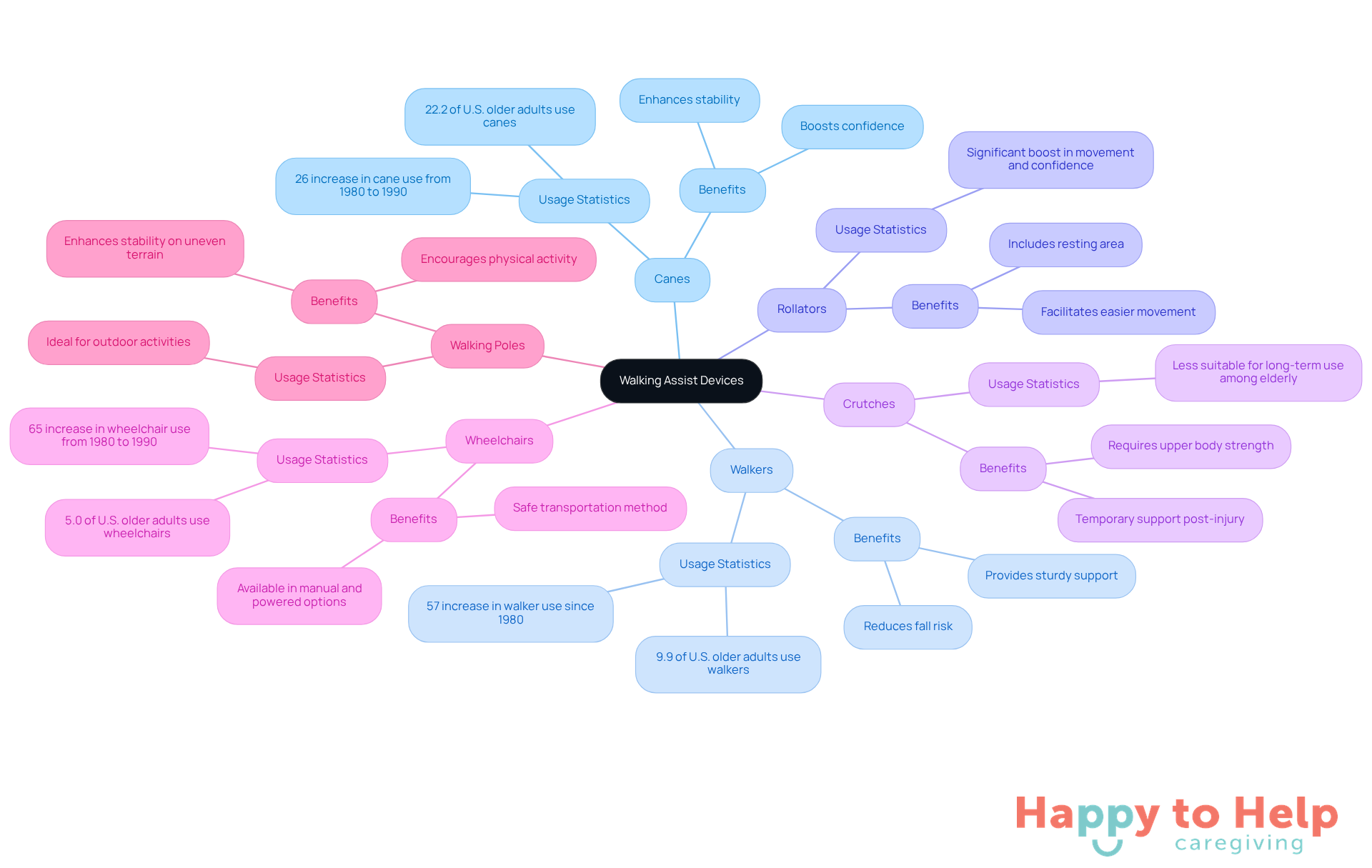
Canes: For many seniors, maintaining balance can be a significant challenge. Canes provide a lightweight and portable walking assist device for elderly individuals, enhancing stability and confidence during ambulation. Research indicates that 22.2% of U.S. older adults utilize walking assist devices for elderly care, such as canes, underscoring their vital role.
When mobility issues become more pronounced, a walking assist device for elderly individuals, like walkers, provides a sturdy frame that supports users in maintaining balance while walking. The use of a walking assist device for elderly individuals reduces the risk of falls, a common concern among older adults. Notably, the usage of walking assist devices for elderly individuals has surged by 57% since 1980, reflecting their growing acceptance in the senior community.
For seniors who may tire easily, a walking assist device for elderly, like rollators, combines mobility support with the convenience of a resting area. Equipped with wheels, they facilitate easier movement and often include a seat for breaks. Healthcare professional Kushang V Patel notes that using a walking assist device for elderly, like rollators, can significantly boost movement and confidence among older adults.
Crutches: While primarily designed for temporary support post-injury, crutches require upper body strength and coordination, making them less suitable for long-term use among the elderly. They can assist individuals in navigating their surroundings during recovery.
For seniors facing considerable movement restrictions, a walking assist device for elderly provides a means of independent travel over longer distances. These walking assist devices for elderly people are particularly beneficial for those who struggle with walking but wish to maintain an active lifestyle. The mobility device market is projected to grow significantly, with a focus on the walking assist device for elderly individuals, highlighting their increasing importance in enhancing safety and well-being.
Wheelchairs, as a walking assist device for elderly individuals who cannot walk or require substantial assistance, provide a safe and comfortable transportation method. They come in both manual and powered options, catering to diverse needs and preferences.
Walking Poles: Ideal for outdoor activities, walking poles enhance stability on uneven terrain while encouraging physical activity. Incorporating a walking assist device for elderly individuals into care plans can help seniors maintain their independence and confidence.
Assess Individual Mobility Needs
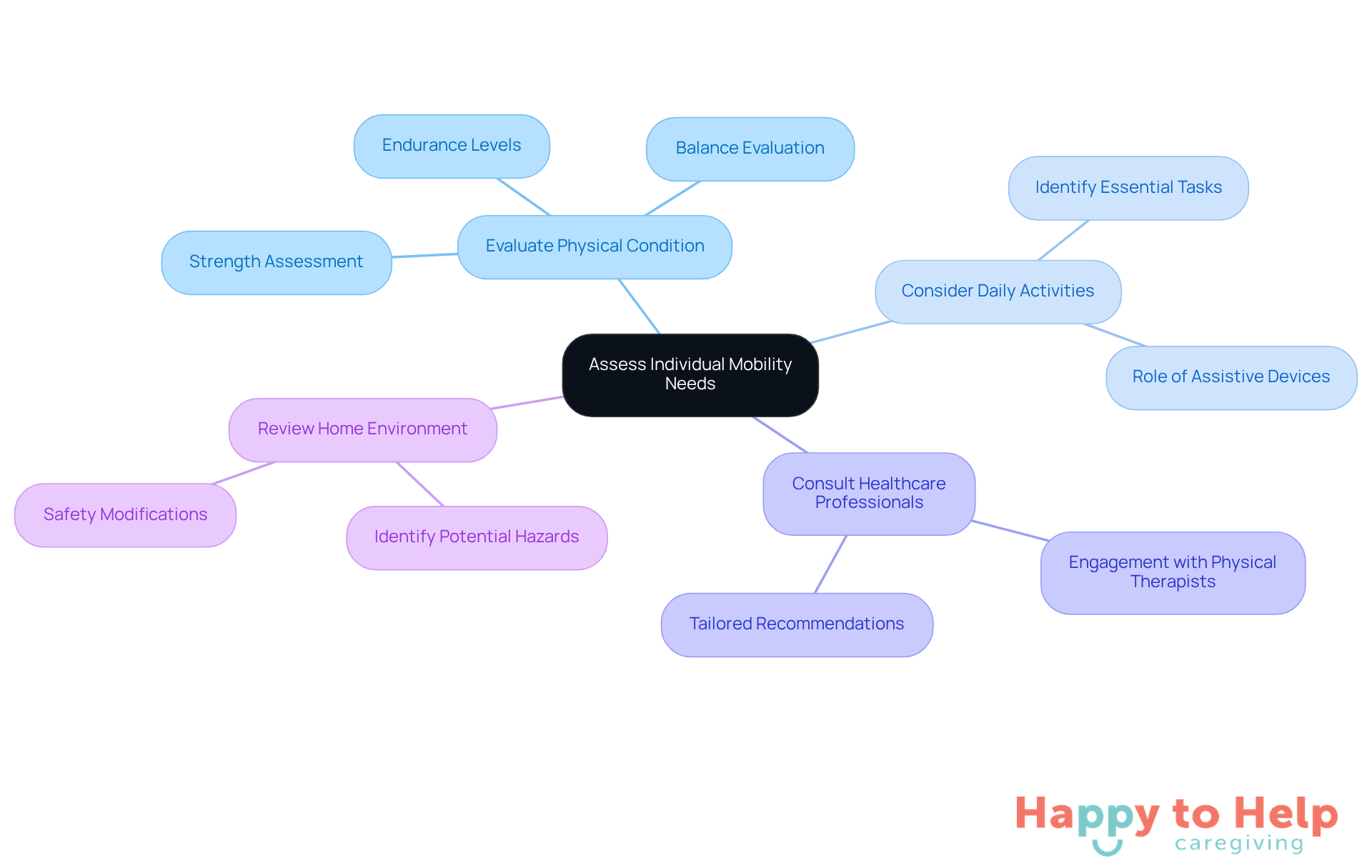
Evaluate Physical Condition: Caregivers often struggle to assess an individual's physical capabilities, which can lead to inadequate support. It's crucial to consider strength, balance, and endurance levels to ensure safety and independence.
Consider Daily Activities: Identifying the tasks that an individual needs to perform is essential. Understanding how a walking assist device for elderly can aid in these activities can significantly enhance their quality of life.
Consult Healthcare Professionals: Engaging with physical therapists is vital for accurate assessments and tailored recommendations. Their expertise can guide caregivers in making informed decisions about care strategies.
Review Home Environment: A thorough evaluation of the living space is necessary to identify potential hazards that may impact movement. By addressing these dangers, caregivers can create a safer environment for those they support.
Evaluate Safety Features and Fit
Problem: Ensuring Mobility Aid Effectiveness
Caregivers often struggle with selecting the right mobility aids for elderly individuals, which can significantly impact their safety and independence. One major concern is the weight capacity of these devices. Most walking aids, like canes and walkers, support weights between 250 and 300 pounds, with some specialized models designed for higher capacities. Notably, 22.6% of seniors aged 75-79 use canes, underscoring the need for assistive devices that accommodate this demographic.
Agitate: The Risks of Inadequate Support
When mobility aids fail to meet the user's needs, the consequences can be severe. A poorly fitted device can lead to falls, injuries, and a decline in confidence. Occupational therapists stress that a well-fitted mobility aid enhances user confidence and reduces fall risk. For example, seniors using adjustable walkers reported greater satisfaction and fewer falls compared to those with fixed-height models. This highlights the critical role of adjustability in the safety and independence provided by a walking assist device for elderly.
Solution: Key Features to Consider
To ensure the effectiveness of mobility aids, caregivers should prioritize the following features:
- Check Weight Capacity: Confirm that the apparatus can comfortably support the user's weight.
- Adjustability: Opt for devices that offer height and grip adjustments for a proper fit.
- Stability Features: Evaluate the foundation for stability; wider bases typically offer improved support.
- Braking Systems: Ensure that rollator brakes are easy to engage and effective, crucial for preventing accidents on inclines or uneven surfaces.
- Grip and Handle Design: Assess the ergonomics of handles to prevent strain during use.
Real-world assessments show that proper weight capacity and adjustability are vital for maintaining independence and safety. As Kushang V Patel observed, a primary reason for mobility aid prescription is to lower the risk of falling while enhancing mobility. By prioritizing these features, caregivers can significantly enhance the quality of life for elderly individuals with the help of a walking assist device for elderly.

Plan for Maintenance and Care
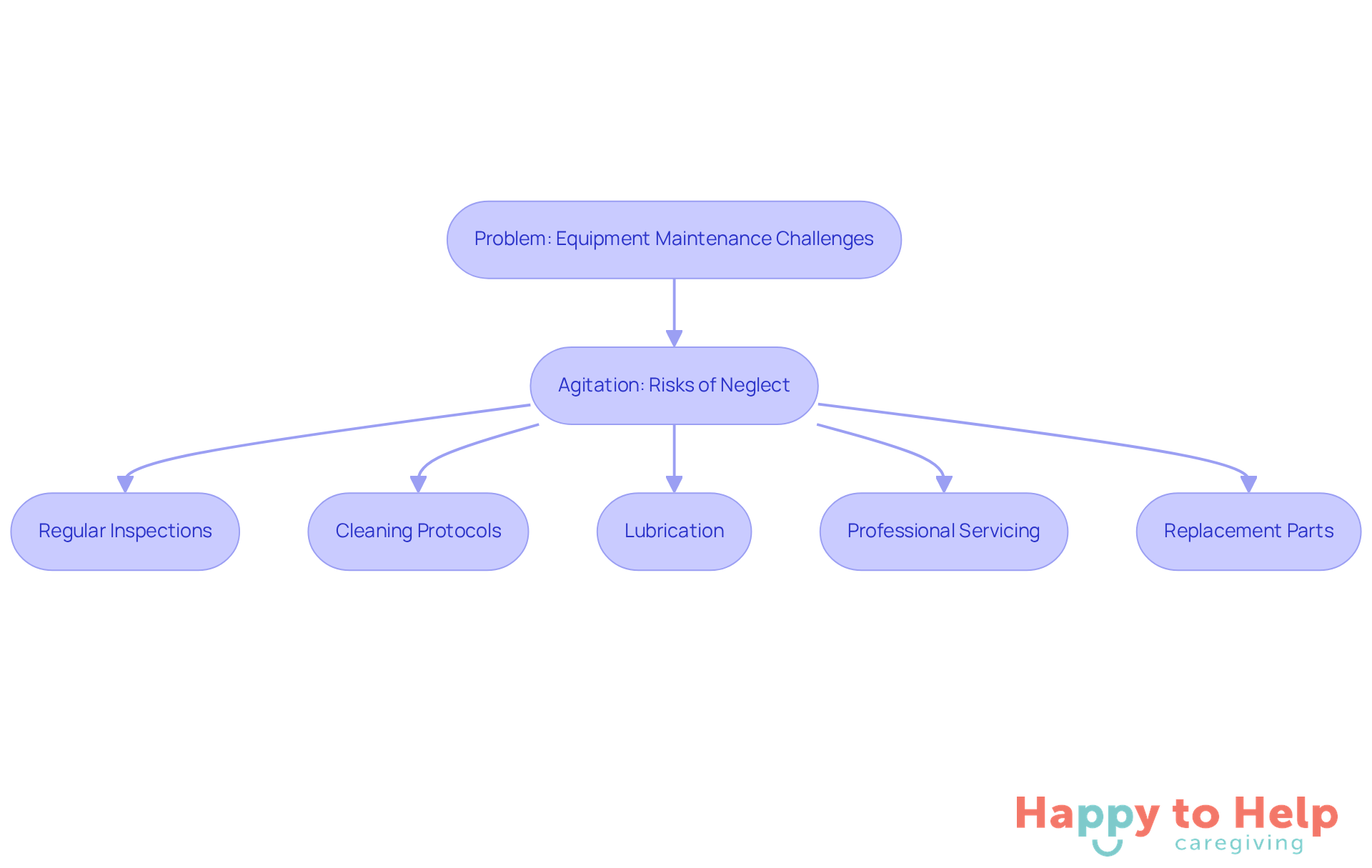
Problem: Caregivers often face challenges in maintaining equipment, which can lead to safety issues and decreased efficiency. Regular inspections are crucial to identify wear and tear on all parts, including wheels and grips.
Agitate: Neglecting these inspections can result in equipment failure, putting both caregivers and those they assist at risk. Without a proper cleaning routine, hygiene can also become a concern, further complicating caregiving tasks.
Solution:
- Regular Inspections: Check for wear and tear on all parts, including wheels and grips.
- Cleaning Protocols: Establish a routine for cleaning the apparatus to maintain hygiene.
- Lubrication: Apply lubricant to moving parts as needed to ensure smooth operation.
- Professional Servicing: Schedule periodic professional checks for complex devices like scooters and powered wheelchairs.
- Replacement Parts: Keep a list of necessary replacement parts and their suppliers for quick access.
Key Takeaways for Caregivers
Choosing the right walking assist device for elderly care presents a significant challenge. Caregivers face the daunting task of enhancing mobility, independence, and safety for seniors. Without proper guidance, the selection process can lead to confusion and potential risks for the elderly.
To address this issue, it’s essential to understand the various types of devices available, including:
- canes
- walkers
- rollators
- crutches
- wheelchairs
Each device serves distinct needs and capabilities, making it crucial for caregivers to assess individual mobility requirements and evaluate physical conditions. Consulting healthcare professionals can provide tailored recommendations that significantly impact the quality of life for seniors.
Safety features are paramount in this selection process. Factors such as weight capacity, adjustability, and stability directly influence the effectiveness of the chosen mobility aid. Regular maintenance and care of these devices are also vital to ensure their longevity and reliability, preventing potential hazards related to equipment failure.
Ultimately, selecting an appropriate walking assist device is more than just a convenience; it’s a vital step toward fostering confidence and independence in elderly individuals. By prioritizing the right features and committing to ongoing support, caregivers can help seniors maintain an active lifestyle, reduce the risk of falls, and enhance their overall well-being. Embracing this approach is essential for promoting a safer and more fulfilling life for those in need of mobility assistance.
https://iframe.tely.ai/cta/eyJhcnRpY2xlX2lkIjogIjY5MjY0M2FjZGUyNDgxZjQ1MzJkZTdjYiIsICJjb21wYW55X2lkIjogIjY4ZWU1ZGNhNzMxNzYyNTU3ZjNjOTVjMSIsICJpbmRleCI6IG51bGwsICJ0eXBlIjogImFydGljbGUifQ==Frequently Asked Questions
What are the main types of walking assist devices for elderly individuals?
The main types of walking assist devices for elderly individuals include canes, walkers, rollators, crutches, wheelchairs, and walking poles.
How do canes assist elderly individuals?
Canes provide a lightweight and portable option that enhances stability and confidence during ambulation, helping seniors maintain balance.
What is the purpose of walkers for seniors?
Walkers provide a sturdy frame that supports users in maintaining balance while walking, significantly reducing the risk of falls.
How has the usage of walking assist devices among older adults changed over time?
The usage of walking assist devices among older adults has surged by 57% since 1980, indicating their growing acceptance in the senior community.
What are rollators and how do they benefit seniors?
Rollators are walking assist devices that combine mobility support with a resting area, equipped with wheels for easier movement and often include a seat for breaks, boosting movement and confidence among older adults.
Are crutches suitable for long-term use among the elderly?
No, crutches are primarily designed for temporary support post-injury and require upper body strength and coordination, making them less suitable for long-term use among the elderly.
What role do wheelchairs play for elderly individuals?
Wheelchairs provide a safe and comfortable transportation method for elderly individuals who cannot walk or require substantial assistance, available in both manual and powered options.
How do walking poles assist seniors?
Walking poles enhance stability on uneven terrain and encourage physical activity, making them ideal for outdoor activities among elderly individuals.
List of Sources
- Identify Types of Walking Assist Devices
- Prevalence and characteristics of community-dwelling older adults using mobility devices: a cross-national comparison between the United States and China (https://academic.oup.com/aje/advance-article/doi/10.1093/aje/kwaf173/8243827)
- Mobility Device Use Among Older Adults and Incidence of Falls and Worry About Falling: Findings From the 2011–2012 National Health and Aging Trends Study - PMC (https://pmc.ncbi.nlm.nih.gov/articles/PMC4439269)
- 10 Best Assistive Devices for Elderly Independence and Safety - Happy To Help (https://happytohelpcaregiving.com/10-best-assistive-devices-for-elderly-independence-and-safety)
- Read "The Future of Disability in America" at NAP.edu (https://nap.nationalacademies.org/read/11898/chapter/13)
- Assess Individual Mobility Needs
- New Report on Assessing Mobility Has Experts Moving Toward Consensus on Care We Need as We Age (https://americangeriatrics.org/media-center/news/new-report-assessing-mobility-has-experts-moving-toward-consensus-care-we-need-we)
- 4 Essential Steps for Choosing Home Aids for Elderly Care - Happy To Help (https://happytohelpcaregiving.com/4-essential-steps-for-choosing-home-aids-for-elderly-care)
- Maintaining mobility and preventing disability are key to living independently as we age (https://nia.nih.gov/news/maintaining-mobility-and-preventing-disability-are-key-living-independently-we-age)
- Mobility in Older Community-Dwelling Persons: A Narrative Review - PMC (https://pmc.ncbi.nlm.nih.gov/articles/PMC7522521)
- Mobility is Most Common Disability Among Older Americans, Census Bureau Reports (https://census.gov/newsroom/archives/2014-pr/cb14-218.html)
- Evaluate Safety Features and Fit
- Mobility Device Use Among Older Adults and Incidence of Falls and Worry About Falling: Findings From the 2011–2012 National Health and Aging Trends Study - PMC (https://pmc.ncbi.nlm.nih.gov/articles/PMC4439269)
- Assistive Devices for Seniors: Enhancing Mobility and Independence - OrthoArkansas (https://orthoarkansas.com/assistive-devices-for-seniors-enhancing-mobility-and-independence)
- 10 Best Assistive Devices for Elderly Independence and Safety - Happy To Help (https://happytohelpcaregiving.com/10-best-assistive-devices-for-elderly-independence-and-safety)
- New mobile robot helps seniors walk safely and prevent falls (https://foxnews.com/tech/new-mobile-robot-helps-seniors-walk-safely-prevent-falls)
- From Canes to Power Chairs: How to Choose the Right Mobility Aid for Older Family Members (https://ltcnews.com/articles/cranes-to-power-chairs-choose-right-mobility-aid-older-family-members)
- Plan for Maintenance and Care
- How Can Regular Maintenance and Repairs Prolong the Life of Your Wheelchair? (https://daily.com.au/blogs/news/how-can-regular-maintenance-and-repairs-prolong-the-life-of-your-wheelchair?srsltid=AfmBOoo85xbs6fV4Nexj1mUsymtBGH6n9LTMsBVBFsj6Mwdx9WpztARA)
- 27 Inspirational Quotes for Caregivers (https://ultimatecareny.com/resources/27-quotes-for-caregivers)
- Mobility Device Statistics: United States (https://disabled-world.com/disability/statistics/mobility-stats.php)
- The Ultimate Guide to Wheelchair Safety for Improved Mobility (https://mpowerchairs.com/blogs/news/the-ultimate-guide-to-wheelchair-safety-for-improved-mobility?srsltid=AfmBOooMweRmd4RfdDhSa3o9kvc2snh2wnp55P2lUQqIqDzdtHgIGjpT)
- Wheelchair Maintenance Tips | Daily & Long-Term Care (https://winfar.co.za/maintaining-your-wheelchair-5-essential-wheelchair-care-and-maintenance-tips?srsltid=AfmBOorWXw95fkCT\_sLJYk\_u8iqFG-a1-BwMn4\_J5Joe92rUi1Tz5gnO)