
Discover the Best Caregiver Agency to Work For: Happy to Help

For families in our service areas
For families in our service areas, this guide explains caregiver support and how non-medical in-home caregiving can support care planning in East Idaho, Treasure Valley & Magic Valley, Northern Wasatch, North Central West Virginia, and Northeast Ohio.
Why Discover the Best Caregiver Agency to Matters
Navigating the caregiver agency landscape can feel overwhelming for families seeking the right support for their loved ones. With numerous options available, from companionship to skilled nursing, understanding the nuances of various organizations is essential for ensuring effective care. Families often struggle to find the right fit, leading to confusion and stress in an already challenging situation.
This complexity can have significant implications. Families may end up with inadequate support, which can affect the well-being of their loved ones. Therefore, it’s crucial to evaluate caregiver agencies carefully. This article outlines the critical criteria families should consider when assessing these agencies, emphasizing how Happy to Help Caregiving stands out among competitors.
What makes this agency a top choice? By leveraging a comparison of services and support options, families can make informed decisions that enhance the well-being of their loved ones. Understanding these criteria not only simplifies the selection process but also ensures that families find the right care tailored to their needs.
Understanding the Caregiver Agency Landscape
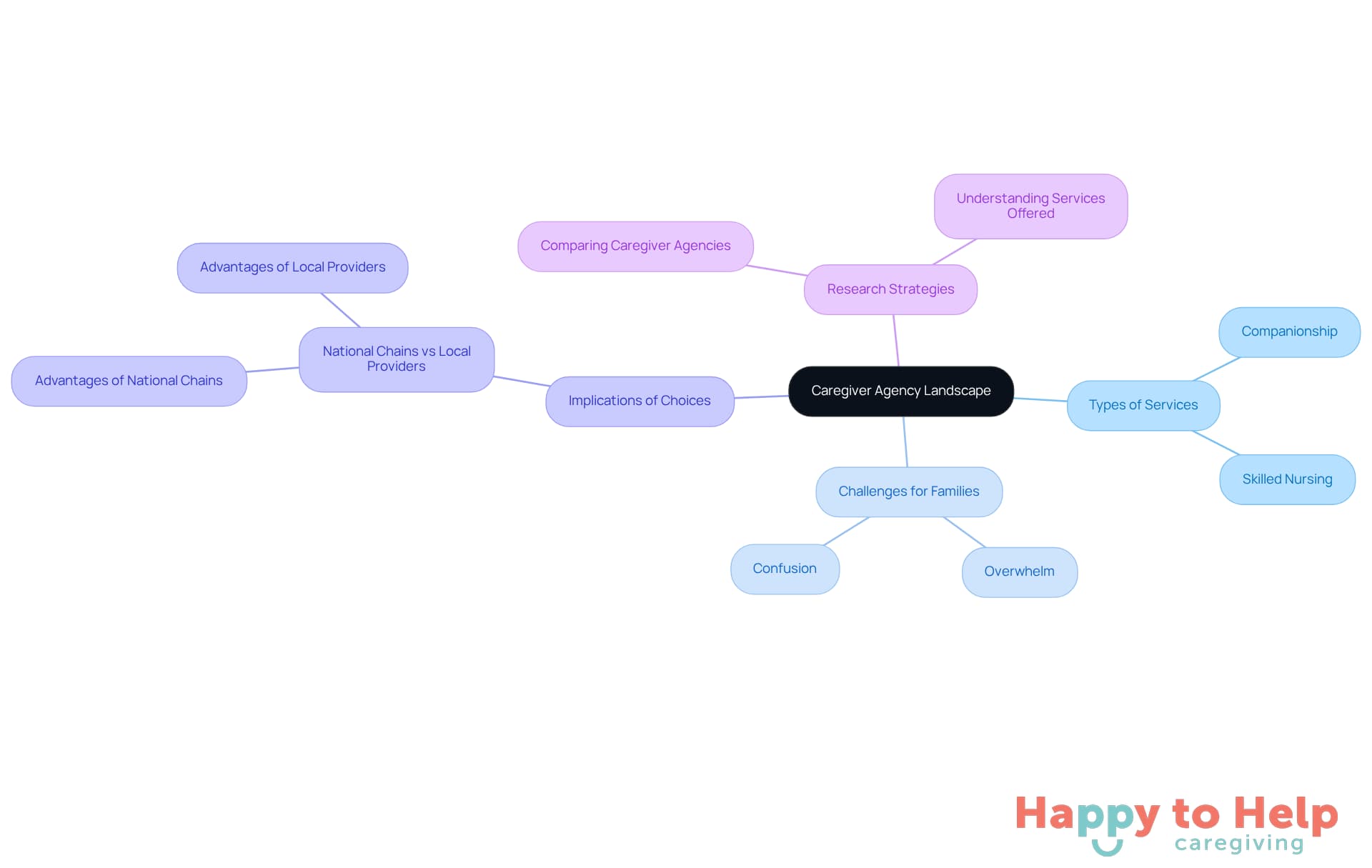
Navigating the caregiver sector can be challenging for families seeking assistance. With a wide range of services available - from companionship to skilled nursing - understanding the differences between organizations is crucial. Families may feel overwhelmed by the variety of options, which can lead to confusion about which type of support best meets their loved one's needs.
The implications of this confusion are significant. As the demand for at-home support services rises, driven by an aging population and a preference for seniors to remain in their homes, competition among providers intensifies. Families must recognize that national chains and local providers each come with their own set of advantages and challenges. Larger firms may boast more resources, but they often lack the personalized care that smaller, community-focused organizations can provide.
To address these challenges, families should take the time to research and compare the best caregiver agency to work for among different caregiving organizations. Understanding the specific services offered and the organization's approach to care can help ensure a better match for individual support needs. By prioritizing this research, families can make informed decisions that lead to more effective and compassionate care for their loved ones.
Key Comparison Criteria for Caregiver Agencies
When evaluating caregiver agencies, families often face significant challenges that can impact the quality of care for their loved ones. Understanding these challenges is crucial for making informed decisions. Here are several essential criteria to guide your decision-making process:
-
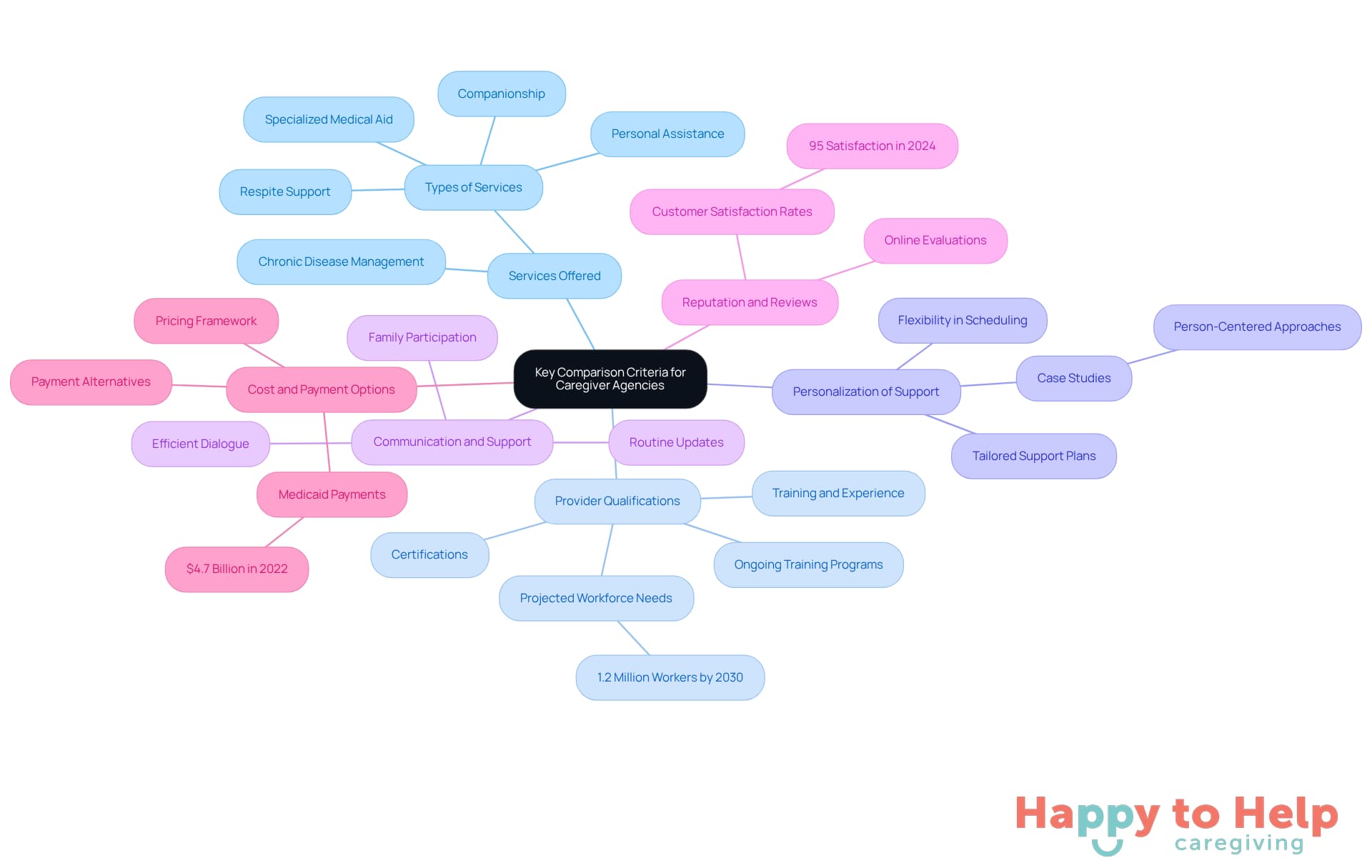
Services Offered: Agencies typically provide a variety of services, including companionship, personal assistance, respite support, and specialized medical aid. Grasping the specific services available is essential for matching support with individual needs. For instance, agencies that offer tailored support for chronic disease management can significantly enhance health outcomes for seniors.
-
Provider Qualifications: The training and experience of providers are crucial in determining the quality of assistance offered. Agencies should clearly outline caretaker certifications and ongoing training programs. With the home support industry anticipated to need an extra 1.2 million direct support workers by 2030, ensuring that caregivers are thoroughly trained is more crucial than ever.
-
Personalization of Support: Quality organizations excel in creating tailored support plans that address individual needs. This encompasses flexibility in scheduling and the capacity to adjust support as situations evolve. Case studies demonstrate that person-centered approaches promote autonomy and dignity, resulting in enhanced satisfaction and well-being among clients.
-
Communication and Support: Efficient dialogue among caregivers, clients, and relatives is essential for successful service provision. Agencies should establish systems for routine updates and promote participation from relatives, which has been demonstrated to improve the overall support experience.
-
Reputation and Reviews: Online evaluations and endorsements provide meaningful perspectives on the experiences of other households, assisting in evaluating the organization's dependability and service excellence. A high customer satisfaction rate, like the 95% reported by users of certain agencies, can indicate a strong commitment to quality service.
-
Cost and Payment Options: Grasping the pricing framework and accessible payment alternatives is essential for households planning for support services. With Medicaid payments for personal home support services totaling $4.7 billion in 2022, exploring financial assistance options can ease some of the burdens linked to in-home support.
By thoroughly assessing organizations against these criteria, families can make informed decisions that lead them to the best caregiver agency to work for, ensuring a supportive and effective caregiving experience for their loved ones.
Why Happy to Help Caregiving Excels Among Competitors
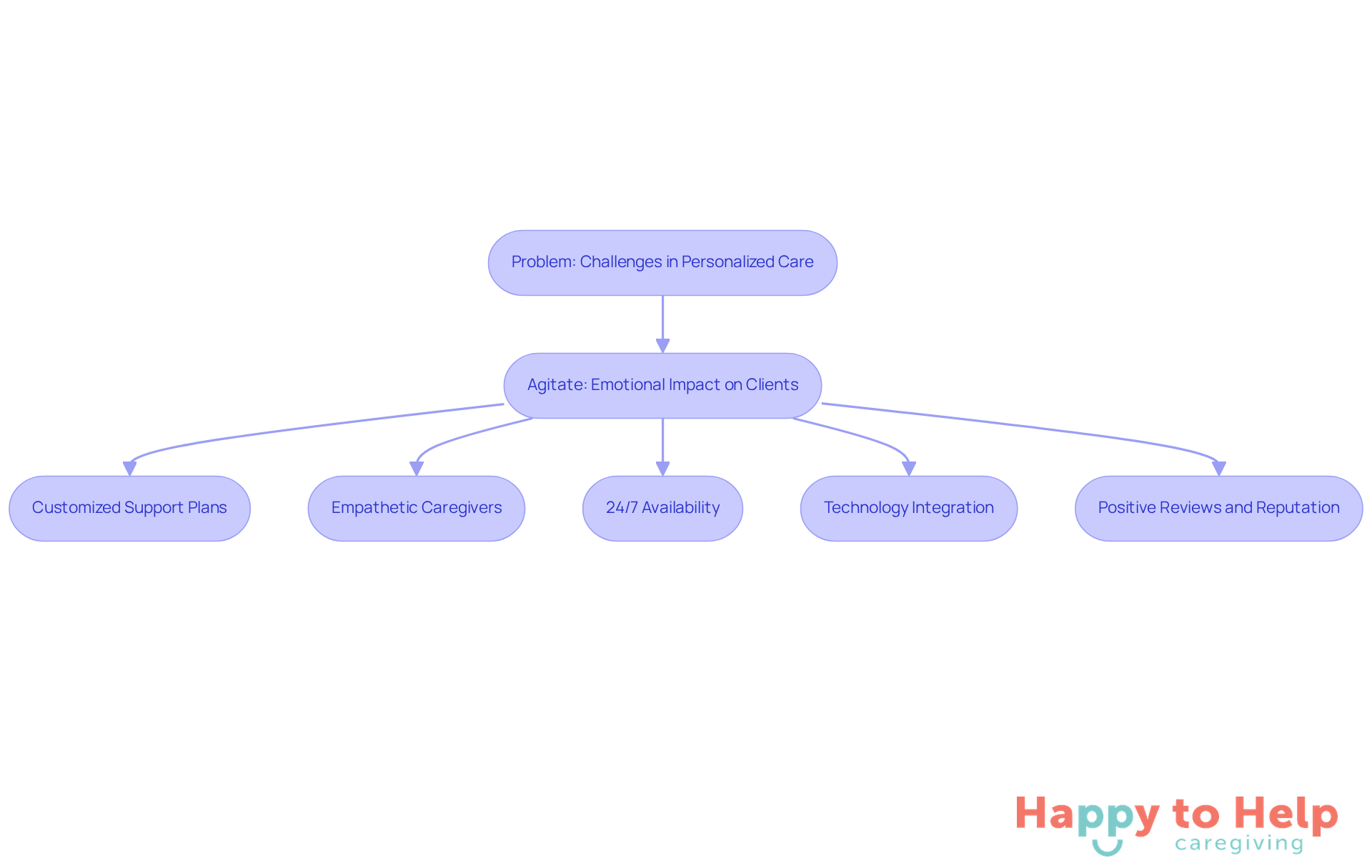
Problem: Caregivers often face significant challenges in providing personalized and empathetic support to their clients. Many larger organizations tend to offer a one-size-fits-all approach, which can overlook the unique needs of individuals.
Agitate: This lack of tailored care can lead to feelings of isolation among clients, particularly seniors who may already struggle with loneliness. Emotional support is crucial; studies show that compassionate care can significantly improve mental health and overall happiness. In fact, compassion fatigue levels in nursing and home assistance reached 52.55% in 2021, highlighting the need for emotional support in caregiving roles.
Solution: Happy to Help Caregiving addresses these challenges through several key factors:
-
Customized Support Plans: Unlike many competitors, Happy to Help Caregiving focuses on developing tailored support plans that cater to the specific needs and preferences of each client. This personalized approach fosters stronger relationships between caregivers and clients, enhancing the overall support experience.
-
Empathetic Caregivers: The agency prides itself on its team of empathetic caregivers who genuinely value their clients' well-being. This emotional connection is vital for clients, especially seniors, as it can alleviate feelings of loneliness and promote better mental health.
-
24/7 Availability: With continuous service, Happy to Help Caregiving ensures that clients receive assistance whenever needed, providing peace of mind for families. This level of availability is often unmatched by competitors.
-
Technology Integration: The organization leverages technology to enhance communication and care coordination, offering features like online notes for relatives and autopay options. This makes it easier for families to stay informed and engaged in their loved one's care.
-
Positive Reviews and Reputation: Feedback from families highlights the agency's ability to create a nurturing environment, with many praising the reliability and consistency of the staff. This strong reputation is a crucial factor when selecting the best caregiver agency to work for. Case studies have shown that compassionate support leads to improved emotional well-being and greater independence for seniors, reinforcing the organization's commitment to quality service.
In summary, Happy to Help Caregiving's focus on empathy, communication, and customized support positions it as a leader in the in-home assistance sector.
Final Thoughts on Choosing the Right Caregiver Agency
Selecting the right support service can be a daunting task, and it significantly impacts the quality of life for both clients and their loved ones. Families often face the challenge of navigating various options, which can lead to confusion and uncertainty.
-
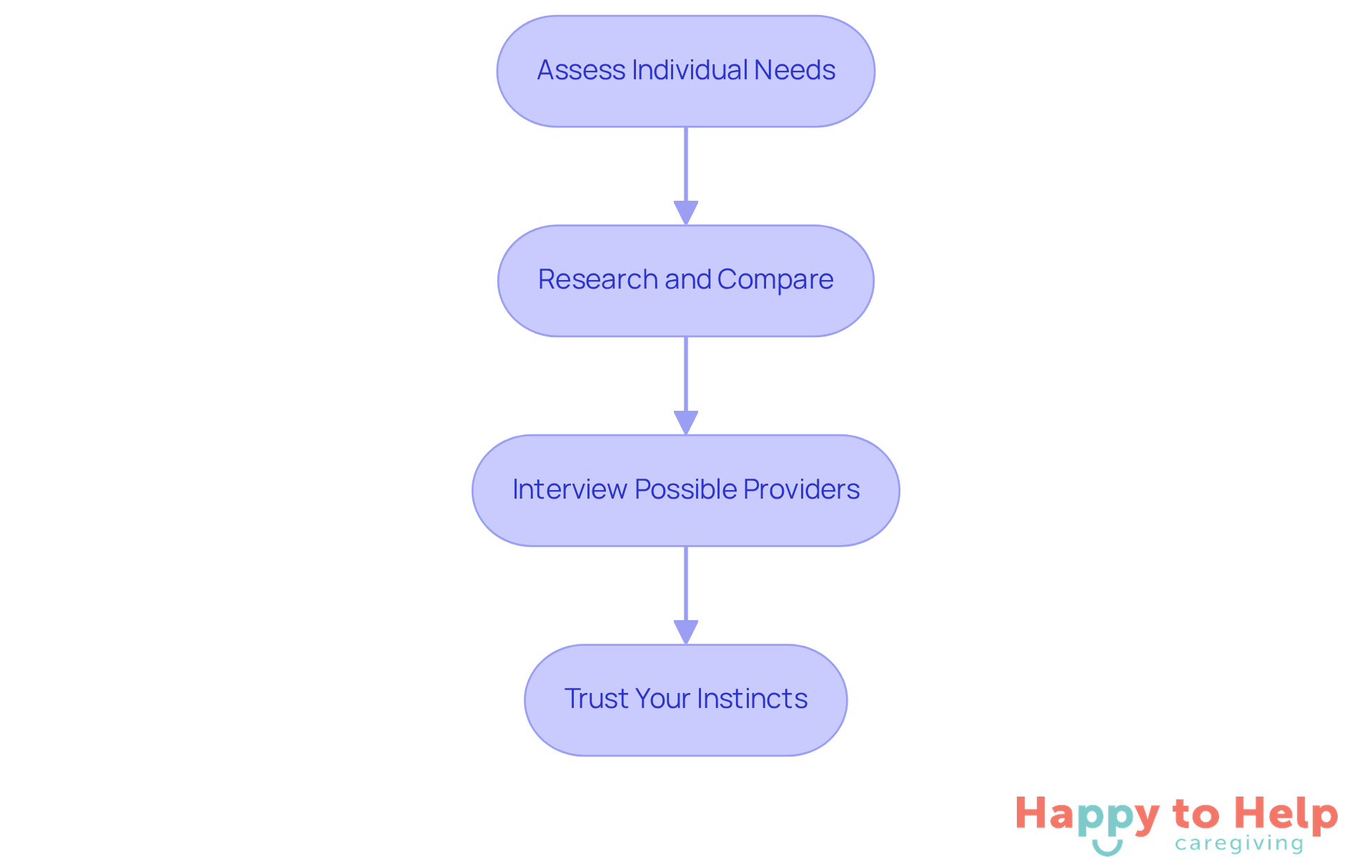
Assess Individual Needs: Before diving into the search for a caregiver service, it’s crucial for families to outline the specific needs of their loved ones. This includes identifying the type of care required and any personal preferences that may influence the choice.
-
Research and Compare: Utilize the criteria for comparison to evaluate different organizations. Take the time to read reviews, seek recommendations, and explore organization websites to gather comprehensive information. This research phase is vital for making an informed decision.
-
Interview Possible Providers: Arrange discussions with potential providers to explore care options. Inquire about caregiver credentials and understand their approach to personalized care. These conversations can provide valuable insights into the organization’s culture and responsiveness.
-
Trust Your Instincts: Ultimately, the decision should resonate with both the relatives and the client. Trusting your intuition about the providers and their philosophy can lead to a more positive caregiving experience.
By following these steps, families can confidently select the best caregiver agency to work for, which aligns with their values and meets their loved one's needs, ensuring a supportive and nurturing environment at home.
Key Takeaways for Caregivers
Choosing the right caregiver agency poses a significant challenge for families, as it directly impacts the quality of care for their loved ones. With a diverse landscape of caregiver services available, families often feel overwhelmed by the options. This decision is crucial, as the right agency can provide compassionate and effective support tailored to individual needs.
Key factors to consider include:
- The range of services offered
- Caregiver qualifications
- The importance of personalized care
Families must evaluate these criteria carefully. Happy to Help Caregiving distinguishes itself by offering:
- Customized support plans
- Empathetic caregivers
- A commitment to ongoing communication
This approach fosters a nurturing environment that enhances the well-being of clients. Furthermore, the agency's strong reputation and positive reviews solidify its status as a leading choice among caregiver agencies.
To navigate this complex decision, families should take the time to assess their specific needs and conduct thorough research. Trusting one’s instincts is equally important in this process. By following this thoughtful approach, families can ensure they select the best caregiver agency for their situation. This not only guarantees tailored support but also significantly improves the overall quality of life for clients. As the demand for in-home care continues to rise, making informed decisions about caregiver services remains essential for securing the best possible care for loved ones.
https://iframe.tely.ai/cta/eyJhcnRpY2xlX2lkIjogIjY5MjEwZjkwYTE0NTEzNzg0OGJmYTRjZiIsICJjb21wYW55X2lkIjogIjY4ZWU1ZGNhNzMxNzYyNTU3ZjNjOTVjMSIsICJpbmRleCI6IG51bGwsICJ0eXBlIjogImFydGljbGUifQ==Frequently Asked Questions
What challenges do families face when seeking caregiver assistance?
Families often feel overwhelmed by the variety of services available, which can lead to confusion about which type of support best meets their loved one's needs.
Why is it important to understand the differences between caregiver organizations?
Understanding the differences is crucial because each organization offers various services, and recognizing these distinctions helps families choose the right support for their loved ones.
What factors are driving the demand for at-home support services?
The demand is rising due to an aging population and a preference for seniors to remain in their homes.
What are the advantages and challenges of national chains versus local caregiver providers?
National chains may have more resources, but they often lack the personalized care that smaller, community-focused organizations can provide.
How can families ensure they choose the best caregiver agency?
Families should research and compare different caregiving organizations, focusing on the specific services offered and the organization's approach to care.
What impact does thorough research have on the caregiver selection process?
Prioritizing research allows families to make informed decisions, leading to more effective and compassionate care for their loved ones.
List of Sources
- Understanding the Caregiver Agency Landscape
- Home Care Industry Trends to Watch in 2025 (https://firstlighthomecare.com/blog/home-care-industry-trends)
- 6 Home Care Companies To Watch In 2025 (https://homehealthcarenews.com/2025/07/6-home-care-companies-to-watch-in-2025)
- Home Care Industry Trends to Look Out for in 2025 (https://axiscare.com/blog/home-care-industry-trends)
- An Aging Population and the Ever-Growing Need for Healthcare Workers (https://commerce.nc.gov/news/the-lead-feed/aging-population-healthcare-workers)
- The Top 4 Trends Affecting the Home Health Care Industry in 2025 | JM Search (https://jmsearch.com/blog/the-top-4-trends-affecting-the-home-health-care-industry-in-2025)
- Key Comparison Criteria for Caregiver Agencies
- Home Care Predictions Shaping 2025 and Beyond (https://caresmartz360.com/blog/home-care/home-care-predictions-shaping-2025-and-beyond)
- Understanding the Major Trends Influencing Home Care in 2025 (https://learn2care.us/blog/predictions-for-caregiving-trends-in-2025)
- How Home Care Agencies Can Prepare Now to Secure a Strong Start in 2025 (https://aaniie.com/news/how-home-care-agencies-can-prepare-now-to-secure-a-strong-start-in-2025)
- 2025 home care trends include tightened EVV oversight, investments in caregiver training (https://mcknightshomecare.com/2025-home-care-trends-include-tightened-evv-oversight-investments-in-caregiver-training)
- How to Evaluate Home Care Agencies for Quality Services (https://ultimatecareny.com/resources/how-to-evaluate-home-care-agencies-for-quality-services)
- Why Happy to Help Caregiving Excels Among Competitors
- The Heart of Homecare is Built on the Unshakeable Compassion and Dedication of Caregivers | Healthcare IT Today (https://healthcareittoday.com/2024/09/25/the-heart-of-homecare-is-built-on-the-unshakeable-compassion-and-dedication-of-caregivers)
- The Importance of Compassionate Care: Enhancing Quality of Life for Seniors (https://bryanskilledhomecare.com/2024/07/31/the-importance-of-compassionate-care-for-seniors-i-bryan-skilled-home-care)
- Compassion in Home Care (https://homeinstead.com/home-care/usa/la/carencro/347/news-and-media/compassion-in-home-care)
- Home Care Is About Love: Why Compassion Is More Important Now | Home Care agency in New York (https://angelcareny.com/home-care-is-about-love-why-compassion-is-more-important-now)
- Final Thoughts on Choosing the Right Caregiver Agency
- Choosing a Home Care Provider: 8 Essential Steps | AdvisaCare (https://advisacare.com/how-to-choose-the-right-home-care-provider-for-your-loved-one)
- 10 Tips for Finding the Right Home Care Agency | VirginiaNavigator (https://disabilitynavigator.org/article/93691/10-tips-finding-right-home-care-agency)
- 8 Tips for Choosing a Home Care Agency (https://careindeed.com/blogs/8-tips-for-choosing-a-home-care-agency)
- How to Choose the Right In-Home Care Provider for Your Loved One | Luxe Homecare (https://luxehomecare.com/how-to-choose-the-right-in-home-care-provider-for-your-loved-one)
- Caregiver Statistics: Demographics (https://caregiver.org/resource/caregiver-statistics-demographics)