For families in our service areas
For families in our service areas, this guide explains in-home care and how non-medical in-home caregiving can support care planning in East Idaho, Treasure Valley & Magic Valley, Northern Wasatch, North Central West Virginia & Southwestern Pennsylvania, and Northeast Ohio.
Quick answer for VA home health aide benefits
Happy to Help is not the VA and cannot guarantee approval or authorization. The official VA Homemaker and Home Health Aide Care page explains that trained aides can help eligible Veterans with daily activities such as eating, dressing, grooming, bathing, using the bathroom, moving around, and grocery shopping. VA also states that aides are not nurses, are supervised by a registered nurse, and services may vary by location.
The next step is usually to talk with the Veteran's VA social worker or care team about clinical eligibility, community care availability, copays, and local contracted providers. In Happy to Help's active service areas, our non-medical care team can help families plan companion care, personal care, respite, and daily routines when a private-pay, insurance, or VA-authorized path is available. Browse active service areas.
Does the VA Pay for In-Home Care?
Many veterans don’t realize the valuable in-home care benefits available to them through the VA. This lack of awareness can significantly impact their quality of life and independence. Understanding the eligibility criteria and the range of services covered is essential for former service members seeking support.
However, the application process can feel overwhelming. Many veterans find themselves asking:
- What exactly does the VA cover for in-home care?
- How can they ensure they receive the assistance they need?
Addressing these questions is crucial. By familiarizing themselves with the benefits and the application process, veterans can take proactive steps to secure the support they deserve.
Explore VA In-Home Care Benefits and Eligibility Criteria
Many former service members wonder what benefits the VA offers and specifically, does the VA pay for in home care to help them maintain their independence while receiving essential support. However, many veterans face significant challenges in accessing these benefits due to specific eligibility criteria.
-
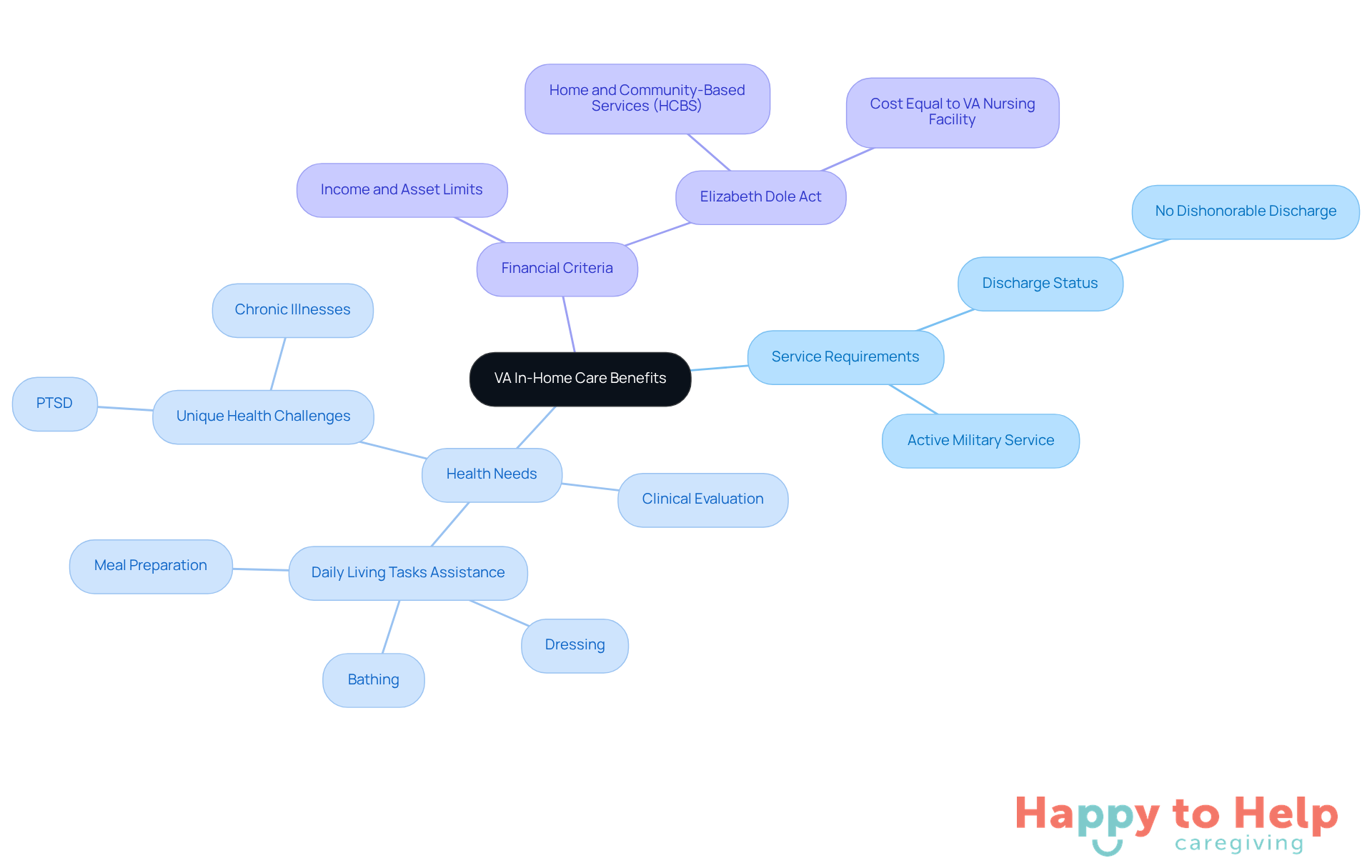
Service Requirements: Veterans must have served in active military, naval, or air service and must not have received a dishonorable discharge.
-
Health Needs: A clinical evaluation is necessary to determine the level of support required. This may involve assistance with daily living tasks such as bathing, dressing, and meal preparation. Veterans often encounter unique health challenges, including PTSD and chronic illnesses, complicating their daily tasks and increasing their reliance on caregivers.
-
Financial Criteria: Some benefits may have income and asset limits, impacting eligibility for programs like Aid and Attendance. Recent changes to VA in-home assistance eligibility criteria, particularly the Elizabeth Dole 21st Century Veterans Healthcare and Benefits Improvement Act, address the question of what does the VA pay for in home care, allowing servicemen and women to receive home and community-based services (HCBS) if the expense is equal to or lower than that of support in a VA nursing facility. This significantly broadens access to necessary care.
Eligibility depends on VA enrollment, clinical need, community care availability, service-connected disability status, and the specific program being considered. Families should avoid relying on broad percentage estimates and should confirm eligibility directly with a VA social worker or care team.
For detailed eligibility information, former service members are encouraged to consult the VA's official resources or speak with a VA representative. This proactive approach can help navigate the available options effectively.
Identify Covered In-Home Care Services Under VA Programs
Many former military personnel face challenges in maintaining their independence at home due to health issues. This can lead to feelings of isolation and frustration, as they struggle with daily tasks that many take for granted. Fortunately, many veterans wonder, does the VA pay for in-home care options designed to help them live comfortably and independently.
Key Services Provided by the VA:
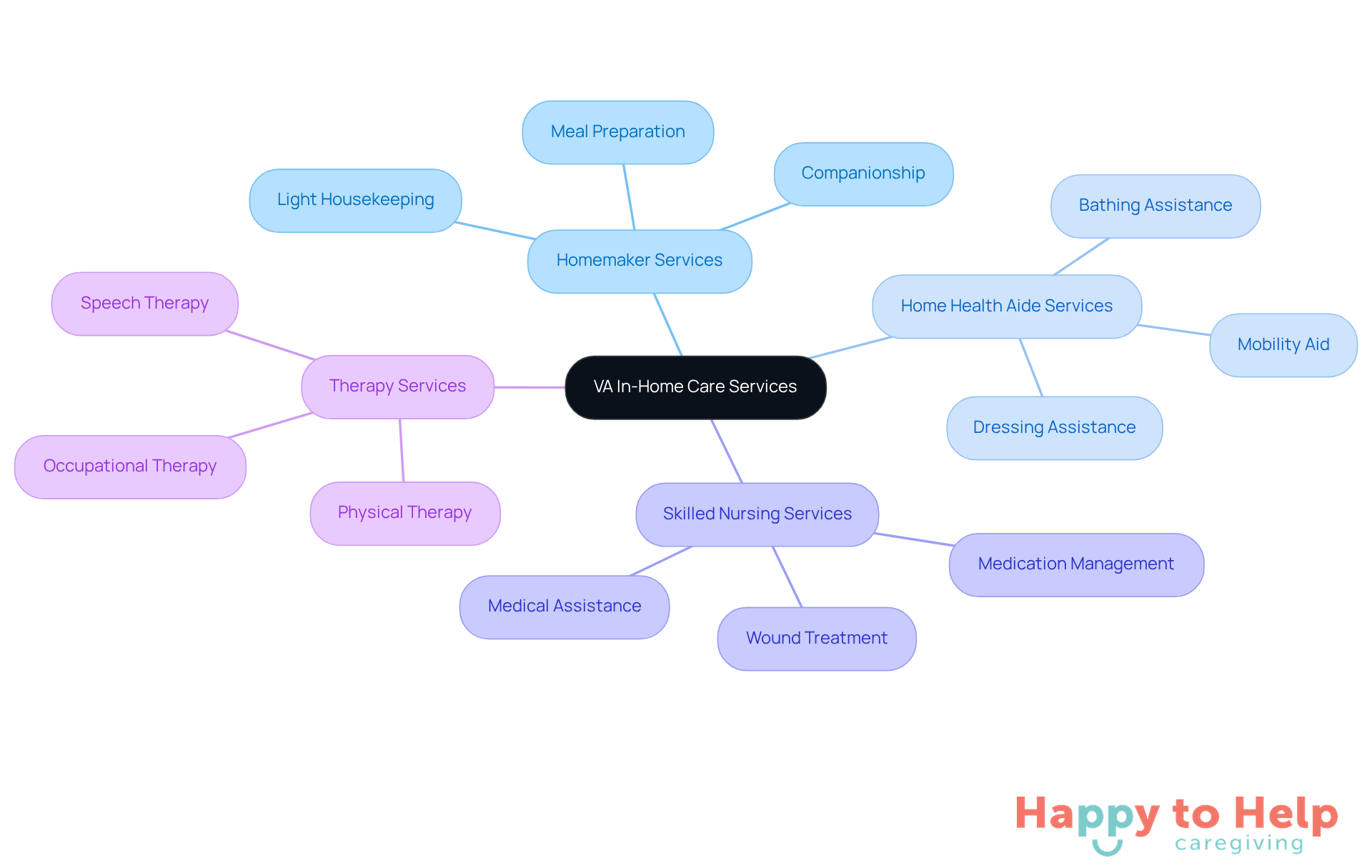
- Homemaker Services: Vital support with daily tasks such as meal preparation, light housekeeping, and companionship helps veterans manage their home environment effectively.
- Home Health Aide Services: Personal assistance is available for bathing, dressing, and mobility aid, which is crucial for those facing health challenges.
- Skilled Nursing Services: Registered nurses provide essential medical assistance, including medication management and wound treatment, ensuring professional health support at home.
- Therapy Services: Access to physical, occupational, and speech therapy facilitates recovery and enhances quality of life.
These programs enable veterans to live autonomously in the comfort of their homes while receiving the necessary support. The Homemaker Home Health Aide Support program is particularly beneficial, assisting individuals with personal tasks and daily living activities, allowing them to thrive in familiar surroundings. Thousands of former service members are currently benefiting from these homemaker services, underscoring the program's importance in addressing the unique health challenges faced by this population.
It's important to note that the question of what does the VA pay for in home care varies based on specific programs, eligibility criteria, and disability classification. A copayment may also apply depending on the individual's VA service-connected disability condition.
Understand VA Payment Rates and Financial Assistance for In-Home Care
A significant challenge faced by former service members who wish to maintain their independence is whether the VA pays for in-home care, as they provide essential financial aid for in-home assistance. Many veterans struggle with the costs associated with daily care, which can hinder their ability to live autonomously.
-
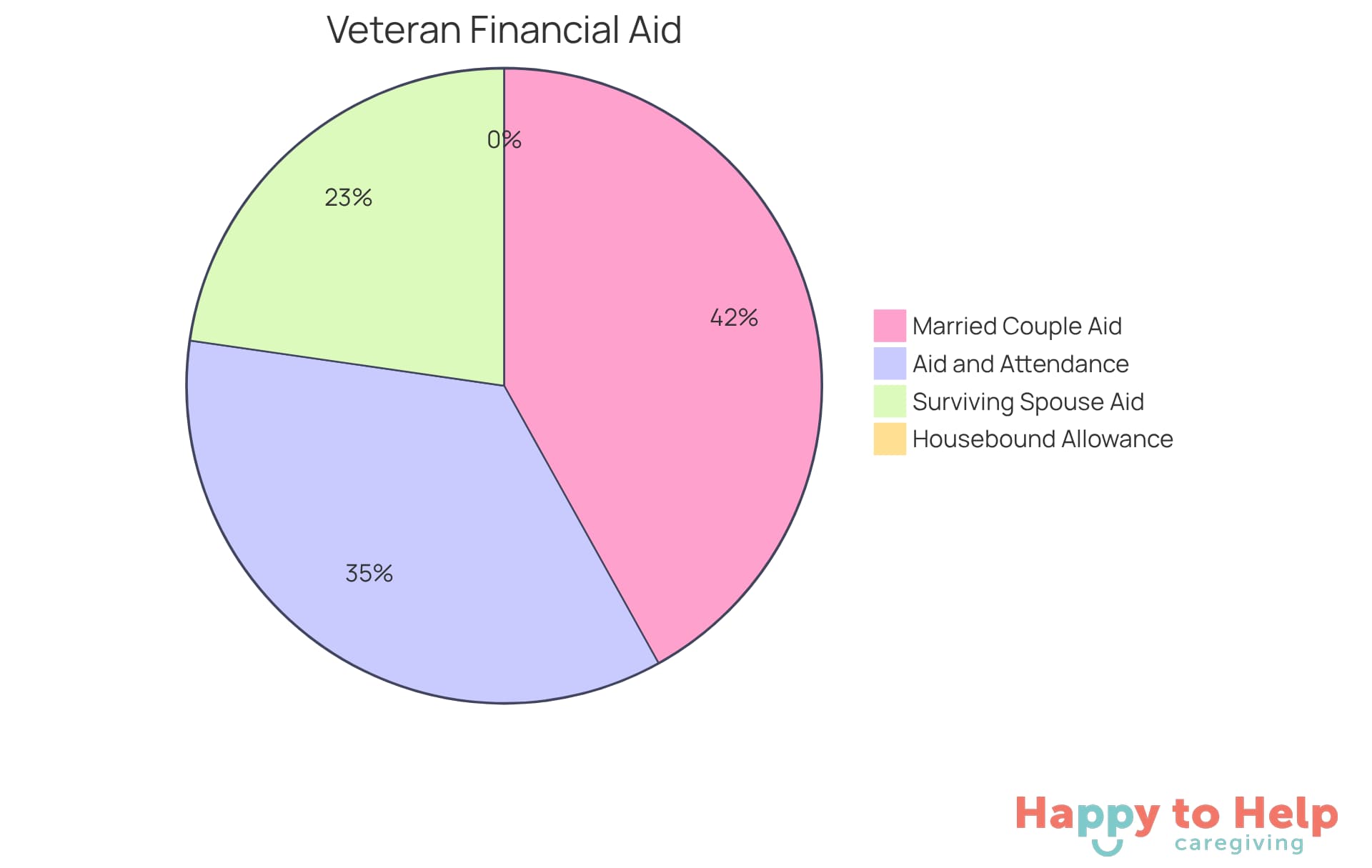
Aid and Attendance Benefit: This program can increase pension support for eligible Veterans or survivors who need help with daily activities. Current payment amounts depend on VA pension rules, household status, income, assets, and medical expenses, so families should confirm current figures directly with VA.
-
Housebound Allowance: For veterans who are permanently confined to home, additional financial assistance may be available, enhancing their capacity to live independently.
-
Copayment Rates: Veterans might face copayment obligations for certain services, which can vary based on income and disability status. Understanding these rates is essential for effective financial planning.
It's crucial for Veterans to assess their financial situations and consult with a VA representative, VA social worker, or accredited benefits advisor to clarify the specific payment rates and benefits applicable to their unique circumstances. This proactive approach helps families avoid relying on outdated public estimates.
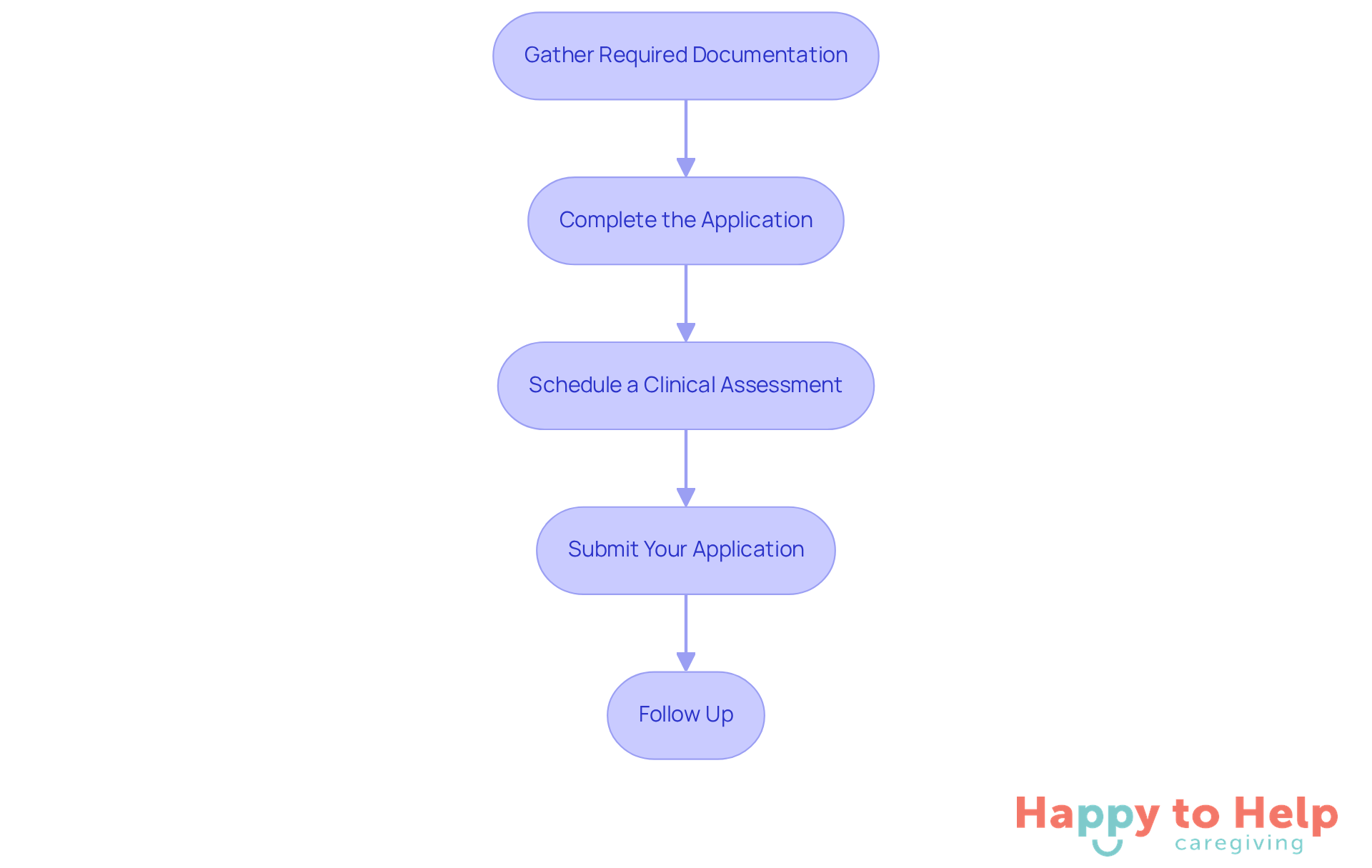
Navigate the Application Process for VA In-Home Care Benefits
For many caregivers, a daunting task is understanding what does the VA pay for in home care when applying for VA in-home care benefits. The process often involves navigating complex requirements and gathering extensive documentation, which can lead to stress and confusion. However, with the right approach, you can simplify this process significantly.
Step 1: Gather Required Documentation
Start by collecting essential documents, such as proof of military duty (DD-214), financial information, and medical records. Having these documents ready is crucial for establishing eligibility and can help expedite the application process.
Step 2: Complete the Application
Next, fill out the VA Form 10-10EZ for health services benefits, along with any additional forms needed for in-home support. Accuracy in this step is vital; it can prevent unnecessary delays in processing your application.
Step 3: Schedule a Clinical Assessment
Contact your local VA medical center to schedule a clinical evaluation. This assessment is essential for identifying your specific support needs and determining the level of assistance required.
Step 4: Submit Your Application
Once your application is complete, send it along with the necessary documentation to the appropriate VA office, either online or by mail. Timely submission is key, as the VA processes applications in the order they are received.
Step 5: Follow Up
After submitting your application, it’s important to follow up with the VA to check its status. Be prepared to provide any additional information if requested, as this can help expedite the approval process.
The typical duration for processing applications to find out what does the VA pay for in home care can range from three to six months. This timeframe can vary based on factors such as the thoroughness of your application and the VA's current workload. Veterans have noted that collecting all essential documentation beforehand greatly simplifies the process, leading to a more seamless experience. One veteran shared, "Having all my documents prepared made the application process much less stressful. I was able to focus on my care needs instead of worrying about paperwork."
Additionally, it’s worth noting that the VA receives about 8,000 PCAFC applications each month, underscoring the volume of applications and the importance of thorough preparation. For emotional and practical support during the application process, veterans and their families can contact the VA Caregiver Support Line at 1-855-260-3274.
Making the Right Choice
Many former service members face a significant challenge: understanding whether the VA provides financial support for in-home care. This support is crucial for maintaining their independence while receiving necessary assistance. Without clarity on available resources, veterans may struggle to access the help they need.
The implications of this lack of understanding can be profound. Veterans may miss out on essential benefits that cater to their unique health needs. It’s vital to grasp the eligibility criteria and the various programs designed to support them. Key points to consider include:
- Specific service requirements
- Health evaluations
- Financial criteria that determine eligibility for VA in-home care benefits
Fortunately, help is available. The VA offers a range of covered services, including:
- Homemaker assistance
- Skilled nursing
- Therapy services
All of which play a vital role in enhancing the quality of life for veterans. Additionally, financial assistance options like the Aid and Attendance benefit provide significant monthly support, while the Housebound Allowance assists those with limited mobility.
Ultimately, the significance of VA in-home care benefits cannot be overstated. These programs not only offer vital support to veterans but also promote their autonomy and well-being in familiar environments. It is crucial for veterans and their families to actively seek information and navigate the application process effectively to ensure they receive the support they need. By understanding the available resources and taking proactive steps, former service members can secure the in-home care benefits essential for their independence and quality of life.
https://iframe.tely.ai/cta/eyJhcnRpY2xlX2lkIjogIjY5MjdhNWQzMWZiNDA3NDMzMmRlOGJiMSIsICJjb21wYW55X2lkIjogIjY4ZWU1ZGNhNzMxNzYyNTU3ZjNjOTVjMSIsICJpbmRleCI6IG51bGwsICJ0eXBlIjogImFydGljbGUifQ==Frequently Asked Questions
What benefits does the VA offer for in-home care?
The VA offers in-home care benefits to help veterans maintain their independence while receiving essential support, particularly for daily living tasks.
What are the service requirements for VA in-home care benefits?
Veterans must have served in active military, naval, or air service and must not have received a dishonorable discharge to qualify for VA in-home care benefits.
How is the health needs assessment conducted for veterans seeking in-home care?
A clinical evaluation is necessary to determine the level of support required, which may include assistance with daily living tasks such as bathing, dressing, and meal preparation.
What financial criteria affect eligibility for VA in-home care benefits?
Some benefits may have income and asset limits, which can impact eligibility for programs like Aid and Attendance.
What recent changes have been made to VA in-home assistance eligibility criteria?
The Elizabeth Dole 21st Century Veterans Healthcare and Benefits Improvement Act allows servicemen and women to receive home and community-based services (HCBS) if the expense is equal to or lower than that of support in a VA nursing facility, broadening access to necessary care.
How can former service members confirm whether they qualify for VA in-home care benefits?
They should contact their VA care team or VA social worker, review the official VA Homemaker and Home Health Aide Care page, and confirm whether they meet clinical criteria and community care availability requirements.
How can former service members find detailed eligibility information for VA in-home care?
Former service members are encouraged to consult the VA's official resources or speak with a VA representative to navigate the available options effectively.
List of Sources
- Explore VA In-Home Care Benefits and Eligibility Criteria
- VA Tries to Keep Up With Drastic Veteran In-Home Care Increase (https://military.com/feature/2025/10/08/va-tries-keep-drastic-veteran-home-care-increase.html)
- New Law Supports Home Care, Caregivers for Military Veterans - Goff and Goff (https://goffandgoffattorneys.com/2025/02/07/new-law-supports-home-care-caregivers-for-military-veterans)
- Prioritizing Veteran Healthcare in 2025 and Beyond (https://missionrollcall.org/veteran-voices/articles/prioritizing-veteran-healthcare-in-2025-and-beyond)
- New Law Supports Home Care, Caregivers for Military Veterans (https://elderlawrillc.com/new-law-supports-home-care-caregivers-for-military-veterans)
- Identify Covered In-Home Care Services Under VA Programs
- New Law Supports Home Care, Caregivers for Military Veterans (https://elderlawrillc.com/new-law-supports-home-care-caregivers-for-military-veterans)
- VA Tries to Keep Up With Drastic Veteran In-Home Care Increase (https://military.com/feature/2025/10/08/va-tries-keep-drastic-veteran-home-care-increase.html)
- Veterans Home Care: Eligibility and Services (https://aplaceformom.com/caregiver-resources/articles/home-care-for-veterans)
- Homemaker and Home Health Aide Care | Veterans Affairs (https://www.va.gov/geriatrics/pages/Homemaker_and_Home_Health_Aide_Care.asp)
- Home health utilization in the Veterans Health Administration: Are there rural and urban differences? - PMC (https://pmc.ncbi.nlm.nih.gov/articles/PMC11635398)
- Understand VA Payment Rates and Financial Assistance for In-Home Care
- VA Tries to Keep Up With Drastic Veteran In-Home Care Increase (https://military.com/feature/2025/10/08/va-tries-keep-drastic-veteran-home-care-increase.html)
- How Much Does the VA Pay for In-Home Care? (https://angelsinstead.com/how-much-does-the-va-pay-for-in-home-care)
- Current VA health care copay rates | Veterans Affairs (https://va.gov/health-care/copay-rates)
- How Much Does the VA Pay for In-Home Care? (https://regencyhcs.com/blog/how-much-does-the-va-pay-for-in-home-care)
- VA Benefits 2025: What Every Veteran Family Should Know | Operation Family Fund (https://operationfamilyfund.org/va-benefits-2025-update-what-every-veteran-family-should-know)
- Navigate the Application Process for VA In-Home Care Benefits
- VA In-Home Care for Elderly Veterans: Services and How to Apply (https://seniorlivingnearme.com/resources/va-in-home-care-for-elderly-veterans-services-and-how-to-apply)
- Navigating Veterans Benefits: Accessing Home Care Through the VA - Caretech (https://caretechinc.com/navigating-veterans-benefits-accessing-home-care-through-the-va)
- Progress Continues as VA Revamps Its Caregiver Program (https://moaa.org/content/publications-and-media/news-articles/2023-news-articles/advocacy/progress-continues-as-va-revamps-its-caregiver-program)
- How Long Does the Aid & Attendance Application Process Take? (https://avcchomecare.com/aid-attendance-application-process-length)
- Home Care for Veterans: What Benefits Are Available and How to Apply - At Home Care Inc (https://at-home-care.com/home-care-for-veterans-what-benefits-are-available-and-how-to-apply)