
Understanding Find Care Services Near Me: A
Navigating the complex landscape of care services presents a significant challenge for caregivers. As the demand for personalized support rises, the options - from in-home care to assisted living facilities - can feel overwhelming. Caregivers often struggle to understand the nuances of each type, which is crucial for making informed decisions.
This situation can lead to stress and uncertainty. Caregivers may worry about whether they are choosing the best possible support for their loved ones. With so many choices available, how can they ensure they are making the right decision?
This guide offers a step-by-step approach to finding care services that meet individual needs. By empowering caregivers with practical solutions, we aim to help them provide the best care while also maintaining their own well-being. Here, you’ll find actionable tips and insights to navigate this complex landscape effectively.
Understand Different Types of Care Services
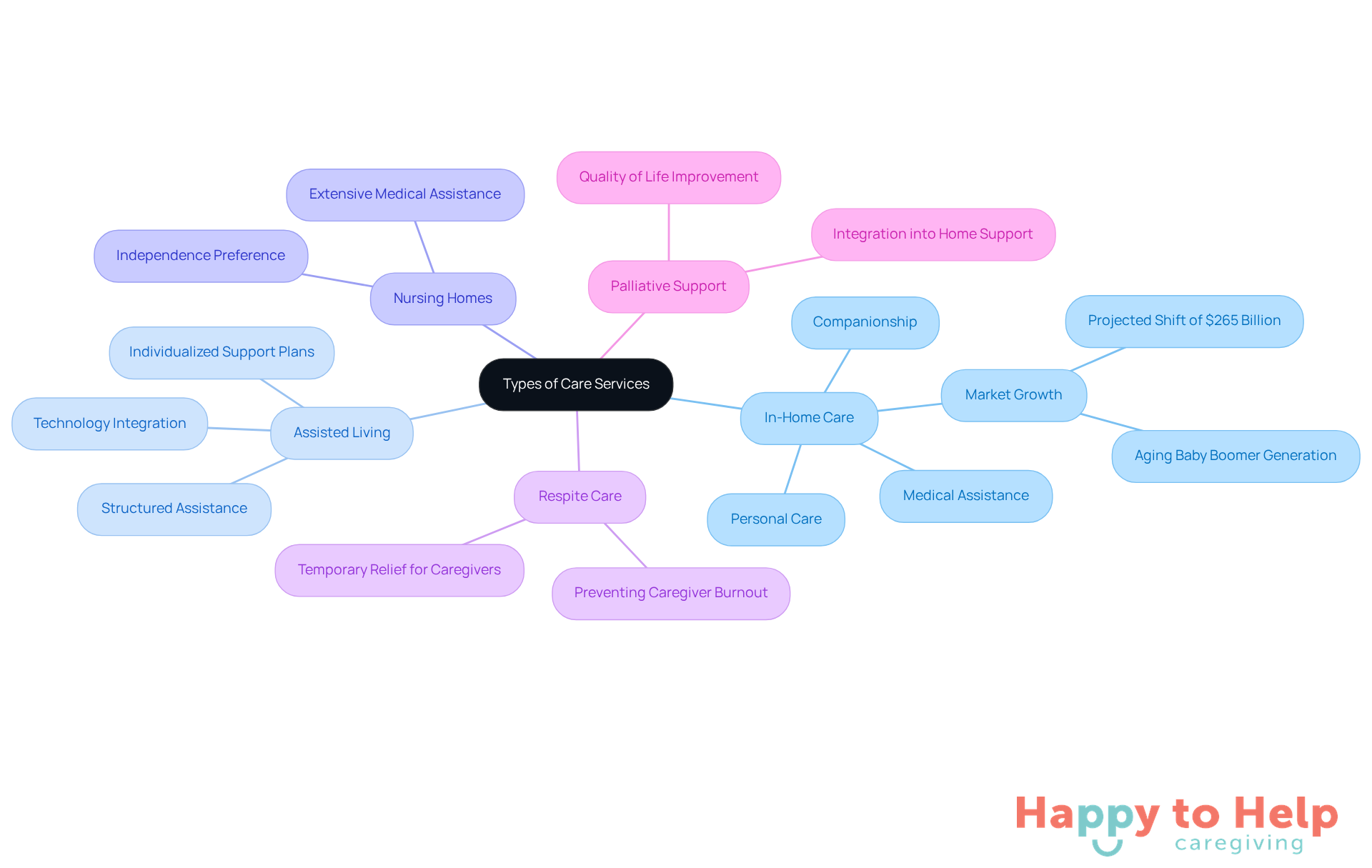
Before seeking care services, it's crucial to understand the various types of care available, each catering to different needs:
-
In-Home Care: This service allows individuals to receive personal care, companionship, and medical assistance in the comfort of their own homes. With a growing preference for aging in place-75% of seniors express a desire to do so-home assistance is becoming increasingly popular. The market for home assistance is expected to grow considerably, fueled by demographic changes and the aging baby boomer generation. Significantly, up to $265 billion worth of services currently provided in conventional facilities for Medicare beneficiaries could transition to home, reflecting the growing importance of home support.
-
Assisted Living: These facilities provide housing and support for daily activities, making them suitable for individuals who require more structured assistance. Current trends suggest that assisted living facilities are adapting to provide more individualized support plans, incorporating technology to improve resident experiences. Specialists observe that although assisted living offers essential support, numerous households are now contemplating in-home assistance as a feasible option for preserving independence.
-
Nursing Homes: Intended for individuals with serious health problems, nursing homes offer extensive medical assistance. However, as the demand for care services near me increases, many households are exploring options that allow for more independence.
-
Respite Care: This option offers temporary relief for primary caregivers, ensuring that their loved ones are well cared for while they take necessary breaks. This service is essential in preventing caregiver burnout, which is a frequent challenge encountered by households.
-
Palliative Support: Concentrated on easing symptoms and stress linked to severe illnesses, palliative support improves the quality of life for patients and their relatives. This method is progressively being incorporated into home support services, indicating a transition towards more comprehensive treatment models.
Understanding these options enables families to select the most appropriate support for their relatives, ensuring that their specific needs and preferences are addressed. By 2029, around 71.4 million Americans aged 65 and above are anticipated, with about 70% expected to need some type of assistance throughout their lives, further highlighting the significance of informed decision-making in providing support.
Assess Your Loved One's Care Needs
Assessing your loved one's care needs can be challenging, but it's crucial for ensuring they receive the right support. Caregivers often struggle with identifying specific areas where assistance is needed, which can lead to inadequate care and increased stress for both the caregiver and the loved one.
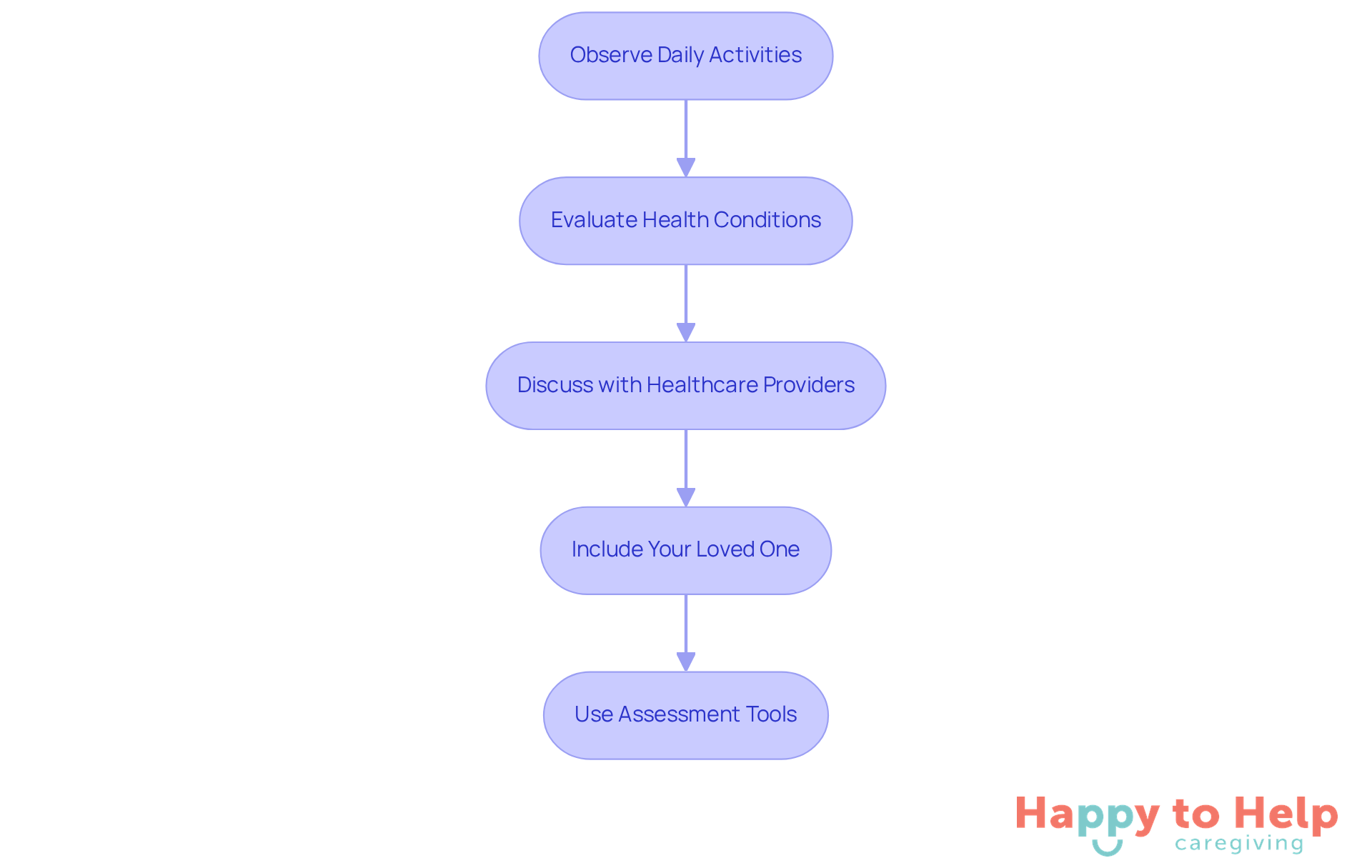
To effectively assess these needs, follow these steps:
- Observe Daily Activities: Take note of any difficulties they face with daily tasks such as bathing, dressing, or eating.
- Evaluate Health Conditions: Consider any medical conditions that may necessitate specialized attention or monitoring.
- Discuss with Healthcare Providers: Consult with doctors or specialists to gain insights into your loved one's health status and support requirements.
- Include Your Loved One: Engage them in discussions about their preferences and concerns regarding support.
- Use Assessment Tools: Utilize checklists or questionnaires designed to evaluate assistance needs, which can help in identifying specific areas of concern.
This thorough assessment will provide a clear picture of the support needed, guiding you in the next steps.
Research Local Care Providers
When researching care services near me, caregivers often face the challenge of making informed decisions. This can be overwhelming, given the variety of options and the importance of finding the right support for loved ones. Here are essential steps to help navigate this process:
-
Utilize online resources like Medicare.gov and A Place for Mom to find and compare care services near me. These resources provide valuable insights into service offerings and quality ratings.
-
Check Reviews and Ratings: Look for testimonials and feedback from other households. A national survey revealed that almost 450,000 residents and relatives evaluated their satisfaction with different facets of community life, emphasizing the significance of peer feedback in evaluating service quality.
-
Verify Credentials: Confirm that providers are licensed and certified according to state regulations. This step is crucial as it ensures compliance with safety and quality standards.
-
Ask for Recommendations: Reach out to friends, family, or healthcare professionals for personal recommendations. Many caregivers report that personal referrals significantly influence their choices, as trust plays a vital role in caregiving.
-
Visit Facilities: If considering assisted living or nursing homes, schedule visits to observe the environment and meet staff. Interacting directly with the facility can offer insights into the culture of support and staff interactions.
-
Consider Financial Aspects: Home assistance services cost an average of $28 per hour in 2023. Comprehending these expenses can assist you in budgeting efficiently for support services.
-
Ensure Effective Communication: Look for providers that offer live operators for immediate communication rather than relying solely on voicemail or text. This ensures that you feel supported and informed throughout the caregiving process.
-
Acknowledge Emotional Well-being: Be aware that 40% to 70% of family caregivers experience clinically significant symptoms of depression. Seeking support and resources for your own well-being is equally important as finding assistance for your family member.
By conducting thorough research, you can compile a list of care services near me that align with your family member's needs, ensuring a supportive and compassionate care experience.

Interview and Evaluate Caregivers
Finding the right caregiver for your loved one can be challenging. Many families struggle with ensuring that the caregiver not only has the necessary qualifications but also connects well with their family member. This can lead to feelings of uncertainty and stress during an already difficult time.
To address these concerns, it’s essential to follow a structured evaluation process. Here are some actionable steps you can take:
- Prepare Questions: Develop a list of questions that cover experience, training, and approach to caregiving. Consider inquiring about their experience with specific conditions related to your family member.
- Conduct Interviews: Arrange face-to-face or virtual interviews to assess their communication skills and demeanor.
- Observe Interactions: If feasible, have the caregiver engage with your family member to assess their rapport and comfort level.
- Check References: Contact previous employers or clients to verify the caregiver's reliability and quality of care.
- Discuss Availability and Flexibility: Ensure that the caregiver's schedule aligns with your family member's needs and that they can adapt to changing circumstances.
By implementing these steps, you can select a caregiver who not only meets the necessary qualifications but also fosters a positive connection with your loved one.

Making the Right Choice
Navigating the landscape of care services can be daunting for caregivers. The overwhelming number of options makes it vital to understand what’s available to ensure that loved ones receive the appropriate support. Caregivers face the challenge of assessing their loved one's specific care requirements while managing the emotional toll this process can take on them.
To tackle these challenges, caregivers should take proactive steps:
- Start by conducting thorough research on local providers and seeking personal recommendations.
- Engaging in interviews with potential care services can help identify the right match for your loved one.
- Remember, it’s not just about meeting immediate needs; it’s about fostering a supportive environment that enhances the quality of life for both the caregiver and the care recipient.
Utilizing available resources and strategies empowers caregivers to make confident choices. By understanding care options, assessing needs, and researching providers, caregivers can create a more fulfilling caregiving experience. Ultimately, this journey is about ensuring that both caregivers and their loved ones thrive.
https://iframe.tely.ai/cta/eyJhcnRpY2xlX2lkIjogIjY5MjNhMDk0MjcyNDliYTNkMmMzZTVlYiIsICJjb21wYW55X2lkIjogIjY4ZWU1ZGNhNzMxNzYyNTU3ZjNjOTVjMSIsICJpbmRleCI6IG51bGwsICJ0eXBlIjogImFydGljbGUifQ==Frequently Asked Questions
What are the different types of care services available?
The different types of care services include In-Home Care, Assisted Living, Nursing Homes, Respite Care, and Palliative Support, each catering to various needs.
What is In-Home Care and why is it becoming popular?
In-Home Care allows individuals to receive personal care, companionship, and medical assistance at home. It is becoming popular as 75% of seniors prefer to age in place, and the market for home assistance is expected to grow due to demographic changes and the aging baby boomer generation.
What does Assisted Living provide?
Assisted Living facilities offer housing and support for daily activities, suitable for individuals needing more structured assistance. They are adapting to provide individualized support plans and incorporate technology to enhance resident experiences.
Who are Nursing Homes intended for?
Nursing Homes are intended for individuals with serious health problems, providing extensive medical assistance. However, many families are exploring options that allow for more independence as demand for care services increases.
What is Respite Care and why is it important?
Respite Care offers temporary relief for primary caregivers, ensuring their loved ones are cared for while they take breaks. It is essential for preventing caregiver burnout, a common challenge faced by households.
What is Palliative Support and how is it evolving?
Palliative Support focuses on easing symptoms and stress related to severe illnesses, improving the quality of life for patients and their families. This approach is increasingly being incorporated into home support services, indicating a shift towards more comprehensive treatment models.
Why is understanding these care options important for families?
Understanding these care options enables families to select the most appropriate support for their relatives, ensuring that specific needs and preferences are addressed, especially as the population ages and more individuals require assistance.
List of Sources
- Understand Different Types of Care Services
- Home Care Industry Trends to Watch in 2025 (https://firstlighthomecare.com/blog/home-care-industry-trends)
- From facility to home: How healthcare could shift by 2025 (https://mckinsey.com/industries/healthcare/our-insights/from-facility-to-home-how-healthcare-could-shift-by-2025)
- Disruption Redefines Home-Based Care: Providers Confront Challenges, Seize New Opportunities (https://homehealthcarenews.com/2025/10/disruption-redefines-home-based-care-providers-confront-challenges-seize-new-opportunities)
- State of home care in 2025 (https://mcknightshomecare.com/state-of-home-care-in-2025)
- Top 10 inspirational quotes for the homecare industry | Nursebuddy (https://nursebuddy.co/blog/top-10-inspirational-quotes-for-the-home-care-industry)
- Research Local Care Providers
- U.S. News Releases 2025 Best Senior Living Ratings (https://usnews.com/info/blogs/press-room/articles/2025-04-15/u-s-news-releases-2025-best-senior-living-ratings)
- 3 Best Home Care Services of 2025, Reviewed by Buyers (https://consumeraffairs.com/health/in-home-care)
- Caregiver Statistics: Health, Technology, and Caregiving Resources (https://caregiver.org/resource/caregiver-statistics-health-technology-and-caregiving-resources)
- CMS Begins Updating Nursing Home Care Compare Ratings (https://skillednursingnews.com/2025/11/cms-begins-updating-nursing-home-care-compare-ratings)
- What do caregivers in the North Central Region use for support and what support do they still need? / Research Snapshot - North Central Regional Center for Rural Development (https://ncrcrd.ag.purdue.edu/2024/10/04/what-do-caregivers-in-the-north-central-region-use-for-support-and-what-support-do-they-still-need-research-snapshot)