

For families in our service areas
For families in our service areas, this guide explains home care and how non-medical in-home caregiving can support care planning in East Idaho, Treasure Valley & Magic Valley, Northern Wasatch, North Central West Virginia, and Northeast Ohio.
What You Need to Know About Find Home Care in My Area: A
Navigating home care can be daunting for caregivers, particularly when the well-being of loved ones is at stake. With an increasing number of seniors needing assistance, understanding the various types of home care services - both medical and non-medical - is crucial for making informed decisions.
Caregivers often struggle to assess their loved ones' needs and find the right support in their area. This challenge can lead to stress and uncertainty, making it even more difficult to ensure quality care.
This guide offers a comprehensive, step-by-step approach to help caregivers identify, evaluate, and secure the best home care options. By following these actionable tips, caregivers can ensure their family members receive the quality care they deserve.
Understand Home Care Services
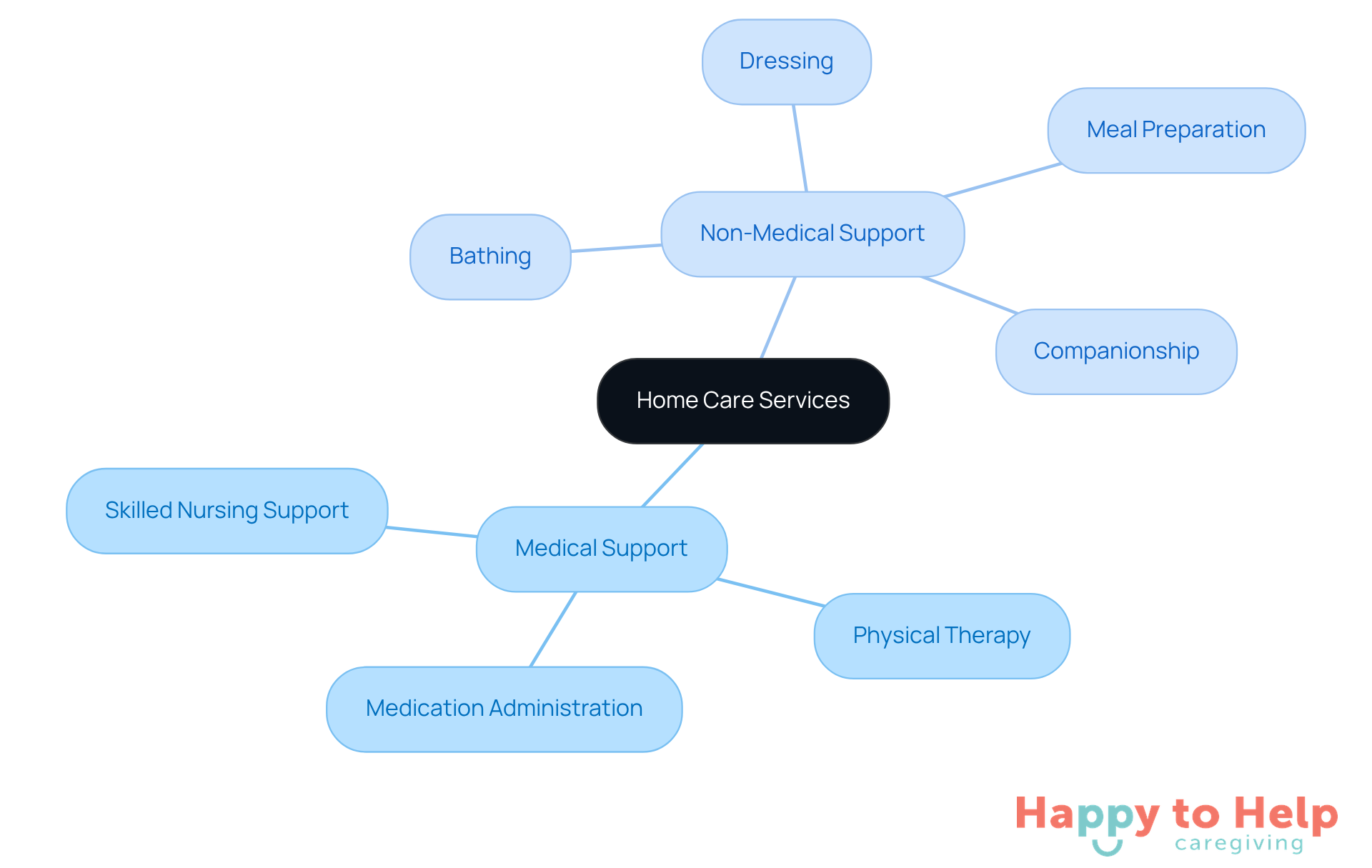
Home assistance can be categorized into two main types: medical and non-medical support. Understanding these distinctions is crucial for caregivers facing the challenge of selecting the right type of help for their loved ones.
The Problem: Many caregivers struggle to identify whether their loved ones need medical or non-medical assistance. This confusion can lead to inadequate support, impacting the quality of care provided.
The Implications: For instance, if an elderly person requires help with mobility and personal hygiene, non-medical support may suffice. However, a recent surgery might necessitate medical attention. With approximately 70% of seniors expected to need some form of assistance during their lifetime, the demand for both types of services is on the rise.
The Solution: Caregivers should assess the specific needs of their loved ones. Medical assistance includes:
- Skilled nursing support
- Physical therapy
- Medication administration
These services are typically provided by licensed professionals. In contrast, non-medical support focuses on daily living activities such as:
- Bathing
- Dressing
- Meal preparation
- Companionship
By understanding these differences, families can make informed choices about the assistance options available to them, ensuring their loved ones receive the appropriate care.
Assess Your Care Needs
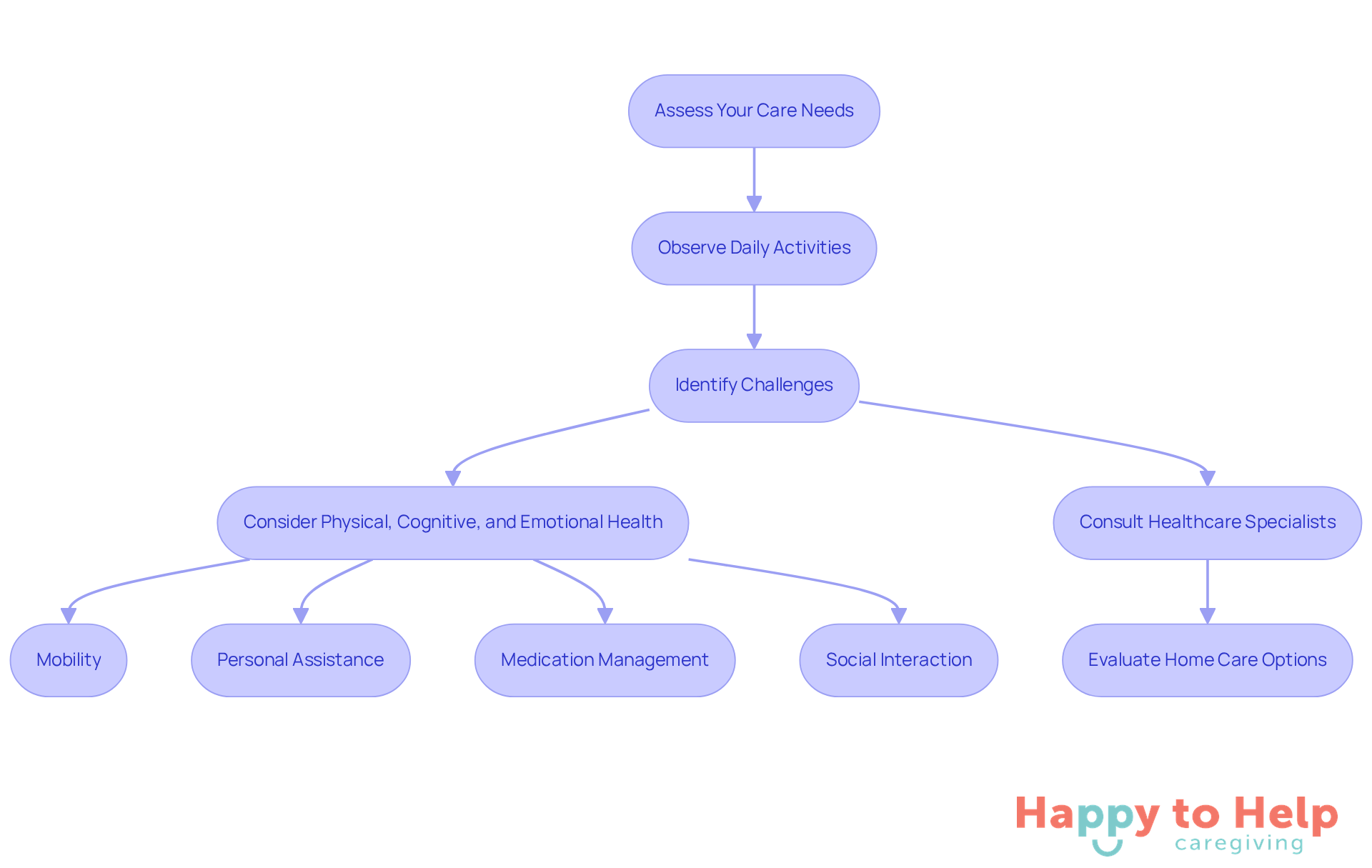
Begin by closely observing your loved one's daily activities to identify specific challenges they face. Consider their physical limitations, cognitive abilities, and emotional health. A thorough checklist can be essential in assessing their needs across several key areas:
- Mobility
- Personal assistance
- Medication management
- Social interaction
For instance, if your loved one struggles with walking, they may require assistance with mobility tasks. Interacting with healthcare specialists can provide essential insights into any medical conditions that may affect their needs. This comprehensive evaluation will help you identify the most suitable options for home care in my area that are necessary to enhance their well-being and autonomy.
The caregiving sector is currently facing a workforce deficit, which is expected to escalate. This makes it even more crucial to evaluate support needs precisely. According to geriatric service experts, understanding the specific challenges families encounter in obtaining assistance can significantly influence the quality of support provided. Therefore, utilizing checklists and consulting with professionals is vital for ensuring that your family member receives the support they need.
Research Local Home Care Options
For caregivers, finding the right agency for home care in my area can be a daunting task. With so many options available, it’s crucial to ensure that your loved one receives the best possible care. Poor choices can lead to inadequate support, which can significantly impact the well-being of both the caregiver and the individual needing assistance.
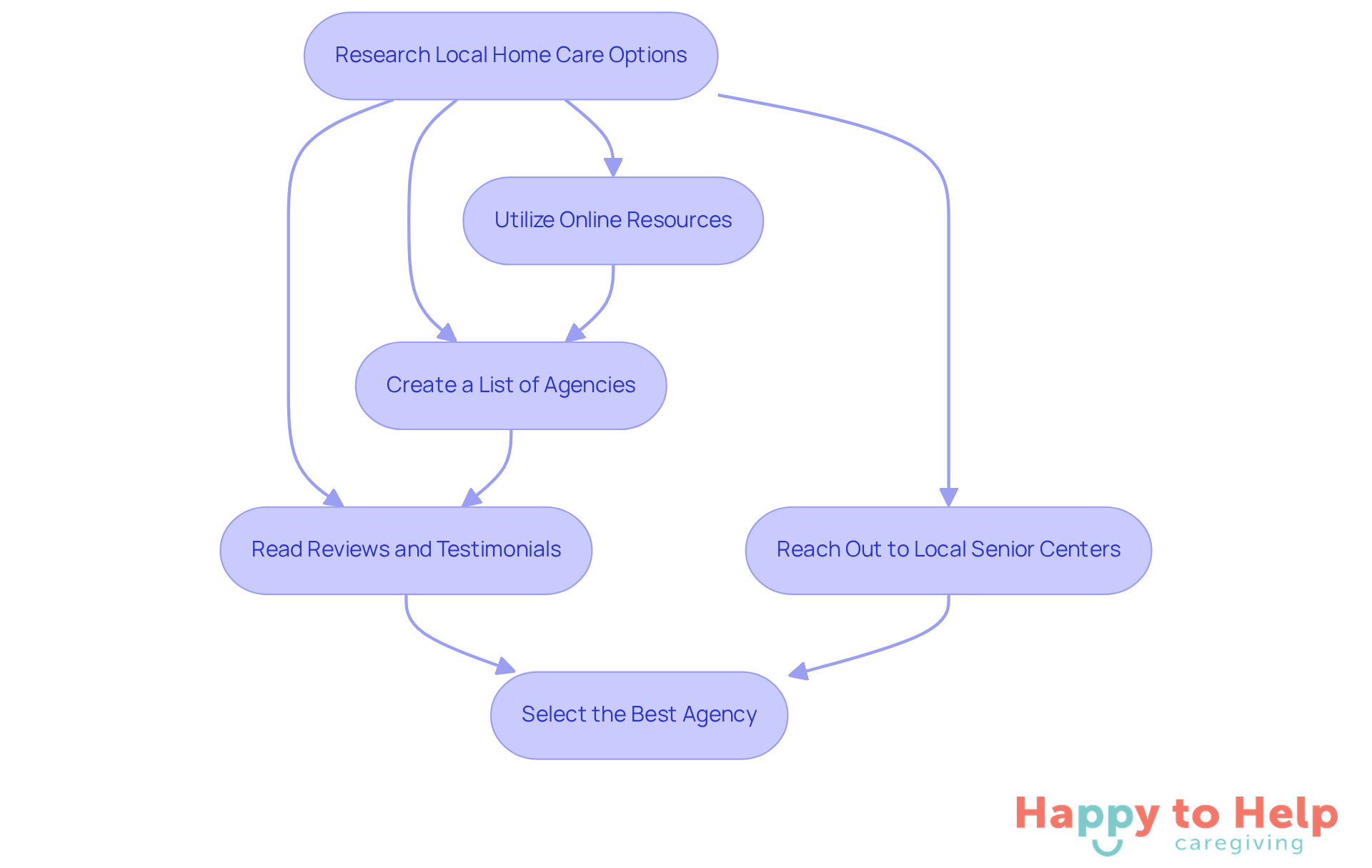
To tackle this challenge, start your research by utilizing online resources like Yelp, Care.com, and local directories. Create a list of agencies that provide home care in my area, specializing in the type of assistance your loved one requires. Reading reviews and testimonials is essential to gauge the quality of care provided by these agencies.
Additionally, don’t hesitate to reach out to local senior centers or healthcare providers for recommendations. For example, if you’re in Albuquerque, NM, agencies like:
- Roadrunner Home Health
- Visiting Angels
are often highly rated. Make sure to note their offerings, availability, and any specialties they may have. This proactive approach will help ensure that you find a reliable agency for home care in my area that meets your loved one’s needs.
Evaluate and Compare Care Providers
For caregivers, finding the right provider for home care in my area can be a daunting task. With the aging population, the demand for highly skilled providers in home care in my area is on the rise, making it crucial to assess potential agencies carefully. Without a thorough evaluation, caregivers risk compromising the quality of support their loved ones receive.
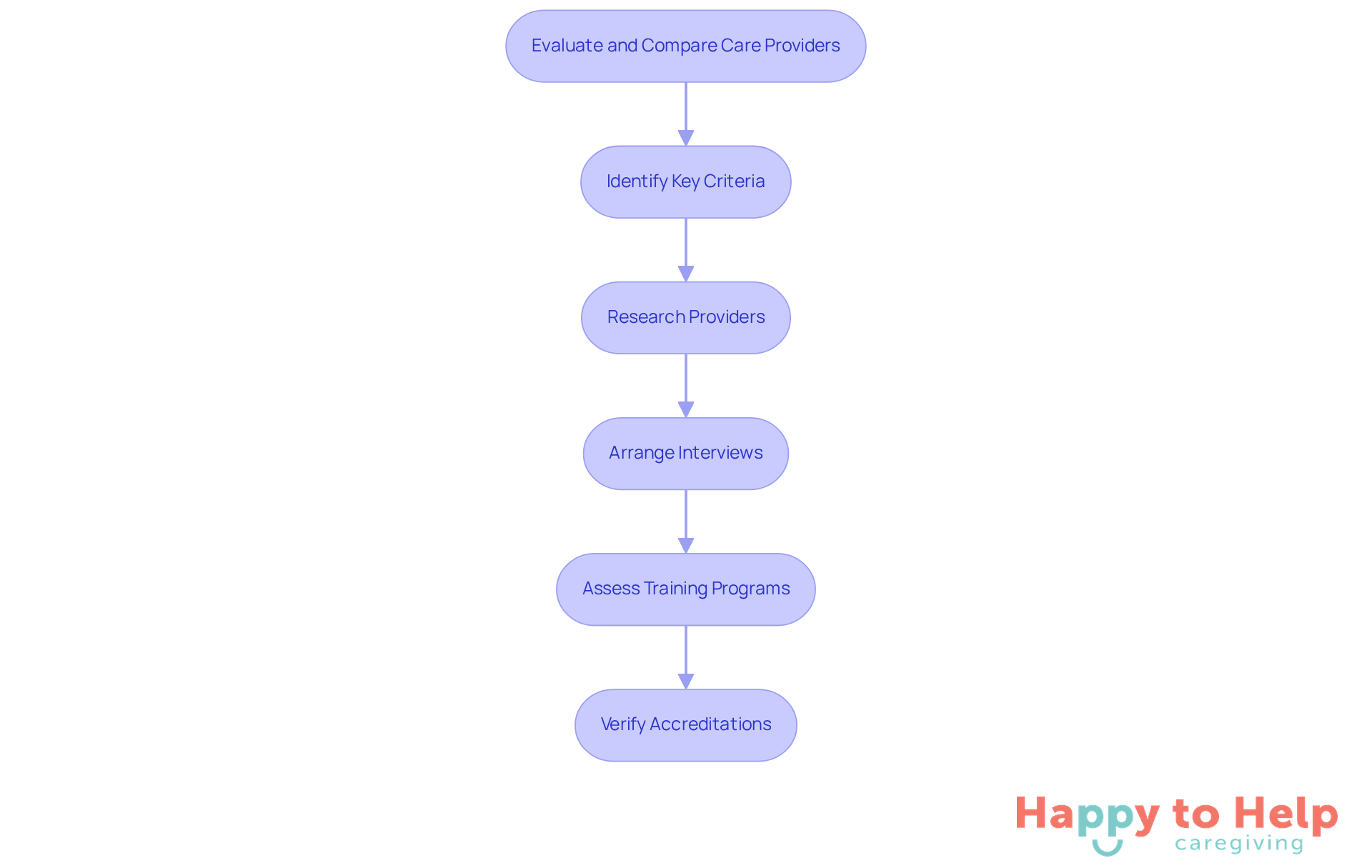
To tackle this challenge, start by creating a comparison chart that evaluates potential providers of home care in my area based on key criteria:
- Services offered
- Staff qualifications
- Agency reputation
- Costs
It's essential to ensure that the agencies you consider have robust training programs for their staff. This not only enhances the quality of care but also ensures that caregivers are well-prepared to handle emergencies.
Arrange interviews or consultations with each agency to inquire about their treatment approach and staff training. Ask about their caregiver screening process and whether they provide ongoing training. Additionally, verify any accreditations or certifications that signify a commitment to quality service. Agencies should also adopt reputable Electronic Visit Verification (EVV) systems to ensure compliance and enhance service quality.
By conducting this thorough evaluation, you can narrow down your options to the most suitable providers. This proactive approach ensures that your loved ones receive the best possible support.
Understand Costs and Payment Options
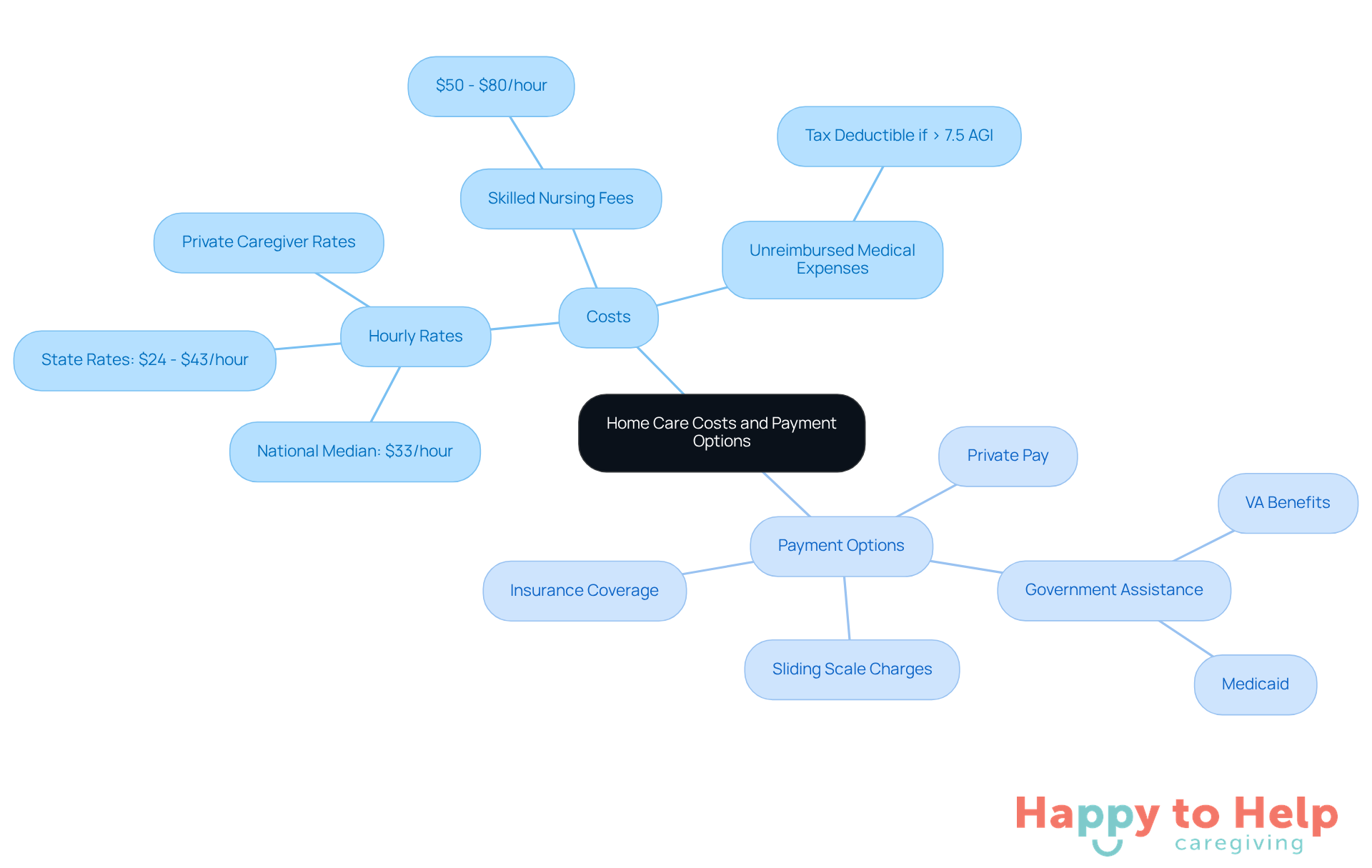
Expenses related to home care in my area can pose a significant challenge for families seeking assistance for their loved ones. In 2025, the national median expense for non-medical in-home assistance is approximately $33 per hour, with state rates ranging from $24 to $43 per hour. This variability can create financial strain, especially when skilled nursing services command even higher fees, often between $50 and $80 per hour.
To navigate these costs, families should engage in discussions about payment options with potential providers of home care in my area. These options may include:
- Private pay
- Insurance coverage
- Government assistance programs such as Medicaid or VA benefits
Additionally, some agencies offer sliding scale charges based on income, making services more accessible to those in need.
Creating a comprehensive budget that outlines anticipated expenses is crucial. Families should also investigate various financial aid options, such as:
- Long-term insurance
- Community programs like Meals on Wheels, which can provide low-cost or free assistance
Furthermore, it's important to note that unreimbursed medical expenses for in-home assistance may be itemized for tax deductions if they exceed 7.5% of adjusted gross income.
Understanding these financial factors is essential for ensuring that families can afford the necessary home care in my area for their relatives. By being proactive and informed, caregivers can better manage the costs associated with home support services.
Communicate and Adjust Care Plans
Problem: Inconsistent communication with support providers and family members can hinder the effectiveness of a care plan. Without regular check-ins, caregivers may miss critical changes in a loved one's condition or preferences, which can lead to inadequate support.
Agitate: This lack of communication can create confusion and frustration, making it difficult to adapt care strategies as needed. For instance, if a caregiver notices a decline in mobility but fails to communicate this, the individual may not receive the increased physical therapy sessions or modifications to daily activities that could enhance their safety and comfort.
Solution: To address this issue, caregivers should establish a routine for consistent check-ins. Here are some actionable steps:
- Increase Communication: Regularly discuss any changes in your loved one's condition with all involved parties.
- Document Modifications: Keep a record of any adjustments made to the care plan and share these updates with everyone involved.
- Conduct Regular Assessments: Studies show that frequent evaluations of treatment plans can significantly improve health outcomes and client satisfaction. This proactive approach allows for timely actions that align with the individual's evolving needs.
Care coordinators stress that adapting care plans based on ongoing assessments not only improves the quality of care but also builds trust and rapport between caregivers and clients. This ultimately leads to a more positive caregiving experience.

Your Path Forward
Understanding the nuances of home care services poses a significant challenge for caregivers. As the demand for home care continues to grow, caregivers must distinguish between medical and non-medical assistance to make informed decisions that directly impact the quality of care their loved ones receive. This clarity is essential, as it can greatly influence the support provided to family members.
To navigate these complexities, caregivers can follow key steps:
- Assess individual care needs to identify what type of support is necessary.
- Research local options and evaluate providers based on their offerings and reputation.
- Understand costs associated with different services.
- Maintain communication and adaptability in care plans; ongoing dialogue and adjustments are vital for effective support.
Ultimately, finding the right home care is about more than just securing services; it’s about ensuring that loved ones receive compassionate and appropriate assistance tailored to their unique needs. By taking proactive steps and utilizing available resources, caregivers can enhance their loved ones' quality of life. This process fosters a supportive environment that promotes dignity and independence. Engaging in these efforts is a meaningful way to demonstrate care and commitment, ensuring that every family member receives the respect and attention they deserve.
https://iframe.tely.ai/cta/eyJhcnRpY2xlX2lkIjogIjY5MjNiNTcwODUwNzYyNmU1YWRlYzJiZiIsICJjb21wYW55X2lkIjogIjY4ZWU1ZGNhNzMxNzYyNTU3ZjNjOTVjMSIsICJpbmRleCI6IG51bGwsICJ0eXBlIjogImFydGljbGUifQ==Frequently Asked Questions
What are the two main types of home care services?
Home care services are categorized into two main types: medical support and non-medical support.
Why is it important for caregivers to understand the differences between medical and non-medical assistance?
Understanding these distinctions is crucial for caregivers to select the right type of help for their loved ones, as confusion can lead to inadequate support and impact the quality of care provided.
What type of assistance might an elderly person require if they have mobility and personal hygiene needs?
Non-medical support may suffice for elderly individuals requiring help with mobility and personal hygiene.
What are some examples of medical assistance?
Medical assistance includes skilled nursing support, physical therapy, and medication administration, typically provided by licensed professionals.
What does non-medical support focus on?
Non-medical support focuses on daily living activities such as bathing, dressing, meal preparation, and companionship.
How can caregivers assess the care needs of their loved ones?
Caregivers can assess care needs by closely observing their loved one's daily activities, considering physical limitations, cognitive abilities, and emotional health, and using a checklist to identify specific challenges.
What key areas should be included in a needs assessment checklist?
Key areas to assess include mobility, personal assistance, medication management, and social interaction.
Why is it important to consult with healthcare specialists during the assessment process?
Interacting with healthcare specialists can provide essential insights into any medical conditions that may affect the care needs of the individual.
What is the current state of the caregiving workforce?
The caregiving sector is facing a workforce deficit, which is expected to escalate, making it crucial to evaluate support needs precisely.
How can families ensure their loved ones receive the appropriate support?
Families can ensure appropriate support by utilizing checklists, consulting with professionals, and understanding the specific challenges they encounter in obtaining assistance.
List of Sources
- Understand Home Care Services
- Home Care Industry Trends to Watch in 2025 (https://firstlighthomecare.com/blog/home-care-industry-trends)
- Home Health Care Trends for 2025 (https://carevoyant.com/home-health-blog/home-health-care-trends-2025)
- Mid-Year Check-In: 7 Key Trends Shaping Non-Medical Home Care for the Rest of 2025 | Aaniie, formerly Smartcare Software (https://aaniie.com/news/key-trends-shaping-non-medical-home-care-for-the-rest-of-2025)
- How 3 Top Trends Have Shaped Home-Based Care This Year (https://homehealthcarenews.com/2025/08/how-3-top-trends-have-shaped-home-based-care-this-year)
- Types of Home Care Services in 2025 (https://websterhc.com/breaking-down-the-different-types-of-home-care-services-in-2025)
- Assess Your Care Needs
- Elderly Care Statistics (https://rosewood-nursing.com/post/elderly-care-statistics)
- The US is not ready for its aging population. New Northeastern research explains why (https://news.northeastern.edu/2025/08/16/aging-population-us-challenges)
- What Is the Lifetime Risk of Needing and Receiving Long-Term Services and Supports? (https://aspe.hhs.gov/reports/what-lifetime-risk-needing-receiving-long-term-services-supports-0)
- The declining population will make it even harder to care for elders (https://npr.org/2025/11/02/nx-s1-5535648/population-elderly-caregivers)
- Research Local Home Care Options
- Home Care Statistics In 2025: Key Insights In Home Care (https://sagapixel.com/marketing/home-care-statistics)
- TOP 10 BEST Home Care Agency in Albuquerque, NM - Updated 2025 - Yelp (https://yelp.com/search?find\_desc=Home+Care+Agency&find\_loc=Albuquerque%2C+NM)
- Top 10 Home Care Agencies in Albuquerque, NM | Affordable Pricing (https://care.com/home-care-agencies/albuquerque-nm)
- 50 Home Care Agencies in Albuquerque, NM - AgingCare.com (https://agingcare.com/local/in-home-care/albuquerque-nm)
- The 10 Best Home Care Agencies for Seniors in Albuquerque, NM for 2025 | Caring.com (https://caring.com/senior-care/in-home-care/new-mexico/albuquerque)
- Evaluate and Compare Care Providers
- Disruption Redefines Home-Based Care: Providers Confront Challenges, Seize New Opportunities (https://homehealthcarenews.com/2025/10/disruption-redefines-home-based-care-providers-confront-challenges-seize-new-opportunities)
- U.S. News to Debut Best Home Health Ratings in 2026 (https://usnews.com/info/blogs/press-room/articles/2025-11-03/u-s-news-to-debut-best-home-health-ratings-in-2026)
- 2025 home care trends include tightened EVV oversight, investments in caregiver training (https://mcknightshomecare.com/2025-home-care-trends-include-tightened-evv-oversight-investments-in-caregiver-training)
- How Home Care Agencies Can Prepare Now to Secure a Strong Start in 2025 (https://aaniie.com/news/how-home-care-agencies-can-prepare-now-to-secure-a-strong-start-in-2025)
- Caregiver Statistics: Demographics (https://caregiver.org/resource/caregiver-statistics-demographics)
- Understand Costs and Payment Options
- How Much Does In-Home Care Cost in 2025? A State-by-State Guide - Elder Answers (https://elder-answers.com/how-does-in-home-care-cost-in-2025)
- Home Care Costs in 2025: A State-by-State Guide (https://aplaceformom.com/caregiver-resources/articles/in-home-care-costs)
- Genworth and CareScout Release Cost of Care Survey Results for 2024 (https://investor.genworth.com/news-events/press-releases/detail/982/genworth-and-carescout-release-cost-of-care-survey-results)
- Payment Rates for Medicaid Home Care: States’ Responses to Workforce Challenges | KFF (https://kff.org/medicaid/payment-rates-for-medicaid-home-care-states-responses-to-workforce-challenges)
- States’ Management of Medicaid Home Care Spending Ahead of H.R. 1 Effects | KFF (https://kff.org/medicaid/states-management-of-medicaid-home-care-spending-ahead-of-h-r-1-effects)
- Communicate and Adjust Care Plans
- State of home care in 2025 (https://mcknightshomecare.com/state-of-home-care-in-2025)
- How Home Care Agencies Can Prepare Now to Secure a Strong Start in 2025 (https://aaniie.com/news/how-home-care-agencies-can-prepare-now-to-secure-a-strong-start-in-2025)
- The Importance of Communication in Home Health Care Relationships (https://h2hhc.com/blog/the-importance-of-communication-in-home-health-care-relationships)
- Overcoming Challenges In Home-Based Care For Medically Intensive Patients (https://homehealthcarenews.com/2025/09/overcoming-challenges-in-home-based-care-for-medically-intensive-patients)
- The Importance of Communication Between Home Care Providers and Families (https://ultimatecareny.com/resources/the-importance-of-communication-between-home-care-providers-and-families)