
The Importance of Find In Home Health Near Me: Steps to
Navigating the complex landscape of in-home health care presents a significant challenge for families seeking the best support for their loved ones. This daunting task often leaves families feeling overwhelmed and unsure about how to proceed. Understanding the specific needs of an individual - ranging from daily living activities to emotional well-being - is crucial in ensuring they receive the appropriate care.
With a multitude of options available, families may struggle to confidently select the right provider. This uncertainty can lead to inadequate care, impacting the quality of life for their loved ones. So, how can families overcome this challenge?
This guide outlines essential steps to assess care requirements and highlights key qualities to look for in caregivers. By following these actionable solutions, families can empower themselves to make informed decisions that enhance the quality of life for their loved ones.
Identify Your Loved One's Care Needs
Begin by assessing your loved one's daily activities and health status. This initial evaluation is crucial for understanding their needs and ensuring they receive appropriate support.
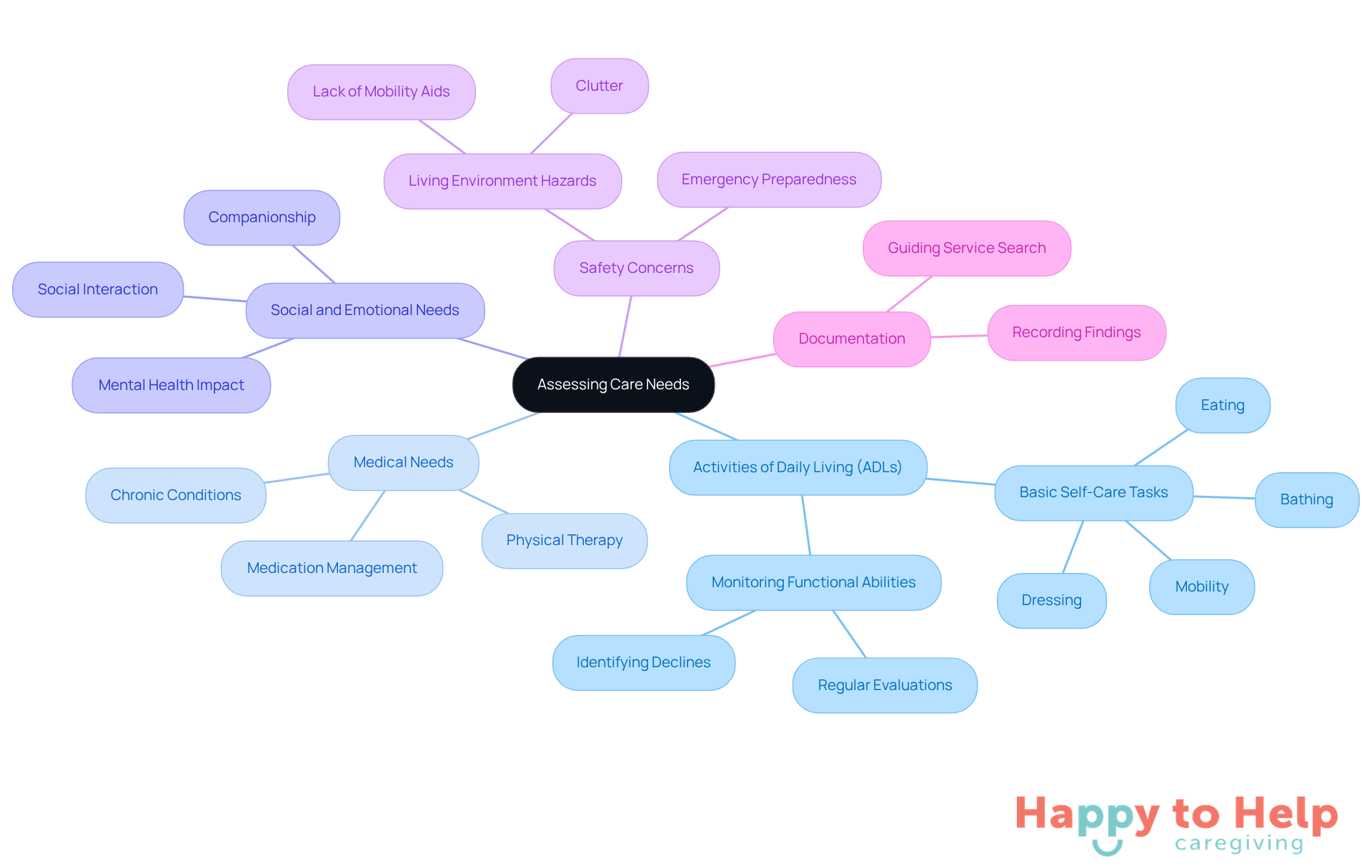
Activities of Daily Living (ADLs): Evaluate their ability to perform basic tasks such as bathing, dressing, eating, and mobility. If they struggle with these, they may require assistance. Recognizing these challenges early can prevent further decline in their independence.
Medical Needs: Identify any chronic conditions or medical requirements that necessitate skilled assistance, such as medication management or physical therapy. Addressing these needs promptly can significantly improve their quality of life.
Social and Emotional Needs: Consider their need for companionship and social interaction, which can greatly impact their mental health. Isolation can lead to feelings of loneliness and depression, making it essential to foster connections.
Safety Concerns: Look for signs of potential hazards in their living environment, such as clutter or lack of mobility aids. These issues may indicate a need for more comprehensive support to ensure their safety.
Record these findings to create a clear picture of the support needed. This documentation will guide your search for suitable services in home health near me, ensuring that your loved one receives the care they deserve.
Evaluate Key Qualities of Care Providers
When evaluating potential caregivers, families often face the challenge of finding individuals who truly meet their loved ones' needs. This can lead to feelings of uncertainty and anxiety about the quality of care provided.
To address this issue, prioritize the following essential qualities:
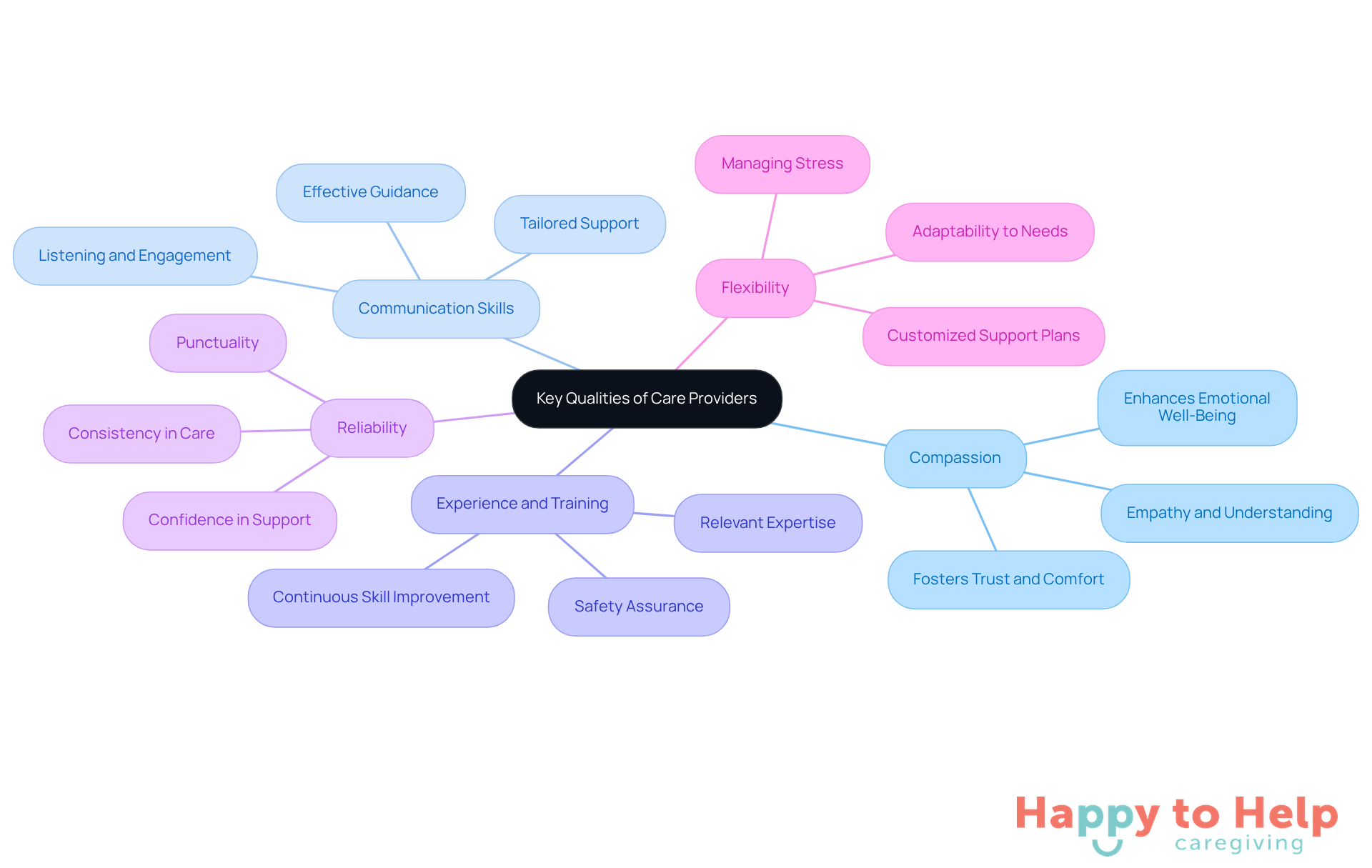
- Compassion: Seek caregivers who exhibit genuine empathy and understanding of their clients' circumstances. Compassionate support not only enhances the emotional well-being of clients but also fosters trust and comfort, which are crucial for effective assistance. Recent studies highlight that empathy is essential for understanding and aiding the individual being supported.
- Communication Skills: Effective communication is paramount in caregiving. It ensures that guidance instructions are accurately followed and allows your loved one to express their needs comfortably. Providers who attentively listen and engage in open conversation can greatly enhance the standard of assistance. Strong communication abilities are vital for establishing trust and ensuring that support is tailored to personal requirements.
- Experience and Training: Confirm that caregivers possess relevant experience and training tailored to your loved one's specific health conditions. This expertise is vital for addressing complex needs and ensuring safety. Caregivers can improve their skills through practical experience and accredited training programs, equipping them with the essential resources to deliver high-quality support.
- Reliability: Choose individuals recognized for their punctuality and consistency. Dependability fosters confidence and guarantees ongoing support, which is crucial for maintaining a stable environment for your family member.
- Flexibility: A proficient caregiver should be adaptable to changing needs and schedules. This flexibility enables customized support that adjusts to your loved one’s requirements, ensuring they receive the assistance they need as situations evolve. Flexibility is crucial for managing stress and developing effective support plans, making it a vital trait in caregiving.
To assess these qualities effectively, request references and read reviews from other families. This feedback can provide valuable insights into the caregiver's performance and approach.
Research and Compare Local Services
For caregivers, finding reliable services in home health near me can be a daunting task. With so many options available, how do you ensure that your loved one receives the best care possible? The implications of choosing the wrong agency can be significant, affecting not only the quality of care but also the overall well-being of your family member.
To tackle this challenge, consider these actionable steps:
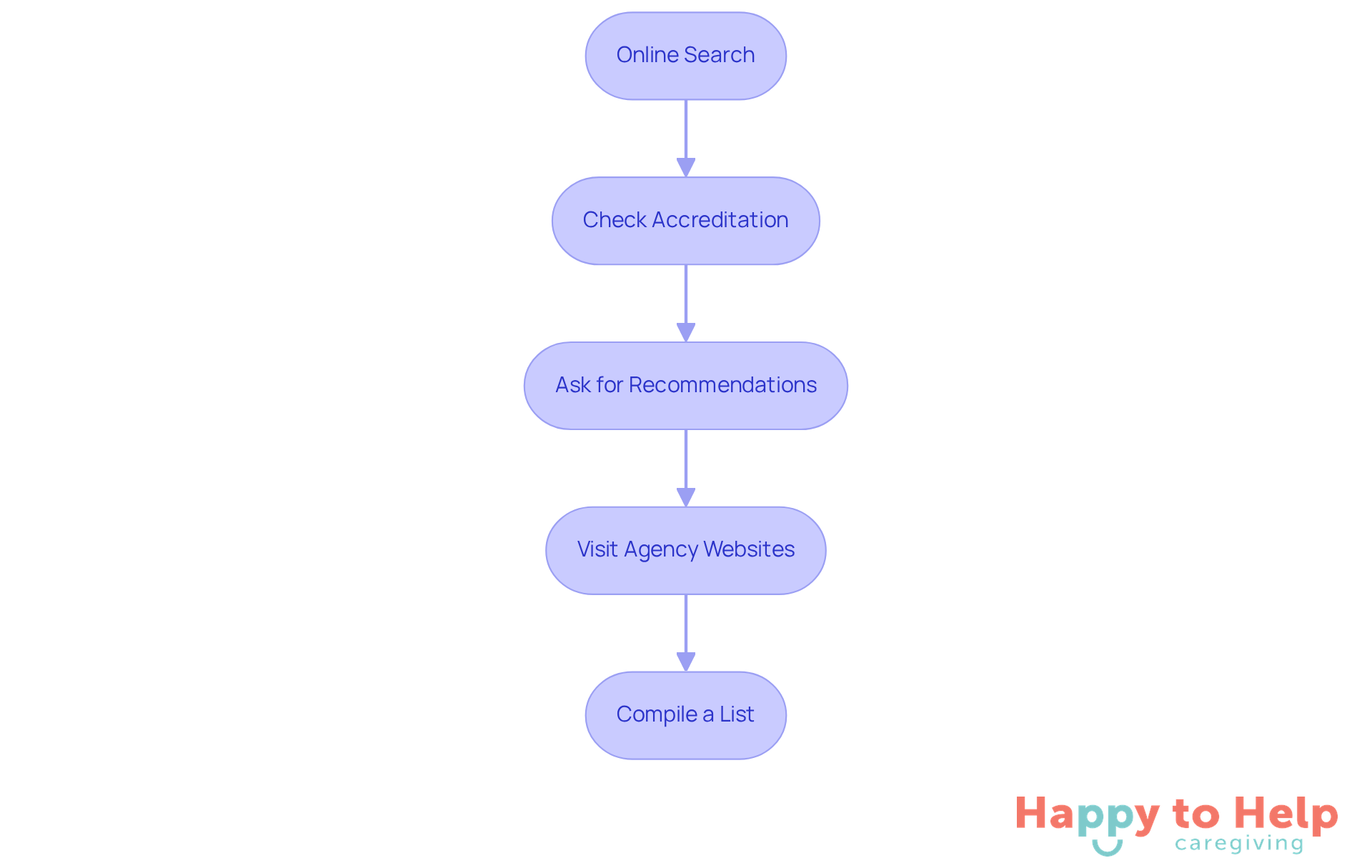
- Online Search: Start by utilizing search engines to locate home care agencies in your area. Websites like Yelp and Caring.com provide valuable reviews and ratings that can guide your decision-making.
- Check Accreditation: It's crucial to verify that the agencies are licensed and accredited by recognized state and national organizations. Accreditation serves as a reliable indicator of a commitment to quality service, which is essential for ensuring safety and service excellence. In fact, studies show that 91% of clients express satisfaction with their home health services, underscoring the positive outcomes associated with selecting accredited agencies.
- Ask for Recommendations: Don’t hesitate to consult friends, family, or healthcare professionals for recommendations based on their experiences. Personal insights can offer a clearer picture of an agency's reliability and quality.
- Visit Agency Websites: Take the time to explore the services offered, staff qualifications, and any specializations that align with your family member's needs. This information can help you determine if an agency is a good fit.
- Compile a List: Create a list of potential providers, noting their strengths and weaknesses based on your research. This organized approach will facilitate a more informed decision.
By following these steps, you can narrow down your options in home health near me to those that best meet your loved one's needs, ensuring they receive the compassionate and individualized support they deserve. With the home support industry expected to grow significantly in 2025 due to rising demand for assistance among seniors, prioritizing quality home support services is more crucial than ever.
Interview Caregivers and Assess Compatibility
When interviewing prospective providers, families often encounter significant challenges in ensuring compatibility and effectiveness in caregiving. Understanding these challenges is crucial for making informed decisions.
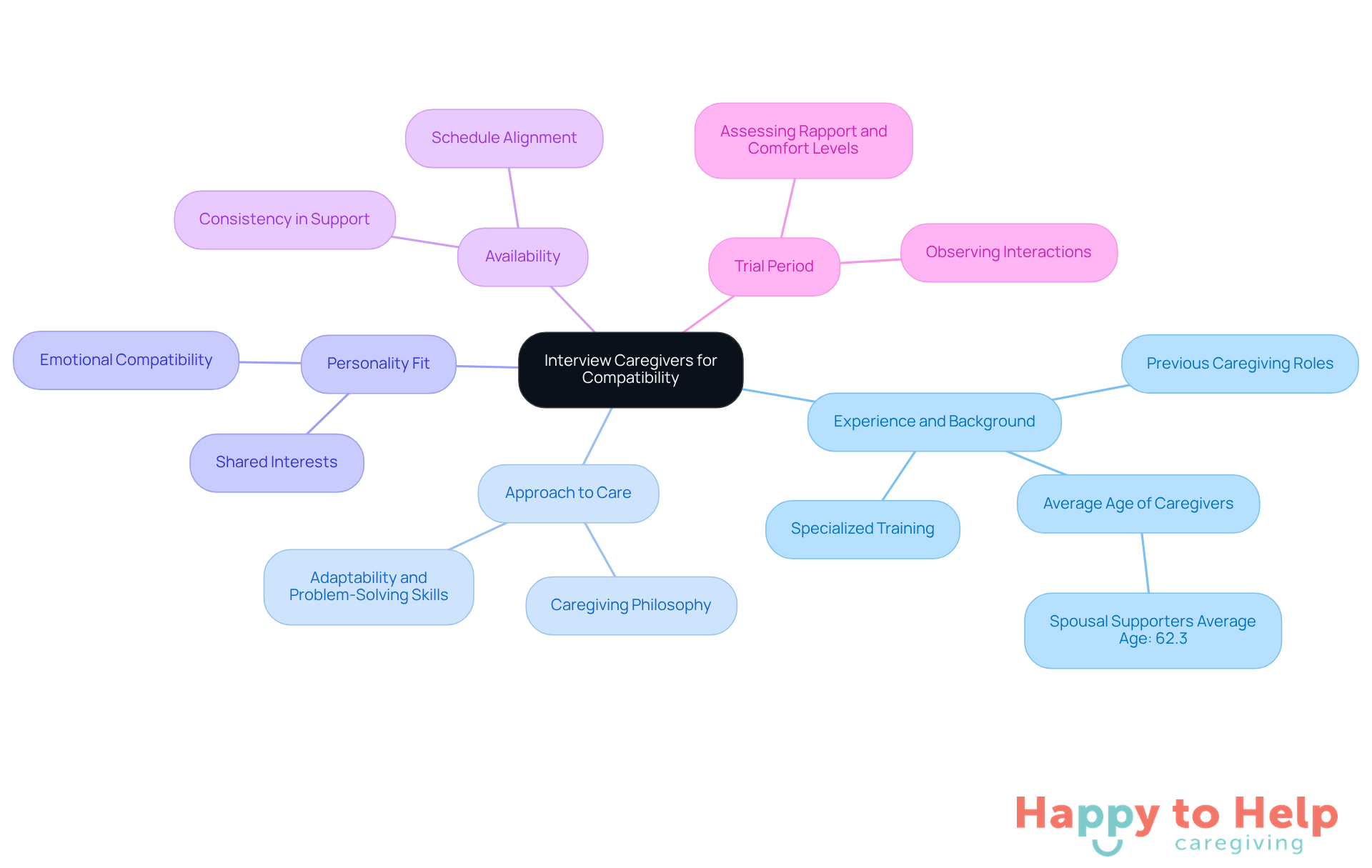
Experience and Background: One major concern is the experience and background of potential caregivers. Inquire about their previous caregiving roles and any specialized training relevant to your loved one's specific needs. Research shows that individuals with formal training are generally more effective in delivering quality care, as they are better equipped to handle complex situations. Notably, the average age of spousal supporters is 62.3 years, which can influence their experience and approach to caregiving.
Approach to Care: Another critical aspect is the caregiver's approach to care. Discuss their caregiving philosophy and how they manage challenging scenarios. Understanding their approach can reveal their adaptability and problem-solving skills, which are essential in caregiving.
Personality Fit: Assessing personality fit is also vital. Determine if their personality aligns with your loved one’s preferences. For instance, if your family member enjoys engaging conversations, a more extroverted support person may foster a better connection. Research indicates that emotional compatibility between supporters and care recipients significantly enhances the overall caregiving experience, reducing feelings of loneliness and anxiety. It's important to note that 36% of family supporters have experienced depression since taking on their roles, highlighting the emotional challenges that can arise in these relationships.
Availability: Confirming availability is another key factor. Ensure that the caregiver's schedule aligns with your family member’s needs. Caregivers who can accommodate specific times and routines are more likely to provide consistent and reliable support.
Trial Period: If possible, establish a trial phase to observe the assistant's interactions with your family member. This firsthand experience can help assess rapport and comfort levels, which are vital for a successful caregiving relationship.
Moreover, nearly half (47%) of those providing assistance receive no formal support, such as financial aid, counseling, or respite services, despite 88% indicating they require more help. This underscores the importance of considering support systems during the hiring process.
By following these steps, families can ensure that the provider not only possesses the necessary qualifications but also fosters a meaningful connection with their loved one, ultimately enhancing the quality of care provided.
Review Contracts and Understand Terms of Service
Before finalizing any caregiving arrangement, it’s crucial to address a common problem: unclear contracts. Families often face challenges when the terms of service are not explicitly defined, leading to misunderstandings and potential conflicts.
To avoid these issues, carefully review the contract and terms of service:
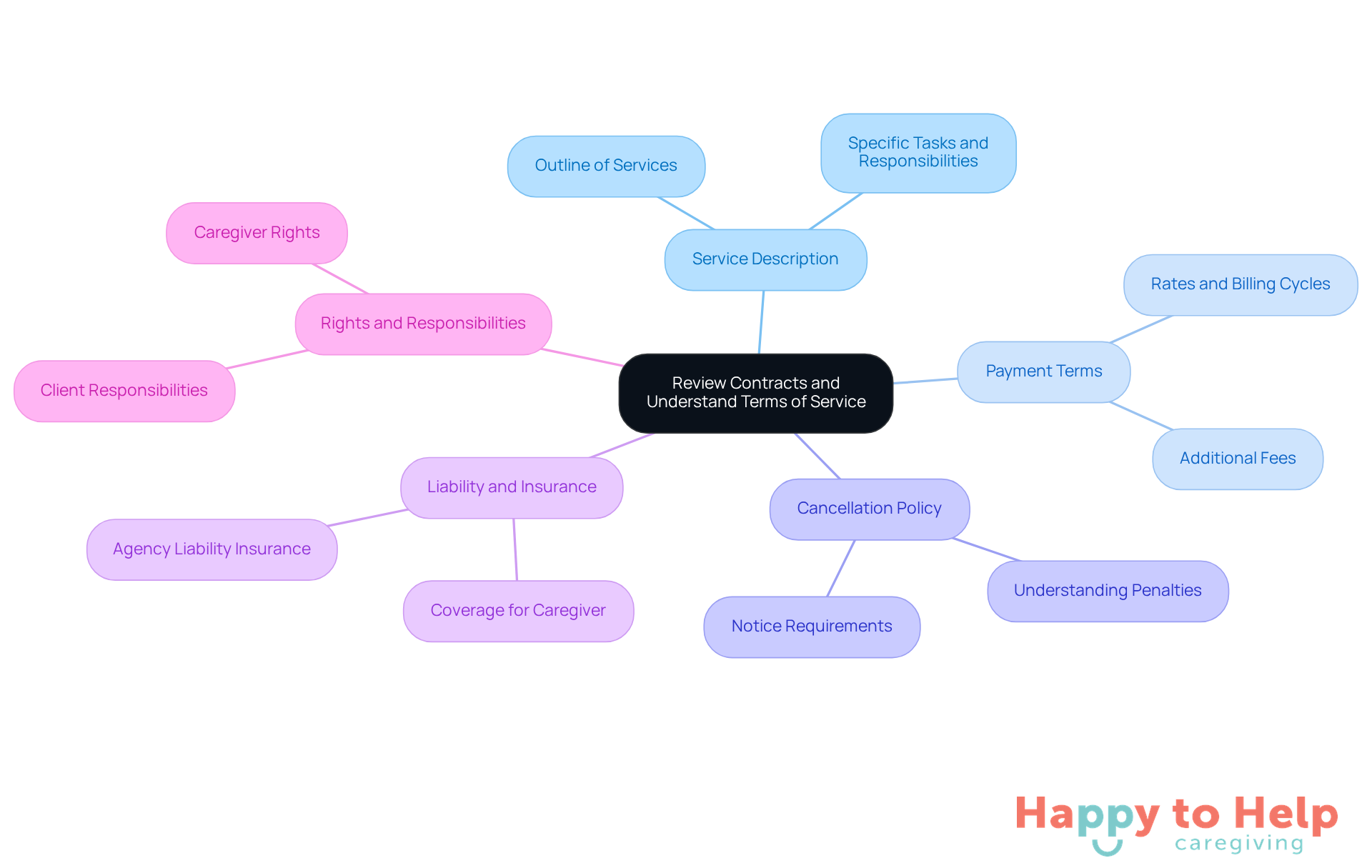
- Service Description: Ensure the contract clearly outlines the services to be provided, including any specific tasks and responsibilities.
- Payment Terms: Understand the payment structure, including rates, billing cycles, and any additional fees that may apply.
- Cancellation Policy: Familiarize yourself with the agency's cancellation policy and any penalties that may be incurred.
- Liability and Insurance: Verify that the agency possesses suitable liability insurance and that the individual providing care is included under this policy.
- Rights and Responsibilities: Ensure that the contract includes a section detailing the rights and responsibilities of both the caregiver and the client.
By thoroughly reviewing these elements, families can ensure they are entering into a clear and fair agreement that protects their interests.
Taking the Next Steps
Choosing the right in-home health care provider is a significant decision that can greatly influence the well-being and quality of life of a loved one. Families often face the challenge of understanding their loved one's care needs, which can lead to stress and uncertainty. This decision is not just about finding assistance; it’s about ensuring safety and comfort for those we care about.
To navigate this process effectively, families should assess daily living activities, medical and emotional needs, and safety concerns. Key qualities to look for in caregivers include compassion, communication skills, and reliability. Conducting thorough research on local services, interviewing potential caregivers, and reviewing contracts can help avoid misunderstandings and ensure a supportive environment.
Here are some actionable steps to consider:
- Assess Needs: Identify specific daily living activities and medical requirements.
- Research Services: Look into local providers and their reputations.
- Interview Caregivers: Ask about their experience, qualifications, and approach to care.
- Review Contracts: Ensure clarity on services provided and costs involved.
Ultimately, selecting in-home health care is about fostering a meaningful connection that enhances the quality of care. By taking the time to evaluate needs, explore options, and engage in open communication, families can navigate this journey with confidence. Prioritizing quality care not only impacts the individual receiving support but also uplifts the entire family, reinforcing the importance of thoughtful choices in caregiving.
https://iframe.tely.ai/cta/eyJhcnRpY2xlX2lkIjogIjY5M2Y1MDk4YzVjNjk0NTk3NDczMjcwNCIsICJjb21wYW55X2lkIjogIjY4ZWU1ZGNhNzMxNzYyNTU3ZjNjOTVjMSIsICJpbmRleCI6IG51bGwsICJ0eXBlIjogImFydGljbGUifQ==Frequently Asked Questions
How can I identify my loved one's care needs?
Begin by assessing their daily activities and health status, focusing on Activities of Daily Living (ADLs) such as bathing, dressing, eating, and mobility. Additionally, consider their medical needs, social and emotional needs, and any safety concerns in their living environment.
What are Activities of Daily Living (ADLs)?
Activities of Daily Living (ADLs) are basic tasks essential for daily functioning, including bathing, dressing, eating, and mobility. Evaluating a loved one's ability to perform these tasks helps determine if they require assistance.
Why is it important to assess medical needs?
Identifying chronic conditions or medical requirements, such as medication management or physical therapy, is crucial as addressing these needs promptly can significantly improve the quality of life for your loved one.
How do social and emotional needs impact care?
Companionship and social interaction are vital for mental health. Addressing these needs can prevent feelings of loneliness and depression, making it essential to foster connections for your loved one.
What safety concerns should I look for in my loved one's living environment?
Look for potential hazards such as clutter or a lack of mobility aids, which may indicate a need for more comprehensive support to ensure their safety.
What qualities should I look for in a caregiver?
Essential qualities to seek in caregivers include compassion, effective communication skills, relevant experience and training, reliability, and flexibility to adapt to changing needs.
Why is compassion important in caregiving?
Compassionate caregivers enhance clients' emotional well-being and foster trust and comfort, which are crucial for effective assistance.
How do communication skills affect caregiving?
Effective communication ensures that guidance instructions are accurately followed and allows your loved one to express their needs comfortably, which enhances the standard of assistance.
What should I verify regarding a caregiver's experience and training?
Confirm that caregivers possess relevant experience and training tailored to your loved one's specific health conditions, as this expertise is vital for addressing complex needs and ensuring safety.
Why is reliability important in a caregiver?
Choosing dependable caregivers who are punctual and consistent fosters confidence and guarantees ongoing support, which is crucial for maintaining a stable environment for your family member.
How can I evaluate a caregiver's flexibility?
A proficient caregiver should be adaptable to changing needs and schedules, allowing for customized support that adjusts to your loved one’s requirements.
How can I assess the qualities of potential caregivers?
Request references and read reviews from other families to gain valuable insights into the caregiver's performance and approach.
List of Sources
- Identify Your Loved One's Care Needs
- Evaluating Senior Autonomy: Exploring Daily Living Activities | Juniper Senior Living (https://junipercommunities.com/evaluating-senior-autonomy-exploring-daily-living-activities)
- Caregiving Crisis: 45% Increase in Americans Providing Care (https://aarp.org/caregiving/basics/caregiving-in-us-survey-2025)
- 6.6 percent of those 65+ need help with ADLs, says CDC (https://mcknightsseniorliving.com/news/6-6-of-those-65-need-help-with-adls-says-cdc)
- Why Activities of Daily Living Are Important for Living Independently (https://health.usnews.com/senior-care/caregiving/articles/activities-of-daily-living-for-seniors)
- Evaluate Key Qualities of Care Providers
- 5 In-Demand Skills Every Caregiver Should Have in 2025 - ConsidraCare (https://considracare.com/in-demand-skills-every-caregiver-should-have-in-2025)
- Five New Year’s resolutions for caregivers to consider in 2025 | Human Resources (https://hr.uky.edu/news/2024-12-16/five-new-years-resolutions-caregivers-consider-2025)
- Healthcare's empathy in elderly care: How anxiety, depression, and professional quality of life influence empathic abilities (https://sciencedirect.com/science/article/pii/S0197457225000436)
- How to Find the Right Caregiver | Expert Tips for 2025 (https://findinghomecare.net/tips-for-find-the-right-caregiver)
- National Family Caregivers Month 2025 (https://johnahartford.org/resources/view/national-family-caregivers-month-2025)
- Research and Compare Local Services
- 52 Eye-Opening Home Health Statistics: Insights for 2025 (https://boosthomehealth.com/home-health-statistics)
- ‘First-of-its-kind’ pilot provides insights into benefits of assisted living accreditation (https://mcknightsseniorliving.com/news/first-of-its-kind-pilot-provides-insights-into-benefits-of-assisted-living-accreditation)
- Why Home Care Accreditation Matters in a Crowded Market (https://corecubed.com/blog/stand-out-in-home-care-accreditation-can-help)
- FastStats (https://cdc.gov/nchs/fastats/home-health-care.htm)
- Home Care Industry Trends to Watch in 2025 (https://firstlighthomecare.com/blog/home-care-industry-trends)
- Interview Caregivers and Assess Compatibility
- Caregivers Need to Maintain Solid Relationships with Care Recipients to Maintain Better Quality of Life (https://ltcnews.com/articles/caregivers-need-to-maintain-solid-relationships-with-care-recipients)
- Caregiver Statistics: Demographics (https://caregiver.org/resource/caregiver-statistics-demographics)
- Why ‘The Best’ Caregiver Might Not Be the Right Fit for Your Loved One (https://homewatchcaregivers.com/woodbridge/about-us/blog/why-the-best-caregiver-might-not-be-the-right-fi)
- Caregiving can test you, body and soul. It can also unlock a new sense of self (https://npr.org/2025/04/01/nx-s1-5336314/caregiver-caregiving-identity-family-support-burnout)
- Family Caregiver Annual Report and Statistics | SeniorLiving.org (https://seniorliving.org/research/family-caregiver-report-statistics)
- Review Contracts and Understand Terms of Service
- Understanding Caregiver Contracts (https://regencyhcs.com/blog/understanding-caregiver-contracts)
- Why Every Caregiver Should Sign a Written Agreement (and What to Include) (https://clarahomecare.com/articles/why-every-caregiver-should-sign-a-written-agreement-(and-what-to-include))
- Payment Rates for Medicaid Home Care: States’ Responses to Workforce Challenges | KFF (https://kff.org/medicaid/payment-rates-for-medicaid-home-care-states-responses-to-workforce-challenges)
- Home Care Costs in 2025: A State-by-State Guide (https://aplaceformom.com/caregiver-resources/articles/in-home-care-costs)
- Average Senior In-Home Care Costs in 2025 (https://seniorliving.org/home-care/costs)