
What You Need to Know About Find Personal Care Near Me: A
Navigating personal care services can be daunting for families, especially as the need for assistance among seniors grows. With a staggering 70% of older adults expected to require help with daily activities, it’s crucial to understand how to find and evaluate local personal care options. This understanding is key to ensuring that loved ones maintain their independence and quality of life.
However, the challenge lies in identifying reliable providers and crafting tailored care plans that truly meet individual needs. Families often struggle with this process, which can lead to stress and uncertainty. How can they effectively bridge this gap and secure the best possible support for their aging relatives?
To tackle this issue, families should start by researching local personal care services. Look for providers with strong reputations and positive reviews. Additionally, consider reaching out to local senior centers or healthcare professionals for recommendations. Once potential providers are identified, families can schedule consultations to discuss specific needs and evaluate the suitability of each option.
Creating a tailored care plan is also essential. This plan should address the unique requirements of the individual, ensuring that their preferences and needs are prioritized. By taking these steps, families can navigate the complexities of personal care services more effectively, ultimately securing the support their aging relatives deserve.
Understand Personal Care Services
Personal assistance options address a significant problem: many seniors require help with daily living tasks to maintain their independence and quality of life. This need is growing, with approximately 70% of Americans aged 65 and older expected to need some form of assistance during their lifetime. Without proper support, seniors may face challenges that affect their physical and mental well-being.
The implications of inadequate assistance can be severe. Seniors often experience feelings of loneliness and isolation, which can lead to deteriorating mental health. As geriatric support specialists note, "consistent assistance with meals, hygiene, and mobility leads to improved physical health, better nutrition, and greater emotional well-being." Therefore, understanding the available personal care near me services is crucial for families.
Solutions:
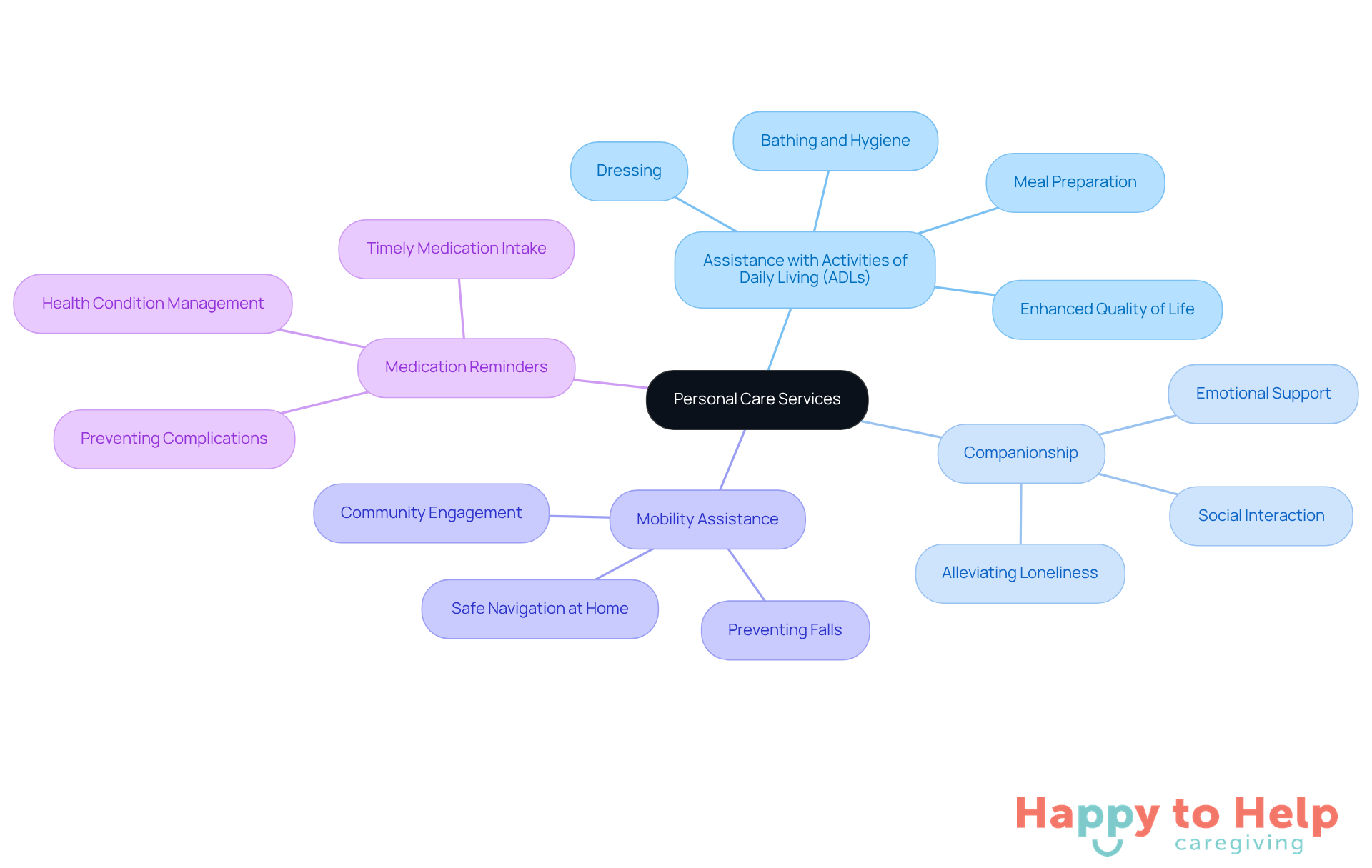
- Assistance with Activities of Daily Living (ADLs): This vital support includes help with bathing, dressing, grooming, and meal preparation. Research shows that seniors receiving assistance with ADLs report enhanced quality of life and better mental health outcomes.
- Companionship: Providing emotional support and social interaction can alleviate feelings of loneliness, leading to improved emotional stability and a sense of belonging.
- Mobility Assistance: Helping clients navigate their homes safely or during outings is critical for preventing falls and ensuring seniors remain active and engaged in their communities.
- Medication Reminders: Ensuring clients take their medications as directed helps manage health conditions effectively and prevent complications.
Families must prioritize individualized support plans to ensure their loved ones receive the tailored assistance necessary for maintaining dignity and independence, including personal care near me. With the home assistance industry projected to grow significantly, including a 22% rise in demand for home support by 2034, understanding these services is more important than ever.
Identify Local Personal Care Providers
Finding personal care providers can be a daunting task for families. With the growing demand for home assistance services - projected to reach around 71.4 million Americans aged 65 and older by 2029 - having access to reliable information is crucial for making informed choices regarding support. This challenge is largely driven by the aging baby boomer generation, highlighting the importance of preparing for future care needs.
To tackle this issue, consider the following actionable solutions:
-
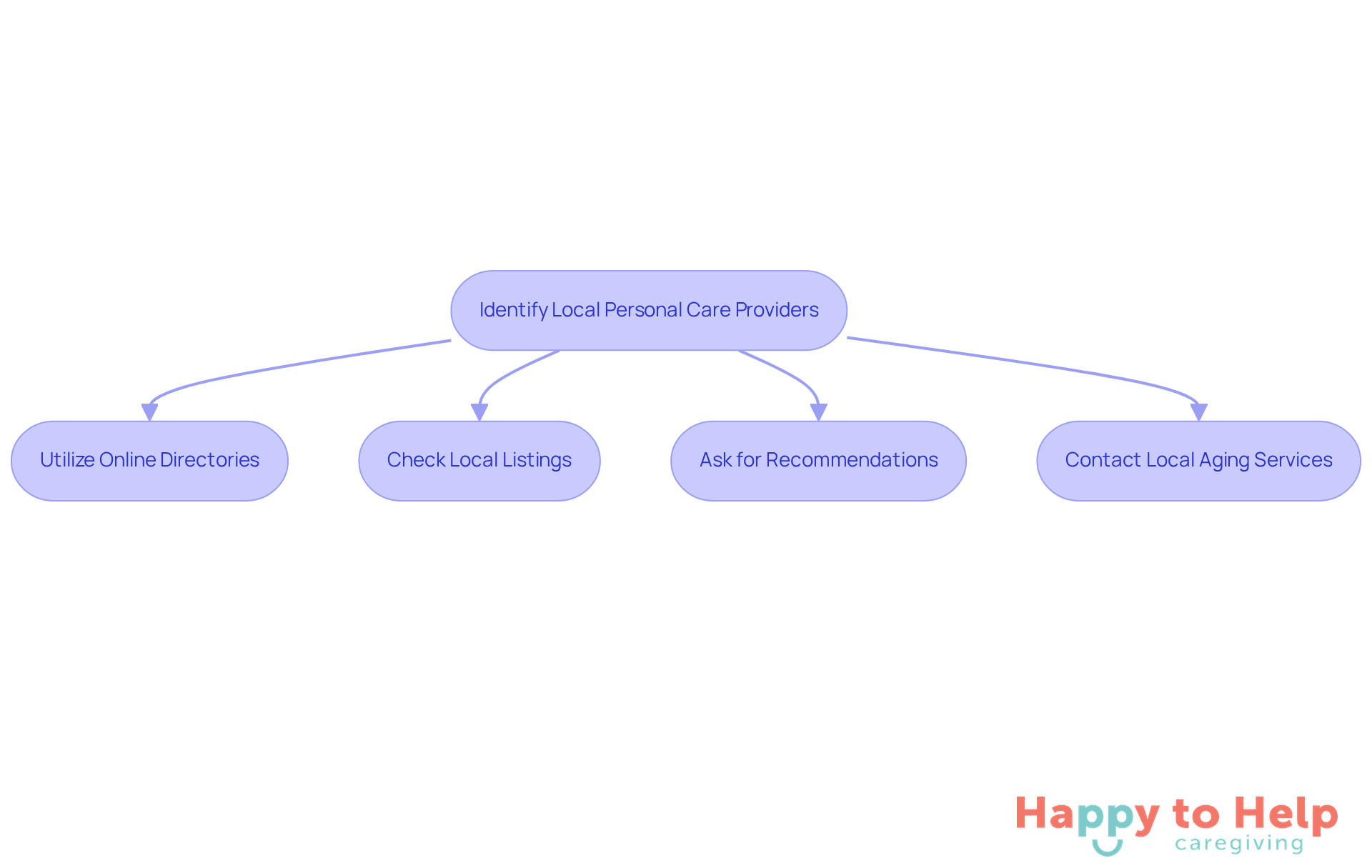
Utilize Online Directories: Platforms like Yelp, Care.com, and A Place for Mom allow you to search for personal assistance options in your area. For example, check Yelp to view top-rated offerings. The Senior Directory is also a valuable resource, providing extensive details on various senior support options throughout the United States.
-
Check local listings for personal care near me by searching for home care agencies in your city through local business directories or community boards. These listings often provide insights into the options available in your area.
-
Ask for Recommendations: Reach out to friends, family, or healthcare professionals for referrals to trusted providers. Personal experiences can guide you toward reliable options that have worked well for others.
-
Contact Local Aging Services: Organizations such as the Area Agency on Aging can offer resources and suggestions for local personal care assistance. They are equipped to connect you with resources tailored to your specific needs.
By utilizing these resources, families can compile a list of potential providers to evaluate further. This proactive approach not only eases the search process but also ensures that families are better prepared to meet their caregiving needs.
Evaluate Caregiver Qualifications and Services
When it comes to finding the right caregiver for your loved one, the stakes are high. Many families face the challenge of ensuring their loved ones receive the best possible care, which can be overwhelming. The implications of choosing the wrong caregiver can lead to inadequate support and increased stress for both the caregiver and the family.
To tackle this issue effectively, consider these essential factors:
-
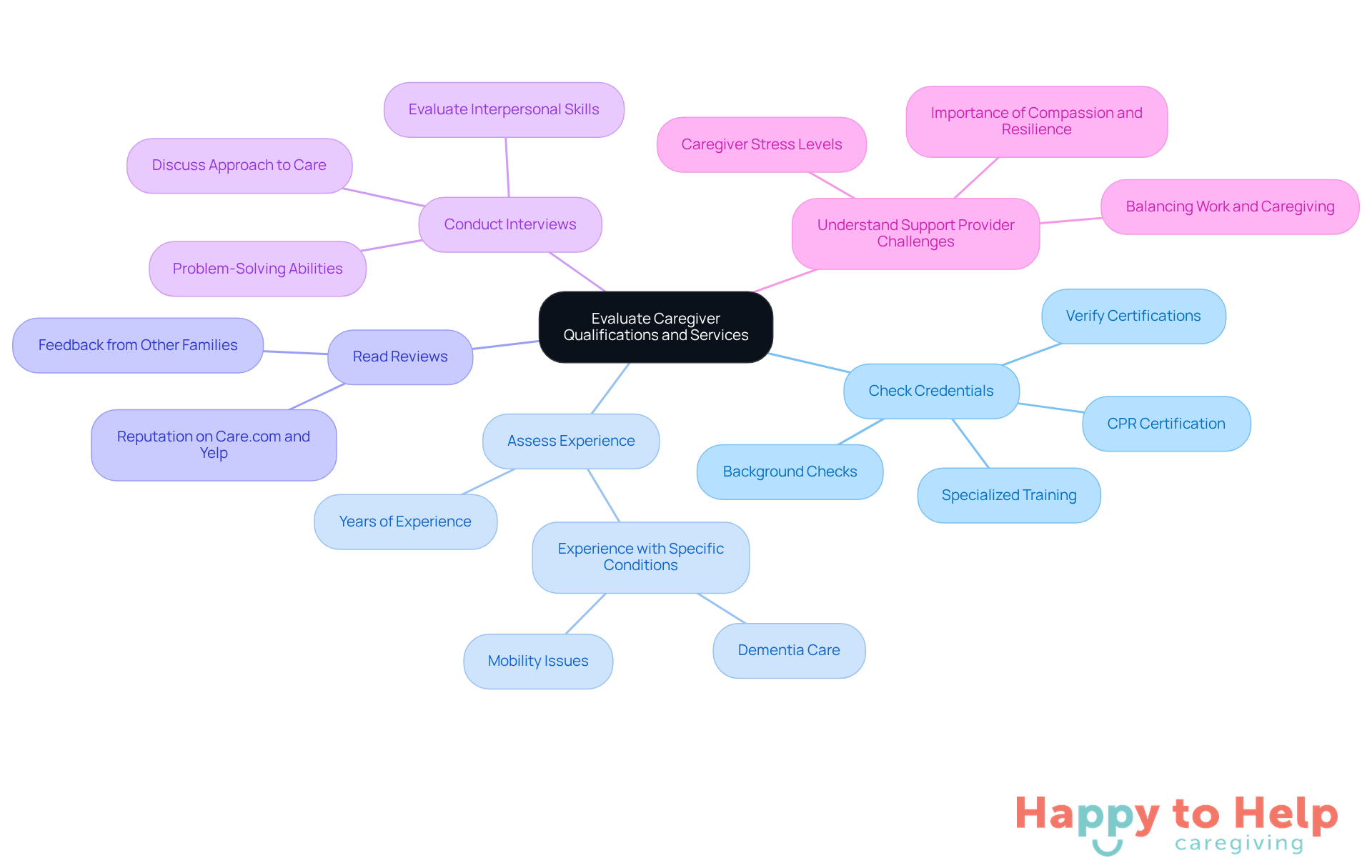
Check Credentials: Always verify that caregivers are certified and have undergone background checks. Look for qualifications such as CPR certification and specialized training in personal assistance. These credentials are crucial for ensuring safety and competence.
-
Assess Experience: Ask about the caregiver's experience with specific conditions relevant to your loved one, like dementia or mobility issues. Caregivers with specialized experience can provide more effective assistance, significantly improving the quality of care.
-
Read Reviews and Testimonials: Gather feedback from other families who have used the service. Websites like Care.com and Yelp can offer valuable insights into the quality of support provided, helping you gauge the provider's reputation.
-
Conduct Interviews: Set up meetings with potential caregivers to evaluate their interpersonal skills, empathy, and compatibility with your loved one. Discuss their approach to care and how they handle challenging situations; this can reveal their problem-solving abilities and emotional intelligence.
-
Understand Support Provider Challenges: It's important to recognize that many caregivers face significant stress. In fact, 67% of working support providers report difficulties balancing their jobs with caregiving duties. Understanding this can help families appreciate the importance of selecting caregivers who are not only qualified but also compassionate and resilient.
By thoroughly evaluating potential caregivers, families can make informed decisions that align with their loved ones' unique needs. This approach ultimately fosters a supportive and nurturing environment.
Communicate Needs and Establish Care Plans
To effectively communicate needs and establish a personalized care plan, families face significant challenges. Research shows that nearly 30% of caregivers struggle to understand healthcare professionals, which can lead to misunderstandings and inadequate care for their loved ones. This lack of clarity can hinder the quality of support seniors receive at home.
To address these issues, families can follow these essential steps:
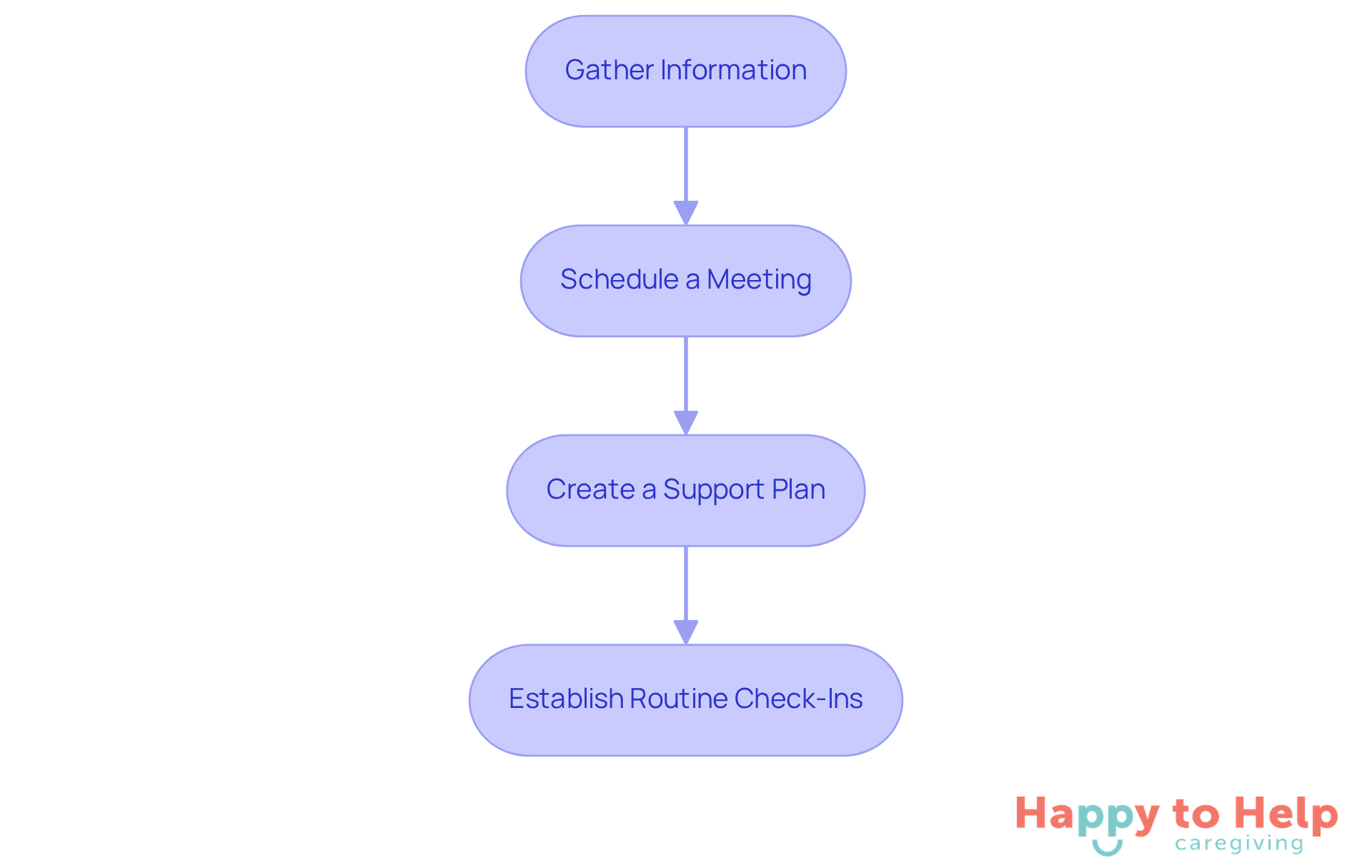
- Gather Information: Compile a comprehensive list of your loved one's medical history, daily routines, and specific support needs. Include their preferences regarding care to ensure a tailored approach.
- Schedule a Meeting: Arrange a meeting with the chosen provider or agency to discuss your loved one's needs in detail. Involve all relevant family members in this discussion to foster a collaborative environment.
- Create a Support Plan: Collaborate with the attendant to design a tailored support plan that details daily activities, timetables, and any medical necessities. This plan should be flexible, allowing for adjustments as needs change over time.
- Establish Routine Check-Ins: Create a schedule for consistent communication with the support person to discuss progress, address issues, and make required modifications to the support plan.
By following these steps, families can ensure their loved ones receive the tailored support necessary to thrive at home. Additionally, studies indicate that 34% of caregivers are making progress in effective communication, while 27% continue to struggle. Engaging in clear dialogue and involving family members in care planning significantly enhances the quality of care for seniors.
Making the Right Choice
Finding the right personal care services is crucial for families supporting their aging loved ones. As the number of seniors needing assistance grows, understanding the various personal care options becomes essential. Tailored support that addresses both physical and emotional needs is vital for ensuring seniors enjoy a better quality of life.
Families face the challenge of navigating different types of personal care services, including:
- Assistance with daily living activities
- Companionship
- Mobility support
- Medication reminders
This can be overwhelming, but there are practical steps to simplify the process. Start by:
- Identifying local providers
- Evaluating caregiver qualifications
- Establishing effective communication to create personalized care plans
By prioritizing these elements, families can make informed decisions that align with their loved ones' unique needs.
Investing time and effort into finding and evaluating personal care services can significantly enhance seniors' well-being. Families should take proactive steps in researching local options and engaging with potential caregivers. This fosters a supportive environment that promotes dignity and independence. Not only does this contribute to the physical health of their loved ones, but it also helps combat feelings of loneliness and isolation, paving the way for a more fulfilling life.
https://iframe.tely.ai/cta/eyJhcnRpY2xlX2lkIjogIjY5MjNiOWI4ZTUyZmU2NjM2Njg4Njc2YSIsICJjb21wYW55X2lkIjogIjY4ZWU1ZGNhNzMxNzYyNTU3ZjNjOTVjMSIsICJpbmRleCI6IG51bGwsICJ0eXBlIjogImFydGljbGUifQ==Frequently Asked Questions
What are personal care services and why are they important for seniors?
Personal care services address the need for assistance with daily living tasks, helping seniors maintain their independence and quality of life. Approximately 70% of Americans aged 65 and older are expected to require some form of assistance, making these services crucial for their physical and mental well-being.
What challenges do seniors face without proper support?
Without adequate assistance, seniors may experience loneliness and isolation, which can lead to deteriorating mental health. Inadequate support can affect their overall well-being, making personal care services essential.
What types of assistance are included in personal care services?
Personal care services include assistance with Activities of Daily Living (ADLs) such as bathing, dressing, grooming, meal preparation, companionship for emotional support, mobility assistance to prevent falls, and medication reminders to help manage health conditions.
How does assistance with Activities of Daily Living (ADLs) benefit seniors?
Seniors receiving help with ADLs report enhanced quality of life and better mental health outcomes, contributing to their overall well-being.
What role does companionship play in personal care services?
Companionship provides emotional support and social interaction, which can alleviate feelings of loneliness and lead to improved emotional stability and a sense of belonging for seniors.
Why is mobility assistance important for seniors?
Mobility assistance helps seniors navigate their homes safely and during outings, preventing falls and ensuring they remain active and engaged in their communities.
How do medication reminders contribute to senior care?
Medication reminders ensure that seniors take their medications as directed, which helps manage health conditions effectively and prevent complications.
Why is it important for families to prioritize individualized support plans for seniors?
Individualized support plans ensure that seniors receive the tailored assistance necessary for maintaining their dignity and independence, which is especially important given the projected growth in demand for home support services.
List of Sources
- Understand Personal Care Services
- 5 Ways Personal Care Services Provide Additional Value in Senior Living Communities | Aaniie, formerly Smartcare Software (https://aaniie.com/news/ways-personal-care-services-provide-additional-value-in-senior-living-communities)
- The Role Of Personal Care Aides (PCAs) In Supporting Independent Living At Home - New York Health Care (https://nyhc.com/the-role-of-personal-care-aides-pcas-in-supporting-independent-living-at-home)
- Home Care Industry Trends to Watch in 2025 (https://firstlighthomecare.com/blog/home-care-industry-trends)
- Trends in Senior Care: What to Expect in 2025 (https://agingconnections.org/blog/trends-in-senior-care-what-to-expect-in-2025)
- Breaking Down Barriers to Personal Care: Unlocking Vital Services for Those Who Need Them Most - Justice in Aging (https://justiceinaging.org/breaking-down-barriers-to-personal-care)
- Identify Local Personal Care Providers
- Find Senior Care Near You - Senior Directory (https://seniordirectory.com)
- FastStats (https://cdc.gov/nchs/fastats/home-health-care.htm)
- State of home care in 2025 (https://mcknightshomecare.com/state-of-home-care-in-2025)
- HOW TO FIND A Great Home Health Aide - Consumer Reports (https://consumerreports.org/health/elder-care/how-to-find-a-great-home-health-aide-a1146419247)
- 37 Home-Based Care Companies Earn A Spot On Inc. 5000 List (https://homehealthcarenews.com/2025/08/36-home-based-care-companies-earn-a-spot-on-inc-5000-list)
- Evaluate Caregiver Qualifications and Services
- Recognizing the Impact of Nurse Caregivers (https://news.humana.com/news/articles/recognizing-the-impact-of-nurse-caregivers)
- What to expect when you become a caregiver– and how to cope with the challenges (https://heart.org/en/news/2025/11/20/what-to-expect-when-you-become-a-caregiver-and-how-to-cope-with-the-challenges)
- Location, individual circumstances impact caregiver well-being, researchers find | Penn State University (https://psu.edu/news/research/story/location-individual-circumstances-impact-caregiver-well-being-researchers-find)
- Family Caregivers: One of the Most Important but Difficult Jobs (https://iredellhealth.org/news/releases/family-caregivers-one-of-the-most-important-but-difficult-jobs)
- Your Working Caregiver Experience Matters: What Every Working Caregiver Should Know (https://lifework.arizona.edu/news/2025/your-working-caregiver-experience-matters-what-every-working-caregiver-should-know)
- Communicate Needs and Establish Care Plans
- AI must optimize home care, continuity, and early detection for older adults (https://news-medical.net/news/20251007/AI-must-optimize-home-care-continuity-and-early-detection-for-older-adults.aspx)
- Communication Breakdowns Are a Major Hurdle for Caregivers (https://asha.org/news/2025/communication-breakdowns-are-a-major-hurdle-for-caregivers?srsltid=AfmBOoqH2I3NAMO7\_VNKG8uYupdwWx48AygoLOSC3iRcQtwvwxt7jSSZ)
- Communication Tips for Caregivers (https://heart.org/en/health-topics/caregiver-support/communication-tips-for-caregivers)