
What You Need to Know About Find Senior Assistance Near Me: A
Caring for elderly loved ones can be both fulfilling and overwhelming. Caregivers often find themselves grappling with the emotional weight of their responsibilities. It’s important to recognize these feelings and understand that you’re not alone in this journey.
Understanding the various types of senior assistance available is crucial for alleviating this burden. It ensures that the unique needs of each individual are met. However, with so many options and resources to navigate, how can caregivers effectively identify and select the right support services?
This guide aims to provide a comprehensive roadmap for caregivers. It empowers you to find local assistance, evaluate service providers, and initiate care that enhances the quality of life for seniors. Remember, seeking help is a sign of strength, and there are compassionate resources available to support you every step of the way.
Identify Types of Senior Assistance Available
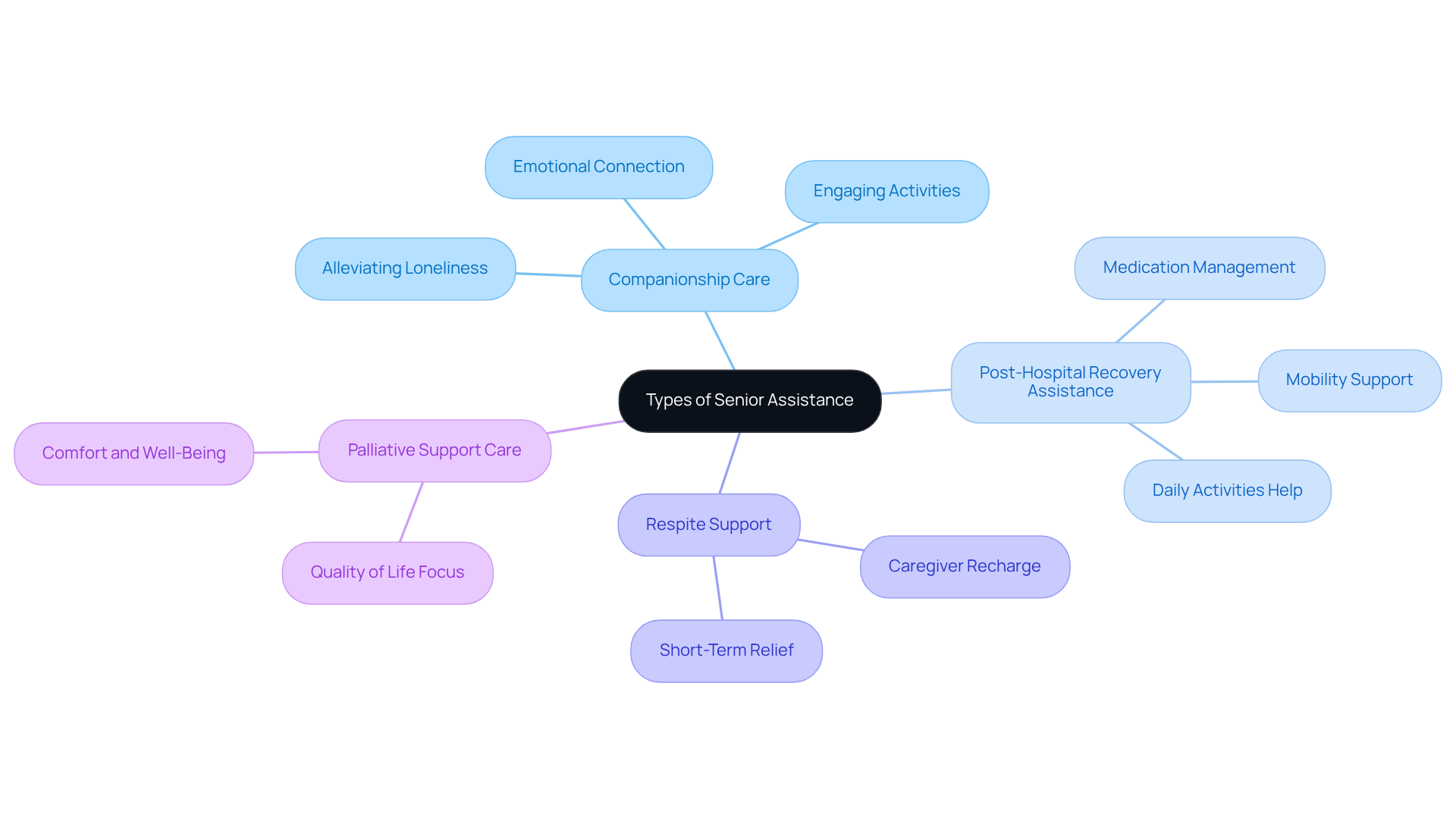
Caring for elderly individuals can be a deeply rewarding yet challenging experience. Caregivers often face emotional hurdles, feeling overwhelmed by the weight of their responsibilities. It’s essential to recognize the types of senior assistance near me that are available to help ease this burden. Here are some common categories:
-
Companionship Care: This type of support offers emotional connection, engaging older individuals in activities they love. It helps alleviate feelings of loneliness, reminding them they are not alone.
-
Post-Hospital Recovery Assistance: Tailored support for older adults recovering from surgery or illness is crucial. This includes help with mobility, medication management, and daily activities, ensuring they regain their strength and independence.
-
Respite Support: Caregivers need breaks too. Respite support provides short-term relief for primary providers, allowing them to recharge while ensuring their loved ones receive quality care.
-
Palliative Support Care: For elderly individuals facing serious illnesses, specialized care focuses on enhancing their quality of life. This type of support prioritizes comfort and emotional well-being, offering a compassionate approach during difficult times.
By understanding these categories, caregivers can better assess the needs of their loved ones and find senior assistance near me. It’s about finding the right type of assistance that resonates with their unique situation. Remember, seeking help is a sign of strength, and you’re not alone on this journey.
Locate Local Senior Assistance Resources
Caring for a loved one can be overwhelming, and finding the right resources for senior assistance near me is crucial. Here are some steps that can help caregivers navigate this journey:
-
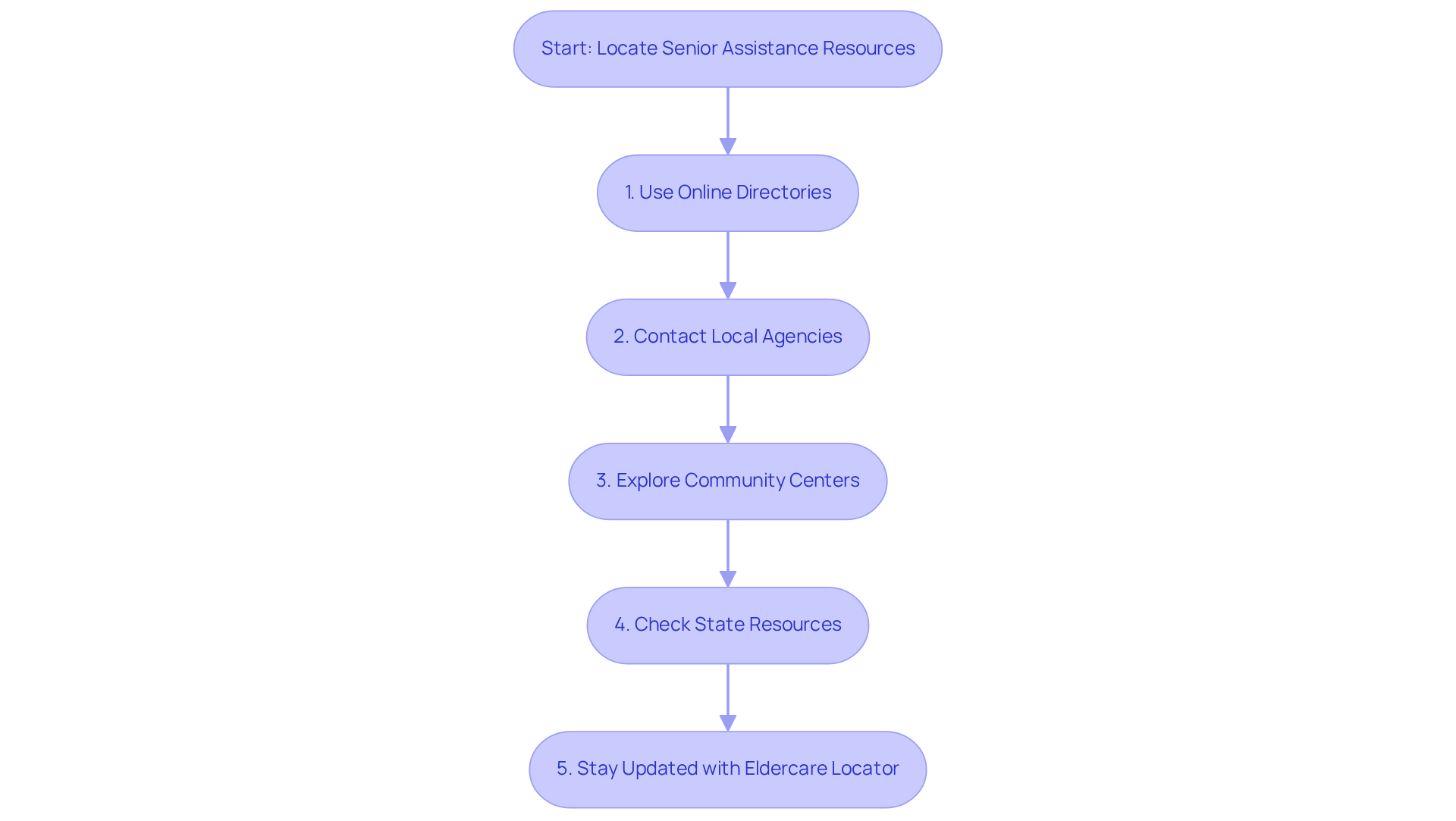
Make use of online directories like Eldercare Locator to find senior assistance near me, as they are invaluable for discovering local resources tailored for older adults. By simply entering a zip code, caregivers can discover a wealth of information about senior assistance near me in their area.
-
Contact Local Agencies: Organizations such as the Greater Nashville Regional Council and AgeWell Middle Tennessee provide comprehensive insights into resources for older adults. Reaching out to these agencies can reveal specific programs and support options that may be beneficial.
-
Explore Community Centers: Local community centers often host programs designed for older adults, including transportation services and meal delivery. For instance, the communal dining program at the Bay Terraces Center not only boosts social interaction among older adults but also offers essential support.
-
Check State Resources: State government websites usually feature extensive lists of aging and disability services. These resources can guide caregivers to various local programs for senior assistance near me that cater to seniors' needs.
By embracing these strategies, caregivers can ensure they have the support and resources necessary to assist their loved ones effectively. Plus, with updates from the Eldercare Locator for 2025, caregivers can stay informed about the latest resources available, helping them feel more empowered and connected.
Evaluate and Select Appropriate Service Providers
Finding the right service provider for your loved one can be a daunting task, filled with emotional challenges. It’s essential to ensure that the caregiver you choose is not only qualified but also a good fit for your family’s unique needs. Here are some caring steps to guide you through this important process:
-
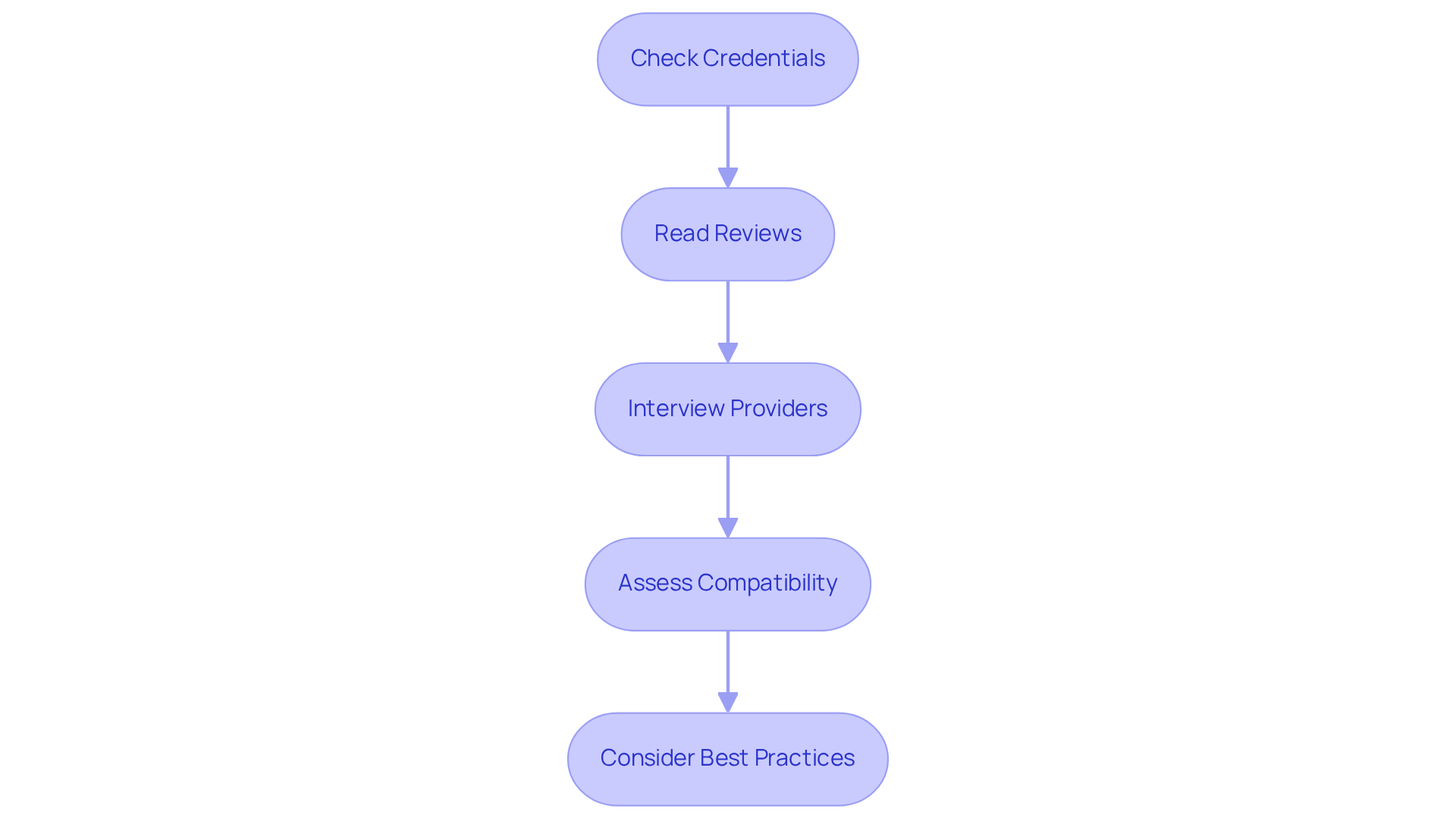
Check Credentials: Start by confirming that the provider is licensed and insured, following state regulations. This step is crucial; improper credentialing can lead to serious issues, including financial exploitation and inadequate support. For instance, a $6 million lawsuit payout was tied to improper criminal background checks, underscoring the risks of insufficient vetting.
-
Read Reviews: Look for testimonials from other families. Positive feedback can indicate a reliable service, while negative reviews may highlight potential concerns. Hearing from others can provide comfort and insight.
-
Interview Providers: Set up meetings with potential caregivers or agencies. Discuss their services, experience, and philosophy of care. This interaction allows you to gauge their approach and commitment to providing quality support.
-
Assess Compatibility: Consider whether the provider’s personality and methods resonate with your loved one’s preferences. A good match can greatly enhance the caregiving experience, fostering a sense of comfort and security.
-
Consider Best Practices: Make it a habit to monitor and regularly re-verify provider credentials. This ongoing diligence ensures compliance and safety. The Accreditation Commission for Health Care (ACHC) emphasizes that credential verification is vital for maintaining quality and safety in patient care.
By thoughtfully following these steps, you can select a provider who not only meets regulatory standards but also aligns with the specific needs of your loved one. This choice fosters a nurturing and safe environment. Remember, the Care.com Background Check Controversy serves as a poignant reminder of the importance of thorough evaluations; inadequate vetting can lead to serious consequences. You’re not alone in this journey, and taking these steps can help ensure peace of mind for you and your family.
Initiate Care and Support Services
To effectively initiate care services, caregivers should follow these essential steps:
-
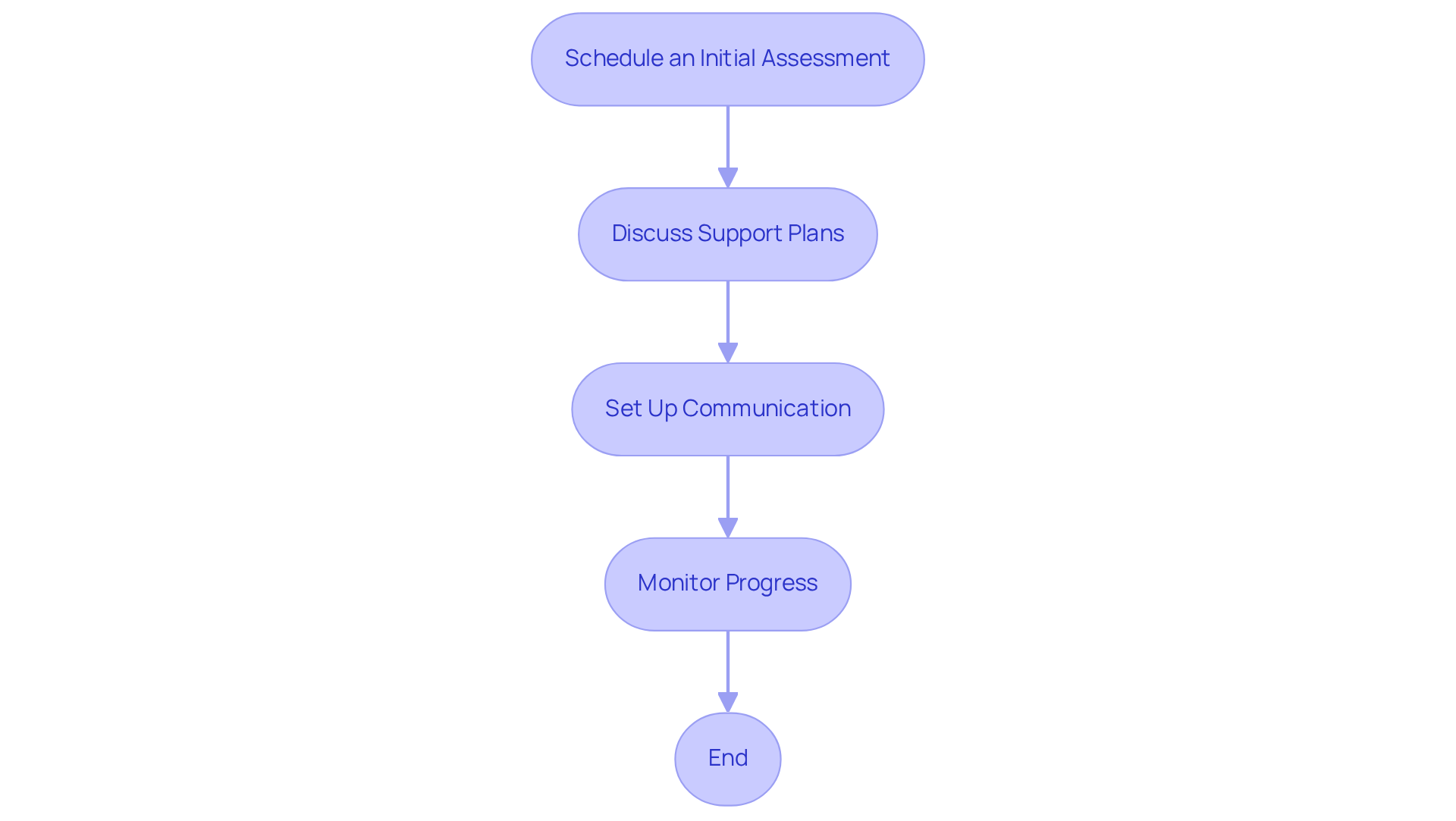
Schedule an Initial Assessment: It’s important to arrange for a caregiver to meet with the senior to evaluate their specific needs and preferences regarding senior assistance near me. This evaluation is crucial as it lays the groundwork for personalized support, ensuring that the services align with the individual’s lifestyle and requirements.
-
Discuss Support Plans: Collaborate with the service provider to create a tailored support plan that clearly outlines the specific services to be provided and the goals to be achieved. Many caregivers have found that customized treatment plans significantly enhance the quality of life for elderly individuals, addressing their unique challenges and preferences.
-
Set Up Communication: Establish a strong communication plan with the support person to facilitate regular updates and feedback. Open communication is vital for adjusting support strategies as needs evolve, nurturing a supportive environment for both the caregiver and the elderly individual.
-
Monitor Progress: Regularly check in on the support being offered to ensure it meets the senior's needs. Ongoing observation allows for timely adjustments to the treatment strategy, enhancing the overall effectiveness of the support.
By diligently following these steps, caregivers can ensure a successful start to the support services, ultimately promoting the well-being and independence of their loved ones. With nearly 75% of seniors expressing a desire to age in place, senior assistance near me through personalized care plans is increasingly recognized as essential for maintaining their quality of life at home.
Taking the Next Steps
Finding the right senior assistance is essential for the well-being and comfort of our elderly loved ones. This guide has provided a thoughtful approach for caregivers to identify, locate, and evaluate the various types of support available. By understanding the range of senior assistance options - from companionship care to palliative support - caregivers can make informed decisions that truly cater to the unique needs of their family members.
Key steps have been highlighted throughout this guide, such as:
- Utilizing online directories
- Reaching out to local agencies
- Assessing the credentials of potential service providers
These strategies empower caregivers to navigate the often overwhelming landscape of senior care with confidence. Moreover, initiating care services through tailored support plans and ongoing communication ensures that the evolving needs of seniors are consistently met.
Ultimately, the journey of caregiving can be challenging, yet it is also filled with opportunities for connection and growth. By actively seeking out resources and support, caregivers not only enhance the quality of life for their loved ones but also nurture their own resilience. Embracing this process reflects the strength and dedication that caregivers bring to their roles, highlighting the importance of community and shared resources in the journey of caring for seniors.
https://iframe.tely.ai/cta/eyJhcnRpY2xlX2lkIjogIjY5MWE3Zjc2ZDE4ZjYzYWFiYjNkNTMzOSIsICJjb21wYW55X2lkIjogIjY4ZWU1ZGNhNzMxNzYyNTU3ZjNjOTVjMSIsICJpbmRleCI6IG51bGwsICJ0eXBlIjogImFydGljbGUifQ==Frequently Asked Questions
What are the main types of senior assistance available?
The main types of senior assistance include companionship care, post-hospital recovery assistance, respite support, and palliative support care.
What is companionship care?
Companionship care offers emotional connection and engages older individuals in activities they enjoy, helping to alleviate feelings of loneliness.
How does post-hospital recovery assistance help elderly individuals?
Post-hospital recovery assistance provides tailored support for older adults recovering from surgery or illness, including help with mobility, medication management, and daily activities to help them regain strength and independence.
What is respite support and why is it important?
Respite support provides short-term relief for primary caregivers, allowing them to take breaks while ensuring their loved ones receive quality care.
What does palliative support care focus on?
Palliative support care focuses on enhancing the quality of life for elderly individuals facing serious illnesses, prioritizing comfort and emotional well-being during difficult times.
How can caregivers assess the needs of their loved ones?
By understanding the different categories of senior assistance, caregivers can better assess the unique needs of their loved ones and find suitable support options.