
The Importance of Find Senior Healthcare Near Me: A
Navigating senior healthcare can feel overwhelming, especially for caregivers who want the best for their loved ones. It’s a journey filled with choices-from in-home care to specialized facilities-and understanding these options is vital for making informed decisions. When the pressure builds and the stakes are high, it’s easy to feel stressed and uncertain.
This guide is here to support you. We aim to empower caregivers with the knowledge and tools needed to find the right senior healthcare services nearby. Our goal is to transform this complex journey into a more manageable and compassionate experience. Remember, you’re not alone in this; there’s help available, and together we can navigate these challenges.
Identify Types of Senior Healthcare Services
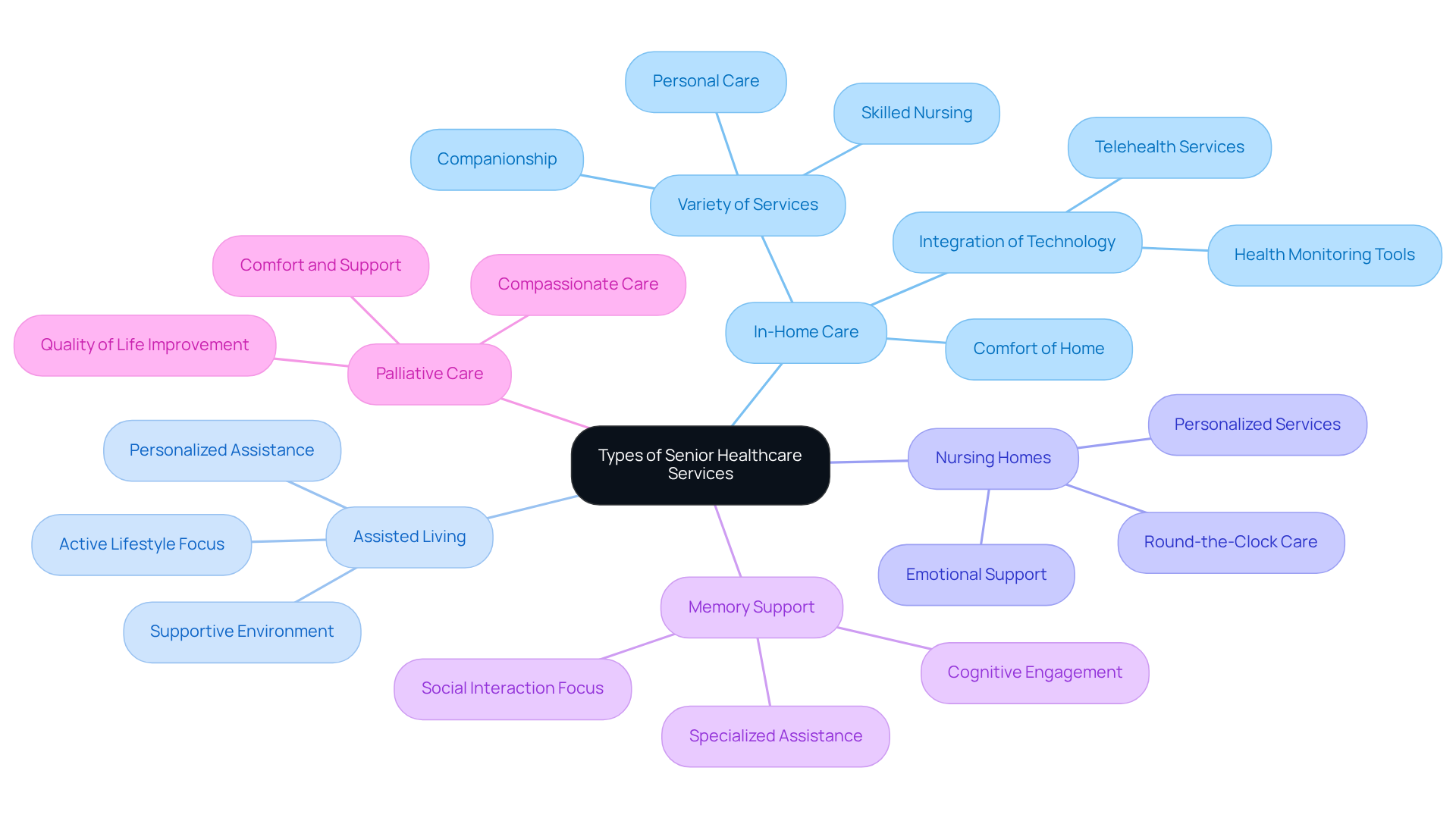
Navigating the landscape of senior healthcare near me can feel overwhelming, especially when you’re trying to find the best support for your loved ones. It’s important to understand the various choices available, as each option offers unique benefits that can truly make a difference in their lives. Here are some key categories to consider:
-
In-Home Care: Imagine the comfort of receiving care right in the familiar surroundings of home. In-home care includes a variety of services, from personal care and companionship to skilled nursing. This approach not only promotes independence but also allows elderly individuals to feel secure and at ease. With about 53% of U.S. individuals aged 55 and older embracing health-related technology, in-home care is increasingly integrating these tools to enhance care and monitor health effectively.
-
Assisted Living: These facilities are designed to provide a supportive environment for seniors who need help with daily activities. They focus on creating vibrant communities that prioritize quality experiences and active lifestyles. The emphasis on personalized assistance is crucial, as it allows residents to maintain their independence while receiving the support they need.
-
Nursing Homes: For elderly individuals facing significant health challenges, nursing homes offer round-the-clock medical care. These facilities are evolving to provide more personalized and hospitality-focused services, reflecting the changing needs of seniors. Emotional support services are becoming increasingly vital, enhancing the overall well-being of residents and ensuring they feel cared for.
-
Memory Support: Specialized assistance for those with Alzheimer’s or other forms of dementia is essential. Memory support units are designed to foster social interaction and engagement, addressing both the emotional and cognitive needs of residents. The growing demand for these units highlights the importance of facilities that cater to the unique challenges faced by older adults with cognitive impairments.
-
Palliative Care: This type of care focuses on providing comfort from the symptoms and stress associated with serious illnesses, ultimately improving the quality of life for seniors. It emphasizes compassionate support, ensuring that individuals receive the care they need during difficult times.
Understanding these options is crucial for finding the right senior healthcare near me that is tailored to your loved one’s specific situation. As the elder support sector continues to evolve, staying informed about contemporary trends and effective facility models will empower you to make the best decisions for your family. Remember, you’re not alone in this journey; there are compassionate resources available to help you every step of the way.
Assess Personal Care Needs and Preferences
To effectively assess personal care needs for seniors, it’s important to consider options for senior healthcare near me with empathy and understanding. Here are some essential steps to guide you:
-
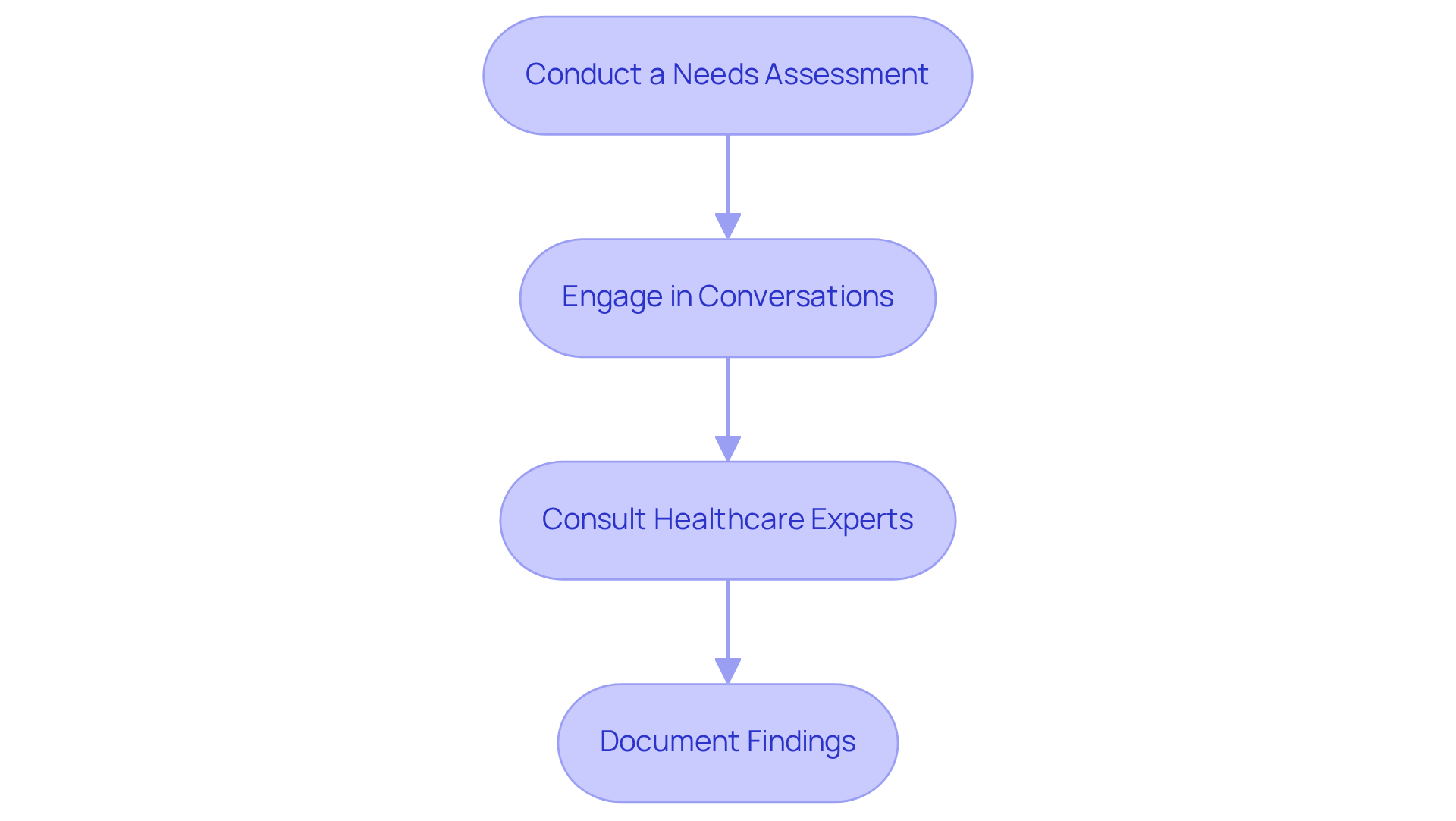
Conduct a Needs Assessment: Start by evaluating your loved one's physical, emotional, and social needs. Notice any changes in mobility, hygiene, or daily activities; these can be signs of shifts in their overall well-being. It’s crucial to recognize these changes early on.
-
Engage in Conversations: Have open discussions about their preferences for support. Understanding their wishes regarding senior healthcare near me not only fosters comfort but also enhances their satisfaction with the services they receive. This conversation is vital, as caregivers often express that emotional support is a key component of effective assistance. As Chandra Matthews points out, caregivers can feel isolated, making it essential to address these emotional needs.
-
Consult Healthcare Experts: Involve doctors or geriatric service managers in your discussions. Their expertise can provide valuable insights into medical requirements and suggest suitable treatment options, ensuring that every aspect of your loved one's health is considered. Geriatric managers in senior healthcare near me can also help navigate the complexities of the healthcare system, which can be overwhelming for many older adults.
-
Document Findings: Keep a detailed record of all assessments and preferences. This documentation will serve as a crucial reference when seeking appropriate services, helping to ensure that the chosen support aligns with your loved one's unique needs and lifestyle. Honoring individual preferences is key to delivering effective healthcare.
By prioritizing personal care preferences and maintaining open lines of communication, caregivers can significantly enhance the quality of life for elderly individuals receiving senior healthcare near me. This approach not only makes the transition to in-home care smoother but also more effective, allowing for a nurturing environment where seniors can thrive.
Search for Local Senior Healthcare Providers
Searching for senior healthcare near me can feel overwhelming, especially when you’re trying to ensure your loved ones receive the best care possible. Here are some steps to help you navigate this journey with compassion and confidence:
-
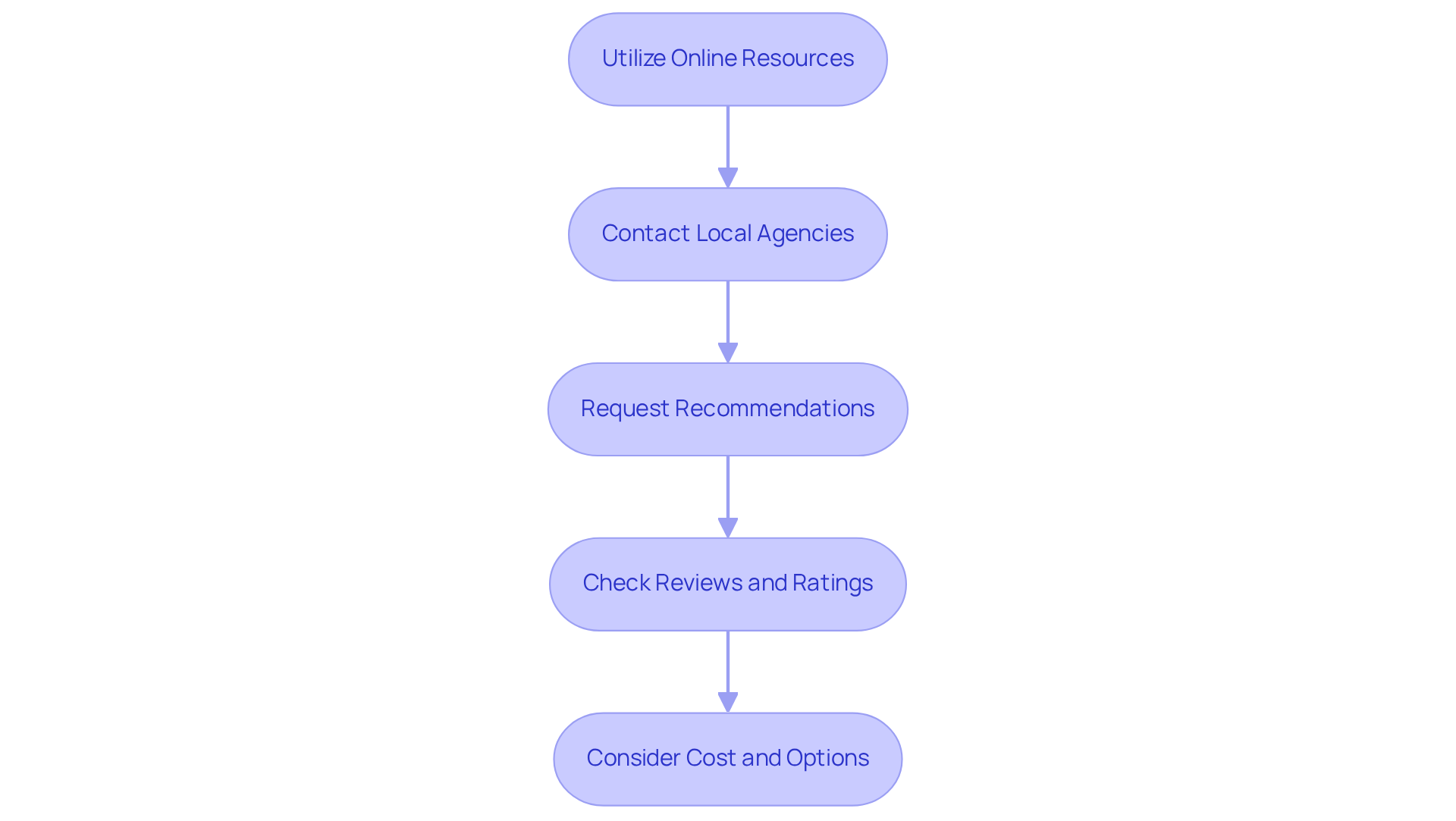
Utilize Online Resources: Take advantage of platforms like Yelp, Care.com, and the Eldercare Locator. These websites allow you to search specifically for senior healthcare near me, making it easier to find options that truly fit your needs.
-
Contact Local Agencies: Don’t hesitate to reach out to Area Agencies on Aging or local health departments. These organizations can provide valuable suggestions for trustworthy providers, ensuring you have access to quality assistance options that can ease your worries.
-
Request Recommendations: Connect with friends, family, or healthcare professionals who may have insights or experiences with local options. Personal referrals can lead you to reliable providers who have a proven track record of compassionate care.
-
Check Reviews and Ratings: Investigate feedback from other families to evaluate the quality of service offered by different agencies. Online reviews can give you a clearer picture of what to expect, helping you make informed decisions that align with your loved one’s needs.
As the senior population continues to grow, projected to rise by 17.3% in Orange County by 2045, the demand for services related to senior healthcare near me is becoming increasingly vital. The typical cost of a private room in a nursing facility in Orange County can exceed $12,000 monthly, making in-home support a more budget-friendly choice for many families. It’s essential for caregivers to utilize all available resources to ensure their loved ones receive the highest quality support. As Tanner Gish wisely noted, "This increase is raising the demand for home care options as more elderly individuals prefer to age in their own homes."
Remember, you’re not alone in this journey. There are compassionate resources available to help you every step of the way.
Evaluate and Compare Healthcare Options
Evaluating and comparing senior healthcare near me options can feel overwhelming, but taking it step by step can ease the burden. Here are some thoughtful approaches to help you navigate this important decision:
-
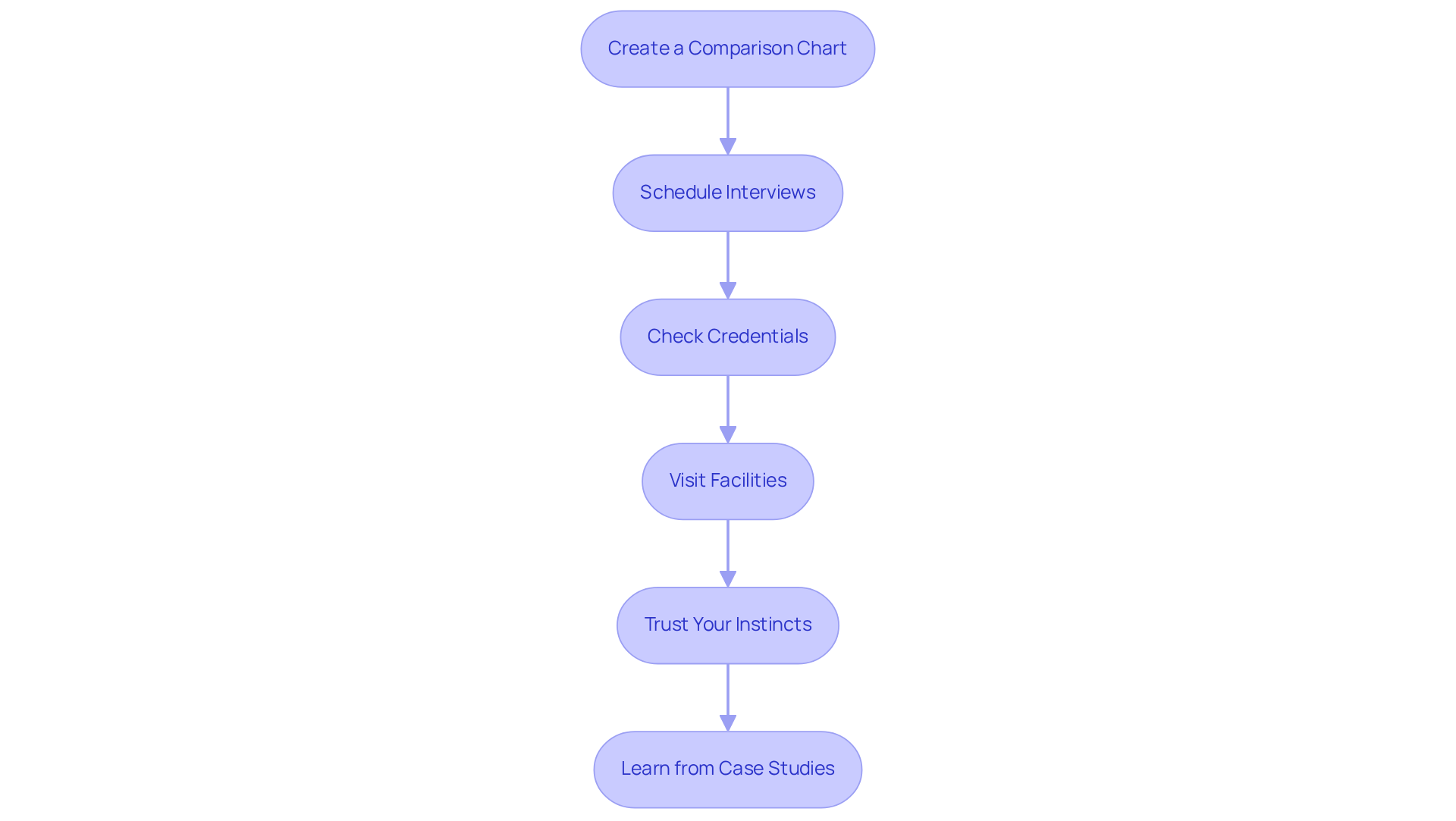
Create a Comparison Chart: Start by compiling a list of potential providers. Outline their offerings, costs, and availability. This visual tool can simplify your decision-making process, making it easier to see your options for senior healthcare near me clearly. For instance, the average score for assisted living is 867, which can serve as a helpful benchmark when evaluating providers.
-
Schedule Interviews: Arrange meetings with prospective providers to discuss their services and support philosophies. Engaging in these conversations can reveal a lot about how they approach senior healthcare near me, especially for clients with similar needs.
-
Check Credentials: It’s essential to ensure that each provider has the necessary licenses, certifications, and insurance. This verification is crucial for confirming that the senior healthcare near me meets industry standards and regulations, giving you peace of mind.
-
If you’re considering assisted living or nursing homes, take the time to visit facilities that provide senior healthcare near me. Observe the surroundings and interact with both staff and residents. This firsthand experience can help you gauge the quality of support and the community atmosphere.
-
Trust Your Instincts: Ultimately, choose a provider that resonates with you and your loved one. While professional qualifications are important, the personal rapport you establish during your interactions is equally vital. As one caregiver wisely noted, "The emotional connection with a provider can significantly impact the quality of care."
-
Learn from Case Studies: Reviewing case studies can provide valuable insights. For example, a study showed that families who utilized comparison charts reported higher satisfaction with their chosen providers. This highlights the effectiveness of this approach and can reassure you as you make your decision.
Moving Forward with Find Senior Healthcare Near Me: A
Navigating the realm of senior healthcare can feel overwhelming for caregivers. It’s essential to understand the diverse options available to make informed decisions that truly prioritize the well-being of your loved ones. This guide has shed light on various types of senior healthcare services, such as:
- In-home care
- Assisted living
- Nursing homes
- Memory support
- Palliative care
Each of these caters to unique needs and preferences, empowering caregivers to choose the most suitable support systems for their family members.
Key insights throughout this article highlight the importance of assessing personal care needs and preferences. Engaging in open conversations, consulting healthcare experts, and documenting your findings are vital steps that foster a supportive environment for seniors. Additionally, utilizing online resources, reaching out to local agencies, and seeking recommendations can simplify the process of finding local senior healthcare providers. This ensures that caregivers can access the best possible care for their loved ones.
Ultimately, finding appropriate senior healthcare isn’t just about meeting immediate needs; it’s about enriching the quality of life for elderly individuals. Caregivers are encouraged to take a proactive approach, using the strategies outlined to thoughtfully evaluate and compare options. By doing so, you can ensure that your loved ones receive compassionate, personalized care that respects their dignity and enhances their overall well-being. Embracing this journey with empathy and diligence can lead to a more fulfilling experience for both caregivers and those they care for.
https://iframe.tely.ai/cta/eyJhcnRpY2xlX2lkIjogIjY5MWU1YWI1MDAzNjA5ODRkZWZlZjk5MiIsICJjb21wYW55X2lkIjogIjY4ZWU1ZGNhNzMxNzYyNTU3ZjNjOTVjMSIsICJpbmRleCI6IG51bGwsICJ0eXBlIjogImFydGljbGUifQ==Frequently Asked Questions
What are the main types of senior healthcare services available?
The main types of senior healthcare services include in-home care, assisted living, nursing homes, memory support, and palliative care.
What is in-home care and what services does it provide?
In-home care allows seniors to receive care in the comfort of their own home. It includes services such as personal care, companionship, and skilled nursing, promoting independence and security.
How does assisted living support seniors?
Assisted living facilities provide a supportive environment for seniors who need help with daily activities. They focus on creating vibrant communities that prioritize quality experiences and active lifestyles while offering personalized assistance.
What types of care do nursing homes offer?
Nursing homes offer round-the-clock medical care for elderly individuals facing significant health challenges. They are evolving to provide more personalized and hospitality-focused services, including emotional support to enhance residents' well-being.
What is memory support and who is it for?
Memory support is specialized assistance for individuals with Alzheimer’s or other forms of dementia. Memory support units foster social interaction and engagement, addressing both the emotional and cognitive needs of residents.
What does palliative care focus on?
Palliative care focuses on providing comfort from symptoms and stress associated with serious illnesses, aiming to improve the quality of life for seniors through compassionate support.
Why is it important to understand the different senior healthcare options?
Understanding the various senior healthcare options is crucial for finding the right support tailored to a loved one’s specific situation, ensuring that they receive the best care possible.