How to Choose Senior Care Companies Near You: A Step-by-Step

For families in our service areas
For families in our service areas, this guide explains caregiving and how non-medical in-home caregiving can support care planning in East Idaho, Treasure Valley & Magic Valley, Northern Wasatch, North Central West Virginia & Southwestern Pennsylvania, and Northeast Ohio.
The Importance of Choose Senior Care Companies Near Me: A
Navigating the landscape of senior care services can be overwhelming for families seeking the best support for their loved ones. With an increasing number of options available, understanding the distinct types of care - from in-home assistance to specialized memory care - becomes crucial.
This situation poses a significant problem: families often feel lost amidst endless choices, and the stakes are high when it comes to the well-being of seniors. The implications of this uncertainty can lead to stress and indecision, making it even harder to find the right care.
So, how can families transform this uncertainty into confidence? By exploring how to assess individual needs and evaluate local providers, families can make informed decisions. This guide offers a step-by-step approach to empower caregivers, ensuring that seniors receive the personalized care they deserve.
Identify Types of Senior Care Services
When considering senior care companies near me, families often face the challenge of understanding the various types of support available. This lack of clarity can lead to confusion and inadequate care for loved ones.
Here’s a breakdown of the most common categories:
-
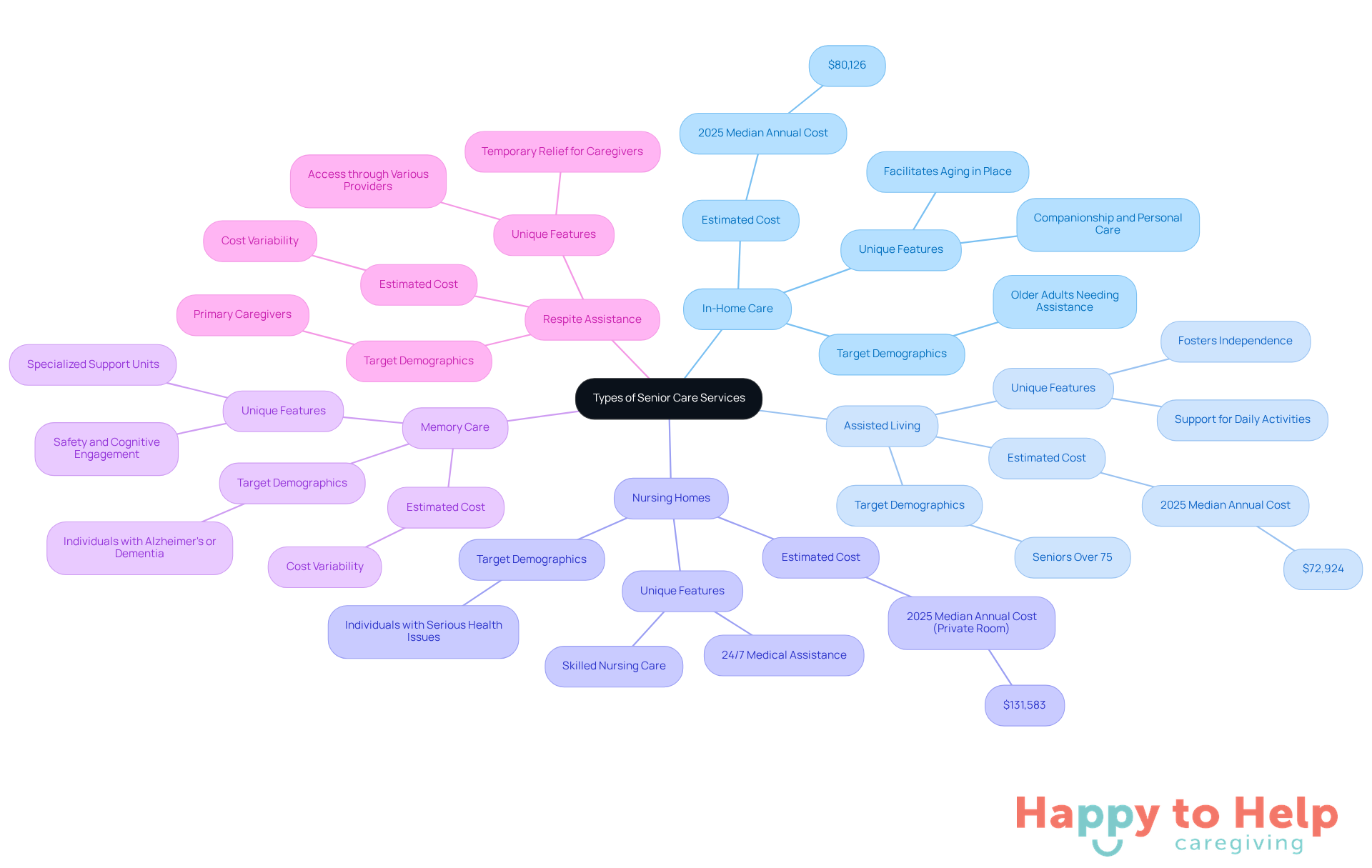
In-Home Care: This service allows seniors to receive care in the comfort of their own homes, encompassing companionship, personal care, and medical assistance. In 2025, around 65% of older adults will need some type of home health assistance, emphasizing its essential role in facilitating aging in place. As Lynne Katzmann, Founder and CEO, states, "There’s no such thing as one-size-fits-all senior assistance anymore. Every person deserves a space that supports their habits, hobbies, and health goals."
-
Assisted Living: These facilities provide accommodation and support for seniors who need help with daily activities but do not require constant medical attention. Particularly popular among seniors over 75, many facilities are designed to foster independence while offering necessary support. The estimated median annual cost for assisted living facilities in 2025 is $72,924.
-
Nursing Homes: Facilities that provide 24/7 medical assistance for individuals with serious health issues or disabilities. With more than 15,300 nursing homes in the U.S., these facilities are essential for seniors requiring skilled nursing assistance. The estimated median annual cost for nursing homes (private room) in 2025 is $131,583.
-
Memory Care: Specialized support for individuals with Alzheimer’s or other types of dementia, emphasizing safety and cognitive engagement. The demand for memory support units is rapidly increasing, driven by the growing number of seniors living with cognitive impairments.
-
Respite Assistance: This support offers temporary relief for primary caregivers, enabling them to take a break while ensuring their loved ones receive quality attention. Respite services can be accessed through various providers, including adult day programs and home health agencies.
By understanding these categories, families can better evaluate which type of assistance from senior care companies near me aligns with their loved one's unique needs and preferences. Moreover, it's crucial to recognize that 70% of older adults will require some type of long-term assistance during retirement, further highlighting the significance of in-home support.
Assess Individual Needs and Preferences
Identifying the right senior support options can be challenging for caregivers. Without a clear understanding of your loved one's specific needs, it’s easy to overlook critical aspects of their care.
-
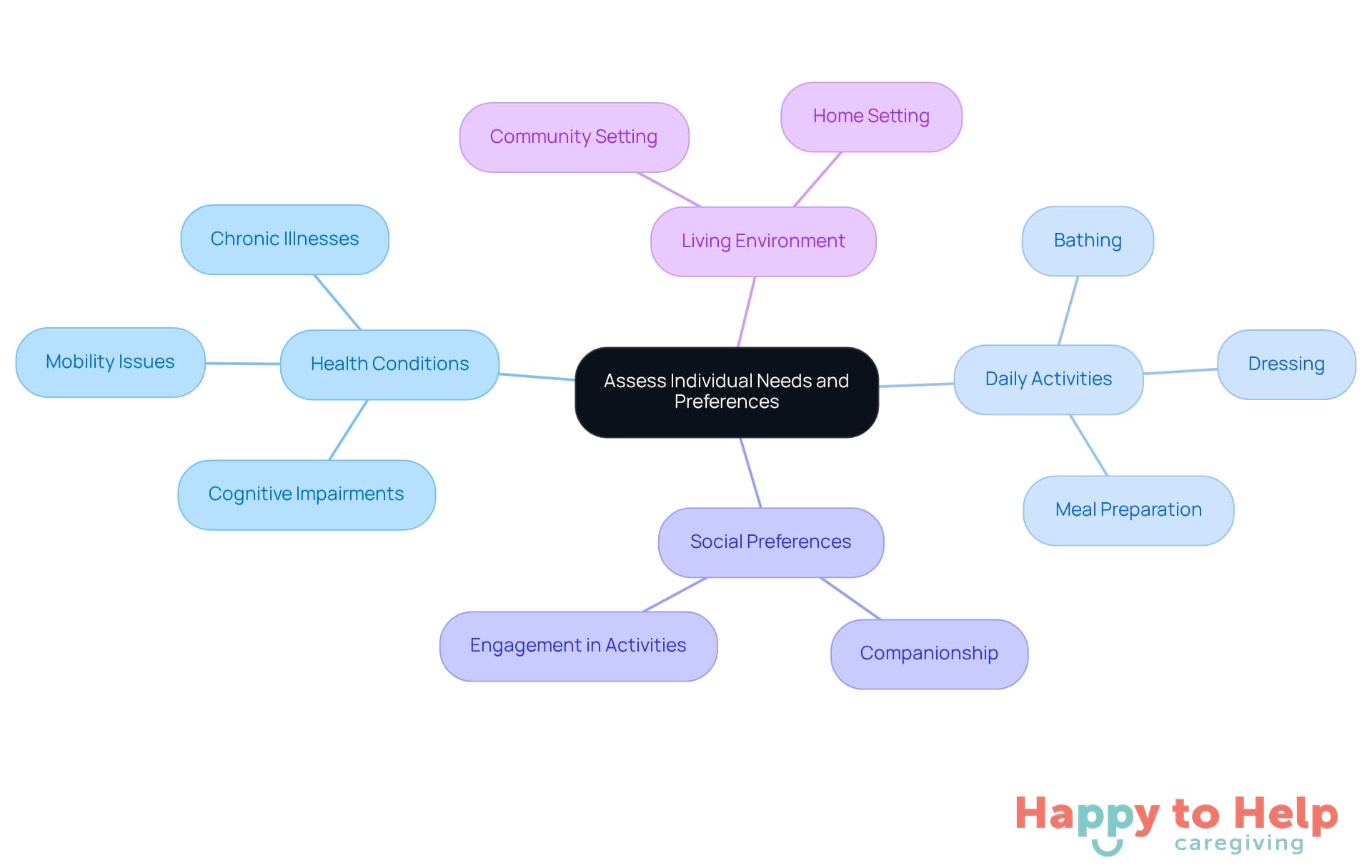
Health Conditions: Start by evaluating any medical conditions that require attention. This includes mobility issues, chronic illnesses, or cognitive impairments that may affect their daily life.
-
Daily Activities: Next, determine which daily activities your loved one struggles with. This could be anything from bathing and dressing to meal preparation.
-
Social Preferences: Don’t forget to consider their social needs. Companionship and engagement in enjoyable activities are vital for their emotional well-being.
-
Living Environment: Finally, think about their living environment. Do they prefer to stay at home, or would they benefit from a community setting?
By gathering this information, you can effectively align your loved one's needs with the most suitable form of support.
Research and Compare Local Care Providers
Finding the right support for your loved one can be a daunting task. Caregivers often face the challenge of identifying suitable assistance services that meet specific needs. This can lead to stress and uncertainty, especially when considering the health conditions many seniors face, such as high blood pressure and Alzheimer's disease.
To tackle this issue effectively, follow these actionable steps:
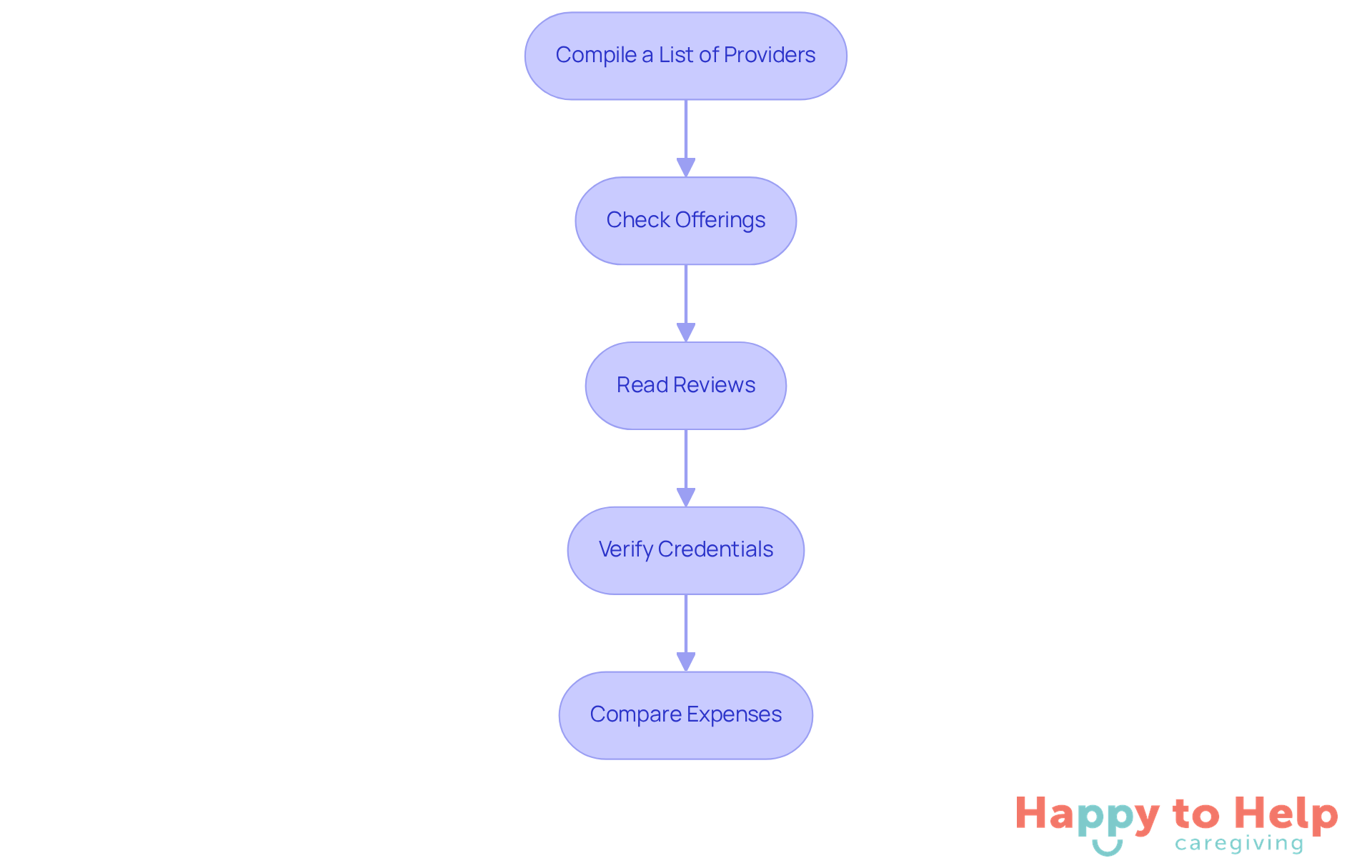
- Start by compiling a list of senior care companies near me that offer possible assistance services in your area. Utilize online resources, local directories, and recommendations from friends or family.
- Check Offerings: Review the options each provider presents to ensure they align with your loved one's needs. Many assisted living facilities offer essential services like 24-hour monitoring, medication management, and personal support, which are crucial for seniors needing help with daily tasks.
- Read Reviews: Look for online reviews and testimonials from other families to gauge the quality of care provided. Positive feedback can indicate a service's reliability and commitment to client satisfaction.
- Verify Credentials: Ensure that the suppliers are licensed and accredited by relevant authorities. This step is vital to ensure compliance with state regulations and standards of practice.
- Compare Expenses: Assess the pricing frameworks of various suppliers to find one that suits your budget while still delivering quality support. The national median expense for assisted living services is roughly $5,350 per month, while in-home support costs can vary significantly. Understanding these costs will help you find a supplier that fits your budget without compromising on quality.
By conducting thorough research and comparing senior care companies near me, you can confidently narrow down your choices to the most suitable providers for your loved one. Remember, nearly half of all assisted living residents have high blood pressure, and 40% are living with Alzheimer's disease or other dementias. This highlights the importance of personalized support. As Jodi Eyigor from LeadingAge emphasizes, timely updates and precise information are essential for making informed decisions regarding support.
Evaluate Quality and Reputation of Care Companies
Selecting the right assistance professionals for senior care can be a daunting task. With so many options available, how do you ensure that you’re making the best choice? It’s crucial to assess the quality and reputation of potential providers to avoid the pitfalls of inadequate care.
-
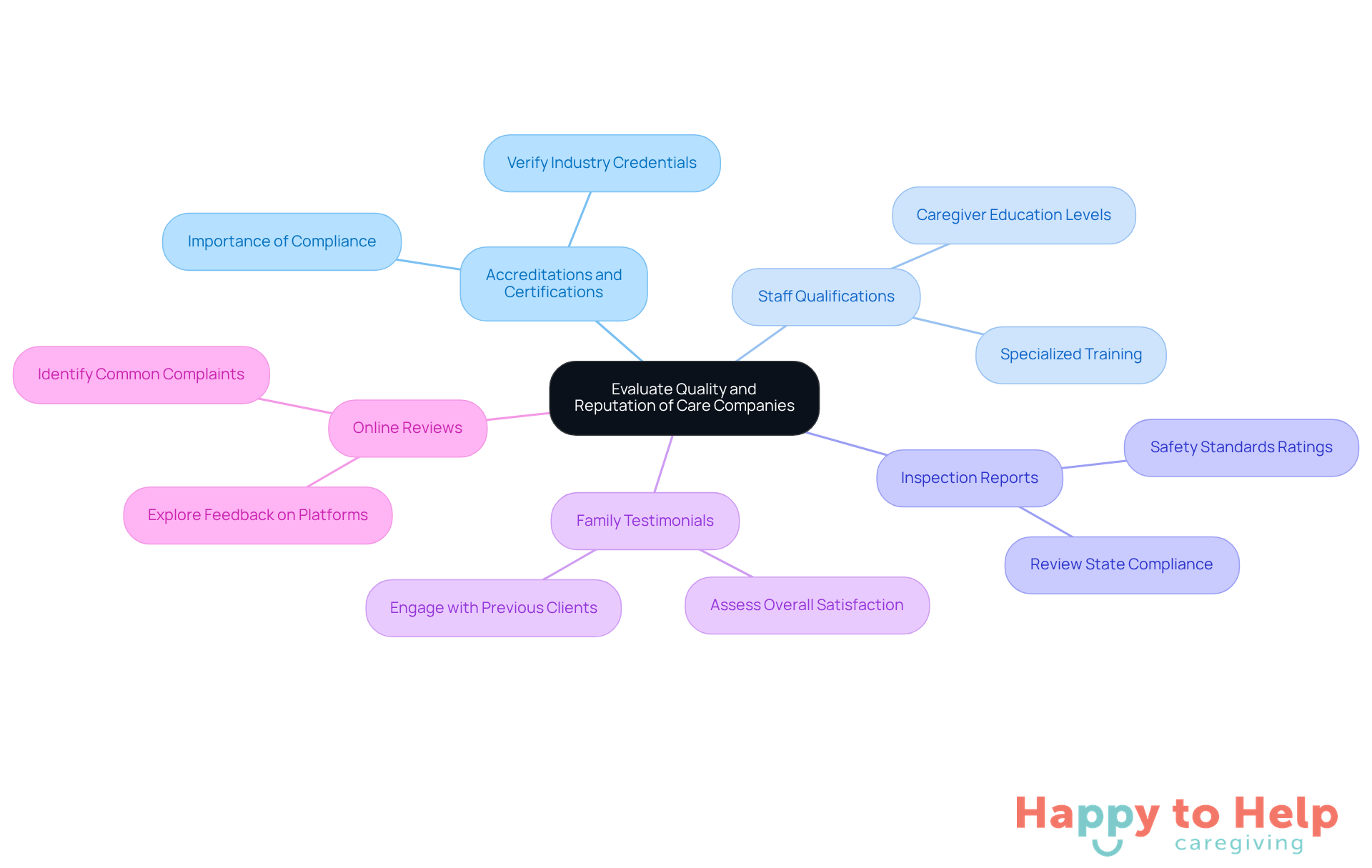
Accreditations and Certifications: Start by verifying whether the provider holds industry certifications or accreditations. These credentials reflect a commitment to delivering quality care. Accreditation organizations emphasize that such certifications are vital for maintaining standards in senior support, as they often require compliance with strict guidelines that enhance service quality.
-
Staff Qualifications: Next, inquire about the qualifications and training of caregivers. Typically, caregivers in the senior support sector hold a high school diploma, with many possessing additional certifications in areas like first aid, CPR, and specialized training for conditions such as dementia or Alzheimer’s disease. This specialized training is essential for providing effective support tailored to individual needs.
-
Inspection Reports: Don’t forget to review state inspection reports or ratings. These documents offer insights into a facility's compliance with health and safety standards. Facilities that consistently meet or exceed these standards are more likely to provide a safe and supportive environment for residents.
-
Family Testimonials: Engaging with families who have utilized the service can provide valuable firsthand accounts of their experiences. Personal testimonials often reveal insights into the quality of care and overall satisfaction of clients.
-
Online Reviews: Finally, utilize platforms like Yelp or Google Reviews to explore others' experiences with the service. High ratings and positive feedback can indicate a reliable and reputable service.
By following this comprehensive assessment procedure, you can ensure that the provider you select is trustworthy and capable of offering top-notch support, ultimately enhancing the well-being of your loved ones.
Visit Facilities or Meet Caregivers
The final step in your decision-making process is to visit the facilities or meet the caregivers in person. This is crucial for ensuring the best care for your loved one. Here’s how to maximize your visit:
- Schedule Visits: Arrange visits to the facilities on your shortlist. If you’re considering in-home assistance, set up meetings with prospective providers to evaluate their suitability.
- Observe the Environment: Pay attention to cleanliness, safety, and the overall atmosphere of the facility. Are residents engaged in activities and appearing happy? This can provide insight into the quality of service.
- Ask Questions: Prepare a comprehensive list of questions to ask during your visit. Inquire about staff-to-resident ratios, emergency procedures, daily activities, and how caregivers interact with residents. This information is vital for understanding the extent of support offered.
- Meet the Caregivers: If possible, meet the individuals who will be delivering support. Assess their demeanor, communication style, and willingness to address your concerns. Positive caregiver-client interactions are essential for quality service.
- Trust Your Instincts: Finally, trust your gut feelings about the environment and the caregivers. Choose a place where you feel your loved one will be safe, respected, and cared for. Personal interactions can be invaluable in making the right decision for your loved one’s well-being.
Additionally, consider bringing a checklist during your visits to ensure you cover all important questions and evaluate facilities effectively. Remember, 87% of families make their senior care choice before visiting a community, highlighting the urgency of this decision. As you assess your options, keep in mind that "Trust also comes from transparency," which can guide you in evaluating both the environment and the caregivers.

Moving Forward with Choose Senior Care Companies Near Me: A
Choosing the right senior care company presents a significant challenge for families, impacting the well-being of their loved ones. With a complex landscape of services - ranging from in-home care and assisted living to nursing homes and memory care - it's essential to navigate these options carefully. Families must assess individual needs to make informed choices that align with the unique preferences of seniors.
Thorough research and comparison of local care providers are crucial steps in this process. Evaluating the quality and reputation of potential services through:
- Accreditations
- Staff qualifications
- Firsthand testimonials
can greatly influence decision-making. Visiting facilities and meeting caregivers in person allows families to gauge the environment and level of care provided, ensuring a safe and supportive setting for their loved ones.
Ultimately, finding the right senior care solution highlights the importance of personalized support in enhancing the quality of life for older adults. By understanding available options and conducting diligent research, families can select a care provider that meets their loved one's needs while fostering dignity and respect. Prioritizing this process is vital for every caregiver, leading to a more fulfilling and secure future for seniors.
https://iframe.tely.ai/cta/eyJhcnRpY2xlX2lkIjogIjY5M2Y1MDdlYzVjNjk0NTk3NDczMjZmYSIsICJjb21wYW55X2lkIjogIjY4ZWU1ZGNhNzMxNzYyNTU3ZjNjOTVjMSIsICJpbmRleCI6IG51bGwsICJ0eXBlIjogImFydGljbGUifQ==Frequently Asked Questions
What are the main types of senior care services available?
The main types of senior care services include In-Home Care, Assisted Living, Nursing Homes, Memory Care, and Respite Assistance.
What does In-Home Care entail?
In-Home Care allows seniors to receive care in their own homes, including companionship, personal care, and medical assistance, supporting their ability to age in place.
What is Assisted Living?
Assisted Living facilities provide accommodation and support for seniors who need help with daily activities but do not require constant medical attention, promoting independence while offering necessary assistance.
What are Nursing Homes and who are they for?
Nursing Homes provide 24/7 medical assistance for individuals with serious health issues or disabilities, essential for seniors requiring skilled nursing care.
What is Memory Care?
Memory Care offers specialized support for individuals with Alzheimer’s or other types of dementia, focusing on safety and cognitive engagement.
What is Respite Assistance?
Respite Assistance provides temporary relief for primary caregivers, allowing them to take a break while ensuring their loved ones receive quality care.
How can families assess their loved one's individual needs and preferences?
Families can assess individual needs by evaluating health conditions, determining difficulties with daily activities, considering social preferences, and examining the living environment.
Why is it important to understand the types of senior care services?
Understanding the types of senior care services helps families evaluate which assistance aligns with their loved one's unique needs and preferences, as many older adults will require long-term assistance during retirement.
List of Sources
- Identify Types of Senior Care Services
- Seven trends in senior living that will define 2025 and beyond (https://mcknightsseniorliving.com/home/columns/guest-columns/seven-trends-in-senior-living-that-will-define-2025-and-beyond)
- Senior Living Trends in 2025 | Juniper (https://junipercommunities.com/senior-living-trends-in-2025)
- Long Term Care Options for Seniors in 2025 (https://seniorliving.org/care)
- 2025 Senior Living Statistics | SeniorLiving.org (https://seniorliving.org/companies/statistics)
- Assess Individual Needs and Preferences
- Elderly Care Statistics (https://rosewood-nursing.com/post/elderly-care-statistics)
- New Health Challenges for Seniors in 2025 | Home Care Providers (https://homecareproviders.com/blog/new-health-challenges-for-seniors-in-2025-how-home-care-can-help)
- Warning From Older Adults: Care for Aging in America Needs Urgent Rethinking (https://johnahartford.org/newsroom/view/warning-from-older-adults-care-for-aging-in-america-needs-urgent-rethinking)
- Seven trends in senior living that will define 2025 and beyond (https://mcknightsseniorliving.com/home/columns/guest-columns/seven-trends-in-senior-living-that-will-define-2025-and-beyond)
- Top 10 Chronic Conditions Affecting Older Adults (https://ncoa.org/article/the-top-10-most-common-chronic-conditions-in-older-adults)
- Research and Compare Local Care Providers
- CMS Begins Updating Nursing Home Care Compare Ratings (https://skillednursingnews.com/2025/11/cms-begins-updating-nursing-home-care-compare-ratings)
- Facts & Figures (https://ahcancal.org/Assisted-Living/Facts-and-Figures/Pages/default.aspx)
- FastStats (https://cdc.gov/nchs/fastats/residential-care-communities.htm)
- Coming Soon: 2025 Best Senior Living Ratings (https://health.usnews.com/health-news/blogs/second-opinion/articles/2025-03-13/coming-soon-2025-best-senior-living-ratings)
- U.S. News Releases 2025 Best Senior Living Ratings (https://usnews.com/info/blogs/press-room/articles/2025-04-15/u-s-news-releases-2025-best-senior-living-ratings)
- Evaluate Quality and Reputation of Care Companies
- 2025 U.S. Senior Living Satisfaction Study (https://jdpower.com/business/press-releases/2025-us-senior-living-satisfaction-study)
- 61 Assisted Living Statistics Operators Should Know | Aline (https://alineops.com/blog/assisted-living-statistics)
- Assisted living accreditation is going national after successful state pilot (https://mcknightsseniorliving.com/news/assisted-living-accreditation-is-going-national-after-successful-state-pilot)
- Caregiver Statistics: Work and Caregiving (https://caregiver.org/resource/caregiver-statistics-work-and-caregiving)
- Just The Facts: Assisted Living Is A Safe, High-Quality Long Term Care Option For America’s Seniors (https://ahcancal.org/News-and-Communications/Press-Releases/Pages/Just-The-Facts-Assisted-Living-Is-A-Safe,-High-Quality-Long-Term-Care-Option-For-America’s-Seniors.aspx)
- Visit Facilities or Meet Caregivers
- Nursing Homes: Visiting Multiple Facilities Eases Decisions (https://theseniorsource.org/visit-multiple-nursing-homes-for-decision-making)
- 20 Inspirational Senior Care Quotes (https://1plus1cares.com/20-inspirational-senior-care-quotes)
- Senior Care SEO: How Families Really Choose Facilities in 2025 - Argentum (https://argentum.org/senior-care-seo-how-families-really-choose-facilities-in-2025)
- 5 Best Practices When Choosing a Senior Care Center - Palm Primary Care Texas (https://palmprimarycare.com/5-best-practices-when-choosing-a-senior-care-center)
- 15 Things to Look for When Touring a Senior Living Facility (https://health.usnews.com/best-senior-living/articles/touring-senior-living-facility-questions)