Mentor Emergency Alerts: Plan Beyond the Outdoor Siren
Reviewed by Tyree Powell, Marketing on .
For families in Mentor
For families in Mentor, Northeast Ohio: use the resources and practical steps in this guide to plan wanted nonmedical help. Confirm individual requirements and current availability with the responsible provider.
A family plan should not depend on a parent hearing an outdoor siren from inside a Mentor home. Lake County's Emergency Management Agency explains that its sirens are intended for people outdoors, prompting them to seek further information.
The county also describes its Wireless Emergency Notification System, or WENS, with voice, text and email channels and optional weather warnings. Start from that official county page to find registration or update links. Receiving an alert and having someone available to help are separate parts of the plan.
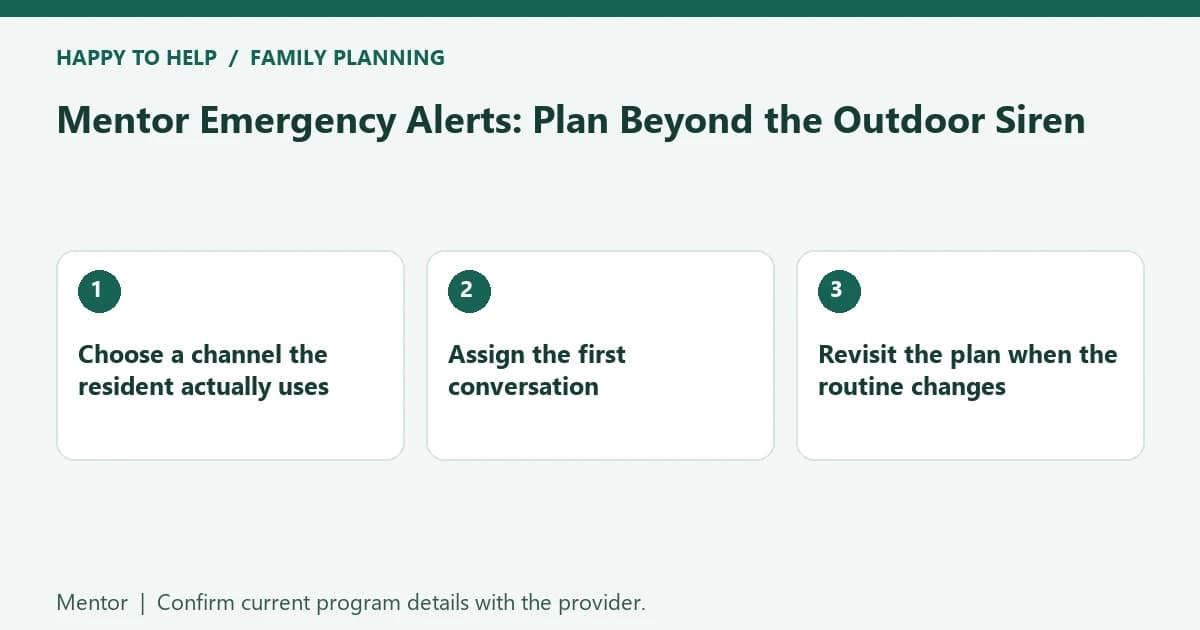
Choose a channel the resident actually uses
Talk through an ordinary day. Is the phone usually nearby? Does the person read text messages or prefer a voice call? Who helps with account settings, with the resident's permission? Ask the county about questions the registration page does not answer.
Avoid assuming that having a mobile phone establishes current enrollment. Review the details through the official process and keep any account information private. The household should understand what it requested; completing a form is not proof that every future warning will arrive.
The county also lists radio and television information sources. Decide how the resident will seek official instructions if one channel is unavailable. Follow current instructions for the particular emergency rather than substitute a general family checklist for official directions.
Assign the first conversation
Choose which relative will try to contact the resident after learning of a warning affecting the home. Agree on a backup person if that relative is unavailable. The goal is a clear conversation: has the person received the information, and do they need help following the instructions?
Do not assume a scheduled companion visit provides continuous monitoring or emergency transport. If paid care is involved, ask the agency how urgent concerns are handled and which family contacts should receive updates. Put the confirmed arrangement in the care plan.
Revisit the plan when the routine changes
A new phone, a relative moving away or a change in who is at home can make an earlier arrangement less useful. Keep a short note of the official notification source, the family contact order and the date those details were last reviewed.
If ordinary nonmedical support is part of the household's needs, the Mentor care page and Northeast Ohio care contact provide a starting point. Ask about specific daily tasks and current staffing; arrange emergency notification and response through the appropriate official resources.