Navigate Temporary Senior Care Near You: A Step-by-Step Approach

For families in our service areas
For families in our service areas, this guide explains caregiving and how non-medical in-home caregiving can support care planning in East Idaho, Treasure Valley & Magic Valley, Northern Wasatch, North Central West Virginia, and Northeast Ohio.
What You Need to Know About Navigate Temporary Senior Care Near Me:
Navigating the complexities of temporary senior care can feel overwhelming for families and caregivers alike. With numerous options available, understanding how to meet both the caregiver's and the senior's needs is crucial.
The challenge lies in the myriad of choices, which can lead to confusion and stress. Families often grapple with emotional and financial burdens, making it essential to find a solution that not only provides relief but also enhances the quality of life for their loved ones.
This guide will explore essential steps to identify, evaluate, and implement effective temporary senior care solutions. By addressing these challenges head-on, families can make informed decisions that benefit everyone involved.
Understand Temporary Senior Care Options
Caregivers often face significant challenges, including stress and burnout, as they juggle their responsibilities. Understanding the available options for temporary senior care near me can alleviate some of this pressure, providing essential relief and assistance tailored to individual needs.
Temporary senior care near me provides vital relief for primary caregivers, allowing them to recharge while ensuring their loved ones receive professional care. This service can be provided at home or in specialized facilities, with stays typically lasting from a few days to several weeks. Regular family supporters report substantial advantages from as little as four hours of respite assistance per week, greatly improving their well-being and ability to manage responsibilities.
-
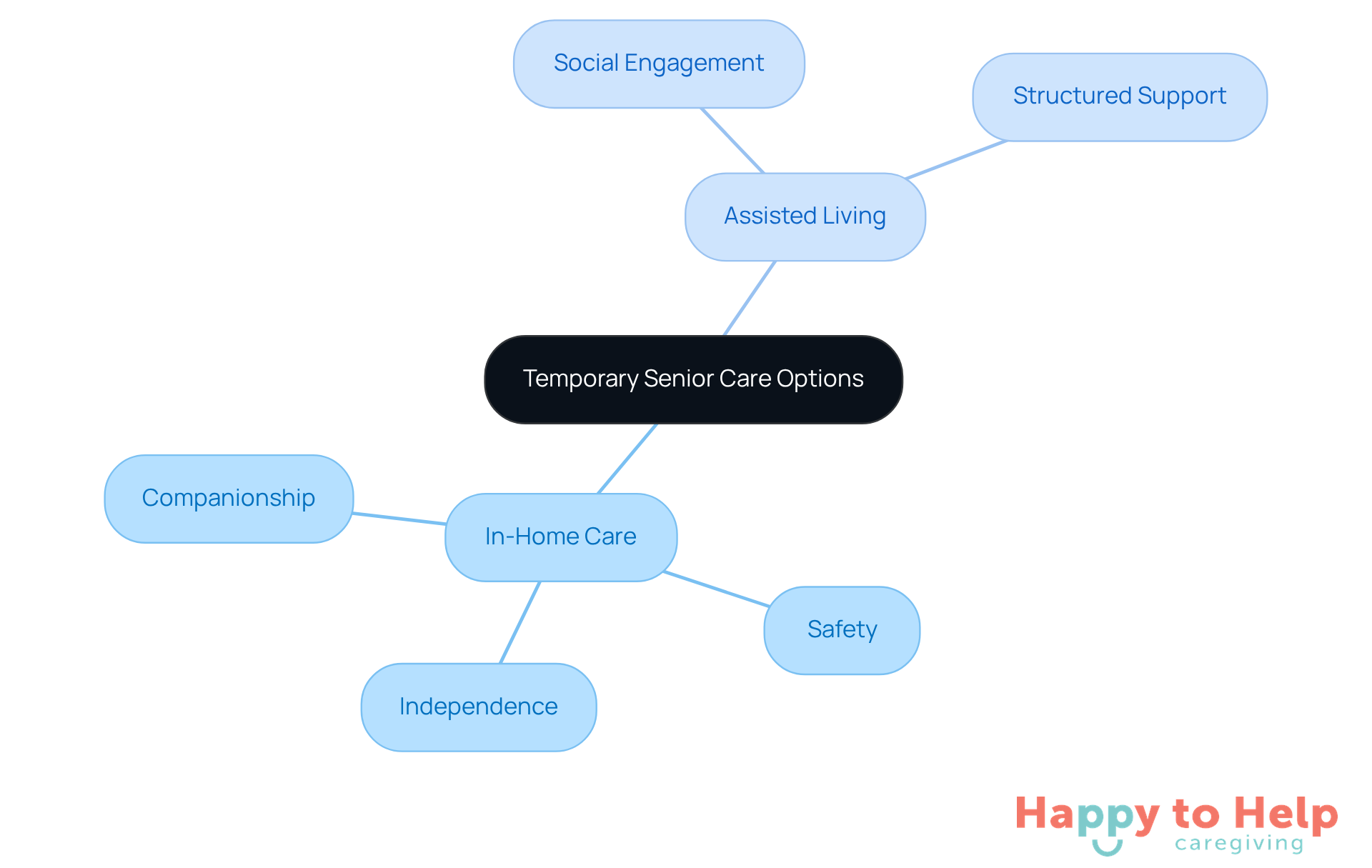
In-Home Care involves caregivers arriving directly at the residence to assist with daily tasks. This option not only promotes independence but also ensures safety and comfort in familiar surroundings, offering companionship and support tailored to the person's preferences.
-
Assisted Living facilities provide housing and support services for seniors who need help with daily activities but do not require full-time medical attention. These environments are designed to foster social engagement and structured support, enhancing the quality of life for residents.
Understanding these options is crucial for families navigating the complexities of caregiving. Choosing the right temporary senior care near me can significantly impact both the caregiver's and the senior's quality of life, providing peace of mind and support during transitional periods.
Assess Your Care Needs and Preferences
To effectively assess care needs and preferences for seniors, caregivers face several challenges. Many older adults struggle with daily activities, which can significantly impact their quality of life. Roughly 40% of older people worldwide encounter restrictions in their daily living skills, highlighting the need for thorough evaluations.
-
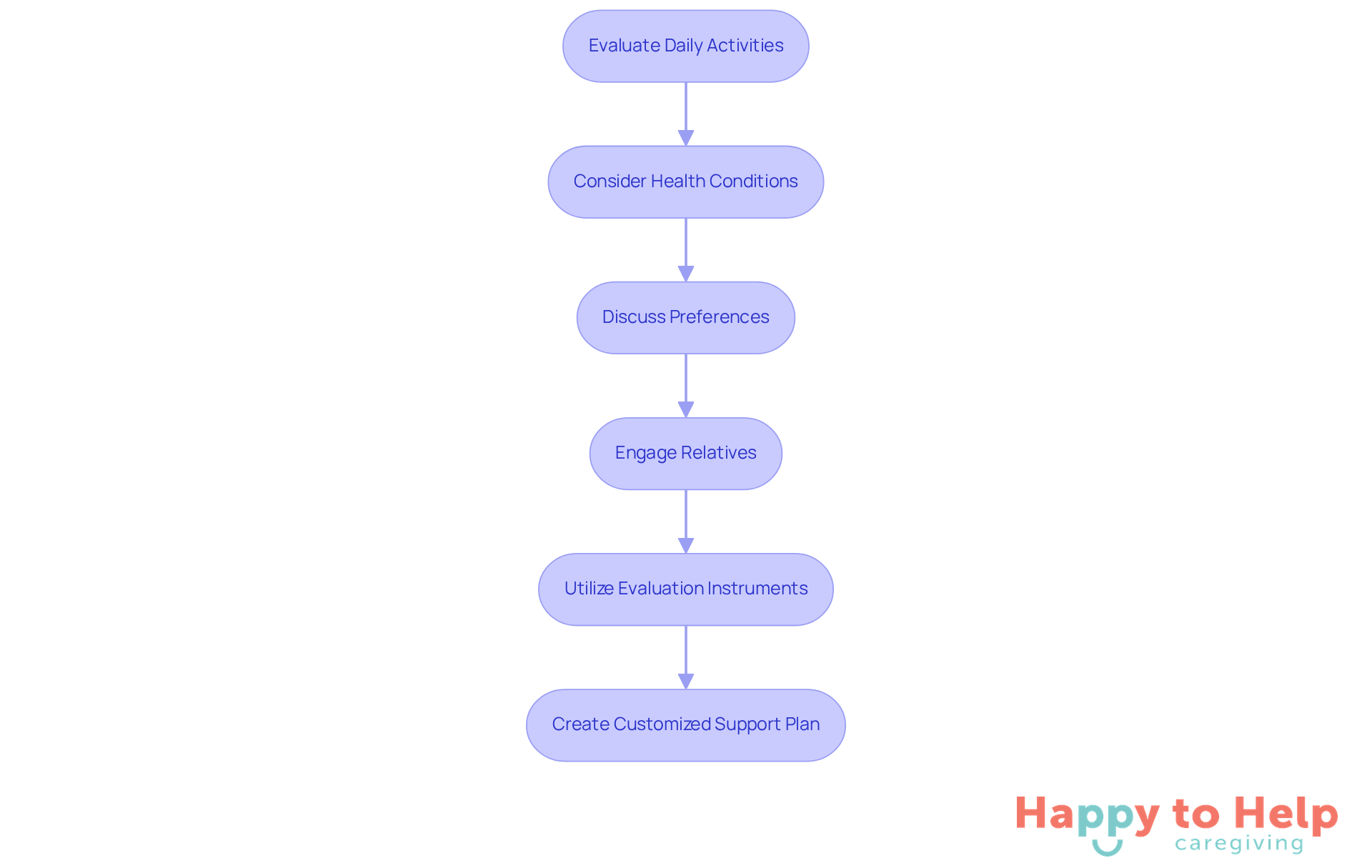
Evaluate Daily Activities: Start by observing how well your loved one manages essential tasks such as bathing, dressing, eating, and medication management. Document any challenges they encounter, as these can indicate the level of support required.
-
Consider Health Conditions: Take into account any existing medical conditions that may require specialized attention or ongoing monitoring. Conditions like Alzheimer’s disease or mobility issues often necessitate tailored interventions.
-
Discuss Preferences: Engage in open conversations with your loved one about their treatment preferences. Understanding their need for companionship, independence, and specific activities can greatly influence their support plan. As Chandra Matthews, Senior Director of Services at the Seniors Resource Center, notes, "It takes a village to just circle around and support someone."
-
Engage Relatives: Collect perspectives from relatives who may have noticed the senior's requirements and preferences. Their insights can provide a more comprehensive view of the situation.
-
Utilize Evaluation Instruments: Use available evaluation instruments or checklists, such as the Barthel Index or Geriatric Depression Scale, to systematically assess requirements. These resources help ensure that no critical areas are overlooked, facilitating a thorough understanding of the senior's needs.
By following these steps, families can create a customized support plan that aligns with the unique needs and preferences of their loved ones, ultimately enhancing their quality of life. Moreover, studies show that social involvement is crucial in helping older individuals feel more youthful and extend their lifespan, underscoring the importance of including social activities in support plans.
Research and Evaluate Local Care Providers
Finding the right care provider can be a daunting task for families. With so many options available, how do you ensure that your loved ones receive the best possible care? This challenge is compounded by the emotional weight of the decision, as families want to ensure safety and quality of service.
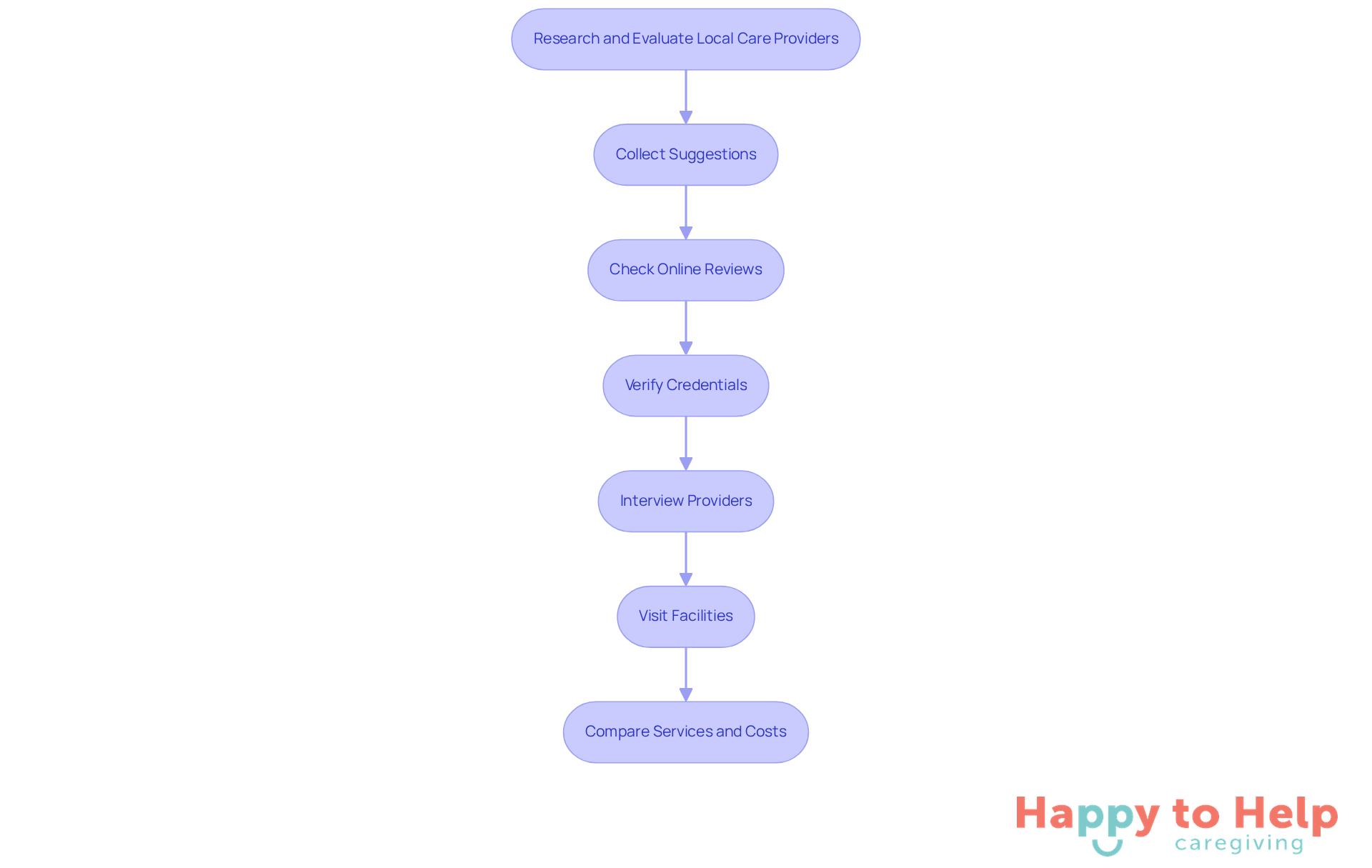
To tackle this issue, start by collecting suggestions. Ask friends, relatives, or healthcare professionals for referrals to trustworthy service providers in your area. Personal recommendations often lead to reliable options.
Next, check online reviews. Platforms like Yelp or Google Reviews can provide valuable insights into the experiences of other families. These reviews are crucial for assessing the quality of care and service consistency, as many families rely on them to gauge provider reliability.
It's also essential to verify credentials. Ensure that the service providers are licensed and insured. Look for certifications that demonstrate their qualifications and adherence to industry standards, as these factors significantly influence the quality of care.
Once you've narrowed down your options, interview potential providers. Schedule meetings with caregivers or facility administrators to discuss their experience, support methods, and emergency management. This step is vital for assessing compatibility and understanding how they will meet your loved one's needs.
If you're considering temporary senior care near me or respite services, make sure to visit facilities in person. Evaluate the atmosphere, cleanliness, and staff interactions with residents. A welcoming and safe environment is crucial for your loved one's well-being.
Finally, compare services and costs. Create a chart that outlines the services offered, associated costs, and any additional fees. This will help you make an informed decision based on your budget and your family member's specific needs.
By following these steps, families can navigate the complexities of selecting a suitable service provider for temporary senior care near me, ensuring their loved ones receive the compassionate and personalized care they deserve. Remember, a significant percentage of relatives providing assistance contribute financially to their loved one’s care, making it essential to choose a trustworthy provider. Additionally, agencies should conduct thorough screenings of caregivers, including background checks and competency testing, to ensure safety and quality. Effective communication between home support providers and families is also vital for maintaining high-quality service.
Understand Costs and Financial Assistance Options
To navigate the financial challenges of caregiving, it’s crucial to understand the costs involved and the available assistance options.
Problem: Caregivers often face overwhelming expenses. For example, in-home support services have a national median cost of $34 per hour in 2024, while assisted living facilities can average around $70,800 annually, reflecting a 10% increase. This financial burden can strain families significantly.
Agitate: Without proper planning, these costs can escalate, leaving families in a difficult position. Many caregivers may not be aware of the financial assistance programs available to them, which can lead to unnecessary stress and financial hardship.
Solution: Here are some actionable steps to help manage these expenses:
-
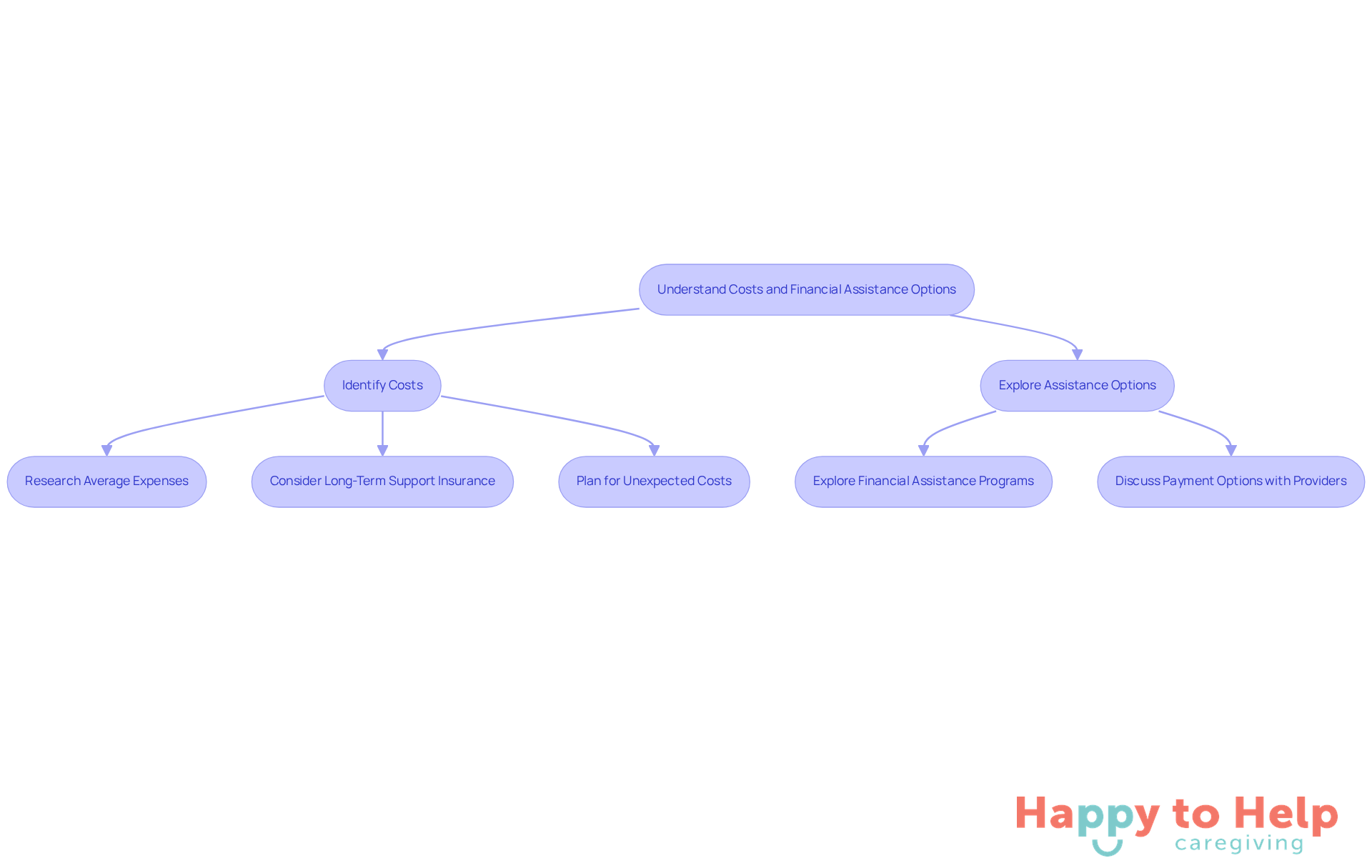
Research average expenses by investigating the costs associated with temporary senior care near me and various types of assistance in your region. Knowing the typical expenses can help you budget effectively.
-
Explore Financial Assistance Programs: Look into programs like Medicaid and Medicare, which often cover medically necessary services. Additionally, local government assistance and non-profit organizations may provide grants specifically for caregivers. Community services, such as Meals on Wheels and senior programs, can also offer low-cost or no-cost assistance.
-
Consider Long-Term Support Insurance: If applicable, check if your loved one has long-term support insurance. This can significantly reduce costs related to in-home assistance or supported living, especially for essential medical services.
-
Discuss Payment Options with Providers: Don’t hesitate to ask potential service providers about payment plans or sliding scale fees. Many agencies offer flexible payment options that can accommodate different financial situations.
-
Plan for Unexpected Costs: It’s wise to set aside a contingency fund for any unforeseen expenses that may arise during the caregiving period. This proactive approach can help manage financial stress more effectively.
By following these steps, families can better navigate the complexities of senior expenses and ensure their loved ones receive necessary temporary senior care near me without overwhelming financial strain.
Create a Personalized Care Plan
Creating a personalized care plan can be challenging for caregivers, as it involves understanding and addressing the unique needs of their loved ones. Without a structured approach, caregivers may struggle to provide the necessary support, leading to potential gaps in care and well-being.
To tackle this issue, here are several key steps that ensure effective care planning:
-
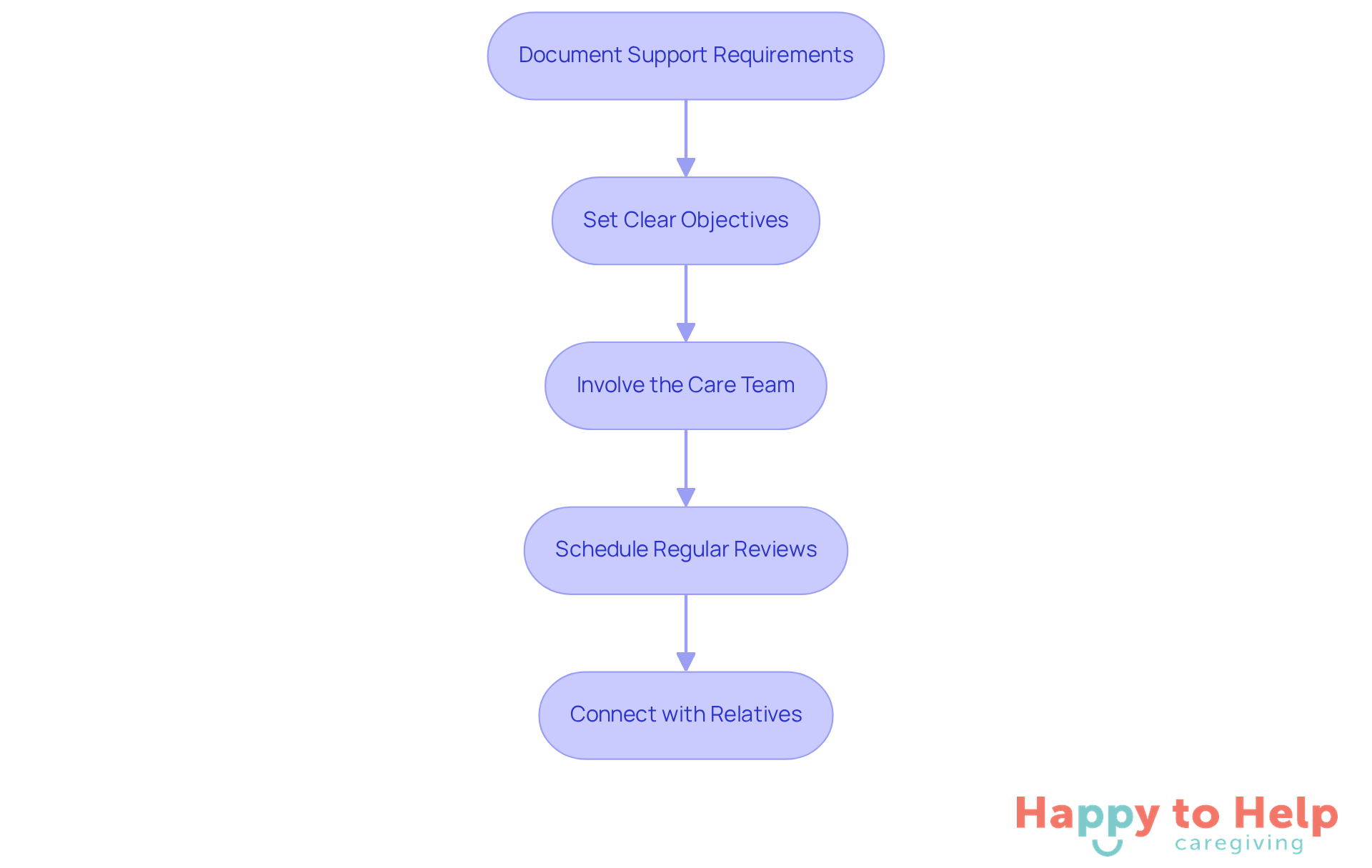
Document Support Requirements: Start by thoroughly evaluating and recording the specific support requirements, preferences, and goals of your loved one. This foundational step is crucial for customizing the support plan to their individual circumstances. Research indicates that individualized management plans assist in addressing health conditions, medications, mental and social needs, and future treatment preferences.
-
Set Clear Objectives: Establish clear, achievable goals for the plan. These could include improving mobility, enhancing social interaction, or effectively managing medications. Defined goals offer guidance and concentration for both caregivers and the person receiving support. As coordinators emphasize, "Establishing specific objectives is crucial for directing the process and ensuring everyone is aligned."
-
Involve the Care Team: Collaboration is essential. Involve all caregivers-family members and professional caregivers alike-in the planning process. Statistics suggest that effective caregiver teamwork can significantly enhance the quality of assistance given. This ensures that everyone is aligned and working towards the same goals, fostering a supportive environment.
-
Schedule Regular Reviews: Frequently evaluate the plan to make necessary adjustments based on any changes in health or personal preferences. This practice not only keeps the support relevant but also empowers households by offering clarity and confidence in the process. Care plans should be updated regularly, usually during yearly wellness visits.
-
Connect with Relatives: Keep open channels of dialogue with relatives about the support strategy and any updates. Keeping everyone informed promotes ongoing support and collaboration, which is vital for the well-being of the senior. Effective individualized treatment plans frequently involve regular gatherings of relatives to review progress and any required adjustments.
By following these steps, families can create a structured and compassionate care plan that enhances the quality of life for their loved ones, ensuring they receive the personalized support they need to thrive.
Taking the Next Steps
Navigating the landscape of temporary senior care presents a significant challenge for caregivers and their loved ones. This complexity can lead to stress and uncertainty, making it essential for families to find the right support. Without a clear understanding of available options, caregivers may struggle to meet the needs of their seniors, impacting both parties' well-being.
To address these challenges, families must assess individual needs and research local providers. By creating a tailored approach, they can ensure that immediate care requirements are met while fostering a sense of security. Key strategies include:
- Identifying the right type of care - whether in-home assistance or assisted living facilities.
- Evaluating costs alongside financial assistance options.
Each step is crucial for making informed decisions that prioritize the quality of life for seniors.
Ultimately, the importance of temporary senior care cannot be overstated. It not only provides essential relief for caregivers but also enhances the lives of seniors through professional support and companionship. As families embark on this journey, remaining proactive and engaged is vital. By taking these steps, they can navigate the complexities of senior care with confidence, leading to better outcomes for everyone involved.
https://iframe.tely.ai/cta/eyJhcnRpY2xlX2lkIjogIjY5MjI2NTA3NTI5MTQwM2MxYzYzNjdkMiIsICJjb21wYW55X2lkIjogIjY4ZWU1ZGNhNzMxNzYyNTU3ZjNjOTVjMSIsICJpbmRleCI6IG51bGwsICJ0eXBlIjogImFydGljbGUifQ==Frequently Asked Questions
What are temporary senior care options available for caregivers?
Temporary senior care options include in-home care and assisted living facilities, which provide essential relief for primary caregivers by ensuring their loved ones receive professional care while they recharge.
How does in-home care work?
In-home care involves caregivers coming directly to the residence to assist with daily tasks, promoting independence and ensuring safety and comfort in familiar surroundings while offering companionship and tailored support.
What is the purpose of assisted living facilities?
Assisted living facilities provide housing and support services for seniors who need help with daily activities but do not require full-time medical attention, fostering social engagement and structured support to enhance residents' quality of life.
Why is it important to understand temporary senior care options?
Understanding these options is crucial for families navigating caregiving complexities, as choosing the right temporary senior care can significantly impact both the caregiver's and the senior's quality of life, providing peace of mind during transitional periods.
How can caregivers assess the care needs and preferences of seniors?
Caregivers can assess care needs by evaluating daily activities, considering health conditions, discussing preferences with the senior, engaging relatives for insights, and using evaluation instruments or checklists to systematically understand the senior's needs.
What challenges do older adults face regarding daily activities?
Roughly 40% of older adults worldwide encounter restrictions in their daily living skills, which can significantly impact their quality of life, highlighting the need for thorough evaluations.
What role do social activities play in the support plans for seniors?
Social involvement is crucial for helping older individuals feel more youthful and can extend their lifespan, emphasizing the importance of including social activities in their support plans.
List of Sources
- Understand Temporary Senior Care Options
- News & Updates | ARCH National Respite Network & Resource Center (https://archrespite.org/news)
- Stats, Facts and Things to Know About Respite Care (https://bethesdaseniorliving.com/senior-resources/stats-facts-and-things-to-know-about-respite-care)
- 2025 Senior Living Statistics | SeniorLiving.org (https://seniorliving.org/companies/statistics)
- What Is Respite Care?: Support That Empowers Seniors and Caregivers (https://burchamhills.com/blog/what-is-respite-care)
- It’s Time to Care for Caregivers: Senator Markey Announces Comprehensive Family Caregiving Legislative Agenda | U.S. Senator Ed Markey of Massachusetts (https://markey.senate.gov/news/press-releases/11/20/2025/its-time-to-care-for-caregivers-senator-markey-announces-comprehensive-family-caregiving-legislative-agenda)
- Assess Your Care Needs and Preferences
- Bridging the Gap in Elderly Care: The Case for Comprehensive In-Home Assessment (https://reachmd.com/news/bridging-the-gap-in-elderly-care-the-case-for-comprehensive-in-home-assessment/2474101)
- Older adults prioritize social activities, inclusiveness in massive survey assessing what matters most to them (https://mcknights.com/news/older-adults-prioritize-social-activities-inclusiveness-in-massive-survey-assessing-what-matters-most-to-them)
- Aurora releases study to address needs of older adults and caregivers (https://denver7.com/news/front-range/aurora/aurora-releases-study-to-address-needs-of-older-adults-and-caregivers)
- Assessment of the Daily Living Activities of Older People (2004–2023): A Bibliometric and Visual Analysis - PMC (https://pmc.ncbi.nlm.nih.gov/articles/PMC11203029)
- Warning From Older Adults: Care for Aging in America Needs Urgent Rethinking (https://johnahartford.org/newsroom/view/warning-from-older-adults-care-for-aging-in-america-needs-urgent-rethinking)
- Research and Evaluate Local Care Providers
- Evaluate Home Care Providers: Step-by-Step Guide (https://proactivehealthcarestaffing.co/how-to-assess-experience-and-qualification-home-care-providers)
- U.S. News to Debut Best Home Health Ratings in 2026 (https://usnews.com/info/blogs/press-room/articles/2025-11-03/u-s-news-to-debut-best-home-health-ratings-in-2026)
- How to Evaluate Home Care Agencies for Quality Services (https://ultimatecareny.com/resources/how-to-evaluate-home-care-agencies-for-quality-services)
- The Caregiving Landscape: Data & Insights on the Caregiver Experience in the U.S. (https://caregiveraction.org/caregiver-statistics)
- Caregiver Statistics: Demographics (https://caregiver.org/resource/caregiver-statistics-demographics)
- Understand Costs and Financial Assistance Options
- Home Care Costs in 2025: A State-by-State Guide (https://aplaceformom.com/caregiver-resources/articles/in-home-care-costs)
- Cost of Long Term Care by State | Cost of Care Report | Carescout (https://carescout.com/cost-of-care)
- 4 Financial Assistance Programs for Seniors and Family Caregivers – DailyCaring (https://dailycaring.com/financial-assistance-programs-seniors-caregivers)
- Genworth and CareScout Release Cost of Care Survey Results for 2024 (https://investor.genworth.com/news-events/press-releases/detail/982/genworth-and-carescout-release-cost-of-care-survey-results)
- Create a Personalized Care Plan
- AI must optimize home care, continuity, and early detection for older adults (https://news-medical.net/news/20251007/AI-must-optimize-home-care-continuity-and-early-detection-for-older-adults.aspx)
- Importance of Personalized Senior Home Care in Burlington NC (https://wisdomseniorcare.com/the-importance-of-personalized-care-plans-for-seniors)
- How a Personalized Care Plan Makes Living with Chronic Conditions Easier | JenCare Senior Medical Center (https://jencaremed.com/articles/how-personalized-care-plan-makes-living-chronic-conditions-easier)
- Customized Care at Home: The Benefits of Personalized Care Plans - VNA Health Group (https://vnahg.org/customized-care-at-home-the-benefits-of-personalized-care-plans)
- Creating Individualized Mental Health Care Plans for Seniors - Supportive Care (https://thesupportivecare.com/blog/creating-individualized-mental-health-care-plans-for-seniors)