A DeafBlind SSP Plan Alongside Daily Care in Ogden
Reviewed by Tyree Powell, Marketing on .
For families in Ogden
For families in Ogden, Northern Wasatch: use the resources and practical steps in this guide to plan wanted nonmedical help. Confirm individual requirements and current availability with the responsible provider.
Ask the DeafBlind adult which activity matters, how they want to communicate and what they want from a support service provider. An SSP can support environmental information and access while the adult directs their activity; do not assume the role includes personal care or substitute decisions.
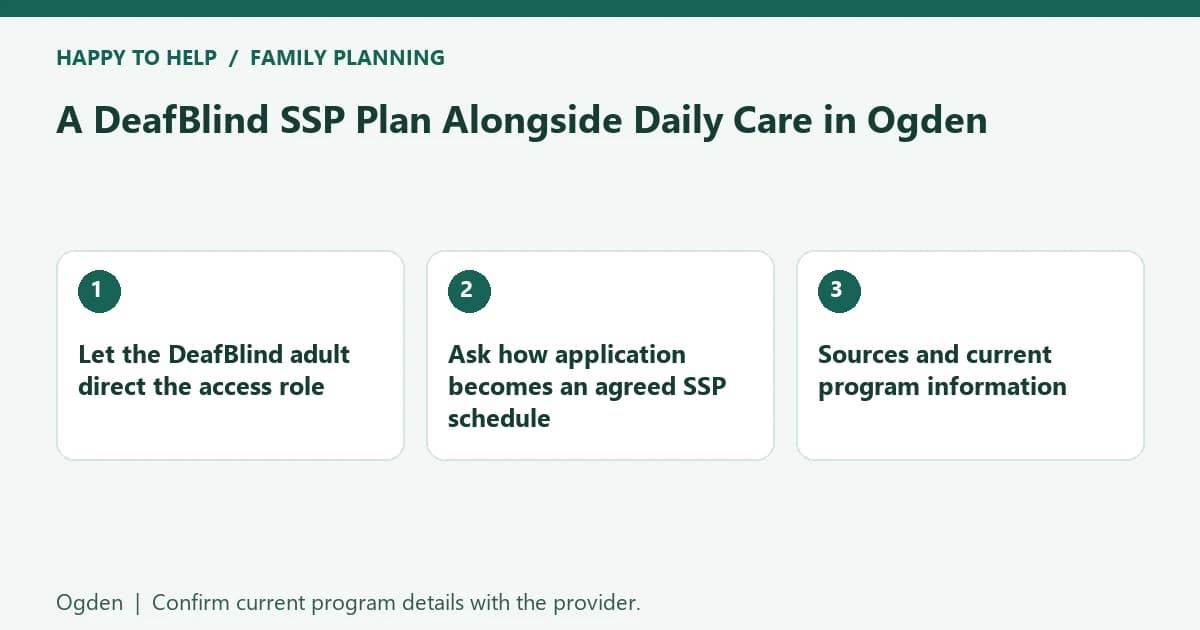
Let the DeafBlind adult direct the access role
Use Utah's actual service route to ask about support and availability. Map remaining preparation and personal routines separately. The adult chooses permitted information sharing between helpers. Confirm accepted responsibilities instead of assigning everything to the first available person. An inquiry establishes neither an approved SSP nor transport or continuous care.
Ask how application becomes an agreed SSP schedule
Utah's DeafBlind Services page links an application and guidelines. They involve specialist review, relevant hearing and vision evidence, program explanation and eligibility determination before matching to available SSP staff. The guidelines describe participant-planned activities and communication with the SSP or coordinator when scheduling or matching concerns arise. An SSP activity should be more than a ride. The SSP cannot sign for the person and is not automatically a certified interpreter, personal-care worker or clinician. Ask the coordinator about the specific activity and remaining assistance rather than treating program entry as an all-purpose helper assignment.
For ordinary help at home, explore care in Ogden and contact the Northern Wasatch team. Describe the tasks the person wants help with and the arrangements already confirmed. Ask about the actual service scope and availability before relying on a care schedule.