When a Parent Who Provided Daily Help Dies: Supporting an Adult
Reviewed by Tyree Powell, Marketing on .
For families in Uniontown
For families in Uniontown, North Central West Virginia & Southwestern Pennsylvania: use the resources and practical steps in this guide to plan wanted nonmedical help. Confirm individual requirements and current availability with the responsible provider.
When an adult with an intellectual or developmental disability loses a parent who was also a daily helper, the loss is both personal and practical. Replacing tasks should not crowd out the adult's opportunity to understand, remember or decline a conversation about the parent.
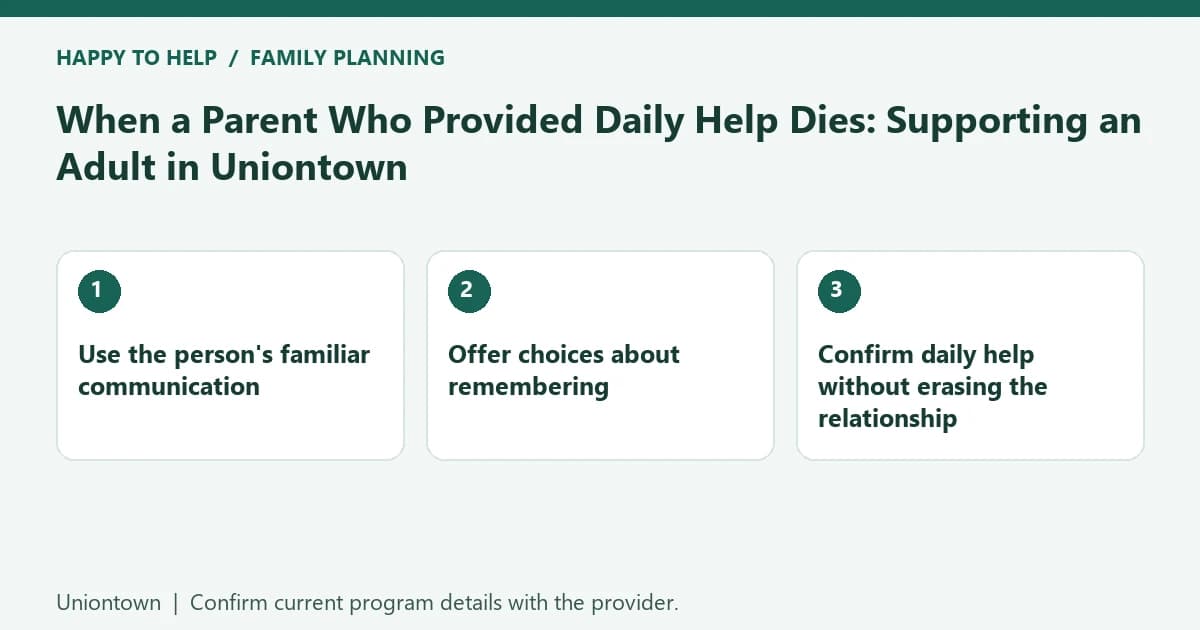
Use the person's familiar communication
Choose a trusted person and the communication methods the adult already uses. Offer understandable information about the death and allow questions without demanding a particular response. MHDD's grief-and-loss education provides background for including the adult rather than assuming they cannot experience or express the loss.
Ask what the person wants to know and whether they want company. Do not force repeated discussion, a ritual or a public expression of grief. Their response need not follow someone else's timetable.
Offer choices about remembering
The adult may want to attend a memorial, look at photographs, remember privately or decline an activity. Explain available choices in a familiar way and respect the person's preference. Family members may have different needs, and the adult is not responsible for comforting everyone else.
Keep familiar relationships and wanted routines available while acknowledging what has changed. Ask qualified professionals for help when needed rather than interpreting behavior as a diagnosis or prescribing a grief treatment.
Confirm daily help without erasing the relationship
Identify which tasks the parent supplied and which willing people or existing teams now agree to them. The Fayette County resource route can help with the relevant service inquiry, but it does not establish a dedicated grief service or an approved replacement plan. Let support for mourning and actual daily assistance develop together, with the adult included in both.
Discuss ordinary help at home
For separately arranged nonmedical assistance, our Uniontown care team can discuss the person's requested tasks and timing. Contact the local care team to ask about the actual scope, schedule and available staffing.