Washington, PA Care Concerns: Asking an Ombudsman for Help
Reviewed by Tyree Powell, Marketing on .
For families in Washington
For families in Washington, North Central West Virginia & Southwestern Pennsylvania: use the resources and practical steps in this guide to plan wanted nonmedical help. Confirm individual requirements and current availability with the responsible provider.
A Washington, Pennsylvania family may need help understanding an unresolved long-term care concern without wanting to change every part of the person's care. Start by asking the person what happened and what they want to address.
SWPA AAA's Long-Term Care Ombudsman Program serves Washington, Fayette and Greene counties. Its published scope includes complaints involving long-term care services in the home as well as care facilities, with service disruption and quality-of-life concerns among the listed issues. Contact the program to confirm whether the particular concern fits.
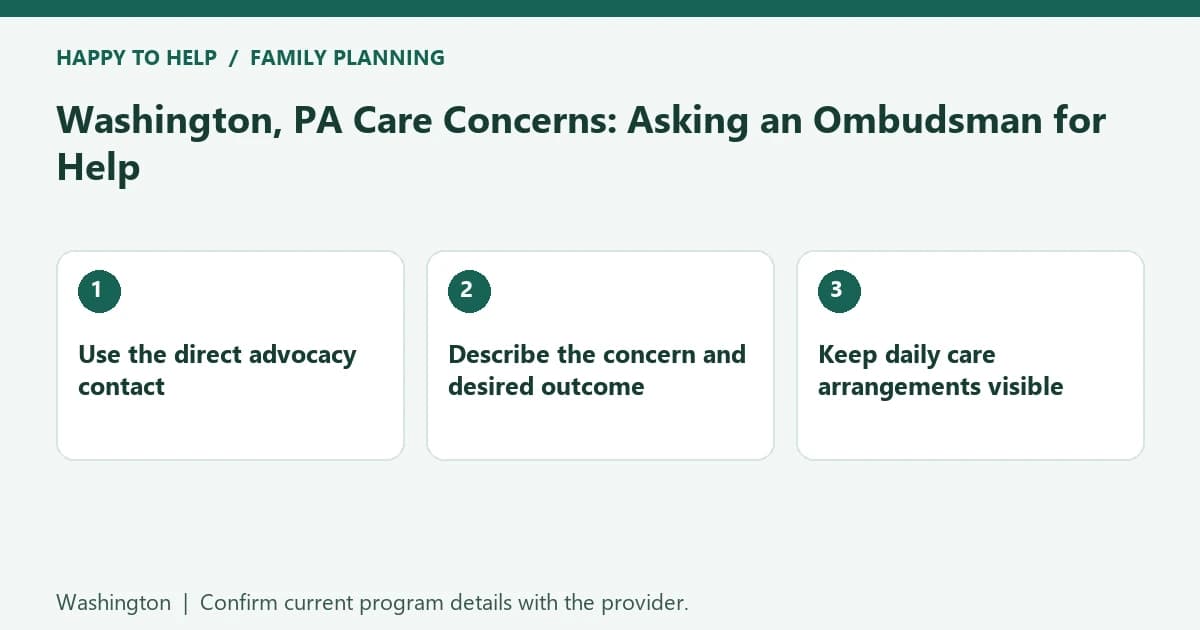
Use the direct advocacy contact
The agency lists 855-450-2274 and ombudsman@swpa-aaa.org for this program. It describes the service as confidential and free. This is a different inquiry from registering for a caregiver group or requesting a new care visit.
Ask how the program works with the person receiving care, what information is useful and how a family member may participate. Do not assume that speaking on a relative's behalf establishes authority to make all of their care decisions.
Describe the concern and desired outcome
Prepare a short factual account: the service involved, what changed, when it happened and any response already received. Keep the person's own explanation separate from assumptions about why an organization acted. Ask the Ombudsman how to share relevant documents privately rather than send a large collection of records in a first message.
State what would help the person now: understanding the process, communicating a concern or discussing a service interruption. Let the program explain its role and any next step. An advocacy request does not establish wrongdoing, a guaranteed resolution or a specific response time.
If the concern involves immediate danger or an urgent medical need, use the appropriate emergency or healthcare route. A routine advocacy message should not be treated as an emergency dispatch or clinical assessment.
Keep daily care arrangements visible
While the concern is being discussed, record which visits or services are still confirmed and which tasks remain uncovered. Ask the responsible provider about actual schedule changes rather than assume a complaint either cancels care or restores a missed visit.
If the household separately wants to discuss nonmedical assistance, use Washington care planning and the regional care contact. Describe the current daily tasks and confirmed arrangements. Keep that service inquiry separate from independent advocacy and from any decision the person is still considering.