Passing On Meaningful Possessions While Receiving Help at Home
Reviewed by Tyree Powell, Marketing on .
For families in Washington
For families in Washington, North Central West Virginia & Southwestern Pennsylvania: use the resources and practical steps in this guide to plan wanted nonmedical help. Confirm individual requirements and current availability with the responsible provider.
Passing on meaningful belongings while living at home should begin with the owner's choice, not a family's need to clear space for care. Moving an object out of a walkway does not mean it has been given away.
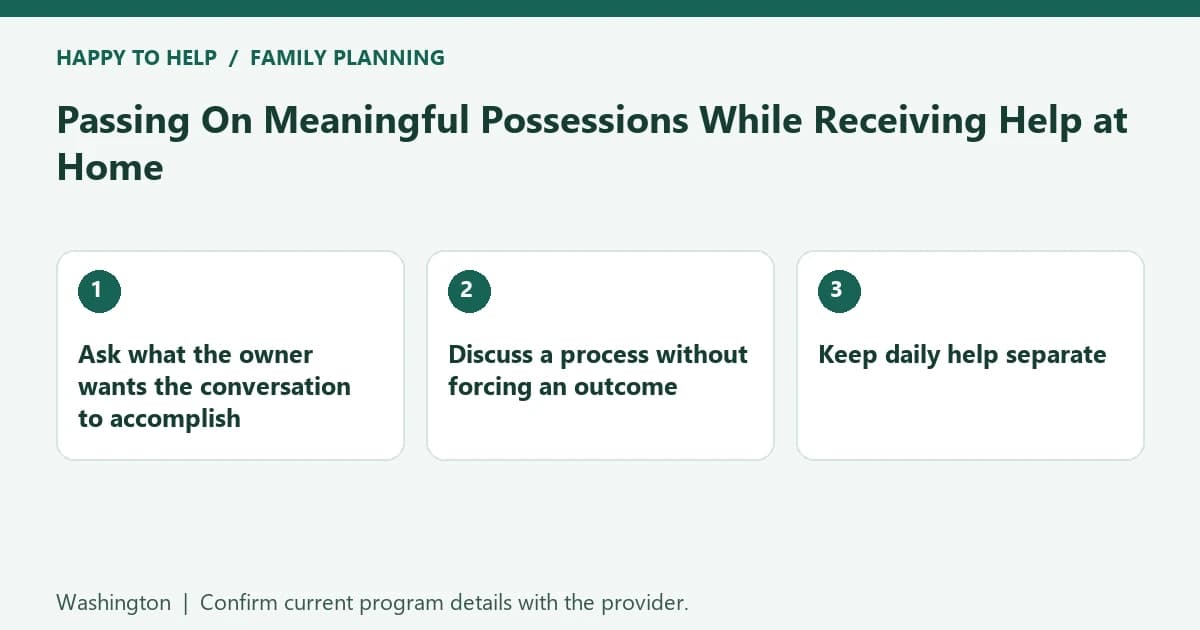
Ask what the owner wants the conversation to accomplish
The owner may want to tell an object's story, hear who values it, make a future plan or postpone any decision. Ask which of those purposes fits before discussing recipients. Different relatives can attach different meanings to the same item without having an established claim to it.
University of Minnesota Extension's possessions education offers a public introduction to this family question. Penn State's related program is another education route to ask about, but current participation or a local appointment must be confirmed. This discussion does not reproduce a purchased workbook or professional mediation method.
Discuss a process without forcing an outcome
Ask what the owner considers fair, who they want involved and how an unresolved disagreement should be handled. Deferring a transfer is a legitimate outcome. Do not use care contributions or promises of future help to pressure the owner.
A note, label or family conversation is not proof of a legally completed gift or authority to transfer property. Bring ownership, capacity, estate, tax or benefit questions to qualified advisers before acting.
Keep daily help separate
Agree where items may be moved or stored for ordinary assistance and what permission that actually includes. Do not donate, sell or discard belongings because sorting began. Paid helpers should perform only agreed tasks within their role. The owner's care should remain independently arranged while the possessions discussion proceeds at the pace they choose.
Discuss ordinary help at home
For separately arranged nonmedical assistance, our Washington care team can discuss the person's requested tasks and timing. Contact the local care team to ask about the actual scope, schedule and available staffing.