

For families in our service areas
For families in our service areas, this guide explains caregiving and how non-medical in-home caregiving can support care planning in East Idaho, Treasure Valley & Magic Valley, Northern Wasatch, North Central West Virginia, and Northeast Ohio.
The Importance of Practices for Family Caring for Elderly
Caring for elderly parents presents a unique set of challenges that many families encounter as their loved ones age. These challenges can lead to emotional strain and physical exhaustion for caregivers, impacting both their well-being and that of their parents. Understanding how to navigate these complexities is crucial for enhancing the caregiver's experience and improving the quality of life for seniors.
So, how can families effectively balance the demands of caregiving with the emotional and physical needs of their elderly parents? This article explores four best practices that empower families to provide effective, compassionate care:
- Assessing individual needs
- Fostering open communication
- Implementing actionable solutions
- Creating a supportive environment
By implementing these strategies, families can create a supportive environment that benefits everyone involved.
Assess Needs to Tailor Care Plans
Family caring for elderly parents can be challenging, especially when it comes to understanding their unique needs. Without a thorough assessment, caregivers may struggle to provide the appropriate support, leading to potential health and emotional issues for their loved ones.
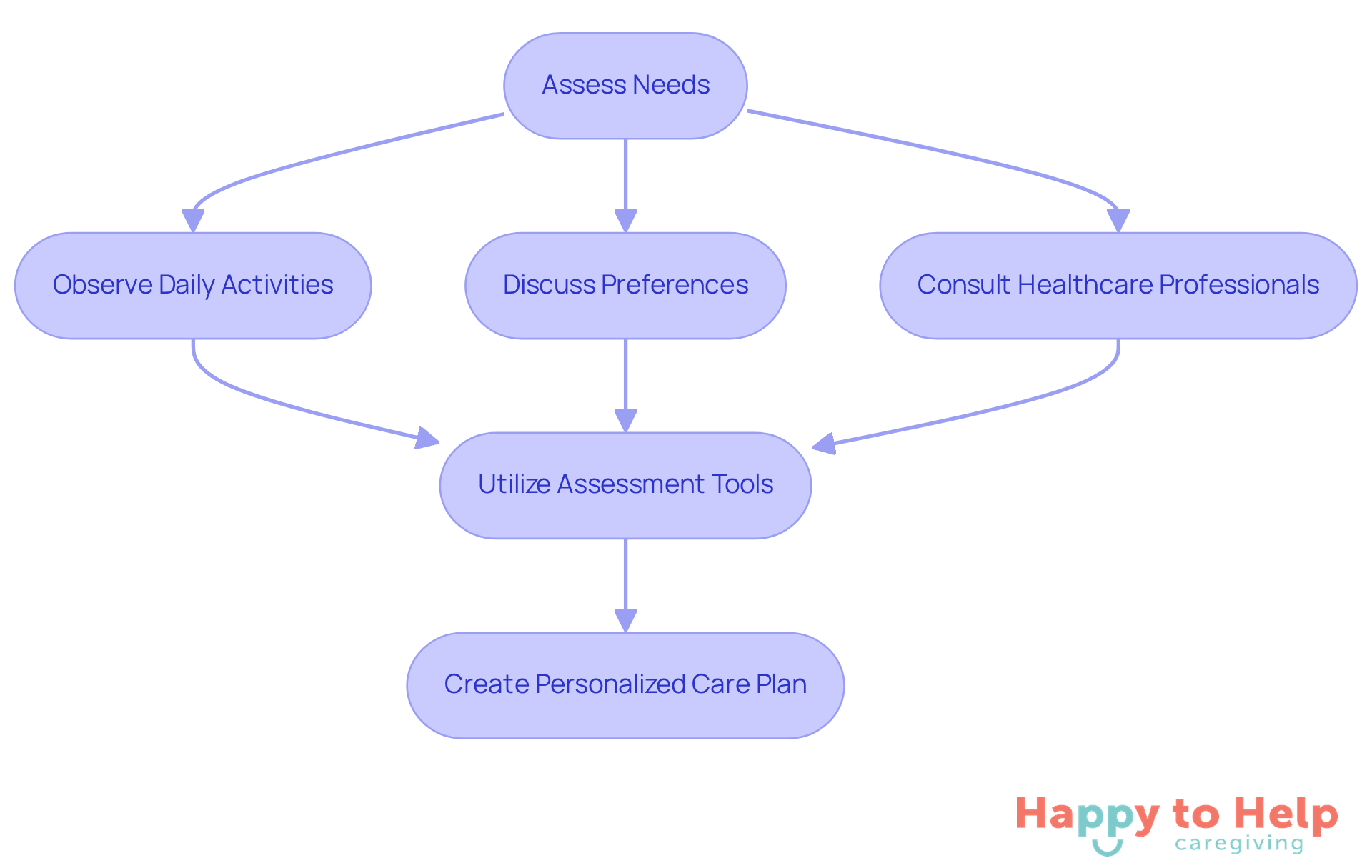
To address this, start by conducting a comprehensive evaluation of their physical, emotional, and cognitive needs. This involves:
- Observing their daily activities
- Discussing their preferences
- Consulting healthcare professionals
Utilizing assessment tools, such as the Katz ADL scale, can help gauge their ability to perform daily living activities effectively.
With this information, you can create a personalized care plan tailored to their specific needs. For example, if mobility is a concern, consider integrating physical therapy or mobility aids into their routine. This proactive approach ensures that family caring for elderly parents provides the right level of support, enhancing the quality of life for their loved ones.
Ensure Safety and Create Supportive Routines
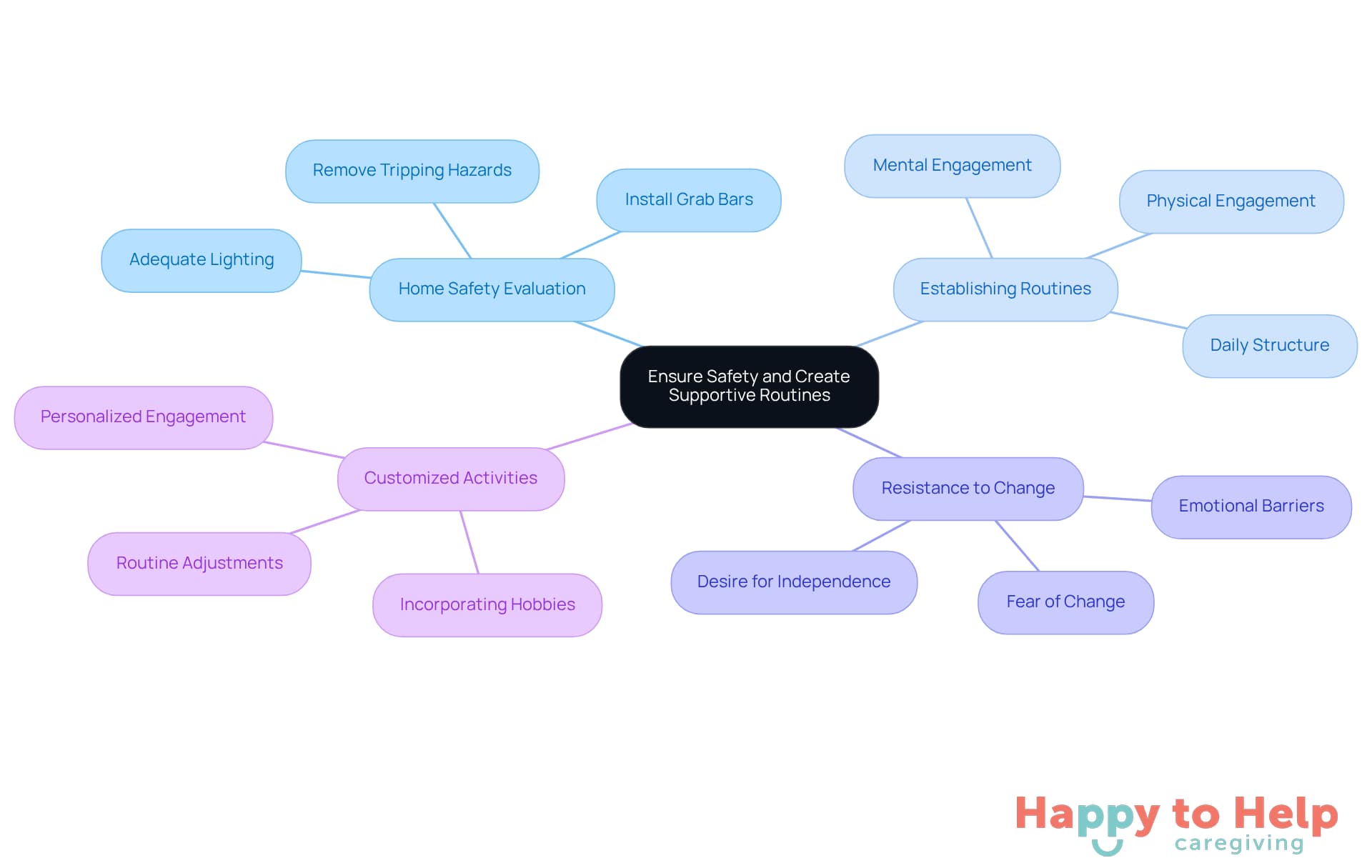
To ensure the safety of elderly parents, caregivers face a significant challenge: the risk of falls at home. Falls can lead to serious injuries, and home safety assessments can decrease the rate and risk of falling by up to 36%. This makes it crucial for caregivers to take proactive steps in preventing such incidents.
Start with a comprehensive home safety evaluation. Remove tripping hazards, install grab bars in bathrooms, and ensure adequate lighting throughout the home. Establishing a daily routine is also essential, as it provides structure and predictability, which are particularly beneficial for seniors. Incorporate regular activities that promote both physical and mental engagement, such as light exercise or hobbies they enjoy. For instance, setting specific times for walks or reading can significantly enhance their physical health and emotional well-being.
However, it's important to recognize that older individuals often resist recommended changes due to a desire to maintain independence and dignity. As noted by a Fall Prevention Center Leader, "They [older adults] don’t want to change, and this term [home modifications] isn’t enough to conquer their fear of change." This resistance can complicate the implementation of safety measures.
Case studies demonstrate that consistent everyday practices not only promote independence but also alleviate feelings of confusion and anxiety, ultimately enhancing overall quality of life. Occupational therapists highlight that customized activities designed for individual preferences can empower seniors, making them feel more in control of their daily lives. By prioritizing safety and supportive routines, a family caring for elderly parents can create an environment that nurtures their loved ones' well-being.
Communicate Openly and Support Emotional Well-Being
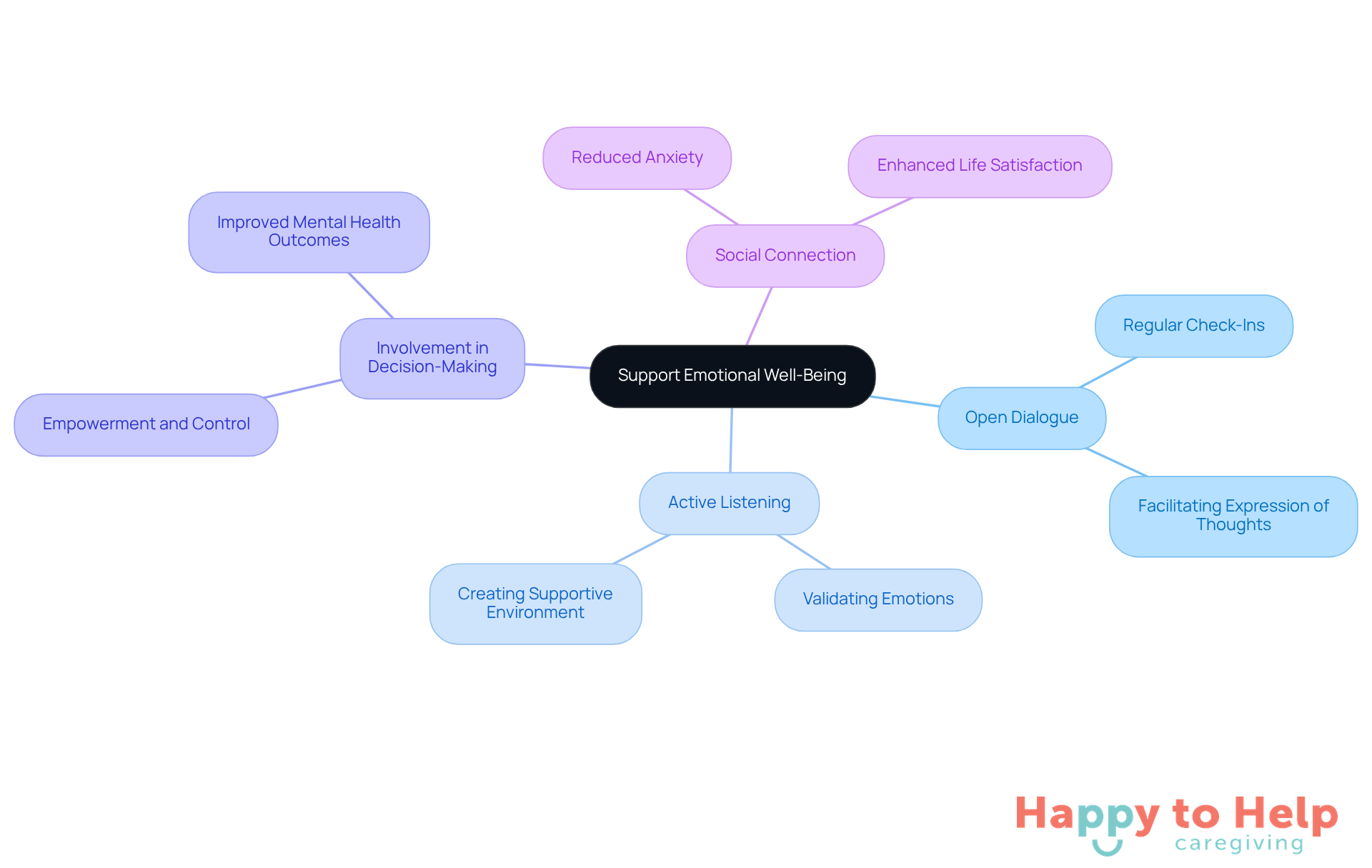
It is crucial for the family caring for elderly parents to foster open dialogue about their feelings, preferences, and concerns to support their emotional well-being. Family caring for elderly parents often face the challenge of ensuring that these conversations happen, which can lead to feelings of isolation and depression for the elderly if neglected.
Employing active listening techniques not only validates their emotions but also creates a supportive environment. Regular check-ins about their daily experiences and challenges can significantly enhance their mental health. For instance, if they express frustration with a specific task, collaboratively discussing alternative solutions or adjustments to their routine can alleviate stress.
Involving elderly parents in decision-making regarding their care empowers them, which is crucial for family caring for elderly parents, as it enhances their sense of control and dignity. Research shows that such involvement can lead to improved mental health outcomes. Older individuals who feel acknowledged and appreciated are less prone to experience feelings of isolation and depression.
According to a recent report, social connection is essential for older individuals to lower risks linked to social isolation and loneliness. Initiatives promoting open communication have successfully reduced anxiety and improved overall life satisfaction among seniors, underscoring the importance of these practices in caregiving.
As Rachael Steimnitz states, "Facilitate open and supportive dialogues to allow residents to freely express their thoughts and concerns." This highlights the need for caregivers to prioritize communication in their approach.
Seek Support and Utilize Community Resources
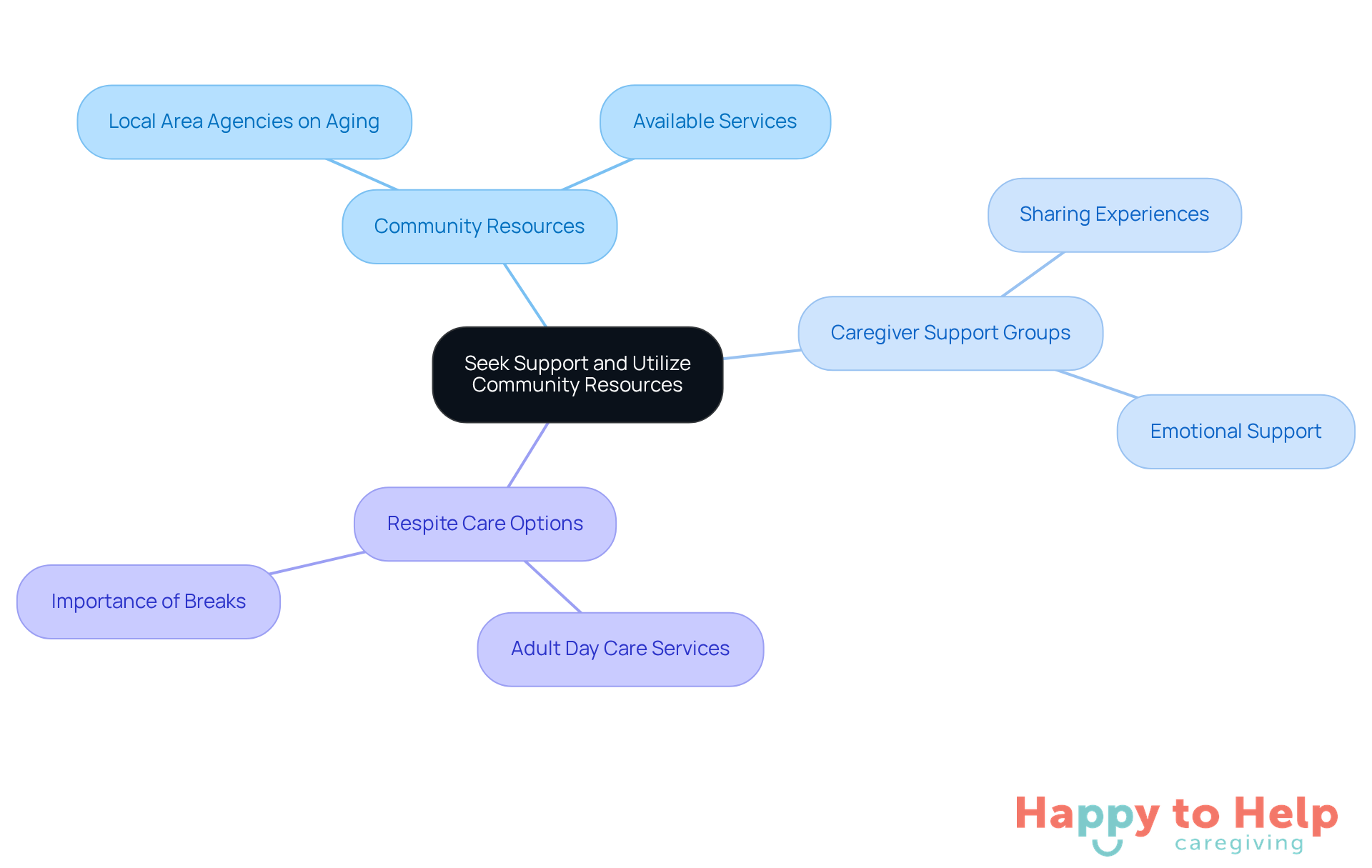
Family caring for elderly parents often encounter the challenge of feeling overwhelmed and isolated. This can lead to stress and burnout, making it crucial to seek support from community resources. Local Area Agencies on Aging can provide valuable information on available services tailored to your needs.
Consider joining caregiver support groups. These groups offer a space to share experiences and gain insights from others who understand your situation. Connecting with peers can alleviate feelings of loneliness and provide emotional support.
Additionally, exploring respite care options is essential. Taking breaks is vital for your well-being while ensuring that the family caring for elderly parents provides quality care. For instance, utilizing adult day care services can provide social interaction for your parents, allowing you the time to recharge and focus on your own health.
Moving Forward with Practices for Family Caring for Elderly
Caring for elderly parents presents a significant challenge for many families. The complexities of their unique needs can lead to stress and uncertainty for caregivers. Without a thoughtful approach, the risk of neglecting essential aspects of care increases, potentially impacting the well-being of elderly loved ones.
To address these challenges, families can implement several key strategies:
- Conducting comprehensive assessments allows caregivers to tailor care plans that meet the specific needs of their parents.
- Ensuring home safety is crucial; simple modifications can prevent falls and accidents.
- Open communication fosters emotional health, enabling elderly parents to express their feelings and concerns.
- Seeking external support can alleviate caregiver stress, providing much-needed relief.
By embracing these best practices, families not only empower their elderly parents but also create a nurturing environment where they can thrive. Proactively assessing needs, ensuring safety, maintaining open lines of communication, and utilizing community resources enhances the caregiving experience. This approach promotes the dignity and independence of elderly loved ones, ultimately leading to a more fulfilling life for everyone involved.
https://iframe.tely.ai/cta/eyJhcnRpY2xlX2lkIjogIjY5M2Y1MDgzNjk1NDdlMzRlNWE0ZWU2MSIsICJjb21wYW55X2lkIjogIjY4ZWU1ZGNhNzMxNzYyNTU3ZjNjOTVjMSIsICJpbmRleCI6IG51bGwsICJ0eXBlIjogImFydGljbGUifQ==Frequently Asked Questions
Why is it important to assess the needs of elderly parents when providing care?
Assessing the needs of elderly parents is crucial as it helps caregivers understand their unique requirements. Without a thorough assessment, caregivers may struggle to provide appropriate support, potentially leading to health and emotional issues for their loved ones.
What should be included in a comprehensive evaluation of an elderly parent's needs?
A comprehensive evaluation should include observing their daily activities, discussing their preferences, and consulting healthcare professionals.
What assessment tools can be used to evaluate an elderly parent's daily living activities?
Tools such as the Katz ADL scale can be utilized to gauge an elderly parent's ability to perform daily living activities effectively.
How can the information from the needs assessment be used?
The information gathered from the needs assessment can be used to create a personalized care plan tailored to the specific needs of the elderly parent, ensuring they receive the right level of support.
What is an example of a tailored care plan for an elderly parent with mobility concerns?
If mobility is a concern, a tailored care plan may include integrating physical therapy or mobility aids into the elderly parent's routine to enhance their quality of life.
List of Sources
- Assess Needs to Tailor Care Plans
- The care crisis: Eldercare collides with childcare (https://kpmg.com/us/en/articles/2025/february-2024-the-care-crisis-eldercare.html)
- (https://belleviecare.co.uk/support-advice/60-elderly-care-quotes-to-lift-your-spirits)
- The Power of Personalized Care Plans for Seniors Aging at Home (https://faithcareus.com/blog/personalized-care-plans-for-seniors-at-home)
- 10 Inspiring Quotes on Aging and Wisdom for Family Caregivers - Happy To Help (https://happytohelpcaregiving.com/10-inspiring-quotes-on-aging-and-wisdom-for-family-caregivers)
- Activities of Daily Living - StatPearls - NCBI Bookshelf (https://ncbi.nlm.nih.gov/books/NBK470404)
- Ensure Safety and Create Supportive Routines
- Helping Seniors Establish Routine Through Behavioral Programs - Supportive Care (https://thesupportivecare.com/blog/helping-seniors-establish-routine-through-behavioral-programs)
- Understanding Barriers to Home Safety Assessment Adoption in Older Adults: Qualitative Human-Centered Design Study (https://humanfactors.jmir.org/2025/1/e66854)
- Get the Facts on Falls Prevention (https://ncoa.org/article/get-the-facts-on-falls-prevention)
- The Power of Routine: Helping Seniors Thrive | Amada Blog (https://amadaseniorcare.com/2025/07/the-power-of-routine-helping-seniors-thrive)
- Home Safety Month, Garbage Cans, and Aging in Place (https://lifework.arizona.edu/news/2025/home-safety-month-garbage-cans-and-aging-place)
- Communicate Openly and Support Emotional Well-Being
- Six Recommendations To Promote Emotional Wellness In Older Adults Using Design Thinking (https://forbes.com/sites/forbeseq/2024/07/03/six-recommendations-to-promote-emotional-wellness-in-older-adults-using-design-thinking)
- Effective Communication Strategies for Older Adults: Evidence-Based Approaches that Improve Care (https://medtigo.com/news/effective-communication-strategies-for-older-adults-evidence-based-approaches-that-improve-care)
- Mental health of older adults (https://who.int/news-room/fact-sheets/detail/mental-health-of-older-adults)
- New report gives healthcare providers fresh guidance on communicating with older adults (https://mcknights.com/news/new-report-gives-healthcare-providers-fresh-guidance-on-communicating-with-older-adults)
- How to Better Address Mental Health Needs of Older Adults (https://ncoa.org/article/why-we-must-address-the-rising-mental-health-needs-of-our-growing-older-adult-population)
- Seek Support and Utilize Community Resources
- The Power of Support: Why Support Groups Matter for Families of Those Living with Dementia - James L. West (https://jameslwest.org/the-power-of-support-why-support-groups-matter-for-families-of-those-living-with-dementia)
- The Caregiving Landscape: Data & Insights on the Caregiver Experience in the U.S. (https://caregiveraction.org/caregiver-statistics)
- Family Caregiver Annual Report and Statistics | SeniorLiving.org (https://seniorliving.org/research/family-caregiver-report-statistics)
- Caregiver Action Network (https://caregiveraction.org)
- Why Family Caregivers Should Consider Joining a Support Group - FirstLight Home Care (https://firstlighthomecare.com/blog/why-family-caregivers-should-consider-joining-a-support-group)