

For families in our service areas
For families in our service areas, this guide explains caregiving and how non-medical in-home caregiving can support care planning in East Idaho, Treasure Valley & Magic Valley, Northern Wasatch, North Central West Virginia, and Northeast Ohio.
What You Need to Know About Practices for Taking Care of Old
Caring for elderly parents presents a unique set of challenges that can be both rewarding and overwhelming. Caregivers often find themselves navigating complex emotional and logistical hurdles, which can lead to stress and burnout. Understanding the specific needs of aging loved ones is crucial for effective caregiving, yet many struggle to balance these demands with their own well-being.
To address these challenges, caregivers can implement four best practices that enhance the quality of care and foster a supportive environment:
- Tailored assessments can help identify the individual needs of elderly parents, ensuring that care is personalized.
- Comprehensive planning allows caregivers to anticipate challenges and allocate resources effectively.
- Open communication is another vital component, as it encourages dialogue between caregivers and their parents, fostering understanding and cooperation.
- Prioritizing self-care is essential for caregivers to maintain their own health and resilience.
By focusing on these strategies, caregivers can create a balanced approach that benefits both themselves and their loved ones.
Assess Individual Needs for Tailored Care
Taking care of old parents can be challenging, especially when it comes to understanding their specific needs. Many caregivers face the problem of not knowing where to start, which can lead to feelings of frustration and helplessness.
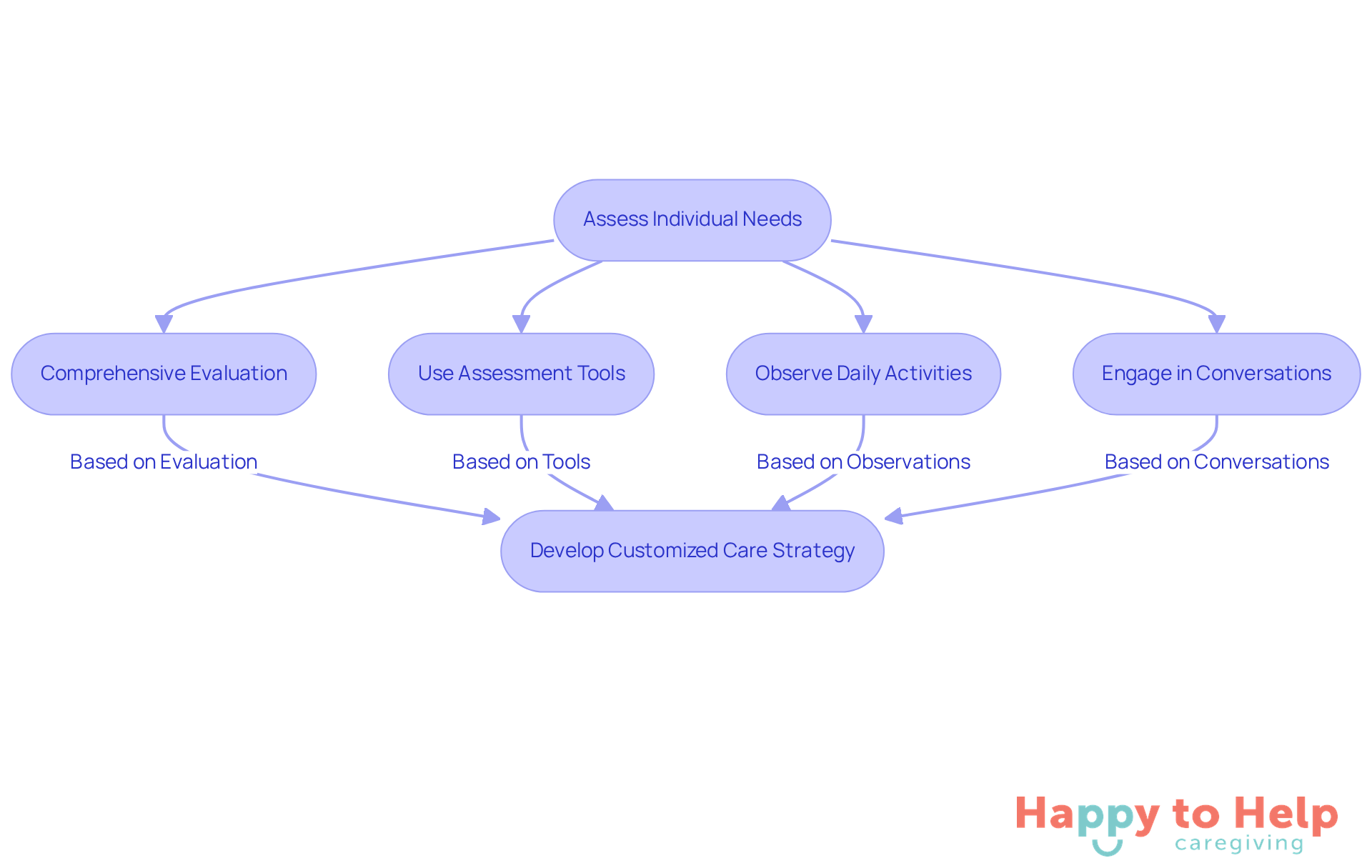
To effectively assist in taking care of old parents, begin with a comprehensive evaluation of their personal requirements. This includes assessing their physical health, cognitive abilities, emotional well-being, and daily living skills. Use tools like assessment questionnaires or checklists to pinpoint areas where support is necessary. For example, observe their ability to perform daily activities such as bathing, dressing, and meal preparation.
Engaging in open conversations is crucial when it comes to taking care of old parents. This dialogue helps you understand their preferences and concerns, allowing you to develop a customized care strategy that meets their particular needs. By doing so, you ensure they receive the appropriate assistance to preserve their independence and dignity.
Develop a Comprehensive Care Plan
Taking care of old parents can be challenging when developing a comprehensive care strategy. Caregivers often struggle to identify specific needs and the resources necessary for taking care of old parents. Without a clear plan, both the caregiver and the aging parent may experience increased stress and uncertainty in taking care of old parents.
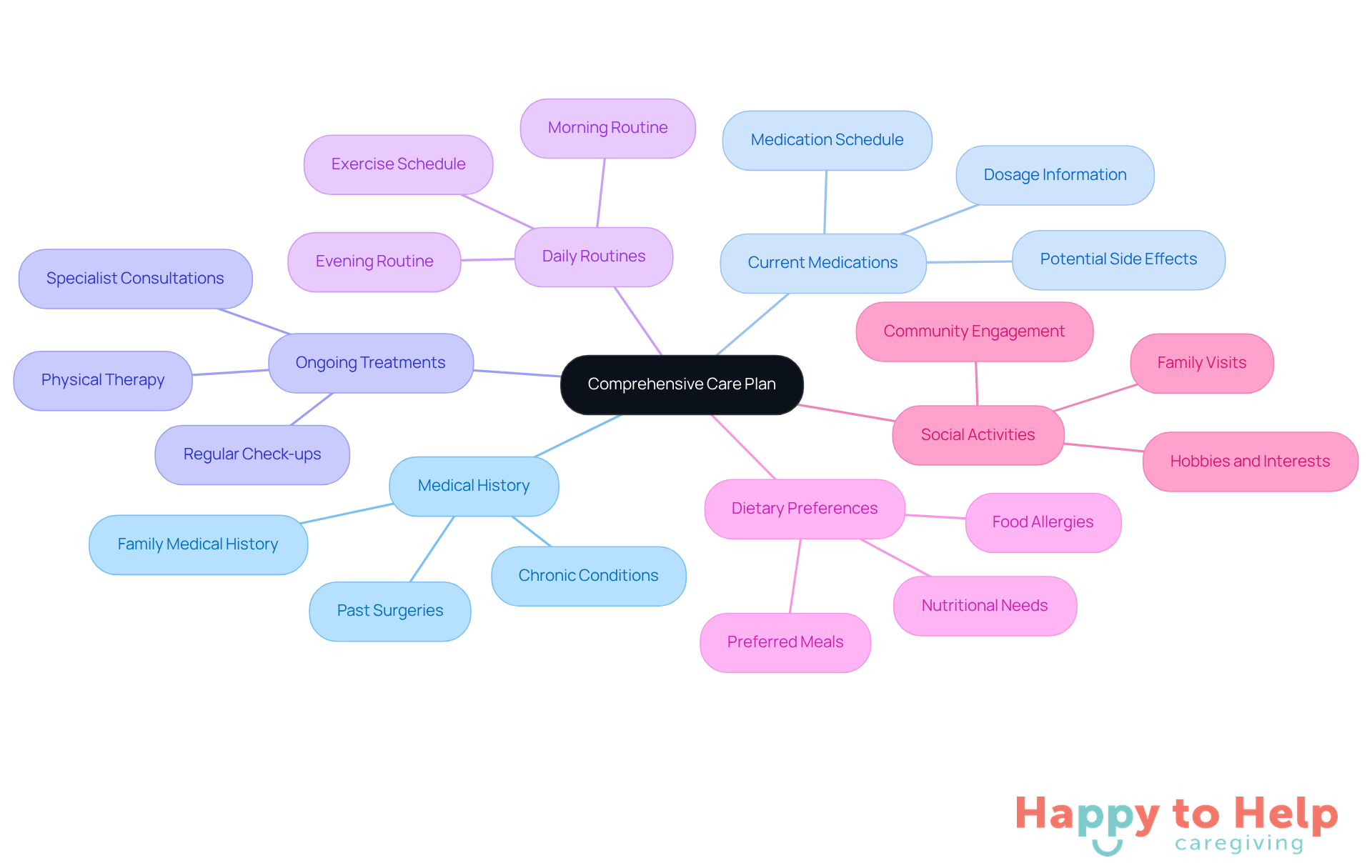
To address these challenges, start by documenting your parent's:
- Medical history
- Current medications
- Ongoing treatments
Include details about:
- Daily routines
- Dietary preferences
- Social activities that encourage engagement
Collaborating with healthcare experts ensures that your strategy aligns with medical advice, providing a solid foundation for taking care of old parents.
Regularly reviewing and updating the care plan is crucial when taking care of old parents. This proactive approach allows you to adapt to any changes in health or circumstances, enhancing the quality of care. Not only does this foster a sense of security for both the caregiver and the aging parent, but it also promotes a more fulfilling life for your loved one.
Foster Open Communication Among Family Members
Effective caregiving, especially when taking care of old parents, often faces a significant challenge: the lack of open communication among relatives. This issue can lead to misunderstandings and disorganization, ultimately affecting the quality of care provided. Without regular discussions, caregivers may struggle to coordinate their efforts, leading to increased stress and potential gaps in care.
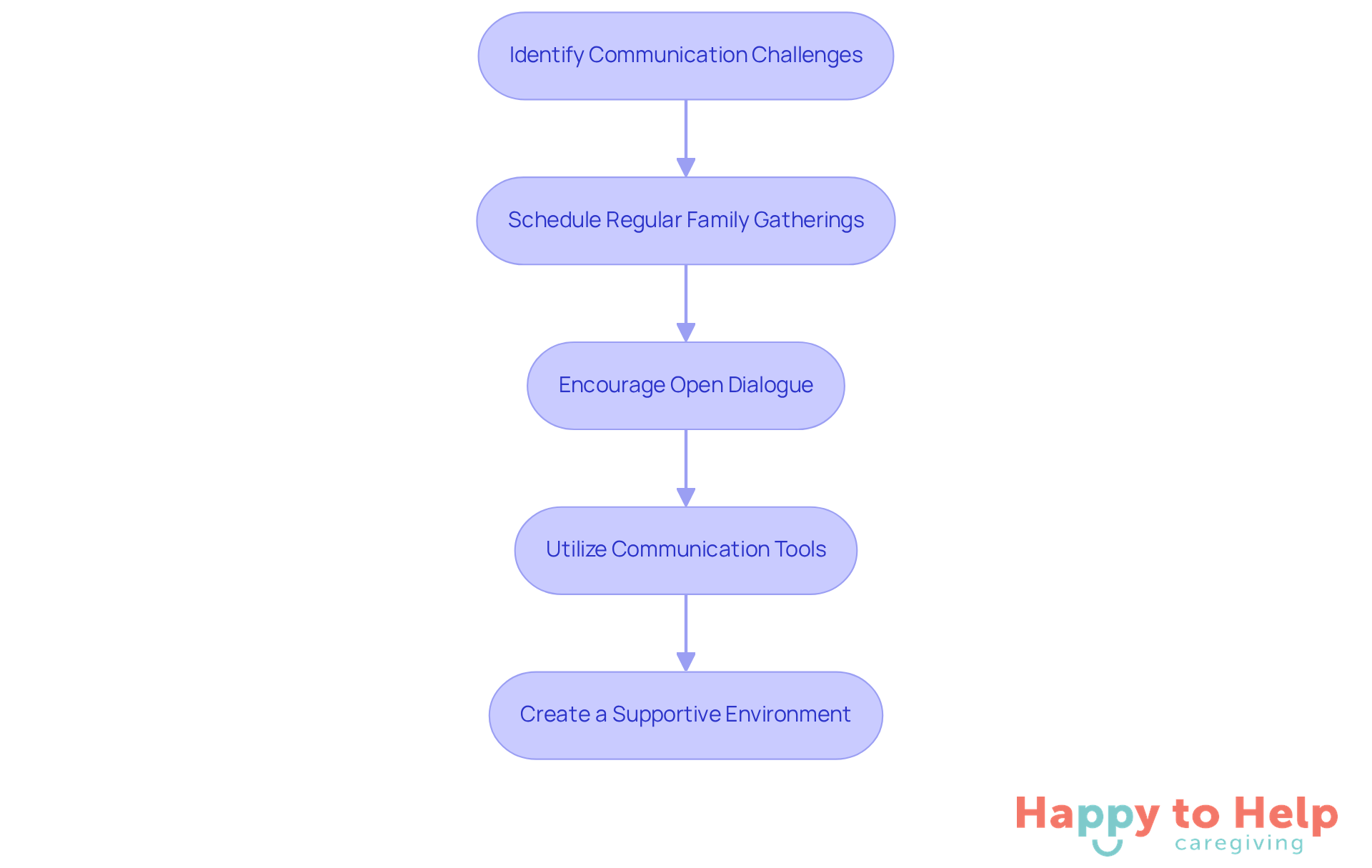
To address this problem, scheduling regular family gatherings is essential. These meetings provide a structured opportunity to discuss care plans, share observations, and voice concerns. Encouraging each household member to express their thoughts fosters a collaborative environment, which is vital for effective caregiving. Research shows that household meetings can significantly improve coordination and help avoid misunderstandings.
Utilizing tools like shared online calendars or communication apps can further enhance this process. These resources keep everyone informed about appointments, medication schedules, and care tasks, ensuring that no detail is overlooked. Additionally, preparing a family meeting agenda helps prioritize pressing issues, making sure all voices are heard.
Family therapists emphasize the importance of open dialogue among caregivers. This approach not only reduces stress but also creates a supportive environment, making it easier to navigate the challenges of caring for others together. Choosing a neutral, comfortable location for these meetings is crucial, as it encourages open discussions and minimizes potential tensions.
Prioritize Self-Care for Caregiver Well-Being
Caring for others can be incredibly demanding, making it crucial for caregivers to prioritize their own well-being. As Dr. Rivas states, "Just as you’re told to put your oxygen mask on first before assisting others on a plane, those who provide care must prioritize their own well-being." Neglecting personal health can lead to serious consequences; approximately 41% of caregivers report having two or more chronic diseases.
To combat this issue, caregivers should:
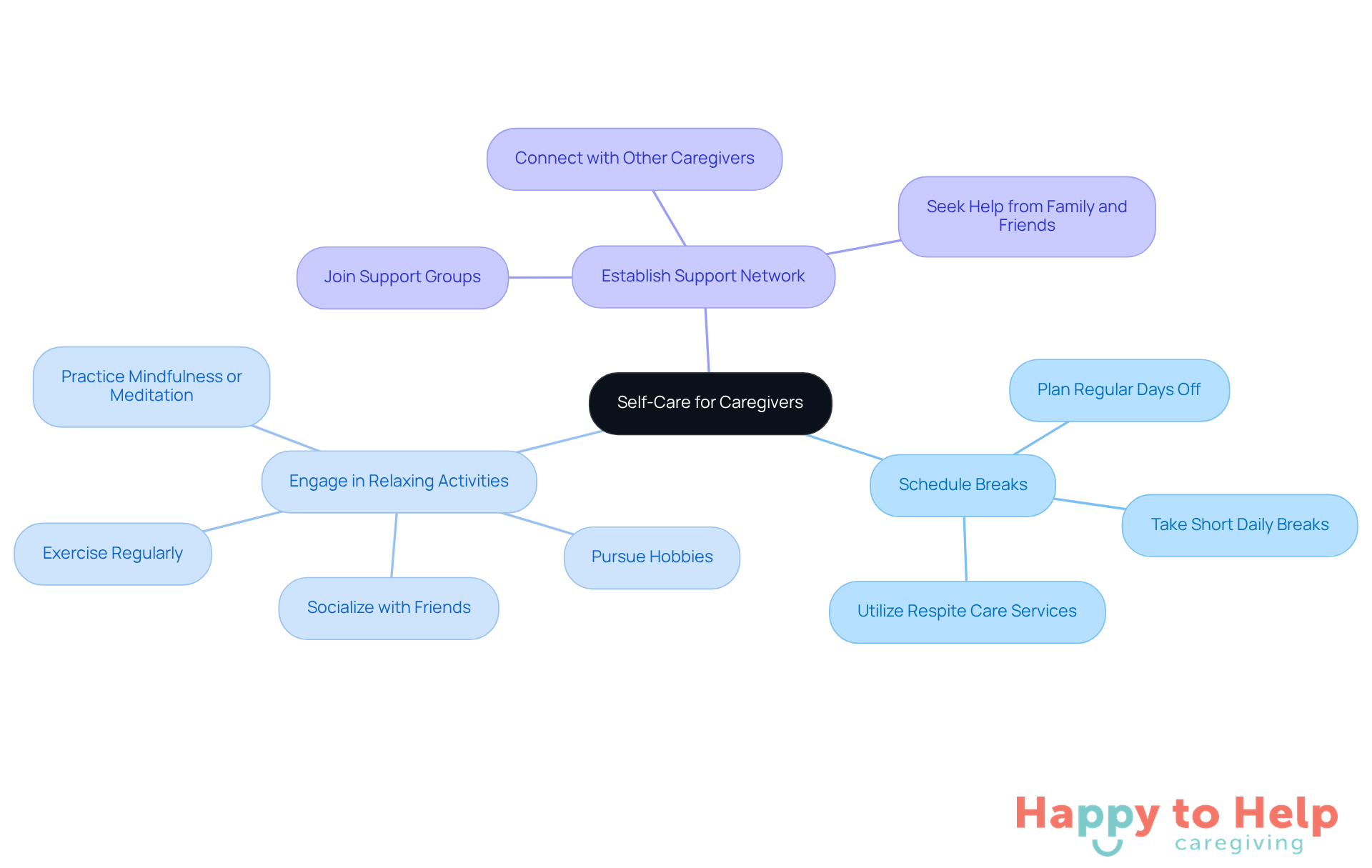
- Schedule regular breaks to recharge.
- Engage in activities that promote relaxation and joy, such as exercise, hobbies, or socializing with friends.
- Establish a support network. Connecting with others in similar roles or joining support groups can provide a platform for sharing experiences and strategies.
Additionally, consider utilizing respite care services for temporary relief. Research indicates that individuals who engage in self-care are better equipped to handle the emotional and physical challenges of caregiving. In fact, nearly 40 million family supporters in the United States contributed 36 billion hours of assistance to adults with limitations in daily activities, highlighting the scale of caregiving and the necessity for self-care.
By taking care of your own physical and emotional health, you will be better prepared for taking care of old parents with compassion and effectiveness. Prioritizing self-care is not just beneficial for caregivers; it also enhances the quality of care they provide.
Moving Forward with Practices for Taking Care of Old
Caring for aging parents presents significant challenges that require a thoughtful approach. Caregivers often face the problem of understanding their parents' unique needs while fostering a supportive environment. This complexity can lead to stress and overwhelm, impacting both the caregiver's and the elderly's quality of life.
To navigate these challenges effectively, caregivers must:
- Conduct thorough assessments to tailor care to individual requirements.
- Create a well-documented care plan that evolves with the changing needs of the elderly.
- Engage in open family discussions to ensure that everyone involved is aligned and informed about the care process.
- Prioritize self-care for caregivers, as maintaining their health and resilience enables them to provide the best support possible.
Ultimately, the journey of caring for elderly parents transcends mere task management. It’s about fostering relationships and ensuring dignity in their later years. By embracing these best practices, caregivers can alleviate the challenges they face, promoting a healthier, more fulfilling experience for all involved. Engaging in these strategies not only enhances the care provided but also strengthens family bonds, creating a legacy of love and respect that honors the aging process.
https://iframe.tely.ai/cta/eyJhcnRpY2xlX2lkIjogIjY5NDFmMzVhMTZmMjZkMjQ4NTRmZDJkNCIsICJjb21wYW55X2lkIjogIjY4ZWU1ZGNhNzMxNzYyNTU3ZjNjOTVjMSIsICJpbmRleCI6IG51bGwsICJ0eXBlIjogImFydGljbGUifQ==Frequently Asked Questions
Why is it important to assess individual needs when caring for elderly parents?
Assessing individual needs is crucial as it helps caregivers understand the specific requirements of their elderly parents, leading to more effective and tailored care.
What areas should be evaluated when assessing the needs of elderly parents?
Caregivers should evaluate physical health, cognitive abilities, emotional well-being, and daily living skills of their elderly parents.
What tools can be used to assess the needs of elderly parents?
Tools such as assessment questionnaires or checklists can be used to identify areas where support is necessary.
How can caregivers observe the daily living skills of their elderly parents?
Caregivers can observe their parents' ability to perform daily activities such as bathing, dressing, and meal preparation.
What role do open conversations play in caring for elderly parents?
Open conversations are essential as they help caregivers understand their parents' preferences and concerns, facilitating the development of a customized care strategy.
How does a tailored care strategy benefit elderly parents?
A tailored care strategy ensures that elderly parents receive appropriate assistance, helping them preserve their independence and dignity.
List of Sources
- Assess Individual Needs for Tailored Care
- 52 Eye-Opening Home Health Statistics: Insights for 2025 (https://boosthomehealth.com/home-health-statistics)
- Older adults prioritize social activities, inclusiveness in massive survey assessing what matters most to them (https://mcknights.com/news/older-adults-prioritize-social-activities-inclusiveness-in-massive-survey-assessing-what-matters-most-to-them)
- Fact Sheet: Trends in Family Care for Older Americans (https://prb.org/resources/fact-sheet-trends-in-family-care-for-older-americans)
- Warning From Older Adults: Care for Aging in America Needs Urgent Rethinking (https://johnahartford.org/newsroom/view/warning-from-older-adults-care-for-aging-in-america-needs-urgent-rethinking)
- Top Trends in Senior Care Services for 2024 (https://westmontliving.com/blog/assisted-living/top-10-trends-in-senior-care-services-for-2024)
- Develop a Comprehensive Care Plan
- Need for Comprehensive Health Care Quality Measures for Older Adults - PMC (https://pmc.ncbi.nlm.nih.gov/articles/PMC6070128)
- Predictors of advance care planning in 11 high‐income nations - PMC (https://pmc.ncbi.nlm.nih.gov/articles/PMC11637245)
- Families urged to plan ahead for elderly parent care before a crisis hits (https://fox8live.com/2025/11/26/families-urged-plan-ahead-elderly-parent-care-before-crisis-hits)
- Caring for an Aging Parent (https://urmc.rochester.edu/news/publications/health-matters/caring-for-an-aging-parent)
- Guide to Taking Care of Aging Parents and Family Members (https://arnothealth.org/news/guide-to-taking-care-of-aging-parents-and-family-members)
- Foster Open Communication Among Family Members
- Holding a Family Meeting (https://caregiver.org/resource/holding-family-meeting)
- Family Meetings in Caregiving (https://caregiveraction.org/family-meeting)
- Tips for planning and managing a caregiver family meeting (https://canr.msu.edu/news/tips\_for\_planning\_and\_managing\_a\_caregiver\_family\_meeting)
- Making Family Meetings Meaningful and Productive - Health Concepts (https://healthconceptsltd.com/2025/09/01/making-family-meetings-meaningful-and-productive)
- Prioritize Self-Care for Caregiver Well-Being
- Caregiver Support: A Guide to Self-Care for Caregivers | Pfizer (https://pfizer.com/news/articles/caregiver\_support\_a\_guide\_to\_self\_care\_for\_caregivers)
- Facebook (https://newsroom.clevelandclinic.org/2025/11/19/importance-of-self-care-for-family-caregivers)
- Why self-care for caregivers matters | Kaiser Permanente (https://healthy.kaiserpermanente.org/health-wellness/care-stories/why-caregiver-self-care-matters)
- The Importance of Self-Care for Family Caregivers - UF Health Jacksonville (https://ufhealthjax.org/stories/2022/the-importance-of-self-care-for-family-caregivers)