

For families in our service areas
For families in our service areas, this guide explains caregiving and how non-medical in-home caregiving can support care planning in East Idaho, Treasure Valley & Magic Valley, Northern Wasatch, North Central West Virginia, and Northeast Ohio.
Understanding When You Can No Longer Care for an
Caring for an elderly parent can be an emotionally charged journey, often filled with guilt, anxiety, and overwhelming responsibility. As our population ages, many individuals face the difficult decision of whether they can continue to provide the necessary support for their loved ones. This situation raises important questions:
- How do you assess your emotional readiness and practical capacity for caregiving?
- What steps can you take to ensure a smooth transition when it’s time to seek additional help?
This guide explores essential strategies to prepare for this significant life change. By understanding the emotional complexities and practical challenges of elder care, you can find clarity and support. Here, we’ll outline the key issues caregivers face, delve into their implications, and provide actionable solutions to navigate this journey effectively.
Assess Your Emotional and Practical Readiness
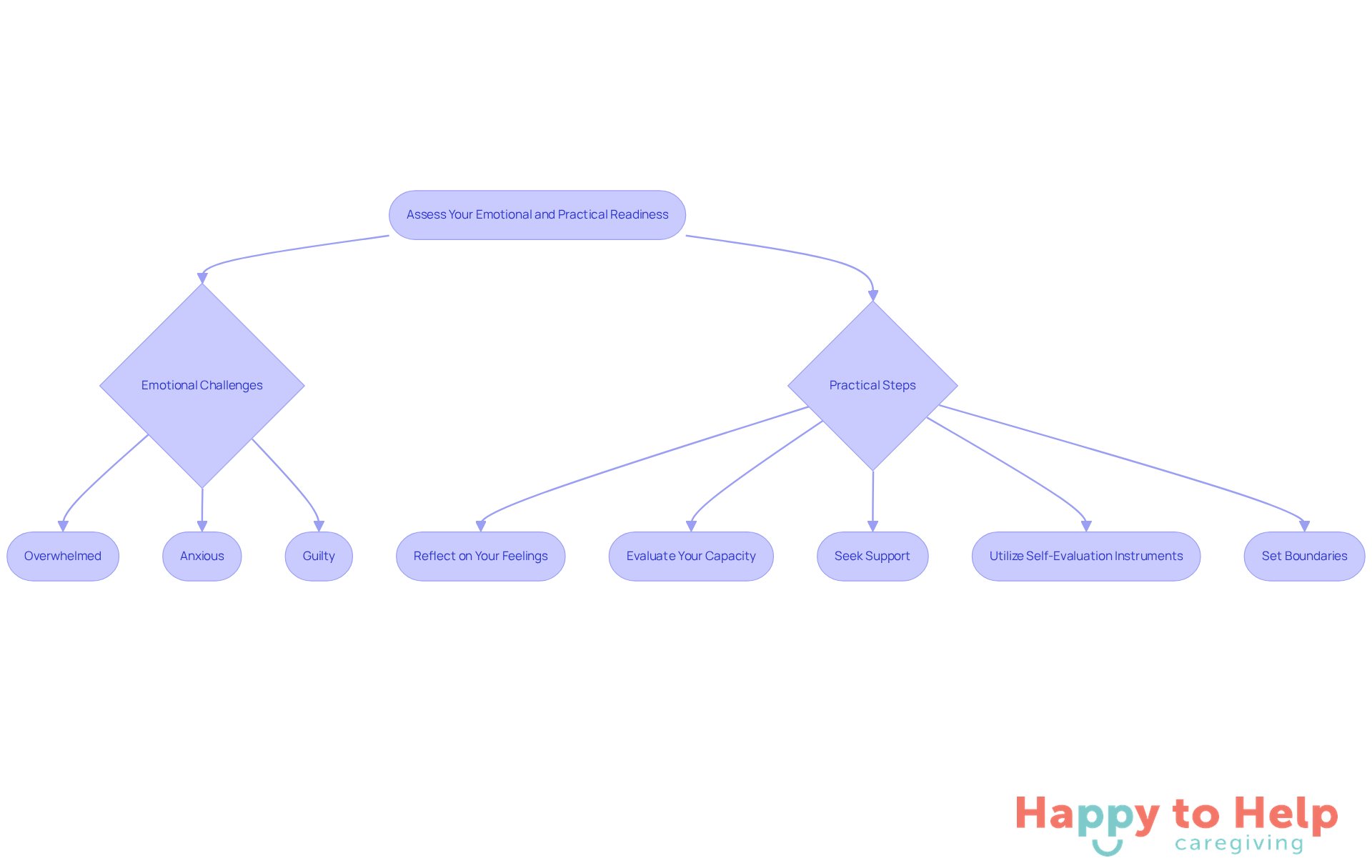
Problem: Emotional Challenges of Caregiving
Caring for a parent can stir up a whirlwind of emotions. You might feel overwhelmed, anxious, or even guilty about the responsibilities ahead. These feelings are not only valid but also common among caregivers.
Agitate: The Weight of Responsibility
These emotions can weigh heavily on your mental and physical health. It’s crucial to recognize how these feelings can impact your ability to provide care effectively.
Solution: Practical Steps to Prepare
- Reflect on Your Feelings: Take time to consider how you feel about the prospect of caring for your parent. Acknowledge these emotions as valid and common among caregivers.
- Evaluate Your Capacity: Assess your physical and mental stamina. Do you have the time and energy to commit to caregiving? Consider your work, domestic responsibilities, and personal health.
- Seek Support: Talk to friends, family, or a counselor about your feelings. Sharing your concerns can provide relief and help you gain perspective.
- Utilize Self-Evaluation Instruments: Think about employing caregiver self-evaluation questionnaires accessible online to measure your preparedness and pinpoint areas where you might require assistance.
- Set Boundaries: Determine what you can realistically handle and set boundaries to protect your well-being. This may include deciding how much time you can dedicate to caregiving each week.
Evaluate Your Parent's Care Needs
-
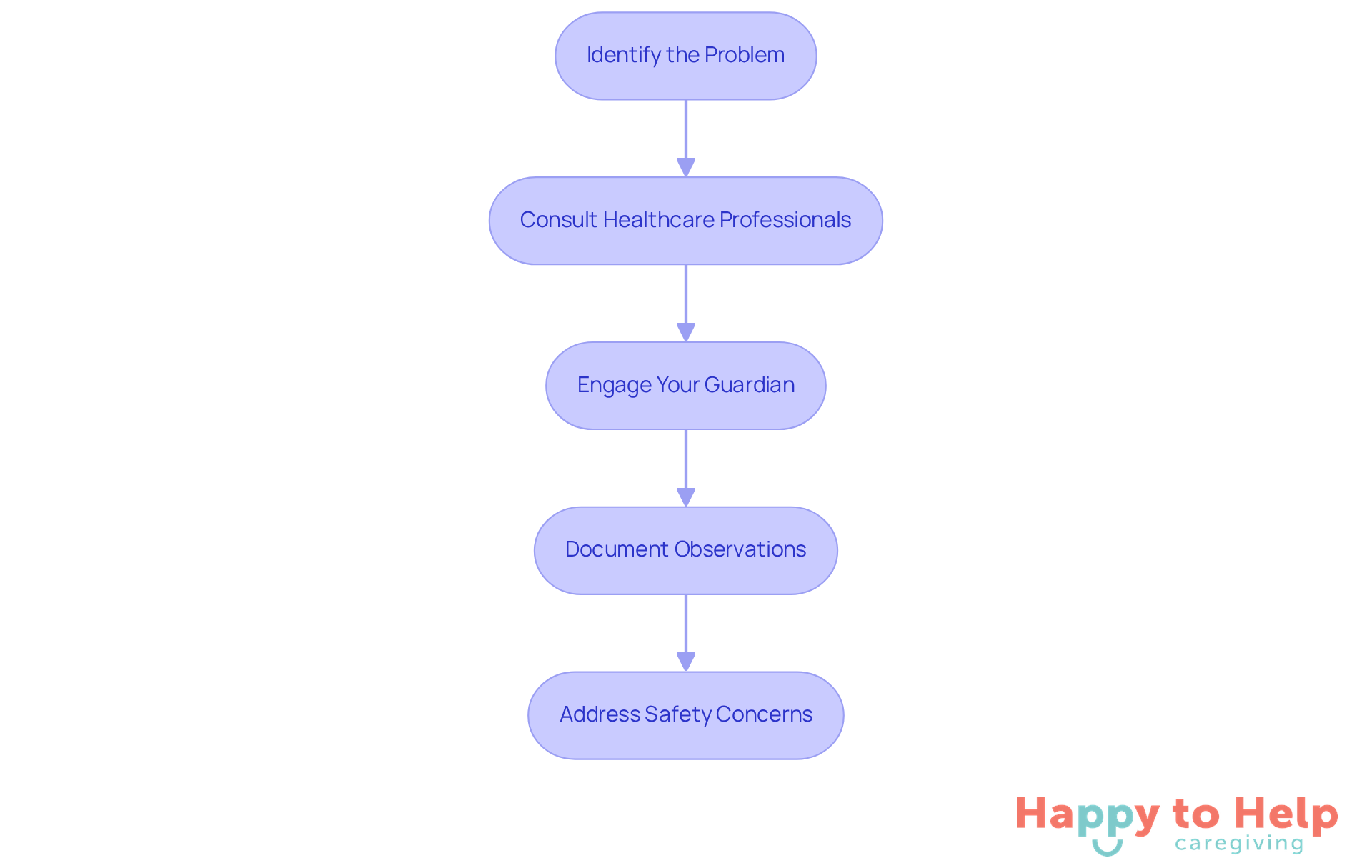
Identify the Problem: Conducting a needs assessment is crucial. Start by observing your loved one's daily activities to pinpoint areas where they may struggle, especially when you can no longer care for elderly parent. Focus on their ability to perform activities of daily living (ADLs) such as bathing, dressing, and eating. Research shows that nearly 70% of seniors require assistance with at least one ADL. With 1 in 6 Americans currently over 65, projected to rise to 1 in 4 by 2050, the demand for effective caregiving services is more urgent than ever.
-
Consult Healthcare Professionals: Next, arrange a visit with your relative's doctor to discuss their overall health and specific care recommendations. This consultation can provide essential insights into their medical needs and help identify any underlying health concerns that may require attention. As Ali Rogin notes, "America’s population is older than it’s ever been, according to U.S. Census Bureau data," highlighting the urgency of these consultations.
-
Engage Your Guardian: Involve your guardian in conversations about their needs and preferences. This approach not only empowers them but also fosters a collaborative environment where their perspective on care is valued, which is essential for their emotional well-being.
-
Document Observations: Keep a detailed record of any changes in your guardian's behavior, health, or daily routines. This documentation will be invaluable when discussing care options with healthcare professionals, ensuring that all relevant information is considered.
-
Address Safety Concerns: Finally, assess the safety of your parent's living environment. Identify potential hazards such as clutter, inadequate lighting, or the absence of mobility aids. Ensuring a safe home is crucial, as studies show that falls are a leading cause of injury among seniors. The challenges faced by caregivers during the COVID-19 pandemic have further underscored the importance of thorough evaluations and consultations, especially when you can no longer care for elderly parent.
Explore Available Care Options
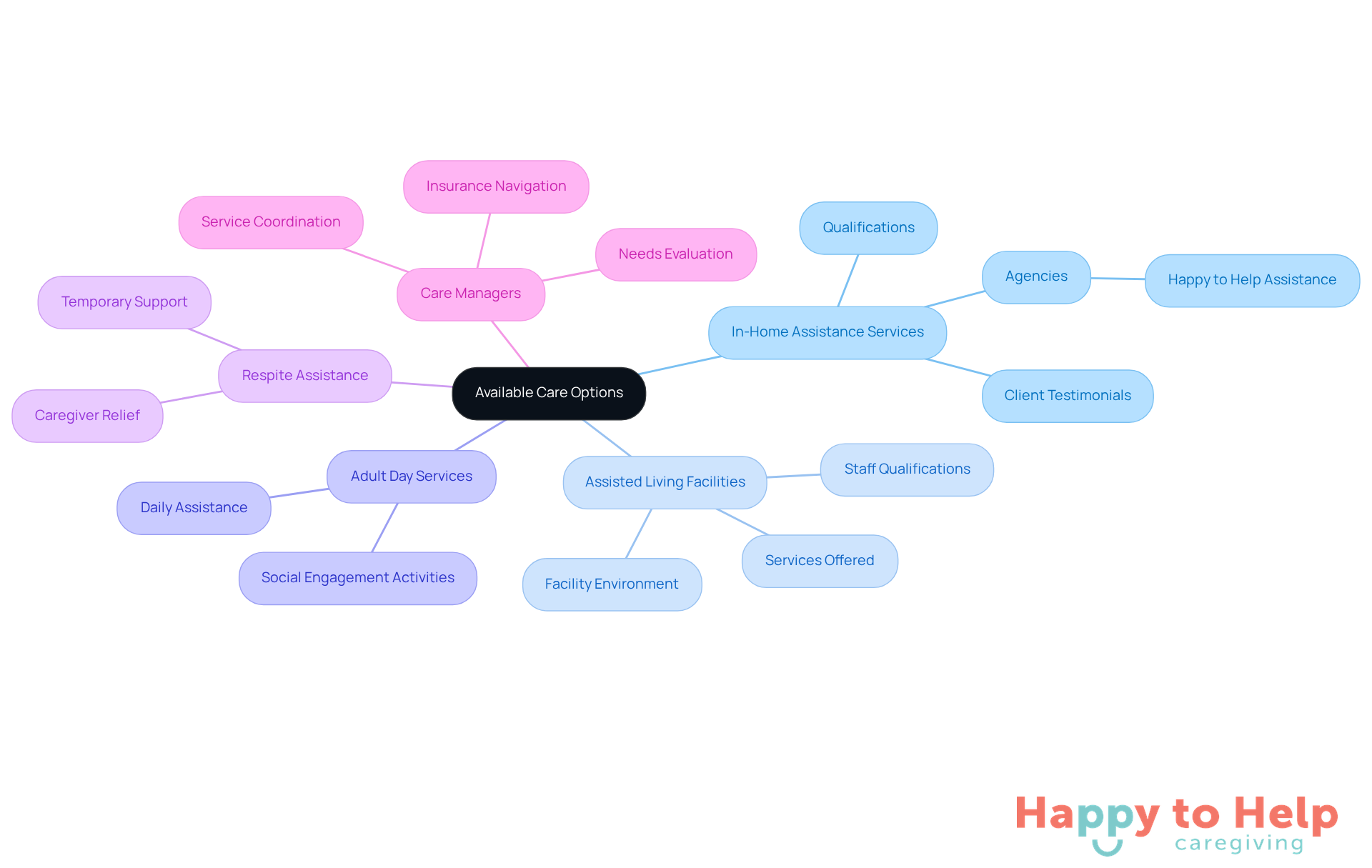
Research In-Home Assistance Services: Caregivers often struggle to find reliable support for their loved ones. Agencies like Happy to Help Assistance can provide essential in-home services. Evaluate their offerings, caregiver qualifications, and client testimonials to ensure quality care.
Consider Assisted Living Facilities: When home care isn't enough, assisted living facilities may be the solution. Visiting potential locations allows you to assess their environment, staff, and services, ensuring your family member receives the support they need.
Assess Adult Day Services: Adult day services can be a valuable resource, offering social engagement and assistance during the day. This enables your guardian to return home at night, maintaining a sense of normalcy. Research local programs and their activities to find the right fit.
Explore Respite Assistance: Caregiving can be overwhelming, and temporary relief is essential. Respite services provide short-term support for your loved one, allowing you to rejuvenate and recharge.
Consult with Care Managers: Professional care managers can help evaluate your needs and suggest suitable care options. They also assist with coordinating services and navigating insurance, making the process smoother for caregivers.
Communicate with Family and Care Professionals
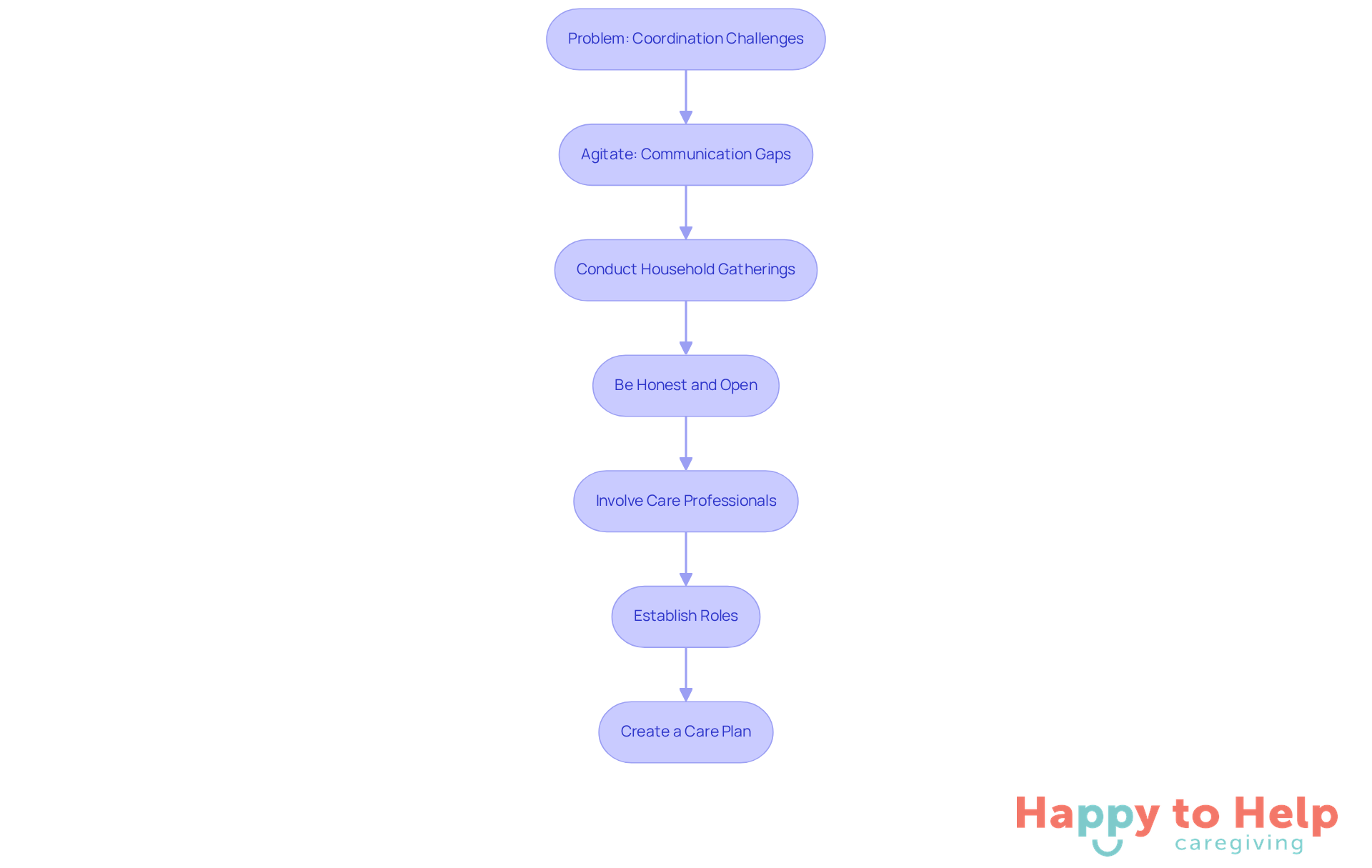
Problem: Coordinating care for a loved one can be challenging, especially when family dynamics are involved. Misunderstandings can arise, leading to frustration and ineffective care.
Agitate: Without regular communication, family members may feel disconnected or unsure about their roles, which can exacerbate stress and hinder the caregiving process. This lack of clarity can lead to conflicts and ultimately affect the quality of care provided.
Solution:
- Conduct Household Gatherings: Arrange consistent household meetings, ideally at the same time each month, to discuss your caregiver's needs and options. Ensure that all relevant relatives are present to share their perspectives, fostering a collaborative environment and reducing misunderstandings.
- Be Honest and Open: Approach discussions with transparency. Share your observations and concerns about your parent's well-being without placing blame. Open communication encourages family members to express their feelings, alleviating tensions and promoting understanding. Remember, all feelings are valid and should be acknowledged during these discussions.
- Involve Care Professionals: If possible, invite a care manager or healthcare professional to the meeting. Their expertise can provide valuable insights and guide the conversation, ensuring that all aspects of care are effectively addressed. In complicated family dynamics, having a neutral facilitator can help ensure that all voices are heard.
- Establish Roles: Clearly define each household member's role in the caregiving process. This clarity helps prevent misunderstandings and ensures responsibilities are shared equitably, allowing family members to play to their strengths and manage their time effectively.
- Create a Care Plan: Collaboratively develop a care plan that outlines agreed-upon actions, responsibilities, and timelines. This document serves as a reference for everyone involved, ensuring accountability and facilitating ongoing communication as needs evolve. Preparing an agenda before meetings can help guide discussions and ensure all relevant topics are covered, while maintaining a clear timetable keeps discussions focused and productive.
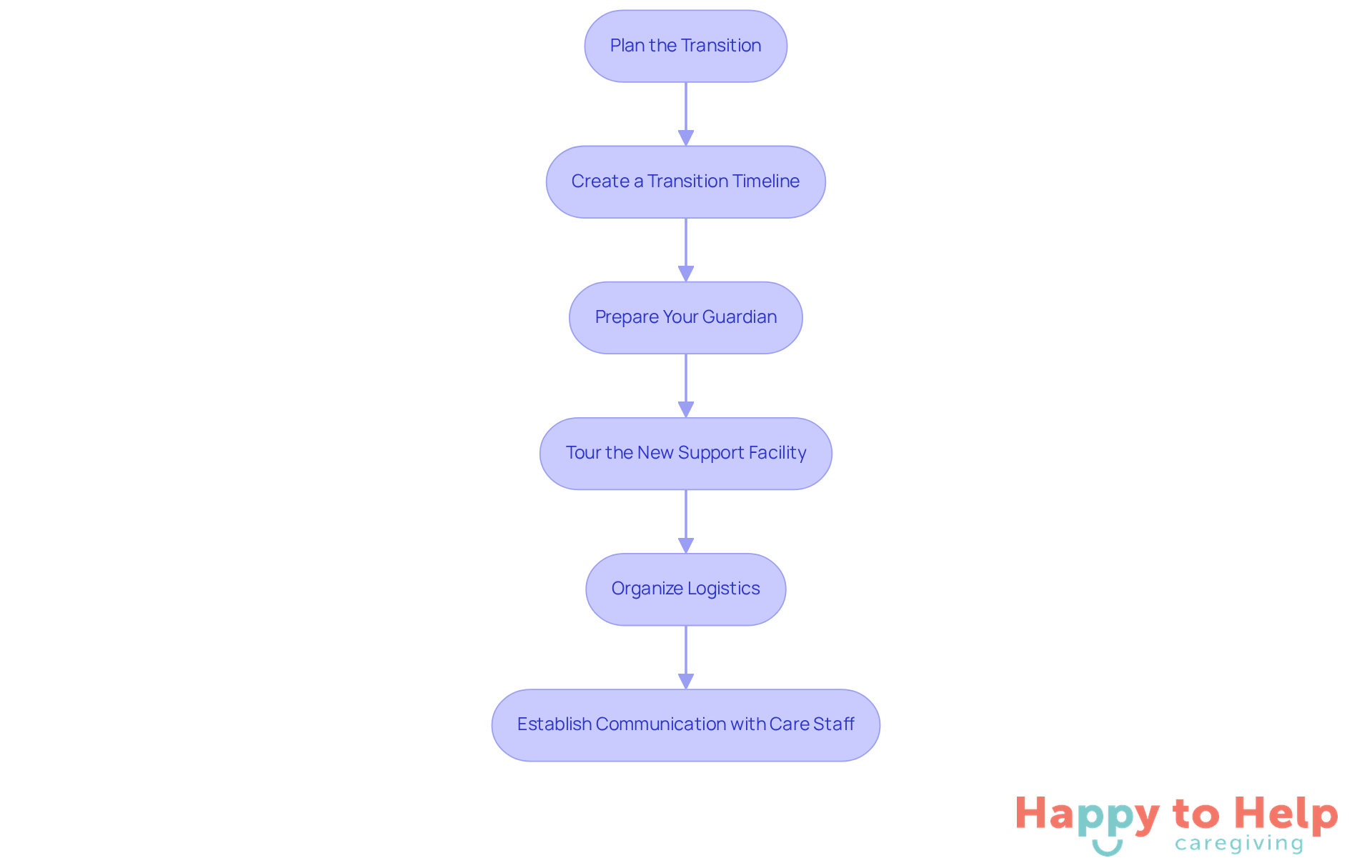
Plan the Transition to New Care Arrangements
Create a Transition Timeline: Caregivers often face the challenge of managing a complex transition for their loved ones. Developing a detailed timeline that outlines key dates and tasks related to the transition can help alleviate this stress. This should include moving dates, medical appointments, and family meetings to ensure everyone is aligned and prepared. As Margot Gage Witvliet notes, "The sooner you start planning, the more choices you have," emphasizing the importance of early preparation.
Prepare Your Guardian: Engaging in open discussions with your guardian about the upcoming changes is crucial. Addressing their concerns and emotions can significantly reduce anxiety. Providing reassurance and involving them in the planning process fosters a sense of control. Recognizing that many elderly individuals have emotional attachments to their homes can guide these conversations effectively.
Tour the New Support Facility: If moving to a support center, arranging a visit for your loved one can ease the transition. Familiarizing them with the new surroundings can significantly alleviate anxiety and help them feel more comfortable with the change.
Organize Logistics: The logistics of the move can be overwhelming. Careful planning is essential, including packing, transportation, and setting up the new living space. Incorporating familiar items from their previous home can provide emotional comfort. Additionally, understanding financial aspects, such as insurance coverage and potential out-of-pocket costs, is vital to avoid unexpected expenses during this process.
Establish Communication with Care Staff: After the transition, maintaining open lines of communication with the care staff is important. Regular updates about your parent's adjustment and care can help you stay informed and involved. This ensures they receive the support they need during this significant change. Remember, nearly half of family caregivers are expected to perform follow-up medical and nursing tasks, highlighting the importance of family involvement in care transitions.
Taking the Next Steps
Recognizing when it’s no longer feasible to care for an elderly parent presents a significant challenge for many caregivers. This emotional decision can lead to feelings of guilt and uncertainty, making it essential to navigate the complexities of caregiving with care. To address this, it’s crucial to focus on:
- Emotional readiness
- Assessing care needs
- Exploring available options
- Maintaining effective communication
- Planning for transitions
The emotional challenges of caregiving cannot be overstated. Caregivers often face stress and burnout, which can impact their well-being. Self-reflection and establishing support systems are vital in this process. Evaluating an elderly parent's care requirements through observation, professional consultations, and safety assessments is essential. This thorough evaluation helps in understanding the level of care needed.
Exploring various care options is another critical step. From in-home assistance to assisted living facilities, families have a range of resources available. Understanding these options allows caregivers to make informed decisions that best suit their loved ones' needs. Furthermore, effective communication among family members and care professionals is vital for a smooth caregiving process.
Ultimately, the journey of caring for an elderly parent requires careful consideration and planning. Approaching this transition with empathy and understanding is crucial, both for oneself and for the loved one in need of care. By taking proactive steps and fostering open communication, families can navigate these challenges more effectively. This ensures that elderly parents receive the support and care they deserve while also safeguarding the mental and emotional health of caregivers.
https://iframe.tely.ai/cta/eyJhcnRpY2xlX2lkIjogIjY5NDBkZmI5N2M4N2VmZTAzYzcxOTY3MyIsICJjb21wYW55X2lkIjogIjY4ZWU1ZGNhNzMxNzYyNTU3ZjNjOTVjMSIsICJpbmRleCI6IG51bGwsICJ0eXBlIjogImFydGljbGUifQ==Frequently Asked Questions
What emotional challenges do caregivers face when caring for a parent?
Caregivers often experience a whirlwind of emotions, including feeling overwhelmed, anxious, or guilty about their responsibilities. These feelings are valid and common among caregivers.
How can the emotional challenges of caregiving impact a caregiver's health?
The emotions associated with caregiving can weigh heavily on a caregiver's mental and physical health, impacting their ability to provide effective care.
What practical steps can caregivers take to prepare for their role?
Caregivers can prepare by reflecting on their feelings, evaluating their physical and mental stamina, seeking support from friends or professionals, using self-evaluation tools, and setting boundaries regarding their caregiving capacity.
How can caregivers assess their parent's care needs?
Caregivers should conduct a needs assessment by observing their parent's daily activities, focusing on their ability to perform activities of daily living (ADLs), and consulting healthcare professionals for insights into their parent's health.
Why is it important to involve the parent in discussions about their care needs?
Involving the parent in discussions empowers them and fosters a collaborative environment where their preferences and perspectives on care are valued, which is essential for their emotional well-being.
What should caregivers document regarding their parent's health and behavior?
Caregivers should keep a detailed record of any changes in their parent's behavior, health, or daily routines, as this information is vital for discussions with healthcare professionals.
What safety concerns should caregivers address in their parent's living environment?
Caregivers should assess the safety of their parent's home by identifying potential hazards such as clutter, inadequate lighting, or the lack of mobility aids, as falls are a leading cause of injury among seniors.
List of Sources
- Assess Your Emotional and Practical Readiness
- 'I don't know where to start.' Parents and caregivers are burned out. Who's most at risk? (https://usatoday.com/story/money/2025/04/04/parents-caregivers-burnt-out-help/82695959007)
- Caregivers carry an emotional weight. More and more shoulder that intimate responsibility (https://fortworthreport.org/2025/11/27/caregivers-carry-an-emotional-weight-more-and-more-shoulder-that-intimate-responsibility)
- Opinion | America’s Caregivers Are in Crisis (https://nytimes.com/2025/11/24/opinion/caregiving-crisis.html)
- Evaluate Your Parent's Care Needs
- elder care (https://pbs.org/newshour/tag/elder-care)
- Texas A&M study highlights urgent needs of dementia caregivers (https://stories.tamu.edu/news/2025/12/15/texas-am-study-highlights-urgent-needs-of-dementia-caregivers)
- Aurora releases study to address needs of older adults and caregivers (https://denver7.com/news/front-range/aurora/aurora-releases-study-to-address-needs-of-older-adults-and-caregivers)
- The declining population will make it even harder to care for elders (https://npr.org/2025/11/02/nx-s1-5535648/population-elderly-caregivers)
- Explore Available Care Options
- Needs improvement: Survey finds concerns among Mass. assisted living facilities (https://wcvb.com/article/assisted-living-safety-review-results-massachusetts/69146184)
- Fall River assisted-living facility owner and inspector sue each other over faulty sprinklers in deadly fire (https://boston.com/news/local-news/2025/12/09/assisted-living-facility-owner-inspector-lawsuits-faulty-sprinklers-fall-river-fire)
- Assisted-living facility owner and inspector sue each other over faulty sprinklers in deadly fire (https://ctpost.com/news/article/assisted-living-facility-owner-and-inspector-sue-21232971.php)
- The Top 10 Home Health Care News Stories Of 2025 (https://homehealthcarenews.com/2025/12/the-top-10-home-health-care-news-stories-of-2025)
- U.S. News & World Report Names VillageCare at 46 & Ten a 2025 Best Assisted Living Facility | VillageCare (https://villagecare.org/news/us-news-world-report-names-villagecare-46-ten-2025-best-assisted-living-facility)
- Communicate with Family and Care Professionals
- When to Have "The Talk": Why Family Care Planning Meetings Matter - Alden of Waterford (https://aldenwaterford.com/when-to-have-the-talk-why-family-care-planning-meetings-matter)
- Holding a Family Meeting (https://caregiver.org/resource/holding-family-meeting)
- Mom or Dad Need Long-Term Health Care - Start with a Family Meeting (https://ltcnews.com/articles/mom-or-dad-need-long-term-health-care)
- Caring for Older Parents: Family Meetings Have a Role - Alden Long Grove (https://aldenlonggrove.com/caring-for-older-parents-family-meetings-have-a-role)
- Plan the Transition to New Care Arrangements
- 5 tips for supporting elderly parents transition into care (https://shower-buddy.com/blogs/news/5-tips-for-supporting-elderly-parents-transition-into-care)
- Managing Caregiving Transitions from Hospitals to Skilled Nursing, Rehab or Assisted Living and Back Home | VirginiaNavigator (https://seniornavigator.org/article/79777/managing-caregiving-transitions-hospitals-skilled-nursing-rehab-or-assisted-living)
- Eldercare Transitions helps Allegheny County seniors, families plan final, peaceful years (https://wtae.com/article/allegheny-planning-eldercare-transitions/69547019)
- Moving Mom or Dad? How to Make Downsizing or Senior Living Transitions Easier (https://ltcnews.com/articles/moving-mom-or-dad-make-senior-living-transitions-easier)