4 Essential Steps for Choosing GPS Tracking for Seniors

For families in our service areas
For families in our service areas, this guide explains caregiving and how non-medical in-home caregiving can support care planning in East Idaho, Treasure Valley & Magic Valley, Northern Wasatch, North Central West Virginia & Southwestern Pennsylvania, and Northeast Ohio.
What You Need to Know About Steps for Choosing GPS Tracking
The increasing reliance on technology to enhance safety and independence for seniors has brought GPS tracking devices to the forefront of elder care. While these tools provide peace of mind for families, they also empower elderly individuals to maintain their autonomy in daily activities. However, caregivers face a significant challenge: with so many options available, how can they select the right GPS tracking device?
This decision-making process is crucial, as it impacts both the safety and privacy of seniors. Choosing the wrong device can lead to frustration and a lack of trust, undermining the very independence caregivers aim to support. Therefore, understanding the essential steps in selecting a GPS tracking device is vital for ensuring that seniors feel respected and secure.
Understand the Purpose of GPS Tracking Devices
Understanding the purpose of GPS tracking for seniors is crucial for enhancing their quality of life. The primary problem is ensuring safety and preventing wandering, especially for those with cognitive impairments like dementia. This concern can lead to anxiety for both elderly individuals and their families, creating a significant emotional burden.
The implications of this anxiety are profound. Many geriatric care experts highlight that GPS tracking for seniors can help alleviate these worries. For instance, a study found that 72% of senior participants felt more secure with GPS tracking for seniors, which directly correlates with increased independence. Families report that the ability to locate their loved ones at any time significantly reduces the constant stress associated with caregiving.
So, what’s the solution? GPS tracking for seniors provides a practical way to enhance elderly autonomy. Real-world examples illustrate their effectiveness. The Johnson family, for example, invested in GPS trackers for both their children and Mark's elderly mother. This technology not only provided real-time location updates but also empowered Mark's mother to maintain her independence during daily activities, such as walks to the local market. Such experiences underscore how GPS tools can help older adults engage in social activities, reducing feelings of isolation.
Moreover, the use of GPS tracking for seniors significantly improves the safety of elderly individuals. Caregivers can set up geofencing alerts, which notify them if an elderly person crosses designated boundaries. This feature is particularly beneficial for individuals with dementia, enhancing their ability to navigate safely. In emergencies, GPS tracking for seniors can pinpoint an elderly individual's location, enabling quicker responses from family or emergency services, which is vital for ensuring prompt assistance.
In summary, GPS tracking for seniors is not merely an observational tool; it is essential for empowering elderly individuals to live independently while providing peace of mind to their families. By adopting this technology, caregivers can create a supportive environment that prioritizes both safety and autonomy.

Explore Different Types of GPS Tracking Devices
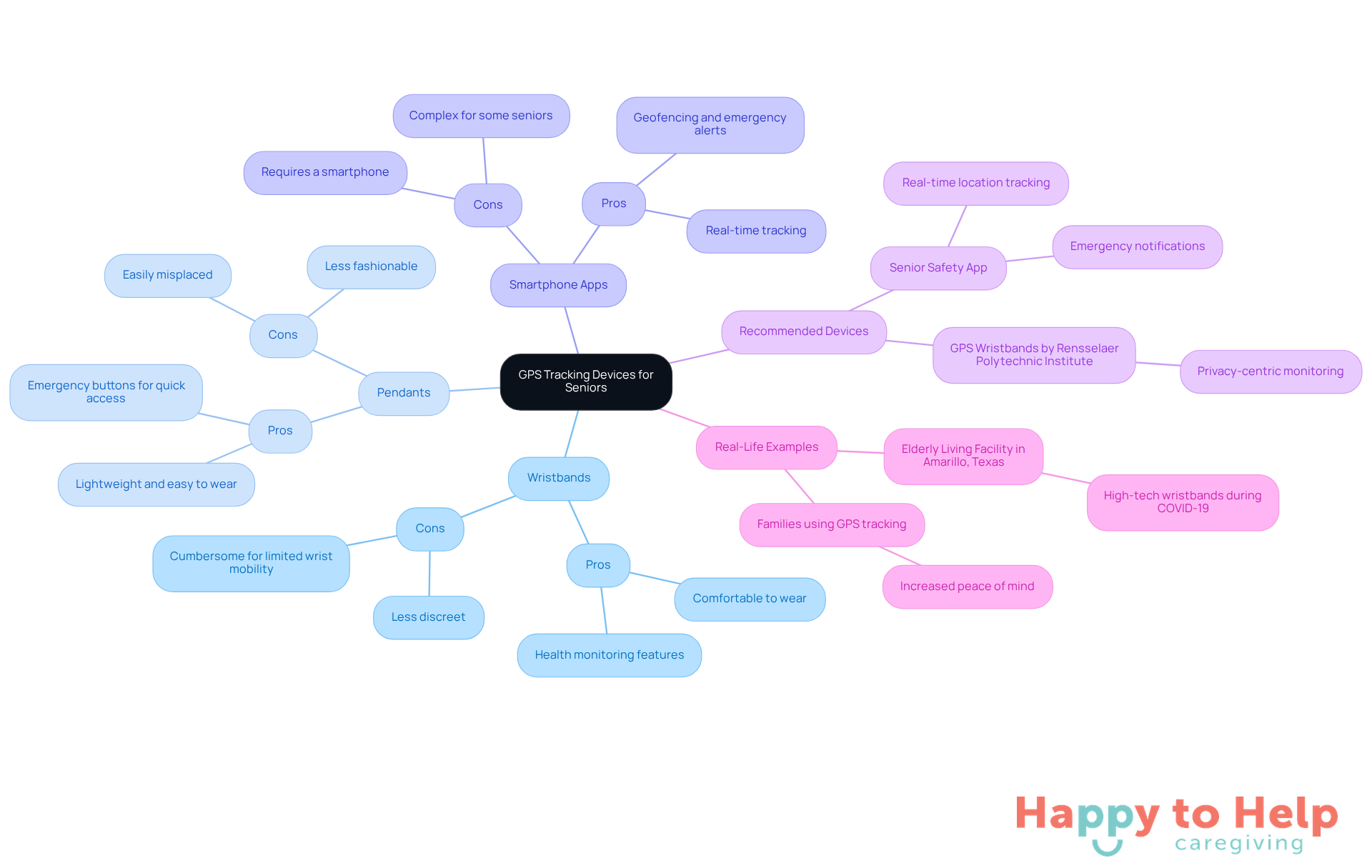
Common types of GPS devices include GPS tracking for seniors, which is essential for ensuring the safety of older adults, a significant concern for caregivers. The main varieties of GPS monitoring devices available include wristbands, pendants, and smartphone applications. Each type offers unique features tailored to different needs, but they also come with their own set of challenges.
Comparison of Pros and Cons:
-
Wristbands:
- Pros: Comfortable to wear, often designed to resemble regular watches, and can include health monitoring features.
- Cons: May be less discreet than pendants and can be cumbersome for those with limited wrist mobility.
-
Pendants:
- Pros: Lightweight and easy to wear around the neck, often equipped with emergency buttons for quick access to help.
- Cons: Some users may find them less fashionable, and they can be easily misplaced.
-
Smartphone Apps:
- Pros: Provide real-time tracking and additional features like geofencing and emergency alerts, accessible via family members' smartphones.
- Cons: Require a smartphone, which may not be suitable for all elderly individuals, and can be complex for those unfamiliar with technology.
Recommended Devices: To address these challenges, devices specifically designed for older adults often feature user-friendly interfaces and accessibility options. For instance, the Senior Safety App is recognized as a top safety tool, providing real-time location tracking and emergency notifications. Additionally, GPS wristbands, such as those created by Rensselaer Polytechnic Institute, include privacy-centric monitoring technology, ensuring that elderly individuals' movements are observed without undermining their dignity.
Real-Life Examples: A notable example is an elderly living facility in the United States, which successfully implemented high-tech wristbands to enhance safety during the COVID-19 pandemic. This demonstrates the effectiveness of monitoring technology in real-world scenarios. Families utilizing GPS tracking for seniors report increased peace of mind, knowing they can monitor their loved ones' whereabouts through simple smartphone applications. In fact, with 70 million Americans intending to purchase location-tracking gadgets in the next six months, the growing interest in GPS tracking for seniors highlights their significance for older adults.
In conclusion, choosing the appropriate GPS monitoring tool requires careful consideration of comfort, functionality, and simplicity. This ensures that older adults can maintain their autonomy while providing families with peace of mind. Ethical considerations regarding privacy and autonomy should also be taken into account when selecting a product.
Evaluate Key Features and Functionalities
When selecting GPS tracking for seniors, caregivers face the critical challenge of ensuring safety and usability. The implications of inadequate monitoring can lead to anxiety for both seniors and their families. Therefore, it’s essential to focus on key features that enhance safety, such as real-time monitoring, geofencing, and SOS buttons.
Real-time GPS tracking for seniors allows caregivers to continuously monitor their loved ones' whereabouts, providing peace of mind. Geofencing enables caregivers to set virtual boundaries, sending immediate notifications if seniors wander outside designated safe areas - particularly beneficial for those prone to confusion. The SOS button is another vital feature, allowing seniors to quickly alert authorities in emergencies, ensuring prompt assistance when needed.
Battery life and durability are also crucial considerations. A long-lasting battery minimizes the need for frequent recharging, which can disrupt monitoring and lead to lapses in tracking. Devices with extended battery life are especially important for older adults who may forget to charge their devices regularly. As technology analysts note, long battery life in GPS trackers reduces maintenance costs and enhances reliability, providing reassurance for users. For example, the Tracki GPS Tracker features a robust battery designed for continuous use, allowing families to monitor their loved ones without interruption.
Beyond these core features, additional functionalities can significantly enhance the user experience. Two-way communication capabilities enable seniors to stay in touch with caregivers, fostering a sense of safety. Health monitoring features, such as heart rate sensors and fall detection, offer comprehensive oversight of older adults' well-being, alerting caregivers to potential health issues and promoting overall safety and independence.
Integrating these features into GPS tracking for seniors enhances the safety and autonomy of older adults while also alleviating worry for families. As highlighted by technology analysts, the importance of battery life in GPS devices cannot be overstated; it is a crucial factor that directly impacts the reliability and effectiveness of these essential tools in elderly care.

Consider Privacy and Autonomy Concerns
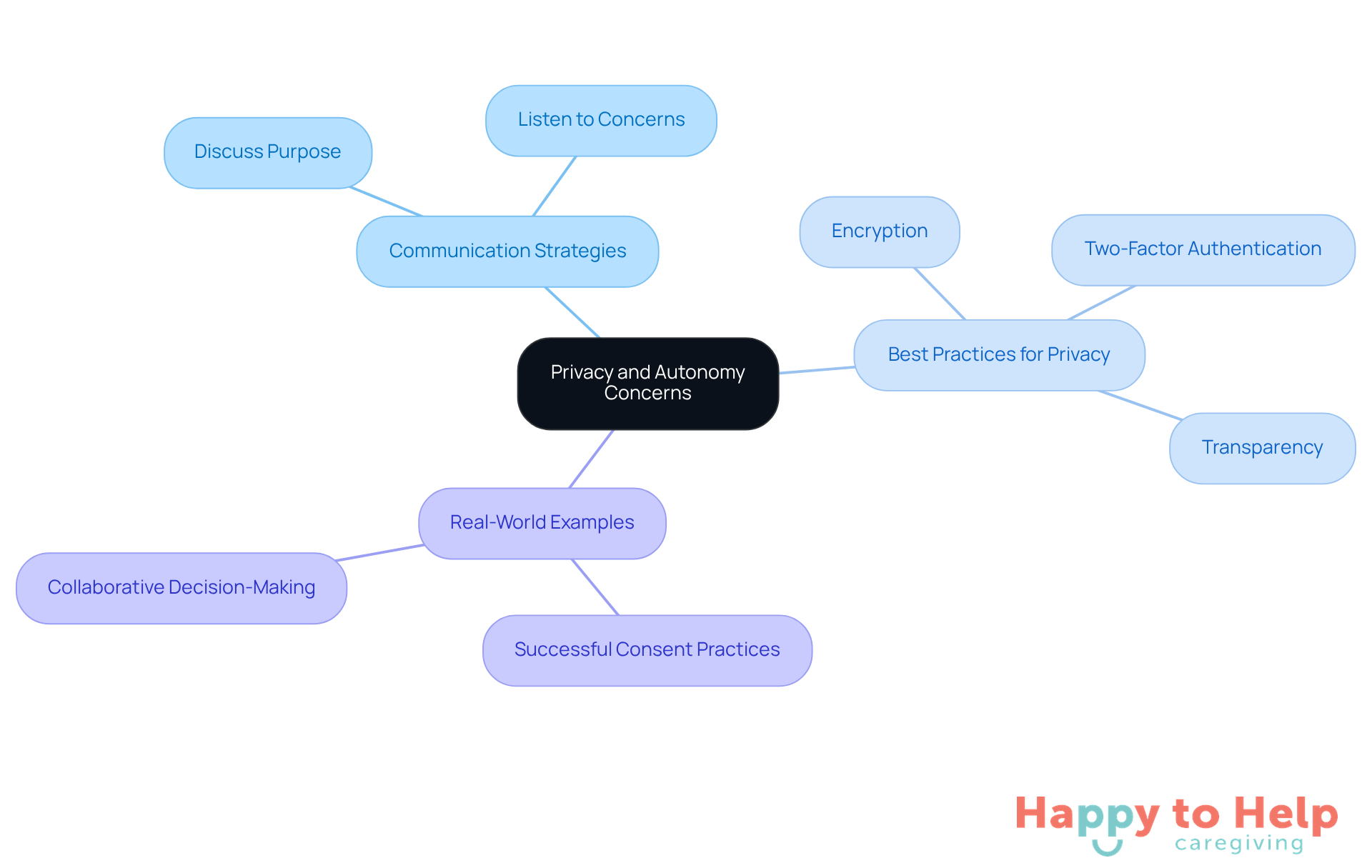
Gaining approval from older adults for GPS monitoring presents a significant challenge for caregivers. This issue not only impacts the autonomy of seniors but also affects the trust between caregivers and those they support. Without proper communication, older adults may feel uneasy about being monitored, which can lead to resistance against the technology.
To address this problem, open conversations are essential. Caregivers should:
- Discuss the purpose of monitoring
- Actively listen to any concerns raised by older adults
Research shows that consent rates for GPS monitoring can improve significantly when families prioritize communication and respect personal autonomy. In fact, nearly 70% of older adults are more likely to consent when they understand the benefits and have their privacy concerns addressed.
Implementing best practices for privacy is crucial in this context. Caregivers should adopt robust data security measures, such as:
- Encryption
- Two-factor authentication
Additionally, using reputable cellular networks and changing default passwords enhances safety. Transparency about how data will be used is vital; families must clearly communicate the advantages of monitoring, such as improved safety and peace of mind, while reassuring older adults that their privacy will be protected.
Real-world examples highlight effective consent practices. Some caregivers have successfully integrated GPS tracking for seniors by first discussing its benefits and addressing privacy concerns, leading to a collaborative decision-making process. A legal expert notes that respecting seniors' autonomy in these discussions is not only ethical but also cultivates a more supportive caregiving environment. By following these guidelines, families can ensure that GPS tracking for seniors aligns with the values and preferences of their loved ones.
Making the Right Choice
Choosing the right GPS tracking device for seniors presents a significant challenge for caregivers, as it directly impacts their loved ones' safety and independence. Families often experience anxiety over the well-being of older adults, making it crucial to find effective solutions. GPS tracking technology not only monitors location but also enhances the quality of life for seniors, alleviating some of this anxiety.
To address this issue, caregivers should consider four essential steps when selecting GPS tracking for seniors:
- Understand the purpose of these devices
- Explore the different types available
- Evaluate key features and functionalities
- Address privacy concerns
Each step is vital in ensuring comfort, usability, and respect for seniors' autonomy, while also providing families with peace of mind. Real-life examples and statistical insights underscore the positive impact GPS tracking can have, reinforcing that this technology is a necessity rather than a luxury.
Ultimately, embracing GPS tracking for seniors goes beyond safety; it fosters independence and enhances overall well-being. Caregivers are encouraged to engage in open conversations with seniors about the benefits of these devices, ensuring their concerns are addressed and their autonomy respected. By following these essential steps, families can create a supportive environment that empowers seniors to live confidently and securely, paving the way for a more connected and caring approach to elder care.
https://iframe.tely.ai/cta/eyJhcnRpY2xlX2lkIjogIjY5MjI0ZjcxZmViYTIxODdjZTM2NWJkNiIsICJjb21wYW55X2lkIjogIjY4ZWU1ZGNhNzMxNzYyNTU3ZjNjOTVjMSIsICJpbmRleCI6IG51bGwsICJ0eXBlIjogImFydGljbGUifQ==Frequently Asked Questions
What is the primary purpose of GPS tracking devices for seniors?
The primary purpose of GPS tracking devices for seniors is to enhance their safety and prevent wandering, especially for those with cognitive impairments like dementia.
How does GPS tracking alleviate anxiety for seniors and their families?
GPS tracking alleviates anxiety by allowing caregivers to locate their loved ones at any time, which significantly reduces the constant stress associated with caregiving.
What percentage of seniors felt more secure with GPS tracking according to a study?
According to a study, 72% of senior participants felt more secure with GPS tracking.
How does GPS tracking improve the independence of elderly individuals?
GPS tracking improves independence by providing real-time location updates, allowing seniors to engage in daily activities, such as walks, while maintaining a sense of autonomy.
What feature of GPS tracking is particularly beneficial for individuals with dementia?
The geofencing alert feature is particularly beneficial for individuals with dementia, as it notifies caregivers if the elderly person crosses designated boundaries.
In what way can GPS tracking assist in emergencies?
In emergencies, GPS tracking can pinpoint an elderly individual's location, enabling quicker responses from family or emergency services, which is vital for ensuring prompt assistance.
How does the use of GPS tracking for seniors contribute to their social engagement?
The use of GPS tracking allows older adults to engage in social activities, reducing feelings of isolation and enhancing their overall quality of life.
List of Sources
- Understand the Purpose of GPS Tracking Devices
- Ensuring Safety: A GPS Tracker Success Story For Kids And Seniors | Service | (https://sinotrackgps.com/ensuring-safety-a-gps-tracker-success-story-for-kids-and-seniors)
- (PDF) Effects of Tracking Technology on Daily Life of Persons With Dementia: Three Experimental Single-Case Studies (https://researchgate.net/publication/261923008_Effects_of_Tracking_Technology_on_Daily_Life_of_Persons_With_Dementia_Three_Experimental_Single-Case_Studies)
- Is GPS Tracking For Seniors Worth It? The Pros & Cons (https://trualta.com/resources/blog/is-gps-tracking-for-seniors-worth-it-the-pros-cons)
- GPS Technology and Its Impact on Elderly Independence: A Closer Look (https://cprguardian.com/blogs/latest-dementia-news-and-updates/gps-technology-and-its-impact-on-elderly-independence-a-closer-look?srsltid=AfmBOoqrh4VE4Q9hnSCxBKKz-DV4_fYEwiPyvFmgpZET3wet20-uavop)
- Exploring the Benefits of SOS GPS Trackers for Seniors - Senior Safety App (https://seniorsafetyapp.com/safety-at-your-fingertips-exploring-the-benefits-of-sos-gps-trackers-for-seniors)
- Explore Different Types of GPS Tracking Devices
- How GPS Tracker Technology is Revolutionizing Senior Care (https://seniorsafetyapp.com/how-gps-tracker-technology-is-revolutionizing-senior-care)
- (PDF) Effects of Tracking Technology on Daily Life of Persons With Dementia: Three Experimental Single-Case Studies (https://researchgate.net/publication/261923008_Effects_of_Tracking_Technology_on_Daily_Life_of_Persons_With_Dementia_Three_Experimental_Single-Case_Studies)
- 170 Million Americans Now Own GPS Tracking Devices (https://safehome.org/gps-industry-outlook-statistics)
- Is GPS Tracking For Seniors Worth It? The Pros & Cons (https://trualta.com/resources/blog/is-gps-tracking-for-seniors-worth-it-the-pros-cons)
- Patient Safety Tip of the Week Archive (https://patientsafetysolutions.com/docs/June_16_2020_Tracking_Technologies.htm)
- Evaluate Key Features and Functionalities
- The Importance of Long Battery Life in GPS Trackers (https://pakatak.co.uk/importance-of-long-battery-life-in-gps-trackers?srsltid=AfmBOor5wGjY-z5hZIb6PeEJk9axTth20_EvUA7yDa9RsRcmtgORKu5J)
- Elderly Safety - The Benefits of GPS Trackers for Senior Care (https://tracki.com/blogs/post/benefits-of-gps-trackers-for-senior-care?srsltid=AfmBOorMrPiYd697i1ZU8XxVtMU4-N8LAZN2KY25WV24VkUz3vHIiVym)
- Case Studies | GIS in Transportation | Planning, Environment & Realty | FHWA (https://gis.fhwa.dot.gov/case_studies/Mobile_Applications_for_GIS_Case_Studies.aspx)
- Patient Safety Tip of the Week Archive (https://patientsafetysolutions.com/docs/June_16_2020_Tracking_Technologies.htm)
- 6 Things To Know Before Buying A GPS Tracker For Your Senior Parents | Family1st (https://family1st.io/things-to-know-before-buy-a-gps-tracker)
- Consider Privacy and Autonomy Concerns
- Alzheimer’s GPS Devices: Safety Measures or Privacy Invasions? (https://pameladwilson.com/care-planning-for-alzheimers-professional)
- Patient Safety Tip of the Week Archive (https://patientsafetysolutions.com/docs/June_16_2020_Tracking_Technologies.htm)
- Is GPS Tracking For Seniors Worth It? The Pros & Cons (https://trualta.com/resources/blog/is-gps-tracking-for-seniors-worth-it-the-pros-cons)
- 170 Million Americans Now Own GPS Tracking Devices (https://safehome.org/gps-industry-outlook-statistics)