
4 Steps for Taking Care of Your Elderly Parent Effectively

For families in our service areas
For families in our service areas, this guide explains caregiving and how non-medical in-home caregiving can support care planning in East Idaho, Treasure Valley & Magic Valley, Northern Wasatch, North Central West Virginia & Southwestern Pennsylvania, and Northeast Ohio.
Understanding Taking Care of Your Elderly Parent
Caring for elderly parents presents a significant challenge that many individuals encounter, often filled with love, concern, and uncertainty. The unique needs and preferences of aging parents must be understood to ensure their well-being and independence. However, the complexities of care options, emotional health, and caregiver stress can create a daunting landscape for those involved.
This responsibility can lead to feelings of overwhelm as caregivers strive to balance their parents' needs with their own well-being. The emotional toll can be heavy, and without proper support, caregivers may find themselves struggling. So, how can caregivers effectively navigate this challenging yet rewarding journey?
To address these challenges, caregivers can implement several practical solutions:
- Establishing open communication with elderly parents about their needs and preferences is essential.
- Seeking support from local resources, such as community programs or support groups, can alleviate some of the stress.
- Prioritizing self-care is also crucial; caregivers should carve out time for their own mental and physical health.
By taking these steps, caregivers can create a more manageable and fulfilling caregiving experience.
Assess Your Parents' Needs and Preferences
-
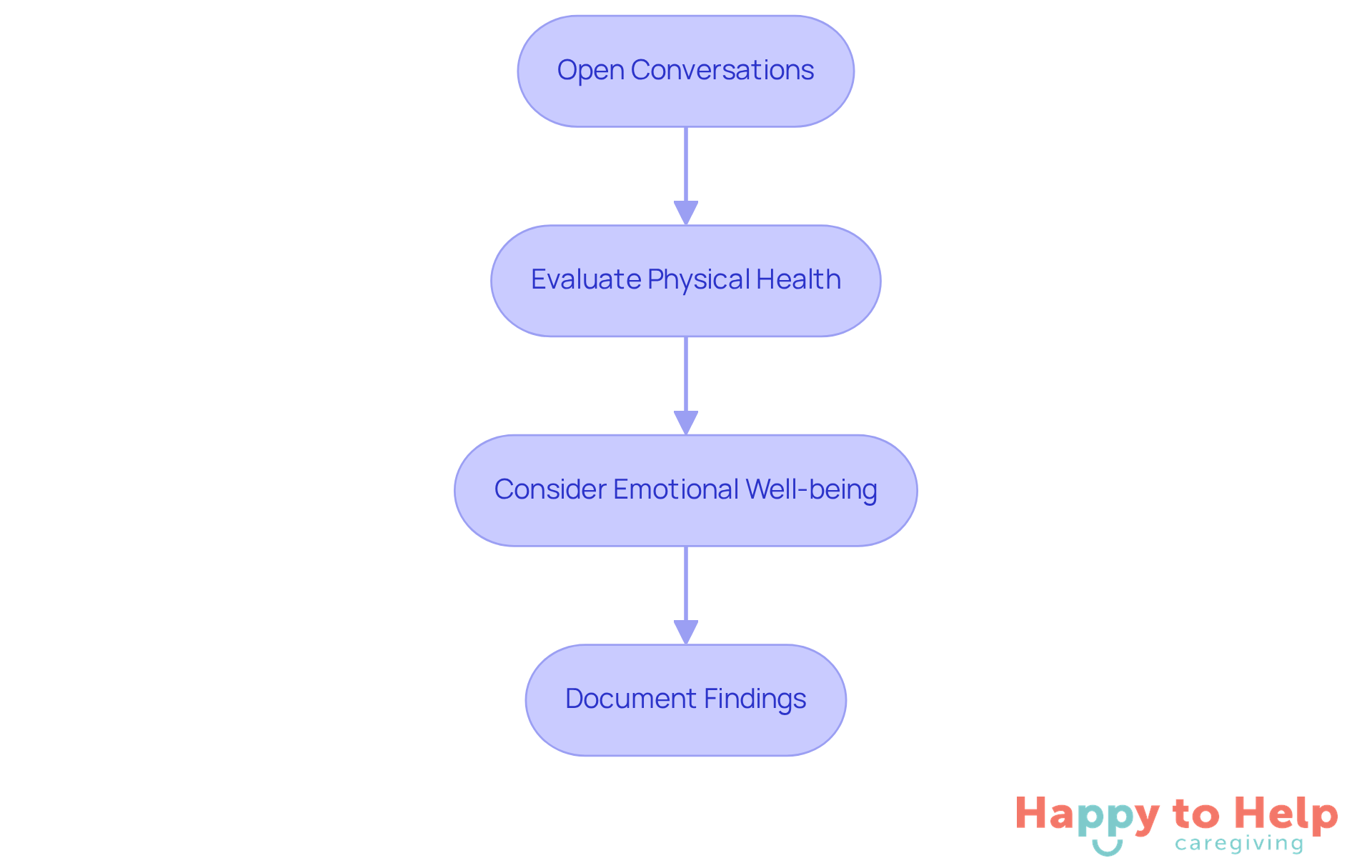
Problem: Open Conversations: Caregivers often struggle to engage their aging parents in meaningful discussions about their daily lives and well-being. Initiating sincere conversations can be challenging, but it’s crucial. Start by asking open-ended questions that encourage your parents to share their feelings and preferences. This approach fosters a supportive dialogue and helps you understand their needs better.
-
Agitate: Evaluate Physical Health: Changes in physical abilities can significantly impact seniors' independence. Statistics show that about 30% of seniors face mobility challenges, which can hinder their daily tasks. It’s essential to monitor any changes in their physical health. Arranging a medical evaluation can provide a thorough assessment, ensuring that any underlying issues are addressed promptly.
-
Solution: Consider Emotional Well-being: Emotional health is just as vital as physical health. Be attentive to signs of isolation or depression, which may indicate a need for additional support. Recognizing these emotional signals is crucial for maintaining overall well-being. As geriatric support specialists emphasize, "Understanding the emotional landscape of aging loved ones is essential for their overall health and happiness."
-
Document Findings: Keeping a detailed record of your observations and discussions is key. This documentation will be invaluable when discussing assistance options with family members or healthcare professionals. It ensures that everyone is informed and aligned on the best course of action. Proper documentation not only aids communication but also helps coordinate services effectively.
Discuss Care Options and Living Arrangements
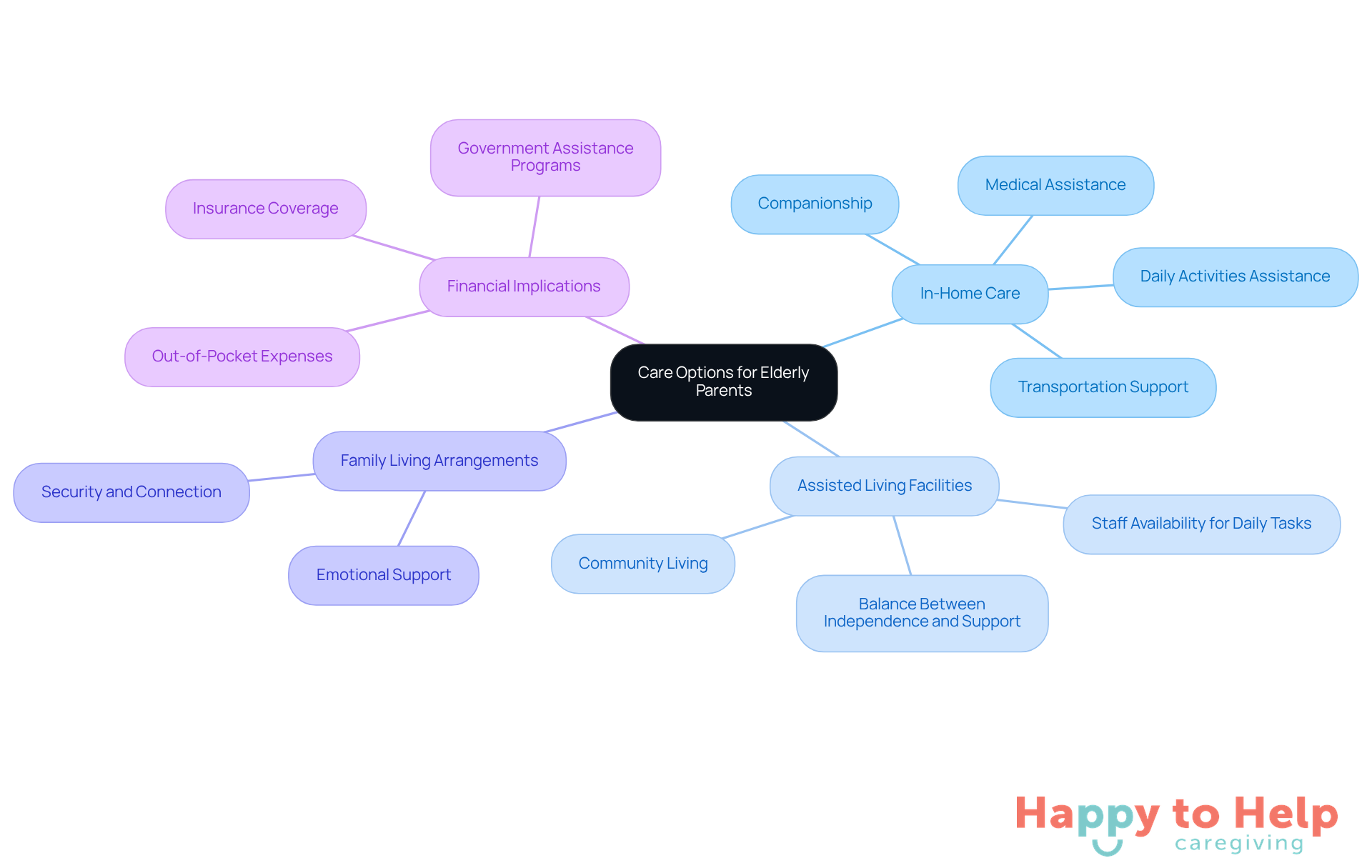
Explore in-home care: Many caregivers struggle with the challenge of taking care of elderly parents while ensuring they receive adequate support in a familiar environment. Hiring professional caregivers can be a viable solution. Taking care of elderly parents involves caregivers who can assist with daily activities, providing companionship, personal care, and even medical assistance, allowing your parents to maintain their independence.
If your parents require more help than can be provided at home, assisted living facilities may be the solution for those taking care of elderly parents. These communities strike a balance between independence and support, with staff available to assist with daily tasks, ensuring your parents receive the care they need.
Evaluate Family Living Arrangements: Another option to consider is moving in with family members. This arrangement not only provides emotional support for taking care of elderly parents but also ensures that your parents are not alone, fostering a sense of security and connection.
Review Financial Implications: It's crucial to assess the financial aspects of each option. Take into account insurance coverage, potential out-of-pocket expenses, and any available government assistance programs. Understanding these factors can help you make an informed decision that best suits your family's needs.
Manage Caregiver Stress and Emotional Well-being
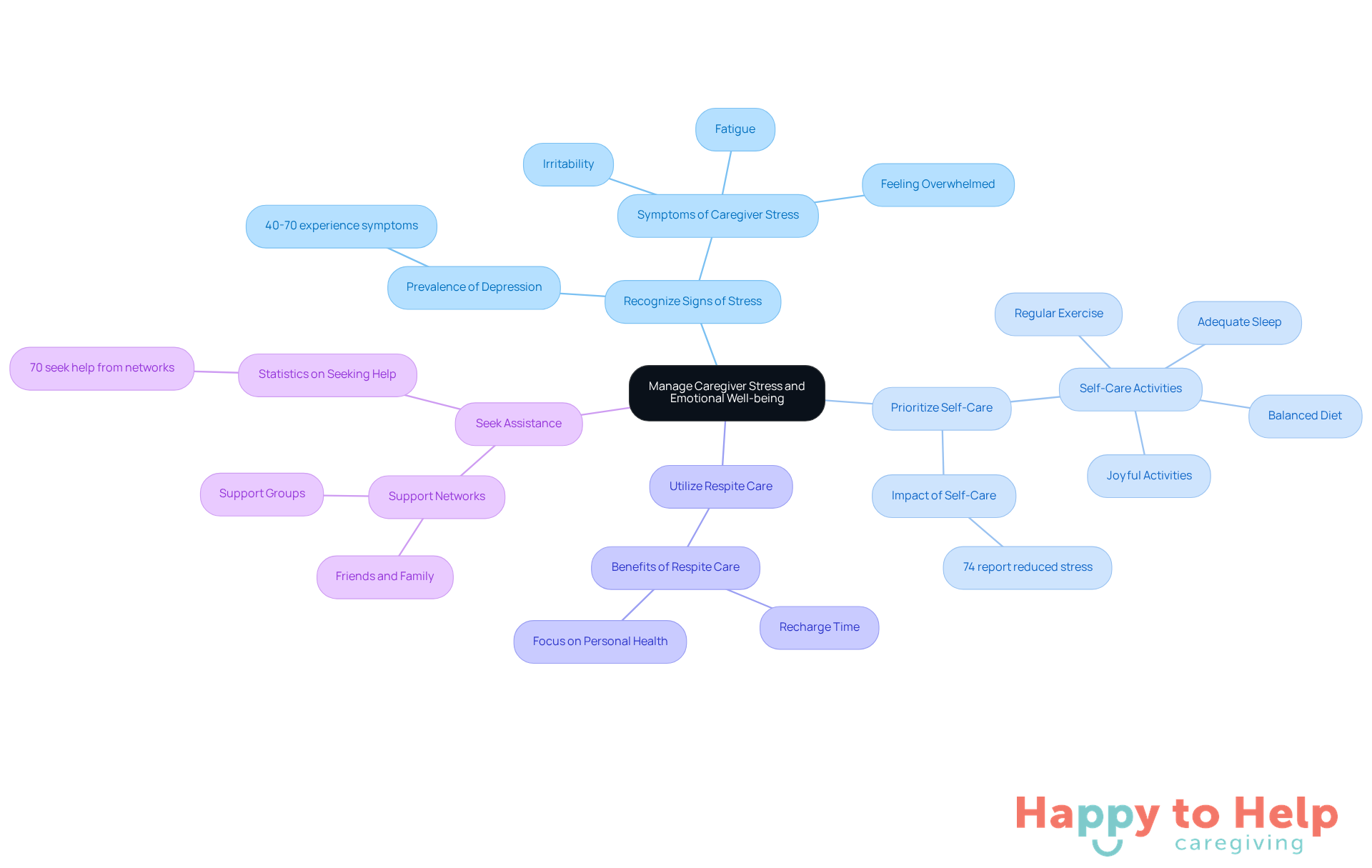
Recognize Signs of Stress: Caregivers often face significant challenges, including symptoms like fatigue, irritability, and feelings of being overwhelmed. Recognizing these signs is crucial; research indicates that 40 to 70 percent of those providing assistance experience symptoms of depression. This can severely impact their ability to offer support.
Prioritize Self-Care: It's essential to carve out time for your own health. Engage in regular exercise, maintain a balanced diet, and ensure you get enough sleep. Activities that bring joy and relaxation are vital; even small moments of self-care can help reduce stress and improve overall well-being. Studies show that individuals who prioritize self-care feel more effective and less stressed, with 74% reporting reduced stress through these practices.
Utilize Respite Care: Respite care services can be a game changer. Hiring someone to assist for a few hours or days allows you to recharge and focus on your own health and interests. This is crucial for maintaining long-term support.
Seek Assistance: Don’t hesitate to connect with support groups or confide in friends and family about your experiences. Sharing your feelings can alleviate stress and provide valuable insights. Almost 70% of caregivers seek help from their networks for information and emotional support, highlighting the importance of community in managing caregiving responsibilities. As health psychologist Taylor Rush emphasizes, building a network of assistance is vital for sustainable caregiving.
Create a Support System for Caregiving
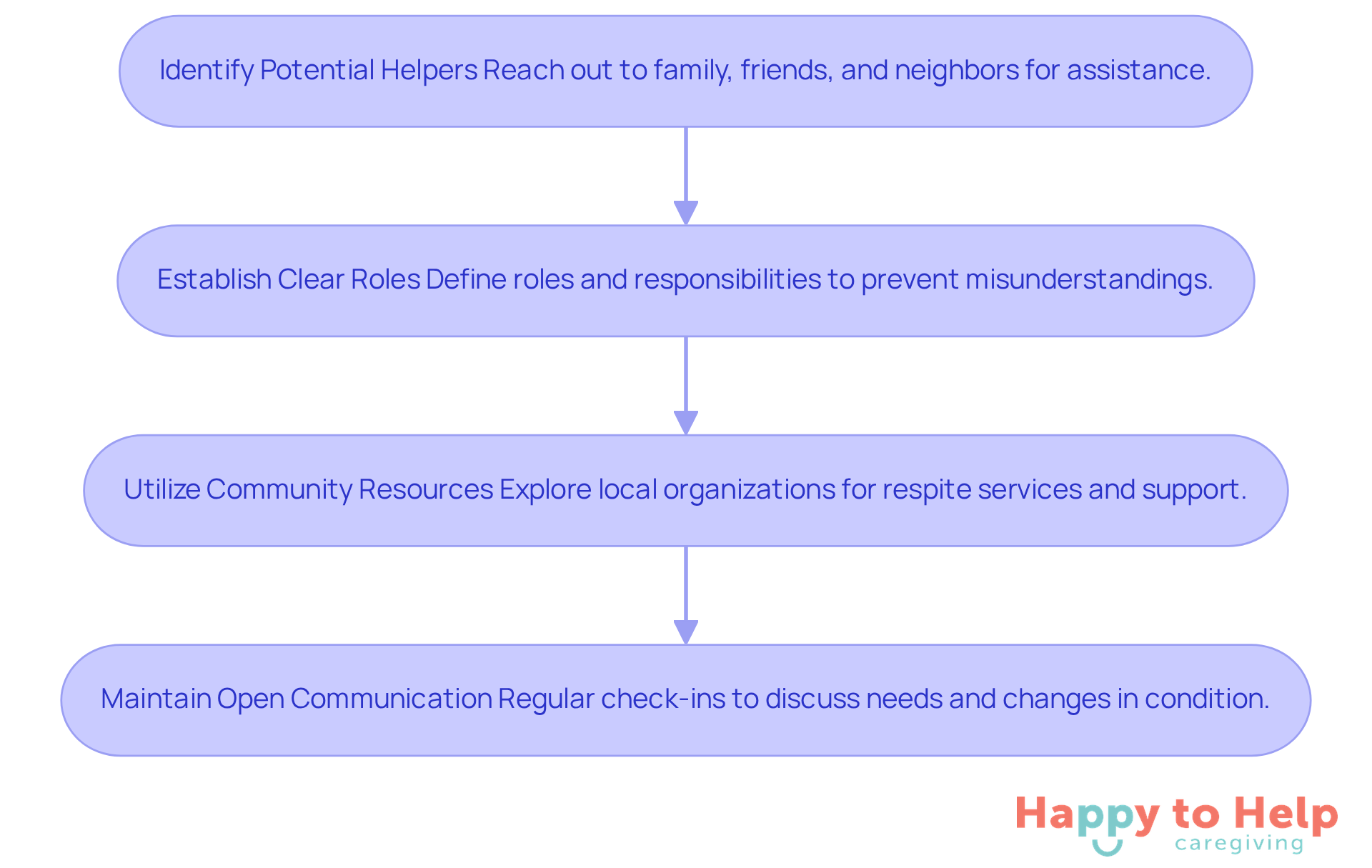
Identify Potential Helpers: Caregiving can be overwhelming, especially when you’re trying to manage everything alone. It’s crucial to reach out to family members, friends, and neighbors who might be willing to assist with caregiving tasks. Compile a list of individuals who can help with specific responsibilities, such as grocery shopping, transportation, or companionship. Remember, around 40 million adults in the U.S. offer full-time assistance for disabled or elderly relatives, highlighting the importance of establishing a support network.
Establish Clear Roles: Once you have your helpers, it’s essential to define their roles and responsibilities clearly. This clarity helps prevent misunderstandings and ensures that everyone knows their contributions, fostering a more effective caregiving environment. As Christine Bracey, MSW, LSW, Shore’s administrative director of management, notes, "You can only give so much of yourself before you start to feel drained."
Utilize Community Resources: Caregivers often face challenges that can be alleviated by community support. Explore local organizations that offer services for those providing care. In 2025, many communities will provide resources such as respite services, meal delivery, and transportation support. For instance, platforms like Ianacare connect caregivers with essential resources, making it easier to manage caregiving duties. These services can significantly lighten the load, allowing you to focus on your loved one's needs while also taking care of yourself.
Maintain Open Communication: Regular check-ins with your network are vital to discuss your parents' needs and any changes in their condition. Keeping everyone informed fosters collaboration and strengthens the support system, ensuring that all caregivers are aligned and responsive to evolving circumstances. Community resource coordinators emphasize that open dialogue is crucial for effective caregiving, as it allows for timely adjustments and shared understanding among all involved.
Your Path Forward
Caring for elderly parents presents a significant challenge for many individuals, often leading to feelings of overwhelm and stress. The multifaceted nature of this responsibility requires not only careful planning but also a deep sense of empathy and support. Caregivers must assess their parents' needs and preferences, explore suitable care options, and manage their own stress to provide effective and compassionate care.
To navigate these challenges, open communication is essential. Understanding the physical and emotional health of elderly parents lays the groundwork for effective caregiving. Evaluating care options - whether through in-home assistance, assisted living facilities, or family arrangements - also plays a crucial role. Caregivers must consider the financial implications of these choices, as they can significantly impact the overall caregiving experience.
Moreover, managing caregiver stress is vital for sustaining long-term caregiving. Self-care practices, respite services, and community support can help alleviate the pressures that caregivers face. By prioritizing their own well-being, caregivers can maintain the energy and resilience needed to support their aging loved ones.
Ultimately, the journey of caring for elderly parents is about more than just meeting their needs; it’s about fostering a supportive environment for everyone involved. By encouraging open dialogue, utilizing community resources, and establishing clear roles within the caregiving network, caregivers can navigate this challenging path with greater ease. Embracing these strategies not only leads to a healthier dynamic for aging loved ones but also reinforces the importance of compassion and collaboration in the caregiving process.
https://iframe.tely.ai/cta/eyJhcnRpY2xlX2lkIjogIjY5MjI2NTBiMjcyNDliYTNkMmMzZTVhOCIsICJjb21wYW55X2lkIjogIjY4ZWU1ZGNhNzMxNzYyNTU3ZjNjOTVjMSIsICJpbmRleCI6IG51bGwsICJ0eXBlIjogImFydGljbGUifQ==Frequently Asked Questions
What is the first step in assessing my aging parents' needs?
The first step is to engage them in open conversations. Start by asking open-ended questions that encourage your parents to share their feelings and preferences, fostering a supportive dialogue.
Why is it important to evaluate my parents' physical health?
Evaluating physical health is important because changes in physical abilities can significantly impact seniors' independence. Approximately 30% of seniors face mobility challenges that can hinder their daily tasks, so monitoring their health is essential.
How can I monitor my parents' emotional well-being?
Be attentive to signs of isolation or depression in your parents, as these may indicate a need for additional support. Recognizing these emotional signals is crucial for maintaining their overall well-being.
What should I do if I notice changes in my parents' physical or emotional health?
If you notice changes, consider arranging a medical evaluation for a thorough assessment of their physical health. Additionally, be proactive in discussing emotional support options with them.
Why is it necessary to document my observations and discussions about my parents' needs?
Documenting your observations and discussions is key for effective communication with family members and healthcare professionals. It ensures everyone is informed and aligned on the best course of action and helps coordinate services effectively.
List of Sources
- Assess Your Parents' Needs and Preferences
- Number of Family Caregivers Supporting Older Adults Increased Nearly One-Third Between 2011 and 2022 | Johns Hopkins Bloomberg School of Public Health (https://publichealth.jhu.edu/2025/number-of-family-caregivers-supporting-older-adults-increased-nearly-one-third-between-2011-and-2022)
- How to Assess if an Older Adult Needs Caregiving Help (https://aarp.org/caregiving/home-care/assessing-need-for-caregiver)
- Guide to Taking Care of Aging Parents and Family Members (https://arnothealth.org/news/guide-to-taking-care-of-aging-parents-and-family-members)
- Warning From Older Adults: Care for Aging in America Needs Urgent Rethinking (https://johnahartford.org/newsroom/view/warning-from-older-adults-care-for-aging-in-america-needs-urgent-rethinking)
- Discuss Care Options and Living Arrangements
- Assisted Living Facilities Offer Seniors Enhanced Comfort and Improved Quality of Life (https://ltcnews.com/articles/assisted-living-facilities-seniors-comfort-improved-quality-life)
- In-Home Care for Seniors - Caregiving News and Tips (https://aarp.org/caregiving/home-care)
- 2025 Home Care Statistics: Trends & Insights To Know (https://premierhcinc.com/blog/home-care-statistics)
- The senior population is booming. Caregiving is struggling to keep up (https://cnbc.com/2025/11/21/senior-caregiving-labor.html)
- What Is Senior Home Care: Services, Costs and Tips for Aging in Place (https://health.usnews.com/senior-care/articles/senior-home-care-aging-in-place)
- Manage Caregiver Stress and Emotional Well-being
- News & Information (https://wellnessalliance.org/resources-and-tools/news-and-information/2025/11/10/national-family-caregivers-month--preventing-caregiver-burnout)
- Caregiving’s Mental Health Crisis (https://forbes.com/sites/otsuka/2025/10/02/caregivings-mental-health-crisis)
- Managing Caregiver Stress - Zumbro Valley Health Center (https://zvhc.org/news/2025/04/managing-caregiver-stress)
- Facebook (https://newsroom.clevelandclinic.org/2025/11/19/importance-of-self-care-for-family-caregivers)
- Caregiver Statistics: Health, Technology, and Caregiving Resources (https://caregiver.org/resource/caregiver-statistics-health-technology-and-caregiving-resources)
- Create a Support System for Caregiving
- Caregiving connects us, community strengthens us - VA News (https://news.va.gov/143323/caregiving-connects-us-community-strengthens-us)
- Family Caregivers: You Deserve Support, and Here’s Where to Find It | Shore Medical Center (https://shoremedicalcenter.org/news/family-caregivers-you-deserve-support-and-here-s-where-find-it)
- Improving Support for Family Caregivers (https://nationalacademies.org/news/2025/07/improving-support-for-family-caregivers)
- Building a lifeline for family caregivers across the US (https://news.mit.edu/2025/ianacare-builds-lifeline-for-family-caregivers-across-us-0811)
- Creating a support system for caregivers (https://spectrumlocalnews.com/nys/central-ny/news/2025/06/08/creating-a-support-system-for-caregivers)