4 Steps to Choose the Right Tracking Device for Seniors

For families in our service areas
For families in our service areas, this guide explains dementia care and how non-medical in-home caregiving can support care planning in East Idaho, Treasure Valley & Magic Valley, Northern Wasatch, North Central West Virginia & Southwestern Pennsylvania, and Northeast Ohio.
The Importance of Choose the Right Tracking Device
The safety and well-being of seniors with dementia is a pressing concern for caregivers. Alarming statistics reveal that many individuals may wander, putting themselves at risk of harm. This situation creates a significant challenge for caregivers who strive to protect their loved ones while promoting their independence.
Tracking devices have emerged as essential tools in this context. They not only provide peace of mind for caregivers but also empower seniors to maintain a degree of autonomy. However, with so many options available, caregivers face the daunting task of selecting the right device that balances safety with respect for individual freedom.
This article explores the crucial steps for choosing the most effective tracking device. We will delve into key features, recommend products, and outline evaluation methods to empower caregivers in their decision-making process.
Understand the Importance of Tracking Devices for Dementia
Tracking devices for seniors with dementia are essential tools in their care, addressing a critical problem: safety. Many caregivers face anxiety linked to wandering and the potential for harm. Research indicates that up to 50 percent of individuals who roam and are not located within 24 hours may suffer significant harm or even fatality. This alarming statistic underscores the necessity of utilizing GPS systems.
By implementing a tracking device for seniors with dementia, caregivers can promote independence for these individuals, allowing them to engage in outdoor activities while knowing that assistance is readily available if needed. The advantages of a tracking device for seniors with dementia extend beyond mere location observation; they foster a sense of safety for both guardians and patients. For instance, a tracking device for seniors with dementia can reduce the average search time for missing dementia patients from over eight hours to just 24 minutes, showcasing its effectiveness in emergencies.
Moreover, caregivers report a significant reduction in stress levels, as the tracking device for seniors with dementia provides reassurance that they can swiftly locate their loved ones. However, it is crucial to balance safety with respect for privacy and autonomy. Ethical considerations surrounding GPS monitoring must be acknowledged. Understanding these benefits and implications is vital when selecting the appropriate equipment, emphasizing the importance of safety and emotional well-being in the caregiving journey.

Identify Key Features to Look for in a Tracking Device
When it comes to caring for seniors with dementia, using a tracking device for seniors with dementia can be a significant way to ensure their safety. Caregivers often face the distressing reality of wandering, which can lead to dangerous situations. Fortunately, selecting the right tracking device can provide a practical solution to this pressing problem.
-
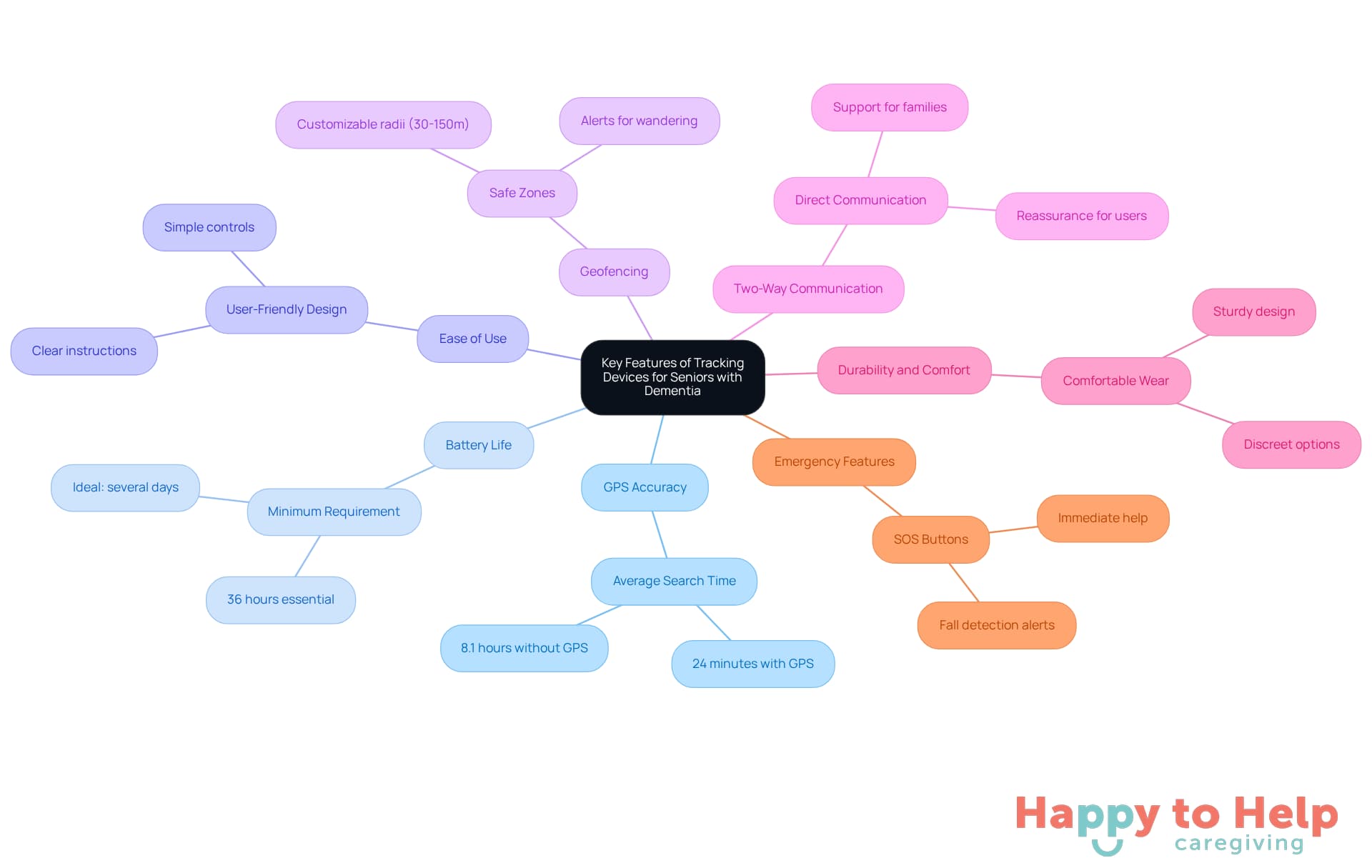
GPS Accuracy is crucial. Studies reveal that GPS-equipped dementia patients can be located in an average of 24 minutes, compared to 8.1 hours without such technology. This rapid response can be lifesaving in emergencies when a tracking device for seniors with dementia is used.
-
Battery Life is another vital consideration. Opt for devices with prolonged battery life, ideally lasting several days. A minimum of 36 hours is essential, especially since 70 percent of wanderings occur in the late afternoon.
-
Ease of Use cannot be overlooked. The tracking device for seniors with dementia should be user-friendly for both the elderly individual and their caregiver, featuring simple controls and clear instructions. Many users appreciate designs that enhance usability, contributing to a positive experience.
-
The tracking device for seniors with dementia provides geofencing capabilities that allow caregivers to establish safe zones and receive alerts if the senior wanders outside these designated areas. Customizable geofence radii of 30-150 meters help minimize false alarms while ensuring effective monitoring.
-
Two-Way Communication is a feature worth considering. Certain devices allow direct communication with the wearer, offering reassurance and support when necessary. This can significantly enhance the sense of security for both the user and their family.
-
Durability and Comfort are essential for daily use. The device should be comfortable to wear and sturdy enough to withstand regular wear and tear. Discreet options, such as wrist gadgets or smart soles, can be particularly effective for individuals who may resist wearing visible trackers.
-
Emergency features in a tracking device for seniors with dementia are critical. Look for devices equipped with SOS buttons or fall detection alerts, which can be lifesaving in critical situations. For instance, products like the CPR Guardian Watch provide two-way calling and emergency alerts, improving safety for users.
By focusing on these key features, caregivers can select a monitoring tool that not only ensures safety but also promotes the autonomy and well-being of older adults with dementia.
Explore Recommended Tracking Devices for Seniors
Caring for seniors with dementia presents significant challenges, particularly regarding the use of a tracking device for seniors with dementia to ensure their safety. One major concern is that over 60% of individuals with dementia will wander at some point, which can lead to distress for both the seniors and their caregivers. This issue underscores the need for effective tracking devices for seniors with dementia that can offer peace of mind.
To address this problem, here are some recommended tracking devices designed specifically for seniors with dementia:
-
The AngelSense GPS Tracker is a highly regarded tracking device for seniors with dementia, featuring real-time tracking capabilities and two-way voice communication. It offers notifications for wandering events and enables guardians to observe their loved ones closely. The AngelSense GPS Tracker has a battery life of 24 hours and updates location every 10 seconds in Runner Mode, ensuring timely alerts during emergencies.
-
GPS Smart Sole: This innovative device is discreetly embedded in a shoe insole, ensuring comfort for daily wear while providing precise location monitoring. Its subtle design promotes regular use among older adults.
-
Tranquil GPS Watch: Merging location monitoring with health assessment features, this watch is a flexible choice for older adults. With a battery life of up to one week and a waterproof design, it is both practical and fashionable, attracting older adults who may oppose conventional monitoring gadgets.
-
PocketFinder Smart Tracker: A compact gadget that provides real-time monitoring and geofencing notifications, making it perfect for active seniors. Its lightweight design allows for easy attachment to clothing or bags, ensuring that it can be worn without discomfort.
-
Family1st GPS Tracker: This tool is praised for its extended battery longevity and intuitive application, which eases oversight for guardians. With location updates every 8 seconds and an accuracy range under 12 feet, it offers dependable monitoring for those prone to wandering. Family1st is recognized as the 'Best Overall choice for dementia patients' and serves as an effective tracking device for seniors with dementia based on real-world testing.
-
Theora Connect: An economical choice for families, this gadget provides essential tracking features at a lower price point, making it reachable for those who are cost-conscious.
Each of these items showcases unique characteristics that address different needs, so it's crucial to consider your loved one's lifestyle and preferences when making a choice. Additionally, caregivers should be aware of potential constraints, such as the need for regular recharging with certain gadgets and the possibility of inaccurate notifications. Understanding these factors will help ensure that the selected device effectively meets the needs of both the caregiver and the person with dementia.

Evaluate and Test the Chosen Tracking Device
Problem: Caregivers face the challenge of ensuring that a tracking device for seniors with dementia effectively supports the safety and independence of their loved ones. Without thorough evaluation, these devices may not perform as expected, leading to potential risks.
Agitate: Imagine the anxiety of not knowing if a tracking device for seniors with dementia will accurately monitor an elderly individual’s whereabouts or if it will function properly in an emergency. This uncertainty can be overwhelming for caregivers who want to provide the best support possible.
Solution: To address these concerns, it’s crucial to evaluate and test the tracking device thoroughly:
- Initial Setup: Follow the manufacturer's instructions for configuring the apparatus, ensuring all features are activated.
- Test Tracking Accuracy: Take the equipment for a test run in various locations to assess its tracking precision and responsiveness.
- Check Battery Life: Monitor how long the gadget lasts on a single charge under normal usage conditions.
- Assess User Experience: Ensure that both the helper and the elderly individual can easily use the equipment, including accessing the application or interface.
- Simulate Emergency Scenarios: Practice using emergency features, such as the SOS button, to ensure they work as intended.
- Gather Feedback: Ask the senior how they feel about wearing the gadget and if they find it comfortable and non-intrusive.
By thoroughly evaluating and testing the tracking device for seniors with dementia, caregivers can ensure it will effectively support their loved one's safety and independence.

Moving Forward with Choose the Right Tracking Device
Choosing the right tracking device for seniors with dementia is a crucial decision that can greatly enhance safety and provide peace of mind for caregivers and their loved ones. The challenge lies in preventing wandering while promoting independence, allowing seniors to participate in activities outside their homes. This balance is essential for ensuring they can be quickly located in emergencies.
Key considerations include:
- GPS accuracy
- Battery life
- Ease of use
- Features like geofencing and two-way communication
Each of these factors plays a vital role in ensuring that the selected device meets the specific needs of seniors with dementia. A variety of recommended devices cater to different preferences and lifestyles, providing options that can fit individual circumstances.
The significance of tracking devices for seniors with dementia cannot be overstated. They are essential tools that not only protect vulnerable individuals but also reduce the stress and anxiety often felt by caregivers. By prioritizing safety and emotional well-being, caregivers can make informed choices that enhance the quality of life for those they care for, allowing seniors to enjoy their independence while being closely monitored.
It is crucial to thoroughly evaluate and test these devices to ensure they function effectively and meet the unique needs of each individual. Taking the time to assess these options can lead to better outcomes for both seniors and their caregivers.
https://iframe.tely.ai/cta/eyJhcnRpY2xlX2lkIjogIjY5MjI0ZjgzOWEwZThiZmU5YWJhN2M4ZCIsICJjb21wYW55X2lkIjogIjY4ZWU1ZGNhNzMxNzYyNTU3ZjNjOTVjMSIsICJpbmRleCI6IG51bGwsICJ0eXBlIjogImFydGljbGUifQ==Frequently Asked Questions
Why are tracking devices important for seniors with dementia?
Tracking devices are essential for the safety of seniors with dementia, addressing the anxiety caregivers face regarding wandering and the potential for harm.
What risks are associated with wandering in dementia patients?
Research indicates that up to 50 percent of individuals who wander and are not located within 24 hours may suffer significant harm or even fatality.
How do tracking devices benefit caregivers and seniors with dementia?
Tracking devices promote independence for seniors, allowing them to engage in outdoor activities while ensuring assistance is available if needed. They also provide reassurance to caregivers, reducing their stress levels.
What impact do tracking devices have on search times for missing dementia patients?
Tracking devices can reduce the average search time for missing dementia patients from over eight hours to just 24 minutes, highlighting their effectiveness in emergencies.
What ethical considerations should be taken into account when using GPS monitoring for seniors with dementia?
It is crucial to balance safety with respect for privacy and autonomy, acknowledging the ethical implications of GPS monitoring in caregiving.
What should caregivers consider when selecting tracking devices for seniors with dementia?
Caregivers should understand the benefits and implications of tracking devices, emphasizing the importance of safety and emotional well-being in the caregiving journey.
List of Sources
- Understand the Importance of Tracking Devices for Dementia
- Is GPS Tracking For Seniors Worth It? The Pros & Cons (https://trualta.com/resources/blog/is-gps-tracking-for-seniors-worth-it-the-pros-cons)
- How can GPS tracking devices keep a person with dementia safe from wandering? (https://eurekahealth.com/resources/dementia-wandering-gps-tracking-devices-safety-en)
- How IoT Tracking Devices Can Help People with Dementia | Ambiq (https://ambiq.com/blog/how-iot-tracking-devices-can-help-people-with-dementia)
- Implementing global positioning system trackers for people with dementia who are at risk of wandering - PMC (https://pmc.ncbi.nlm.nih.gov/articles/PMC11290024)
- Caregiver Dementia Quotes (Encouragement For Dementia Caregivers) (https://optoceutics.com/caregiver-dementia-quotes-encouragement-dementia-caregivers?srsltid=AfmBOopoYv6_zXa9KP2pAH3zgozs6407l6eN5vGSfWT0IZDQ0YLPz67-)
- Identify Key Features to Look for in a Tracking Device
- Best Tracking Device for Dementia Patients - Caring.com (https://caring.com/resources/tracking-devices-for-dementia-patients)
- Is GPS Tracking For Seniors Worth It? The Pros & Cons (https://trualta.com/resources/blog/is-gps-tracking-for-seniors-worth-it-the-pros-cons)
- How Does GPS Tracking Reduce Wandering Risks for Dementia Patients? (https://cprguardian.com/blogs/latest-dementia-news-and-updates/how-does-gps-tracking-reduce-wandering-risks-for-dementia-patients?srsltid=AfmBOor2uD6yHXaEq_D1wm3reWbFZgPRnHQslJquq3MFnfAW0PeIWR2_)
- How can GPS tracking devices keep a person with dementia safe from wandering? (https://eurekahealth.com/resources/dementia-wandering-gps-tracking-devices-safety-en)
- Advanced Wearable Technology Improves Support For People With Dementia And Their Caregivers (https://stories.tamu.edu/news/2025/02/18/advanced-wearable-technology-improves-support-for-people-with-dementia-and-their-caregivers)
- Explore Recommended Tracking Devices for Seniors
- 4 Best GPS Trackers for Dementia Patients (2025 Review) | SafeWise (https://safewise.com/best-gps-trackers-dementia-patients)
- 11 Best GPS Trackers for Dementia Patients In 2025 (https://family1st.io/best-gps-trackers-for-dementia-patients)
- 5 Best GPS Trackers For Dementia Patients In 2025 (https://gpstracker247.com/blogs/gps-trackers/best-gps-trackers-for-dementia-patients)