
4 Steps to Cope with Aging Parents Effectively

For families in our service areas
For families in our service areas, this guide explains caregiving and how non-medical in-home caregiving can support care planning in East Idaho, Treasure Valley & Magic Valley, Northern Wasatch, North Central West Virginia & Southwestern Pennsylvania, and Northeast Ohio.
The Importance of Cope with Aging Parents Effectively
Caring for aging parents presents a significant challenge for many families. The emotional and physical demands can be overwhelming, leaving caregivers feeling isolated and stressed. As seniors experience changes in their health and well-being, it becomes crucial to understand how to support them effectively.
To address these challenges, caregivers must prioritize:
- Communication
- Self-care
- Establishment of a robust support network
Effective communication fosters understanding and connection, while self-care ensures that caregivers maintain their own health and resilience. Building a support network can provide essential resources and emotional backing, helping to alleviate some of the pressures associated with caregiving.
By exploring these strategies, families can enhance their caregiving journey and ensure their loved ones receive the compassionate care they deserve. Implementing these solutions not only benefits the seniors in their care but also supports the caregivers themselves, creating a healthier dynamic for everyone involved.
Understand the Aging Process and Its Impact
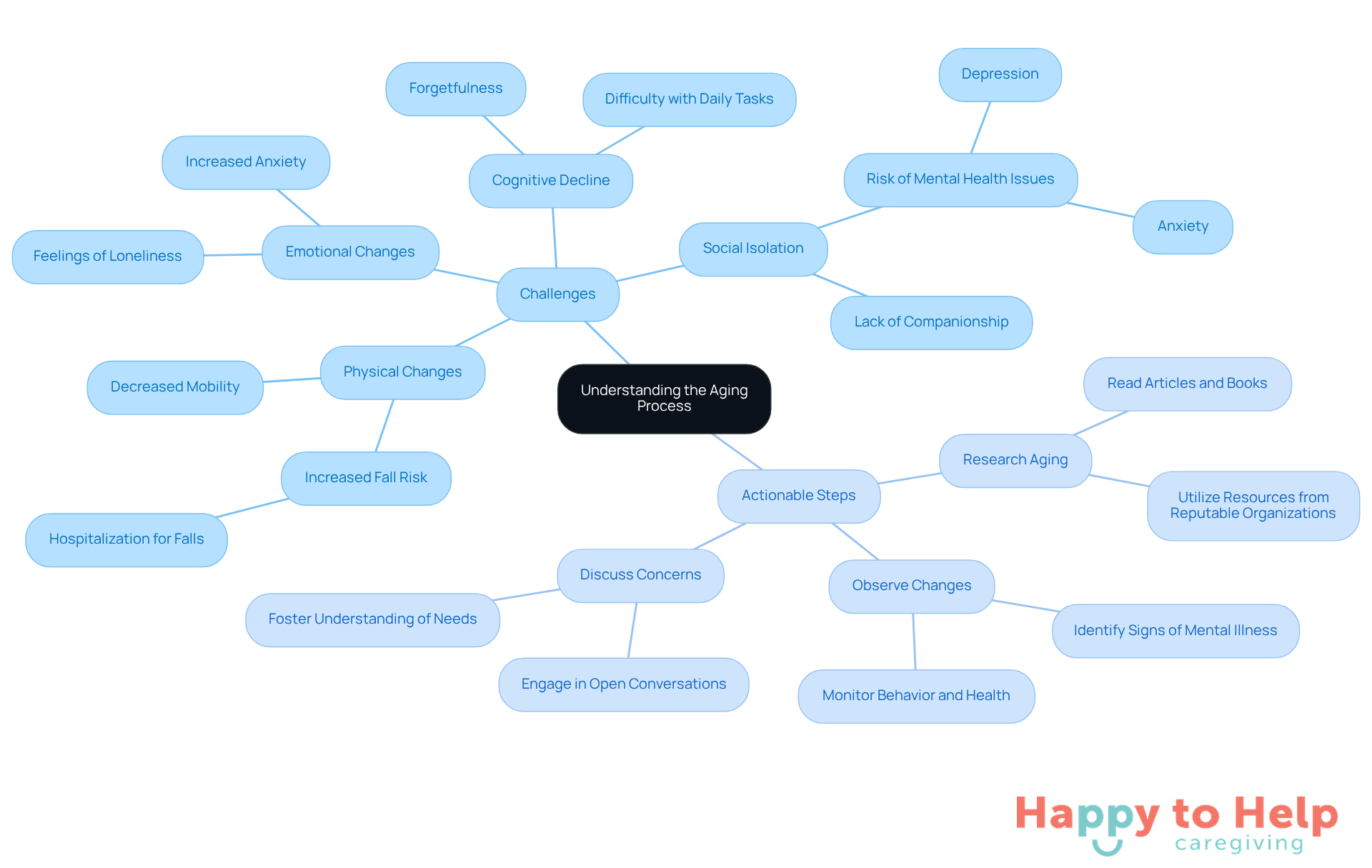
Managing elderly parents can be challenging, particularly when considering how to cope with aging parents as they face various physical and emotional changes associated with aging. Common issues include decreased mobility, cognitive decline, and a heightened risk of illnesses. For instance, seniors are admitted to the hospital for fall-related injuries five times more often than for other reasons. This highlights the importance of monitoring their physical well-being. Additionally, understanding how to cope with aging parents can help alleviate feelings of loneliness, frustration, and anxiety about losing independence. Alarmingly, about one in three older individuals report a lack of companionship, which significantly increases the risk of mental health issues such as depression and anxiety.
To address these challenges, caregivers can take several actionable steps:
- Research Aging: Familiarize yourself with the aging process by reading articles or books that detail typical changes. Resources from reputable organizations like the Mayo Clinic and WHO offer valuable insights into the physical and mental well-being challenges faced by older adults.
- Observe Changes: Be vigilant about any noticeable changes in your parents' behavior or health. This may include forgetfulness, difficulty with daily tasks, or shifts in mood. Studies show that approximately 14% of adults aged 60 and over live with a mental illness, underscoring the need for careful observation.
- Discuss Concerns: Engage in open conversations with your parents about how to cope with aging parents and their experiences and feelings related to aging. This dialogue can foster understanding and help you address their needs more effectively. Gerontologists emphasize that supportive social connections are crucial for mental well-being; individuals with negative relationships are at least twice as likely to experience depression compared to those in stable partnerships.
By implementing these strategies, families can better navigate the complexities of aging, ensuring that their loved ones receive the care and support they need.
Communicate Openly and Compassionately
Effective communication transcends mere conversation; it hinges on active listening and empathy. Caregivers often face the challenge of understanding how to cope with aging parents, which can lead to misunderstandings and frustration. Here’s how to elevate your communication:
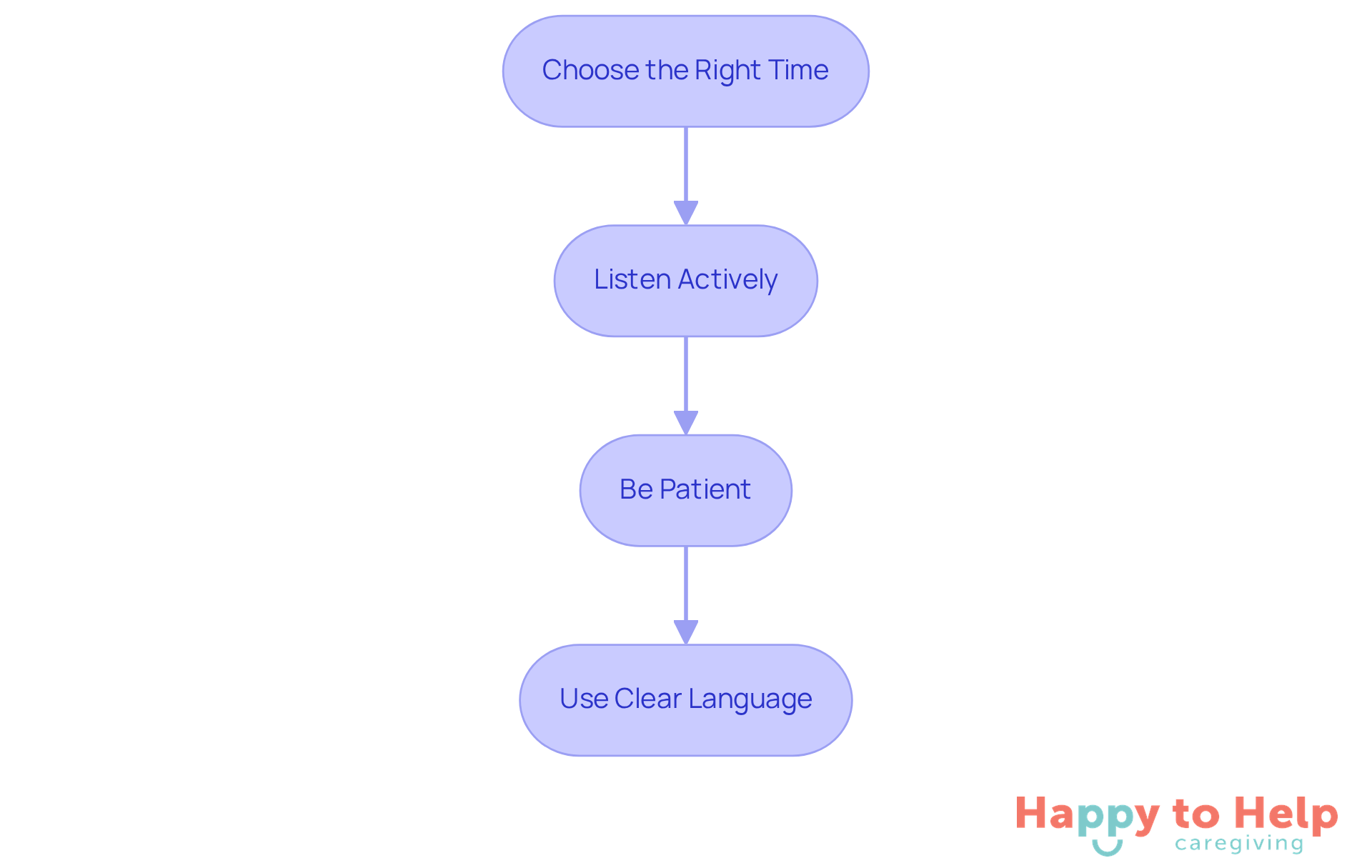
- Choose the Right Time: Select a calm moment for discussions, steering clear of stressful or distracting situations to foster a more open dialogue.
- Listen Actively: Show sincere interest in your guardians' feelings and concerns. Phrases like, 'I understand how you feel,' can validate their emotions and strengthen your connection.
- Be Patient: Allow your guardians to express themselves fully without interruptions. This approach fosters respect and makes them feel valued.
- Use Clear Language: Steer clear of jargon and opt for straightforward language. This clarity is essential, particularly if cognitive decline is a factor, ensuring your guardians understand the conversation completely.
Additionally, effective communication improves understanding, adherence to treatment, and overall patient satisfaction, as noted by the Gerontological Society of America. Remember, compassion fosters empathy and understanding, which is essential for learning how to cope with aging parents and creating a safe and loving environment for them. Embrace the caregiving journey as a privilege rather than a burden, and stay organized to manage details like medical appointments and medication schedules effectively. As Dr. Ella wisely states, 'You are the CEO of your care, and we support you in managing it effectively.
Prioritize Self-Care and Manage Stress
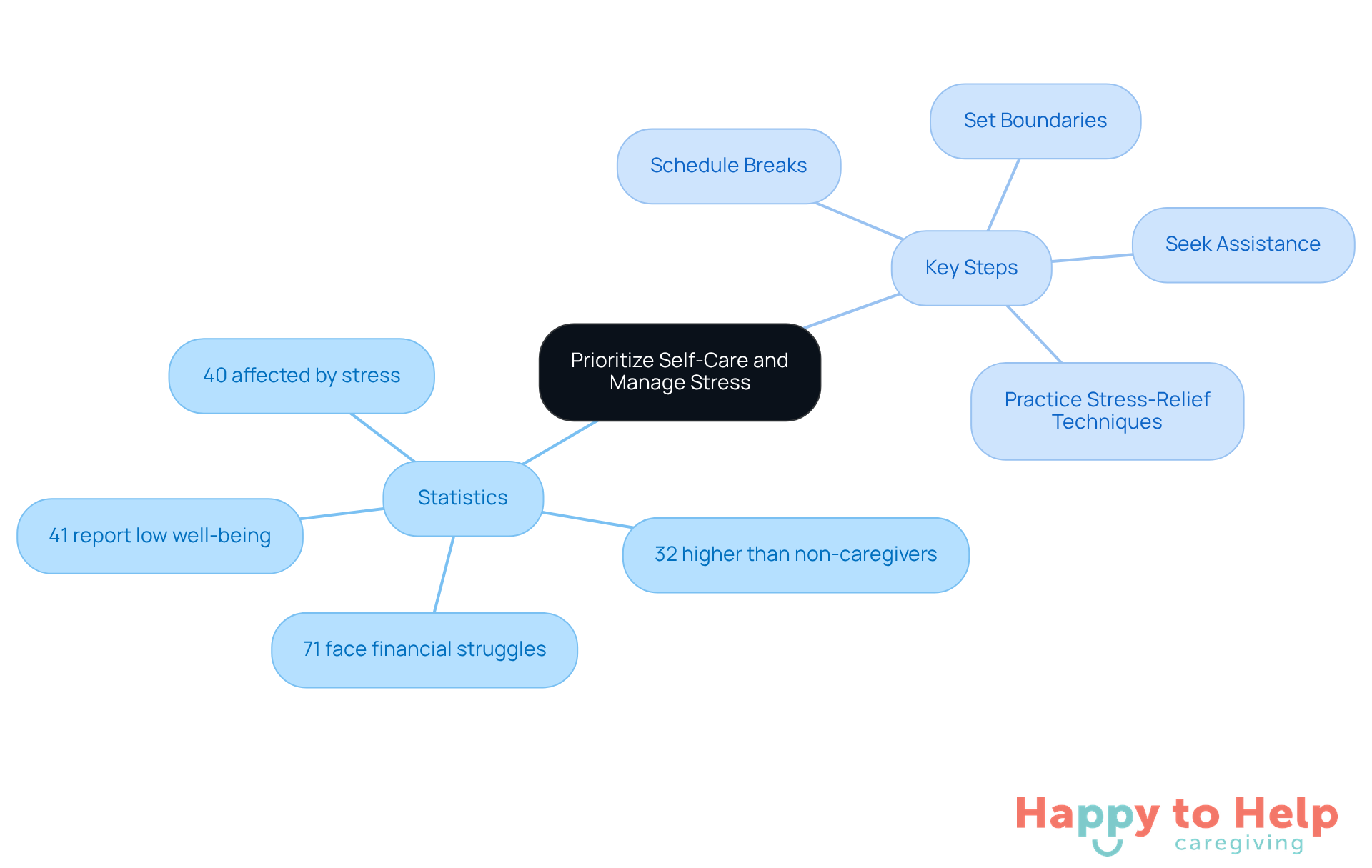
Self-care is vital for those who provide care, not merely a luxury. Many caregivers face significant challenges as they learn how to cope with aging parents and manage their own well-being. In fact, statistics show that 41% of caregivers report low overall well-being, a staggering 32% higher than those who do not provide care. Additionally, 40% of caregivers indicate that their responsibilities adversely affect their stress levels. Mental health professionals warn that neglecting self-care can result in chronic stress and health issues. With 71% of caregivers facing financial struggles, prioritizing self-care is crucial for fostering a healthier lifestyle, ultimately benefiting both caregivers and their loved ones.
Here are key steps to prioritize your well-being:
-
Set Boundaries: Clearly define your limits regarding caregiving tasks. This practice helps manage expectations and mitigates feelings of overwhelm, allowing you to maintain a healthier balance between caregiving and personal time.
-
Schedule Breaks: Make it a priority to take regular breaks for yourself. Whether it’s a brief walk, reading a book, or indulging in a hobby, these moments can significantly recharge your emotional batteries and enhance your overall resilience.
-
Seek Assistance: Consider joining a support group for those providing care. Sharing experiences with others facing similar challenges can provide not only comfort but also practical advice and strategies on how to cope with aging parents.
-
Practice Stress-Relief Techniques: Incorporate stress management activities into your daily routine. Techniques such as yoga, meditation, or deep-breathing exercises can effectively reduce stress levels and improve your mental health.
Build a Support Network and Seek Help
Creating a support network can significantly ease the burden of caregiving and help you learn how to cope with aging parents. Caregivers often face overwhelming responsibilities, so understanding how to cope with aging parents is essential to avoid stress and burnout. Without adequate support on how to cope with aging parents, the emotional and physical toll can be substantial, affecting both the caregiver and the person receiving care.
Here’s how to build a support network:
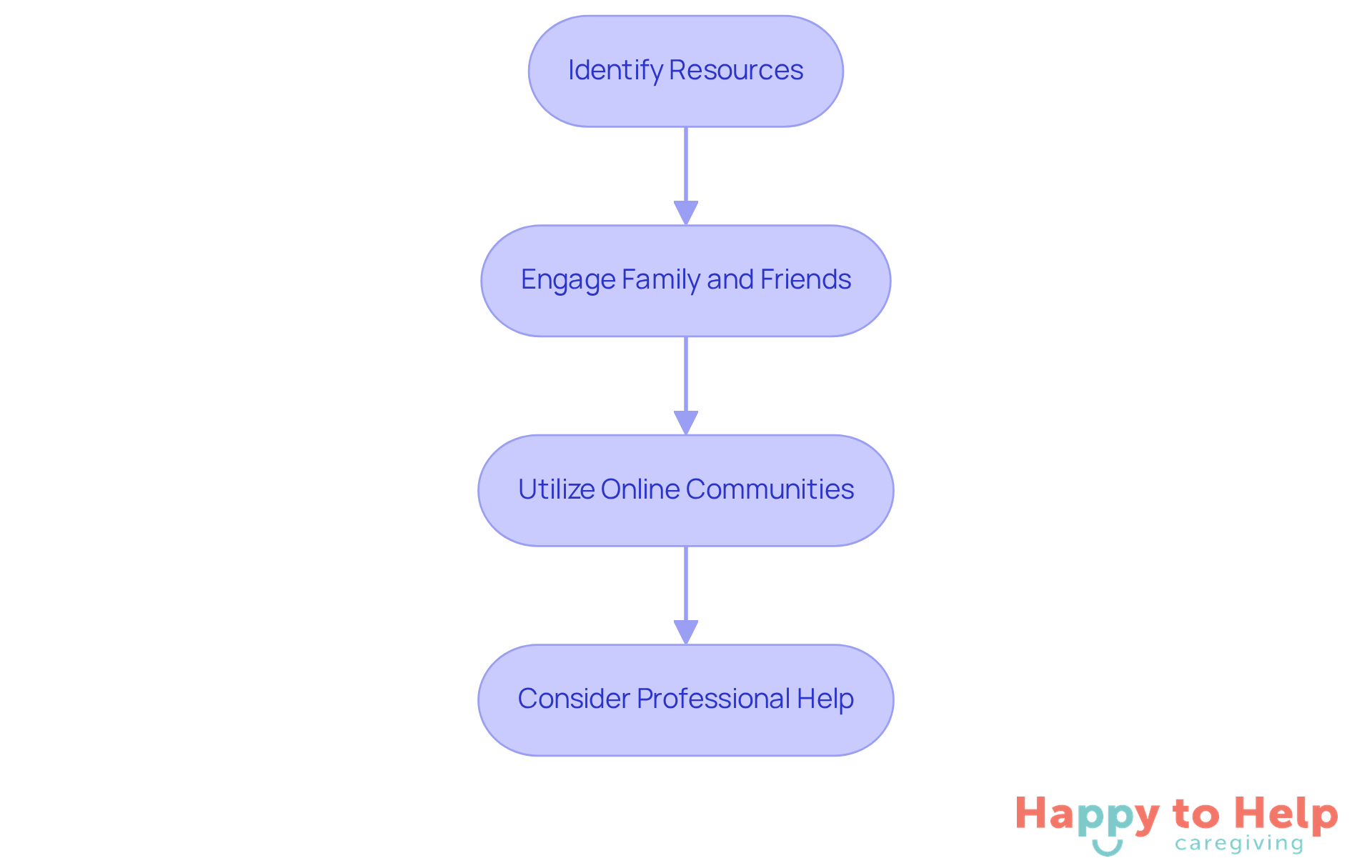
- Identify Resources: Look for local organizations that offer support for caregivers, such as Happy to Help Caregiving, which provides in-home assistance and respite care.
- Engage Family and Friends: Don’t hesitate to ask family members or friends for help. They may be willing to share caregiving responsibilities or provide emotional support.
- Utilize Online Communities: Join online forums or social media groups focused on caregiving. These platforms can provide guidance on how to cope with aging parents, share experiences, and connect you with others facing similar challenges.
- Consider Professional Help: If the caregiving demands become overwhelming, consider hiring professional caregivers to assist with daily tasks, allowing you to focus on emotional support.
Moving Forward with Cope with Aging Parents Effectively
Caring for aging parents presents a significant challenge that requires a multifaceted approach. Caregivers often face emotional and physical demands that can lead to stress and burnout. Recognizing these challenges is essential for fostering a supportive environment for both caregivers and their loved ones.
To effectively navigate these complexities, caregivers must prioritize understanding the aging process. This includes recognizing the physical and emotional changes that come with aging, which allows for a more compassionate response to their parents' needs. Engaging in open discussions and practicing active listening can strengthen connections, ensuring that parents feel valued and understood.
Here are some actionable strategies for caregivers:
- Research the aging process: Understanding the changes your parents are experiencing can help you respond appropriately.
- Observe behavioral changes: Keep an eye on shifts in mood or behavior, as these can signal underlying issues.
- Prioritize self-care: Taking care of your own health is crucial for being an effective caregiver.
- Build a support network: Connecting with others who understand your situation can alleviate the pressures of caregiving.
Ultimately, the journey of caring for aging parents is about more than just meeting their needs; it’s also about nurturing your own health and resilience. Embracing this role with compassion and awareness can lead to a more fulfilling experience for both you and your loved ones. Taking proactive steps, seeking assistance, and engaging in self-care practices are vital to navigating this challenging yet rewarding phase of life. By doing so, caregivers can ensure that they and their loved ones thrive amidst the challenges of aging.
https://iframe.tely.ai/cta/eyJhcnRpY2xlX2lkIjogIjY5MjEwYTk0N2I4YTJhOGJkNzc1MGJmZSIsICJjb21wYW55X2lkIjogIjY4ZWU1ZGNhNzMxNzYyNTU3ZjNjOTVjMSIsICJpbmRleCI6IG51bGwsICJ0eXBlIjogImFydGljbGUifQ==Frequently Asked Questions
What are some common issues faced by aging parents?
Common issues include decreased mobility, cognitive decline, and a heightened risk of illnesses. Seniors are particularly prone to fall-related injuries, being admitted to the hospital five times more often for this reason than for other health issues.
How can caregivers cope with the challenges of managing elderly parents?
Caregivers can cope by researching the aging process, observing noticeable changes in their parents' behavior or health, and discussing concerns openly with their parents.
Why is it important to monitor the physical well-being of aging parents?
Monitoring physical well-being is crucial because seniors are at a higher risk for fall-related injuries and other health issues. Awareness of these risks helps ensure timely intervention and care.
What resources can caregivers use to understand the aging process better?
Caregivers can read articles or books from reputable organizations like the Mayo Clinic and the World Health Organization (WHO) to gain valuable insights into the challenges faced by older adults.
How can observing changes in aging parents' behavior help caregivers?
Being vigilant about changes such as forgetfulness, difficulty with daily tasks, or shifts in mood can help caregivers identify potential mental health issues, as approximately 14% of adults aged 60 and over live with a mental illness.
What role do open conversations play in managing aging parents?
Open conversations about aging experiences and feelings can foster understanding and help caregivers address their parents' needs more effectively. Supportive social connections are crucial for mental well-being.
What is the impact of companionship on the mental health of older adults?
About one in three older individuals report a lack of companionship, which significantly increases the risk of mental health issues such as depression and anxiety. Stable social relationships are important for mental health.
List of Sources
- Understand the Aging Process and Its Impact
- Addressing the Unique Mental Health Challenges Brought on by Aging (https://behavioralhealthnews.org/addressing-the-unique-mental-health-challenges-brought-on-by-aging)
- It’s never too late: How older adults can restore optimal well-being, according to experts | CNN (https://cnn.com/2025/10/05/health/emotional-well-being-older-adults-wellness)
- Medflyt at Home | Elderly Mental Health Statistics: What You Need To Know (https://medflyt.com/blog/posts/elderly-mental-health-statistics)
- Get the Facts on Healthy Aging (https://ncoa.org/article/get-the-facts-on-healthy-aging)
- Mental health of older adults (https://who.int/news-room/fact-sheets/detail/mental-health-of-older-adults)
- Communicate Openly and Compassionately
- Taking Care of Elderly Parents Quotes (https://ultimatecareny.com/resources/taking-care-of-elderly-parents-quotes)
- Communication is key when dealing with aging parents | Penn State University (https://psu.edu/news/research/story/communication-key-when-dealing-aging-parents)
- How to Effectively Advocate for Aging Parents — Care Advocate Network (https://careadvocate.org/news/effectively-advocate-for-aging-parents)
- 65 Inspirational Quotes About Caring For Elderly Parents - Home Care Agency | Global One Home Care Boston (https://globalonehomecare.com/65-inspirational-quotes-about-caring-for-elderly-parents)
- Clearer Conversations, Better Care: New Guide Highlights Best Practices for Communicating with Older Adults (https://geron.org/News-Events/GSA-News/Press-Room/Press-Releases/clearer-conversations-better-care-new-guide-highlights-best-practices-for-communicating-with-older-adults)
- Prioritize Self-Care and Manage Stress
- Facebook (https://newsroom.clevelandclinic.org/2025/11/19/importance-of-self-care-for-family-caregivers)
- 2023 Study — Caregiving in America, Statistics on Family Caregivers and Beyond | Guardian (https://guardianlife.com/reports/caregiving-in-america)
- The Importance of Caregiver Self-Care (https://gccnews.augusta.edu/2025/11/06/the-importance-of-caregiver-self-care)
- The Caregiving Landscape: Data & Insights on the Caregiver Experience in the U.S. (https://caregiveraction.org/caregiver-statistics)
- Caregiver Statistics: Health, Technology, and Caregiving Resources (https://caregiver.org/resource/caregiver-statistics-health-technology-and-caregiving-resources)
- Build a Support Network and Seek Help
- Building a lifeline for family caregivers across the US (https://news.mit.edu/2025/ianacare-builds-lifeline-for-family-caregivers-across-us-0811)
- Caregiving connects us, community strengthens us - VA News (https://news.va.gov/143323/caregiving-connects-us-community-strengthens-us)
- Asking for Help as a Caregiver: Building a Support Network (https://caregiveraction.org/asking-for-help-as-caregiver)
- Caregiver Statistics: Demographics (https://caregiver.org/resource/caregiver-statistics-demographics)
- The Importance of Community for Caregivers: Building Your Support Network (https://momsinmotion.net/the-importance-of-community-for-caregivers-building-your-support-network)