
Essential Practices for Effective Elderly Parent Care

For families in our service areas
For families in our service areas, this guide explains caregiving and how non-medical in-home caregiving can support care planning in East Idaho, Treasure Valley & Magic Valley, Northern Wasatch, North Central West Virginia & Southwestern Pennsylvania, and Northeast Ohio.
Understanding Essential Practices for Effective
Caring for elderly parents presents a unique set of challenges that can often feel overwhelming for caregivers. The intricate balance of physical, emotional, and social needs must be understood to provide effective support.
These challenges can lead to caregiver burnout, stress, and feelings of isolation. It’s crucial to recognize that without proper support, both caregivers and their elderly loved ones may suffer.
This article delves into essential practices that can transform the caregiving experience. We’ll explore strategies to assess needs, develop flexible care plans, and prioritize the well-being of both caregivers and their elderly loved ones.
How can caregivers navigate the complexities of communication and boundaries? By fostering a nurturing environment, caregivers can create a supportive atmosphere that benefits everyone involved.
Assessing the Needs of Elderly Parents
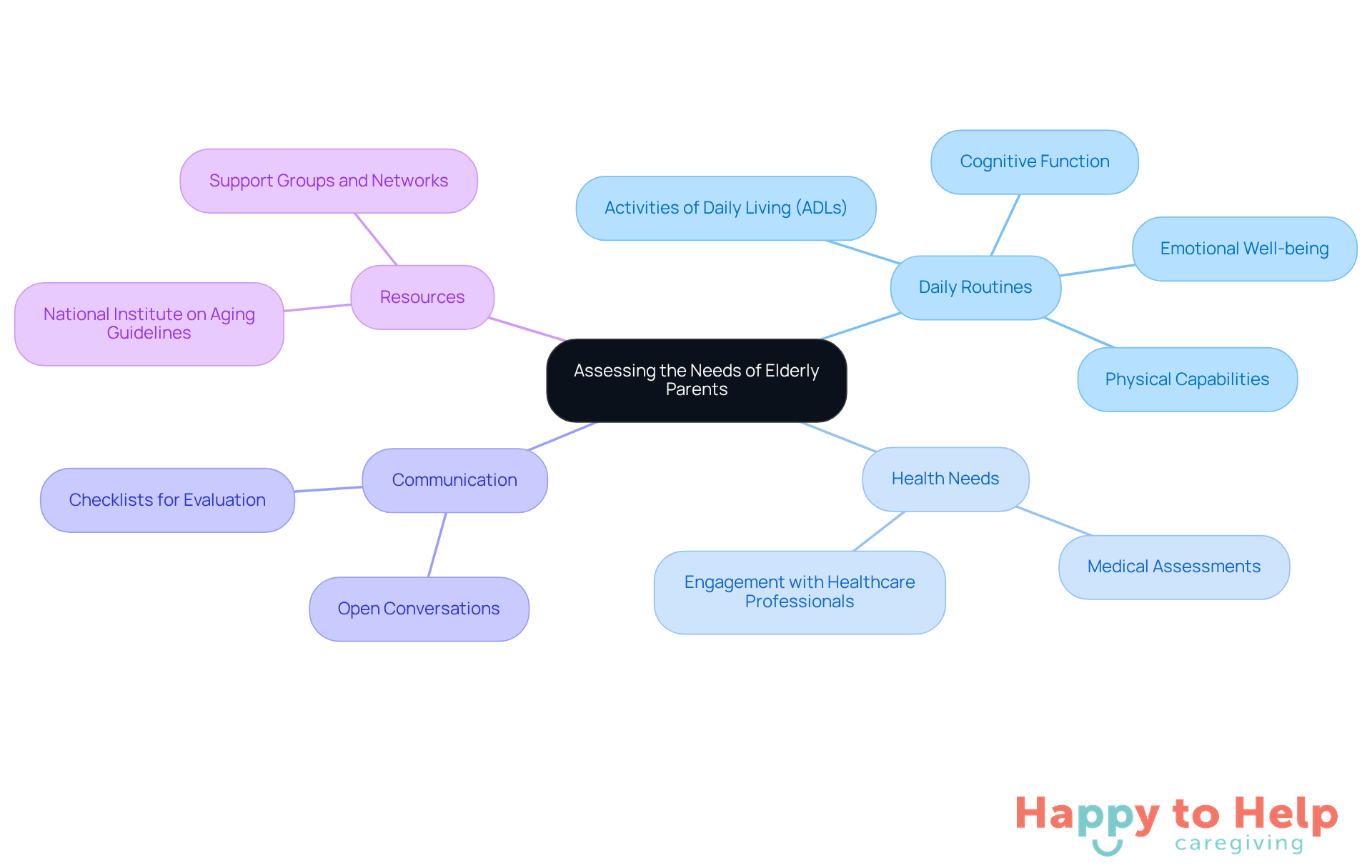
Caring for elderly parent care can be challenging, especially when it comes to understanding their daily routines and health needs. Many caregivers struggle to assess their parents' physical capabilities, cognitive function, and emotional well-being.
- For instance, the ability to perform activities of daily living (ADLs) like bathing, dressing, and meal preparation is crucial.
- Studies show that a significant percentage of older adults face difficulties with these tasks, which can lead to a decline in their overall well-being.
- This situation can create stress for both the elderly and their caregivers, as unmet needs may go unnoticed.
To address these challenges, start by having open and honest conversations regarding elderly parent care. Utilize tools such as checklists to evaluate their capabilities. Engage healthcare professionals when necessary to gain insights into their medical requirements. This comprehensive approach not only identifies urgent support needs but also anticipates future demands, allowing for proactive planning.
Resources like the National Institute on Aging provide valuable guidelines for assessing caregiving requirements effectively. Additionally, be mindful of common pitfalls, such as neglecting emotional well-being or failing to regularly update support plans. Anecdotes from families who have successfully navigated this process can offer relatable insights and encouragement.
Developing a Flexible Care Plan
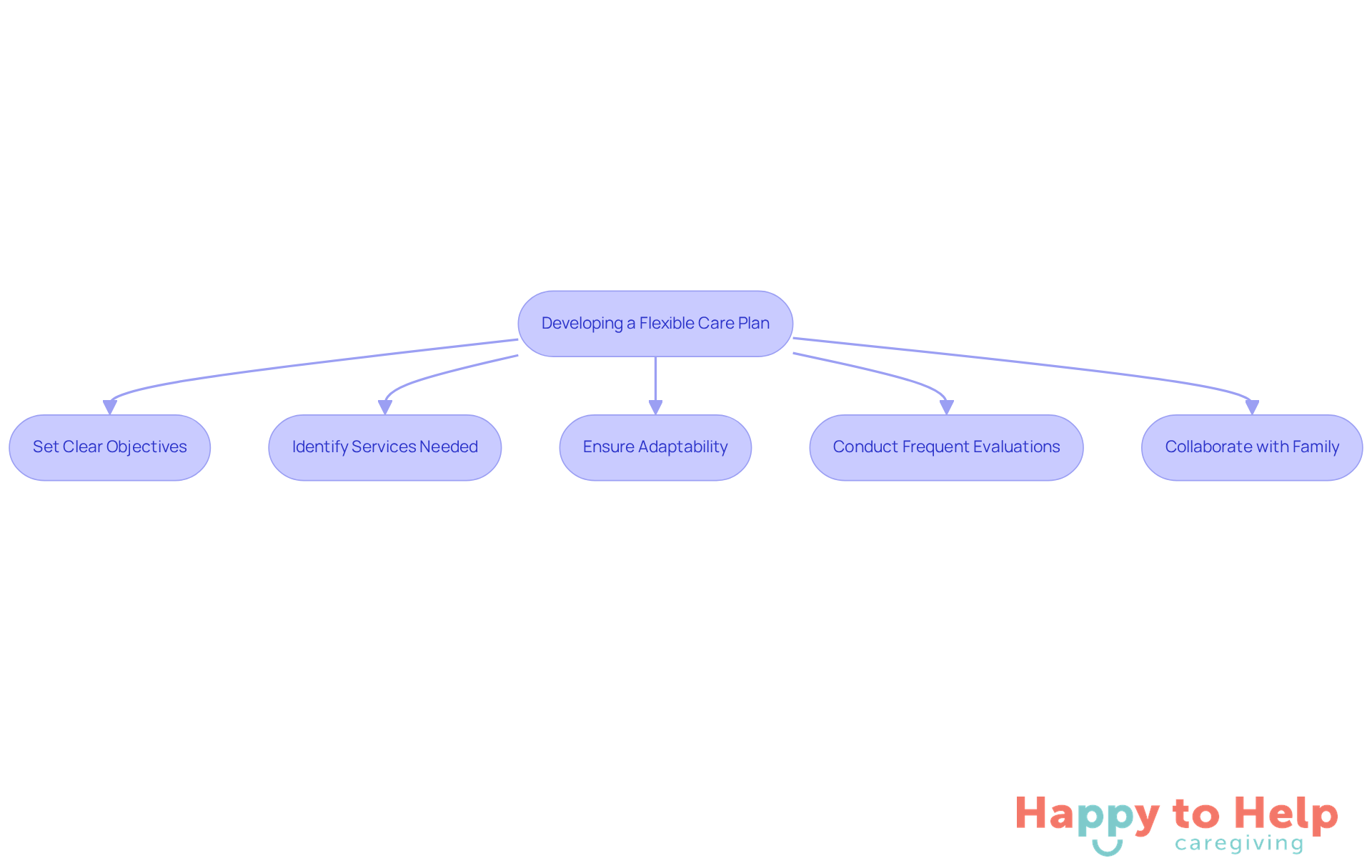
Creating a support plan for elderly parent care can be challenging. Caregivers often struggle to set clear, specific objectives that meet the unique needs of elderly parent care. Without a tailored plan, the risk of inadequate elderly parent care increases, potentially impacting the well-being of elderly individuals.
To address this issue, it’s essential to create a comprehensive plan for elderly parent care that includes a variety of services, such as:
- Companionship
- Medical support
- Personal assistance
Adaptability is key; as health conditions change, modifications may be necessary. This could mean increasing visit frequency or incorporating services like respite support.
Frequent evaluations and revisions of the support plan are crucial. Collaborating with your guardian and family members ensures that any changes in health or preferences are addressed promptly. This joint approach not only keeps the support plan relevant but also empowers the senior guardian, fostering a sense of ownership and comfort in the decision-making process.
Research indicates that tailored support plans significantly enhance the well-being of elderly individuals in the realm of elderly parent care, leading to improved health outcomes and greater satisfaction with assistance. Geriatric support specialists emphasize that continuous communication and flexibility in treatment plans are vital for effectively responding to the evolving needs of elderly parent care.
Prioritizing Caregiver and Parent Well-Being
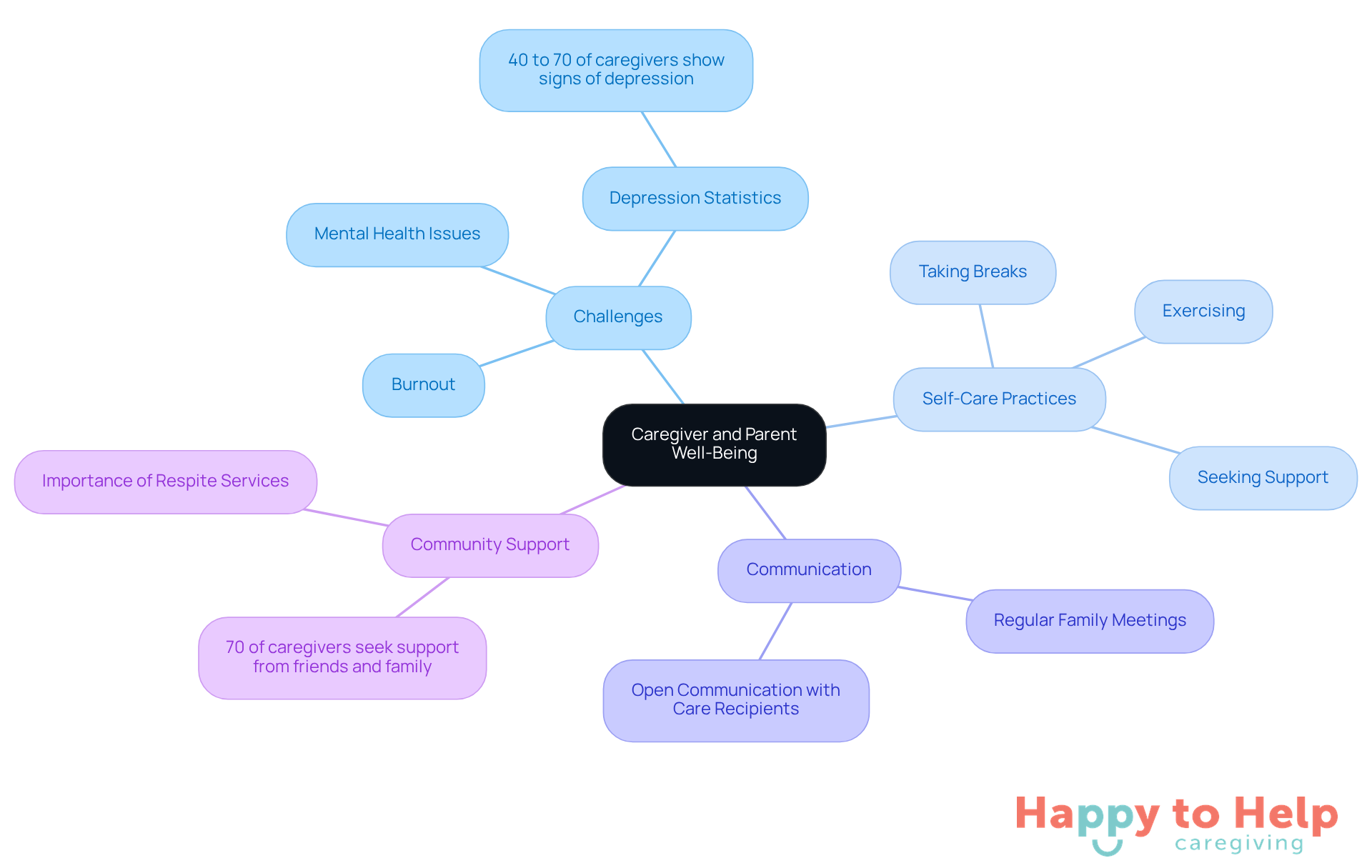
Caregivers face significant challenges, particularly the risk of burnout and mental health issues. Studies reveal that 40% to 70% of family supporters show clinically significant signs of depression. This highlights the urgent need for respite services to alleviate supporter burnout, anxiety, and depression, ultimately enhancing their emotional resilience.
To combat these issues, caregivers must prioritize self-care practices. Taking breaks, exercising, and seeking support from friends or support groups are essential. Establishing respite support services is vital, as it provides caregivers with the necessary time to rejuvenate. Research indicates that individuals who take regular breaks report improved mental well-being and stronger connections with those they assist. The case study 'The Importance of Respite Support for Providers' illustrates how respite services help prevent burnout and promote provider health.
Open communication between supporters and elderly parent care regarding feelings and stressors is crucial for emotional well-being. Scheduling regular family meetings can address concerns and celebrate successes, fostering a supportive environment. Resources like the National Institute on Aging offer valuable advice for managing stress effectively, which is essential for elderly parent care, ensuring caregivers remain healthy and capable of providing assistance.
Significantly, 70% of caregivers seek information, assistance, or support from friends and family, underscoring the importance of community backing in coping with stress. Mental health experts emphasize that taking time for oneself is not just beneficial but essential for maintaining a caregiver’s ability to support their loved ones. By integrating these practices, caregivers can enhance their well-being and create a more positive caregiving experience.
Establishing Communication and Boundaries
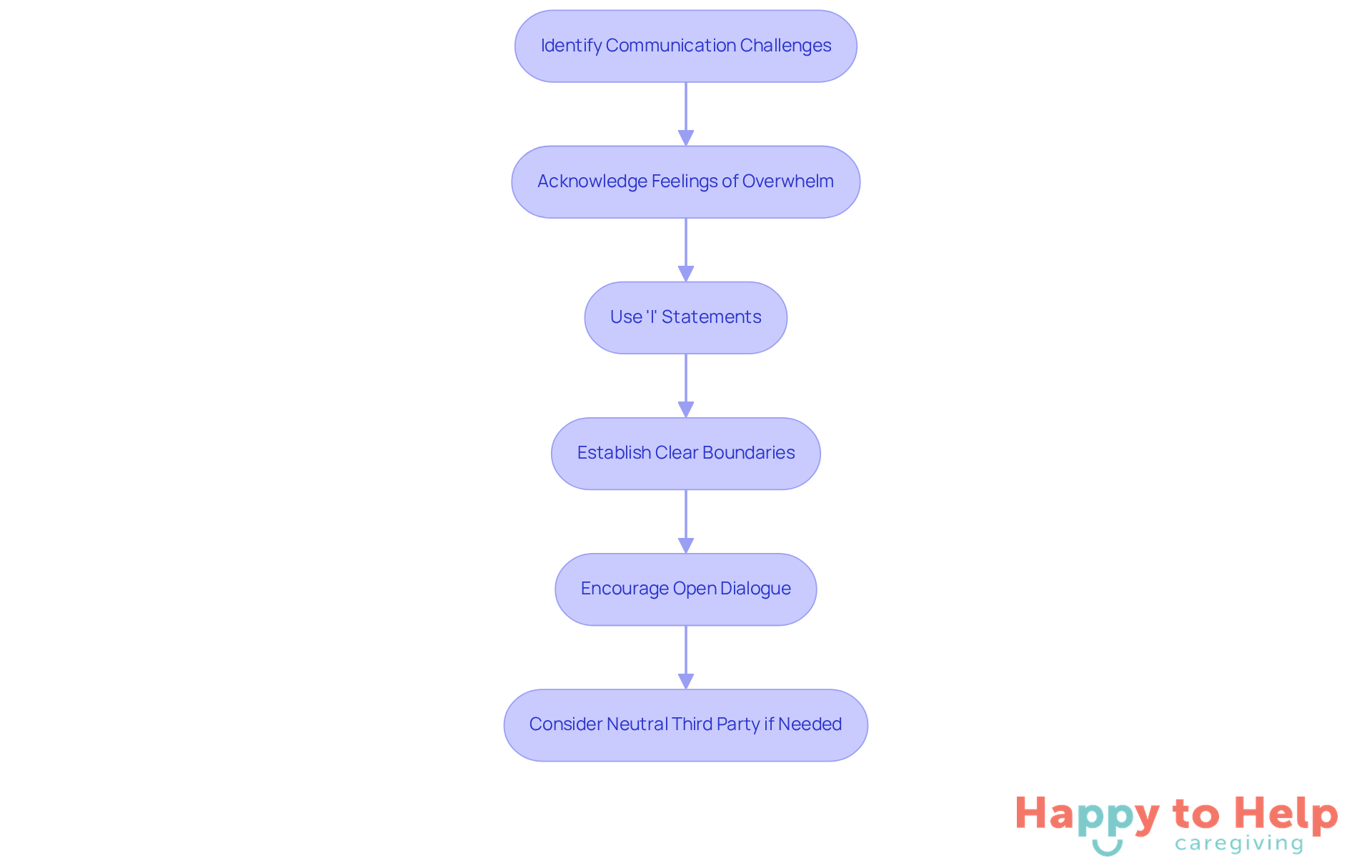
Problem: Caregivers often face significant challenges in initiating conversations about care preferences and limitations. This can lead to misunderstandings and frustration, impacting the quality of care provided.
Agitate: When caregivers and elderly relatives fail to communicate openly, it can create feelings of isolation and overwhelm. For instance, a caregiver might feel burdened, saying, "I feel overwhelmed when I have to manage everything alone." This sentiment can hinder dialogue and understanding, making it crucial to address these feelings early on.
Solution: To foster open communication, caregivers should utilize 'I' statements to express their feelings without sounding accusatory. Clearly establishing boundaries about what one can and cannot do is essential. Encourage your elderly relative to share their needs and concerns, cultivating mutual respect and cooperation. As Tia Walker wisely notes, "In the heart of every supporter is a knowing that we are all connected. As I do for you, I do for me."
If discussions become particularly challenging, consider involving a neutral third party, such as a family mediator, to facilitate the conversation. Resources from caregiving organizations, like AARP, offer valuable insights on setting boundaries while nurturing a loving relationship.
Additionally, be aware of common pitfalls, such as being too rigid or not allowing for flexibility, which can hinder effective communication. By establishing clear boundaries, both caregivers and elderly parent care can lead to a more harmonious relationship, ultimately improving emotional well-being for both parties.
Key Takeaways for Caregivers
Caring for elderly parents presents a significant challenge for many caregivers. The complexities of their physical, cognitive, and emotional needs can be overwhelming, often leading to caregiver burnout. This situation not only affects the well-being of the elderly but also places a strain on those providing care.
To address these challenges, caregivers must prioritize their own well-being alongside that of their loved ones. Developing a flexible care plan is essential, as it allows for adjustments based on changing needs. Regular evaluations of these plans can help identify areas for improvement, ensuring that both the caregiver and the elderly parent receive the necessary support.
Establishing clear communication channels is another key practice. Open dialogue with healthcare professionals and family members fosters collaboration and understanding, which is vital for effective caregiving. Additionally, utilizing respite services can provide caregivers with much-needed breaks, helping to prevent burnout and maintain their mental health.
Ultimately, the journey of caring for elderly parents can be both rewarding and challenging. By embracing these essential practices, caregivers can enhance the quality of life for their parents while safeguarding their own emotional health. Taking proactive steps today will lead to more effective and compassionate caregiving, creating a nurturing atmosphere that benefits everyone involved.
https://iframe.tely.ai/cta/eyJhcnRpY2xlX2lkIjogIjY5MjI2NTA4MjcyNDliYTNkMmMzZTVhNiIsICJjb21wYW55X2lkIjogIjY4ZWU1ZGNhNzMxNzYyNTU3ZjNjOTVjMSIsICJpbmRleCI6IG51bGwsICJ0eXBlIjogImFydGljbGUifQ==Frequently Asked Questions
What are the main challenges in caring for elderly parents?
The main challenges include understanding their daily routines, assessing their physical capabilities, cognitive function, and emotional well-being, as well as managing the stress that unmet needs can create for both the elderly and their caregivers.
What are activities of daily living (ADLs)?
Activities of daily living (ADLs) are essential tasks that individuals perform daily, such as bathing, dressing, and meal preparation. Difficulty in these tasks can significantly impact an elderly person's overall well-being.
How can caregivers assess the needs of their elderly parents?
Caregivers can assess needs by having open conversations with their parents, utilizing checklists to evaluate capabilities, and engaging healthcare professionals for insights into medical requirements.
Why is it important to anticipate future caregiving needs?
Anticipating future needs allows caregivers to plan proactively, ensuring that they can provide adequate support as their parents' requirements evolve over time.
What resources are available for assessing caregiving requirements?
Resources like the National Institute on Aging provide valuable guidelines and information for effectively assessing caregiving requirements.
What common pitfalls should caregivers avoid?
Caregivers should avoid neglecting the emotional well-being of their parents and failing to regularly update support plans to reflect changing needs.
How can anecdotes from other families help caregivers?
Anecdotes from families who have successfully navigated caregiving challenges can provide relatable insights and encouragement for those currently in similar situations.
List of Sources
- Assessing the Needs of Elderly Parents
- Elderly Care Statistics (https://rosewood-nursing.com/post/elderly-care-statistics)
- Number of Family Caregivers Supporting Older Adults Increased Nearly One-Third Between 2011 and 2022 | Johns Hopkins Bloomberg School of Public Health (https://publichealth.jhu.edu/2025/number-of-family-caregivers-supporting-older-adults-increased-nearly-one-third-between-2011-and-2022)
- Guide to Taking Care of Aging Parents and Family Members (https://arnothealth.org/news/guide-to-taking-care-of-aging-parents-and-family-members)
- Fact Sheet: Trends in Family Care for Older Americans (https://prb.org/resources/fact-sheet-trends-in-family-care-for-older-americans)
- Developing a Flexible Care Plan
- Warning From Older Adults: Care for Aging in America Needs Urgent Rethinking (https://johnahartford.org/newsroom/view/warning-from-older-adults-care-for-aging-in-america-needs-urgent-rethinking)
- The Number Of Family Caregivers Helping Older US Adults Increased From 18 Million To 24 Million, 2011–22 | Health Affairs Journal (https://healthaffairs.org/doi/10.1377/hlthaff.2024.00978)
- Caregiving Crisis: 45% Increase in Americans Providing Care (https://aarp.org/caregiving/basics/caregiving-in-us-survey-2025)
- Care planning model allows for more flexibility in the event of serious illness (https://mcknights.com/news/care-planning-model-allows-for-more-flexibility-in-the-event-of-serious-illness)
- Fact Sheet: Trends in Family Care for Older Americans (https://prb.org/resources/fact-sheet-trends-in-family-care-for-older-americans)
- Prioritizing Caregiver and Parent Well-Being
- Caregivers and the Importance of Respite Care (https://benedictineliving.org/resources/news/caregivers-and-the-importance-of-respite-care)
- Improving Support for Family Caregivers (https://nationalacademies.org/news/2025/07/improving-support-for-family-caregivers)
- Caregiver Statistics: Health, Technology, and Caregiving Resources (https://caregiver.org/resource/caregiver-statistics-health-technology-and-caregiving-resources)
- Establishing Communication and Boundaries
- Communication tips for caregivers of elders (https://uhc.com/news-articles/healthy-living/communication-tips-for-caregivers-of-elderly-parents)
- 65 Inspirational Quotes About Caring For Elderly Parents - Home Care Agency | Global One Home Care Boston (https://globalonehomecare.com/65-inspirational-quotes-about-caring-for-elderly-parents)
- Evaluation of the ‘Ladder to the Moon, Culture Change Studio Engagement Programme’ staff training: Two quasi-experimental case studies | Request PDF (https://researchgate.net/publication/313538369_Evaluation_of_the_'Ladder_to_the_Moon_Culture_Change_Studio_Engagement_Programme'_staff_training_Two_quasi-experimental_case_studies)
- Taking Care of Elderly Parents Quotes - Freedom Care (https://freedomcare.com/taking-care-of-elderly-parents-quotes)
- Heartwarming Quotes on Taking Care of Elderly Parents (https://humancareny.com/blog/taking-care-of-elderly-parents-quotes)