10 Essential Benefits of Senior Tracking Devices for Caregivers

For families in our service areas
For families in our service areas, this guide explains caregiver support and how non-medical in-home caregiving can support care planning in East Idaho, Treasure Valley & Magic Valley, Northern Wasatch, North Central West Virginia & Southwestern Pennsylvania, and Northeast Ohio.
The Importance of Benefits of Senior Tracking Devices
Caring for seniors presents a unique set of challenges. As their needs for safety and independence grow, caregivers often find themselves in a difficult position. The integration of technology, particularly senior tracking devices, offers a powerful solution to enhance support and ensure the well-being of loved ones.
However, how can these devices effectively balance the dual demands of safety and autonomy for seniors? This question is crucial for caregivers navigating these complexities. Senior tracking devices not only help prevent wandering and facilitate quick emergency responses but also empower caregivers to provide personalized and efficient care. By understanding the essential benefits of these devices, caregivers can implement practical solutions that address both safety and independence.
Happy to Help Caregiving: Personalized Support for Seniors
Caring for seniors can be challenging, especially when they require tailored support to enhance their quality of life. Many caregivers face the problem of providing adequate emotional and physical assistance, which can lead to feelings of frustration and helplessness.
Happy to Help Caregiving addresses this issue by offering specialized in-home support services. Their offerings include:
- Companionship care
- Post-hospital recovery assistance
- Palliative support
This customized approach allows caregivers to understand individual needs better, which is crucial for effective support.
To further enhance care, the agency incorporates a senior tracking device, such as GPS tracking tools. This solution not only helps caregivers monitor their clients' safety and well-being but also utilizes a senior tracking device to ensure that seniors remain comfortable and secure in their own homes. By employing these tools, caregivers can provide a higher level of oversight, making their support more efficient and effective.
Prevent Wandering: The Role of GPS Trackers in Senior Safety
Wandering among older adults, especially those with Alzheimer's or dementia, poses a significant challenge for caregivers. This issue not only increases the risk of individuals becoming lost but also creates emotional distress for families who worry about their loved ones' safety.
The emergence of GPS trackers as a senior tracking device provides a practical solution to this pressing problem. These devices, known as senior tracking devices, offer real-time location tracking, enabling guardians to monitor their loved ones' movements closely. With geofencing alerts, caregivers receive immediate notifications if an elderly individual leaves a designated safe area, significantly reducing the chances of them getting lost.
This proactive approach enhances safety and provides peace of mind for families, allowing them to quickly locate their loved ones if they wander off. Geriatric specialists highlight that such technology can help prolong independence at home, enabling seniors to maintain their quality of life while ensuring their safety.
Current research indicates that a senior tracking device effectively minimizes wandering occurrences, making it an essential tool for those navigating the complexities of dementia care. By implementing a senior tracking device, caregivers can address the challenges of wandering while fostering a safer environment for older adults.

Ensure Quick Emergency Response: Benefits of Senior Tracking Devices
Senior tracking devices address a critical problem: the need for swift emergency responses for older adults. Delayed assistance can have serious implications, especially for those who struggle to communicate their needs during a fall or medical emergency. An essential feature of the senior tracking device is the SOS button, which allows older adults to quickly alert caregivers or emergency services. Research shows that senior tracking devices equipped with SOS buttons can significantly reduce response times, providing peace of mind for both elderly individuals and their families.
In 2025, advancements in elder safety technology are further enhancing these systems. Innovations like a senior tracking device with real-time GPS tracking and two-way communication capabilities enable caregivers to locate elderly individuals accurately and maintain contact during emergencies. This timely intervention can be life-saving. Real-life examples underscore the importance of SOS buttons; there have been numerous instances where older adults activated these buttons in critical situations, resulting in prompt medical assistance and potentially saving lives.
Moreover, the durability and extended battery life of these gadgets minimize the need for frequent recharging, enhancing their reliability. The integration of SOS features and a senior tracking device for GPS monitoring not only boosts the overall safety of older adults but also fosters a sense of autonomy, allowing them to engage in daily activities with confidence.
As the medical alert systems market is projected to grow to $4.6 billion by 2025, the relevance and investment in such technologies continue to rise, reflecting their vital role in elder care.

Promote Independence: Balancing Safety and Freedom for Seniors
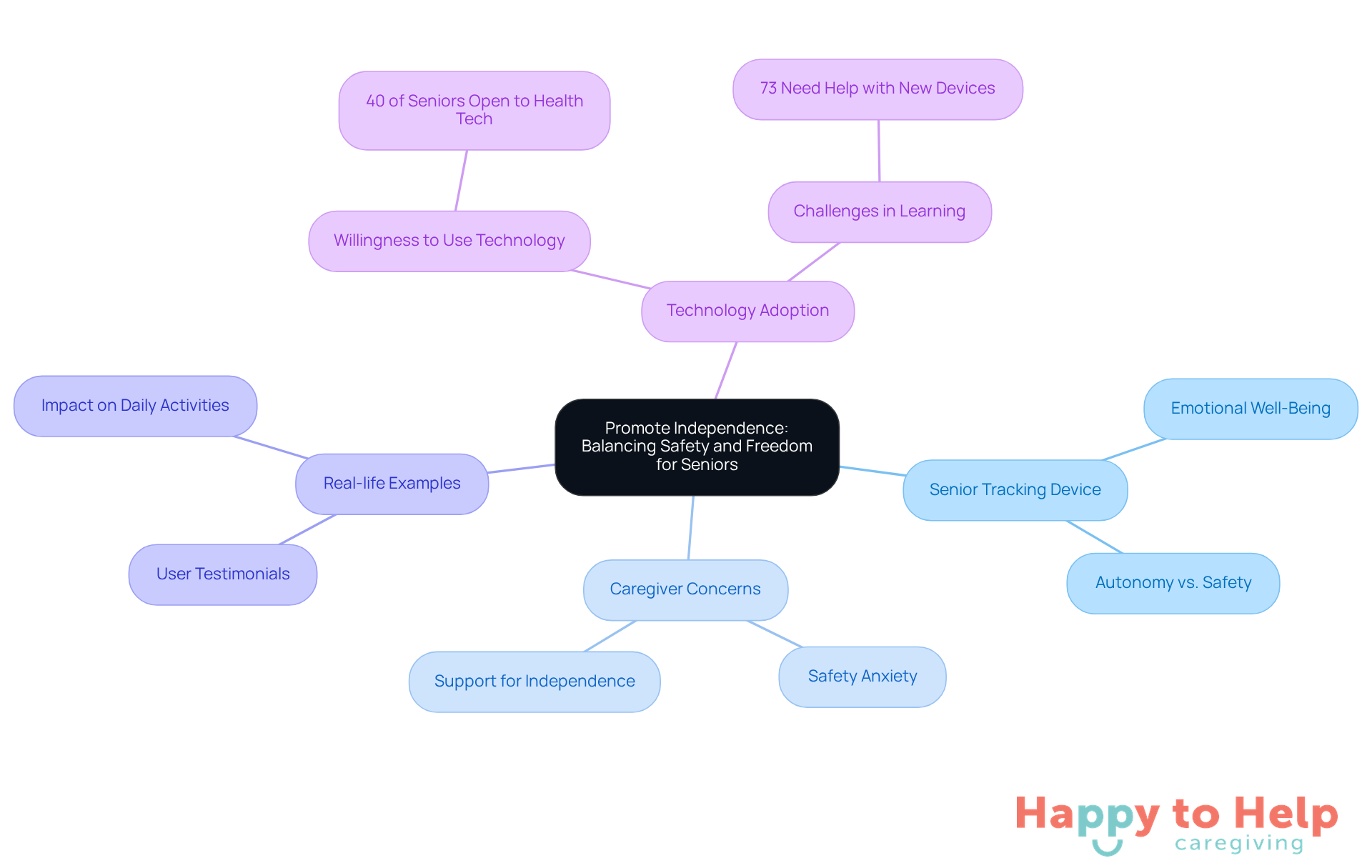
The senior tracking device is a GPS tracking tool that addresses a significant challenge faced by older adults and their caregivers: the need for autonomy while ensuring safety. Many older adults desire to engage in daily activities - like walking, shopping, or visiting friends - without constant oversight. This need for independence is crucial for their emotional well-being, as knowing they can be easily located provides a sense of freedom.
However, caregivers often worry about their loved ones' safety during these activities. This concern can lead to anxiety for both parties, as caregivers want to support independence but also need to ensure their loved ones are secure. Fortunately, a senior tracking device provides a practical solution. By allowing caregivers to monitor their loved ones' whereabouts, senior tracking devices help maintain a balance between independence and safety, significantly enhancing the quality of life for older adults.
Real-life examples illustrate this dynamic: many elderly individuals report feeling freer when using a senior tracking device, which enables them to pursue their interests without the fear of being unsupervised. Caregivers share this sentiment, noting that the senior tracking device empowers them to support their loved ones' independence while ensuring their safety. As technology advances, the use of a senior tracking device in the lives of older adults represents a crucial step toward promoting both autonomy and safety.
Moreover, statistics reveal that 40% of older adults are willing to use technology for health care activities, indicating a growing acceptance of such tools. However, it’s essential to acknowledge that 73% of individuals aged 65 and older report needing assistance with setting up and learning to use new technology. This highlights the challenges that may arise in technology adoption, underscoring the importance of providing support and education to facilitate this transition.
Monitor Health and Activity: Enhancing Care for Seniors
Caregivers often face the challenge of monitoring the health of older adults, particularly when managing chronic conditions. This can lead to concerns about whether seniors are remaining active and engaged in their daily lives. Without effective monitoring, caregivers may struggle to make informed decisions about their loved ones' health.
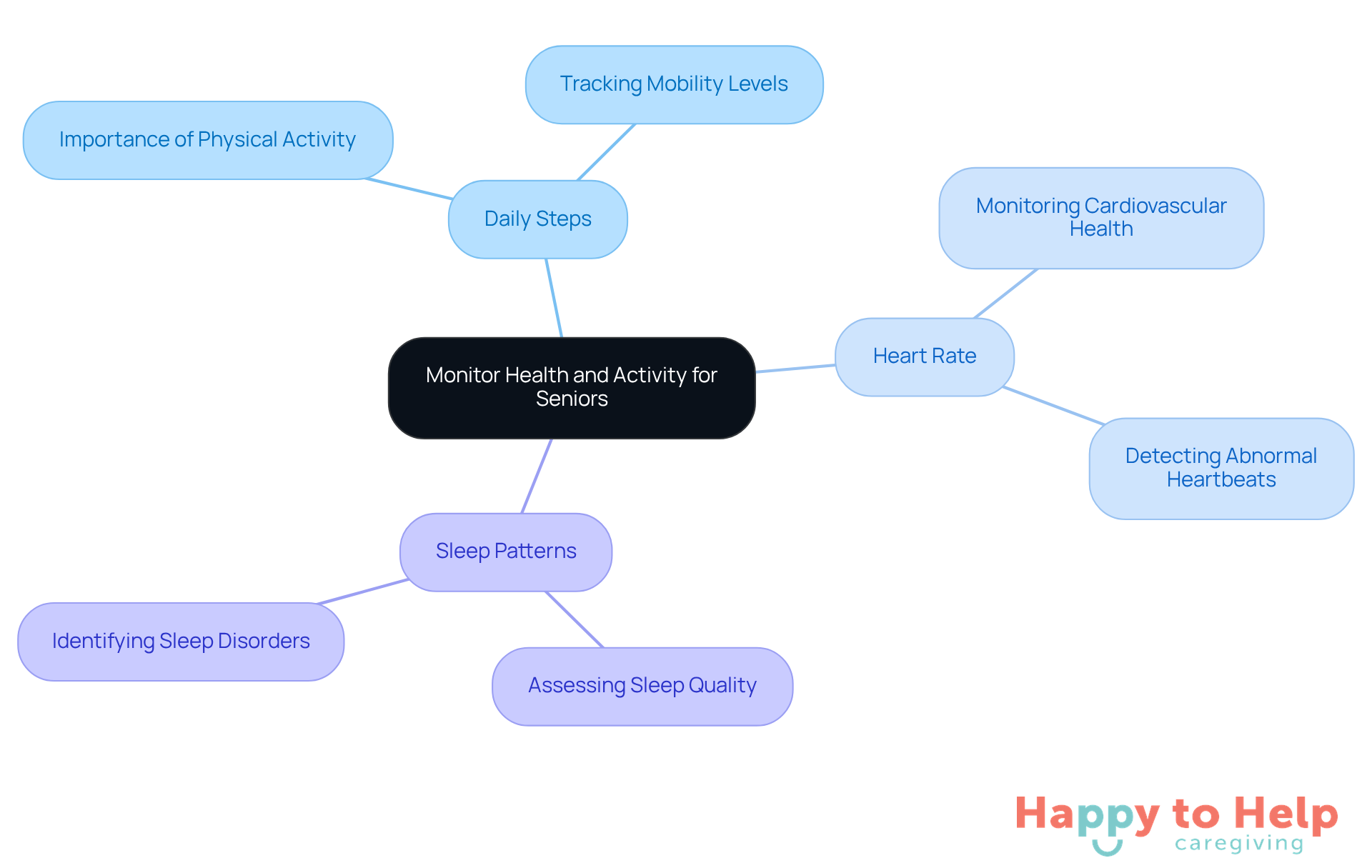
Fortunately, many contemporary GPS tracking devices, including senior tracking devices, now come equipped with health monitoring functions. These devices allow guardians to track vital signs, activity levels, and overall health metrics. For instance, caregivers can monitor:
- Daily steps taken
- Heart rate
- Sleep patterns
This information is invaluable for tailoring care to meet the specific needs of seniors with the help of a senior tracking device.
By integrating these health metrics into their caregiving approach, families can ensure that older adults receive the appropriate level of care and support. This proactive strategy not only enhances the quality of life for seniors but also provides peace of mind for caregivers, knowing they have the tools to make informed health decisions.
Support Caregivers: How Tracking Devices Aid Daily Monitoring
Caregivers often struggle with the challenge of monitoring their loved ones' safety and health. This responsibility can lead to significant stress, as they worry about potential changes in behavior or health status that may require immediate attention.
A senior tracking device provides a practical solution to this problem. These tools, including the senior tracking device, simplify daily monitoring tasks by providing real-time location updates and health metrics. Caregivers can easily check on their loved ones without needing to be physically present, allowing for more efficient care management.
Moreover, the reassurance offered by a senior tracking device can significantly lessen caregiver stress. With the ability to quickly identify any changes that may require attention, caregivers can focus on delivering quality care instead of constantly worrying about their loved ones' safety.
Incorporating a senior tracking device into caregiving routines not only enhances safety but also promotes peace of mind for both caregivers and their loved ones.

User-Friendly Interfaces: Essential Features for Senior Tracking Devices
Choosing a senior tracking device for older adults can be challenging because of usability issues. Many devices, such as the senior tracking device, are complicated, leading to frustration for both seniors and their caregivers. This can hinder the effectiveness of the technology, making it essential to find tools that are easy to operate.
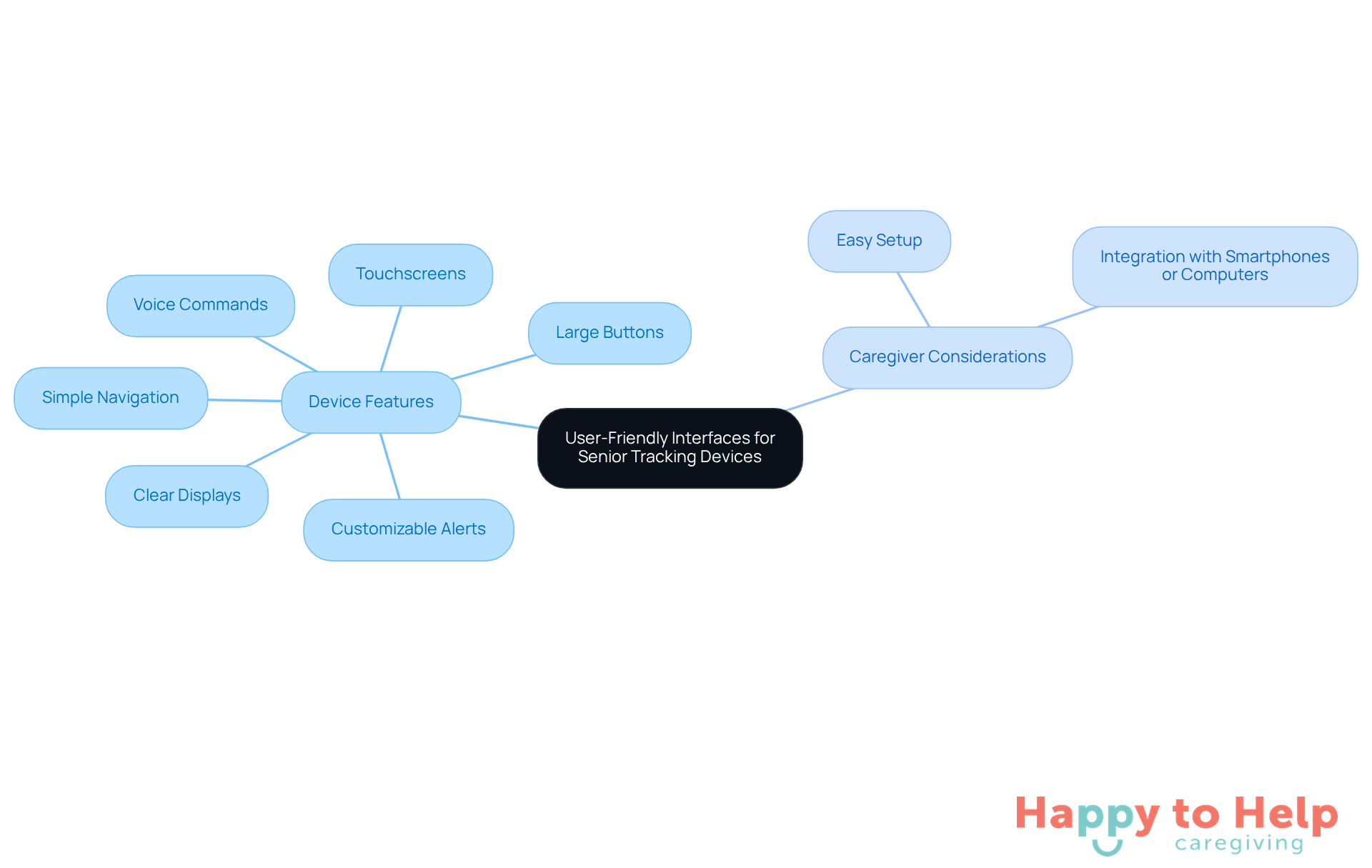
To address this problem, look for a senior tracking device that features:
- Large buttons
- Clear displays
- Simple navigation
Features like voice commands, touchscreens, and customizable alerts can significantly enhance usability. These elements not only make it easier for older adults to use the senior tracking device independently but also encourage regular use, maximizing the benefits of the senior tracking device technology.
Additionally, caregivers should prioritize tools that offer:
- Easy setup
- Integration with smartphones or computers
This allows for seamless monitoring and communication, ensuring that caregivers can stay connected with their loved ones. An intuitive design is key to promoting autonomy and enhancing the overall experience for older adults.
Understand Costs: Budgeting for Senior Tracking Devices
Budgeting for a senior tracking device poses a significant challenge for caregivers. With initial purchase expenses and recurring subscription charges, understanding the total cost can be overwhelming. Costs for senior tracking devices vary widely, influenced by features ranging from basic models to advanced units equipped with health monitoring capabilities.
Moreover, families must factor in monthly service plans, which often include essential features like real-time monitoring provided by a senior tracking device and emergency alerts. This complexity can lead to confusion and stress when trying to ensure the safety of loved ones.
To navigate these challenges, families should assess their budget alongside the specific needs of their loved ones. By doing so, they can select a product that not only fits their financial constraints but also provides the best value in terms of safety and peace of mind.

Utilize Intelligent Alerts: Staying Informed About Senior Safety
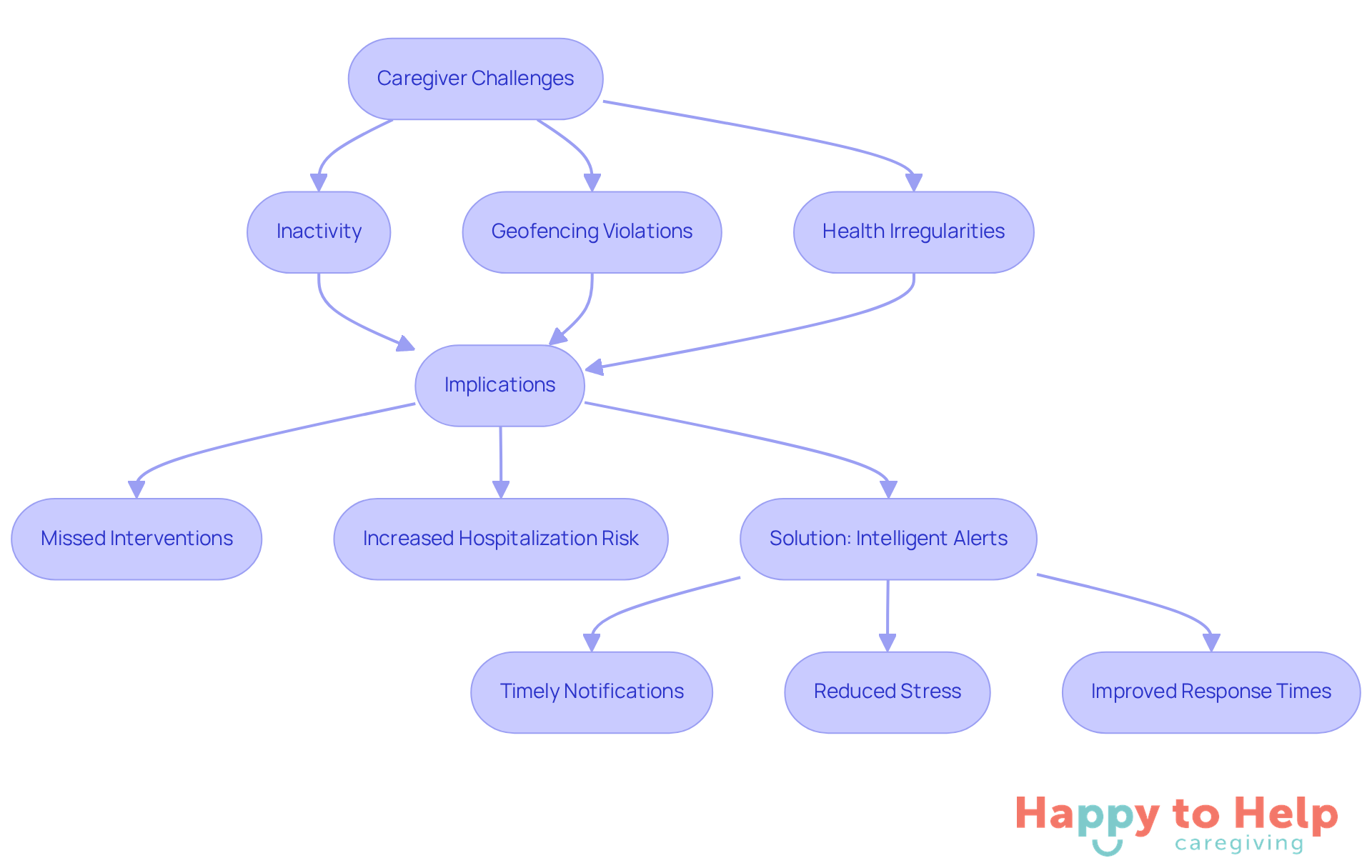
Problem: Caregivers often face significant challenges in ensuring the safety of their elderly loved ones. Concerns about inactivity, geofencing violations, and health irregularities can lead to anxiety and uncertainty.
Agitate: These issues can have serious implications. For instance, if a caregiver receives no notification about an elderly person's inactivity, they may miss the chance to intervene in a potentially dangerous situation. This lack of timely information can lead to severe consequences, including hospitalization. In fact, data shows that older adults equipped with fall detection technology are 35% less likely to need hospitalization after a fall, and those using wearables are 50% more likely to receive prompt help.
Intelligent alerts from modern GPS tracking devices provide a practical solution with the addition of a senior tracking device. These alerts enable guardians to monitor their loved ones' safety effectively, providing timely notifications that allow for quick responses to potential issues. For example, caregivers can check in on elderly individuals who show signs of inactivity, potentially preventing serious occurrences. Moreover, 70% of caregivers report decreased stress when older adults use a senior tracking device that includes fall detection systems, highlighting the dual advantage of enhanced safety and reassurance. As the elder care landscape evolves, with the global market for wearables expected to surpass $10 billion by 2030, incorporating smart alerts into monitoring tools is essential for creating a safe and supportive environment for older adults. Real-life examples demonstrate the effectiveness of wearable fall detection devices in reducing emergency response times by up to 50%, showcasing the significant impact these technologies have on caregiver response and senior safety.
GPS Tracker vs. Tracking App: Choosing the Right Solution for Seniors
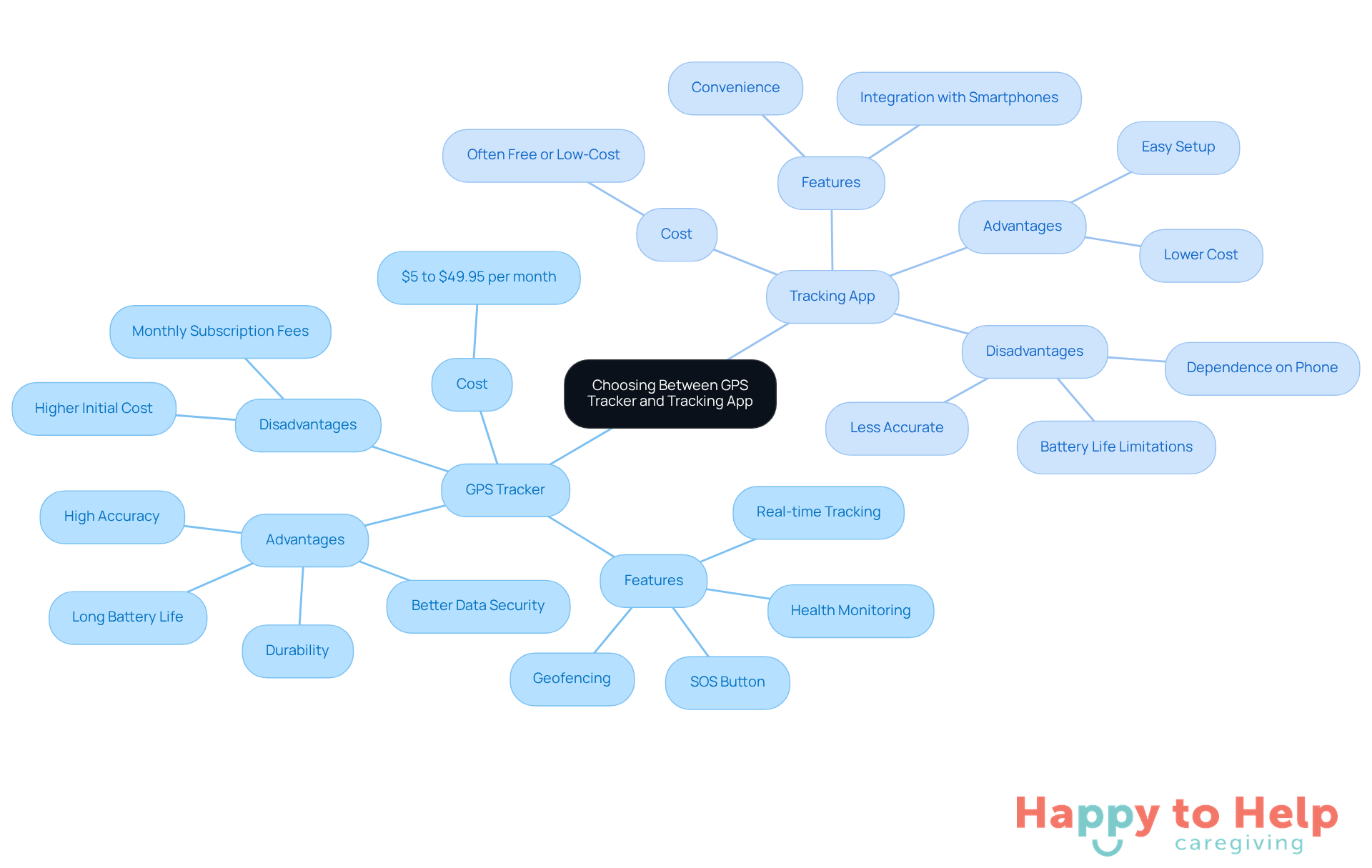
Choosing between a senior tracking device and an app for monitoring elderly loved ones presents a significant challenge for families. The problem lies in the need for reliable, real-time location tracking, especially for those who may wander or require immediate assistance.
Dedicated GPS devices, particularly the senior tracking device, stand out as a solution, offering dependable monitoring and essential safety features like SOS buttons and health tracking capabilities. These devices utilize advanced satellite technology, ensuring accuracy even in low-signal areas. This reliability is crucial for families concerned about the safety of their elderly members.
On the other hand, tracking apps, while convenient, often fall short due to battery life limitations and connectivity issues. They may lack the precision and security that dedicated GPS devices provide. For example, a senior tracking device can send instant alerts when an elderly person leaves a designated 'safe zone,' significantly enhancing safety and providing peace of mind for families.
Moreover, ethical considerations are paramount, particularly for individuals with dementia. Striking a balance between safety and privacy is essential. Families should also consider the financial aspect, as subscription costs for a senior tracking device can range from $5 to $49.95 per month.
Ultimately, the decision should reflect the elder's lifestyle, their comfort with technology, and the level of monitoring necessary for their well-being. Transparency is key when introducing GPS trackers to seniors, fostering open discussions about their use and benefits.
Taking the Next Steps
Caregivers face significant challenges in ensuring the safety and well-being of older adults. The risk of wandering, health emergencies, and the need for constant monitoring can create anxiety for both caregivers and seniors. These issues not only affect the quality of care but also the independence of older adults, making it crucial to find effective solutions.
Senior tracking devices offer a practical solution to these challenges. By providing real-time monitoring, these devices help prevent wandering and enable quick emergency responses. They also allow caregivers to track health and activity levels, facilitating timely interventions when necessary. This technology promotes a sense of autonomy for seniors, empowering them to engage in daily activities with confidence.
Moreover, the user-friendly interfaces and intelligent alerts of these devices enhance their usability, making them invaluable tools for caregivers. As technology evolves, integrating these innovations into caregiving practices can significantly improve the quality of care and the overall experience for both seniors and their caregivers.
In conclusion, adopting senior tracking devices is essential for creating a safer and more supportive environment for older adults. Investing in these solutions not only addresses immediate safety concerns but also contributes to long-term well-being. Families should prioritize the integration of such technologies into their caregiving strategies to ensure the best possible care for their loved ones.
https://iframe.tely.ai/cta/eyJhcnRpY2xlX2lkIjogIjY5MjRmMWRiZWM0Y2FiOGU3NGVjMDBkNSIsICJjb21wYW55X2lkIjogIjY4ZWU1ZGNhNzMxNzYyNTU3ZjNjOTVjMSIsICJpbmRleCI6IG51bGwsICJ0eXBlIjogImFydGljbGUifQ==Frequently Asked Questions
What services does Happy to Help Caregiving offer for seniors?
Happy to Help Caregiving offers specialized in-home support services, including companionship care, post-hospital recovery assistance, and palliative support.
How does Happy to Help Caregiving enhance the care provided to seniors?
They enhance care by incorporating a senior tracking device, such as GPS tracking tools, which helps caregivers monitor the safety and well-being of seniors in their homes.
What is the significance of GPS trackers for seniors, particularly those with Alzheimer's or dementia?
GPS trackers provide real-time location tracking and geofencing alerts, allowing caregivers to monitor movements and receive notifications if a senior leaves a designated safe area, which reduces the chances of them getting lost.
How do senior tracking devices contribute to emergency response for older adults?
Senior tracking devices often include an SOS button that allows elderly individuals to quickly alert caregivers or emergency services, significantly reducing response times during emergencies.
What advancements in senior tracking devices are expected by 2025?
Advancements include real-time GPS tracking, two-way communication capabilities, and improved features that enhance the safety and reliability of these devices for older adults.
How do senior tracking devices help maintain the independence of older adults?
By enabling caregivers to monitor seniors' safety and respond quickly in emergencies, these devices allow older adults to engage in daily activities with greater confidence and autonomy.
What is the projected market growth for medical alert systems by 2025?
The medical alert systems market is projected to grow to $4.6 billion by 2025, indicating the increasing relevance and investment in technologies that support elder care.
List of Sources
- Happy to Help Caregiving: Personalized Support for Seniors
- AI must optimize home care, continuity, and early detection for older adults (https://news-medical.net/news/20251007/AI-must-optimize-home-care-continuity-and-early-detection-for-older-adults.aspx)
- CVS Health is shaping a more connected care experience for older adults (https://cvshealth.com/news/health-equity/cvs-health-is-shaping-a-more-connected-care-experience-for-older-adults.html)
- Executive Home Care Honors Family Caregivers During National Family Caregivers Month (https://prnewswire.com/news-releases/executive-home-care-honors-family-caregivers-during-national-family-caregivers-month-302616991.html)
- 2025 Home Care Statistics: Trends & Insights To Know (https://premierhcinc.com/blog/home-care-statistics)
- Webster Home Care Emphasizes How Personalized Support Helps Adults Thrive Safely in Their Own Homes (https://starnewsonline.com/press-release/story/11598/webster-home-care-emphasizes-how-personalized-support-helps-adults-thrive-safely-in-their-own-homes)
- Prevent Wandering: The Role of GPS Trackers in Senior Safety
- Is GPS Tracking For Seniors Worth It? The Pros & Cons (https://trualta.com/resources/blog/is-gps-tracking-for-seniors-worth-it-the-pros-cons)
- Shocking Elopement Statistics: How to Keep Wandering Residents Safe (https://pcalic.com/shocking-elopement-statistics-how-to-keep-wandering-residents-safe)
- GPS devices can help caregivers of dementia patients | Medical Economics (https://medicaleconomics.com/view/gps-devices-can-help-caregivers-of-dementia-patients)
- Approach to Management of Wandering in Dementia: Ethical and Legal Issue - PMC (https://pmc.ncbi.nlm.nih.gov/articles/PMC8543604)
- Implementing global positioning system trackers for people with dementia who are at risk of wandering - PMC (https://pmc.ncbi.nlm.nih.gov/articles/PMC11290024)
- Ensure Quick Emergency Response: Benefits of Senior Tracking Devices
- Medical Alert Systems: 2023-2024 Research and Statistics (https://theseniorlist.com/research/medical-alert-device-consumer-usage-study)
- 4 Essential Steps for Choosing GPS Tracking for Seniors - Happy To Help (https://happytohelpcaregiving.com/4-essential-steps-for-choosing-gps-tracking-for-seniors)
- Emergency Alerts & Alert Systems for Seniors (https://elliapp.co/emergency-alerts-for-seniors)
- 20 Inspirational Senior Care Quotes (https://1plus1cares.com/20-inspirational-senior-care-quotes)
- Medical Alert Statistics 2025 (https://consumeraffairs.com/medical-alert-systems/medical-alert-statistics.html)
- Promote Independence: Balancing Safety and Freedom for Seniors
- Medical Alert Systems: 2023-2024 Research and Statistics (https://theseniorlist.com/research/medical-alert-device-consumer-usage-study)
- Senior Technology Statistics: Key Facts (https://californiamobility.com/21-senior-technology-statistics)
- Tech tools promote independence, seniors say (https://mcknightsseniorliving.com/news/tech-tools-promote-independence-seniors-say)
- Monitor Health and Activity: Enhancing Care for Seniors
- 170 Million Americans Now Own GPS Tracking Devices (https://safehome.org/gps-industry-outlook-statistics)
- The Importance of Health Monitoring for Seniors: Tips from an Internist (https://evansmedicalgroup.com/importance-of-health-monitoring-for-seniors)
- Advanced Wearable Technology Improves Support For People With Dementia And Their Caregivers (https://stories.tamu.edu/news/2025/02/18/advanced-wearable-technology-improves-support-for-people-with-dementia-and-their-caregivers)
- Medicare Guidance Simplified | Chapter (https://askchapter.org/magazine/senior-health-wellness/medical-devices-equipment/best-monitoring-devices-for-seniors)
- Support Caregivers: How Tracking Devices Aid Daily Monitoring
- (PDF) Effects of Tracking Technology on Daily Life of Persons With Dementia: Three Experimental Single-Case Studies (https://researchgate.net/publication/261923008_Effects_of_Tracking_Technology_on_Daily_Life_of_Persons_With_Dementia_Three_Experimental_Single-Case_Studies)
- 27 Inspirational Quotes for Caregivers (https://ultimatecareny.com/resources/27-quotes-for-caregivers)
- 6 Tech Tools Transforming Caregiving for Aging Loved Ones (https://ltcnews.com/articles/tech-tools-transforming-caregiving-aging-loved-ones)
- GPS devices can help caregivers of dementia patients | Medical Economics (https://medicaleconomics.com/view/gps-devices-can-help-caregivers-of-dementia-patients)
- User-Friendly Interfaces: Essential Features for Senior Tracking Devices
- Is GPS Tracking For Seniors Worth It? The Pros & Cons (https://trualta.com/resources/blog/is-gps-tracking-for-seniors-worth-it-the-pros-cons)
- 170 Million Americans Now Own GPS Tracking Devices (https://safehome.org/gps-industry-outlook-statistics)
- GPS Tracker Recommendations for Seniors: Comprehensive Review of Safety, Usability, and Battery Life (https://locater.ai/blogs/news/gps-tracker-recommendations-for-seniors-comprehensive-review-of-safety-usability-and-battery-life)
- 11 Best GPS Trackers for the Elderly In 2025 | Family1st (https://family1st.io/best-trackers-for-the-elderly)
- Older Americans Are Leveraging More Technology (https://aarp.org/pri/topics/technology/internet-media-devices/2025-technology-trends-older-adults)
- Understand Costs: Budgeting for Senior Tracking Devices
- Is GPS Tracking For Seniors Worth It? The Pros & Cons (https://trualta.com/resources/blog/is-gps-tracking-for-seniors-worth-it-the-pros-cons)
- Best Cellular GPS Medical Alert Systems in 2025 (https://seniorliving.org/medical-alert-systems/best/gps)
- 4 Essential Steps for Choosing GPS Tracking for Seniors - Happy To Help (https://happytohelpcaregiving.com/4-essential-steps-for-choosing-gps-tracking-for-seniors)
- Electronic Tracking Devices for People With Dementia: Content Analysis of Company Websites - PMC (https://pmc.ncbi.nlm.nih.gov/articles/PMC9700241)
- Dementia Gps Tracker Market: A Comprehensive Analysis 2035 (https://wiseguyreports.com/reports/dementia-gps-tracker-market)
- Utilize Intelligent Alerts: Staying Informed About Senior Safety
- Modern Tools That Improve Safety and Accountability in Elder Care Settings (https://dcreport.org/2025/11/24/modern-tech-tools-improving-safety-in-elder-care-facilities)
- Senior Care Wearables: Fall Detection & Monitoring Stats (https://patentpc.com/blog/senior-care-wearables-fall-detection-monitoring-stats)
- New guidance on electronic monitoring devices aims to balance resident safety, privacy (https://mcknightsseniorliving.com/news/new-guidance-on-electronic-monitoring-devices-aims-to-balance-resident-safety-privacy)
- 7 Innovations In Elderly Alert Systems That Are Changing Senior Care | Fingerlakes1.com (https://fingerlakes1.com/2025/11/07/7-innovations-in-elderly-alert-systems-that-are-changing-senior-care)
- GPS Tracker vs. Tracking App: Choosing the Right Solution for Seniors
- 6 Things To Know Before Buying A GPS Tracker For Your Senior Parents | Family1st (https://family1st.io/things-to-know-before-buy-a-gps-tracker)
- Is GPS Tracking For Seniors Worth It? The Pros & Cons (https://trualta.com/resources/blog/is-gps-tracking-for-seniors-worth-it-the-pros-cons)
- Guardian Tech: Why GPS Trackers Are the Droids Our Seniors Need - Jedi News (https://jedinews.com/misc/articles/guardian-tech-why-gps-trackers-are-the-droids-our-seniors-need)
- GPS Tracking Apps vs GPS Devices: Which One Is More Reliable? (https://tracki.com/zh/blogs/post/gps-tracking-apps-vs-gps-devices?srsltid=AfmBOooDZuRKU3En70dmJ3zGtV5F94UUlSDWl3hgTTnp1eJAEpSuvZzP)