

For families in our service areas
For families in our service areas, this guide explains caregiving and how non-medical in-home caregiving can support care planning in East Idaho, Treasure Valley & Magic Valley, Northern Wasatch, North Central West Virginia, and Northeast Ohio.
Understanding Tips for Caring for Older Parents at
Caring for older parents presents a unique blend of challenges and rewards. Many caregivers navigate the emotional and physical demands of this vital role. Nearly 25% of caregivers dedicate over 40 hours each week to their loved ones, highlighting the need for effective strategies and support systems.
This article explores ten essential tips that illuminate best practices for caring for aging parents at home. It also addresses the complexities of communication, companionship, and professional assistance. How can caregivers balance their own well-being while ensuring their parents receive the quality care they deserve? Let's delve into these challenges and discover practical solutions.
Happy to Help Caregiving: Personalized In-Home Support for Aging Parents
Caring for older parents can be a daunting task, especially for those who take on this responsibility. Many caregivers face overwhelming challenges, including the emotional and physical toll of providing support. In fact, studies show that nearly 1 in 4 caregivers report offering over 40 hours of assistance each week, highlighting the demanding nature of this role.
These challenges can lead to feelings of stress and burnout, impacting both the caregiver's and the senior's well-being. Without adequate support, caregivers may struggle to maintain their own health, which can further complicate the care they provide. This is where effective in-home assistance becomes crucial.
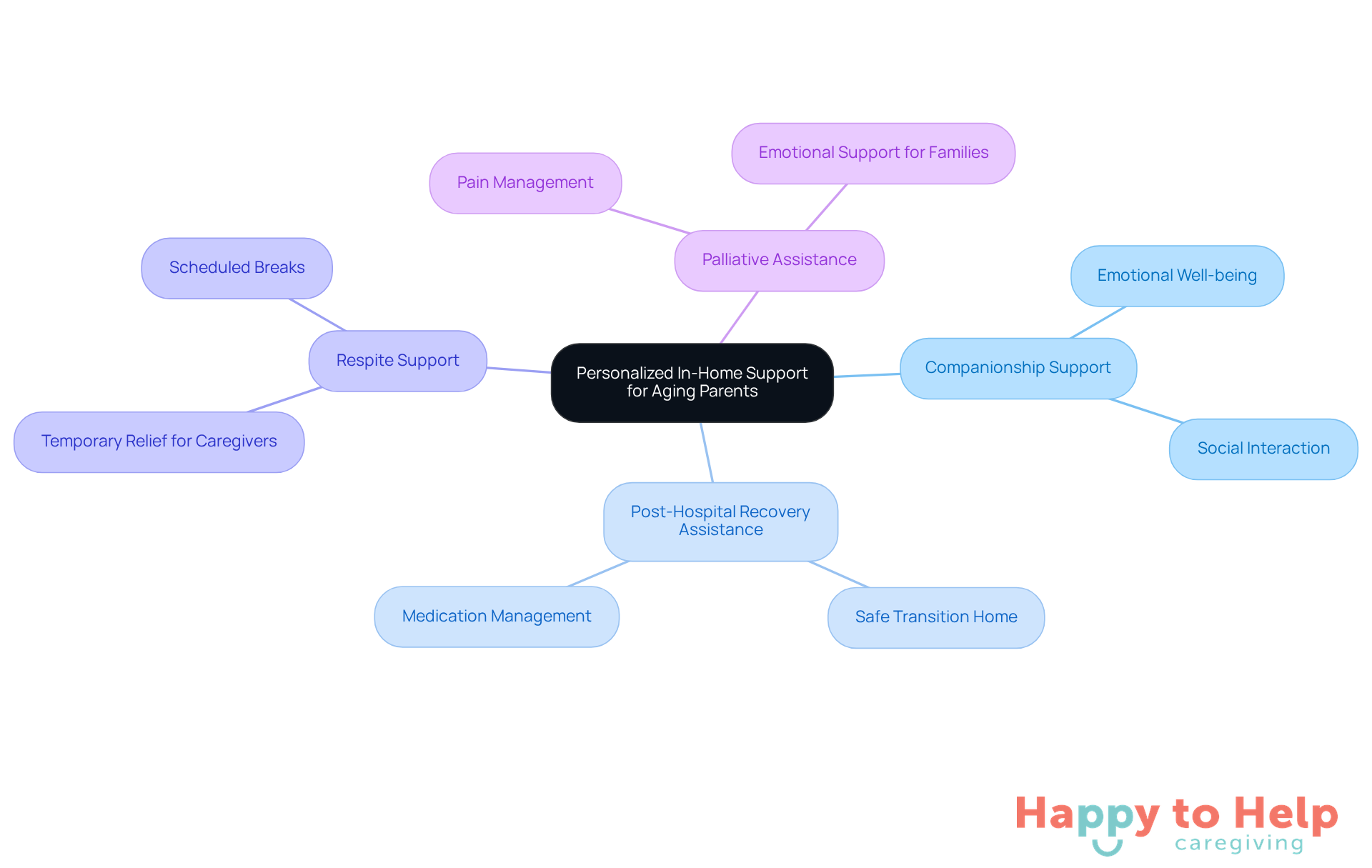
Happy to Help Caregiving excels in delivering compassionate, personalized in-home support for those caring for older parents. Their extensive services include:
- Companionship support
- Post-hospital recovery assistance
- Respite support
- Palliative assistance
Each service is meticulously crafted to address the unique needs of seniors. This personalized approach not only enhances independence but also cultivates a profound sense of security and well-being for both seniors and their families.
By ensuring that seniors receive the appropriate level of assistance in the comfort of their own homes, Happy to Help Caregiving plays a vital role in nurturing a supportive atmosphere that encourages dignity and respect for elderly individuals. This support is essential for improving emotional and physical health outcomes, making it a vital component of their overall quality of life.
Initiate Conversations: Discussing Care Needs with Aging Parents
Starting discussions about support requirements can be a delicate process. Caregivers often face the challenge of ensuring that caring for older parents helps them feel cherished and esteemed while addressing their needs. This situation can lead to feelings of anxiety and frustration for both parties, making effective communication essential.
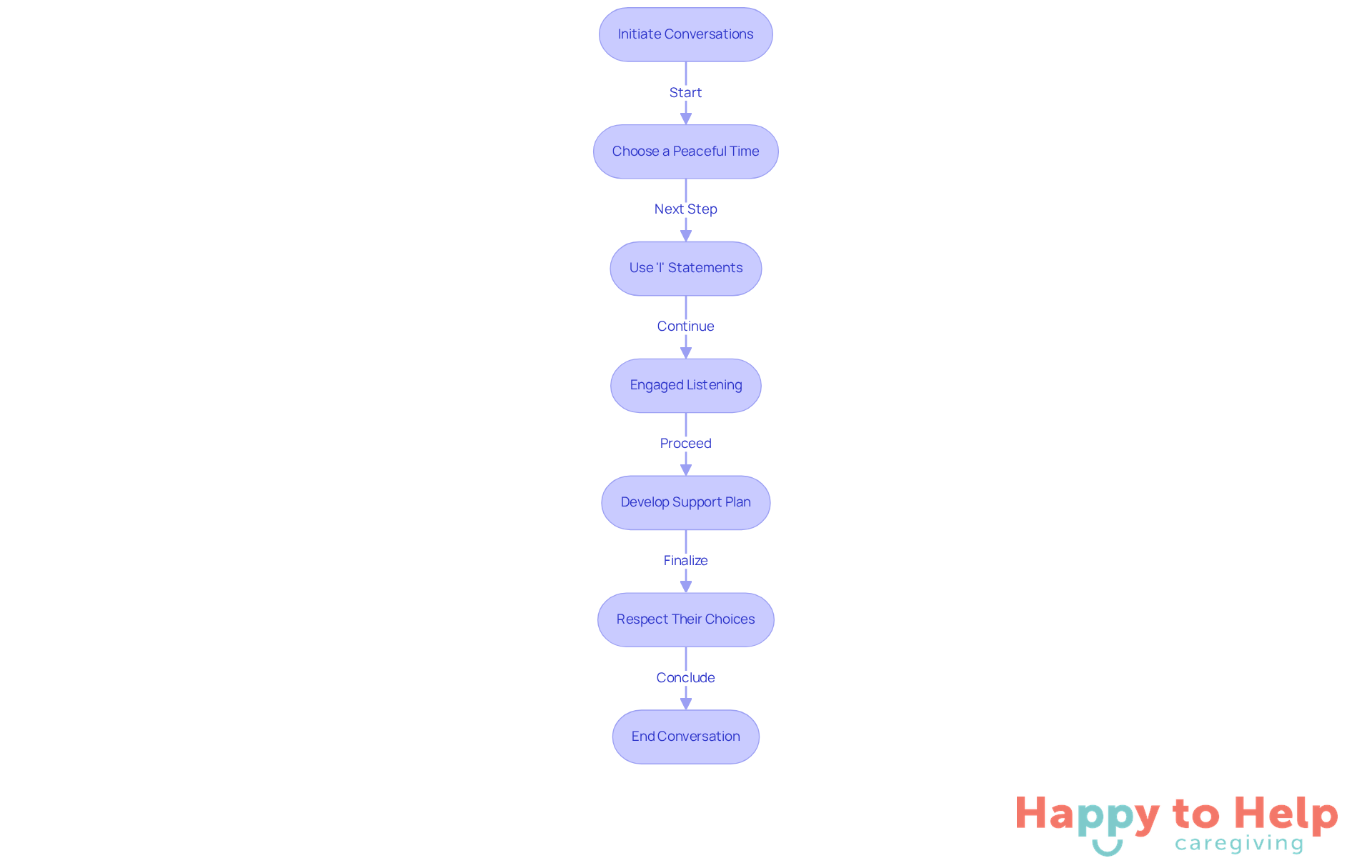
To navigate this sensitive topic, it’s crucial to select a peaceful and private time to share your worries. Using 'I' statements can help convey your feelings without sounding accusatory. For example, saying, "I've been worried about your safety at home" opens the door for dialogue and encourages a more open conversation.
Engaged listening is another vital component. Focus on their emotions and choices, which promotes a cooperative method to developing a support plan that respects their desires. This respectful communication not only strengthens your relationship but also empowers your parents to participate in decisions about their care, which is essential in caring for older parents, enhancing their sense of independence and dignity.
As the number of relatives assisting older adults rose by 32% from 2011 to 2022, effective communication strategies are more crucial than ever. Remember, caregiver relatives are critical to our care-delivery system, as emphasized by Jennifer L. Wolff, PhD. Acknowledging the emotional toll of caring for older parents can also help in understanding the challenges faced, reinforcing the need for compassionate communication.
Explore Living Options: Choosing the Right Environment for Elderly Parents
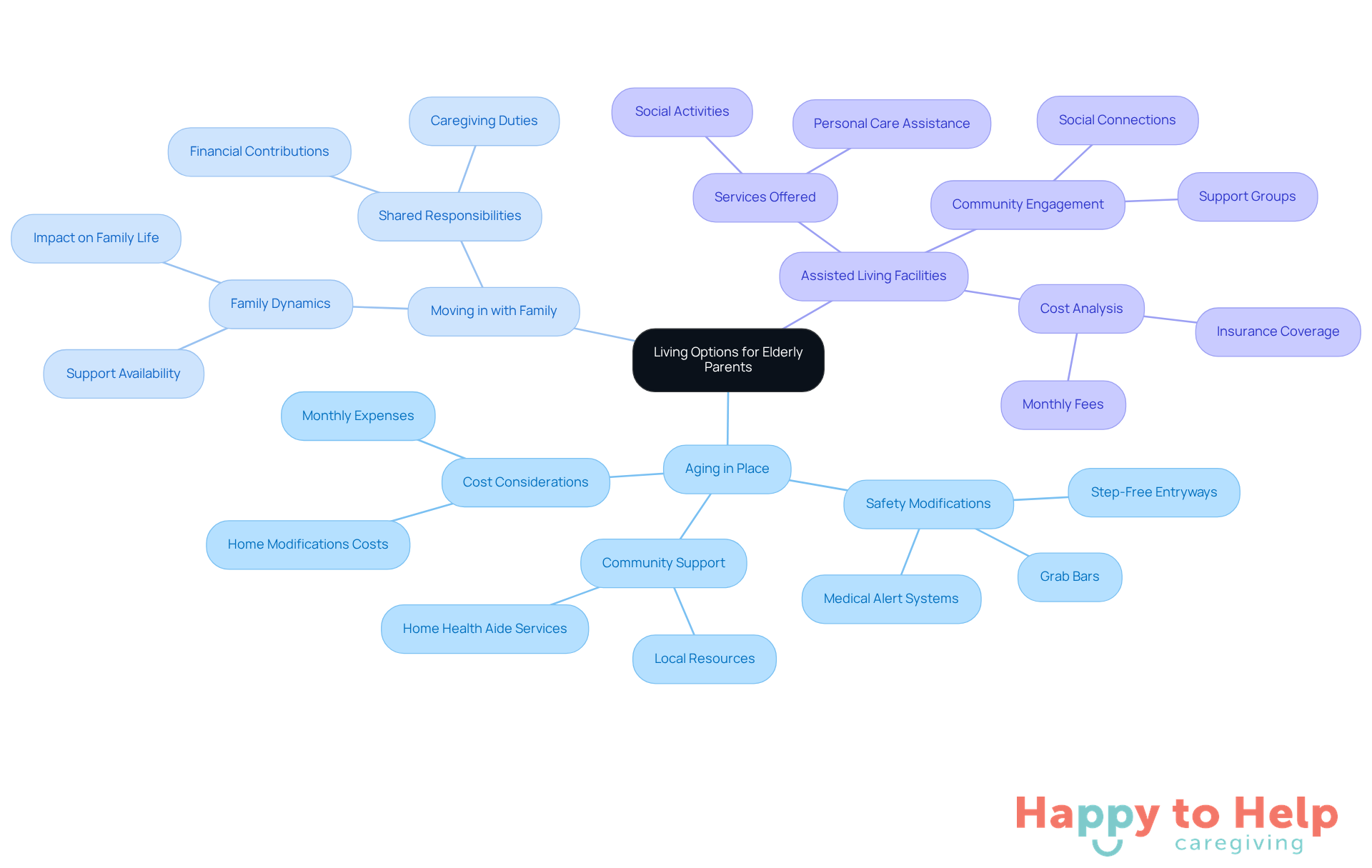
When considering living options for elderly relatives, caregivers face a significant challenge in caring for older parents, ensuring their loved ones' needs and preferences are met. This decision can be overwhelming, as it involves evaluating various options related to caring for older parents, such as aging in place, moving in with family, or exploring assisted living facilities.
The implications of these choices are profound. Caregivers must assess the safety of the home environment, including accessibility features and the availability of community support services. Each option should align with the caregivers' lifestyle and health requirements, making it crucial to weigh the pros and cons carefully.
To navigate this process effectively, consider the following actionable solutions:
- Aging in Place: Ensure the home is safe and accessible, possibly making modifications to accommodate mobility needs.
- Caring for older parents involves evaluating the dynamics of family life and the ability to provide adequate support.
- Assisted Living Facilities: Research local options, focusing on services offered and community engagement.
By taking these steps, caregivers can make informed decisions that prioritize the well-being of their elderly relatives.
Hire Professional Care: Engaging Experts for Elderly Support
Caring for older parents can be a daunting task, often leading to caregiver fatigue and stress. Many caregivers struggle to balance their own lives while caring for older parents and ensuring that their loved ones receive the attention they need. This situation can lead to burnout, affecting both the caregiver's well-being and the quality of care provided.
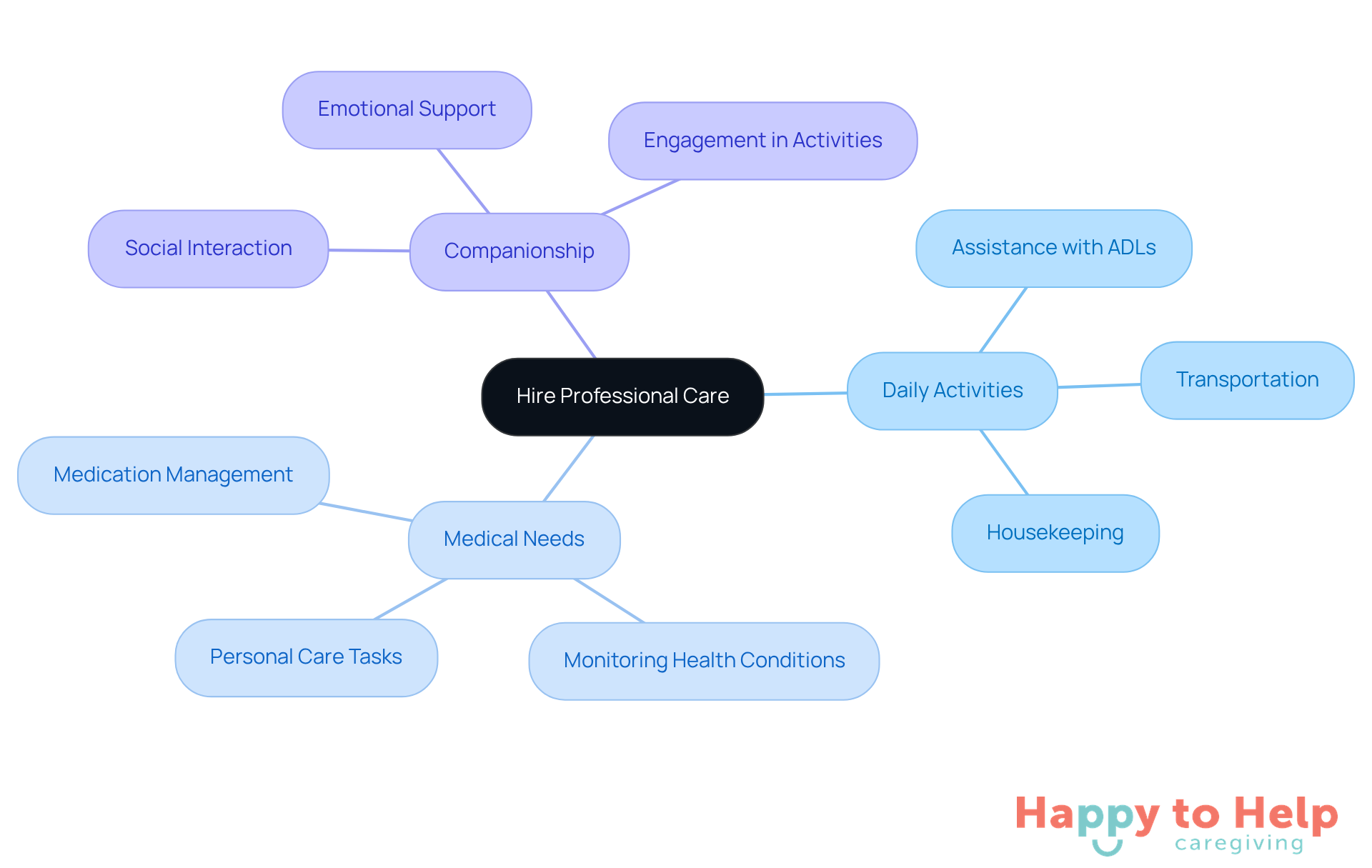
To address these challenges, hiring skilled professionals can be a vital solution. Look for agencies that offer experienced assistants who can help with:
- Daily activities
- Medical needs
- Companionship
These professionals not only provide essential support but also offer relief for family members, allowing them to rejuvenate and recharge.
By bringing in professional support, caregivers can ensure their loved ones receive proper attention while also managing the challenges of caring for older parents and taking care of their own health. This approach not only enhances the quality of care but also fosters a more balanced and fulfilling life for everyone involved.
Provide Companionship: Enhancing Emotional Well-Being for Aging Parents
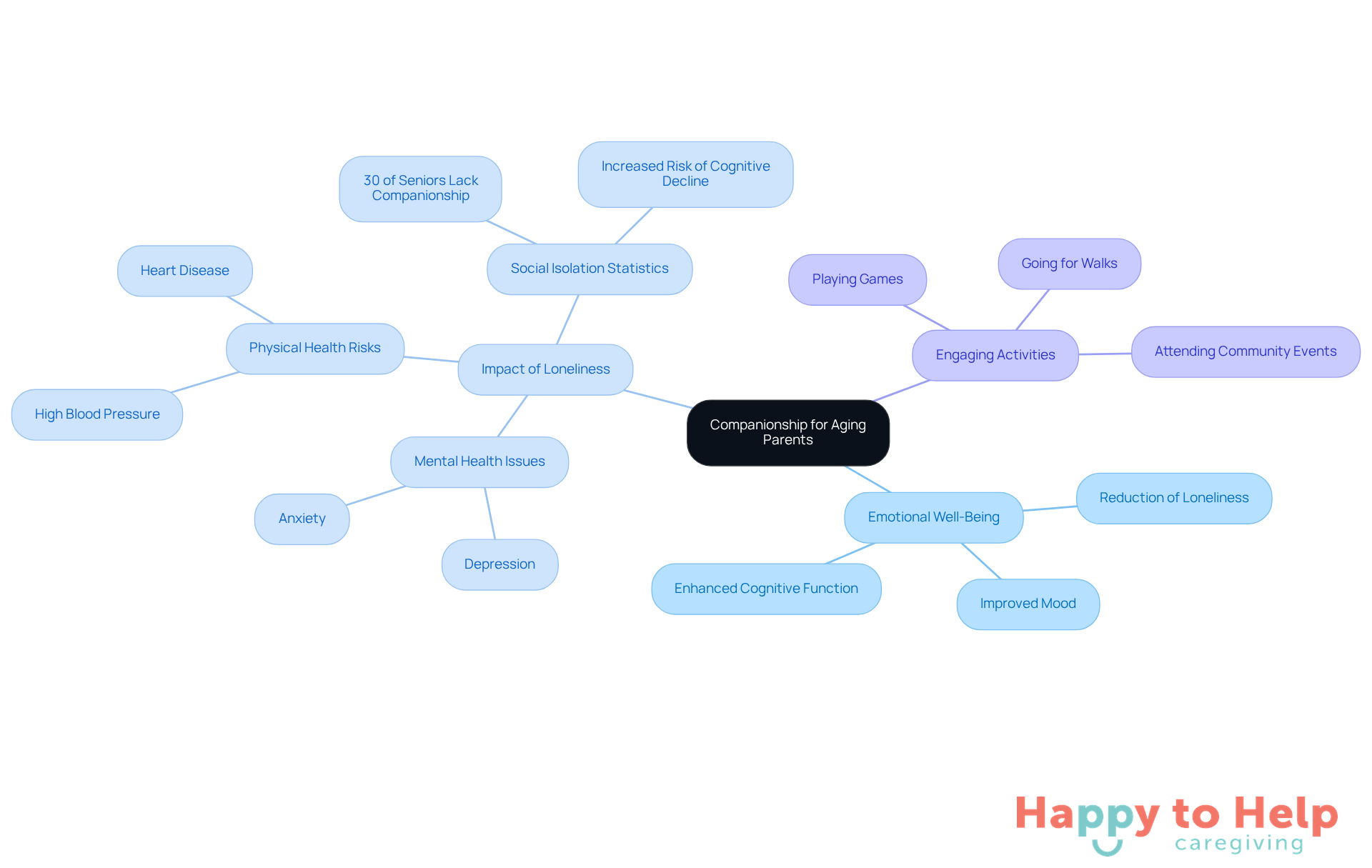
Caring for older parents is crucial, as companionship is a significant concern for them, with many facing feelings of loneliness that can impact their emotional well-being. Research shows that 30% of seniors report lacking consistent companionship, which can lead to a decline in mood and overall quality of life. This highlights the urgent need for caregivers to foster connections and provide support.
To combat this issue, caregivers can promote consistent social engagements through visits from relatives, friends, or professional support. Engaging activities such as:
- Playing games
- Going for walks
- Attending community events
can significantly reduce feelings of isolation. Not only do these interactions help alleviate loneliness, but they also enhance cognitive function, giving seniors a sense of belonging and community.
By prioritizing companionship, households can create a nurturing environment that supports their loved ones' emotional health. Implementing these strategies can lead to improved mood and a better quality of life for those caring for older parents.
Utilize Respite Care: Taking Breaks While Ensuring Quality Support
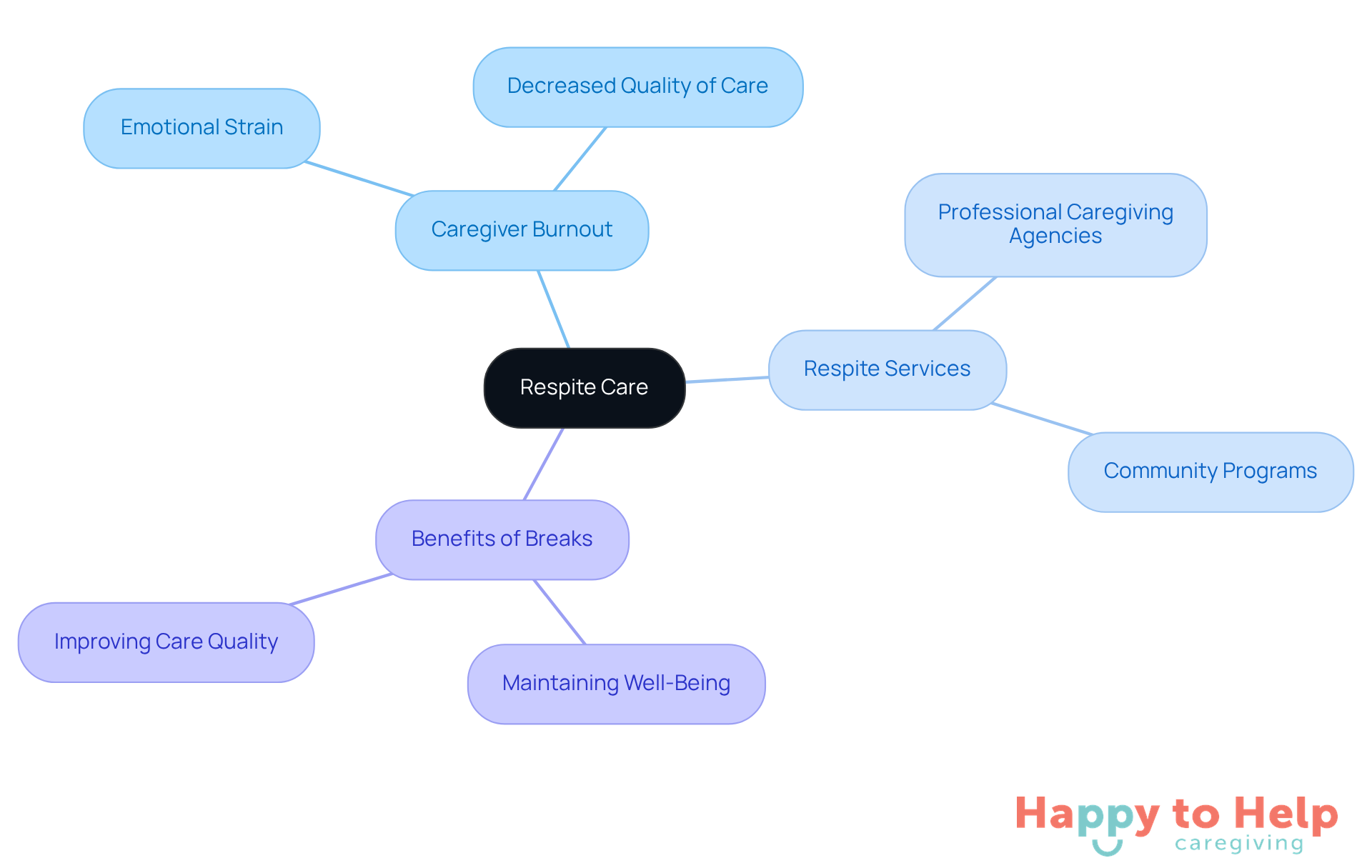
Caregiver burnout is a significant issue that many family members face when caring for older parents while providing support to their loved ones. This exhaustion can lead to decreased quality of care and emotional strain.
Respite services offer a vital solution by providing temporary relief for caregivers, allowing them to recharge. These services can be arranged through professional caregiving agencies or community programs, ensuring that loved ones continue to receive quality support during breaks.
Taking regular breaks is essential for maintaining a healthy balance in caregiving responsibilities. By utilizing respite services, caregivers can prevent burnout and sustain their well-being, ultimately benefiting both themselves and those they care for.
Support Post-Hospital Recovery: Assisting Aging Parents After Medical Care
After a hospital stay, caregivers face the critical challenge of caring for older parents to provide appropriate support and ensure their recovery. Without proper assistance, the risk of complications and hospital readmissions increases significantly. In fact, studies reveal that 40% of medication-related hospital readmissions are preventable, and 16% of readmissions within 30 days are linked to medication issues. This highlights the urgent need for attentive post-discharge support and effective medication management.
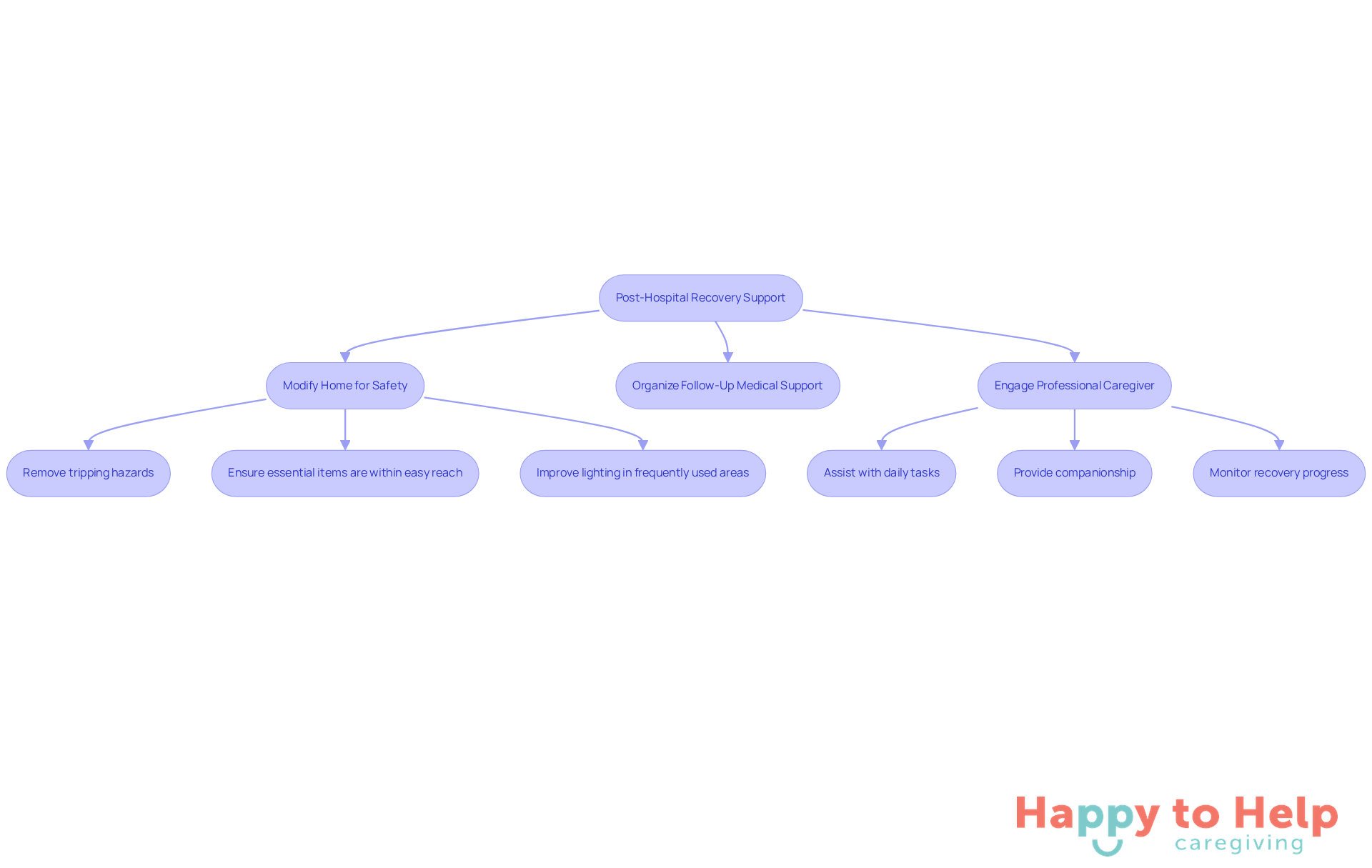
To address these challenges, begin by modifying the home to enhance safety:
- Remove tripping hazards
- Ensure that essential items are within easy reach
- Improve lighting in frequently used areas
Additionally, organizing follow-up medical support is vital to monitor their health status.
Engaging a professional caregiver can significantly ease this transition. Caregivers assist with daily tasks, provide companionship, and monitor recovery progress, which is essential when caring for older parents, as it helps prevent complications and reduces the risk of hospital readmission. By creating a safe and supportive home environment, families can facilitate a smoother recovery process for their loved ones.
Implement Palliative Care: Enhancing Quality of Life for Aging Parents
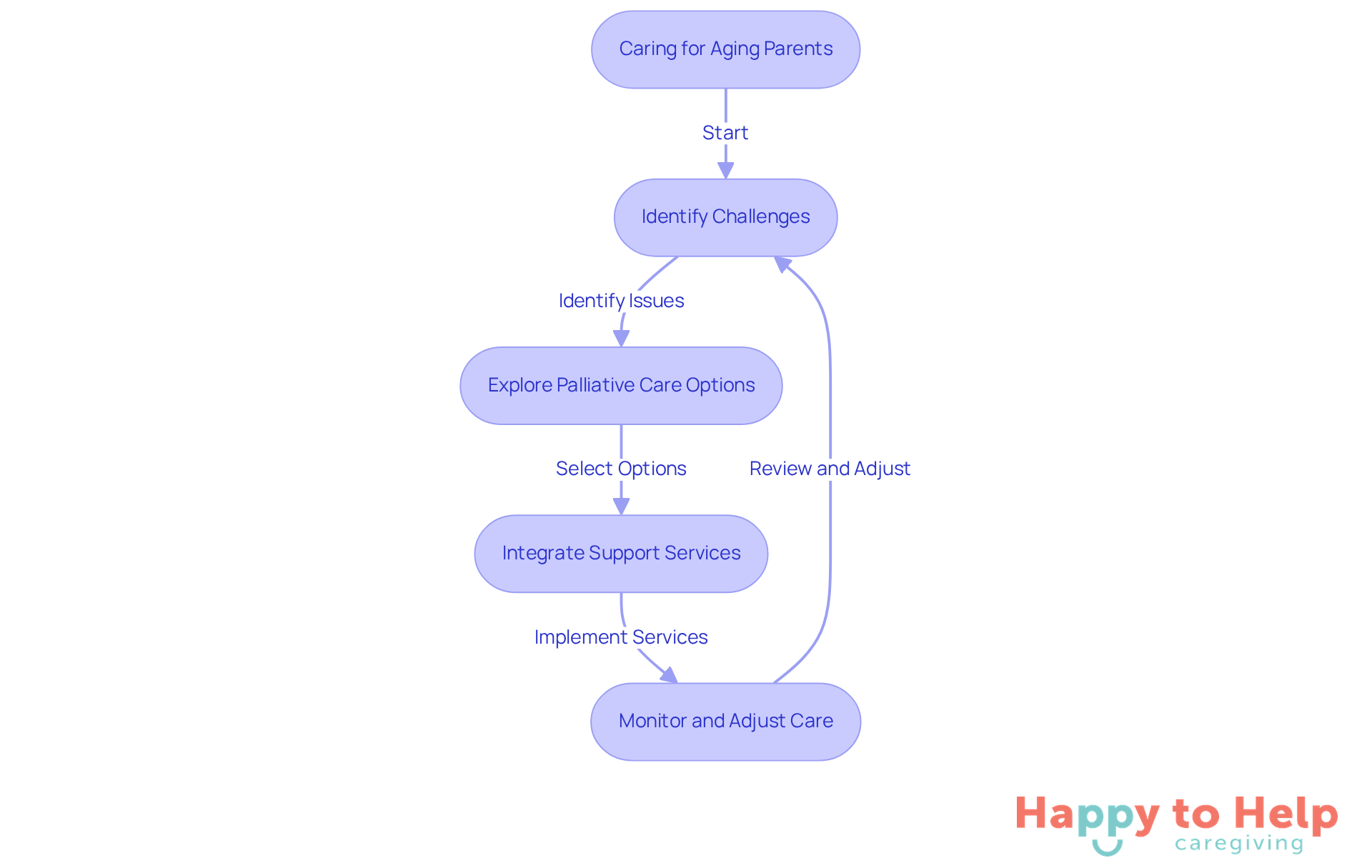
Caring for older parents facing significant health challenges can be overwhelming for families. The problem lies in the emotional and physical toll this situation takes on both caregivers and their loved ones. Without proper support, symptoms can worsen, pain can become unmanageable, and emotional distress can escalate.
To address these challenges, families should consider integrating palliative support into their caregiving strategies. This form of assistance focuses on alleviating symptoms, managing pain, and providing emotional support tailored to individual needs. By doing so, families can ensure their loved ones receive comprehensive care that enhances their quality of life.
Incorporating palliative assistance services not only improves the well-being of older parents but also eases the burden on those involved in caring for older parents. It’s essential to explore available resources and seek expert guidance to implement these services effectively.
Develop Personalized Care Plans: Tailoring Support for Individual Needs
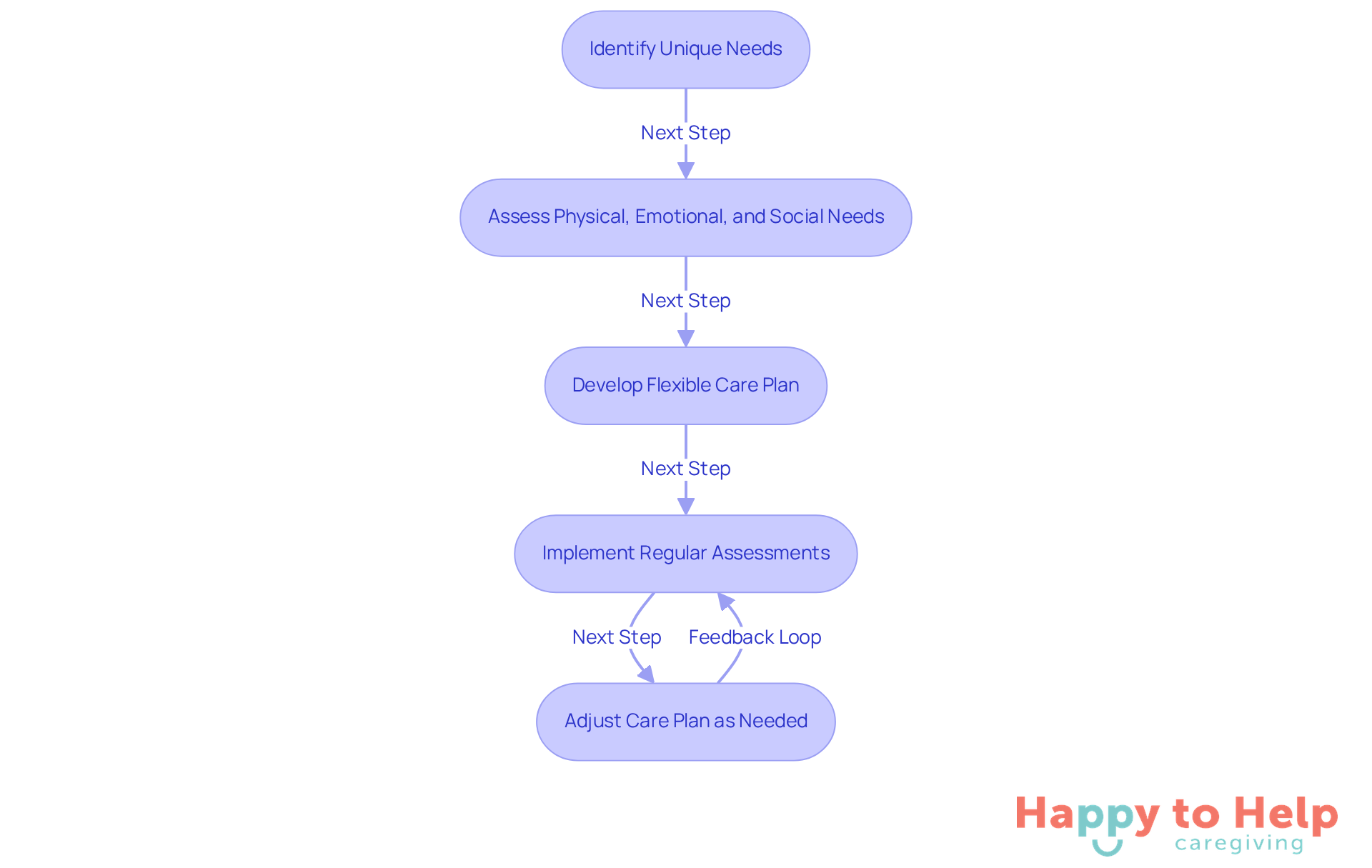
Caring for older parents requires developing personalized support plans to address their unique needs.
- Problem: Many caregivers struggle to create effective plans that honor their parents' preferences and involve them in their well-being.
- Agitate: This lack of involvement can lead to feelings of helplessness and dissatisfaction among seniors, impacting their overall quality of life.
- Solution: A comprehensive assessment of their physical, emotional, and social needs lays the foundation for a flexible plan that can evolve with their circumstances.
Healthcare providers play a vital role in crafting these personalized health plans, ensuring that all aspects of the senior's well-being are considered.
- Regular assessments and continuous evaluations of the treatment plan are essential to maintain its effectiveness, allowing for adjustments based on any changes in health or situations.
- This customized approach significantly improves health outcomes, promoting dignity and respect for seniors, particularly in the context of caring for older parents as they navigate their support journey.
Communicate Effectively: Keeping Family Informed About Care Needs
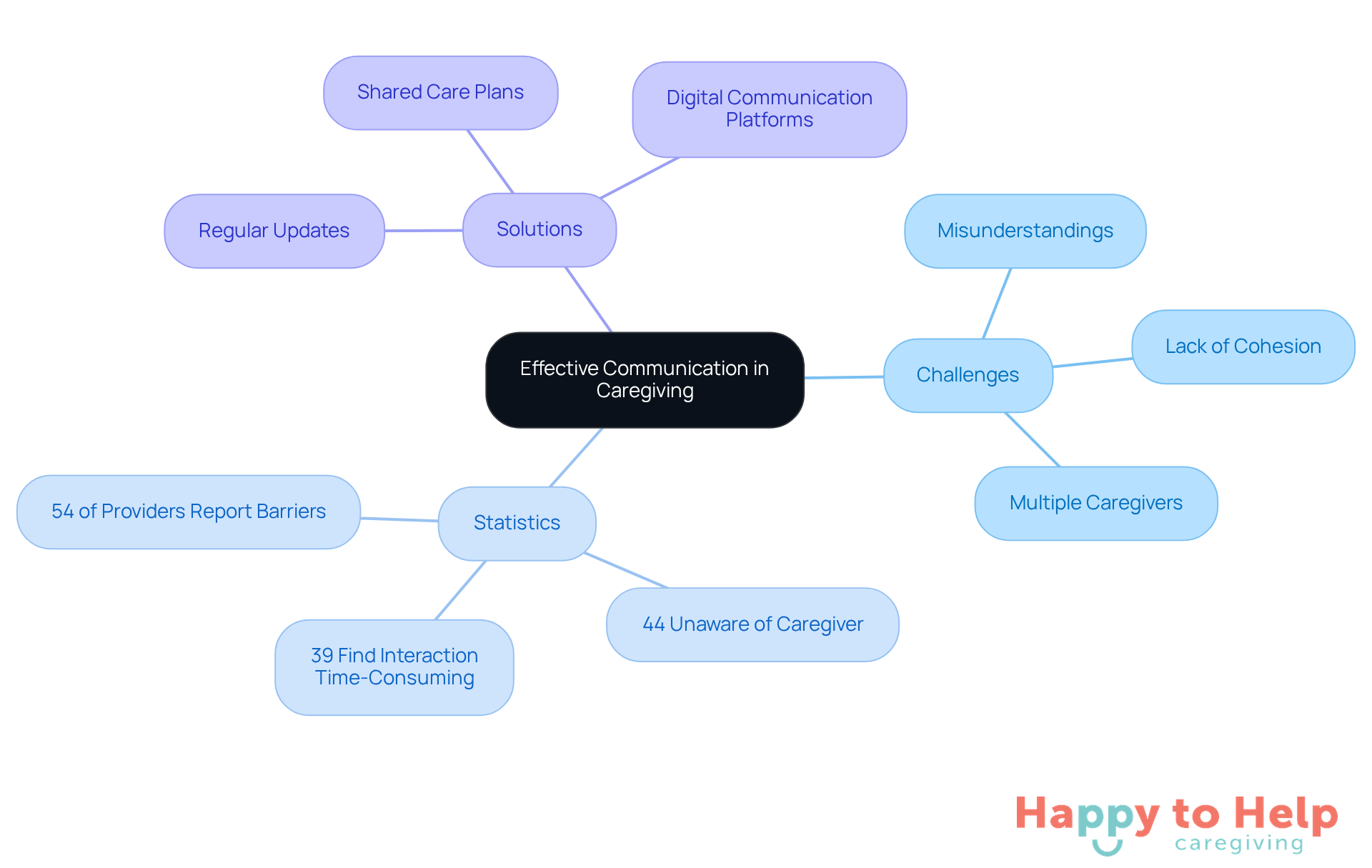
Effective communication is a significant challenge in caregiving. When caregivers fail to keep relatives informed about the support needs and preferences of elderly parents, it can lead to misunderstandings and a lack of cohesion in caring for older parents. This not only diminishes the caregiving experience but also creates an environment that lacks nurturing and support.
Statistics reveal that 54% of healthcare providers indicate that having multiple attendants can hinder effective communication. This highlights the urgency of maintaining clear lines of dialogue among all parties involved. To address this issue, caregivers can implement several practical solutions.
- Regular updates through family meetings
- Shared care plans
- Digital communication platforms
These methods foster collaboration and allow family members to contribute to decision-making processes. Additionally, adopting a collaborative approach with phrases like "Help me understand" can alleviate feelings of isolation for both caregivers and aging parents.
By proactively communicating, caregivers can navigate the complexities of elder care more effectively. This strategy not only enhances the caregiving experience but also ensures that family members feel engaged and valued throughout the caregiving journey.
Making the Right Choice
Caring for older parents at home presents a significant challenge that requires thoughtful planning and consideration. The unique needs of seniors can often overwhelm caregivers, leading to stress and burnout. This situation not only affects the caregivers but also impacts the well-being of the aging parents they care for.
To address these challenges, families can implement several effective strategies:
- Initiating open conversations about care needs is crucial. This helps in understanding what seniors require and allows for exploring suitable living options that promote their independence.
- Companionship plays a vital role in emotional health, so fostering social connections is essential.
- Respite care and post-hospital recovery support are also critical components. These services help prevent caregiver burnout and ensure a smoother transition for seniors returning home.
- Developing personalized care plans tailored to individual needs enhances the quality of care and encourages collaboration among family members.
Ultimately, the journey of caring for aging parents is a shared experience that demands compassion and proactive engagement. By adopting these best practices and utilizing available resources, families can significantly improve the quality of life for their loved ones while also safeguarding their own well-being. Embracing this journey with empathy not only strengthens family bonds but also ensures that seniors receive the respect and care they deserve in their golden years.
https://iframe.tely.ai/cta/eyJhcnRpY2xlX2lkIjogIjY5MjI0ZjczNGZjYWRhOTUwOGRlNDQxNyIsICJjb21wYW55X2lkIjogIjY4ZWU1ZGNhNzMxNzYyNTU3ZjNjOTVjMSIsICJpbmRleCI6IG51bGwsICJ0eXBlIjogImFydGljbGUifQ==Frequently Asked Questions
What challenges do caregivers face when taking care of aging parents?
Caregivers often experience overwhelming challenges, including emotional and physical stress, with nearly 1 in 4 reporting over 40 hours of assistance each week. This can lead to feelings of stress and burnout, impacting both their well-being and that of the seniors they care for.
How does Happy to Help Caregiving support caregivers and seniors?
Happy to Help Caregiving provides personalized in-home support services, including companionship support, post-hospital recovery assistance, respite support, and palliative assistance. These services aim to enhance seniors' independence and well-being while alleviating the burdens on caregivers.
Why is effective communication important when discussing care needs with aging parents?
Effective communication helps ensure that discussions about care needs are respectful and considerate, which can alleviate anxiety and frustration. Using 'I' statements and engaged listening promotes a cooperative approach to developing a support plan that respects the parents' desires and enhances their sense of independence.
What are some living options to consider for elderly parents?
Caregivers can consider several living options, including aging in place with necessary modifications for safety and accessibility, moving in with family, or exploring assisted living facilities. Each option should align with the caregivers' lifestyle and the needs of the elderly parents.
What should caregivers assess when evaluating living options for their parents?
Caregivers should assess the safety of the home environment, including accessibility features, and the availability of community support services. It is important to weigh the pros and cons of each option to prioritize the well-being of their elderly relatives.
List of Sources
- Happy to Help Caregiving: Personalized In-Home Support for Aging Parents
- Blog - Happy To Help (https://happytohelpcaregiving.com/blog)
- Caregiver Statistics: Demographics (https://caregiver.org/resource/caregiver-statistics-demographics)
- New Report Reveals Crisis Point for America’s 63 million Family Caregivers - Massachusetts Healthy Aging Collaborative (https://mahealthyagingcollaborative.org/new-report-reveals-crisis-point-for-americas-63-million-family-caregivers)
- HHS Backs AI Innovation for America’s Caregivers | HHS.gov (https://hhs.gov/press-room/hhs-backs-ai-innovation-for-americas-caregivers.html)
- Caregiving in the US 2025 (https://aarp.org/pri/topics/ltss/family-caregiving/caregiving-in-the-us-2025)
- Initiate Conversations: Discussing Care Needs with Aging Parents
- Quotes on Caring for Aging Parents (https://regencyhcs.com/blog/quotes-on-caring-for-aging-parents)
- Number of Family Caregivers Supporting Older Adults Increased Nearly One-Third Between 2011 and 2022 | Johns Hopkins Bloomberg School of Public Health (https://publichealth.jhu.edu/2025/number-of-family-caregivers-supporting-older-adults-increased-nearly-one-third-between-2011-and-2022)
- Taking Care of Elderly Parents Quotes (https://ultimatecareny.com/resources/taking-care-of-elderly-parents-quotes)
- Taking Care of Elderly Parents Quotes - Freedom Care (https://freedomcare.com/taking-care-of-elderly-parents-quotes)
- What to do when your aging parents need more care than you can provide (https://uchealth.org/today/aging-parents-what-to-do-when-parents-need-more-care-than-you-can-provide)
- Explore Living Options: Choosing the Right Environment for Elderly Parents
- New AARP Report: Majority of Adults 50-plus Want to Age in Place, But Policies and Communities Must Catch Up (https://press.aarp.org/2024-12-10-New-AARP-Report-Majority-Adults-50-plus-Age-Place-Policies-Communities-Catch-Up)
- U.S. News Releases 2025 Best Senior Living Ratings (https://usnews.com/info/blogs/press-room/articles/2025-04-15/u-s-news-releases-2025-best-senior-living-ratings)
- Living Arrangements Varied Across Age Groups (https://census.gov/library/stories/2024/05/living-arrangements.html)
- 2024 Aging in Place Statistics: A Lucrative Opportunity for the Home Care Industry - People Care (https://peoplecare.com/2024-aging-in-place-statistics-a-lucrative-opportunity-for-the-home-care-industry)
- 9 Senior Living Options in 2025: A Family Guide to Making the Right Choice - Resource for Seniors and Caregivers | SeniorSite (https://seniorsite.org/resource/9-senior-living-options-in-2025-a-family-guide-to-making-the-right-choice)
- Hire Professional Care: Engaging Experts for Elderly Support
- New U.S. Workforce Report: Nearly 70% of Family Caregivers Report Difficulty Balancing Career and Caregiving Responsibilities, Spurring Long-Term Impacts to U.S. Economy (https://press.aarp.org/2024-5-16-US-Workforce-Report-70-Caregivers-Difficulty-Balancing-Career-Caregiving-Responsibilities)
- National Alliance for Caregiving: Caregiving in the US 2025 Report (https://johnahartford.org/resources/view/national-alliance-for-caregiving-caregiving-in-the-us-2025-report)
- Supporting workers who are family caregivers benefits employers, too, report says (https://mcknightsseniorliving.com/news/supporting-workers-who-are-family-caregivers-benefits-employers-too-report-says)
- Caregiver Statistics: Demographics (https://caregiver.org/resource/caregiver-statistics-demographics)
- As Family Caregiving Grows, So Does the Need for Reform - Medicare Rights Center (https://medicarerights.org/medicare-watch/2025/08/14/as-family-caregiving-grows-so-does-the-need-for-reform)
- Provide Companionship: Enhancing Emotional Well-Being for Aging Parents
- Trends in Loneliness Among Older Adults from 2018-2023 (https://ihpi.umich.edu/national-poll-healthy-aging/reports-and-resources/trends-loneliness-among-older-adults-2018-2023)
- Friendships Are Especially Powerful Late in Life, Poll Says (https://usnews.com/news/health-news/articles/2024-12-16/friendships-are-especially-powerful-late-in-life-poll-says)
- The Emotional Benefits of Companion Care for Seniors (https://comfortkeepers.com/offices/texas/round-rock/resources/news/the-emotional-benefits-of-companion-care-for-seniors)
- 10 Benefits of Companionship Carers for Seniors' Well-Being - Happy To Help (https://happytohelpcaregiving.com/10-benefits-of-companionship-carers-for-seniors-well-being)
- Home Care Agency in Plantation, FL Near You | Skilled Nursing and Senior Home Care Services Serving Broward and Palm Beach Counties | Home Health Aide | Free Consult | 24-7 | Trust USA Home Health (https://trustusahomehealth.com/?p=2378)
- Utilize Respite Care: Taking Breaks While Ensuring Quality Support
- Caregiver Statistics: Health, Technology, and Caregiving Resources (https://caregiver.org/resource/caregiver-statistics-health-technology-and-caregiving-resources)
- Exclusive | Little-known caregiver program in NYC gets $6.2M boost – as number of aging seniors expected to boom: ‘At a pressure point’ (https://nypost.com/2025/11/17/us-news/little-known-caregiver-program-in-nyc-gets-6-2m-boost-as-number-of-aging-seniors-expected-to-boom)
- State Innovations to Advance Respite Care: Policy Strategies Shared at the State-Federal Respite Summit - NASHP (https://nashp.org/state-innovations-to-advance-respite-care-policy-strategies-shared-at-the-state-federal-respite-summit)
- The Caregiving Landscape: Data & Insights on the Caregiver Experience in the U.S. (https://caregiveraction.org/caregiver-statistics)
- It’s Time to Care for Caregivers: Senator Markey Announces Comprehensive Family Caregiving Legislative Agenda | U.S. Senator Ed Markey of Massachusetts (https://markey.senate.gov/news/press-releases/11/20/2025/its-time-to-care-for-caregivers-senator-markey-announces-comprehensive-family-caregiving-legislative-agenda)
- Support Post-Hospital Recovery: Assisting Aging Parents After Medical Care
- Safe Healing: Home Care for Seniors After Hospitalization (https://sandiegohomecaregivers.com/why-home-care-for-seniors-after-hospitalization-makes-recovery-easier)
- 10 Tips to Prepare Your Home After a Hospital Stay (https://health.usnews.com/wellness/articles/tips-to-prepare-your-home-after-a-hospital-stay)
- Post-Hospital Home Care: The Key to a Smoother, Safer Recovery (https://heavenathomecare.com/how-post-hospital-home-care-helps-seniors-recover)
- Post-Hospital Discharge: Why In-Home Care Improves Recovery for Florida Seniors (https://visitingangels.com/pasco/news-info/post-hospital-discharge-why-in-home-care-improves-recovery/26199)
- Roberta's Story: My Experience with Hospital Discharge (https://carersfirst.org.uk/news-and-stories/roberta-s-story-my-experience-with-hospital-discharge)
- Implement Palliative Care: Enhancing Quality of Life for Aging Parents
- The Effectiveness of Palliative Care Interventions in Long-Term Care Facilities: A Systematic Review - PMC (https://pmc.ncbi.nlm.nih.gov/articles/PMC11277722)
- Integrating palliative and dementia care can cut emergency visits and hospitalizations in half (https://medicalxpress.com/news/2025-01-palliative-dementia-emergency-hospitalizations.html)
- Palliative care and end-of-life health care utilization in elderly patients with pancreatic cancer - PMC (https://pmc.ncbi.nlm.nih.gov/articles/PMC6006043)
- As elderly population swells, some doctors see benefits of palliative care in the ER (https://pbs.org/newshour/health/elderly-population-swells-doctors-see-benefits-palliative-care-er)
- Senators Reintroduce Dual Community-Based Palliative, Hospice Care Legislation (https://hospicenews.com/2025/06/06/senators-reintroduce-dual-community-based-palliative-hospice-care-legislation)
- Develop Personalized Care Plans: Tailoring Support for Individual Needs
- Customized Care at Home: The Benefits of Personalized Care Plans - VNA Health Group (https://vnahg.org/customized-care-at-home-the-benefits-of-personalized-care-plans)
- The Importance of Having Personalized Care Plans for Seniors (https://seniorhelpers.com/fl/nature-coast/resources/blogs/2024-10-02)
- Creating Individualized Mental Health Care Plans for Seniors - Supportive Care (https://thesupportivecare.com/blog/creating-individualized-mental-health-care-plans-for-seniors)
- 2025: AI enhances personalized care; caregiver experience in the spotlight (https://healthcareitnews.com/news/2025-ai-enhances-personalized-care-caregiver-experience-spotlight)
- Personalizing Care Plans for Seniors: Why One Size Doesn't Fit All (https://promedcareinc.com/personalizing-care-plans-for-seniors-why-one-size-doesnt-fit-all)
- Communicate Effectively: Keeping Family Informed About Care Needs
- Communication Breakdowns Take Toll on Family Caregivers, Especially for Older Adults with Chronic Illness (https://ltcnews.com/articles/communication-breakdowns-toll-family-caregivers-older-adults-chronic-illness)
- The Importance of Effective Communication in Caregiving (https://familycaregiversonline.net/the-importance-of-effective-communication-in-caregiving)
- Effective Caregiver Communication: Tips, Barriers, and Benefits (https://scphealth.com/blog/effective-caregiver-communication-tips-barriers-and-benefits)
- Communication tips for caregivers of elders (https://uhc.com/news-articles/healthy-living/communication-tips-for-caregivers-of-elderly-parents)