
Understanding the Benefits of Caring for Elderly Parents at Home
For families in our service areas
For families in our service areas, this guide explains caregiving and how non-medical in-home caregiving can support care planning in East Idaho, Treasure Valley & Magic Valley, Northern Wasatch, North Central West Virginia, and Northeast Ohio.
What You Need to Know About The Benefits of Caring for Elderly
Caring for elderly parents at home presents a significant challenge for many families. This choice, while deeply personal, often leads to feelings of stress and overwhelm as caregivers juggle responsibilities. The emotional and psychological needs of seniors must be met in a familiar environment, yet the complexities of home care can make this difficult.
The implications of this challenge are profound. Families may struggle to provide the tailored assistance their loved ones require, leading to feelings of frustration and inadequacy. Balancing work, personal life, and caregiving duties can create a heavy burden, impacting both the caregiver's and the senior's quality of life.
So, how can families navigate these complexities? Here are some actionable solutions:
- Establish a Routine: Create a daily schedule that includes time for caregiving tasks, personal time, and family activities.
- Seek Support: Don’t hesitate to reach out for help from family members, friends, or professional caregivers.
- Educate Yourself: Learn about the specific needs of your elderly parents to provide better care.
By implementing these strategies, families can enhance the quality of life for their loved ones while managing the challenges of home care.
Defining Home Care for Elderly Parents
Caring for elderly parents at home benefits caregivers by helping them navigate significant challenges. Many older adults struggle with daily tasks and health requirements, which can lead to feelings of frustration and helplessness for both the elderly and their families. This situation can be overwhelming, as caregivers may find it difficult to balance their responsibilities while ensuring their loved ones receive the necessary support.
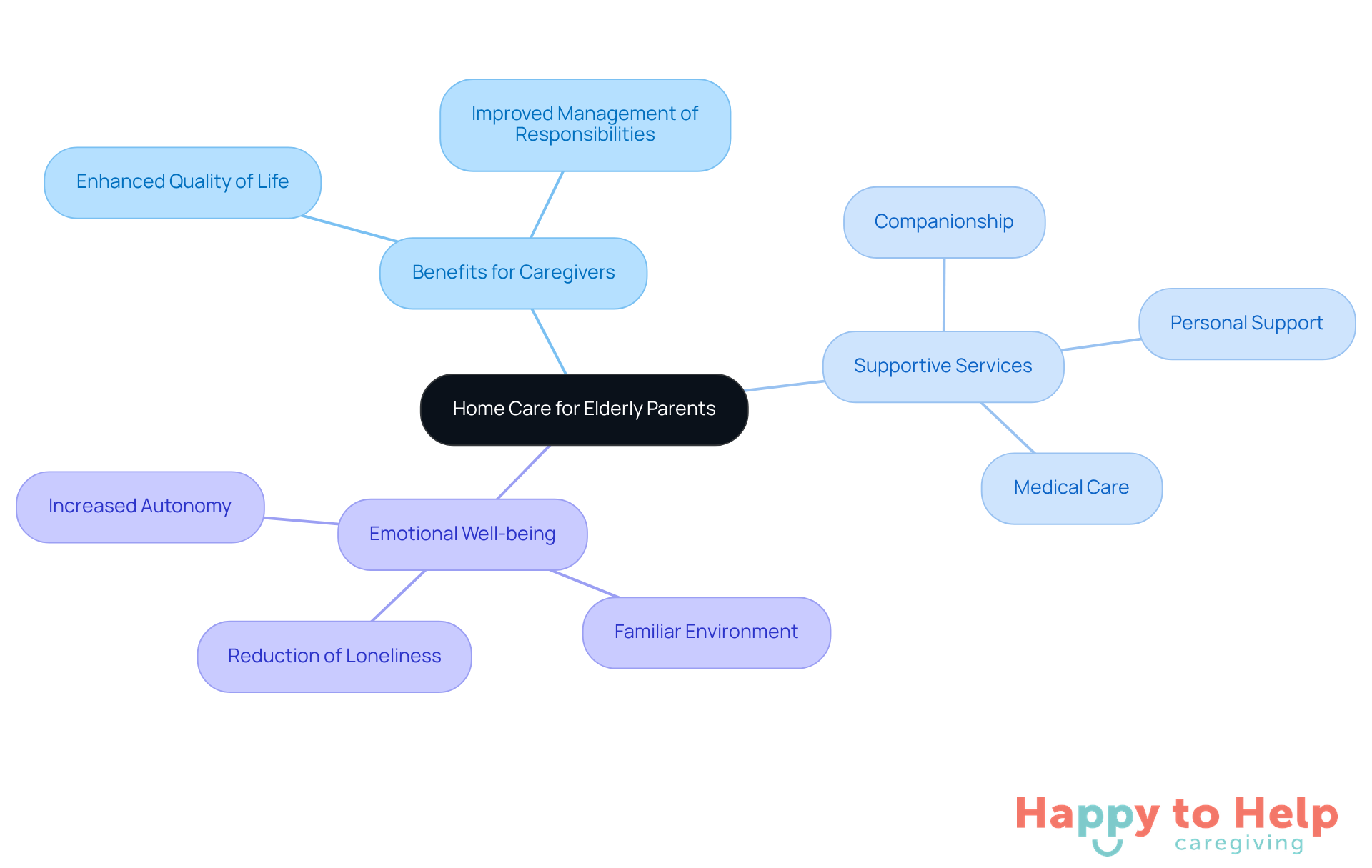
In-home assistance emerges as a practical solution to this problem. Caring for elderly parents at home benefits caregivers by allowing them to provide a variety of supportive services tailored to individual needs, helping older adults maintain their independence while receiving essential help. This assistance can include:
- Personal support
- Companionship
- Medical care
All designed to enhance the quality of life for seniors.
Moreover, caring for elderly parents at home benefits their emotional well-being by allowing them to remain in familiar surroundings with the support of professional caregivers or family members. This approach not only fosters autonomy but also ensures that caregivers can manage their responsibilities more effectively, leading to a healthier dynamic for everyone involved.
The Importance of Aging in Place
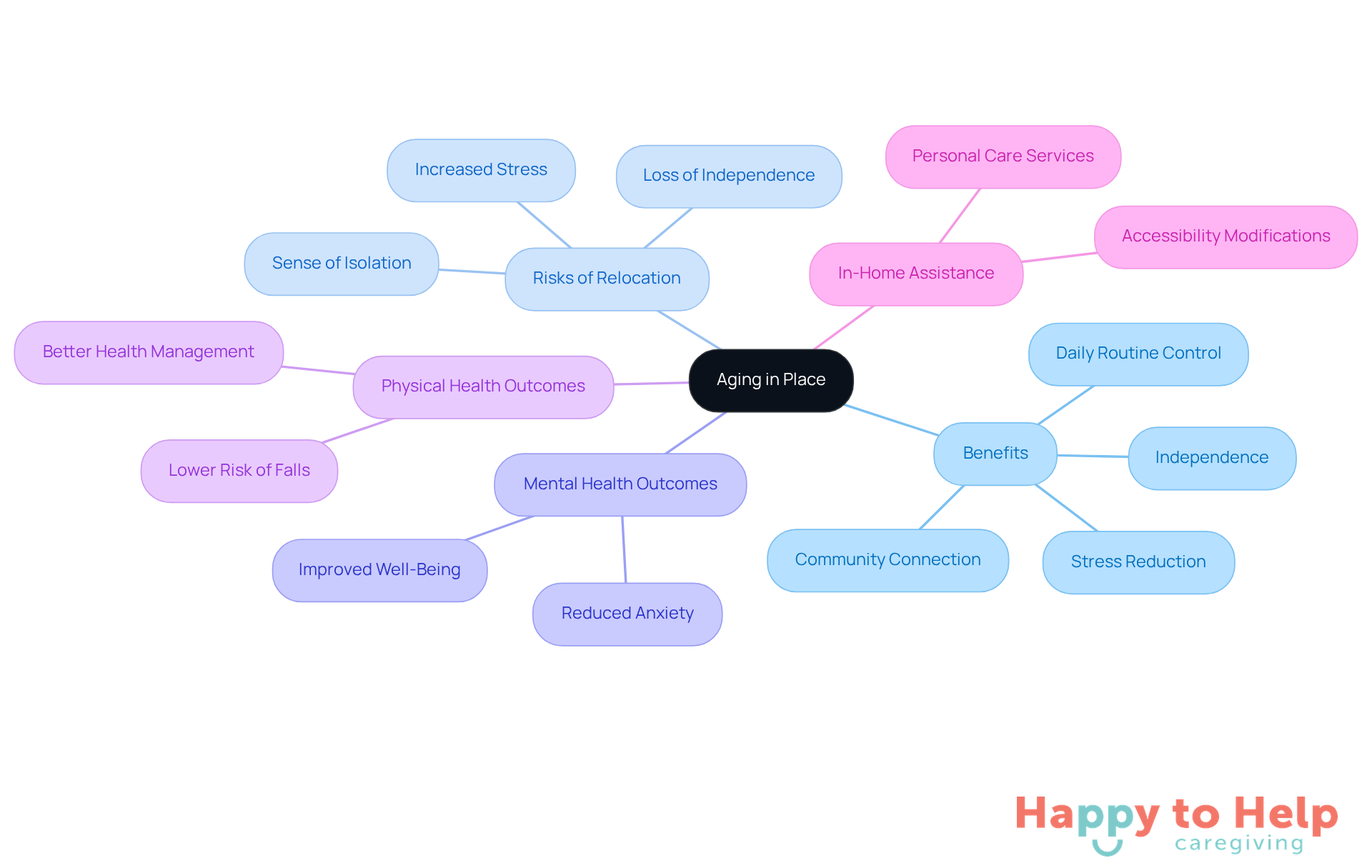
Caring for elderly parents at home benefits them by enabling aging in place, which allows older adults to stay in their own homes as they age instead of relocating to assisted living centers or nursing facilities. This situation presents a significant problem: many seniors face the risk of losing their independence and connection to their communities when they relocate. The implications of such a move can be profound, often leading to increased stress and a sense of isolation.
Research shows that caring for elderly parents at home benefits their mental and physical health outcomes. Familiar environments help reduce stress and promote a sense of security. In-home assistance services play a vital role in caring for elderly parents at home benefits. Caring for elderly parents at home benefits them by providing the necessary help while allowing seniors to remain in their beloved environment, thus maintaining their independence and control over daily routines.
In summary, aging in place not only fosters independence but also enhances overall well-being. Caregivers can facilitate this process by exploring in-home assistance options that cater to the specific needs of older adults.
Key Benefits of Caring for Elderly Parents at Home
Caring for elderly parents at home benefits families, but it also presents significant challenges that many face today. The emotional and financial strain can be overwhelming, especially when considering the unique needs of each individual.
-
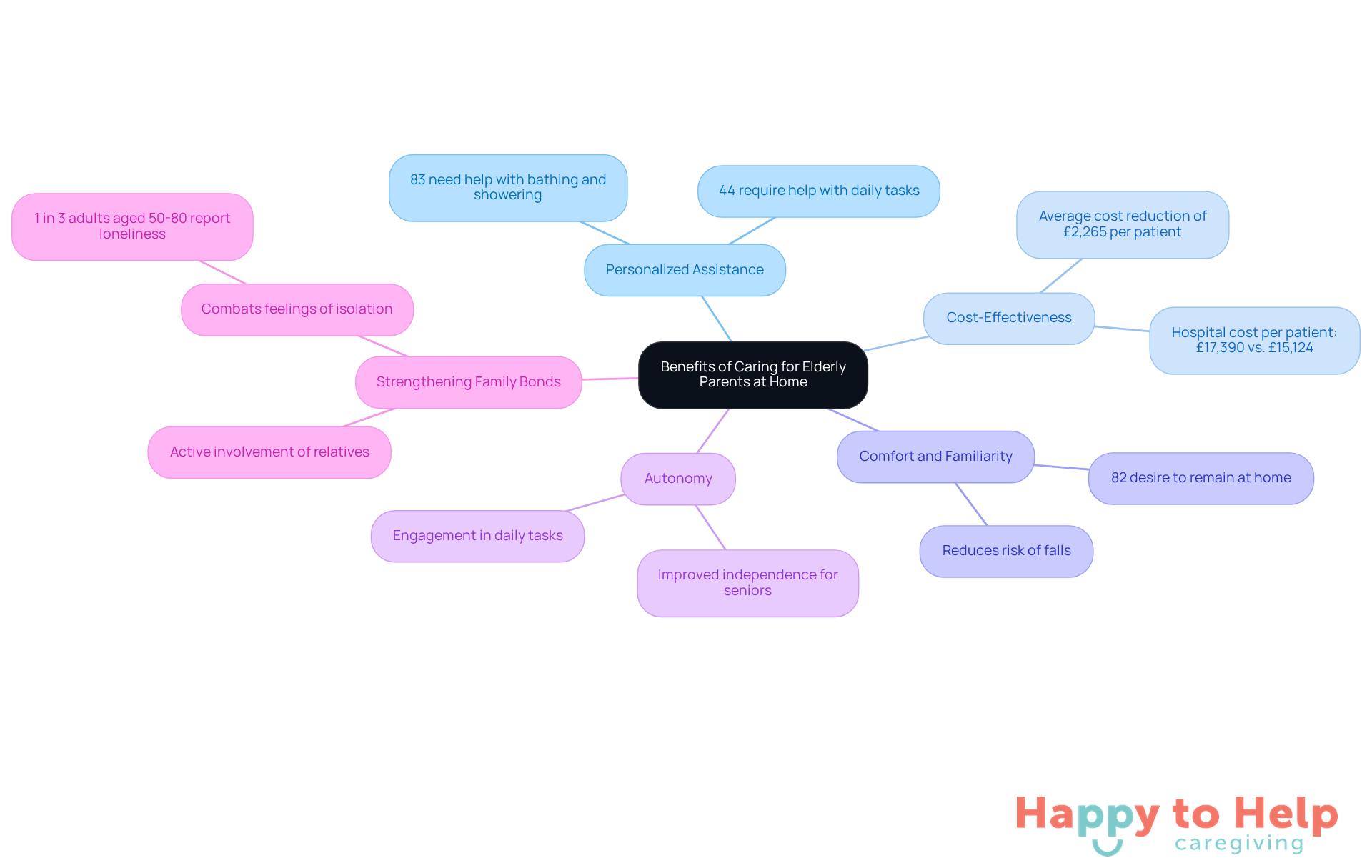
Personalized Assistance: One major issue is the lack of tailored support. Almost 44% of home support recipients require help with daily tasks, highlighting the necessity for individualized attention. Caring for elderly parents at home benefits them by allowing for customized assistance that enhances their quality of life and ensures their specific needs are met.
-
Cost-Effectiveness: Financial concerns are another critical factor. Research indicates that Hospital at Home assistance can reduce costs by an average of £2,265 per patient compared to traditional hospital admissions, while maintaining similar quality of life outcomes. The average hospital cost per patient is £17,390, which drops to £15,124 for Hospital at Home care. The financial advantage alleviates the burden on families, allowing them to enjoy the caring for elderly parents at home benefits while providing high-quality support without excessive expenses.
-
Comfort and Familiarity: Emotional well-being is also at stake. Around 82% of older adults express a desire to remain in their homes for as long as possible, emphasizing the importance of comfort and safety. Caring for elderly parents at home benefits by significantly reducing the risk of falls, which are a leading cause of injury among seniors, particularly at night.
Caring for elderly parents at home benefits their improved autonomy and fosters independence. It allows older adults to engage in daily tasks they enjoy, which is vital for their mental health. This sense of control and purpose can greatly enhance their overall well-being.
Lastly, caring for elderly parents at home benefits by strengthening family bonds. Relatives can be more actively involved in their loved ones' care, improving the quality of support and providing emotional reassurance. Many seniors experience feelings of isolation, with one in three adults aged 50-80 reporting loneliness at least some of the time. A case study of Fay, a 96-year-old woman with Alzheimer's living with her family, illustrates how modifications to her living space can create a supportive environment that enhances her quality of life.
In conclusion, the caring for elderly parents at home benefits extend beyond just financial considerations. They encompass emotional, social, and practical advantages that significantly improve the quality of life for elderly parents.
Emotional and Psychological Benefits of Home Care
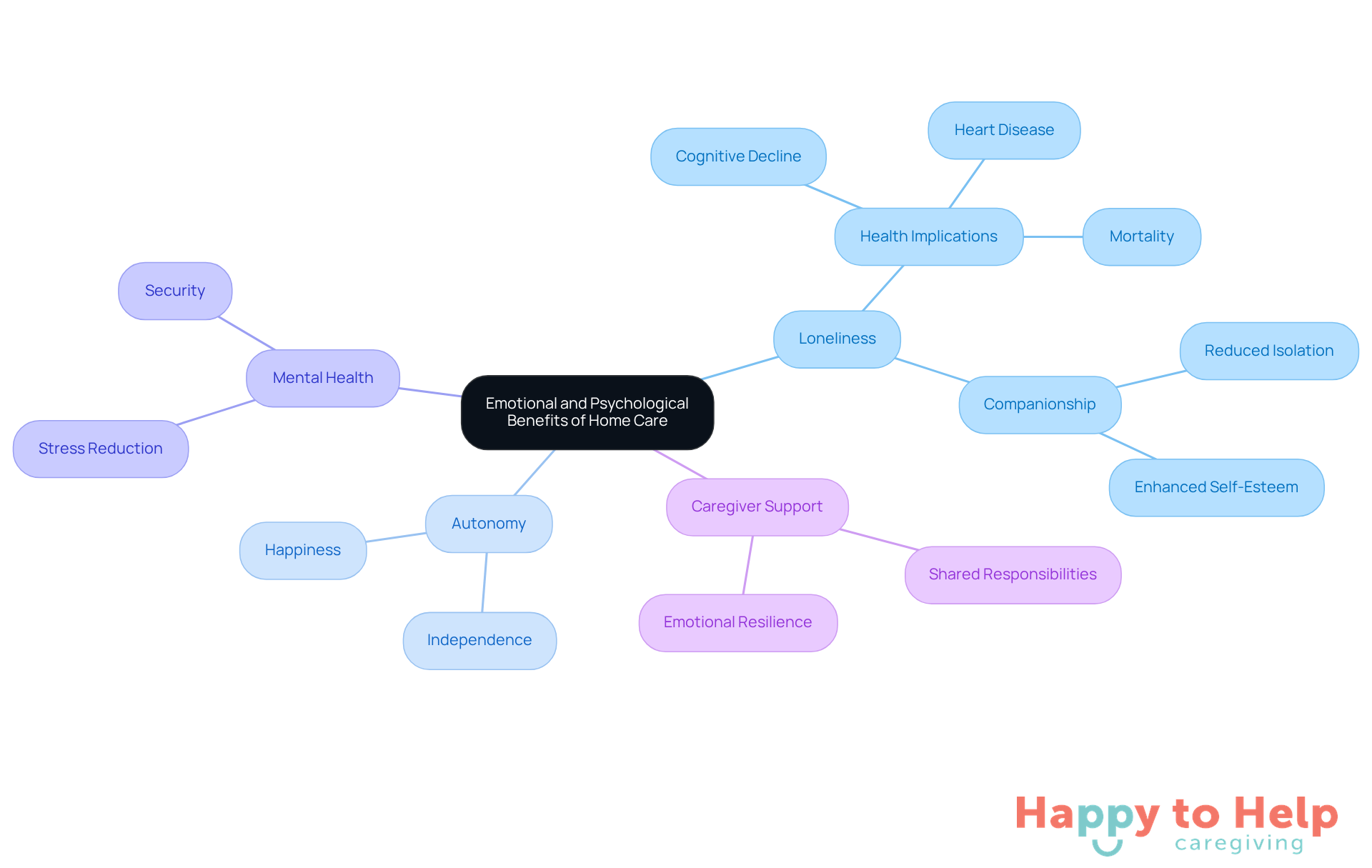
The emotional and psychological challenges faced by seniors receiving care at home are significant. Many older adults experience feelings of loneliness, which can lead to serious health implications. In fact, research shows that one in three adults aged 50-80 reported feelings of loneliness in 2023. This isolation is not just a feeling; it’s linked to increased cognitive decline, heart disease, and even mortality. Therefore, addressing loneliness is crucial for their well-being.
To combat this issue, home care offers a solution by providing companionship. This support not only reduces feelings of isolation but also enhances self-esteem. When seniors maintain independence and control over their surroundings, their overall happiness improves. This sense of autonomy is vital for emotional health.
Moreover, familiar surroundings contribute to enhanced mental health. Lower stress levels and a sense of security are essential for older adults. Caregivers are trained to recognize signs of emotional distress, ensuring timely support and preventing worsening situations.
Caring for elderly parents at home benefits not only the parents but also the family caregivers through in-home support. Sharing responsibilities with professional providers alleviates stress and helps avoid burnout. This collaborative approach fosters a supportive environment for both seniors and caregivers. As Katrecia Belgrave notes, "Having a caregiver available around the clock can alleviate the stress and anxiety of living alone." This partnership not only supports seniors but also strengthens caregivers' emotional resilience, enabling them to provide better care.
Key Takeaways for Caregivers
Caring for elderly parents at home presents a significant challenge for many families. The emotional and practical implications can be overwhelming, as caregivers often juggle their own responsibilities while trying to provide the best support for their loved ones. This situation can lead to stress, feelings of isolation, and concerns about the well-being of both the elderly and the caregivers themselves.
However, there is a solution that can enhance the quality of life for seniors while supporting family caregivers. Home care allows elderly individuals to remain in familiar surroundings, fostering independence and emotional well-being. This approach not only nurtures their physical health but also addresses their emotional needs, creating a comprehensive support system.
Key benefits of home care include:
- Personalized assistance tailored to individual needs.
- Cost-effectiveness compared to traditional care facilities.
- The emotional comfort of aging in place.
These advantages contribute to improved mental health, reduced feelings of isolation, and strengthened family bonds. As caregivers engage more closely with their loved ones, they provide essential support while creating an environment that promotes autonomy and a sense of purpose for seniors.
In conclusion, the significance of caring for elderly parents at home cannot be overstated. It is a holistic solution that addresses the emotional, financial, and practical challenges faced by families. Embracing this approach not only enhances the lives of older adults but also reinforces invaluable family connections. For those considering the benefits of caring for elderly parents at home, exploring available support services can lead to a more fulfilling and balanced caregiving experience.
https://iframe.tely.ai/cta/eyJhcnRpY2xlX2lkIjogIjY5MjEwYTk3Nzc3MWQ3MTM0ODQzOTBhNiIsICJjb21wYW55X2lkIjogIjY4ZWU1ZGNhNzMxNzYyNTU3ZjNjOTVjMSIsICJpbmRleCI6IG51bGwsICJ0eXBlIjogImFydGljbGUifQ==Frequently Asked Questions
What is home care for elderly parents?
Home care for elderly parents refers to the supportive services provided at home to assist older adults with daily tasks and health requirements, helping them maintain their independence while receiving necessary help.
What are the benefits of caring for elderly parents at home?
Caring for elderly parents at home benefits caregivers by allowing them to tailor supportive services to individual needs, enhancing the quality of life for seniors, and improving emotional well-being by keeping them in familiar surroundings.
What types of services are included in home care for elderly parents?
Home care services can include personal support, companionship, and medical care, all designed to assist older adults in their daily lives.
How does in-home assistance impact the emotional well-being of elderly parents?
In-home assistance allows elderly parents to remain in familiar surroundings, which fosters autonomy and contributes to their emotional well-being by providing support from professional caregivers or family members.
How can home care help caregivers manage their responsibilities?
Home care allows caregivers to provide necessary support to their loved ones while managing their own responsibilities more effectively, leading to a healthier dynamic for everyone involved.
List of Sources
- Defining Home Care for Elderly Parents
- 5 Benefits of Senior In-Home Care in 2025 | Valley Home Care (https://valleyhca.com/the-top-5-benefits-of-in-home-senior-care-for-aging-loved-ones-in-2025)
- The senior population is booming. Caregiving is struggling to keep up (https://cnbc.com/2025/11/21/senior-caregiving-labor.html)
- She cares for her aging parents full time. That requires taking care of herself, too (https://npr.org/2025/11/20/nx-s1-5522341/unpaid-caregivers-elderly-support)
- Caregiving in the US 2025 (https://aarp.org/pri/topics/ltss/family-caregiving/caregiving-in-the-us-2025)
- The Importance of Aging in Place
- Home sweet home: A majority of Americans want to age in place (https://empower.com/the-currency/life/home-sweet-home-americans-age-place-news)
- ‘Smart home’ tech the answer for aging in place, older adults say (https://mcknightsseniorliving.com/news/smart-home-tech-the-answer-for-aging-in-place-older-adults-say)
- Families caring for older adults at home say aging in place should not be taken lightly, but may be worth it (https://cbsnews.com/newyork/news/aging-in-place-home-remodeling-cost-of-caregiving)
- The Alliance for Health Policy Releases Final Report from 2025 Signature Series on Aging in America | Alliance for Health Policy (https://allhealthpolicy.org/news/the-alliance-for-health-policy-releases-final-report-from-2025-signature-series-on-aging-in-america)
- Seniors see aging in place as greatest health risk in 2025: survey (https://housingwire.com/articles/seniors-see-aging-in-place-as-greatest-health-risk-in-2025-survey)
- Key Benefits of Caring for Elderly Parents at Home
- Families caring for older adults at home say aging in place should not be taken lightly, but may be worth it (https://cbsnews.com/newyork/news/aging-in-place-home-remodeling-cost-of-caregiving)
- 2025 Home Care Statistics: Trends & Insights To Know (https://premierhcinc.com/blog/home-care-statistics)
- Hospital at home saves lives and money: CMS report (https://ama-assn.org/public-health/population-health/hospital-home-saves-lives-and-money-cms-report)
- Caring for older people at home can be more cost-effective than hospital care, study finds (https://ndph.ox.ac.uk/news/caring-for-older-people-at-home-can-be-more-cost-effective-than-hospital-care-study-finds-1)
- Caregiving in the US 2025 (https://aarp.org/pri/topics/ltss/family-caregiving/caregiving-in-the-us-2025)
- Emotional and Psychological Benefits of Home Care
- The Emotional Benefits of In-Home Care: How Personalized Support Enhances Well-Being - Emory Mills (https://emorymills.com/blogs/the-emotional-benefits-of-in-home-care)
- Elderly Isolation: Combating Loneliness Through Home Healthcare - VNA Health Group (https://vnahg.org/elderly-isolation-combating-loneliness-through-home-healthcare)
- The Emotional Benefits of 24-Hour Home Care For Seniors (https://avodahhomecare.health/the-emotional-benefits-of-24-hour-home-care-for-seniors)
- How Home Care Helps Older Adults Overcome Isolation in Meaningful Ways - Family & Nursing Care (https://familynursingcare.com/how-home-care-helps-older-adults-overcome-isolation-in-meaningful-ways)
- Mental Health Support for Seniors: The Role of In-Home Caregivers (https://homeinstead.com/home-care/usa/in/kendallville/871/news-and-media/mental-health-support-for-seniors-the-role-of-in-home-caregivers)